Tag: Sumantra Dutta

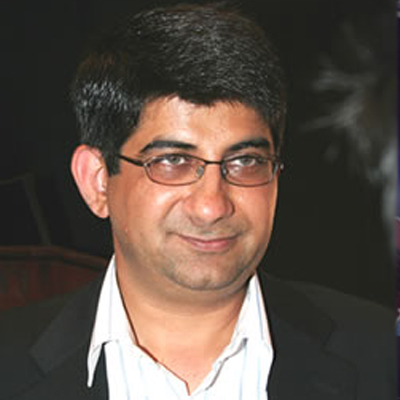
  • Sumantra ‘Sumo’  Dutta moves on from Star

    Sumantra ‘Sumo’ Dutta moves on from Star

    MUMBAI: A score of years of relationship with a company is not something that many a senior executive in media can boast of. But Sumantra Dutta (or Sumo as he is fondly called) had that with the News Corp owned Star India. And in his twentieth year of employment with India’s leading broadcast network, Sumo has said sayonara. He was Star Middle East, Pakistan and Africa country head, at the time of leaving.


    Star India CEO Uday Shankar said, “Sumantra has had a long and fruitful career marked by strong performance across diverse portfolios at STAR. His leadership has helped STAR establish itself as a leading network in the Middle East, Pakistan and Africa. Sumantra has always demonstrated sound judgement and a willingness to take on risk in everything he did, and has contributed significantly to Star’s success.”


    Dutta said, “I have spent most of my professional life so far at Star, and it has been  a truly enriching and fulfilling experience. I am grateful to Uday and the great team at Star for the belief, passion and support, and I wish them all the very best. I shall always remain a brand ambassador of this great network.”


    Dutta joined Star India as ad sales manager in Kolkata in 1994, after which he moved to Delhi  in 1996 and Mumbai in 1999, where he grew to finally head ad sales and marketing as EVP in 2000. A year later, as Radio City COO, he was part of the team that successfully launched the FM network, which he went on to head as CEO in 2003. In October 2008, Dutta moved to Dubai to spearhead STAR’s expansion in the Middle East, Pakistan and Africa as Country Manager.


    Prior to joining Star India, Dutta worked with brands like Nestle, Times of India and Mudra.

  • ‘If there are large eyeballs to address with local content, we will do it’ : Sumantra Dutta – Star country head, Middle East, Africa and Pakistan

    ‘If there are large eyeballs to address with local content, we will do it’ : Sumantra Dutta – Star country head, Middle East, Africa and Pakistan

    Star is eyeing growth in Middle East, Pakistan and Africa. Which is why it has created the new post of country head for these three markets and appointed Sumantra Dutta, who has been in the News Corp family for 14 years, to take up this role from 1 July.


    Dutta rejoins Star from News Outdoor India (News Corp‘s out-of-home subsidiary), where he served as the company‘s managing director.


    Dutta was also involved in the FM radio start-up venture and successfully established Radio City as a strong brand with a revenue that fell just below market leader Radio Mirchi which had a seven-station presence compared with Star‘s four.


    Prior to this, Dutta led Star India‘s advertising sales and marketing teams.


    In an interview with Indiantelevision.com, Dutta talks of his new role and the company‘s growth plans in the three markets that he will spearhead.


    Excerpts:

    By creating the new post of a country head for Middle East, Africa and Pakistan, has Star identified these three as high growth markets?
    Middle East is emerging as the hot spot for growth. Pakistan is also expected to boom because of globalisation. Africa is an almost virgin market for us and there is scope in taking our channels to various countries there. The businesses in these three markets is under exploited. The task is to identify the opportunities, develop distribution, push ad sales.

    Will Star‘s effort include localising content for the Middle East market?
    India and the Middle East share similarities in TV content consumption. In India, Star Plus is the leader channel and the Star bouquet is very strong. The task is to aggressively grow the Star brand in the region. The need to develop connect with the larger audience base is always there. We will study the market and find the right profiling, language and content offering.

    Even Zee network had to experiment with local content for further growth. Is the advertising revenue skewed heavily towards local content?
    The television ad spend in Middle East is broadly in the region of $1.5 billion. The free-to-air (FTA) channels account for 90 per cent of the total ad pie and within this category, Arabic content gets the lion‘s share.

    So will Star get into local content with local partners?
    There is scope to grow ad revenues even within the pay-TV segment. The Middle East is booming – be it in real estate, tourism, or other areas of business. Star has clear plans in servicing the burgeoning demand in this market. If there are large eyeballs to address with local content, we will do it. But our first task is to study the market and identify the gaps.

    How challenging is the Middle East market to conquer?
    The challenges are similar to that of India. It is a highly competitive environment and has about 360 channels beaming into the region. The only differentiator is that media buying and planning is much more sophisticated in India. The idea is to put the learnings of this market in place in the Middle East.

    I have the added advantage of being associated with Star‘s start-up businesses. The size of the business is really in the opportunity that it throws open for the company to exploit

    Isn‘t the distribution scenario also a lot more different?
    Distribution is much more organised than in India. The region has DTH (direct-to-home) and FTA. In India, cable TV continues to be strong. The idea is to also find newer channels and revenue streams. The mobile telephony base, for instance, is big and Star has not tapped this segment.

    What is Star‘s strategy going to be in these three markets?
    It is too early for me to define that now. But we need to go into a higher growth trajectory. Faster, higher, stronger – that is the credo. We will play the same game but with more attitude. We will be growing the team – because you are only as good as your team. The idea is to go and knock the ball out of the park.

    Don‘t you feel that you are being continuously marginalised into businesses that are relatively smaller in size than what you were earlier handling being part of Star India‘s core team in the broadcasting arena?
    I have the added advantage of being associated with Star‘s start-up businesses. I moved from the high of television to the FM radio space. I was out not to just launch a FM radio station, but to kick-start the entire category. In the outdoor advertising business, the challenge was to bring respect to the category and get the local administration lease out long-term contracts. The size of the business is really in the opportunity that it throws open for the company to exploit.

    Since News Corp is globally getting out of the outdoor business, is the India part up for sale?
    I wouldn‘t like to comment on this.

    For somebody who has been associated with Star for such a long period, which are your most precious moments?
    The launching of Star News in 1998 and National Geographic Channel in 1999 were momentous events. But nothing beats the launch of the Amitabh Bachchan-hosted game show Kaun Banega Crorepati (KBC) in July 2000 as it changed the fortunes of Star in India.

  • ‘We should leverage on each other’s strength and boost the sector by providing the consumer a common platform of services’ : Viren Popli – Star senior VP, Interactive Services

    ‘We should leverage on each other’s strength and boost the sector by providing the consumer a common platform of services’ : Viren Popli – Star senior VP, Interactive Services

    For the last six years, Viren Popli has been an integral part of the Star India system. As the international business senior VP, Popli reported to Kaushik Dalal before moving to the Wireless division to work with Sumantra Dutta. As he puts it, those were days when he worked quietly behind the camera and enjoyed the ‘privacy’ too.


    The so-called privacy was soon broken when he was made the head of Interactive Services in February 2005. As he recognizes the tough task he has at hand to build this emerging business as a strong revenue stream, Popli settles down to give his first interview to the media.


    At the Wireless division, Popli and his team are making efforts to create a highly sought after destination brand for mobile content, Star 7827, to offer specially created and aggregated content for the mobile screen available through SMS, WAP, Web and voice platforms. In this interview with indiantelevision.com’s Bijoy A K, Popli shares Star’s plans and talks about the evolving digital market.


    Excerpts:

    Star India has been spending the last three years to prepare the first draft of its wireless and interactivity plan. And as the first step, the revamped version of Star’s wireless platform 7827 has been unveiled. What went into the research? What are the key findings?

    Several things went into the research. Firstly, we have tried to analyse the effectiveness of areas such as voting, gaming and content. For example, on the gaming front, we have tried to look at the effectiveness of text games and java games. We wanted to know how the product actually sells itself.


    Secondly, we have done a lot of focus group studies and discussions across the country to gather useful feedback. Lastly, while doing the research, we did a series of internal studies which covered the whole News Corp platform. News Corp entities across the globe are doing various things on mobile. Hence, we were able to exchange ideas.


    Research provided us with a total new insight into the market. For example, very few people in this country know how to download using a mobile. There are booklets and help manuals released by mobile phone companies, but you won’t get a solution in any of those. Someone had to teach people to effectively use the mobile phone in such practical situations.


    People are willing to learn technology and pay for it, if they are provided the right content. What kind of content is desired by the mobile community? What is the age group structure here? What is the significance of the word of mouth communication in this segment? Through our research, we got an idea on the kind of efforts we have to make to provide the right response. We also learnt that flexibility, speed and relevance are the most important pieces of this business.

    Could you elaborate on your digital and wireless strategy?

    Our first goal is to make our mobile service 7827 as the most preferred platform both for content owners/mobile operators and consumers. The next focus will be on content. I would rate content space as the biggest challenge in the wireless business.

    What is the next step?

    We want to deliver an all-pervasive service available on all platforms, whether it is text, web or WAP. For an average Indian, Web and WAP are high-end technology words. Hence, we also want to put together an easy-to-access interface method that is more accessible.

    How much of investment has gone into revamping 7827?

    The project requires a significant funding. I can’t provide you the actual figures because we are still in the investment mode. We want to expand in the areas of technology, content and marketing. This is an ongoing process.

    What are the issues that will foster an even faster mobile market growth in India?

    The mobile business has grown tremendously, but the industry is just three or four years old. It will still take some time to evolve. The value chain and the relationship need to fall in place. The audio visual content should reach the masses. The market requires effective strategies and marketing initiatives to attract consumers to audio visual content. This will be crucial for the market to grow.


    3G is still some distance away as far as India is concerned. The Indian market has explored 2G and 2.75G technologies really well, but I would say there is still room for improvement. These technologies have still juice in them to drive innovative concepts and deliver better results.


    Instead of waiting for the arrival of 3G, we should explore the 3C business, which is Cool Connected Consumer. Mobile phone is no more a mere communication equipment. We change our mobile phone models in such frequency, while we never make an attempt to change our fixed phones. Here the content, as the driver of such a phenomenon, takes centre stage. As a content provider for wireless, we want to make sure that the market will not run short of content. That is what we are doing here. We believe that, content can force the technology to catch up or take a leap.

    We have learnt that, flexibility, speed and relevance are the most important pieces of this business

    Will web streaming as a concept catch up in India?

    It is a tremendous opportunity. As I said, it again depends on technology and the technology depends on the content. If the content is really attractive, we will have more and more people opting for the broadband service.

    What is your take on the global scenario? Is there any learning from the China market, where Star Wireless is already operational?

    This space is all about intelligence and experimentation. One interesting development has happened in the international space. Globally, most of the mobile companies are getting out of the content sector. The operators have found working on the content space — which is not actually their main area of strength – very distracting. Across the platform, the players have decided to focus on their main areas of strength.


    In India also, mobile operators will have to move out of the content space. It would be very difficult for them to run content services. Focus on a niche area is very important in this sector.

    Who are the key players occupying the digital and wireless space?

    Yahoo is very strong in the communication space, while Google reigns supreme in search. Entertainment companies are aggressively eyeing the digital space. Fox, for example, has taken major inititatives. There are also many small companies. But once consolidation happens, we will have four or five big aggregators and a range of secondary companies working around them in niche areas.

    What is the role played by News Corp. in Star India’s interactive initiatives?

    There is a macro direction element present in the whole process. News Corp. as a company has been a great idea exchange platform. It is all about sharing ideas and capitalising on the ideas and thoughts exchanged through this vast network. Since each individual country has its own local environment, we won’t be able to accept all the ideas generated. We will have to see what survives in our environment. However, the global platform has helped us tremendously to share and generate information and ideas.

    News Corp recently acquired the social network portal Myspace.com. Are you looking at creating a similar networking platform in India?

    The concept of online social networking has been very successful in the West. Star India is also exploring opportunities to launch a social networking portal on its mobile platform.

    Star India launched mobisodes last year. Now it is more than six months since this happened and how was the experience? How much did the initiatives contribute to Star India’s revenues during the fiscal?

    It did really well. We had significant number of video downloads, though the lack of technology awareness and penetration limited the exercise to certain areas. However, I would say, the initiative covered its costs and made a profit.

    Interactivity works for a channel or a programme, when the viewer chooses mobile phone over remote control

    You are about to launch your mobile voice platform. What are the growth plans for this?

    We have signed agreements with Hutch and BSNL, while more deals are on the anvil. We will have a different short code on Voice. On the technology front, there is bit of a problem since BSNL has a separate short code digit structure. In that case, we will have to market two different short codes for Voice. At present, we are trying to sort this issue out.


    We are also working on the Voice content. The radio channel will offer a mix of created, aggregated and Star India content.

    How do you plan to leverage Star India’s programming dominance with the mobile initiatives? Are there plans to make mobisodes of your popular soaps including Kyunkii…??

    All our programmes can go to mobile as well. At the same time, variations of these programmes can also go. For example, it would be interesting to watch Tulsi’s (the lead character in Kyunkii..) fashion transformation over the years in a mobisode. We can present alternative storylines through mobisodes. Lots can be done in terms of this content variation.


    We have plans to do a lot of things this way. But, I am not in a position to offer a timeline since, once we start such an initiative, we will have to be consistent with our delivery. We can’t provide Kyunkii.. on mobile for a week and forget about it. We will have to offer the Kyunkii.. content six days a week. It requires significant amount of planning and improvisation. The editing of an episode for mobile itself would consume significant amount of time. Hence, to make a formal announcement, we want to be confident of our delivery cycle.

    Does it also work in reverse? Will 7827 also help in driving up viewership?

    It can be assumed that the consumer downloading a mobisode of our programme is a loyal viewer of our shows. The interest in the programme must be inspiring him to download the mobisode of that particular programme. Hence, we believe that mobile holds tremendous potential to boost viewership and audience base.


    Now, how to take it ahead? Here is where interactivity comes in. We are looking at various methods to boost interactivity by way of the existing mobile technologies. Interactivity works for a channel or a programme, when the viewer chooses mobile phone over remote control. There are these traditional methods such as contests and special schemes. Interactivity can be a more powerful weapon, if used effectively in breaks. We are looking at various strategies to improve on this front.

    Any SMS-driven shows from Star? Are you planning any mobile-based gameshow at the moment?

    I have nothing concrete to offer you at the moment. But we are definitely exploring this segment.

    Has Star recently bought any show formats for the mobile and internet?

    We keep scanning the environment. But nothing significant has caught our attention as of now.

    Are you planning to work with film producers for mobile and other interactive initiatives?

    We are looking to work with every content provider in the country, including filmmakers and producers. In fact, we are very keen to work with film producers.

    How much have broadcasters raked in as revenues through SMS services during the last fiscal? How fast will it grow this year?

    It is in the range of Rs 750 million to Rs 1 billion. With more initiatives coming in, we expect this to double this fiscal.

    In the next five years, how much will the mobile division contribute to Star India’s revenues?

    Mobile will evolve as a strong revenue stream for Star India, after advertising and subscription. It is difficult to forecast the figures, because the technology will undergo lot of changes during the next five years.

    Will it be totally subscription driven or is there a scope for ad revenues in the immediate future?

    In the mobile content platform, there have been many experiments to generate advertising revenues. There is this method of inserting brands in content, but it is not generally very effective because of the space constraints. That is just one way of doing it. We believe that the real opportunity is yet to happen and there should be a better way out. Marketing and branding should be handled in a smarter way in this case.

    What is your take on in-game advertising?

    In-game advertising can be effective in the case of console and PC gaming. But, again, when it comes to mobile, we have space restrictions. The brand will look too small to generate appeal. Branded games can be one way out. Still, how many people would want to download a branded game? This space requires an effective strategy.

    What are the plans in India for the Lost game?

    Buena Vista International Television (BVITV) owns the rights for the game and as far as I know, they are very keen to launch the product in India.

    In the next five years, mobile will be a strong number three as Star India’s revenue resource, after advertising and subscription

    Are there any Indian shows that you feel have potential for this kind of an extension?

    Absolutely. I would say, most of our shows have the potential to be extended as various mobile initiatives. But we haven’t really zeroed in on any particular show as yet.

    Have you struck deals with international companies?

    The plan is to aggregate the best content from across the world. We are planning associations with companies working in the areas including content, applications, technology and games. We haven’t reached a position to name any particular company as our associate yet.

    How would you like to explore the interactive market segments such as video sharing, messaging, connecting and email through your digital initiatives?

    We are an entertainment and information service provider. We would stick to what we are doing at present. There is no plan to offer services which are outside our purview.

    How do you rate competition in this segment?

    All the players have competed really well to create their own space in the mobile industry. The next incremental step should be a leap in terms of strategies. All of us should come together to empower the business. We should try to leverage on each other’s strength and boost the sector by providing the consumer a common platform of services.