Tag: Suman Dubey

  • Guest column: ‘Digital Drive,’ not ‘Cover Drive’, is the best shot for the future of cricket

    Guest column: ‘Digital Drive,’ not ‘Cover Drive’, is the best shot for the future of cricket

    Mumbai: Let’s face it – globally cricket is not the most popular sport. The ICC, cricket’s global governing body of cricket was founded in 1909 in Lords. In its 110+ years of existence, it has managed to create only 12 full-time member countries competing in Test cricket. Currently, cricket suffers from three major problems.

    First, the massive difference in skill level between the 92 associate members and the full-time members curtails the game’s popularity in the associate member countries. Second, at least four of the 12 full-time members, such as Ireland, Afghanistan, Zimbabwe, and even Bangladesh, cannot compete against India, England, or Australia, which creates unengaging matches. And third, the low viewership of cricket outside the 12 full-time member countries.

    Fans’ engagement suffers when their national teams can’t compete against the more powerful teams. Thus, we find the powerful cricket teams only playing against each other to ensure business sustainability for the game. In the last 10 years, India has played 50 per cent of their test matches against England and Australia. There is no real incentive for an Indian or Bangladeshi fan to watch a bland India-Bangladesh match unless the games are competitive enough to drive the narrative.

    There is no doubt that Test cricket is dying, and the T20 format can help associate and full-time members produce competitive cricket. However, T20 cricket has been around since 2003, when the England and Wales Cricket Board (ECB) first introduced this format for their inter-county competition. Thus in the last 18 years, this format has failed to popularise cricket in ICC associate member countries, not even in major sporting nations such as Argentina and Germany. It is not that Germans only love soccer, as they also play handball, basketball, tennis, among other sports.

    They just do not play cricket, as there is no interest at the ground level. It is a catch-22 situation as citizens won’t play the game unless they find their national teams competing well with the stronger teams. But, countries won’t have strong national teams unless more citizens play the game.

    Building strong national cricket teams in associate member countries is an almost impossible task, especially if it didn’t happen in 110 years. Thus, only franchise cricket can popularise cricket and make it a truly global sport. Franchise cricket can help erase the massive difference in quality between national teams and make cricket more democratic and popular. The launch of the IPL was a decisive first step for taking cricket outside of the rigid competition between national teams.

    After that, the rapid spread of franchise cricket leagues in almost every cricketing country and the recent launch of Major League Cricket in the US produced a reliable preview of the future of global cricket. But, franchise cricket leagues alone can’t drive the growth of cricket beyond a point. They will need digital platforms to generate and retain interest at the grassroots level in both playing and non-playing countries.

    According to a study done by Havas Sports and Entertainment, during the IPL, viewers in the age group of 31-44 years make for the most engaged group with the game, not only in terms of viewership but also in terms of social media chatter, participating in contests and creating their fantasy leagues based on IPL players. This trend is bad news for both advertisers and cricket administrators. India is a very young country with a median age of 28 and more than 50 per cent of its population below 25. In such a backdrop, only digital technologies can create a 360-degree ecosystem to drive fan engagement and popularise cricket among the young generation – the most important demographic for all stakeholders.

    The use of match-ups for driving match strategy is only a tiny part of the already rampant use of Digital Technologies in the IPL. The unprecedented growth of fantasy cricket apps and their mainstream status in the cricket narrative shows how the wind is blowing. Every day before the IPL matches, diverse cricket-related websites and apps announce their fantasy cricket predictions, including the IPL broadcaster Disney+ Hotstar and independent platforms such as Cricinfo, CricTracker, SportsKeeda, etc. Thus fantasy cricket has become mainstream and is not considered a critical part of the cricket ecosystem and fan engagement. Almost every prominent cricketer in India is advertising for some fantasy cricket platform or the other on primetime television, which shows the massive investment in such ventures.

    In the future, we will see a convergence of digital for enabling every aspect of the game as digital-driven fan engagement is the key to driving cricket. Broadcasting, Start Interacting is now the new mantra of sports coverage. Instead of fans following sports, the new paradigm will be ‘sports that follow fans’ through VR-driven in-stadium experiences and the thrill of watching the game with millions of online friends.

    Recently Amazon introduced an innovative feature where viewers can choose the announcer/commentator of their choice for NFL games. Another innovation is flexible subscription models where fans can pay to see only a part of the game at meagre costs.

    Digital convergence in cricket has already produced tremendous advantages for brands. As per industry reports, IPL 2020 helped PhonePe enjoy an uplift of 59 per cent in top of mind awareness. Spotify saw a 29 per cent growth in daily downloads, and Josh, a short-video app by Dailyhunt saw a 2.3X increase in advertisement awareness 20 million new downloads for the app during the IPL. Additionally, the daily downloads of the CRED app increased by over 8 times compared to the data recorded during the pre-IPL period.

    This is just the beginning of the Digital revolution in cricket. Augmented 3D and 360-Degree live cricket viewing experience would be a win-win situation for both the viewers and advertisers. Sharper demographic and interest targeting coupled with non-intrusive and immersive in-game advertising opportunities which seamlessly integrate the brand with the gameplay will help anchor brands on top of the customer’s mind.

    At its core, cricket or any sport is a source of entertainment for fans. If cricket can’t match up to other entertainment sources, it will die off. Thus, digital technologies are not just value-add partners for cricket. When harnessed correctly, they can be the vital life force that will grow cricket to become the global phenomenon it deserves to be.

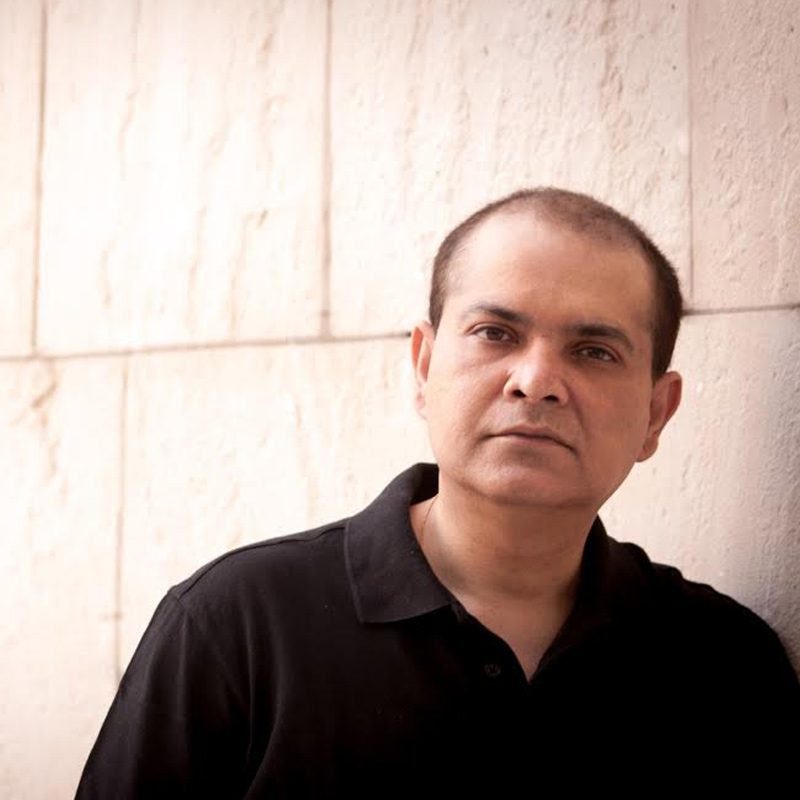
    (Suman Dubey is the author of the best-selling novel ‘The Fixer’ – a thriller based on match-fixing in cricket. He has studied at Cornell University and worked in Silicon Valley. In his 20-year long career, he has experimented with five different career paths across nine industries in 12 global cities. The views expressed in the column are personal and Indiantelevision.com may not subscribe to them.)

  • Prasar Bharati Board crippled as political appointees bid good-bye

    Prasar Bharati Board crippled as political appointees bid good-bye

    NEW DELHI: With the advertisement for filling the posts of member (Finance) and member (Personnel) in the Prasar Bharati Board being given out, the government has commenced the groundwork for shortlisting the names of Prasar Bharati Board members, as four more part-time members have resigned on moral grounds.


    Sources in Prasar Bharati have informed that Prema Cariappa is the latest to put down her papers, while earlier Suman Dubey, Deepa Dixit and R Kesavan who is great-grandson of Rajaji had resigned from their positions.


    There are currently seven vacancies in the Board, since Prasar Bharati is without a chairperson as Mrinal Pande’s term has come to an end, and the posts of both the executive members in-charge of personnel and finance are vacant.


    While no official comment was available, pubcaster sources say that these resignations could be due to the fact that they were political appointees.


    Under the Prasar Bharati Act 1990, the part-time members have a term of six years and therefore cannot be removed before that term is over even if there is a change in government or the governance of Prasar Bharati.


    However, one source said that the members are believed to have resigned as a moral obligation since they were appointees of the previous government.


    It is also learnt that the members were apprehensive of greater interference in the working of the autonomous pubcaster, and the resignations could be termed as a ‘boycott’ or ‘protest’.


    Another source said that the members were also unhappy with the fact that there were crucial delays in not only filling vacancies in the Board, but also the vacancies that had been cleared by the Group of Ministers as crucial to the function of the pubcaster.


    The Prasar Bharati Board comprises its chairman, an executive member (chief executive officer), member (Finance), member (Personnel) and six part-time members.

    That apart, a representative of the Ministry of Information and Broadcasting and the Director General of All India Radio and Doordarshan are its ex-officio members.


    Earlier in April this year, the then Union Cabinet had decided to maintain status quo in Prasar Bharati with regard to recruitment of people up to the age of 62 to allow the public broadcaster to fill key positions that have been lying vacant or are likely.


    Interestingly, a Group of Ministers (GoM) had earlier recommended that the age for these positions be lowered to 55 years and that recommendation has been under the consideration of the government. 


    However, the decision was taken on a proposal by I&B Ministry as the tenure of this government was ending and the implementation of GoM recommendations for lowering the age required an amendment to the Prasar Bharati Act.


    Prasar Bharati CEO Jawhar Sircar had earlier told indiantelevision.com that he was unhappy that no steps had been taken to fill important posts, which he felt should have been filled before they become vacant.

  • Political appointees prefer to bid good-bye to Prasar Bharati following change of government

    Political appointees prefer to bid good-bye to Prasar Bharati following change of government

    NEW DELHI: Even as speculation continues to grow on the spate of resignations from the Board of the Prasar Bharati, it is learnt that one or two more members are expected to put in their papers.


    While no official comment was available with even Prasar Bharati CEO Jawhar Sircar declining to say anything, pubcaster sources said that these resignations could be due to the fact that they were political appointees.


    It is learnt that part-time members Dipa Dixit, Suman Dubey and CR Kesavan have put in their papers.


    Under the Prasar Bharati Act 1990, the part-time members have a term of six years and therefore cannot be removed before that term is over even if there is a change in government or the governance of Prasar Bharati.


    However, one source said that the members are believed to have resigned as a moral obligation since they were appointees of the previous government.


    It is also learnt that the members were apprehensive of greater interference in the working of the autonomous pubcaster, and the resignations could be termed as a ‘boycott’ or ‘protest’.


    Another source said that the members were also unhappy with the fact that there were crucial delays in not only filling vacancies in the Board, but also the vacancies that had been cleared by the Group of Ministers, as crucial to the function of the pubcaster.


    At present, the Prasar Bharati is without a chairperson as Mrinal Pande’s term has come to an end, and the posts of both the Executive Members in-charge of Personnel and Finance.


    Over 1100 persons are believed to have been selected by the selection committees for filling crucial posts, but these are not being cleared by the Government.


    The Prasar Bharati Board comprises its chairman, an executive member (chief executive officer), member (Finance), member (Personnel) and six part-time members.

    That apart, a representative of the Ministry of Information and Broadcasting and the Directors General of All India Radio and Doordarshan are its ex-officio members.