Tag: Suman Baidh

  • Vidnet 2024: Live Sports – The Next Bastion of Growth

    Vidnet 2024: Live Sports – The Next Bastion of Growth

    Mumbai: The OTT business in India is buzzing with new streamers, niche, and language offerings. However, early players are struggling as heavy content spending isn’t matching revenues, and India-specific low pricing hasn’t spurred subscriptions. Growth has plateaued as consumers return to post-COVID normalcy, preferring to binge occasionally.

    Adding to the churn is the shift towards AVOD by giants like JioCinema, offering premium events like cricket for free, with Disney+Hotstar following suit. This has strained streaming bottom lines. The rise of FAST channels is also causing industry jitters. Vidnet explores the future of the streaming ecosystem. This event was held on 19 July 2024, at Hotel Sahara Star, Mumbai

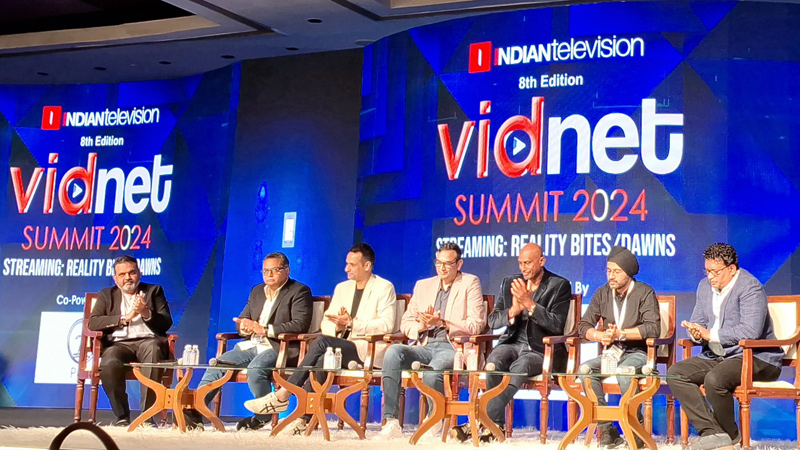
    This panel discussed the imminent growth and development of the live sports industry. It highlighted significant opportunities such as increased viewership, ad revenue, sponsorships, tech advancements, and global expansion. Sports could dominate entertainment further, benefiting stakeholders like sports bodies, broadcasters, advertisers, and tech firms. Factors driving this growth include these opportunities, and businesses can leverage them to boost revenue, engagement, and brand presence.

    The session was chaired by Indiantelevision.com group founder, chairman & editor-in-chief in chief Anil NM Wanvari. It included the following panellists: GroupM India managing director of content, entertainment & sports Vinit Karnik, Star Sports head of ad sales Kingshuk Mitra

    Industry leaders shared their perspectives on the imminent growth and development of the live sports industry and highlighted significant opportunities such as increased viewership, ad revenue, sponsorships, tech advancements, and global expansion.

    GroupM India managing director of content, entertainment & sports Vinit Karnik said,

    “With content fragmentation, aggregating consumers is a major challenge. Live sports, one of the few content types that guarantees a specific audience at a specific time, addresses this by providing appointment viewing. This consistency simplifies advertising planning and ensures a stable viewer base, solving a significant problem in our fragmented ecosystem.”

    Kingshuk Mitra Star Sports Disney Star emphasised, “Sports, especially cricket, is experiencing significant growth, with notable increases in participation from new cohorts and regions, such as South India and tier-2 towns. The rise in engagement from fintech companies and consumer brands underscores the sport’s role in building trust and connecting with audiences. Advertisers are leveraging cricket for its impressive ROI, exemplified by campaigns that highlight grassroots contributions and foster deeper consumer relationships. As technology continues to evolve, it will further drive growth and innovation in the sports sector.”

  • Vidnet 2024: NexC: Distribution that pays off

    Vidnet 2024: NexC: Distribution that pays off

    Mumbai: The OTT business in India is buzzing with new streamers, niche, and language offerings. However, early players are struggling as heavy content spending isn’t matching revenues, and India-specific low pricing hasn’t spurred subscriptions. Growth has plateaued as consumers return to post-COVID normalcy, preferring to binge occasionally.

    Adding to the churn is the shift towards AVOD by giants like JioCinema, offering premium events like cricket for free, with Disney+Hotstar following suit. This has strained streaming bottom lines. The rise of FAST channels is also causing industry jitters. Vidnet explores the future of the streaming ecosystem. The Vidnet 2024 is being held on 19 July 2024, at Hotel Sahara Star, Mumbai.

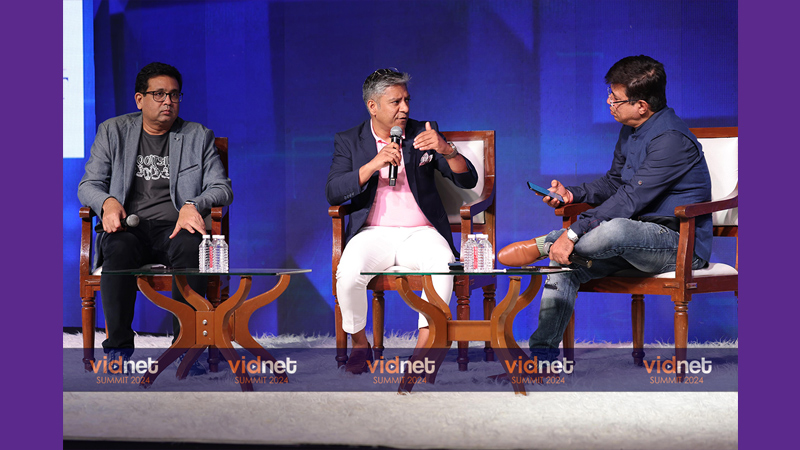
    The fireside chat saw Indiantelevision.com group founder, chairman & editor-in-chief Anil NM Wanvari in conversation with Planetcast COO – digital Venugopal Iyengar.

    The fireside chat delved into the evolving landscape of distribution technology and the challenges faced by Planetcast in its 28-year journey of serving media customers. Venugopal Iyengar highlighted Planetcast’s mission to streamline content creation to delivery, emphasising the integration of software programming and AI in transforming processes and improving cost efficiency.

    “We have been in the business of distribution technology, serving media customers for 28 years,” said Iyengar. “Our goal is to pave the path from content creation to the endpoint where viewers watch it on their screens.”

    Iyengar introduced NexC, a unified platform that simplifies the distribution journey by offering a single access point for all necessary products and services. “NexC gives you a single point ingest and seamless access to all the products and services you need in your distribution journey,” he explained.

    Addressing challenges, Iyengar noted misconceptions about NexC being a monolithic product and concerns over transitioning to cloud solutions. “It’s not a monolith. You can enter through any one product and still be part of the platform,” he clarified. To ease cloud adoption, Planetcast offers hybrid solutions, combining on-prem and cloud services.

    Iyengar also discussed differences between Indian and global markets in cloud adoption and highlighted the significant impact of AI. “AI has been fabulous for us,” he said. “Applications like speech-to-text, text-to-speech, and scene-by-scene tagging are now seamless.”

    In conclusion, Iyengar emphasized the importance of embracing technological advancements to meet customer needs effectively. “We must acknowledge the benefits AI brings and continue to innovate in our approach to content distribution,” he stated.

  • Vidnet 2024: Building affordable sticky binge worthy content

    Vidnet 2024: Building affordable sticky binge worthy content

    Mumbai: The OTT business in India is buzzing with new streamers, niche, and language offerings. However, early players are struggling as heavy content spending isn’t matching revenues, and India-specific low pricing hasn’t spurred subscriptions. Growth has plateaued as consumers return to post-COVID normalcy, preferring to binge occasionally.

    Adding to the churn is the shift towards AVOD by giants like JioCinema, offering premium events like cricket for free, with Disney+Hotstar following suit. This has strained streaming bottom lines. The rise of FAST channels is also causing industry jitters. Vidnet explores the future of the streaming ecosystem. The Vidnet 2024 is being held on 19 July 2024, at Hotel Sahara Star, Mumbai.

    This panel explored creating affordable, binge-worthy content by blending creativity, strategy, and resourcefulness. The discussion focused on crafting engaging, addictive content on a shoestring budget to capture and retain audience attention, leading to binge-watching behavior. Cost-effective content creation strategies and emerging trends were highlighted as key tools for achieving this within budget constraints.

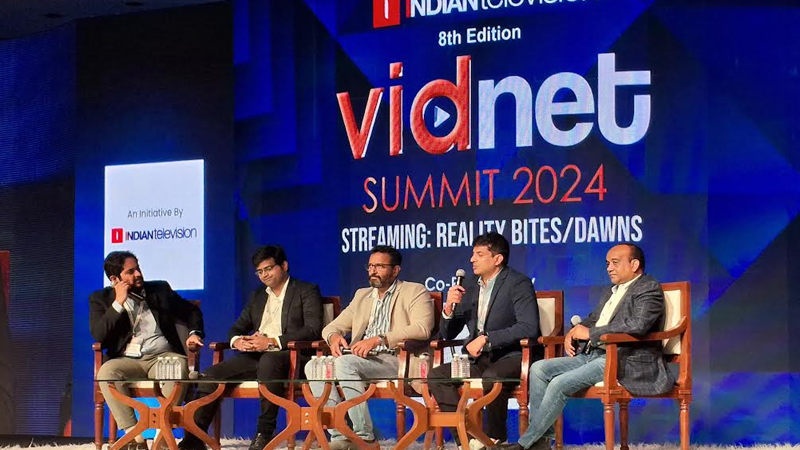
    The session was chaired by Bodhitree CEO Mautik Tolia. It included the following panelists: Red Chillies Entertainment producer Aashish Singh, Locomotive Global Inc co-founder and managing partner Sunder Aaron, Friday Filmworks CEO Devendra Deshpande, Jio Studio head originals Tejkarran Singh Bajaj, and TVF president Vijay Koshy.

    Industry leaders shared their perspectives on balancing budget constraints with the need for engaging and effective content.

    Reflecting on the current challenges in cost management, Rishi Negi said, “The current challenge we face is how to rationalise costs and produce shows within a smaller budget. The key is to get the creators and production team on the same page to create a good show. We believe that the quality of a show is not determined by its budget. At Banijay, we’ve produced some of the most commercial hits from India, as well as niche projects, both with great results. No show is big or small to us. We approach every project with the same dedication, regardless of the budget. This challenge is interesting because, unlike film people who are used to a certain scale, our television background makes it easier for us to scale up or down as needed.”

    Devendra Despande emphasized the importance of return on investment: “As long as a show delivers a return on investment in terms of business metrics, the budget is secondary. Whether it’s a high-budget production or a smaller project, if it delivers results, it works. Audiences will still eagerly await the next season of a show like Game of Thrones, despite its high costs, because it remains affordable and engaging.”

    Highlighting the core principle of engaging content, Aashish Singh said, “Budget isn’t the key factor; the content must engage the audience and keep them invested, whether it’s a series or a film. The formula remains the same: if the content is compelling, it will attract viewers. Affordability is about aligning the budget with the project’s needs, not cutting corners. As long as the content is strong, budget concerns become secondary.”

    Sunder Aaron discussed the flexibility of global studios and cost-effectiveness: “Global studios are now more flexible and responsive than they were a decade ago, which has been beneficial for our formats. While creative passion is crucial, we must also consider the cost of acquiring and retaining viewers. For instance, episodic shows can be more cost-effective for streaming platforms, as they lower the acquisition cost for new viewers and keep them engaged with standalone episodes. Our recent show, produced with Applause Studios and Sameer Nair, and created by Simon Mirren the former showrunner for ‘Criminal Minds,’ exemplifies this approach, highlighting the need for innovative storytelling forms.”

    Addressing the subjective nature of affordability, Tejkarran Singh Bajaj said, “Regardless of whether a show is big or small, it must be effective. Affordability is subjective and depends on the show’s concept and delivery. For example, Geo Studios produced ‘Up 65’ with a lower budget by shooting two seasons together, while a show about 1947 had a higher budget. We focus on ‘right cost’ rather than just affordability, adjusting budgets according to the project’s needs. Innovative budgeting strategies, like combining seasons, help reduce costs while ensuring quality content.”

    Vijay Koshi shared his insights on the importance of storytelling: “13 years ago, a group of engineers and storytellers started with a focus on strong writing and frugality, lacking big stars or international formats. They prioritized good storytelling over glamour and have maintained that ethos even as they gained recognition. Their success with shows like ‘Panchayat’ and others demonstrates that solid storytelling, practical solutions, and a focus on creating compelling content can drive success, regardless of initial resources.”

  • Vidnet 2024: The new content tangle

    Vidnet 2024: The new content tangle

    Mumbai: The OTT business in India is buzzing with new streamers, niche, and language offerings. However, early players are struggling as heavy content spending isn’t matching revenues, and India-specific low pricing hasn’t spurred subscriptions. Growth has plateaued as consumers return to post-COVID normalcy, preferring to binge occasionally.

    Adding to the churn is the shift towards AVOD by giants like JioCinema, offering premium events like cricket for free, with Disney+Hotstar following suit. This has strained streaming bottom lines. The rise of FAST channels is also causing industry jitters. Vidnet explores the future of the streaming ecosystem.  The Vidnet 2024 is being held on 19 July 2024, at Hotel Sahara Star, Mumbai.

    This panel explored the evolving content landscape with constant changes in production and distribution. The new 30-plus episode format on OTT shows (TV++) is seen as a game changer, while premium originals (6-10 episodes) remain popular among urban audiences. Increasing platforms and aggregators are expanding content reach and footprint. Audio content is also making significant strides. How can these strategies be assimilated to create an effective content platform?

    The session was chaired by Boston Consulting Group managing director & partner Akshay Kohli. It included the following panelists: Shemaroo Entertainment COO-digital, Saurav Srivastava, MMTV head of digital & OTT Sathyajith Nair, Klassroom CEO Dhruv Javeri and Chana JOR, V Hunt Digital Media director & CEO Pratap Jain.

    Emphasising the dual nature of content in the global digital landscape, Saurabh Srivastava said, “Good content can be language agnostic and appeal globally, but it also has a soul tied to local culture and nuances. Both will coexist, with some stories resonating universally and others deeply rooted in specific cultural and linguistic contexts.”

    Sathyajith Nair underscored the importance of genuine content that connects with audiences on a personal level and said: “Content should be genuine, focusing on its trueness rather than catering to a specific audience. Our strategy ensures that shows reach a Pan India audience by targeting promotions to individual tastes, as evidenced by a recent show reaching 98 per cent of PIN codes in India.”

    By staying true to the essence of the content, creators can achieve widespread reach and resonance across diverse regions.

    Talking about educational content, Dhruv Javeri shed light on the distinct approach required for academic and extracurricular content. Javeri said, “In education, content creation starts differently. We have two types: academic content, defined by board standards, and extracurricular content. For academics, we write stories from the provided content and visualize them. The focus is on innovative pedagogies to enhance learning, aligned with the new education framework.”

    Highlighting the strategy of creating exclusive content to captivate and retain users, Pratap Jain said, “Creating exclusive content is key to engaging and retaining users, as opposed to relying on content available on multiple platforms. By casting new talents and producing fresh, simple content, we stand out in the market, similar to the appeal of popular YouTube videos.”