
Tag: Sukesh Motwani

  • How to get your story on screen?

    How to get your story on screen?

    MUMBAI: The key to survival in the cut-throat world of television programming is creativity and conviction. At a time when writers and good ones at that, are available nineteen to a dozen, television channels are picky-choosy about the scripts and scriptwriting talent that they hire. In such a scenario, many a scriptwriters with fire in their belly and the desire to be successful are left with no choice but to taken the route of becoming a producer by roping in investors.

    With a focus on how new age writers also have to don the hat of a producer not out of choice but out of compulsion, The Content Hub 2016’s session ‘The Age of Creative Producers’ set the ball rolling by focussing on issues of show-runners, C driving creativity as well as writers and directors turning producers.

    The session was attended by writers, producers, directors and broadcasters alike from the television industry. The session was chaired by Bodhi Tree Multimedia co-owner Sukesh Motwani and the panellists included Neela Telefilms owner Asit Modi, The House of Originals director Nivedita Basu, Sony SAB programming head Saeed Akhtar and Swastik Pictures founder Siddharth Tewary.

    Shedding light on the issue of writers and directors becoming producers, Tewary said, “Writers have no other option than to become producers because many a times, production houses don’t agree to produce their stories. So writers are left with no choice but to manage their funds and produce it on their own.”

    Basu opined, “The concept of writers and directors collaborating with production houses is nothing new. It already existed in the industry. Moreover, the collaboration between writer and production house as well as between the production house and channel has become a key factor.”

    For the smooth shooting for any television show, a ‘show-runner’ is a must. The show-runner is responsible for the show’s creative and financial aspects and also looks after the overall creative authority and management responsibility for television programs. Emphasising the importance of having an able ‘show-runner’ to helm the television show, Basu added, “Nowadays having a good concept is nothing. It’s all about how you build the characters. It is good to have a very experienced person as a show-runner by a channel.”

    Elaborating on the concept of show-runner, Modi opined, “It is important to have somebody who has knowledge about all aspects of creation rather than writing. Thus it is important to have a show-runner who has a better idea, vision and understanding about what the audience wants.”

    Broadcasters play a pivotal role in getting the content out on television and highlighting the criteria that broadcasters look for while choosing a show, Sony SAB programming head Saeed Akhtar opined, “An individual should have a vision on what they are creating. Today, a lot of shows on television are infinite, and thus it is very important to have a vision about the show as for broadcasters, the show is a product, which they need to sell to advertisers as well as the viewers. One should choose the right person internally to drive a particular kind of brand and maintain brand hygiene. If the channel identifies a person who has the capability to drive a particular idea into a good show and everyone’s conviction is on that show, then broadcasters helps in creating an ecosystem so that the essence of the core idea always stays.”
  • The Content Hub: Broadcasters are averse to experimenting with content

    The Content Hub: Broadcasters are averse to experimenting with content

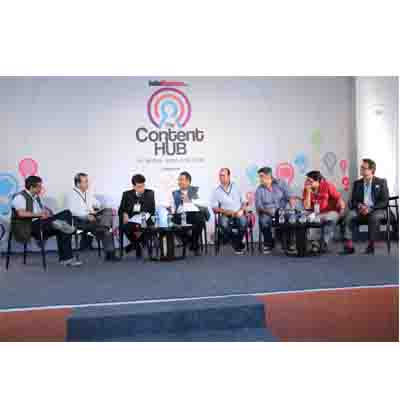
    MUMBAI: The first edition of Indiantelevision.com’s The Content Hub saw a full panel of broadcasters, producers and writers discussing how to change the dynamics of TV content. Moderated by Bodhi Tree Multimedia director Sukesh Motwani, the panel consisted of Doordarshan ADG West Mukesh Sharma, Zee TV business head Pradeep Hejmadi, Cinevistaas producer Siddharth Malhotra, Shashi Sumeet Productions co founder Sumeet H Mittal, Satyamev Jayate director Satyajit Bhatkal, Viacom18 head of content regional network Sanjay Upadhyay and writer Purnendu Shekhar.


    Motwani started off by asking whether the only model of monetising was through having daily soaps with the 23 minute per episode limitation? Upadhyay responded to this saying that some efforts have been made to break away tried to break away. “For instance, Viacom18, we have attempted to do this with our regional shows with one hour shows run twice a week,” he said. “What we found with this is that the audience’s addiction level isn’t as good as a daily because they are so used to dailies. At the same time, economics do play a big role.”


    Motwani further queried if broadcasters could experiment with hour long episodes during weekdays while restricting certain genres to only weekend? Hejmadi  pointed out that it isn’t easy to do dailies, as people generally think. “There is a need for change, yes. But the manner of migrating the audience is also needed. Some people have tried that but even then there is a thought process that broadcasters don’t encourage innovation,” he said.


    On the other hand Malhotra said that when the 9pm-10 pm time band became successful, the economics improved and after that no one even tried to experiment with hour long episodes. Upadhyay clarified that though the broadcaster makes an effort, the pressure on them is heavy. Shekhar lamented that broadcasters are scared of losing loyal audiences by introducing short stories that conclude in four episodes from Monday to Thursday.


    In most shows, the characters drive the shows and shows are scripted accordingly. Hejmadi pointed out that it takes to build characters and promote them amongst viewers to develop stickiness, hence having limited episode shows – like say which run from Monday to Friday does not really work, thanks to the attention deficit among Indian veiwers.  even suggested that producers should comHee with their own research insights that they should show broadcasters.


    Public broadcaster Doordarshan, on the other hand,  tends to look at art, culture and of course  literature for inspiration. Sharma said that this was mainly due to them having a different mandate. “For us the universe isn’t between 7pm to 11pm. We also do events such as every second Sunday is a ‘mothers’ day’ where we bring mothers and daughters to talk about them and this makes good money. But we don’t interfere with producer whether or not a show makes money.”


    As to Motwani’s question of whether there can be different shows for ‘India’ and ‘Bharat’, Upadhyay said, “Honestly, we don’t try hard enough because we don’t have patience. We shift goal posts depending on hits.”


    With a few shows having big names backing them such as Saraswatichandra and Everest, he also went on to say, “The noise that comes out of big shows may amortise costs in a shorter time.”


    While format shows are slowly losing audiences in India, the TV community needs to look at other metrics than simple TVTs and TRPs,  opined Satyemev Jayate director Bhatkal. “We chose the graveyard slot – Sunday morning  – when no one is really watching television to do the show,”he said. “We wanted to reach those viewers who don’t generally watch television, we wanted to encourage appointment viewing. People who would take the trouble  to switch on their sets at that early hour. And we apparently did, if we look at the buzz that SMJ generated online. And this is what sellers of channels also need to do, show the media buyers and planners the  volumes of social media data. In six episodes, we had billions of impressions and we were trending worldwide,” he said.