Tag: Sujit Chakraborty

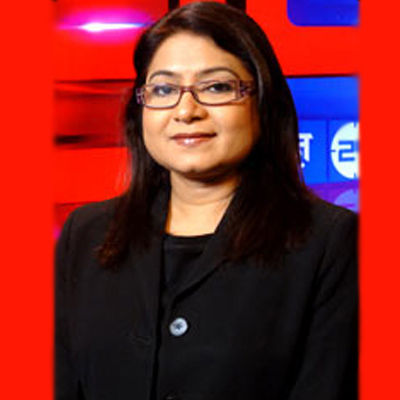
  • ‘The discerning Hindi viewer has moved away to English news channels’ : Anurradha Prasad – B.A.G Films & Media Ltd managing director

    ‘The discerning Hindi viewer has moved away to English news channels’ : Anurradha Prasad – B.A.G Films & Media Ltd managing director

     When she started Bhagwan Allah God Films, a television content production company, many thought she was out of her mind. The company (known better by the acronym B.A.G Films) has moved far above what it had initially stepped out to achieve. Today, it is a full-blown media house and a public limited company, with stakes in content production, TV broadcasting, radio channels and mobile content development.


    In an interview with Sujit Chakraborty, B.A.G Films & Media Ltd managing director Anurradha Prasad talks about the steps the company is taking to emerge as an integrated media company.


    Excerpts:

    Now that you have got FDI (foreign direct investment) clearance, how much does it ease your investment plans?
    We had already raised substantial money earlier for our broadcasting venture. Now what we are getting is Rs 600 million from Fidelity. We are also going in for FCCBs (foreign currency convertible bonds) in two tranches.

    With the funding in place, what are your launch plans?
    We are launching E24 in the first week of March. It is not a GEC (general entertainment channel). It has snacky entertainment content – like glamour, lifestyle, Bollywood. We shall not have fiction and soaps. No saas bahus for us, though my content division is doing saas bahus for others (laughs). Moreover, there are already three new GECs and others coming in. My TG is different even within the entertainment genre.


    Our next launch will be Bliss24, a wellness channel, after 4-5 months. Life24, the fourth channel, will come up after a similar time lag, and we are firming up the content for that.


    Once we are over with the channel launches, we will look at the film production business more seriously as it is an area of expansion.

    What has been the progress of the Hindi news channel which was launched over a month back?
    As far as market position goes, News24 is behind NDTV India but we have a long way to go. We have to sort out distribution problems and go far beyond the channel’s 19 per cent reach. As connectivity grows, we will also grow.


    The encouraging thing, though, is that audience stickiness to the channel is high when big news like the Narendra Modi (Gujarat chief minister ) issue breaks. Our stickiness has been as high as the top three Hindi news channels. This strengthens our belief that credibility is valued. Even as one realises that we are operating in a cluttered market, we are also convinced that our stance towards news coverage pays. Otherwise, the credibility of Hindi TV news has eroded.

    Trends show that you might get lower ratings than the rival news channels that have a preponderance of sex, violence and the supernatural. Would you say people in the Hindi belt prefer nonsense to news?
    That is a misnomer. The discerning Hindi viewer has moved away to English news channels. There is definite demand for proper news in Hindi.

    The government has a problem with repetitive shots of violence and abuse – the mainstay of Hindi news. Are you doing the same?
    No we are not. But if it is news, it will be on my channel. Two years back, you could not have thought of one Indian Test win in a series getting an eight-column banner headline in newspapers. But this is happening. So the way people are viewing news is changing. It is a young, vibrant India, and if we do not reinvent at every stage, we shall be out. But it is not that people want only bhoot-pret and sex. If that is so, why should NDTV, CNN IBN or IBN 7 work? And they are working.

    There has been a demand that such channels be termed ‘tabloid channels’ and not news channels. But if people want to see these things, they will. Does any change in definition make any difference?
    Let them. It is for the government to decide what goes on air – whether people are becoming more superstitious or not. I am saying that I shall not go for that kind of news content. Besides, there is a span of time that certain things sell. The same old thing does not last long. Proper news has lasted and will last.

    You created the Hindi news crime show Sansani but are now doing away with sensationalism in your own news channel?
    People have missed the point about Sansani, as it was much more than a show where people with problems would come to us rather than go to a police station. It was a socially important show. We stopped doing Sansani last July because we were coming up with our own news channel.

    Are you planning something on those lines for News24?
    We are going to do something. Crime against women is a big issue for me. We are working on that, after launching the campus programme in which students from across the country report for us.

    Good method of increasing penetration?
    Yes, of course. It works very well.

    Which economic or social segments does your news channel target?
    A and B category viewers. But as I see it, the real problem is with the ratings system. The economic definitions of A and B are not correct. If the criterion is the ownership of a fridge and a TV, then in the last five years a whole lot of lower strata people have moved up in economic terms but not in cultural terms. The system by which weightage is given is flawed. Some channels are taking advantage of that because it is their business model. As a strategist, I would rather trace out the need gap, which I have, and put things that way.


    Ultimately as a content person, I must do what I believe is the need and that has to be based on scientific studies. My analysis shows that news was losing credibility. Secondly, a whole lot of channels were not reinventing themselves. There was a strong need for a young, vibrant and credible brand… that’s why News24.

    There is a concern that with tabloid news channels getting more TRPs, advertisers might swing their way. Does that worry you?
    Going forward, it can’t be like that. Any good advertiser will check out whether he is reaching only the masses, or hitting the target consumer or not. As an advertiser, I would be asking my media buying department, Boss, jismey dalaa hai uska return kya hai? (what is the return from the channel where you have placed my ad)? Right now, the returns are all hedged because they are all enmeshed in the whole issue of TRP and GRP.

    E24 shall not have fiction and soaps. No saas bahus for us, though my content division is doing saas bahus for other channels
    In the FM radio business, you were talking of leading a consortium of smaller operators. Since that has not taken place, how has it affected your revenue flows?
    Our revenues are not affected as it was not based on consortium selling. Besides, we now have a network to sell across TV channels and radio.

    Does it make better business sense going to the smaller towns?
    Definitely, because that is where new buying power is coming from. We are now in places like Hissar, Karnal and Patiala, and these stations can be looped. We have still to launch in Simla, Jalgaon and Jabalpur out of the 10 FM stations we have won the bid for.

    Don’t you think metros offer bigger opportunities?
    Metros will be there, but they are saturated markets. The psyche is different in the smaller towns and the push is happening from there. We are not afraid of competing in the bigger cities. But we saw the saturation coming, so it was a conscious business decision to go the small-town way. This will give us better penetration and better revenues.

    How are you differentiating your content from the others?
    Firstly, in most of these cities, we have the first mover advantage. Then interactivity is a huge thing for those towns, and we have fully interactive studios. Besides, we are a content company from the beginning and our content is different. The songs may be the same, but in our case interactivity is huge. And we are geared towards the youth.

    But isn’t every radio operator doing that?
    Yes, I am sure they are, but in these small B and C class cities, the youth is massively aspirational.

    What are the regulatory issues that concern radio operators?
    The government has opened up radio licences but not done those other things that need to make radio a successful industry. They are not allowing news. They have irrationally capped the FDI in radio at 20 per cent. These are crucial issues. In advertising and films, you have 100 per cent FDI.

    When you first forayed into the Film City and started your venture, a lot of newspaper circuit people said it was crazy to shift to media production. So, what was the idea then?
    I did not change. I was just working for someone else. A newsperson in the television arena, I decided to do it for myself instead of doing it for others. I was just quitting the Observer Channel. True, since there was hardly anyone else there, people might have thought “she is crazy.” Television business was not like what it is today. But by the time I started in 1994, Zee TV had launched, and satellite TV had come in. So I could see that things were changing. I felt that if one has to learn about it, why not do so by being with oneself?

    What would you say were some of the landmarks in that phase?
    Every show had been a landmark in its own genre, whether it was Zaikay Ka Safar which was a food and travel show that went on for eight years, or Chitrahaar, in which we radically changed the format and many others. They all were landmarks.

    What, according to you, had been the most important step from the government to boost the industry over the years?
    Actually the best thing is that the government did not do anything for a long time, which ensured that we grow on our own. But the government ought to have done something on the distribution area in the initial stages. Of course, now they have started doing certain things.

    You mean Cas (conditional access system) as one of them?
    Cas is one, and then there are various DTH (direct-to-home) players coming in. But there seems to be no desire to push digitisation forward in a big way.
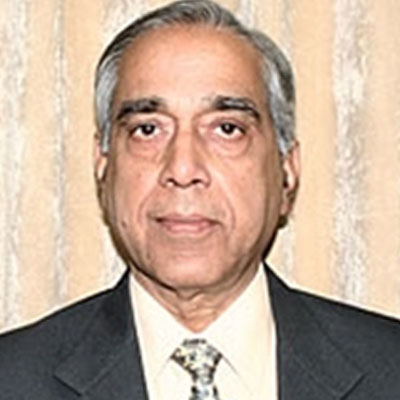
  • ‘Cas is here to stay’ : Nripendra Misra – Trai chairperson

    ‘Cas is here to stay’ : Nripendra Misra – Trai chairperson

    Nripendra Misra is a suave IAS officer with a reputation of being completely above board, and perhaps lacking the ‘guile‘ that puts many others in the topmost slots of the bureaucracy, fellow officials say of him in a positive sense. After the first initial setback for Conditional Access System in 2003, it was during Misra‘s tenure that Cas was enforced in parts of Mumbai, Kolkata and Delhi. And it was war… MSOs had to be readied, LCOs trained to shift to higher technology, broadcasters‘ resistance to be broken down by assuaging their fears and yet, the court order had to be implemented within the deadline: 31 December 2006.

    It could not have been a pleasant task. Amidst all this, Misra and his dedicated but small team is going about handling one of the noisiest of industries in the country, issuing consultation papers, and ushering in new technologies.

    Misra took his stand on various contentious issues during an interview with indiantelevision.com‘s Sujit Chakraborty.

    Excerpts:

    It has been nine months since Cas was implemented in parts of Kolkata, Mumbai and Delhi, after Chennai was brought under Cas. Towards the beginning there were uncertainties, and some people even opposed Cas. So today, what is your assessment of Cas? Is it a success or a failure in numerical terms?
    Well, we never had a target in terms of penetration percentages. It was left to the subscriber who wanted to opt for choice, whether he wanted pay channels or FTAs and which are the ones he wanted. The latest numbers tell me that about six lakh (600,000) homes have opted for Cas in the mandated areas.

    That is out of a universe of around 1.6 million cable homes…?
    Yes, so that is about 30 per cent of subscribers. Then you have also a similar facility in DTH, which has also been accepted by many. In Kolkata particularly, the response has been poor because most of the popular channels are FTAs. So if the criterion is in terms of numbers, I think it has been a very satisfactory performance.

    But it is not the number that is important. Unfortunately, we are always missing the true substance when attempting to evaluate Cas.

    What is it we are trying to do? We are trying to set up a mode of digital transmission, which is more efficient and more accommodative. It is the global practice. Analogue is gradually getting out of the scene, and so we have to make a beginning. That was made into a kind of a pilot in these four areas.

    Today you have a choice, you have DTH and you have Cas. Tomorrow you may have HITS… which is another option. You have voluntary Cas. So a beginning has been made, a seed has been sown, which must someday fructify in terms of an all India feature. Success has to be measured in terms of whether it is a trendsetter or not, and not in terms of how many people have opted for it or not.

    So would you say that the target of becoming a trendsetter has been achieved?
    Oh yes! It is perhaps a watershed in that in the broadcasting industry, digital transmission has begun.

    But one main area that remains disturbing is the quality of service, which in many parts of the mandatory Cas zones remains highly dissatisfactory. Lots people are not getting the channels they have opted and paid for.
    Firstly, I do not want to defend the quality of service, and there are problems of channels being discontinued. But it is not just at the level of local cable operator. I think somewhere down the line, the MSO also has to take his role seriously. Unlike in non-Cas areas, the role of the broadcaster and MSO in implementing Cas is far more important than that of the LCO. So, if these things have happened, they have happened because of the inadequacy of the functioning of MSOs.

    When it started in January, we wanted to take a very liberal view. We did not want to enforce all the regulatory provisions in the first four or five months. They wanted time so that the consumer preference could be registered, and we gave them enough time. The subscriber register that has to be maintained was not complete to the extent we wanted. Therefore billing got delayed, payments also got delayed… subscribers have also not made payments. But we have made it clear that come 1st of July, we are not going to forgive anyone.

    But how do you enforce this, as it has clearly not happened in many places till now?
    There are three ways of how to enforce this. First is the awareness of the consumer. There is a quality of service regulation in the Cas area which is operational. Therefore the subscribers must reach to and judge the performance of the MSOs and cable operators. There are great details in the regulation about the kind of rebate that has to be given if the channels are not coming, or how much time it should take which kind of interruption, what should be the response time for the MSOs… these are all standardised and fixed.

    Broadcasters have been cooperative in rolling out Cas, despite serious reservations about the Rs 5 channel price

    But that brings us to a moot point…. The consumer is not truly aware and also does not seem to care about implementing his rights?
    It takes time…

    So you are saying that MSOs are primarily responsible for QoS, so where have they failed? Because there are lots of complaints about failure across the board.
    The MSOs initially were perhaps not ready with the level of demand. That has settled down, STBs have been imported and they are in plenty today. The second stage was to get the reference of the subscribers. Now, I know and it is correct to say that the MSO representatives have gone to the homes four or five times, asking the subscribers to fill up the forms. But the gentleman says, you have come at the wrong time, that he will have to consult his family.

    But gradually, that too has ceased to be a problem. Ninety percent of the subscriber registers have been completed and the choice is now there. Now the stage is where the subscribers must know what their right is. That is, the manual of practice of the MSOs must be made available to the subscribers. That manual of practice in most of the cases is not available. The contractual conveyance, that we have between us signed a contract, and this is our right, that message is still not being passed on, which is reflecting in the lack of awareness.

    Broadcasters have been extremely cooperative in rolling out Cas, despite serious reservations about the RS 5 channel price, and all the Reference Interconnect Offers are in place.

    So what have you told the MSOs about this?
    We have conveyed to them that look, we shall view very seriously if there are defaults. We have written to the state governments, because they are the enforcement machinery.

    So what is holding back the extension of Cas in the three metros?
    The Central government wanted us to report back on this, we have sent that report, we have said it will take six to eight months‘ time to implement after notification of the extension. But then the state governments said that it is better to evaluate before extending Cas. We on our own without waiting for such instructions have engaged some outside agency to advice us on the level of implementation.

    Has that audit been completed?
    It will take another two months, we are expecting the reports by the end of October or beginning of November.

    So it will further delay Cas extension by that much time?
    Well this has nothing to do with Cas extension, this is something we are doing independently, and as far as the government goes, they can extend Cas, and we have just said that it would take six months from the day of notification to implement the extension. It is for the government to take a view when they wish to notify.

    Resistance to Cas had been from the broadcasters, but even from the grassroots level, due to privileges of piracy and under declaration, there had been resistance from the cable operators as well, so have the realised that this is the business model of the future?
    I think they have realised this more than anybody else. Today there is demand from many, many parts of India that they be given the permission for implementing voluntary Cas.
    Like Ortel and Sristi in Orissa and West Bengal?
    Ortel is one, then Pune is another, and there is demand from Bangalore, Mumbai and many other places. Some have in fact gone ahead with the implementation of voluntary Cas. So what the LCOs know very well is that the competition from DTH is very strong. The LCOs thus know that of they have to remain in the industry, two or three things are required.

    First, investment is required, which is not come if the industry is so disorganised as it is today. Second, they know that there has to be some regulatory provisions to give stability, which will ensure certain amicable relations between them the broadcasters and the MSOs. So to answer your question as to why they are not implementing voluntary Cas, perhaps for that some regulatory initiative is required.

    Now, for that the expert committee had been set up, and it has suggested that voluntary Cas be rolled out in 55 cities and towns. But they have also said that you have got to have a regulatory regime for at least one year. Even for voluntary Cas, certain things are important, like Standard Interconnection Offer, what should be the connectivity, what should be the revenue sharing formula. So these are the issues we are looking at, and we are going to put up the paper on voluntary Cas.

    “Fixing of channel pricing in non-Cas is a challenge, but we shall come out with something that meets the expectations of both the high and low income groups”

    When is that likely?
    Oh any day, we are working on HITS and next is the paper on voluntary Cas.
    The consultancy paper on HITS is already out?
    Yes, but we have to now recommend the terms and conditions of licensing provisions to the ministry of Information & Broadcasting. Even the voluntary Cas paper is also in the pubic domain, and so we have to now concretise our views. And then specifics like what are the regulatory issues, what are the areas in which facilitation is required… perhaps some technical training is required, and the go ahead.
    But voluntary Cas would mean that channel prices will be dictated by the broadcasters and subscribers may suffer?
    Let‘s see. Voluntary Cas does not mean it cannot be regulated, and as such I do not have any views on the subject now.
    It follows that even in voluntary Cas you could regulate prices?
    If it requires so in the case of DTH I can regulate prices. In fact, there has been some judicial expectations on this, when TDSAT in one of its judgments asked that if channel price is regulated in Cas, why it is not there in DTH? We had our reasons, it is an infant industry, we wanted DTH to grow.
    But then Cas is also an infant system?
    The difference is that DTH is a new initiative, and I am of the view that there should be minimal regulation. Cas was a shift from the old cable industry.
    The cable industry has been insisting on a level playing field and they are pointing out to the IPTV and DTH consultation papers as proof that Trai is not creating that level playing field. And in Trai‘s own meetings on Cas in Kolkata and other places, LCOs and MSOs have accuse Trai of siding with broadcasters?
    There was never such an accusation. You may have been told so, but never, never has a single cable operator said that Trai is favouring broadcasters. It is all a matter of which platform you are utilising. You fix the price at RS 5, and someone will say, it is against broadcasters. If you do not do that, they will say you are favouring the broadcasters. There is a bogey being raised that in many of the countries channel prices are fixed. The truth of the matter is channel prices have not been fixed in a majority of the countries. And majority means, more than 90 per cent of the countries.
    So there, prices have panned out according to market pull and push?
    Of course.
    So how much time do you think we will need for market forces to create prices that are compatible with the pockets of the average consumer, who are the vast majority, that is, when would deregulation start and prices shape up as per market forces?
    It is already there, because in non-Cas it is already there according to the market forces. I haven‘t regulated prices there. The prices have been fixed by the cable operators and the subscribers. In 2004 when there was such a noise, there was an order on freezing the prices. You know that order was an interim measure. The ideal situation, which is there in our consultation paper, is it should go to forbearance. And I think that the day is not very far. The moment there is healthy competition and prices should be put on forbearance.

    There is the issue of price freeze versus price cap?
    That I won‘t answer because we have not issued the regulation on that so far.

    It is important for the cable industry to grow and I am not a great votary for centralised economic activity, or vertical integration, so franchise should be the mode.

    Is it in the offing?
    Yes, the next thing for the non-Cas areas.
    In recent meetings the ministry of broadcasting has said that content control in IPTV is not in their domain because that platform is under the ministry of telecom. Despite that Trai has said that it is I&B which should control content in IPTV, so do you think you have usurped some of the government‘s prerogatives?
    No, not all. It is a viewpoint. I can‘t say anything on content regulation, who will or who will not do. It is not within my powers. It is simply this, that we are of the view that the control of all content of all broadcasting and on all technological platform is best done by the broadcasting ministry. It is just a view point.
    So what are the forthcoming issues in the cable or rather the video-related industry?
    Well after introducing digitisation in non-Cas, there will be the issue of pricing. Then the other issue will be also of the structure of the cable operators. Can we contribute to their organisational strength? This comes from the understanding that there is the issue of investment, because we know there is an opportunity.
    But that investment with such small players would not be possible, so what does one do to ensure investment?
    In some manner it has to be there. Whether in the franchise mode, or through takeovers, or vertical integration. But I think that in countries such as India, perhaps there will be a role for everybody. I am not a great votary for a centralised form of economic activity. So it is better that we perhaps have a relationship in which franchise is the mode and there is mutually shared revenue principles.
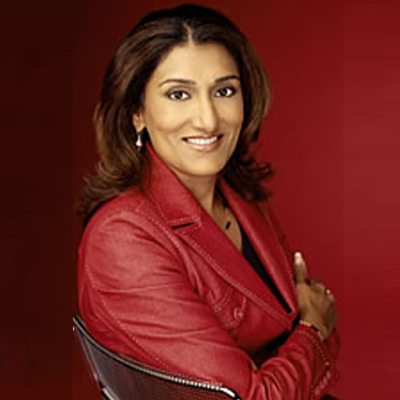
  • ‘CNN is an American-owned news channel, but we are not America-centric’ : Rena Golden – CNN International senior vice president

    ‘CNN is an American-owned news channel, but we are not America-centric’ : Rena Golden – CNN International senior vice president

    A little girl from a small town in Bihar who migrated from India to the US when she was just six years old, Rena Golden is today at the very top rung of the hierarchy at global news major CNN International. As senior vice president, she visited India this week to announce the latest edition of “Eye on India”, focussed this time on the youth power of the country.

    Credited by her colleagues with amazing skills, journalistic and managerial, driving the world’s largest news broadcasting company CNN from just an all-American channel (“I joined 21 years ago when people used to call CNN Chicken Noodle News!”), to an international one reaching 2 billion viewers across 200 countries, she still retains a disarming level of simplicity.

    It is perhaps natural that an American of Indian origin would also be the head of CNN’s Diversity Committee, ensuring that community parity is maintained not just within the organisation but also in the dissemination of news.

    Golden, who studied in two universities in North Carolina, graduating in English with Honours (“My father wanted me to be a doctor, but I wanted to study English”) and started working with CNN from 1985, spoke to Indiantelevision.com’s Sujit Chakraborty on the present status and future plans of CNN.

    Excerpts:

    You have a large hand in shaping the strategic direction of CNN. What is the most significant area you are looking into at the moment?
    I think it is expansion of news beyond the television sphere. We are on the Internet, mobile phones… I think what CNN is interested in becoming is your news source, on whatever platform it may be… your phone, your Blackberry… We want to become your news information source and travel with you, wherever you are.

    CNN’s news website is a tremendous success which attracts a billion users every year. And CNN International has just launched its news service on mobile phone. We are also looking at video on demand and IPTV… we want to be platform agnostic.

    How is IPTV doing in America… there is content available on that platform here in India as well, but the problem is we do not have downloading technology or bandwidth?
    I think even now in the US market the bandwidth is still not there, but the market is growing in South Korea, in Hong Kong and in some of the Nordic countries in Europe, where we can stream the CNN news channel completely on mobile phones. We are still not there on that platform in the US, but I think the important thing is to have your foot in all the areas. CNN is known for that and one of the areas we are looking at is (improving) technology in news gathering.

    That is my second question, in fact. You also deal with the technology of news gathering?
    Yes, for instance, earlier, when we would go for coverage, say in India or the war in Iraq, we would have to travel with 30 suitcases of equipment. Now, thanks to CNN working with Sony, with Panasonic, and other organisations, we have cameras that fit in a suitcase, which you can take as your carry-on luggage.

    When we went to North Korea, we could move in easily and cover news in a much easier manner, which is often cheaper.

    What are the latest innovations and what are the next technological frontiers in news gathering and dissemination?
    Things are getting smaller and smaller… we are looking at shooting footage on a mobile phone. Only last week, we used a Nokia mobile phone and went “live” on CNN. You don’t have to book satellite space. You can just dial into the CNN offices in Hong Kong or Atlanta, and stream news live, so technology is getting smaller and mobile.

    CNN has more than once made public its ambitions to go regional and local. But at least in the context of the Indian subcontinent it has not happened. And now with the explosion in television news in the country, it looks like it never will. I can see your CNNj in Japan, then Turkish and Korean CNN, so why not in India?
    OK, what we have done in India goes beyond what we have done in some of the other regions. We have partnered with IBN and additionally, we have CNN International which covers India not just for Indians but for the rest of the world. Our partnership with CNN-IBN is less than a year old but it has emerged as the number one news channel in this country. That partnership is as strong as what we have in some other regions, say in Turkey where we have tied up with a media channel that broadcasts CNN in Turkish.

    I think there are different models for different markets and the model that we have for the Indian market… Wow! I mean we couldn’t have imagined this. There could be a partnership with some Hindi channel… I am not ruling that out, but what we need is as strong a partner as we have in CNN-IBN.

    We do not have anything to announce here (in terms of a regional channel) so far. We believe in having local partners and we would not do that in India and open a Hindi channel for instance, without a strong local partner. Local partners understand the country much better… So what you see, this partnership with CNN-IBN, is one of our proudest achievements.

    Chris Cramer had told us last year that BBC has a certain Mark Tully factor advantage in India. For the first time though, now both CNN and BBC can be said to running neck-and-neck. It’s been a long while coming but don’t you think it has come too late in the day because of the way Indian news channels have captured virtually all the mind space?
    Sixty years… not just Mark Tully… I think it is a huge association.

    I think also right from the days when we were ruled by the British there was some association, so what do you feel you are looking at here to change that?
    This is the only market where BBC leads the CNN. I think you just put your finger on that. India has a long historic association with Britain and BBC, especially BBC radio, which was here decades before CNN even came to the market. I respect the BBC, no doubt about that.

    But where CNN excels is in breaking news… that’s our DNA, the DNA of CNN-IBN. We also don’t have a British style of presentation, a British view of the world. We have journalists from 50 different nationalities covering news for us. Don’t get me wrong, I have a lot of respect for BBC, but I think CNN has very successfully differentiated itself.

    Unlike a few years ago, when even a major train accident here would not be covered on BBC or CNN, there is a lot of India on these channels now. But I also feel that there are documentaries that need to be made on India. What are the kinds of documentaries you think CNN ought to do on India in the near future? Do you have a kind of road map for that?
    I am glad you brought up that question. CNN has a documentary division, and one recent documentary was on Britain’s Muslim population. We also have a couple of them from Iraq and from Africa, etc. We are also doing documentaries with foreign filmmakers. We have partnered with a filmmaker from Sierra Leon who has done five or six films on the major issues of Africa. That gives us the opportunity to get into some of the under-reported stories of the world. So we are looking at filmmakers to partner with for making documentaries.

    But having said that, the important thing to remember is that we are not a documentary organisation, not a documentary channel. Our first and foremost work is 24-hour news. We believe in context, not only what’s happened but why it has happened.

    Everyone knows now India is changing, especially in the economic and knowledge sectors. What are the specific areas of change that excite you the most and why?
    I think it is the influence that Indians are now having in the diaspora… and not just the diaspora, because many Indians are also coming back home. India’s influence outside India is a story that really excites me.

    In the US, Indians are doing a lot of things. There are Indians heading technology companies, there are a couple of Indian filmmakers in Hollywood, and of course there are those in medicine and engineering. But one area where Indians are not there in the US is politics, which I think is important for us.

    The other thing, which is the topic of this edition of Eye on India, is the Indian youth. There is no other country in the world where 50 per cent of the population in under the age of 25.

    In the early days of the Iraq war, the media was not as critical as it should have been and a lot of American society regrets that

    Looking at the global picture, is there a region-wise break-up of how it all reports back to Atlanta? How does it work?
    Well, we have an Asian production hub in Hong Kong and a hub in Europe and the headquarters is in Atlanta, but we as an organisation are very decentralised. In India, we have 15 people in the bureau, but we cover India primarily by people who have been journalists in India. It is not just Atlanta dictating what stories are to be done, it’s journalists here saying that ‘these are the stories on the front pages of the newspapers today. We think these are the stories that need to be told about India’. It is people who are working in this country, living, breathing India that drives our India coverage (and likewise, across the globe). That is what makes CNN so unique.

    And speaking of regions, can you offer how revenues stack up in percentage terms?
    Our revenue increase over last year is 22 per cent. Which is very good, very, very strong growth.

    A lot has changed in the last 5-7 years. A global news perspective is not solely in the hands of the likes of the CNN and BBC anymore. The impact of Al Jazeera has been well documented. Now the French have also launched their own global news channel. How is CNN changing to meet the challenges of a world view that is no more ruled from a western Anglo-Saxon perspective?
    Let me put this clearly. CNN International is American owned, and we are proud of our American ownership, but CNN International is not America-centric. It would be crazy for us to be broadcasting internationally but from an American perspective. From the business point of view, that would be ridiculous.

    But I think competition always makes us stronger, because competition means we have to be always ahead. We welcome competition. We have been there for 25 years and there is vast acceptance, because CNN’s journalism is top notch. And we feel there is enough room for others as well.

    And we have been talking about ethics and so forth, so what are the checks and balances that are in place to make sure that stories are fair and accurate?
    First of all, we have the standard-practice guidebook, which, of course, all news organisations have, which all CNN journalists have to abide by. Obviously, the journalist reporting knows the story best, but that story is vetted by many people. Along the way there are many different people who touch that story and fact-check it before it actually goes on air. We are much more interested in getting a story right than getting it ‘first’. We are the Breaking News leader, but we would not be that if our objectivity failed.

    Yes, but say you hire me from India and I, for that matter no one, can be totally objective… maybe I am slightly with the BJP or the Congress or whatever, so a tinge of bias creeps in. So how do you correct that? At the desk level?
    Yes, there is always the issue of being subjective, but there are things like hard facts that cannot be changed. That is why we lay so much emphasis on attribution. If you watch the news channel you will sometimes find that one person has been quoted but the other one has not been… this happens sometimes even if the journalist wants to be objective. It’s in their DNA, but it happens, so we tell them, ‘Hey, that guy’s quotes are not there, so go get it’.

    There have been occasions when a story has been held back for a week to make sure that all the players have got the chance to comment. I can’t tell you how much CNN lives and dies by its credibility factor.

    We’ll pick up on a touchy issue, with American media in particular – “embedded” journalism. Isn’t the way the whole Iraq story has developed a severe indictment on the way the media reported on it from the very beginning? What’s the point of the truth coming out now, when all that is left is death and destruction?
    Well, I think the media had not been as critical as it should have been in the early days (of the Iraq war). Not only the media, there are many politicians and different segments of American society that regrets not having been more critical (at the outset). I think that a lot has changed.

    Because and after the massive Iraq fiasco?
    Because of the war in Iraq and other reasons, because of the political season in general, but I do think that a lot of that has changed. I do think the media has got a lot proper.

    Veering off from your day job, as it were, you are on the advisory board of the Atlanta Woman magazine. Tell us something about the magazine and your area of interest in this.
    I am no longer on the board, but this is a local magazine from Atlanta focussing on the businesswomen. I think as a person involved with international news, I am always interested in what’s happening outside my world. And as a mother, as a wife and as a citizen of Atlanta, Georgia, I also have my responsibility of giving something back to my community.

    As the head of the CNN committee on diversity, what are the crucial diversity issues you face and how do you resolve them?
    The diversity issue we face overall is to maintain the diversity of coverage, to be sensitive to diverse cultures. With American, Latin American, African, or Indian people, all working together in the newsroom, it can be tremendously exciting but there is a lot of opportunity of misunderstanding. And what we encourage is a very open communication in our newsrooms, where people can talk to each other honestly, without feeling they are being attacked. But it’s really difficult to work with such diversity of cultures. It’s a tough challenge.

    Sure, but the question is, how do you resolve that?
    We resolve that by getting people to get together and discuss issues together. And we also give people opportunity to take their issues up without putting their names. If somebody wants to talk to me about a report that he or she feels has been unfair to a particular group of people, they can send me an unsigned note.

    We also hold functions where I may not be there but my managers are there. Transparency is the most important thing.

    You are in charge of talent scouting too. What do you think of the talent pool in India in your line of work and how do you plan tapping that pool?
    Well, I’ll tell you what kind of talent we are looking at. There is a lot of talent here. For CNN International, the presenter has to be a really strong journalist, people who know how to write, and more importantly, people who can speak extempore without a script. There are times, during Breaking News stories, when people have to work for four hours at a stretch in front of the camera without a script. These are people who have to have a fairly strong recall, they have to know the history, the culture, and feel confident enough to express themselves without the written script.

    There are people who differ with me and say, ‘No, an anchor is very different from a reporter. They have to look good, have a good voice, look polished all the time… and it’s the reporter who has to be out there and do the story. No. I can’t afford to do that in CNN International.

    Our anchors are the ones who are on the field as much as possible. Because to my mind, there is no difference between an anchor and a reporter. In the case of Lebanon issue last year, for example, I had three or four anchors going from Atlanta reporting alongside CNN reporters.

  • ‘B’cast pros will benefit from tec choices at Expo’ : AS Guin – Engineer-in-chief at AIR and president, BES

    ‘B’cast pros will benefit from tec choices at Expo’ : AS Guin – Engineer-in-chief at AIR and president, BES

    The NGO Broadcast Engineers Society is holding its 13th Expo this year from February 1 to February 3 at Delhi’s Pragati Maidan. It is a much larger exposition this year, and with the government setting the cut-off date for digitalisation, will showcase technology options. Possibly the most socially significant technology presented will be the low-band community radio system, supported by Unesco.


    Indiantelevision.com’s Sujit Chakraborty met AS Guin, engineer-in-chief at AIR and president, BES, to find out what’s on offer this year.


    Excerpts:

    The BES Expo is just a few days away. What are the new things expected this year?

    There are many changes in respect to last year. The participation has grown manifold and instead of the earlier venue of Hotel Taj Palace, as in 2006, this year we have to shift to a much larger arena, the Pragati Maidan, which gives us 20 per cent additional space.

    In terms of revenue, what is BES’ business model?

    Here too, there will be a 20 per cent rise in receipts. There will be 16 new companies who will take part for the first time. BES depends mainly on revenue from the exhibitions and membership. We have 1,600 members across the country, and we expect the number to grow further next year. We have to cut some of the costs, but then we also plan to start an educational programme, which will be no-loss, no-profit.

    What are the major technological windows that you wish to open this time?

    The biggest is of course the community radio solutions and mobile TV and radio. These would be most important in terms of both business and community service, with local NGOs being able to broadcast on their own radio, with all the support of AIR experts. Even our retired engineering staff is willing to offer their services free to persons willing to set up local channels.


    As I told you, we have 1,600 members across the country and they give us a tremendous outreach to help spread the low-band community radio movement. We are very excited about this programme, which will be a prime exhibit this year.

    Who all are supporting this event?

    The event is supported by the Ministry of Information and Broadcasting , Government of India, and endorsed by International Association of Broadcasting Manufacturers and also by Prasar Bharati, Asian Broadcasting Union, UNESCO, IGNOU and Department of Information Technology, Government of India.


    UNESCO is going to showcase its low-cost technological innovations and is with us at BES EXPO 2007, and will push forward the community radio programme. They are going to present suitcase radio, hand-wound sets (which need no battery or electricity to run) solar-powered FM transmitters, and other radio equipment compatible with Indian conditions.


    They will also set up in their stall a community multi-media centre, including radio, internet, and content networking programme, with live content programming.

    Many private sportscasters have announced their mobile programmes and one is running already, but these show snaps only. So how is your system going to be different?

    No, ours will be a full streaming. This will not be clips. In fact, this will completely shift prime time to office time, with people seeing DD or hearing AIR news and programmes on their way to office. These will not be clips, but as you see or hear news.

    New technology will always remain in the public domain, because of the sheer scale of operational costs, which the private sector would find very difficult to match

    Is this Prasar Bharati’s own technology?

    There is technology available in Europe and the US. The latter is using the MediaFlo. technology and Europe is using DVB-H. MediaFlo is a proprietary system, while DVB-H is an open system. An expert committee constituted by the Ministry of Information and Broadcasting has recommended DVB-H .With Secretary level approval a final decision is still awaited.

    What are the technical and operational differences in the two?

    DVB-H is IP-based and an open platform, where as MediaFlo has proprietary elements MediaFlo has less channel switching time than DVB-H. Both employ battery-saving techniques. They have different encoding and modulation schemes.

    What is the delay, and how long would it take?

    The proposal has been sent to the Planning Commission, which will study it and will have to sanction money. This could take eight to 10 months.

    What will be the outcome of the event?

    Broadcast professionals will be highly benefited in enhancing their knowledge about emerging broadcast technologies and also have a look and feel of new broadcast equipment systems in the exhibition. It will help the broadcast planners to choose viable and right technologies for their digitalisation plans.

    You have said that AIR and DD will turn digital during the 11th Plan. What is the cost you are looking at?

    For AIR, we have asked for something like Rs 5,900 crore and for DD another Rs 6,000 crore. But these are very large sums of money and chances are we might not get it all during the 11th Plan itself. But even if we get something like half of this, we could go digital and AIR could have seven digital channels. The output would be almost FM quality.

    Would these channels be available on the normal radio sets we use today?

    No, that technology is not available so far and even in the west, it is very costly, about $80 for a digital radio handset.New technology will always remain in the public domain, because of the sheer scale of operational costs, which the private sector would find very difficult to match.


    This will completely take away perhaps the only joy of millions of poor Indians who are totally dependent on AIR for news and entertainment, besides the public services as on health and agricultural advice. Well, the decision to go digital, across the world, has been taken, so this will have to happen. In any case the cut-off date set by the government for transition from analogue to digital is 2015. But then, as demand goes up, the prices will come down. A normal radio handset now costs Rs 200, and these sets will cost something like Rs 500, at the most, with cheaper technology coming in. But do remember that the audience will have a choice of seven channels.

    Any other benefits on offer for this costly technology?

    Interactive broadcasts and a number of value-added services will be possible. Well, one of the most important things will be the pro-active role AIR will get to play in disaster management. We will introduce a system all across the channels on the coastal belts, which will be integrated with the early warning systems. Thus, whenever an early warning is triggered off the computer linkage with the radio stations will ensure that the channel would automatically switch over to transmitting the warning, with the ongoing programme switched off. Once the warning has been issued, the radio station would switch over to the normal ongoing programme. This will give a huge lead time for people to evacuate.

    How do you see prices coming down?

    Take the example of DTH. When it started the companies were asking for Rs 5,000 per dish, but we are now giving our DTH, DD Direct Plus at Rs 1,200. So this depends on two things, content and demand.

    Who are you looking to as technical collaborators?

    You see, the US has HD radio, and Korea uses DMB but that’s mostly for TV. China uses DRM technology for external services. We have spoken with China about DRM .It has shown a keen interest and once the two countries collaborate, the prices of receivers would dramatically come down. China would have to collaborate to set up factories in India, because if we have to import, prices would be very high.

    What are the network plans?

    The digitalisation process would start with all the studios. It would be the Short Wave transmissions that would go digital first. Each state capital would have one Short Wave transmitter and there will be three transmission complexes with five transmitters per complex for national digital radio coverage. These complexes will be suitably located., Each complex will transmit five digital channels across the country, including regional language channels. This will mean that these channels will be accessible across the country. So, a Bengali in Mumbai would not have a problem if he wishes to hear All India Radio Kolkata.

    Being a public broadcaster, how do you think the private players would match your line of thinking?

    Interestingly, I think that introduction of new technology will always remain in the public domain, due to the sheer scale of operations and costs that private enterprise would find it difficult to match. This is a Plan expenditure with government support. Only after it is introduced in the country will public private participation happen. For example, the private players have invested a huge amount in Phase 1 and 2 of FM, which is in the analogue mode. AIR is proposing digital FM in the near future, using DRM+, or DAB or HD Radio technology. But forget replacing the existing transmitters, even initial investment will not be easy for the private entrepreneurs, unless the receivers for digital broadcasting become low cost and catch the imagination of the public.

  • ‘We have stepped up work on digitalization for Prasar Bharati’ : Asutosh – IBN 7 managing editor

    ‘We have stepped up work on digitalization for Prasar Bharati’ : Asutosh – IBN 7 managing editor

    His father wanted him to be a doctor, but he chose science as his discipline in college. Within a short time, having done his graduation from Allahabad University, he switched over to philosophy as his master’s degree subject. He did not stick to that either, and did his M Phil from JNU in Foreign Affairs.


    Today at 37, Ashutosh is the managing editor of the Hindi news channel IBN 7. He has been with TV journalism ever since it took off in the country.


    But why journalism, and why so many changes? “Restlessness,” he smiles, almost apologetically. Suave and affable, Ashutosh got a prize fellowship, the Dag Hammejoldt U N Scholarship in 1996, and that was one of his two “major jumps in life.”


    He has got pretty strong opinions and does not believe he needs to pussyfoot his industry for some of the ills that have gotten in and are sticking out like snot. But he has the analytical tools to examine why these problems are there and tries to find a way out.


    Ashutosh spoke to Indiantelevision.com’s Sujit Chakraborty.


    Excerpts:

    Why is Hindi news television so loud, often crude, repetitive and boring?
    I agree with you, but only partly. There has been an unbelievable level of dumbing down of content, so much so that some of it ought not to be there at all. I guess the editors of Hindi channels would have to soon sit and decide what goes and what does not. It’s just the rating, the grabbing of eyeballs, which has become the single focal point and, therefore, all this is happening. But as time goes by, we shall have to mature. This is an evolutionary process.

    Eyeball journalism?
    Absolutely. To that extent, I agree with you. But there is the other positive side. Hindi TV journalism has completely revolutionised the news universe. It has educated and broadened the frontiers of news audience. Things have gone so local it is difficult to believe. And yet, we have become unbelievably global as well, for a Saddam story is as important to a Hindi viewer as a rape in Nashik.


    The other huge positive is at the cultural level. I mean, who knew Karva Chauth? We in the Hindi channels went and did Karva Chauth and now it is a nationally recognised Hindu festival. So is Ganesh Chaturthi…

    But Ganesh Chaturthi was always a huge affair…?
    Yes, but in Maharashtra. We now have brought it to mainstream news with round the clock coverage. Look at Dandiya dance from Gujarat. It is now an elite-class affair in Delhi, and our people here deck up and go for Dandiya. So we have brought Ganesh Chaturthi and Dandiya to Delhi and taken Karva Chauth and Chhat out of Hindi heartland to the rest of the country. Hindi news TV has re-unified and revitalised Indian culture and identity.


    The other thing is that Hindi journalism has brought terror to the law makers and law enforcers. They have changed radically after the sting operations. Corruption has not been wiped out, but things have changed, because now no one knows who is a sting man and who is a common person.


    Most importantly, Hindi TV journalism has brought in a sense of urgency, which has forced newspapers to change. They had lost all urgency, till we came along and gave them such a fright by being there 24 X 7. They had to wake up… I mean the Times Of India front page today is not what it was a few years ago.

    Is it that Hindi news channels introduced crudeness and audiences lapped it up? Or is it that the audience itself was like that and you catered to their tastes?
    Both are responsible. But much of this is misunderstood. Take for example: the ‘F’ word…. It sounds OK when said in English but if I were to translate it in Hindi and use it, there would be a horrific repercussion.


    Hindi itself and the people who speak the language are robust, rustic, loud, feudal. Hindi is used in the area where feudalism is still prevalent largely. Hindi journalism is evolving to be more liberal and things are changing.


    English journalism is sophisticated, modern and in touch with global realities. But English news is only for South Block, India International Centre, South Delhi’s sophisticated lot, may be. Even in Delhi, it makes no sense in Shahdara, a few kilometres from the heart of the Capital. Hence, all these account for the complaint of crudeness, etc., but things are changing.

    In what sense?
    Well, there is this stereotypical image of the Hindi journalist, that you have to be the jholawalla and chew paan masalaa….

    And try your best to be dirty and scrumpy, like this major presenter who makes you feel he could any time spit out the paan juice on the floor of the studio, despite the fact that he is a fine National School of Drama actor…. Why?
    (Laughs) But for him that is his achievement, being sophisticated and yet doing the opposite… Things, though, are changing fast. I mean, look around our studio here, there is none like that. Most of them are fluent in English, dress well… the Hindi news reporter’s image is changing fast. Today, in fact, Hindi TV scribes are better paid than their English counterparts. Because in English TV journalism, there is less competition, so there is less demand and the salaries are lower. We have to compete against huge odds.

    What are the synergies you draw from CNN-IBN?
    We are two entirely different and independent channels. Our outputs are different, but at the level of logistics and information there is a lot of synergising. If there is a murder somewhere, and we do not have that, but they (CNN-IBN) do, they tell us. If they are short of an OB Van where something is happening, they tell us and we give them the back up.

    Why are the names of programmes in your channel ( from Breakfast News downward) in English?
    This is a planned thing. It is a clear signal to the viewers that we have to be international in our approach. There is no point in forcing a bad Hindi name for a good Hindi programme. So if the name sounds good in English, and it catches on, we shall use English names. That is a conscious approach.

    Hindi journalism has brought terror to the law makers and law enforcers. They have changed radically after the sting operations

    Breaking news… all the time, Hindi channels are giving breaking news. Pramod Mahajan dies, that is breaking news for all the channels, from morning to late night. Don’t you think this is ridiculous?
    (Laughs) Those two words are the most misunderstood and misused in Indian TV journalism. Breaking News is a TV technique for catching the eye of the viewer; it is vibrant and attractive, but it is being used for everything. We have to evolve somehow to have different methods of presenting big breaking news and the ordinary news.

    Some of your programmes are very long drawn. Do you think any audience would stay that long with a channel?
    These long programmes are meant to tell the audience that here is a basket from which you get everything, from Saddam Hussain to Bollywood to travel and lifestyle. Stay with the channel and you will get everything from the same basket.

    But is it getting reflected in your TRPs?
    (Somewhat uncertainly), Yes, there is a good response. We have gained ratings and respectability.

    What would you say is the driver programme for your channel?
    We simply do not subscribe to the idea of a driver programme. If the driver programme is good, the channel’s showing is good. But if the driver programme flops, it all goes down. So we cannot have one or two driver programmes. The idea is to create a channel that has all good content across.

    I asked a friend once why there were no programmes on environment on Hindi channels, and he said it does not sell. Is that true?
    True, that is the worst tragedy of Hindi TV journalism. There is a lack of concern, and I am party to that crime. Blame it on eyeball journalism. Besides, can you imagine what kind of money BBC or CNN or Nat Geo spend on their programmes?

    Forget big money. Environmental programmes are the most ethical sting operations you can carry out at minimal cost and people would stay glued to them because it relates to their life. Also, corruption is rampant.
    (Ponders) Yes, I see what you mean, but may be we need to give some real thought to this.

    How do you see yourself in the ratings warfare?
    Everyone wants to be number one, and so do we. But as a group, we are have decided that the biggest thing that we need to develop is credibility. We need to bring back the credibility of TV news journalism. In the process, if we become number one, so be it. I would prefer to stay at the second or third place if people told me that we are hugely credible.

    You see so much sophistication in foreign channels. Why do Indian channels never pick that up?
    Oh, Indian channels are way ahead in terms of energy, vitality and intelligence. And we make mistakes, from the exuberance of youth. That can be corrected. But foreign journalism is not what we want to do.


    Indian journalism is far superior. We also went to war in Kargil, and we were taken there by the Indian army. But Indian channels did not spare the army for the mistakes they made. We did critical stories against the army as well.


    We have that freedom. But look at CNN’s embedded journalism… they not only go with the army, they become the army. This is unimaginable, there is no democracy. BBC was marginally better, but just that.