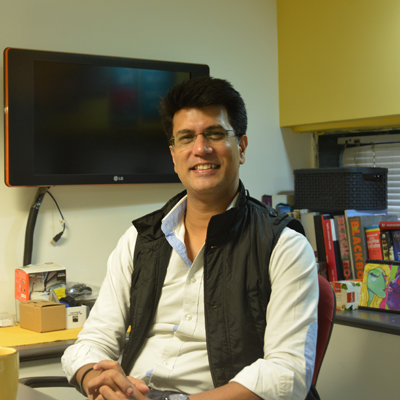
Tag: Sudhir Sharma

  • Section 377: Films, TV, Online and LGBT content

    Section 377: Films, TV, Online and LGBT content

    MUMBAI: Ten years ago most Indians probably did not know what Section 377  of the Indian Penal Code was all about. But the lobbing around that it has received since then has made it a common-as-garden word in the country today.

    It dates back to 1860 and it criminalises  “voluntarily carnal intercourse against the order of nature (by) any man, woman or animal.” Under it, any member of the already marginalised lesbian, gay, bisexual, transgender (LGBT) community could be sent to jail.

    In 2009, in keeping with the rising LGBT voices, it was declared unconstitutional by the Delhi High Court. Four years later, that decision was overturned by the Supreme Court, which said that its amendment or annulment should be the prerogative of the parliament, not the judiciary. Then on 2 February, 2016, a three-member bench of the Supreme Court said that a five-member bench would review afresh all the petitions that had been filed with it. A decision that was met with resounding applause by an estimated three million publicly declared Indian LGBTs (the number would be higher if one were to consider those who prefer to keep their sexual preferences private).

    Indiantelevision.com decided to take a dekko at how TV channels and other audiovisual media have dealt with those who prefer the same gender.

    Indian news channels have on the whole been objective, giving both sides – those favouring gay and bisexual rights and those against – an equal platform to air their views. Some English news channels have however taken an advocacy position for them. India’s first transgender news anchor Padmini Prakash made her debut on Tamil television recently. A few years ago, India’s first transgender television talk show hostess Rose Venkatesh was seen on Ipapdikku Rose on Star Vijay.

    Hindi GECs on the whole have caricatured and forced stereotypes on audiences – whether it was ‘Maddy’ in Jassi Jaisi Koi Nahi or characters in Pyaar Kii Yeh Ek Kahani. On the unscripted front, cross dressing male actors on various comedy shows have parodied the third gender. Recently, MTV India was bold enough to air an episode of The Big F titled ‘I Kissed A Girl,’ which featured two young girls’ desire for each other and also the first lesbian kiss on Indian television.

    TV audiences either did not watch the episode or thought it was okay for girls to make out and fall in love with each other because no complaints to the Broadcasting Content Complaints Council (BCCC) were announced at least till the time of writing this story. However, a few months back viewers objected to an episode of Grey’s Anatomy featuring a homosexual encounter and complained against the broadcaster Star World to the BCCC. They however have kept mum when episodes of American series like Orange is the New Black, Lost Girl, Orphan Black, Faking It, and How to Get Away with Murder aired, featuring steamy and risqué scenes between members of the same sex.

    “Though TV has tried to experiment with LGBT content, shows like Maryada… Lekin Kab Tak, which dealt with matured relationship between two married gay men, need to come back to the idiot box,” says Sridhar Rangayan, who directed many a Hindi TV series before setting up Solaris Pictures, which makes films with a special focus on queer subjects.

    Rangayan has also been the festival director of the Kashish Mumbai-International Queer Film Festival. This year’s edition, which is to be held from 25 to 29 May 2016, will take a look at the LGBT community in a larger way. “Love is not just romantic love but is also different shades of love. We are bringing in more regional and Indian films this year. We are going to encourage more parents, friends and colleagues to attend this festival,” adds Rangayan.

    Talking about the representation that the community gets in today’s society in India he further adds, “There is a need for happy, affirmative and positive stories or at least a normal portrayal of them. What bothers me and is sickening is this entire image of them taken as caricatures. Shows like Comedy Circus or Comedy Nights with Kapil (now off air) ridicule them and the way they are conceptualised is gross. I don’t know why they can’t have actual transgender actors coming in which can make it look more real for people to watch them.”

    “I don’t think a subject or work or genre works independently. It goes hand-in-hand. In such a scenario, producers need to be sensitive about not using the characters in the show as caricatures just for the sake of it,” expresses Monozygotic co-founder Rajiv Ram. “I also believe that we should watch our sense of humour. Jokes are being cracked on other communities as well, which is not a problem. The problem is the lack of acceptance, knowledge, sensitivity and the mindset of the people in the society.”

    Rangayan believes that Indian TV production houses have been progressive and have been open to deal with stories around various subjects (including those targeting the LGBT community) but the fear of governmental, legal and societal retribution has made them tread cautiously. “The same applies to actors, broadcasters and the entire TV fraternity. We all are just waiting for that spark from the government,” he adds.

    Whether there will be a backlash or not will be tested in the not too distant future. If the gossip rags are to be believed, veteran actor Anil Kapoor has expressed his interest to adapt the American sitcom Modern Family (featuring gay characters as two of the main protagonists) for Indian television.

    “We look for great stories wherever they come from. I believe there are great stories within the gay and lesbian community just like any other and we do seek to tell them within the confines of what is permitted by broadcasting regulations and sensibility. In our youth series Kaisi Yeh Yaarian, we explored stories in this space and told them well and were also well received,” says BBC Worldwide India MD and creative head Myleeta Aga.

    Industry professionals say shows will pass muster as long as certain criterion are kept in mind.

    “The content should comply with the internal decency standards of the regulatory board and the government,” says AXN and Sony Pix business head Saurabh Yagnik.

    “The characters need to be interesting and universal, and the stories need not be written from the western mindset. They need to have an Indian context,” says Sunshine Productions founder Sudhir Sharma. “If you are creating something, which is not relevant to the Indian audiences or from the Indian culture’s point of view, such content will be difficult to digest. I think the government will have an issue only if we get into some edgy controversial topics.”

    Media and creative professionals say the winds of change have been blowing in other mediums and will continue to do so. Hindi cinema, for instance. Films like Margarita with a Straw and Aligarh have gone an inch forward in spreading the right message about the community. Other films like Dostana, Fire, Bomgay, My Brother Nikhil, Honeymoon Travels Pvt Ltd, etc, have portrayed characters partially related to those preferring same sex or from the third gender.

    Online is one medium, which is going to see a flood of LGBT content flowing. Badmshiyaan director recently shared the promo of his soon to be launched series titled All About Section 377. The web series consists of eight episodes produced by Weirdoze and The Creative Gypsy. It features Gulshan Nain, Ankit Bhatia, Mustafa Shaikh and Amit Khanna himself. 

    Yash Raj Films’ youth banner Y-Films has also got into the fray when it launched the music video of India’s first transgender band named 6-pack band. The video features its first song titled as ‘Hum Hai Happy,’ which is a cover version of Pharell Williams’ song, ‘Happy.’

    ALT Entertainment – a Balaji Telefilms company – is believed to be incubating ambitions to launch many a web series targeting LGBT subjects for its soon to be launched OTT platform.

    Khanna echoed many an Indian’s thought at the launch of his web series promo when he said, “The existence of Section 377 itself is frightening. How does someone else get to decide how, when and who, one should love? Basically the right of ‘freedom of choice’ isn’t legal anymore…”

    That is something the five member  Supreme Court bench will have to really ponder on.

  • Section 377: Films, TV, Online and LGBT content

    Section 377: Films, TV, Online and LGBT content

    MUMBAI: Ten years ago most Indians probably did not know what Section 377  of the Indian Penal Code was all about. But the lobbing around that it has received since then has made it a common-as-garden word in the country today.

    It dates back to 1860 and it criminalises  “voluntarily carnal intercourse against the order of nature (by) any man, woman or animal.” Under it, any member of the already marginalised lesbian, gay, bisexual, transgender (LGBT) community could be sent to jail.

    In 2009, in keeping with the rising LGBT voices, it was declared unconstitutional by the Delhi High Court. Four years later, that decision was overturned by the Supreme Court, which said that its amendment or annulment should be the prerogative of the parliament, not the judiciary. Then on 2 February, 2016, a three-member bench of the Supreme Court said that a five-member bench would review afresh all the petitions that had been filed with it. A decision that was met with resounding applause by an estimated three million publicly declared Indian LGBTs (the number would be higher if one were to consider those who prefer to keep their sexual preferences private).

    Indiantelevision.com decided to take a dekko at how TV channels and other audiovisual media have dealt with those who prefer the same gender.

    Indian news channels have on the whole been objective, giving both sides – those favouring gay and bisexual rights and those against – an equal platform to air their views. Some English news channels have however taken an advocacy position for them. India’s first transgender news anchor Padmini Prakash made her debut on Tamil television recently. A few years ago, India’s first transgender television talk show hostess Rose Venkatesh was seen on Ipapdikku Rose on Star Vijay.

    Hindi GECs on the whole have caricatured and forced stereotypes on audiences – whether it was ‘Maddy’ in Jassi Jaisi Koi Nahi or characters in Pyaar Kii Yeh Ek Kahani. On the unscripted front, cross dressing male actors on various comedy shows have parodied the third gender. Recently, MTV India was bold enough to air an episode of The Big F titled ‘I Kissed A Girl,’ which featured two young girls’ desire for each other and also the first lesbian kiss on Indian television.

    TV audiences either did not watch the episode or thought it was okay for girls to make out and fall in love with each other because no complaints to the Broadcasting Content Complaints Council (BCCC) were announced at least till the time of writing this story. However, a few months back viewers objected to an episode of Grey’s Anatomy featuring a homosexual encounter and complained against the broadcaster Star World to the BCCC. They however have kept mum when episodes of American series like Orange is the New Black, Lost Girl, Orphan Black, Faking It, and How to Get Away with Murder aired, featuring steamy and risqué scenes between members of the same sex.

    “Though TV has tried to experiment with LGBT content, shows like Maryada… Lekin Kab Tak, which dealt with matured relationship between two married gay men, need to come back to the idiot box,” says Sridhar Rangayan, who directed many a Hindi TV series before setting up Solaris Pictures, which makes films with a special focus on queer subjects.

    Rangayan has also been the festival director of the Kashish Mumbai-International Queer Film Festival. This year’s edition, which is to be held from 25 to 29 May 2016, will take a look at the LGBT community in a larger way. “Love is not just romantic love but is also different shades of love. We are bringing in more regional and Indian films this year. We are going to encourage more parents, friends and colleagues to attend this festival,” adds Rangayan.

    Talking about the representation that the community gets in today’s society in India he further adds, “There is a need for happy, affirmative and positive stories or at least a normal portrayal of them. What bothers me and is sickening is this entire image of them taken as caricatures. Shows like Comedy Circus or Comedy Nights with Kapil (now off air) ridicule them and the way they are conceptualised is gross. I don’t know why they can’t have actual transgender actors coming in which can make it look more real for people to watch them.”

    “I don’t think a subject or work or genre works independently. It goes hand-in-hand. In such a scenario, producers need to be sensitive about not using the characters in the show as caricatures just for the sake of it,” expresses Monozygotic co-founder Rajiv Ram. “I also believe that we should watch our sense of humour. Jokes are being cracked on other communities as well, which is not a problem. The problem is the lack of acceptance, knowledge, sensitivity and the mindset of the people in the society.”

    Rangayan believes that Indian TV production houses have been progressive and have been open to deal with stories around various subjects (including those targeting the LGBT community) but the fear of governmental, legal and societal retribution has made them tread cautiously. “The same applies to actors, broadcasters and the entire TV fraternity. We all are just waiting for that spark from the government,” he adds.

    Whether there will be a backlash or not will be tested in the not too distant future. If the gossip rags are to be believed, veteran actor Anil Kapoor has expressed his interest to adapt the American sitcom Modern Family (featuring gay characters as two of the main protagonists) for Indian television.

    “We look for great stories wherever they come from. I believe there are great stories within the gay and lesbian community just like any other and we do seek to tell them within the confines of what is permitted by broadcasting regulations and sensibility. In our youth series Kaisi Yeh Yaarian, we explored stories in this space and told them well and were also well received,” says BBC Worldwide India MD and creative head Myleeta Aga.

    Industry professionals say shows will pass muster as long as certain criterion are kept in mind.

    “The content should comply with the internal decency standards of the regulatory board and the government,” says AXN and Sony Pix business head Saurabh Yagnik.

    “The characters need to be interesting and universal, and the stories need not be written from the western mindset. They need to have an Indian context,” says Sunshine Productions founder Sudhir Sharma. “If you are creating something, which is not relevant to the Indian audiences or from the Indian culture’s point of view, such content will be difficult to digest. I think the government will have an issue only if we get into some edgy controversial topics.”

    Media and creative professionals say the winds of change have been blowing in other mediums and will continue to do so. Hindi cinema, for instance. Films like Margarita with a Straw and Aligarh have gone an inch forward in spreading the right message about the community. Other films like Dostana, Fire, Bomgay, My Brother Nikhil, Honeymoon Travels Pvt Ltd, etc, have portrayed characters partially related to those preferring same sex or from the third gender.

    Online is one medium, which is going to see a flood of LGBT content flowing. Badmshiyaan director recently shared the promo of his soon to be launched series titled All About Section 377. The web series consists of eight episodes produced by Weirdoze and The Creative Gypsy. It features Gulshan Nain, Ankit Bhatia, Mustafa Shaikh and Amit Khanna himself. 

    Yash Raj Films’ youth banner Y-Films has also got into the fray when it launched the music video of India’s first transgender band named 6-pack band. The video features its first song titled as ‘Hum Hai Happy,’ which is a cover version of Pharell Williams’ song, ‘Happy.’

    ALT Entertainment – a Balaji Telefilms company – is believed to be incubating ambitions to launch many a web series targeting LGBT subjects for its soon to be launched OTT platform.

    Khanna echoed many an Indian’s thought at the launch of his web series promo when he said, “The existence of Section 377 itself is frightening. How does someone else get to decide how, when and who, one should love? Basically the right of ‘freedom of choice’ isn’t legal anymore…”

    That is something the five member  Supreme Court bench will have to really ponder on.

  • Star Plus’ new finite series ‘Gulmohar Grand’ to launch on 3 May

    Star Plus’ new finite series ‘Gulmohar Grand’ to launch on 3 May

    MUMBAI: Star Plus is all set to launch a new series revolving around the hotel industry. Called Gulmohar Grand, the finite series will be of 26 episodes, wherein each episode will have a different story.


    The show is slated to launch on Star Plus on 3 May. The weekly show will be aired every Sunday at 10 pm.


    Giving an insight into the world of a Five Star hotel, Gulmohar Grand will not only showcase the glamorous and luxurious world of hotels but also gives an insight in the world of hotels in a way that has never been seen before on Indian television.


    Produced by Sunshine Productions, the show stars Gaurav Chopraa and Aakansha Singh in the lead role and is being shot in a hotel in Mumbai.


    Sunshine Productions’ Sudhir Sharma said, “When you shoot in a live environment, you get to learn a lot of things about what’s happening in the real world and therefore, it is easier than creating a set for it. Following a certain schedule also has its cons, but since the hotel is functional, the benefits are much more. Even if we would have built a set, we could not have brought the kind of live environment that the current hotel is giving us.”


    The show is going to face a tough competition with DID Super Moms on Zee TV, Savdhaan India on Life OK, Comedy Nights with Kapil on Colors, CID on Sony and Yam Hain Hum on Sab. 

  • Sudhir Sharma’s journey: From facts to fiction

    Sudhir Sharma’s journey: From facts to fiction

    MUMBAI: A fearless producer, who has brought a change in the television industry with his out-of-the-box thinking. He is someone, who doesn’t believe in following the herd which is busy minting four-five shows at a time, but is satisfied doing one at a time. A firm believer of hard work and determination towards his art, he is one of those producers who strive to bring about a change in society through the powerful medium – television.

    We are talking about the owner of Sunshine Productions, Sudhir Sharma who has seen a meteoric rise in the television industry. The husband-wife duo of Sudhir and Seema Sharma have come a long way in providing viewers with niche shows on television like Miley Jab Hum Tum and 12/24 Karol Bagh. The two have dabbled in direction and scripting, apart from production as well.

    From news to fiction

    It was at a very young age (standard six to be precise) that Sharma became certain of making his career in either television or films. He started his career with Rajat Sharma in the news and current affairs section of Zee TV, which was the first private channel to produce news pieces, in 1992. He also directed the famous show, Janta Ki Aadalat and many other projects on Star Plus.

    After spending almost six years in directing news programmes, he then shifted to Mumbai in 1997. This was the time when he decided to work on fiction series. It was this drive which gave birth to Sunshine Productions in 1998.

    Starting a production house poses challenges, and Sharma too had his share. Surprisingly, the biggest challenge came from his news and current affairs background, as people got a little wary about his capability to handle fiction series.

    Sharma recalls the time he has spent with Ebrahim Alkazi, a famous theatre personality, in the national capital while he was working on news related projects. He believes the time he spent with him, gave him the exposure and the understanding of what is needed to create a fiction!

    Under his banner, Sunshine Productions, he began with directing ad films and music videos. From 1999 to 2005, the production house was known for creating packaging and promos.

    Initially, he focused mainly on making TV promos for all the top shows of Hindi general entertainment channels (GECs) Star Plus, Zee TV and Sony. Right from Jassi Jaisi Koi Nai to KBC, the production house was known for creating launch campaigns.

    It was in 2005, that the company finally got into producing shows. Flooded with offers to direct shows, Sharma was somewhere not comfortable in only directing a TV daily. He was confident that he could have a better hold on a project rather than just direct it. “The offers that came in, was a sign that we were doing something right. It was from 2005 that I seriously started thinking about fiction content,” says Sharma.

    The production house is always cautious of not falling into the category of someone who is rolling out shows simultaneously. “I mean this. There are no pretences and I am not being diplomatic about it. We are very sure that we want to do selective work. We do not want to do four-five shows at a time,” states Sharma.

    He is not apprehensive about the P&L of the company. “I am just conscious about the quality of work that we do because we love making and watching our each and every project. We do not do anything which is focused purely from the business perspective. I feel business will grow automatically, if I am confident and happy in what I am doing. That is the only challenge we have taken for ourselves,” explains Sharma.

    For him restraining from doing many shows is a difficult task, considering the high demand for good content, directors and producers.  Also, with the advent of new channels, the greed for doing more soaps is very tough to resist, at times.

    When he started the production house, he was never short of good resources. He had a mini creative team – right from the DOPs to assistants, writers and creative directors – that had directed projects for the company during its initial years. “Then, they used to write promos and design logos for various programmes. So in that case, the mini creative team was already in place,” informs Sharma, who considers himself lucky to have found them.

    One area, which posed challenge, was having a dedicated casting department. “Initially, I used to do the casting on my own, until three years back when Reema came on-board as casting agent and started doing a fabulous job.”

    Behind the scenes

    Sharma believes in working with the same writers again. Apart from the permanent employees, many professionals are also hired, as and when required for a project.

    The husband and wife duo have different qualities but work as a team. Seema, who is a graphic designer, is completely engrossed in content while he takes care of the strategy.

    Ideas come from either the core team or members. “Many a times, it also happens that, broadcasters give us a rough sketch. For 12/24 Karol Bagh, producer Sukesh Motwani called me and said he wanted to make a show on the Delhi middle class. Just one thought/peg is required.”

    Once a basic outline is created, a lot of writers come-in and pitch their ideas, out of which one is selected. Casting, he says, is the trickiest job and 50 per cent of a show’s success depends on it.

    He believes that ideas can float from anywhere; from a newspaper article to a poster at railway platform. He shares that at times, writers come up with their own ideas which is quite laudable. For example, the idea for Na Bole Tum Na Maine Kuch Kaha, which ran for two seasons, came from the writer, Venita Coelho, herself. Sharmas took the lead and gave it a specific direction.

    He goes on to say that the research on how to tap the viewer, (mostly) provided by broadcaster is not on his priority list. Sharma believes in doing his own research. So for Bawre, which is currently on-air on Life OK and is based in Lucknow, he went to the city and stayed there for a month to understand the culture, taste and behaviour of the people. “There I met a lot of people, did my research, shot a number of short videos and read a lot of material,” he informs. For him creative product comes from the gut and from his own conviction.

    Sunshine has clicked with the youth as well through shows like Paanch, It’s Complicated, The Buddy Project on Channel V. While every genre excites him, there are certain areas which are his strengths like youth, love etc.

    Dailies are here to stay!

    He believes that though bi-weeklies have an advantage, the importance of dailies, which cost Rs 6-8 lakh per episode, and Indian soaps will never die. “For makers, the main concern is how to attract the audience and understand what they like and don’t like. In terms of format, daily soaps will never die in India because of the different viewing pattern here. It will not turn into a UK or a US market overnight.”

    He goes on to say that earlier even mediocre shows would run for two to three years but not anymore. “This doesn’t mean that everyone will get into bi-weeklies or mini-short series. It involves a completely different science,” he opines. Finite series is a different grammar of content. “Bi-weeklies are a different type of genre which Indian audience is not exposed to so frequently. Worldwide it is a big phenomena and a big hit.”

    It was 15-16 years ago, when fiction content had just started to develop. “In these 15 years, whatever content one got was put on television and viewers watched it happily without complaining. Those days are gone now. People have become choosy and demanding. They have more channels to watch and hence better quality content is needed. They will go to anyone who offers better content.”

    The next step for Sharma is trying more bi-weeklies and mini-series. So is that the new trend the industry is moving towards? He quickly says, “It is very pre-mature to comment on this. But, from a content perspective, what a bi-weekly or a mini-series does is, it gives you better content and a tight script. Paanch was appreciated because of the kind of budget it had and the kind of quality it delivered.”

    “Feedback should not turn into a screenplay”

    Sharma has always found support from the broadcasters. For him, creative freedom is a must, and he has never faced any issues in that area.  “But at the same time, producers also have to understand that the channels are investing a lot of money and time into it. If we understand that part then things are easy,” opines Sharma.

    He further goes on to say that broadcasters have a lot of research and data which producers may not have. “Problem is when broadcasters start dictating the script and the feedback ends up turning into a screenplay. I hate that. Yes, strategy is their forte. It is always a collaborative effort between the makers and the broadcasters.”

    Sharma agrees that there is pressure always to deliver numbers, but that for him is justified. “I feel there is nothing wrong in it. This is no charity that anyone is doing. We are in a professional environment and I don’t feel anything is wrong if the channel is putting pressure,” laughs Sharma.

    But just because the efforts don’t translate into good ratings, changing the storyline doesn’t work. “One needs to be patient with the medium.” Sharma is of the view that the storyline should be changed only if the audience is unable to relate to the story.

    Surprisingly, apart from the main office, the company has a 16-20 edit set up where all the post-production and edit work happens.

    He broadly defines his three different set-ups. One is the back office where all the meetings take place between the writers and the casting happens. Second, is the post production set-up where one entire set of editors sit 24X7 in various shifts. These include editors, junior editors, post production operations team and creative team. Third, is where the shoot happens. Apart from the set, an office is located at Filmcity. On a daily or weekly basis, all of them meet to decide how to take things to the next level. At Sunshine, the core team consists of 50-60 people.

    He recalls the moment when for his first project he needed huge funding. After that, Sharma says he hasn’t faced many issues. The initial hiccup was also because he came from a different background than other existing professionals.

    By the end of this year, the company plans to delve into producing feature films.

    Sunshine won the prestigious Indian Telly Awards (2010), for being The Most Promising Producers/ Production House and in 2012 won The Best Youth Show Award for ‘The Buddy Project’.

  • Does ‘finite’ spell death for long sagas?

    Does ‘finite’ spell death for long sagas?

    MUMBAI: Once upon a time, there was only Doordarshan and viewers lapped up whatever it served without complaint. Then came the satellite and cable TV explosion, giving DD a run for its TRPs. That’s when daily soaps like Kyunki Saas Bhi Kabhi Bahu Thi and Kahani Ghar Ghar Ki and KumKum became popular, carrying on for years at a stretch, without audiences, especially women, tiring of them.


    However, viewers today are an altogether different breed and broadcasters cannot engage them in the same manner, given their restlessness and constant need for new, fresh content.


    A common tactic fast gaining traction among broadcasters is opting for limited episodes not just in non-fiction but also in the fiction space. Does this mean death for the long sagas of yore? Indiantelevision.com spoke to a cross-section of industry to find out.


    Given that Star India is all set to launch three finite shows Airlines, Hospital and Everest next month, we asked Star India senior vice president programming Ashish Golwalkar whether finite shows had already become a trend?


    “Trends are formed on the basis of consumers. Our consumers are our viewers. It is not yet a trend, because people have to come and see success. By the nature of content, non-fiction always had limited episode series, but in fiction, that wasn’t happening and we thought if we could offer something fresh and different. Currently, we all are experimenting,” he replied. “At Star Plus, we constantly endeavour to give something fresh to our viewers. In order to do that, we think there is a set of talent that works for television.”


    Recalling the good old DD days when legends like Shyam Benegal penned finite series for the channel, Golwalkar said, “Legends used to work for television and all of a sudden, they all disappeared. And we realised that television is very tiring. To produce for six days a week is very tough, but we are happy that we have cracked it and there is where the numbers are coming.”


    Stressing that there was a need for people who could bring a fresh new perspective to storytelling, he said, “But all those creative people and creative talent, they will never be able to do a show that will last for two to three or five years. The other reason is that while there are shows which keep going on and on, there are other shows which just have a finite story.”


    Speaking of Channel V which believes in doing bi-weeklies and has been fairly successful at that, Golwalkar said, “When we at Channel V select those stories, we realize that at the end of the day, our selection has to be based on the story and not on our convenience. We do not want to unnecessarily stretch shows. If there is a show which can go beyond 10 years, let it be. But if there is a show which needs to close in 25 episodes, then let that be.”


    “When you know it is a finite show, the net of story selection widens. So now, you have more number of stories to tell. Technically, in a traditional conventional way, we wouldn’t select those stories, here we can,” Golwalkar added.


    He expressed the view that if the shows being launched in the coming months get a good response, they would definitely introduce more finite series in future. “Because of the change in the content of ecosystem, if we can get fresher and different talent and different stories which are limited in nature and if viewers respond well to it, maybe later on, we will think of doing all our shows like that,” he said.


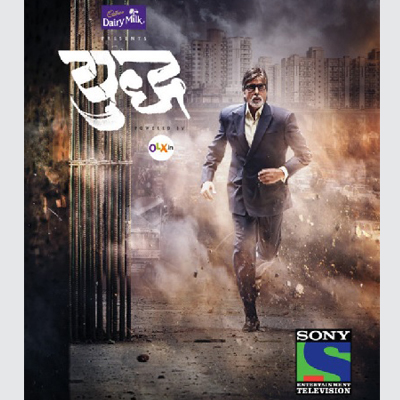
    Shows like 24 on Colors and Encounter on Sony demonstrated the rise of finite in the non-fiction space. At the same time, Sony Entertainment Television’s big bet with Amitabh Bachchan’s Yudh saw the rise of finite fiction as well.


    Sudhir Sharma of Sunshine Productions said broadcasters and viewers were becoming more quality- and content- conscious day by day and keeping that in mind, limited episode series were definitely coming in a big way. “Almost all broadcasters are doing this. The reason behind this is better control on content and it’s very sharp and worked out content so your quality definitely goes up,” he said.


    With this move however, the challenge would be to attract viewership in a big way. “Now, the task for broadcasters is how to attract new viewers, because viewership is getting stale from the last two to three years and the numbers are dipping day-by-day for all Hindi GECs. However, it doesn’t mean that daily soaps will vanish. They are here to stay because there is a large number of viewers and their staple TV diet continues to be soaps,” Sharma said.


    Beyond Dreams producer Yash Patnaik said that finite fiction was not a new trend but a trend that had made a comeback recently. “The advantages of finite series are you can pack the story, you know the beginning till the end. So, drama can be created at a different level,” he said.


    According to Patnaik, thrillers would work best in the finite fiction space. “It is another variety of entertainment where you don’t need a commitment to watch for a longer time… particularly in a finite series, a thriller falls into this category better… because you can’t drag a thriller for long.”


    Patnaik said finite series would do well for broadcasters and would have their own set of audiences. “It all depends on the slots the channels are planning to put and the kind of audience they want to create for finite series. They will have their own set of viewership and good finite series on a good platform will definitely work,” he concluded.

  • Throwing light on the TV Producers-Actors MoU

    Throwing light on the TV Producers-Actors MoU

    MUMBAI: A lot of dust has been raised in the media recently about the memorandum of understanding (MoU) inked between the Cine & TV Artistes Association (CINTAA), the Federation of Western India Cine Employees (FWICE), and the Indian Film and TV Producers’ Council (IIFTPC) on 1 May.


    While producers claim the MoU (indiantelevision.com is in possession of the original copy) aims at creating a more efficient and frictionless system with respect to parameters like employment and wages, shifts and work schedules and working conditions, actors are crying foul over perceived injustices meted out to them in it.


    Referring to the hue and cry over the “three-year contract” clause in the MoU, FWICE president and CINTAA Hon general secretary Dharmesh Tiwari cautioned that actors have misunderstood the clause. He pointed out that the MoU requires only five lead actors, as decided by the producer, to sign the three-year contract with him/her.


    “There has been a lot of confusion in the artistes’ minds regarding the clause. The real intention is: if a show runs for three years, the contract gets renewed every year but only for the main four to five lead actors. A producer has to let go of the other actors after a couple of months, so that they can work elsewhere,” explained Tiwari. “However, once a particular serial becomes a hit, the actor, especially the lead, wants more money to do it. So, we are just being cautious and want the person to sign beforehand so that even if the serial becomes a hit, he/she cannot leave or demand extra money. The clause further specifies that the actor can leave under ‘special circumstances’ and if it is genuine, the producer will let go of him/her anyhow. Mutual understanding is of importance here.”


    The clause implies that it is up to the producer to give a raise to whosoever is the face of the show.


    The three-year contract clause further states that all engagements of actors will be recorded in writing and it will be mandatory for producers to give a copy of the contract/agreement to such actors before commencement of the shoot or not later than 15 days after commencement of the shoot. In the event the artiste is not given a copy of the contract after expiry of the 15 days deadline, the terms and conditions will not be applicable to him/her till such time the signed agreement is handed over to him/her.


    Apparently, 10-15 actors and five to seven producers collectively formulated the MoU, after which, it was signed by hundreds of artistes and 40-50 producers before being sent for a final okay. A producer who was part of this core team on condition of anonymity went on to say, “Four or five actors are now saying in the newspapers that the three-year contract clause is not justified. I don’t think this is fair. It is an insult to CINTAA and the producers’ body.”


    Another producer on condition of anonymity defended the clause saying, “This is the first time in 20 years that some kind of documentation (read: MoU) has been done by CINTAA and the producers’ body together. Shouldn’t we be welcoming it rather than talking about pros and cons.”


    A third producer who also did not wish to be named said, “People are only talking about the three years, but they should know what the details are. Just don’t go by the headlines. People are reacting even without reading it. I can guarantee that most of the actors haven’t even read the clause. No one will benefit from this, but one will surely suffer losses if it isn’t implemented.”


    Sudhir Sharma of Sunshine Productions said, “I am not saying all producers are the same. This MoU puts a lot of  pressure on producers too. There are regulations on producers who do not pay on time or pay conveyance or stick to their contracts. So, it applies to producers as much as it does to actors. It is absolutely balanced and fair.”


    A fourth producer on condition of anonymity said the MoU would make actors think twice before acting pricey. “It is absolutely justified. An artist signs a contract with a show and after eight to 10 months once the show becomes popular, starts demanding extra money or threatens to leave it. Today, the economy is so tough that by the time a producer breaks even, it is already six months,” he said. “The artist starts behaving badly, coming late to the sets, disturbing the schedule, taking other assignments or generally making life hell for the producer. The three-year contract is for such artistes while disciplined artistes do not have anything to worry anyway.” 


    Apart from the three year clause, another clause of the MoU, which deals with actors who are engaged up to only five days per month and whose per day remuneration is only up to Rs 5,000, has been the subject of much debate. The clause states that such actors will be paid within five days of their last day of shooting. Morever, the production house will fix their per-day remuneration after negotiations with them, and Rs 300 will be paid in cash over and above the agreed per day remuneration after completion of the day’s shoot. In the event the actor is part of a mythological/historical/weekend show, the payment will be made within 21 days of his/her day of shooting.


    Lead actors get all the money and fame. Actors are paid purely on the basis of their popularity. It is learnt that a newcomer gets anywhere between five to 10 thousand rupees per day while an extremely popular actor may get paid up to 50-60 thousand rupees a day.


    “Think of the people who get less than Rs 5,000 per day. Out of the 5,000 to 10,000 actors today, there are only about a hundred who get paid above Rs 10,000-15,000 per day. The remaining get paid Rs 3,000-5,000. I am talking about a large chunk of actors here, not the stars,” said a fifth producer, who was also part of the core team that formulated the MoU. “A large number of actors would get paid after three months. Even if they had worked for only two days in the month for Rs 8,000, they would have to visit the office premises twice – once for billing and the second time, for payment. With this clause, 70 per cent of the community is going to get their payments within a week. It’s a beautiful system. Look at the bigger chunk.”


    A majority of producers feel that the MoU will help actors who are getting paid less so that they don’t have to wait for two to three weeks just for their payment to be released.  The MoU is a reflection of the fact that CINTAA is working for 95 per cent actors who work day and night and not just for the cr?me de la cr?me.

  • Life OK to launch ‘Bhatak Lena Baware’

    Life OK to launch ‘Bhatak Lena Baware’

    MUMBAI: Two and a half years ago, Star India decided to turn around one of its older channels and give it a fresh new look and feel. Result: Star One was reborn as Life OK. Two years down the line, Life OK is giving others of its ilk a run for their TRPs, with shows like Savdhaan India and Devon Ke Dev Mahadev in its kitty.


    In keeping with its tradition of ‘differentiated content’, the channel is now all set for the launch of another show titled Bhatak Lena Baware at the end of May.


    Sunshine Productions of Na Bole Tum Na Maine Kuch Kaha and The Buddy Project fame, Bhatak Lena Baware, is the love story of a singer and a theatre director cum lyricist from Lucknow. It tells the tale of two different people drawn to each other and how that changes at least one of them. “It is a completely fresh love story with lots of surprises. It is not your regular love story that people are used to watching,” says a source close to the show.


    Screen writer-lyricist Neelesh Misra of Barfi and Ek Tha Tiger fame has conceptualized the show while Seema and Sudhir Sharma have developed it further. “We are through with the Lucknow schedule and have started shooting in Mumbai at Filmcity,” says Sudhir Sharma.


    Shooting started a month ago and three to four episodes have already been canned. The makers want to create a bank of 10 to 12 episodes before launching the show.


    Life OK content head Aniruddh Pathak believes that it is a very GEC friendly concept. “Keeping in mind the channel’s agenda of showcasing differentiated content to audiences, we are back with a simple love story but in a different manner.”


    He further adds: “You see love stories on every show, but how to make this one different from other offerings was a task. The show is about a small town love story in a realistic zone and a strong narrative.  We have got on-board Neelesh Misra who is the co-creator will act as a narrator for the show.”


    Pathak reveals that the planning of the show was started five months back. He further said that the channel is planning to make its presence in the comedy genre as well. “We want to do serious comedy and with so many shows already ruling the roost, we really have to work hard on the concept. We are working on it and will have a clear picture in sometime,” Pathak signs off.


    In all likelihood, the new show will occupy primetime, reveals the source.