Tag: Sudhanshu Vats

  • TV18 completes acquisition of Viacom shares

    TV18 completes acquisition of Viacom shares

    MUMBAI: TV18 is now officially in control of the Viacom18 joint venture in which the US partner, Viacom Inc (Viacom), was a majority holder till now with 51 per cent. In an announcement to the Bombay Stock Exchange (BSE), it said that the formalities of the transfer of 1 per cent shares from Viacom’s paid up equity capital to TV18 had been successfully completed.

    A statement to the BSE said, “With this acquisition, the company has acquired control and now holds 51 per cent of the equity share capital of Viacom18.”

    In January, the companies had announced the decision to transfer power in the hands of TV18 for $20 million (Rs 127 crore). In the meantime, deals for content licensing and brands between Viacom and Viacom18 also got extended by a decade.

    Holding more authority, TV18 can understand and execute strategies in the evolving digital India market. It can decide to drop or add new business verticals that can push up the company’s profitability.

    While announcing the plan to shift the power, Viacom International Media Networks CEO David Lynn also pointed out that Viacom18’s association with Network18 would help accelerate growth and even added Jio as one of the catalysts.

    Viacom18 Group CEO Sudhanshu Vats said, “This development will allow us to leverage deeper synergies with Jio as we enter our next growth phase.” Undoubtedly, Vats meant the presence of the network in the digital sphere with Voot. Calling the company a ‘full play media organisation’, Vats stated that the focus will be on ‘enriching the digital life of every Indian’. Jio is likely to play a major role in boosting Viacom18’s presence and reach through its 160 million subscribers. Recently, the telecom company announced that it is positive of touching 99 per cent of India by Diwali (October-November) 2018.

    Also Read:

    TV18 to increase Viacom18 stake to 51%

    Sudhanshu Vats on Viacom18’s growth strategy and why data analytics is key

    TV18 reports profit for second quarter

  • Viacom18 rolls up its sleeves for Tamil market share

    Viacom18 rolls up its sleeves for Tamil market share

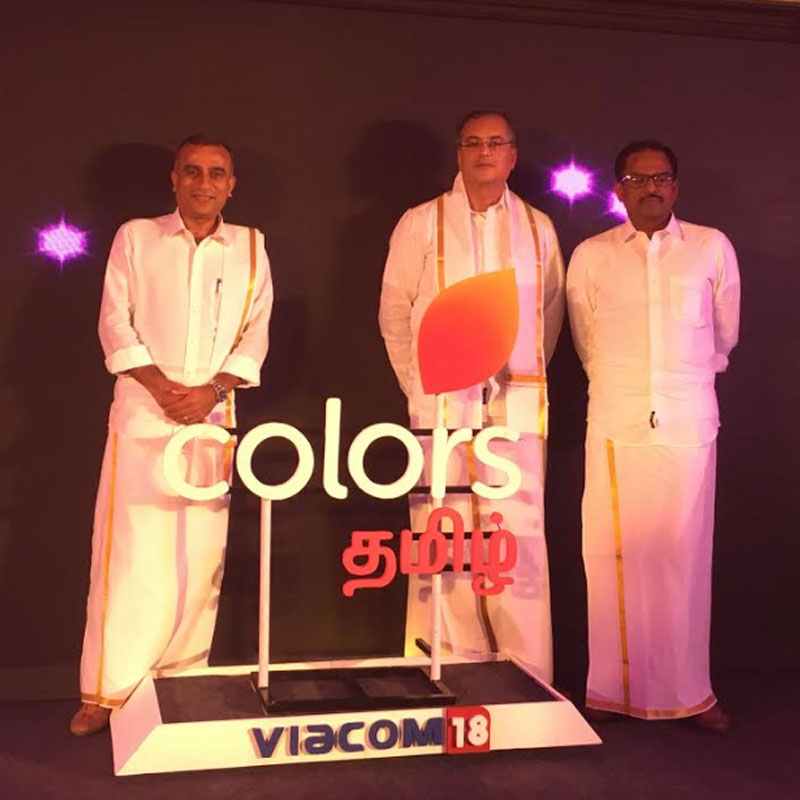
    MUMBAI: Viacom18 has set for itself the task of taking a big bite out of the Tamil general entertainment channel (GEC) market, a stronghold of long-reigning Sun Network. The network is all set to launch its channel Colors Tamil into a large and important entertainment market of India. 

    Scheduled to go on air on 19 February 2018 in Tamil Nadu, the channel will be the conglomerate’s first foray into the state. Viacom18 already operates general entertainment channels in five regional languages, under the brand name Colors Kannada, Marathi, Gujarati, Bengali and Odia.

    Despite big players emptying their coffers in the Southern Indian market, the region has been strongly captivated by the Sun Network.

    Speaking at the launch, Viacom18 Group CEO Sudhanshu Vats says, “After spreading our wings across seven languages, India’s flagship general entertainment brand – Colors is entering the lucrative, fast growing and discerning Tamil entertainment market in line with our stated strategy to drive regional growth aggressively. Our proven ability to break the clutter and disrupt the status quo will help us tell endearing stories to over 20 million TV households in the state and a large global audience in the coming months and years.”

    Tamil Nadu is the country’s sixth most populous state as per census 2011 and is among the bigger television content consuming markets, with a per capita daily viewership of 3 hours which is more than that of the Hindi speaking markets which is 2.5 hours. With an estimated base of 1150 advertisers, Tamil Nadu is among the more lucrative broadcast entertainment markets in India. 

    In order to cater to the market, Viacom18 head of regional entertainment Ravish Kumar reveals the company’s biggest drive is to deliver new and never before seen content to the Tamil audience. “We have invested big in conceptualising programs that are inspiring, innovative, experimental and technically sound. With 22 hours of original content at launch, we are more than confident of Colors Tamil becoming a blockbuster hit here,” he says. 

    With a robust content strategy developed after thoroughly studying the consumer patterns of the region, Colors Tamil offers several original shows in both the fiction and the non-fiction categories. Foraying into a market with existing predominant players, the channel aims at bringing together a range of shows spanning a diverse variety of entertainment genres catering to all demographics.

    Colors Tamil business head Anup Chandrasekharan adds,“Idhu Namma Oru Coloru… the Colors of our land. Our tagline encapsulates our vision of Colors Tamil. It is a platform that aims to entertain, enrich and engage individuals across the length and breadth of the state. Our study of the existing broadcast entertainment market suggests that there is a need gap between what the audience wants to watch and the kind of content that is available to them. Therefore, our focus is on content that is differentiated, thought provoking and socially conscious. Colors Tamil is a promise of optimism, celebration and hope.”

    The channel will offer a range of fiction and non-fiction programs spanning from family drama, reality TV, comedy to fantasy to name a few. The four original shows of the channel will set new standards in the industry with its distinct content and sound technology. The network will also remake the famous show Naaagin from the Hindi GEC Colors for the new Colors Tamil. Naagin has been a huge hit property of the network.

    At launch, Colors Tamil will be available in all leading cable networks catering to an estimated 3.5 million homes in Greater Chennai through SCV, TCCL among others and 11 million homes in the rest of Tamil Nadu through Tamil Nadu Arasu Corporation. 

    Furthermore, the channel will be available on all DTH platforms including Sun Direct, Tata Sky, Airtel, Dish TV & Videocon d2h reaching out to 5.5 million households. Additionally, the entire content library of Colors Tamil will also be available digitally on the network’s OTT platform – Voot.

    As part of its fiction lineup, the channel has curated three striking shows that portray strong women protagonists breaking the shackles of the society. Shot in native locations of Tamil Nadu with top-notch equipment, the shows are set to offer a movie-like experience to the viewers. 

    Offering a refreshing break from the common soap operas, Velunachi is an inspirational story of young girl who transforms herself into a strong woman carrying her father’s lineage in Silambattam. 

    Sivagami show is a transforming tale of courage of a young woman tackling conflicts in society to bring up her daughter as a successful IPS officer. The story is set in rural Tamil Nadu with nativity and rustic aims to create a positive change in mindset among people. 

    Another show, Perazhagi, is an uplifting drama that breaks the stereotype around skin colour featuring a small girl who fights against all odds to become a celebrity.

    Created as the flagship show of Colors Tamil, the reality show Enge Veetu Maapilai will feature the hunt for the ideal match for brand ambassador & Kollywood superstar Arya. Spanning over 40 episodes, the show will telecast the search for the heartthrob’s perfect match. 

    Catering to the young ones, Colors Super Kids is a one of a kind talent show for children, offering them an equal and well-deserved platform to showcase their talents without the concept of competing against each other.

    public://TAMIL.jpg


    Also Read:

    Viacom18 widens regional reach, to launch Colors Tamil in Q4

    TV18 to increase Viacom18 stake to 51%

    Viacom reports lower revenue for Q1 2018

  • TV18 to increase Viacom18 stake to 51%

    TV18 to increase Viacom18 stake to 51%

    MUMBAI: TV18 will take operational control of Viacom18 Media Pvt Ltd (Viacom18), the joint venture partners in Viacom18, TV18 Broadcast and Viacom Inc, announced today. TV18 will raise its stake to 51 per cent by acquiring 1 per cent of Viacom18’s equity from Viacom Inc for a cash consideration of Rs 127 crore (USD 20 million). The brands and content licence agreement between Viacom Inc and Viacom18 will also get extended by 10 years.

    The partners believe that in the fast-evolving media and entertainment landscape in India, TV18 can drive value-addition and synergies across the multi-platform group comprising broadcast, digital, filmed and experiential entertainment and media businesses, the official release stated. Viacom continues to hold 49 per cent in Viacom18 and shares TV18’s vision for scalability and enhanced efficiency at Viacom18.

    Network18 chairman Adil Zainulbhai said, “The transaction further enables our vision for Viacom18 to accentuate its focus on excellence and integration in the broadcast and digital space. The entertainment powerhouse continues to be bolstered by Viacom’s global expertise in content creation and curation, along with Network18 group and affiliates’ strength across the media and telecom value chain.”

    “Viacom18 is one of the fastest growing companies in India’s dynamic media and technology sector and, as a result of this transaction, we believe it will be even better positioned for accelerated growth through closer integration and alignment with the Network 18 Group and its affiliates, including Jio,” Viacom International Media Networks CEO David Lynn said. “Viacom remains strongly committed to our Viacom18 joint venture with the Network 18 Group and we are retaining the vast majority of our ownership stake in the company. We’re delighted to extend our licencing deal with Viacom18 and see clear potential to expand it in live events and recreation, in line with our growing global presence in these lines of business.”

    “We turned 10 last year and our growth journey has been exciting to say the least. None of this would have been possible without the support and commitment of both our partners. This development will allow us to leverage deeper synergies with Jio as we enter our next growth phase. As India’s youngest full-play media organisation, we remain committed to winning the hearts of our audiences across all our on-air, on-line, in-store, in-theatre and on-ground businesses and enriching the digital life of every Indian,” added Viacom18 group CEO Sudhanshu Vats.

    Viacom18 started out as a broadcast business with three channels–MTV, Nickelodeon and Vh1–in 2007. Today, the broadcaster has 44 television channels across 80 countries in six languages. It has also diversified into five lines of business, spawning broadcast, digital, films, merchandise and live events. The company reported total revenue of Rs 3,040 crore in 2016-17, charting 40-fold growth in topline since inception.

    Also Read:

    Viacom18, DSport join hands for simulcast of Nidahas Trophy

    Merger talks on the anvil once again for CBS, Viacom

    Sudhanshu Vats on Viacom18’s growth strategy and why data analytics is key

  • Sudhanshu Vats on Viacom18’s growth strategy and why data analytics is key

    Sudhanshu Vats on Viacom18’s growth strategy and why data analytics is key

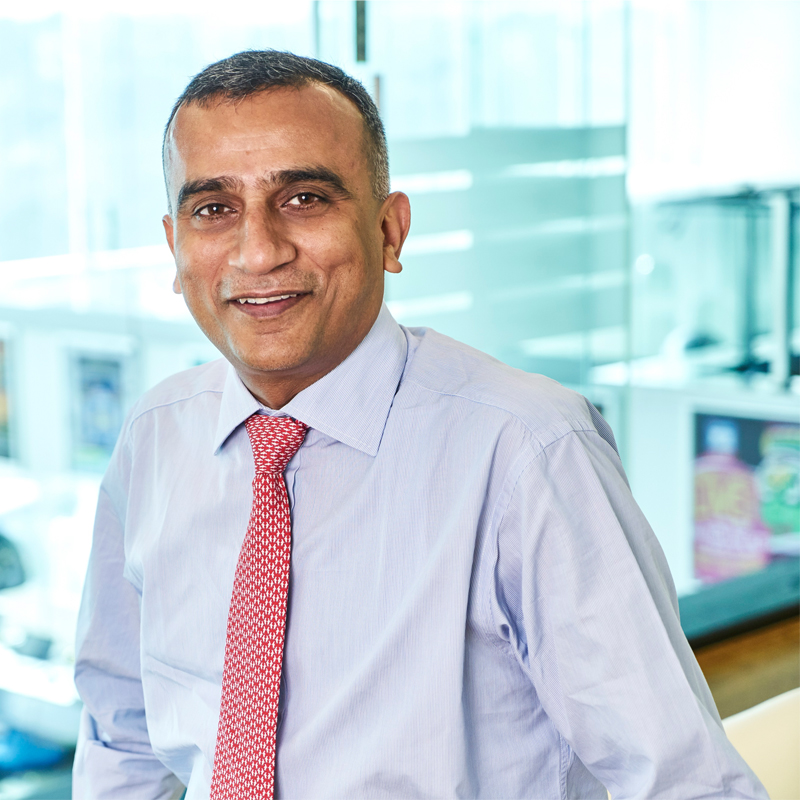
    He goes by many names. The Laundry Man and The Marathon Man being two of the more popular monikers. The second one is self-explanatory given his passion for running, especially marathons of many hues all over the globe. It’s the former one that makes people, sometimes, stop and give a quizzical look. Its origins, according to Unilever folklore, can be traced back to his days at the global FMCG company where he was at the helm of the laundry division in South Asia. But Sudhanshu Vats, group CEO of Viacom18, doesn’t mind the aliases; rather, he refers to them himself, at times—like he did in November at CASBAA Convention 2017 in Macau,where he was featured as a keynote speaker. At the time,Vats explained that running a marathon and running a company had lots in common as they taught one about the importance of planning and breaking down longer plans or goals into shorter milestones.

    Five and a half years into his new role in one of the top media companies of India that is an equal JV between US’ Viacom and Reliance Industries-controlled Network18, Vats is considered a thought-leader within the complex maze of the Indian media and entertainment industryand in government circles. His social media savviness makes him articulate on a range of subjects from media to women empowerment to an individual’s role in the Clean India campaignto the importance of health and fitness.

    In a free-wheeling chat with Indiantelevision.com’s consulting editor AnjanMitra and deputy managing editor Satyam Nagwekar, Vats speaks on a number of issues related to the M&E sector, including the necessity of regulation in India (he sometimes holds contrarian views to the general sectoral outlook of his peers) and why it’s important for a media company to be equally alive to data analytics to derivestrategies.

    Edited excerpts from an interview that took place when he was few days away from completing hisannual tenure as the chairman of BARC India, a joint industry body entrusted with collating audience data in a highly fragmented and, at times, quirky Indian broadcast sector, wherein competition is cut-throat:

    Q: What would be the three major changes in the industry that you have witnessed over the years in the complex M&E industry of India after your switch to the media sector from FMCG?

    A: The first significant development is the entire digitisation of the cable. While digitisation of the signal has happened, allowing (the pipe) to carry more content, addressability needs to improve. Overall cable digitisation has enabled the pipe to carry more content and to improve the viewer experience. The second development is the rise of OTT services; delivering content on demand in addition to the existing linear delivery of content. The third development would be the increasing importance of live and experiential entertainment. The advent of quality multiplexes has certainly made a difference in viewing experience in cinemas. Similarly, in the sphere of live entertainment, experimentation with modern technology has dialed up consumer experience. We have also experimented with theatricals. What happens is that as kids develop a relationship with characters, it allows you to bring those characters alive in different forms outside of television. One can take them outside of television into theatricals, into experiential zones and merchandising.

    I would add a fourth important development and that is the evolution of BARC India. I think the joint industry body that we formed to measure ‘what India watches’ is a significant development. It’s a unique feature that industry bodies have come together for audience measurement in India.

    Q:Are Hindi general entertainment channels (GECs) the largest contributors to the Viacom18 revenue pie?

    A: Yes, they are.

    “About 59-60 per cent of India communicates in regional languages, about 39-40 percent in Hindi, and the balance one per cent in English. This 59 per cent is still under-indexed in viewership. As the viewership catches up with actual consumption, so would monetisation opportunities.

    Q: Keeping in mind what you said, how do you see the market for Viacom18 going forward over the next couple of years?

    A: The GECs will remain an important block (from the point of view of revenues), but I am very bullish on the regional piece, too. I personally feel that regional businesses are gaining traction and will continue to get dialed up significantly in the future. The reason for that is that in television, and arguably in all mediums of television, digital and films, the regional languages have been under-indexed from the point of viewership and monetisation.

    In my opinion,the genesis of this lies in the fact that the erstwhile measurement system was a bit skewed towards the Hindi-speaking urban audiences; perhaps as it too developed along with the cable movement in India in the 1990s, which started with the Hindi-speaking regions. However, in the last decade, language programming in other parts of India, especially South India, has developed considerably. With BARC’s arrival, these markets are being better represented. As we go deeper into India, the regional language play will keep getting dialed up. About 59-60 per cent of India communicates in regional languages, about 39-40 percent in Hindi, and the balance one per cent in English. This 59 per cent is still under-indexed in viewership. As the viewership catches up with actual consumption, so would monetisation opportunities.

    Why do I say this? There is an intuitive understanding — not entirely always incorrect — that the English consuming audience has a higher propensity to spend and that amongst the other language markets, Hindi-speaking markets (HSM), perhaps, have the highest propensity to spend. Equally importantly, regional markets like Tamil Nadu, Karnataka, Andhra Pradesh/ Telengana, Kerala, Maharashtra and Gujarat have higher per capita income (compared to India average) and would therefore have a higher propensity to consume advertising and brands. My hypothesis is that the affinity to one’s mother tongue will remain and India will continue to remain a multi lingual country (most Indians speak at least two languages and in some cases three or more). All three clusters of English, Hindi and regional will grow with regional leading the rate of growth for viewership and monetisation.

    At Viacom18, we will continue to build our portfolio of services in all the three language-clusters mentioned above, while significantly dialing up our regional language clusters. To illustrate this, let me share how our dependence on our flagship Hindi channel Colors is systematically coming down. When I joined Viacom18, we used to get 80 per cent of our ad sales from Colors standard definition channel. That number now is 50 per cent or may be a little lower.

    About 59-60 per cent of India communicates in regional languages, about 39-40 percent in Hindi, and the balance one per cent in English. This 59 per cent is still under-indexed in viewership. As the viewership catches up with actual consumption, so would monetisation opportunities.

    Q: As Colors is the biggest revenue earner, a lot of strategising must be done forprogramming. How do you slice and dice programming for appointment viewing for different parts of India and the HSM?

    A: Not just Colors, but for all our content engines we marry insight to gut in the way we strategise and develop content. At Viacom18, we started an ambitious data science project called Project Pi with the objective to provide information and insights to the users and establish one single version of truth in the company.

    The second leg to this is a free-flowing discussion that we have recently started`Content PeCharcha’ (discussion over content), inspired by PM Modi’s now famous `Chai PeCharcha’ (discussion over tea), primarily with Raj (Nayak, COO, Viacom18), Manisha (Sharma, content head, Colors) and some more team members. These are open sessions where we have a qualitative and free-flowing discussion on both macro content trends and specific current and future programme story arcs.

    Let me give you a couple of examples of how this works. When I joined people said mythologicals/historical dramas don’t work on Colors. But our research suggested that competitors were successfully running them and it was a white space that hadn’t been explored properly at our end. We came up with Ashoka and proved the naysayers wrong. In one of our early meetings, we figured comedy was a white space for us and we should actively explore it. While our first attempt didn’t work, the next one (Comedy Nights with Kapil) created history as it was based on our learning. We then experimented with the crime genre with shows like Code Red and Dev. A Hindi GEC is like a `thali’ (an Indian plate with a variety of food offerings): it needs to have a spread of flavor and taste. Balance, however, is the key to how your audiences perceive the spread to be.

    Q: Has the rise of mythological and historical shows on Viacom18 channels, as well as on other TV channels, increased after 2014 or are we reading too much into it?

    A: I am a firm believer—and I am keep saying it often—that the richness of the Indian culture is reflected a lot in some of our mythological and historical stories. Brilliant evergreen tales like `Ramayan’ and `Mahabharat’ can be told over and over again but there are so many other stories that need to be taken to the audiences. If you look at some of our mythological stories, India has long been telling superhero stories—both of superwomen and supermen. But to answer your question, yes there has been a definite rise in these stories (on TV channels) post 2014.

    “My assumption is that over the next five years, India will follow China’s example and 10 per cent of all internet video consumers will move behind a pay wall. Once this happens, it will create both advertising and subscription economies at scale.

    Q: Hanuman probably was the first super hero and remains till day one. Agree?

    A: Precisely. I personally feel that these are stories that lend themselves well to a variety of interpretations. Moving forward, production quality can make our stories richer and give the consumers a better experience.

    Q. Is the digital venture VOOT making money?

    A: If you are asking if we are monetising VOOT, then yes we do have a fair number of advertising brands on VOOT. But having said that, I’d say we, like most consumer digital businesses, have substantial distance to cover in our monetisation journey. 

    The digital VoD space is one that requires an extended gestation period for investment. Today there are300 million Indians consuming video on the internet. That number is poised to touch 600-700 million in the next three to five years time.Further, my assumption is that over the next five years, India will follow China’s example and 10 per cent of all internet video consumers will move behind a pay wall. Once this happens, it will create both advertising and subscription economies at scale.

    Q: So, is VOOT targeting 10 per cent of subs behind a pay wall in, say, three years’ time?

    A: Absolutely. Maybe, even more. We are planning to launch the subscription service of VOOT early next fiscal.

    India is a price sensitive market and, unlike the West, we do not have the price arbitrage advantage between cable and VoD. In the US, Netflix disrupted the market with its offering at USD8-10 versus a monthly cable bill of USD80-100. In India, we still get 300 channels at Rs 200-250 making linear television the economical entertainment option. But having said that, I believe the right pricing for data and content will continue to drive VoD in India. I think, it is fair to assume that the range of pricing for subscription VoDin India lies between USD 1-3 to begin with.

    Q: So you are working on a price model that is between USD 1-3/sub/month in India?

    A: Yes. If you want to look at large numbers, you need to keep prices competitive in India.USD 3 is approximately Rs 200, but it will also depend on how many people you want at what price and that will be determined on the price volume elasticity study underway.

    public://Sudhanshu V1.jpg

    Q: Does it help for a content owner and producer like Viacom18 to also have a group company like Reliance Jio, which is a platform that is practically giving data free to consumers?

    A: There are clear synergies and we complement each other.

    Q: Have you ruled out sports altogether?

    A: The business of sports,particularly cricket,is a high-investment and long-gestation game. In our current scheme of things,such an investment can be better utilised in a host of other opportunities and, hence, we are not looking at sports as of now.

    Q: What are your views on the evolution of BARC India and that some of the audience data and methodology has been questioned by some industry players?

    A: BARC has made a promising start. The measurement is clearly more robust, transparent and objective. The sample size has already been dialed up to 32k (almost four times the size of the erstwhile measurement system). We plan to further grow the sample size to 40k by next year and even further in the years to come.

    The sample has also become broader,holistic and reflects more accurately what India watches. Even rural consumption and regional languages are getting represented in a better way. The fidelity of data has improved considerably and tent-pole events on television — from a big TV channel launch to a new program introduction and all the way to an important news break event in an hour — are captured and show up with a very prominent spike. The areas where more work needs to be done by all stakeholders are the measurement of niche channels by BARC and management of volatility as high fidelity brings high volatility.

    The initiatives like return path data and premium panel will help improve the measurement of niche channels.

    Q: When is BARC likely to rollout digital measurement?

    A: BARC is in the process of getting all stakeholders aligned for rollout of digital measurement. There are debates around all digital players being a part of the measurement, equitable methods/process used for data capturing from all players and the more holistic India stack/dmp for representation and publishing of the data. All the stakeholders at BARC are debating these issues and the timeframe of publishing digital data will depend on the speed of alignment and approach taken by the stakeholders. Until these issues are resolved, it would be premature to commit to a timeline.

    Q: What is your take on net neutrality?

    A: It is quite a nuanced subject. My broad take is that NN is essential and net should be as neutral as possible because that’s in the best interest of a functional democracy. Essential services, depending upon the evolution of our society, will need to be looked at differently. In years to come, the internet would be a basic requirement for day to day life and therefore net neutrality is an imperative to offer equal opportunity to everybody.

    Q: What about legal and illegal content as the latter results in revenue losses for content owners like Viacom18?

    A: The issue of piracy is entirely different, and another elaborate subject on its own. Illegal content is a big challenge for any content owner. Piracy is a complex topic where different stakeholders need to play a part. My view is clear: illegal content should not be made available, but then enforcement is not always that easy. Having said that, consumers too are not clear on legal and illegal content when it comes to the digital world, at times. In my view piracy should be tackled through a three-pronged approach of legislation, enforcement and consumer awareness. In addition, if content is made available to consumers at competitive price points, it would be a big deterrent to piracy and, business models permitting, arguably the most effective way to tackle this menace.

    “Technology is causing disruptions almost daily and resultantly the very definition of a media company is changing. For any regulator anywhere in the world or any government, it is a challenge to keep abreast or even keep pace with such changes. As we move forward, we will need to evolve a mechanism where there is greater participation from all stakeholders.

    Q. Do you think powerful lobbies like global video-streaming services can have a bearing on legislations relating to NN? How do you see that playing out?

    A: I would not like to specifically comment on this. But there are two fundamental considerations here. The first is that every player will have its point of view and arguments on the subject. Second is that considering the width and complexity of these arguments, the government is best placed to examine in detail and take an overarching view after wide-ranging discussions with every stakeholder.

    Q: You are head of the CII entertainment committee, part of the IBF board, associated with BARC and also head one of the largest media networks in the country. What are your views on the regulatory regime in India as it’s considered a challenging market?

    A: I think the tricky piece, or rather the interesting piece, is that media and entertainment as an industry, both in India and globally, is evolving at a rapid pace. Technology is causing disruptions almost daily and resultantly the very definition of a media company is changing. For any regulator anywhere in the world or any government, it is a challenge to keep abreast or even keep pace with such changes. As we move forward, we will need to evolve a mechanism where there is greater participation from all stakeholders. As one cannot operate in isolation, there is a need for some regulatory framework that is akin to the ground rules of a game, if one wishes the industry to flourish. So, yes, in my opinion, light touch regulation always works well.

    What are your views on FTA vs pay TV considering many popular TV channels are on DD’s free-to-air DTH service FreeDish, taking advantage of DD’s reach and making money on advertising?

    A: I am a firm believer that India is an ‘and’ market. So, I don’t think it’s an `and’ ‘or’ equation between FTA and pay TV. Both will continue to flourish as there is significant headroom for growth for both. Now, coming to DD FreeDish, you’re right in identifying it as a platform as it is a means to carry content to the consumer and represents a very affordable option. Admittedly, it is a rapidly growing platform where many private channels are also present. However, all other platforms are cognizant of the opportunity that a low priced FTA channel bouquet provides. It is quite likely that alternate platform options will emerge if DD FreeDish decides to bar privately owned channels.

    ALSO READ:

    Viacom18 celebrations: Mukesh Ambani sets the roadmap for next 10 years

    Viacom18’s Sudhanshu Vats: Indian media’s growth will be similar to China

    Viacom18 showcases strong women characters content: Ajit Andhare, buys Mithali biopic rights

    Viacom18 & govt announce anti-piracy partnership
  • Nakul Chopra is new BARC chairman

    Nakul Chopra is new BARC chairman

    MUMBAI: Nakul Chopra, currently president of Advertising Agencies Association of India (AAAI) and senior advisor of Publicis Communications, has been elected as the next chairman of BARC India. Chopra succeeds Viacom18 group CEO Sudhanshu Vats, who has completed his one-year tenure as chairman.

    Chopra will be the third chairman of BARC India. He joined the BARC India Board in September 2016 and since then has been an integral part of the various decisions taken by the Board.

    “BARC India has been very busy in the past one year, as it further consolidated its TV measurement business. 2017 has also been the year when groundwork was done for key future projects, and in the year ahead I am looking forward to oversee their implementation. Top on that list is the rollout of EKAM – our digital measurement products. Expansion of TV sample using Return Path Data will be the other big piece to watch out for. We are all thankful to Sudhanshu for his leadership over the past year and I very much look forward to working closely with Partho and his excellent team over the coming year,” said Nakul Chopra on being elected as BARC India Chairman.

    Under chairmanship of Vats, BARC India expanded its sample panel homes from 20,000 to 30,000. Under his tenure, BARC India also announced its partnership with multi-system operator DEN Networks for return path data and announced the digital measurement partner.

    “BARC is a bold, paradigm-changing initiative that has already started to redefine our industry. Since inception, BARC has tackled several challenges while several remain. Going forward, I would urge all stakeholders to continue to take cognizance of the pace of change in our sector and the urgent need for us to adapt. A few years out, the next generation of industry leaders needs to look back and admire our shared legacy. This means creating a future-ready, sustainable organization with each of us making some concessions for the greater good. I wish Nakul the very best as he takes on the reins of a hard-working, industry-critical operation in a fast-changing operating landscape,” said Vats.

    Vats has been on the board of BARC India since its inception and will continue in his capacity as a board member.

    Said BARC India CEO Partho Dasgupta, “I am thankful to Sudhanshu for his guidance and support to the team. Our focus now is to establish ourselves as an insights company. Nakul in his new role as BARC India chairman will be a great driving force in launching our digital-measurement products, expanding sample homes via RPD, and launching a suite of new products.”

  • Debate on for digital India stack consensus: Sudhanshu Vats

    Debate on for digital India stack consensus: Sudhanshu Vats

    MUMBAI: Viacom18 group CEO Sudhanshu Vats is of the opinion that net neutrality is essential for the evolution of society but firmly believes that illegal and pirated content can’t be made available to all in the name of net neutrality.

    Vats, who also happens to be the present chairman of BARC India, said that the ratings organisation has made a solid beginning but will have to iron out some glitches (like niche channels’ measurements) as it continues to evolve and that the rollout of digital measurement would depend on how soon the industry stakeholders bring themselves on the same page on issues under debate, including formation of an Indian stack for benchmarking digital data.

    “Net neutrality is essential and the net should be as neutral as possible because that’s in the best interest of a functional democracy,” Vats told indiantelevision.com in an interview, adding, “My view is clear: illegal content should not be made available but then enforcement is not always that easy.”

    Viacom18, which spans businesses such as film production and distribution of content on TV and digital space, has been working extensively and intensively on anti-piracy issues along with the Indian government and other media companies in recent times.

    Elaborating on his views on tackling the menace of video and content piracy, which is becoming a headache for content owners globally, Vats said, “At times, consumers too are not clear on legal and illegal content… (and) in my view piracy should be tackled through a three-pronged approach of legislation, enforcement and consumer awareness.”

    Making a case for introducing economic disincentives for arresting flourishing piracy, Vats added that if content was made available to consumers at “competitive price points”, it would be a “big deterrent to piracy” and such business models.

    Speaking on BARC India, Vats highlighted fidelity of data has improved considerably and tent-pole events on television — from a big channel launch to a new program introduction and all the way to an important news break event in an hour — are captured and show up with a very prominent spike. “The areas where more work needs to be done are the measurement of niche channels by BARC and management of volatility (high fidelity brings high volatility) by all stakeholders,” he explained.

    The initiatives like return path data (RPD) and premium panel will help improve the measurement of niche channels, Vats said. BARC has announced one partnership with DEN Networks for collecting additional viewership data via RPD from the MSO’s consumer-premises STBs, and negotiations are on with some other DTH platforms and MSOs.

    Vats lauded the measurement agency’s role saying data is more robust, transparent and objective (compared to an earlier system). The sample size, which has already been dialed up to 32,000 (almost four times the size of the erstwhile measurement system), will be further bumped up to 40,000 by next year and even further in the years to come.

    Asked about the much-awaited rollout of digital data by BARC, Vats explained, “There are debates (happening presently) around all digital players being a part of the measurement, equitable methods /process used for data capturing from all players and the more holistic India stack/dmp for representation and publishing of the data. All the stakeholders at BARC are debating these issues and the time-frame of publishing digital data will depend on the speed of alignment and approach taken by the stakeholders.”

    Keep tuned in and watch this space for the full text of the interview with Vats where he speaks on a wide range of subjects, including the evolution of the Indian media and entertainment sector, regulations, Viacom18’s businesses, how programming strategies are conceptualized with the help of data crunchers, why it is important for media companies to have their own data analytics centers and much more.

    ALSO READ:

    TRAI releases recommendations on net neutrality 

    Comment: War on online video piracy, which matters, is here for India to fight

    BARC India to solve digital puzzle with ‘EKAM’ 

    Global digital platforms adapting locally for BARC’s EKAM 

  • Viacom18 awards media mandate to Madison Media

    Viacom18 awards media mandate to Madison Media

    MUMBAI: Madison Media has been appointed as the agency-on-record for Viacom18 and will now handle the media planning and buying duties for its entire gamut of brands. It won the account after a multi-agency pitch.

    Viacom18 Group CEO Sudhanshu Vats says, “We have constantly endeavored to build a portfolio of iconic, distinctive brands and leverage synergies wherever possible. As we step into our next decade, the consolidation of our media duties under one agency will allow us to drive economies of scale and dial up synergies within the network. In Madison, we found a passionate, confident and committed partner with a varied body of work that cuts across industries.”

    Madison group CEO of media and OOH Vikram Sakhuja adds, “It is particularly exciting to be chosen as Viacom18’s consolidated media AOR at a point in time when it has successfully celebrated its first decade and is poised to develop segmented offerings for 1.3 billion Indians. Viacom18 is the country’s foremost storyteller with leading brands in almost every broadcast genre it operates in. Add to that the allied businesses the network has invested in–merchandising and live events and for an agency nothing can be headier and more dynamic than being a partner in the marketing of such varied content.”

    Madison Media has been in the news recently for winning key accounts of Titan, Sri Sri Tatva and Xiaomi in Bangalore, Uber in Delhi and Bandhan Bank in Kolkata, apart from winning a host of other accounts across its office in the country.

    Viacom18 recently celebrated its 10th anniversary.

  • Our work culture fosters leaders: Viacom18’s Sudhanshu Vats

    Our work culture fosters leaders: Viacom18’s Sudhanshu Vats

    Over the last decade, Viacom18 has broken new ground in myriad ways. The company has grown to 44 channels and five lines of business from a three-channel operation back in November 2007. Sudhanshu Vats, the group CEO of the company, is a proud man but is far from being satisfied. Looking back, he says the most defining moment for Viacom18 has been the launch of Colors, at a time when the Indian market was deemed to be over served. The launch of Voot in 2016, according to him, is another big moment in the company’s timeline.

    Viacom18 was formed as an equal joint venture between global entertainment giant Viacom Inc. and Raghav Bahl’s Network18, which was subsequently bought by Reliance Industries. The network launched its flagship general entertainment channel, Colors, in 2008, capturing the number 1 rank within nine months of launch.

    Over the course of the decade, the company has diversified into four additional lines of business—films, digital, experiential, and merchandise—creating an entertainment ecosystem that reaches out to audiences across demographics and geographies.

    Launched in 2011, the film business of the media house has become profitable since the 2015 fiscal. For this business, the network has tied up with several companies, with Viacom-owned Paramount Pictures and Lionsgate Movies among them, to release their movies in India.

    In the live entertainment segment, the company already has intellectual properties, including Supersonic and Chuckle Festival. The consumer durables and merchandising arm of the business, launched in 2009, is the second largest merchandising and licensing operation in the country.

    “Our vision to be India’s most-admired M&E company is reflected in our intent to open new worlds for our audiences. Whether through our shows such as Balika Vadhu, Shakti, Lakshmi Baramma, Angels of Rock, Voot Original Untag or movies like Bhaag Milkha Bhaag, Queen, Toilet Ek Prem Katha; a strong undercurrent of social messaging drives a lot of our content,” said Vats on the occasion of Viacom18’s 10th anniversary.

    Identifying regional TV and digital as the new areas of growth, Viacom18 is launching Colors Tamil in February 2018 and a premium offering of its VoD platform Voot in mid-2018. In keeping with its focus on regional entertainment, the network plans to offer digital original regional content on the steadily growing OTT service and dial up its thrust on regional movies as well.

    The network is also aggressively making its push in the kids’ ecosystem. It has taken its homegrown characters to the silver screen and to digital screens via Voot Kids.

    Said Vats: “As we go forward, we have to make content discovery as seamless as possible. We need to work on recommendation engines. It is all about partnerships. In the digital business, we partner with 42 players. It is all about taking your partners along for the ride.”

    Vats is convinced that it is the corporate ethos which has been ingrained into those at Viacom18 that has made the difference. He elaborated: “We are proud of our ability to nurture and manage a multi-brand, multi-platform and multilingual network while growing at a blistering pace and fostering a winning culture based on a shared set of values.”

    So to what does Vats attribute the success to? He said: “What drives our success the most is our culture. And it is our ability to build our culture, where we foster innovation, where we foster openness, where we foster enterprise and entrepreneurial spirit. It is this culture that builds our leaders.”

    With its focus on creating magic for fans and crafting an inclusive organisational culture, Viacom18 is all set for its next decade of growth.

  • Viacom18 celebrations: Mukesh Ambani sets the roadmap for next 10 years

    Viacom18 celebrations: Mukesh Ambani sets the roadmap for next 10 years

    MUMBAI: Indian television channel owners better watch out. Mukesh Ambani is riding into town and he means business. He sounded his intent at Viacom18’s tenth anniversary celebrations which, were held over the weekend in Mumbai’s NSCI Dome. He came in for a bit post 9 pm. And he was there for a few minutes on the massive stage that was flanked by large LED panels all around the dome. However, what he said, as a joint venture partner of US network Viacom, is what should make other TV industry entrepreneurs sit up and take note.

    Clearly laying out the roadmap for the group for the next 10 years, Ambani, India’s richest man, said: “The digital industry in India and the entertainment industry is going to grow manifold. The next decade is going to be the golden period of the entertainment industry and all of you should contribute and learn from this opportunity. This is a once-in-a-lifetime opportunity. And for all of us–Sudhanshu (Vats, the group CEO of Viacom18) told us we are in the storytelling mode–I think collectively for all of us, the entire Viacom18 team, has the responsibility to win the hearts of 1.3 billion people. (With) the synergies that can come from the talent in the Viacom18 family and digital distribution, there is no limit to growth. It’s been over three years since Viacom18 is part of the Reliance group along with Viacom. But I have to tell you. I was, too, obsessed with Jio and I had told Sudhanshu that once I am done with it I’ll be there. The birthday gift I am giving you is I will give you some of my time and support.”

    Obviously, Ambani is looking at replicating the aggressive growth that he has got from his 4G enterprise Reliance Jio. “I think that what we have achieved in Jio in the last two years is take India from 154th in the world to number one in the world in mobile data consumption. Last month on Jio alone, the video viewing was 200 crore hours. And this is just the beginning,” he said.

    Ambani also extolled the young leaders – the average age at Viacom18 is 32 and he urged Sudhanshu to keep at it that over the next decade – “to have courage to dream big, the determination to realise their vision, to have curiosity and the ability to learn.You have to learn something new everyday. And I believe that empathy is required of everyone–to see and understand what the other feels. It is not about yourself, it is about everybody else. These are three principles, which have helped me. I believe for leaders and the team at the top, the job is to win the hearts of our people.”

    Ambani erred when he said that he remembered in 1997 when Colors was launched (he obviously meant 2008), there was skepticism if a third entertainment channel could succeed. “Today as you stand here, the success is all yours – the entire ViacomTV18 team,” he said. “Today is the day to remember the founders and founding team of Viacom18, which includes Raghav Bahl and others.”

    The tenth anniversary celebrations had performances from many artists associated with Colors’ entertainment shows right from Manish Paul to Malaika Arora Khan to Parthiv Gohil to Mouni Roy to Bharti Singh to Raghu Dixit to Kailash Kher, among many others. The party was attended by the crème de la crème of the industry, including Sony Pictures Networks India CEO NP Singh, Star India MD Sanjay Gupta, Dentsu Aegis CEO Ashish Bhasin, Madison World chairman Sam Balsara as well as actors, producers and directors.

    For many, it was an evening to remember.

  • Viacom18 partners with FHF in its film restoration and archiving for third year

    MUMBAI:  Viacom18 announced its support to the Film Heritage Foundation (FHF) for the annual Film Preservation & Restoration Workshop India being held from 7 to 14 October 2017 in Chennai.

    The partnership was flagged off for the third consecutive year at an event held today in the city and was attended by Viacom 18 group CEO Sudhanshu Vats, legendary actor and producer Kamal Haasan, renowned film-maker Mani Ratnam and celebrated film-maker, archivist and founder director of Film Heritage Foundation Shivendra Singh Dungarpur.

    The Film Preservation & Restoration Workshop India 2017 aims to train an indigenous pool of film archivists and restorers as well as to create awareness about the urgent need to save India’s cinematic heritage. With previous editions being held in Mumbai and Pune, this year the workshop hopes to not create awareness among  the South Indian film industry to this urgent issue but to build on the movement that has been created all over India as well as in neighboring countries.

    “At the heart of it, civilization is a chronicle of stories across generations. As India’s foremost storytellers we connect deeply with this ethos and our support to Film Heritage Foundation is a confluence of this shared belief. India’s culture and heritage is captured creatively and reflected through our films and therefore, these become historical artefacts representative of the times they were created in. It is pertinent that this content is preserved for reference as well as archived for perusal by future generations”, Vats said.

    public://Photo-2-fhf.jpg

    Dungarpur added, “Film Heritage Foundation is committed to preserve the film heritage of India across various genres and languages. Bringing the workshop to Chennai this year, our aim is to create awareness about the urgent need to preserve India’s film heritage including the rich regional film heritage of the South Indian film industry. The programme this year is further strengthened with support of Viacom18 and enriched by partnering with the International Federation of Film Archives (FIAF), the Film Foundation’s World Cinema Project, L’Immagine Ritrovata, the Academy of Motion Picture Arts & Sciences, Prasad Corp., La Cinémathèque Française, Imperial War Museums, Fondazione Cineteca di Bologna, the Finnish Film Archive and the Czech National Film Archive and Criterion Collection.”

    Open to applicants from India, Sri Lanka, Nepal, Bhutan and Bangladesh, the Film Preservation & Restoration Workshop India 2017 will extensively focus on repairing damaged and decayed celluloid film, restore and preserve film posters, lobby cards, song booklets and photographs, techniques of digital preservation and restoration etc.

    public://Photo-4-fhf.jpg

    There are several scholarships available for deserving candidates along with job opportunities at FHF on successful completion of the course.

    Speaking about the workshop, Haasan said, “I am very happy and proud to know that the Film Heritage Foundation has decided to come to Chennai to run a workshop on film archiving. I have seen them do it once in Pune. There were about 50 students and I was really moved. The film industry should come forward to conserve, save and keep our film heritage intact. And this very important workshop is going to teach future archivists how to go about preserving film.It is a very important workshop for those interested in cinema itself, cinema not only of today but of yesterday.”

    Eminent experts from across the globe such as FIAF’s Head of Training and Outreach David Walsh, Camille Blot-Wellens from FIAF, Tina Kelly from Imperial War Museum, Dawn Jaros from the Academy of Motion Picture, Arts & Sciences, Emilie Cauquy from La Cinémathèque française, and Marianna De Sanctis from L’Immagine Ritrovata, Bologna, amongst others will comprise the faculty of the workshop.