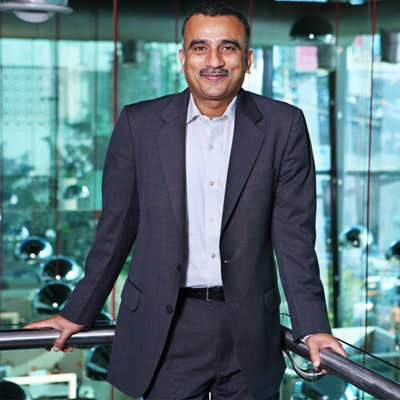
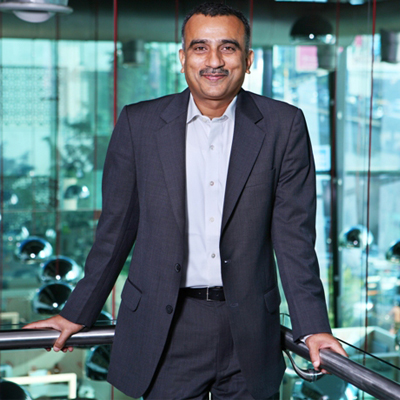
Tag: Sudhanshu Vats

  • Reliance brings with it the zest to win, says Sudhanshu Vats

    Reliance brings with it the zest to win, says Sudhanshu Vats

    MUMBAI: On 29 May 2014, Reliance Industries Limited (RIL) had announced that it would spend Rs 4,000 crore to take complete control of Network18, the company which Raghav Bahl founded in 1993.


    The takeover labeled as the biggest takeovers in India’s media industry, followed the announcement with an open offer to the public.


    Since then, not much has been spoken about the management changes, cultural changes in the companies or the working.


    So, when indiantelevision.com met Viacom18 group CEO Sudhanshu Vats, we couldn’t help but ask.


    Answering the obvious question of has there been any management changes post the takeover of Network 18 by Reliance, Vats says, “No, there have been no changes at Viacom18. The same management team continues to drive Viacom18.”


    Vats goes on to add that Reliance is a very large and successful company. It believes in scale and has strong leading position in all the business segments in which it operates. “The good news from our point of view is that we now have two industry giants – Reliance and Viacom as partners. Reliance brings with it scale, resources and the zest to win. Those are good traits for us to gain new heights in the media sector,” he emphasises


    For the record, Network18 owns news TV channels (including CNBC-TV18, CNN-IBN, CNBC Awaaz etc), websites (firstpost.com, moneycontrol.com), magazines (including the license for Forbes India), entertainment channels (including Colors, MTV and Homeshop18) among other businesses. And Viacom18 founded in November 2007 is a 50:50 joint venture operation in India between Viacom and the Network 18’s subsidiary TV18, based in Mumbai.

  • Viacom18’s digital plan is about ‘mobile first’

    Viacom18’s digital plan is about ‘mobile first’

    MUMBAI: As the world, including the television industry, moves to digital, ways are being found to capture and engage audiences on multiple screens. Viacom18, the JV between Viacom International and TV18, the subsidiary of Network18, is also thinking digital to get a hold of audiences when they skim online.


    Its nine channels – Colors, Rishtey, Nick Jr, Nick, Sonic, MTV, Vh1, Comedy Central and MTV Indies – form the network’s broadcast side.


    Viacom18 group CEO Sudhanshu Vats sees digital as an accompaniment to television viewing. “In India digital is at a very nascent stage. In the US, over the years, TV viewership has remained the same or inched up a little. It is consumption in the digital space that has grown and the same trend will be seen in India,” he says. While India boasts of a 1.2 billion population seated in 250 million homes, the number of TV homes is just about 160 million. “This gap of 90 million means that there will always be room for classic TV content as well,” adds Vats.


    Much of this digital contribution currently comes from urban India but Vats says that data shows a reasonable amount of rural India also utilising the digital medium. As per him, traffic coming from PCs and laptops is an urban phenomenon while rural India is more hooked to the mobile.


    Its flagship channel, Colors, boasts of 414,000 followers on Twitter, thanks to its extensive thrust on the social media platform. It is way ahead of competition on both Twitter as well as Facebook. It also has commendable followers for its non-fiction properties such as Bigg Boss and Jhalak Dikhkhla Jaa.


    In terms of content exclusive to digital, Viacom18’s MTV has experimented a lot with webisodes of which a few have never appeared on television. Now the focus is on creating content that suits the smaller screens. “We need to revisit how best to customise content for the small screen from the way it is shot as well as the duration. What are these short stories? Do they invite to action or a combination of narrative and time span, etc. When you say mobile first, it is what you will do for this screen first that matters,” points out Vats.


    Vats agrees that the business model for monetisation of TV content is superior to digital, which is still in an evolution phase. So the need of the hour is to understand how to target multiple screens. “As transportation develops in India, ‘snacking’ will gain shape.  Digital will offer more snacking content and less long-form. The minute you have the option of watching stuff on a bigger screen you will, but on the other hand, you will snack. Also, the current online content stream is low on quality and high on price. We are exploring avenues in the mobile space to change that for the better,” he explains.


    However, Viacom18 is also focused on increasing traffic to its channel websites rather than to its Youtube page. Colors diverted traffic to its official website rather than its Youtube page for people who wanted to watch Comedy Nights With Kapil. “We had to focus on where people were viewing Comedy Nights With Kapil, and direct it to where we want them to view it. So we figured having a smaller section on YouTube and baiting them from there to the Colors website made more sense in this case,” explains  Vats.  


    He also says that digital is a lot about windowing. “What is running live on television, when is going to be linear in that sense on digital – simultaneous or windowed later – and what is the monetisation plan for each of them. If you want to watch it in the linear format, then it may be subscription based. If you want to watch it later, it might be a combination of subscription and advertising,” concludes Vats.


  • “We have to drive BARC to measure outside of TV, on different screens”: Sudhanshu Vats

    “We have to drive BARC to measure outside of TV, on different screens”: Sudhanshu Vats

    NEW DELHI: Mobile phones today define the life of the youth. Kids watch all kinds of programmes, sometimes on TV and sometimes not on TV. And this, according to CII chairman national committee on media and entertainment and group CEO Viacom 18 Media Sudhanshu Vats, is not an urban phenomena but an Indian one. The consumers are moving fast, but the question currently is if the regulator and the regulations are moving fast enough?


    Reflecting his thoughts on consumer behavior at the recently concluded CII Big Picture Summit 2014, Vats said that the industry hasn’t made much progress in the area. Talking sector wise in the media and entertainment sector he first spoke of radio. “Today private news is splashed across print, television, internet and then there is news available through tweets and other formats on mobile, but private news is still not available on the radio,” he informed. Through the forum he appealed to the Information and Broadcasting  Minister Prakash Javadekar (I&B) to take this into account during the phase III of FM.


    In the film sector, Vats informed that the number of screens that China has is three times the number that India has. Not only this, while the biggest film in India is close to $50 million, the biggest local Chinese film is close to about $150 dollars today. And Hollywood films tend to be bigger. “There is a need to reduce taxation in ticketing and entertainment. If this happens, we will expand volumes and if volumes expand, we will grow in this country, giving a boost to films which are the best ambassadors of our culture. Both in India and abroad,” he said.


    The third sector he spoke about was events, which currently are not much spoken about. “This can become a hotspot for tourism. Single window clearance is needed,” he added.


    Vats also touched upon the most talked about issue of digitisation. “There is a need to look at digitisation holistically and take strides firmly in one direction. What is happening is that in phase I and phase II, we have done something and not done something. Addressability is still not there. The entire start-stop is not helping,” he opined.


    According to Vats, this new India needs new thinking and it needs new rules and principle. “The time for this is ‘now.’ “We are open to looking at this, but we need to make radical, important strides,” he said while putting forth four new principles to address this new thinking.


    The first is the consumer or viewer. “We need to start the story with the viewer. We need to realise that media and entertainment industry is a consumer industry. The question is:  are our regulations or business models tailored to consumers? The answer is no,” he said.


    The second principle that he stressed upon was on collaboration. “It is extremely important that we start collaborating, both within the industry and by the government with the industry in India and other countries as well.”


    Measurement was the third principle he highlighted. “This aspect is extremely important as audience and viewer is moving very fast. Are we being able to measure it the way we want to, currently the answer is no. But the Broadcast Audience Research Council (BARC) India, which is a joint industry body, is the first step in this area. We have to see how we drive it further so that BARC measures outside of television; on different screens and how it is there for other media as we move forward from the point of view of measurement,” Vats said.


    The final principle that he spoke of was capacity. This refers to human capacity and talent. “Are we recognising media and entertainment as a serious industry? Are we developing it as a curriculum which can be brought about, at least in high schools, so that we start facilitating some of the work which happens. So human capacity building and physical infrastructure capacity building like broadband, digital cable etc needs to be worked upon,” he informed.


    According to Vats, a few years down the line, the distinction between the creator and the consumer will narrow down. Not just this, different sectors of media and entertainment will come together. “Converged India will thrive in a connected world,” he opined.


    India is bubbling with creativity and we can pride ourselves in freedom of thought. “Let’s create in India for the world, make in India, show the world,” concluded Vats.  

  • Budget 2014 is an opportunity for M&E to grow: Sudhanshu Vats

    Budget 2014 is an opportunity for M&E to grow: Sudhanshu Vats

    The new government’s overall inclination towards development brings with it great optimism about the new Budget (2014) for me – not just as the head of an organisation but also as a representative of the Media and Entertainment industry. In fact, the Media & Entertainment industry experienced a whiff of fresh air with the new I&B Minister’s thoughts at the recent CII CEO roundtable. Eminent colleagues from across the industry raised key issues, which Shri Javadekar patiently heard and responded to – a sign of the new government’s strong preference for accountability and focus on governance.


    The industry is poised for exponential growth during the term of this new government – almost doubling every year. It has the potential to provide almost six million direct jobs and also add to the economy as an aid to tourism.


    After the extensive discussions and dialogue with colleagues and members of this bustling industry, I’ve penned some suggestions that can fuel the industry to reach never-before levels of growth.


    Accountability


    Accountability is the one thing that lacks processes in the Media & Entertainment space. A single-window clearance mechanism for permissions, especially for films and events, will motivate the industry to concentrate more on revenue streams rather than go around in circles. The wish list would remain only partially addressed without queries and licenses becoming more time-bound.


    And while we expect an evolution in policies, keeping them clear and consistent with foresight at the back of the mind constantly, future action can be planned at the organisational level with greater certainty and generate opportunities for employment in large numbers, thus contributing significantly to the economy.


    Pragmatic Policies


    The media and entertainment industry is currently valued at USD 20 plus billion with significant growth potential. We’re poised to catapult to the next level with a few pragmatic policy reforms. Additionally, the M&E industry has the capacity to generate almost six million jobs directly and also further boost sectors like tourism.


    More Spending Power


    Rationalising Income Tax slabs is a key step towards taking the burden off the consumer’s shoulders. He will have more money to spend on his favourite means of recreation – entertainment.


    Tax Abatement


    And while we are on the topic of the Media & Entertainment industry and its role in the economy, one of the biggest losses I believe that it incurs is almost the one-third of revenue that it gives away in taxes and multiple licence fees over and above recurring commissions. These need to be re-evaluated and rationalised. In anticipation of GST implementation, entertainment and service taxes can be lowered to a more reasonable level.


    Considering the premise of development that the new government has adopted, we expect a growth oriented budget, laying down a clear and consistent long-term roadmap. These steps that I have attempted to chalk out, will only allow the entire industry to collectively entertain India even more, even better!


    (These are purely personal views of CII National Committee on Media & Entertainment chairman & Viacom18 Media group CEO Sudhanshu Vats and indiantelevision.com does not subscribe to these views.)

  • B. Sai Kumar departs from Network18

    B. Sai Kumar departs from Network18

    MUMBAI: People movements continue to dog the Network18 group. The latest to head towards the door is group CEO B. Sai Kumar who spent close to 14 years with Network18, founded by Raghav Bahl.  Sai had ably stepped into Haresh Chawla’s shoes when the latter decided to go his own way in his entrepreneurial forays.


    A notice to the Bombay Stock Exchange states that Sai Kumar was with the group during its formative years and that he was responsible for the creation and management of the group’s various ventures – the business news partnership with CNBC ; the general news partnership with CNN; the entertainment partnership with Viacom and the infotainment deal with A+E Networks and the group’s digital forays.


    Sai Kumar’s departure comes at a time when the group has reported turnaround financials just yesterday.


    The BSE  notice quotes Sai Kumar as saying: “Network18 has been an extension of my family. I take with me very good memories and I will always cherish the time spent here. It has been a tremendous learning ground. Passion and hard work – they brought to work everyday. While all good things come to an end, I see it as a new beginning and I am positive and hopeful that Network18 scales new heights hereon.”


    Added Network18 founder and editor Raghav Bahl in the BSE release: “It’s not easy to describe Sai’s role and contribution to the group. He has been one of the key pillars of the Network18 story. I am truly privileged to have been able to work with someone like Sai who has given the prime of his life to group and development of a baby called Network18, right from the days when it was a fledgling single channel operation to its evolution as one of India’s largest and most diversified and respected media companies. We shall miss him; but there comes a time when one takes heed to one’s calling and I wish Sai all the best for that.”


    The news has indeed come as a shocker to many in the industry. Amongst those who have put in their papers over the past year include: IBN18 CEO Dilip Venkatraman, CNBC TV18’s Udayan Mukherji, CNN-IBN’s Suhasini Haider.


    Dilip was recently replaced by former Times Television head Avinash Kaul.


    But the group has senior talent aplenty with the likes of Viacom18 CEO Sudhanshu Vats; Colors CEO Raj Nayak, Indiacast CEO Anuj Gandhi, and Network18 COO  Ajay Chacko.

  • M&E industry can grow much more than it is right now: Sanjay Gupta

    M&E industry can grow much more than it is right now: Sanjay Gupta

    MUMBAI: Star India CEO Sanjay Gupta while talking during the final session of day one at the 15th edition of FICCI Frames 2014 — “Talking Numbers: Hard Facts about M &E’s Economic Contribution” — said that it seems that “as the media and entertainment (M&E) industry we have really forgotten how big we truly are, we are not just about showbiz. I believe we are undervaluing ourselves and instead of being a $15 billion industry we should be somewhere around $ 60 billion (that is, four times).”


    Gupta thinks that the industry has a potential to grow at the rate of 15 per cent, but it is rather doing just a shade below five per cent. “The industry, comprising of the stakeholders and the regulators, is having a very myopic view on how can we all come together to serve the consumer with what they want,” he remarked.


    He also brought to the fore the hurdles that a new player in the market can come across. “If I want to introduce a product which is of superior quality than what other products are offering, I have regulatory restrictions on the pricing not to mention the pressing taxation on the content,” he said.


    The session, which was anchored by Motion Picture Association (MPA) India MD Uday Singh, brought up many major points about the contribution of the M&E Industry in the country’s economy and the hurdles that need to be overcome to improve the numbers.


    Besides Gupta, the panel comprised Viacom 18 Media group CEO Sudhanshu Vats, Disney India MD Siddharth Roy Kapur and Aditya Birla Group chief economist Dr Ajit Ranade who underlined the improvements that need to be brought in regulations, infrastructure, cutting down on piracy and much more.


    It was Viacom 18 Media group CEO Sudhanshu Vats, who called attention to the issues associated to digitization. He said: “With an expected growth of 21 per cent in subscription revenues and 15 per cent in advertising revenue by the end of phase three and four of the digitisation, the future for the M&E industry looks bright. But the pressing issue that needs to be addressed is though 40 odd cities have been seeded with boxes are they also addressable?”


    However, he thinks the future is bright for subscription driven markets with the oncoming of 100 per cent ad free channels like HBO Hits and HBO Defined.


    The panelists also discussed the contribution of the three major players in the Indian movie business — Hindi, Tamil and Telugu cinema — that contribute nearly 43 per cent, 19 per cent and 14 per cent respectively to the total revenue generation from the film industry. Singh remarked that with nearly 1.8 million people working in this industry, it is certainly one of the important contributors to the GDP of the country.


    Disney India MD Siddharth Roy Kapur said: “As far as the film industry is concerned, the three major areas of concern are creativity, infrastructure and piracy. Once we as a community get together and address these perils, I am sure the world will become a much happier place.”


    According to Kapur, the top 10 box-office hits contribute to nearly 50 per cent or more to the overall collections from the film sector alone, and the top seven male stars contribute to 45 per cent of the year’s overall box-office collections.


    Singh also brought up the topic of distribution and ARPUs (Average Revenue Per User), stating that with better addressability and packaging the ARPU will witness a substantial rise.


    Aditya Birla Group chief economist Dr. Ajit Ranade concluded the discussion with some mind-numbing numbers and facts. “The industry is currently going through a rapid transformation and the contribution to the overall GDP will see improvement in coming time but we need to take into account that the government is always struggling with a fiscal deficit, thus reducing taxation is not the final resolution.”


    “The right way forward is to move towards a micro payment format where the consumer pays for all the facilities he/she uses this will reduce a lot of disparities and only go onto strengthen the growth of the market and further contribute to the economy,” he concluded.

  • The making of  Pepsi MTV Indies

    The making of Pepsi MTV Indies

    MUMBAI: Indian films grew bigger last year. While the country witnessed some of the biggest blockbusters, it was also a year of the indie films – films made by people on their own terms, with stories that they believed in and wanted to narrate truthfully. Some of these films like The Lunchbox by Ritesh Batra, Ship of Theseus by Anand Gandhi and the recently released Miss Lovely by Ashim Ahluwalia took a long time to find space in theatres, some as long as five years. But once they released, people embraced them.


    Similar was the case with many independent musicians, stand up comics and artists. Someone like Honey Singh, who was popular just among the college students for his indie songs, suddenly found space in the popular Bollywood arena; graffiti became big and popular; and stand-up acts became a year-round affair attracting  a full house.


    While more and more youth in India are willing to tread the road not taken (read: Bollywood and popular culture) in terms of artistic expression,  they continue to  grapple to find support – some don’t get a platform while others continue to scrounge the bottom of the financial barrel, with not much patronage coming their way.


    However, some succor is coming the indie artiste’s way, courtesy Pepsi MTV Indies – a soon to be launched channel by Viacom18 Media Pvt Ltd (a 50:50 joint venture between Viacom Inc and Network18). Pepsi MTV Indies is being talked about as  the El Dorado for youth who want to let their creative juices and expression flow and has the food and beverage giant as its title sponsor.


    It was the close observation of the people associated with the the Viacom18 Network that led to the channel’s conception. MTV India EVP & business head Aditya Swamy says that he witnessed a hunger in the young people for differentiated content. “If you look back in history, once something becomes popular, there’s a need for a subculture to emerge. Like if Bollywood has become popular here, a parallel culture has to emerge,” he remarks.


    Almost eight months ago, the channel realised that enough content exists to create a dedicated destination for independent sub-cultures. “While music is a big part of it, there’s enough happening in other spaces like stand-up comedy, independent films, street art, motorcycling as well, but all these were not getting the required fillip,” says Swamy, who wondered what could be the “game changer.”


    And the answer zipped into his brain in a flash: why not use television which he so well knows, add to it the internet, the mobile, and the live stage. Swamy believes all of these put together put together have a synergistic effect and form a potent combination to deliver the  unconventional  to over 20 million Indian homes.


    As soon as the idea struck him, he went to meet PepsiCo India senior marketing director for Colas, Juices and Hydration Homi Battiwala and without wasting time Mission Indie kicked off.


    Keeping in mind the popularity of indie music, the channel’s major programming would be around music. Back to back music videos as well as content around independent music will be aired along with artists’ profiling etc. Other key programming will be around stand-up comedy. So instead of VJs, comic artists would be seen as hosts. Independent cinema – from a five-minute short film to a 60-minute film, all will get space on the channel. It is open sesame for everything from album art, graphic art, street art to body art, fashion and motorcycling on the channel. .


    Interestingly, Pepsi MTV Indies is going to be multi-lingual with English, Bangla, Malayam, Hindi, Oriya music on offer. “Music knows no language. Good music is enjoyable in any language,”  believes Battiwala, who thinks language shouldn’t become a barrier for a performer. “We will have the sub titles to make it audience friendly.”


    To make it beneficial for larger bunch of youth out there, the channel would give a chance to everybody. “There are a lot of people who are creating interesting stuff in the indie space. We are keen to work with everybody. We are already working with large number of partners – from the small hidden content creators to the large brands and corporates. As the platform grows, everyone will benefit,” remarks Swamy.


    Talking about the process of streamlining content and artists for the channel, Swamy says that anything that is not mainstream would get visibility on this platform. “We won’t play film music or music by international pop legends, instead smaller groups and lesser-known artists would be featured,” he says as he adds that teams comprising qualified independent artists and musicians are curating content for the channel.


    Homi believes that a platform like this that is available 24 by 7 and 365 days of the year, will give the indie artists the recognition that’s long due. “What makes a song popular? It’s frequency on the TV channels. It’s played more often and heard more often. If our content is exposed more, people will be bound to follow it.”


    The Network is planning a 360-degree campaign to promote it across platforms. A website – www.pepsimtvindies.com – has been launched to stream some of its content. The website is richly designed with a broad representation and coverage of artists, experiences of fans and indie news from across the globe. Vishal Dadlani, the Raghu Dixit, the Bandish Projekt, the Jaipur Literature Festival are some which seem to be getting the spot light. The videos section has a bunch of videos from the usual indie suspect, but the good part is that it has many more from the unusual newbies too. To add to that, visitors can have access to a gig guide which also allows them to book tickets.  


    Pepsi MTV Indies also has its own indie music discovery app on iOS and android platforms. The app will help the audience in recognizing the name of the song, lyrics, guitar tag along with the names of five other artists to be checked out. Even videos can be watched on it.


    Extensive on-ground activities have been planned too. The channel will reach out to more than 350 top colleges nationally in the first year itself. 


    A promising promo has been created to build the right buzz around the channel. “Every artist in the promo are genuine indie artistes,” reveals Swamy as he talks about the background track that has been created by Dualist Inquiry – a solo project by musician Sahej Bakshi. “The track is going to become a music video. Credibility, realness and honesty have been important for us while building the channel,” he adds. 


    The channel is also working closely with bands like Menwhopause, Indian Ocean, Parikrama, Spud in the Box and Sky Rabbit.


    Some of the shows planned to go on air with the launch of the channel at the end of this month include The Unusual Suspect, Sound Tripping, Morning Jam and Indiepedia.


    The channel is an extension of MTV India and thus everyone working for the parent brand is involved with this as well. While a handful of few new employees are expected to come on board, largely the music team is the same.


    With digitisation and the launch of more premium services, Swamy believes it does not make sense to be a free-to-air (FTA) channel, and thus from day one has been put in the pay bracket.  “People who enjoy such content will be happy to subscribe to it,” he remarks. 


    When quizzed if MTV has had a change in strategy on air time selling following the TRAI mandated ad cap, Swamy said that in the beginning the idea is not to sell the inventory rather to make the channel popular.


    “We want to work with 20 odd advertisers who deeply believe that brands need to be invested in this space. This is not about carpet bombing, but about sniper firing. Brands have already invested in this space to be ahead of the curve. It isn’t about how many spots they want to place on air. It is about adding value to Pepsi MTV Indies. If a phone brand agrees to come on board and embeds Indie content into 10 million phones, we will be happy to involve them as they would be spreading the movement.”


    Pepsi is slated to add its marketing muscle to push the MTV Indies brand. It is looking at using the face of its beverage packaging to reach out to larger audiences. Close to a million different packs are slated to carry the brand of Pepsi MTV Indies.  “And we are quite excited about on-ground and the multiple spaces,” says Battiwala. 


    The Network believes that the new channel is not going to affect the viewership of MTV as there’s enough space for both to co-exist. “Music is always a part of youth. There is so much music in India. We will now be looking at two different types of music. I don’t see content of one overlapping on another. May be, a lot of stuff born on Indies can become mainstream and eventually move to MTV,” says Swamy.


    Launching a new channel is not an easy task, believe experts in the industry. It is an expensive affair as well, especially when the channel will be available in high definition (HD) Dolby Surround 5.1. Industry sources assume the cost of the channel to be close to 25-30 crore. 


    The biggest challenge in today’s time, experts think, is to make something creatively good and also make a business out of it.  According to analysts, Pepsi MTV Indies has numerous mines to dig for gold: subscription money, licensing and merchandising,  growing internationally, expanding digitally, and live events. 


    Madison COO Karthik Lakhsminarayan believes that parent MTV has kind of got its vision relatively clear on the indie offering and that the mother channel will not be affected. “MTV has its own following. The category will expand and new followers will follow the new channel. Ultimately, it is being run by the same set of people. They will ensure that there is no commodisation at their end.”
  • Saugato Bhowmik appointed as head, consumer products business at Viacom18

    Saugato Bhowmik appointed as head, consumer products business at Viacom18

    MUMBAI: Viacom18 has appointed Saugato Bhowmik as the head of consumer products business. The group continues to strengthen its operations with this appointment. Saugato brings to the table rich experience of 12 years across consumer brands in Dabur India and Hindustan Unilever.

    Very early in his career Saugato has successfully led brands in home and personal care categories based in India and Singapore. In Singapore he led the Unilever business for tooth brushes for Asia within the oral care category. In his most recent role, he was leading the sales strategy development for general trade business of Unilever across all key markets.

    Saugato Bhowmik is confident of using his years of experience to hasten the growth of consumer products business at Viacom18

    Speaking about his new appointment, Saugato Bhowmik said, “I am thoroughly excited about my new role with Viacom18 Group. The dynamic nature of the broadcast industry presents multiple opportunities for marketers to leverage the power of our brands across multiple consumer touchpoints, and I hope to apply my experience and contribute to the rapid growth of consumer products business at Viacom18.”

    Viacom18 Group media networks CEO Sudhanshu Vats said, “Saugato brings with him Business experience from FMCG with good understanding of Brands, distribution landscape in India, dealing with large retailers and managing Business P&L. With his experience and his “Never say die” attitude he is well equipped to drive our consumer products business to the next level. I look forward to working him and welcome him to Viacom18 family”.

    A graduate in Economics from Sri Venkateswara College, Delhi University, Saugato completed his MBA with a marketing specialisation from IMT, Ghaziabad in 2002. 

  • Nickelodeon-Unilever-Amagi enter advertising geo-targeting deal

    Nickelodeon-Unilever-Amagi enter advertising geo-targeting deal

    MUMBAI: Advertisers and their agencies always want a bigger bang for their buck. Especially if it is buying expensive air time on TV channels. And one player that has been working at getting them that extra zing is the Bengaluru-based Amagi Media with its geo-targeted advertising DART technology platform.


    With almost 15 channels as clients and a reach of about 200 million viewers, the hot shot tech firm today announced that it has done a deal with arguably India’s biggest advertiser Hindustan Unilever Ltd (HUL) and the Viacom18 kid’s channel Nickelodeon.


    As part of that deal, an HUL TV commercial will run simultaneously on Nick nationally in different versions , depending on geographical location using Amagi’s DART platform. .Lo and behold, HUL will be micro-targeting its communication, something which would surely delight the savvy marketing behemoth. .


    Terming this pact as ‘creative-versioning’ Amagi claims that it addresses crucial needs of advertisers as well as broadcasters to make the most of the ROI from the television spot.


    Says Viacom18 group CEO Sudhanshu Vats: “We are pleased to partner with Amagi and Hindustan Unilever on this unique concept of micro-targeting. This initiative further builds on our strategic thrust of sharper segmentation.”


    Amagi was rated as the second fastest growing technology company in India by Deloitte Touche Tohmatsu.


    Amagi Media co-founder Srinivasan K.A explains: “This is the first time worldwide in television advertising that a single spot bought nationally has been used to communicate different brand messages in different regions. Such micro-targeting is going to be the future of television advertising.”


    What Amagi does for its other broadcast partners is buy ad slots on their channels and then resells them to regional advertisers. A bar code is added to the ad which is used to identify the placement of ads in specific regions.


    Broadcasters have been wary of this kind of advertising as it would mean giving up national inventory for lower-cost local advertising.


    This is probably why Nick is letting HUL do its own micro-targeting rather than selling its ad space to Amagi to get regional advertisers on board. However it is a boon to local advertisers who only pay for advertising in a particular region of a national channel at a much lesser cost as well as those who want to mould their ad to suit geography-specific cultural demands.


    About Rs 70 crore has been invested in Amagi and it aims to break even somewhere in 2014-2015. Its current yearly revenues are a little less than Rs 50 crore.


    It already has a long list of broadcast partners such as TEN sports, Times Now, CNBC Awaaz, IBN7, CNN-IBN, UTV Movies, Maa TV, Zoom, Udaya TV as well as Tata Sky as its DTH partner. Zee News and Zee Business were recently added to its kitty. Its list of advertiser clients includes Chevrolet, Toyota, Fortuna, Skoda apart from local ones such as Kuberan Silks, YLG, Mysore tarpaulins etc.With Unilever being roped in will other top notch advertisers also follow?


    That’s for later, but the news now is that soon a kid watching Nickelodeon in Kolkata will not see the same ad as a kid watching the channel in Kolhapur. Wonder whether he or she will notice the difference?

  • Viacom18 hires Utpal Das as Chief Commercial officer

    Viacom18 hires Utpal Das as Chief Commercial officer

    MUMBAI: From Zee to V. V as in Viacom18. That’s the route that Utpal Das is taking. Viacom18 Media today announced that the long time Times group and Zee TV professional has joined the company as chief commercial officer effective 1 August.


    Utpal will be reporting in to Viacom18 CEO Sudhanshu Vats and will be a part of the Viacom18 leadership team.


    Announcing this appointment Vats said, “As a network we are growing exponentially. In our next phase we are committed to strengthening our central functions to build efficiencies and drive synergies. Utpal brings rich and diversified experience to the team and I am confident he will contribute to our growth story. I welcome him to the Viacom18 family and look forward to working with him.”


    “I have always been in awe of the Viacom18 network for the strength of the channel portfolio and the way they have set benchmarks for television and film entertainment. Its indeed a privilege to be part of this wonderful team,” commented Das.


    Utpal brings to the table more than two decades of experience across several companies in the very diverse business segments ranging from Larsen & Toubro in engineering to Zee Entertainment and BCCL in media. Das is a bachelor of engineering from Regional Engineering College-Silchar and executive masters in international business from IIFT Delhi.