Tag: Sudhanshu Vats

  • Viacom18 christens VOD platform as VOOT

    Viacom18 christens VOD platform as VOOT

    MUMBAI: The digital space in India is going through a revolution of sorts. Broadcasters as well as content companies are firming up their plans to provide content to consumers on the go. The latest to join the bandwagon is Viacom18 Digital Ventures, which has christened its new digital video-on-demand (VOD) platform as VOOT, going by the popular expression used by today’s digital generation to express happiness, enthusiasm and triumph.


    Besides being the singular and exclusive destination for Viacom 18 network’s content portfolio, VOOT will also have an aggressive original programming strategy.


    The brand identity for VOOT, which is expected to go live in the coming months, has been created by Brand Gym and Elephant Design.


    Over the past few months, Viacom18 Digital Ventures has been working with a set of strategic partners on the brand design and logo with the aim of keeping it distinctive, differentiated and in-sync with the brand mission to create a fun filled world of entertainment.


    In July, Viacom18 appointed IndiaCast Media Distribution group COO Gaurav Gandhi as the chief operating officer of Viacom18 Digital Ventures. The company also recently mandated Monika Shergill to drive content and programming strategy as content head for the digital business.


    Viacom 18 group CEO Sudhanshu Vats said, “As one of the fastest growing media companies in the country, for us at Viacom18, digital content creation, delivery and access are essential focus areas for driving growth. With VOOT, we set out to leverage an already digitally engaged audience with our content offerings. VOOT will not only be the singular and exclusive destination for Viacom18’s content portfolio, but will have an equally strong focus on original programming created especially for the platform. The brand mission of VOOT is to create a whole new world of entertainment, filled with happy discoveries and addictive content.”


    Gandhi added, The idea of creating this new brand VOOT comes from our desire to create a new, alternate and differentiated world of entertainment for audiences in the digital space. The core essence of the brand is ‘infectious fun’ and ‘happiness’, and this is something that not only flows through in our bright and colourful logo, but will also resonate in our content philosophy. Just like the expression VOOT, the entire philosophy and experience of the service promises to be joyous and celebratory in nature. The digital video market, both in terms of audiences and revenues, is set to explode over the coming years. VOOT will not only target to gain a sizeable share of this market over the years, but also lead the way and set new trends in original content creation in this space.”


    Working with technology, content and branding partners in India and across the globe, VOOT will deliver high quality content to consumers on a wide variety of connected devices over Wi-Fi, 4G, 3G and 2G networks.

  • ‘M&E industry’s $100 billion dream remains elusive with choking of investment:’ Star India COO Sanjay Gupta

    ‘M&E industry’s $100 billion dream remains elusive with choking of investment:’ Star India COO Sanjay Gupta

    MUMBAI: Despite the India Shining and Digital India waves that the country has been witnessing, the $100 billion dream has remained elusive for the Indian media and entertainment (M&E) industry.

    Speaking at a CII conclave in New Delhi today, Star India COO Sanjay Gupta lamented this fact that saying that from 0.8 per cent of GDP three years ago, the industry had resolved to grow to 1.5 per cent within a decade. However, in the past three years, media as a percentage of GDP has instead fallen by two basis points and the $100 billion dream has continued to remain distant.

    “The biggest hurdle has been the choking of investment. To meet ambitious targets, a business either needs to generate large profits internally, which are then invested back into the business or they grow on the back of external investments – national or international. But the M&E industry boasts of neither,” he said

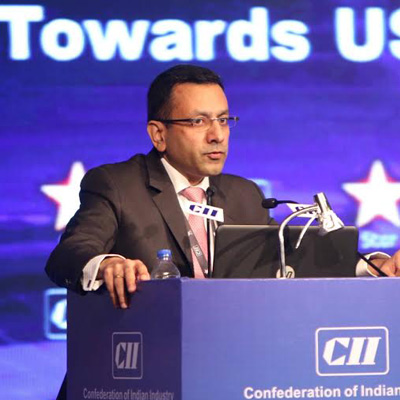
    CII National Committee on Media and Entertainment and Group CEO, Viacom 18 Group CEO and CII National Committee on Media and Entertainment chairman Sudhanshu Vats, Prasar Bharati CEO Jawahar Sircar, Information and Broadcasting Ministry special secretary JS Mathur and Minister of State for Information and Broadcasting Rajyavardhan Singh Rathore were among those present at the summit.

    During the past 15 years, the M&E sector has barely seen any new entrants and only around $4 billion in foreign direct investment (FDI). To garner $100 billion, the industry needs to invest at least $50 billion over the next decade – something that seems farfetched, given the present circumstances. “With M&E remaining an unattractive destination for investments, investors have no interest to invest in a fragmented and unprofitable business. Despite the 12 per cent year-on-year growth touted for the industry, the sector is paradoxically riddled with a host of unprofitable verticals. For example, sports is a $2 billion industry that could easily grow to around $10 in the next five years. Be it Hockey, Football, Kabaddi or Badminton, the new sporting leagues are being lapped up by the audiences,” Gupta said.

    Yet, the M&E industry has been unable to take off on the back of these investments. “Although Star India has been investing almost Rs 200 crore every season for the past two years, dividends are not commensurate. For this to happen, one needs to scale up the volume of content. In other words, more teams, more players and more days of Kabaddi are required annually to capitalize on this opportunity,” Gupta added.

    “A bizarre challenge confronts us here, however. Although Punjab and Haryana contribute large numbers of Kabaddi players, one cannot add more teams based in either of these two states because they do not have a single indoor stadium that could host a Kabaddi match. In Mumbai, the game is hosted at the NSCI Dome, but the biggest constraint is the availability of this facility for a reasonably long period of time. One venue for a city with more than 1,000 Kabaddi clubs simply does not make sense. In this case, consumer interest and the ability to invest are no hurdles, but the fact that the sporting infrastructure required is simply non-existent. Worse, there are no plans to address this situation,” Gupta continued.

    The movie business is no different. With around 7,000 screens, India has one of the world’s lowest screen densities. Despite breakthrough movies such as Queen, PK or Bajrangi Bhaijaan, revenues are stagnant, although the cost of producing these movies has soared dramatically in the past decade. Therefore, a $2 billion industry that sets a billion hearts racing earns zero profits.

    Even news channels fare no better. Without a robust business model, news channel have no money to invest in their business. Whether English or regional, number one channel or last, none of the channels make any money because none earn any money from subscription. Globally, subscription contributes as much as 60-70 per cent of the total earnings of a news channel.

    Television distribution is roughly a third of the total value of the media industry. In the past few years, immense investments have been made in both direct to home (DTH) and the cable business. But the tragedy of this sector is that even after many years of continued investment not a single company or business makes any money. Since the sector is considered a basic need from a consumer viewpoint, the prices at which content is sold by creators to platforms is regulated – prices frozen in 2003 haven’t changed in the past 12 years. In the same 12-year period, even the price of milk has jumped from Rs 12-15 a litre to Rs 35-40 a litre. 

    “Such anomalies are making the sector bleed. But no one seems to care,” Gupta lamented. “In Delhi, for example, the new government has doubled entertainment tax. Consequently, almost 30 per cent of revenue is paid as entertainment tax. The lack of political alignment and consistency of policy in the sector makes it impossible to plan a sustainable business model.”

    In 2015, where millions across the country receive their daily dose of news from Facebook feed, radio broadcasters can only air news snippets from All India Radio (AIR). “In the US, radio has gone hyper local and people spend an hour daily listening to radio. This gives a fillip to local brands since a quick and cheap platform is available to build their business. In India, conversely, there are a limited number of radio stations and limited content that can be aired – and without any news. It is no surprise then that even in large cities where FM exists, the time spent on radio per person is five minutes. Can any industry on Earth make money in such circumstances?” he asked.

    Gupta concluded by asserting, “Unless we unblock minds, we cannot unblock capital.”

    Accordingly, there is an urgent need to make distribution profitable, position animation as the next wave of export-oriented growth, support a serious scale-up of exhibition screens and sports stadiums and allow content innovation in radio. A hugely attractive pitch for domestic and international investors is required, giving them clarity on the policy environment for the next 10 years and confidence of generating sizeable returns on the investments.

    All stakeholders, businesses, policymakers and regulators need to stop being happy with the status quo and incrementalism. In the new era backed by technology, every sector from automobiles to financial institutions and even grocery shopping have witnessed dramatic growth and serious disruptions on the back of serious flow of capital.

    “M&E too needs to see brave new entrepreneurs, disruptive ideas and unconventional business models but this will only happen if we unblock the capital,” stressed Gupta.

  • LMO – consumer collaboration is key to successful digitisation: IDOS

    LMO – consumer collaboration is key to successful digitisation: IDOS

    GOA: Collaboration is the only way for the Indian digital industry to go forward – particularly if it involves the last mile operator (LMO) as well as the subscriber. This was the core of the opening of the Indian Digital Operators Summit (IDOS) 2015 organised by Indiantelevision.com along with Media Partners Asia on the theme of ‘Defining the Digital Future.’


    Speakers at the summit, which is being held at The Lalit, Goa from 24 – 25 September, stressed that it was time to stop fighting with each other in courts or other forums and to move forward together since digitisation was inevitable.


    Speakers in the opening session of IDOS 2015 were clear that though the government was the largest gainer by way of taxes etc, it could not be depended upon and it was for the stakeholders to move forward on their own if the Phase III and IV digitisation deadlines set by the government had to be achieved. 


    Describing the scenario as a marathon race, Viacom Group CEO Sudhanshu Vats said it was critical for all stakeholders to collaborate and yet compete at the same time.


    The industry also needed to keep in mind the fact that the consumer is running ahead and everything depends and changes according to what he wants.


    In order for the market place to evolve, it was imperative that all stakeholders moved forward in a collaborative spirit. The policy makers, unfortunately, are the last in this race as they are slowest. So frustration will set in if everyone looks to the government as the winner.


    “Digitisation is being looked at myopically but it is necessary to look at it along with the consumer. Over the Top services will shortly take over in a big way. It is therefore important to realize that while each platform has a different technology, it’s important to keep pace. Players have to be pro-active and customise for all the 1.2 billion viewers,” Vats said. 


    Walt Disney India MD Siddharth Roy Kapur said it was important to see how consumers were rapidly moving from just a single screen scenario to usage of multiple platforms. “That is the reason why I prefer to use the expression ‘video content delivery business’ instead of television business. There is a strong need to put consumers at the centre of the whole media business,” he added.


    However as a result of multiple screens coming in, the level of attention span per screen has been declining. “Stakeholders have to keep this in view while planning their strategies. Content creation therefore has to change accordingly and companies need to find ways to get the consumer to value the content,” he added.


    He also stressed on the need for companies to look at each other as partners and move ahead to derive more value and average revenue per user (ARPU).


    Hinduja Group’s Grant Investrade MD Tony D’Silva said his company had carried out various studies before launching their Headend In The Sky (HITS) platform – NXT Digital. “All these studies showed that the last mile operator, who had built this industry with his sweat and blood, had to be taken along, and the consumer was a key stakeholder,” he said.


    It was clear that the first beneficiary through taxation, service tax, entertainment duty or licence fee was the government. However, the government has done little to support the industry. On the other hand, the second beneficiary was the broadcaster, which received 75 to 80 per cent of the revenues. “He therefore must play a key role in this journey,” D’Silva said. 


    Considering what these stakeholders – government and broadcasters – get, it was necessary that the two help other stakeholders if digitisation had to be achieved. 


    Digitisation will also help bring about transparency in a scenario where the LMOs had been declaring just around 15 – 20 per cent of their subscriber numbers.


    NXT Digital has been designed in a manner in which the LCO/LMO does not lose proprietorship of their business and did their own broadcasting deals as well as pricing and packaging as per market rates. The HITS platform also enabled LCOs to obtain set top boxes at their own convenience with easy funding and set up local channels in order to compete with other digital platforms like direct-to-home. NXT Digital had worked out a fee of just Rs 50 per subscriber per month and is offering 500 channels.


    It also ensured encryption at three stages: in the NXT system, at the LCO level and at the STB-end. GPS had been provided to the STB to ensure any movement was detected. It is therefore clear that the LCO has to be helped if Digital Addressable Systems (DAS) has to succeed. Perhaps the biggest problem was to get the consumer to pay, and the LCO needs to be aided in this task.


    In a presentation of the present scenario, MPA executive director Vivek Couto said that it was important for stakeholders to get their act together as digital penetration was only at 50 per cent so far. “It is also necessary to remember that Phase III and Phase IV comprise a large chunk than the first two phases,” he added.


    According to Couto, around 70 per cent of the content contribution was coming from players like Viacom, Sony, or Fox. Adding that the low rate of internet connectivity around the country was a major issue, he said, “The Indian pay TV business will remain competitive and reach its peak in the next three years, but research and collaboration is very critical for this.”


    Indiantelevision.com founder CEO and editor-in-chief Anil Wanvari said in his opening remarks that in order to meet their targets, stakeholders had to have commitments and take tough decisions. “However, the large number of legal cases and problems of agreements between various stakeholders must make them realise that DAS will not succeed in this manner,” Wanvari emphasised.


    At the same time, Wanvari was also of the opinion that LCOs and LMOs had to change and forge partnerships in order to move forward. 


    The government on its part must do something about taxation along with opening up for greater foreign direct investment (FDI).

  • Viacom18 launches Viacom18 Digital Ventures; appoints Gaurav Gandhi as COO

    Viacom18 launches Viacom18 Digital Ventures; appoints Gaurav Gandhi as COO

    MUMBAI: Viacom18 has launched its new digital business, Viacom18 Digital Ventures bridging traditional broadcasting and digital innovation.


    The network has handpicked IndiaCast Media Distribution group COO Gaurav Gandhi as the chief operating officer of the new venture, effective 1 August, 2015.


    The decision to start a new line of business comes in light of the organisation’s strategy to develop a convergent digital media platform for evolved consumers and marketers.


    Viacom18 Group CEO Sudhanshu Vats said, “Broadcast industry is growing rapidly, and digital content, delivery and access are the new green shoots. We are looking to leverage the interception between a highly digital audience and the current content offerings. Gaurav’s rich experience in media, keen understanding of digital, strong base in distribution and his entrepreneurial instinct have made him our obvious choice.”


    Gandhi added, “I am very excited about this opportunity of building out a consumer facing digital business for Viacom 18. With the ever changing media landscape, fast growing high-speed internet access and explosive growth in video consumption across screens, there could not be a better time to move forward in this space. We at Viacom 18 want to be the forefront of this digital convergence with our products & content offerings.”

  • Colors Infinity to launch amidst 25 city marketing blitzkrieg

    Colors Infinity to launch amidst 25 city marketing blitzkrieg

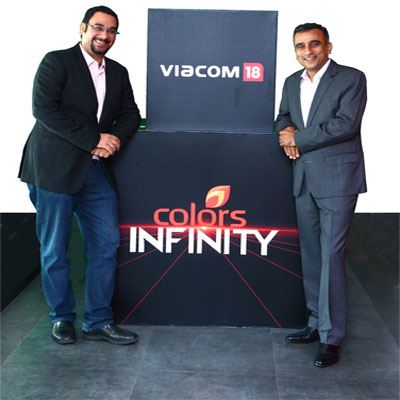
    MUMBAI: Moving towards a new horizon in the English entertainment space in the country, the soon to be launched Colors Infinity from Viacom18 stable is all set to break new ground by ushering in the growing trend of ‘Essential Viewing’ – An immersive experience of watching three continuous episodes of globally applauded narratives back to back. The channel is expected to launch by July end.


    The experience will be further augmented by the ‘First Indian Premiere’ of a new show every day of the week that includes critically acclaimed and multi-award winning series like Fargo, Orange Is The New Black, Better Call Saul, The Flash, amongst others. The channel has been co-curated by Karan Johar and Alia Bhatt, bringing in a great blend of finesse and insight to the channel through curating world class content.


    Viacom 18 Group CEO Sudhanshu Vats said“In 2008 Viacom18 scripted the first few pages of its journey to establish its first milestone in Hindi general entertainment channel (GEC) Colors, thereafter disrupting the genre landscape. In 2015, we once again embark on a journey to recreate history, this time in the English entertainment space with Colors Infinity. Our first home grown English entertainment channel for India, through its many firsts, is all set to subvert convention in the genre through providing a consummate viewing experience.”  


    In unprecedented acquisition for the Indian market, the network has entered into major multi-year deals with Warner Bros. International Television Distribution, NBC Universal, Sony Pictures Television, Twentieth Century Fox, Lionsgate, MGM, BBC and Endemol Shine amongst others.


    Viacom18 EVP and head English entertainment Ferzad Palia said, “Colors Infinity is ready to be the absolute for the best in English language entertainment with its handpicked international content and extensive multi genre offering. Adding to the immersive experience, the innovation of facilitating essential viewing is set to be a definitive game changer through inviting newer audience and growing the viewership pie.”


    Palia added, “Till September, we will telecast seasons already aired in the US and update Indian viewers, and then eventually when the new series starts in the US we will have simultaneous screenings. This is something which will stop people from illegal streaming. Fresh content was unavailable to them as channels were telecasting repeats even in the primetime so they were forced to take the pirated route. No one indulges piracy for fun, it’s just that they lack options.”


    Launched after a thorough research spanning over 24 months, the network has roped in four brands as launch partners viz. L’Oreal, Renault, Grey Goose and Intigriti. All these four brands will have presence on the channel post launch too.


    The launch will be backed by high decibel marketing campaign in over 25 cities across the country. Karan Johar and Alia Bhatt will play the anchor role and every promotional strategy will be orchestrated around them. The promo featuring the Kjo and Alia Bhatt will reverberate both on digital and television. “Most of the creative, promos, packaging, graphics have been created by our in-house creative team and I am delighted that we have such an innovative team who has won many global accolades,” informed Palia.


    Programming


    1) My Kitchen Rules: Every day, at 8 pm.


    2) The Flash Season 1: Three back to back episodes, every Monday at 9 pm.


    3)The Musketeers: Three back to back episodes, every Tuesday at 9 pm.


    4) Forever season 1: Three back to back episodes, every Wednesday at 9pm.


    5) The Big C: Three back to back episodes, every Thursday 9pm.


    6)The Orange Is The New Black: Three back to back episodes, every Friday at 9pm.


    7)Better Call Saul: Three back to back episodes, every Saturday at 9 pm.


    8) Fargo: Three back to back episodes, every Sunday at 9 pm.  


    The channel will have seven day programming instead of five. Not just this, the 8pm to 12 pm slot will be the primetime slot where original content will be premiered. “Colors Infinity will strictly avoid showing repeats in primetime and will offer viewers exquisite content,” concluded Palia.

  • Comedy Central goes HD

    Comedy Central goes HD

    MUMBAI: The English entertainment channel from Viacom18 stable, Comedy Central is going to take a high definition (HD) route. The comedy channel, which so far only had a standard definition (SD) feed, will now be available in HD.


    While the HD feed is currently available only on Tata Sky, it will soon be offered on other platforms as well. Comedy Central HD was launched on Tata Sky on 1 July. “Comedy Central is now HD and so all the Tata Sky subscribers can enjoy the channel in HD,” said Viacom18 group CEO Sudhanshu Vats.


    Comedy Central HD on Tata Sky is priced at Rs 20 on a-la-carte. Surprisingly, the SD feed on a-la-carte on the platform is priced the same. Currently, the channel’s SD and HD feed are part of Tata Sky’s ‘Grand Sports Pack’ that is available at Rs 470 per month.


    “We have just launched Comedy Central HD, once it is available on all platforms, we will only have the HD feed,” said a source from the network.


    No marketing plans have been chalked out to promote the HD version of the channel at least for the next two months.


    It can be noted that Viacom18 is all set to launch two new English entertainment channels—Colors Infinity and Colors Infinity HD. The new channels will have shows from across genres including drama, comedy, super heroes, talent, lifestyle, action, mini-series and live events.


    With the addition of Comedy Central HD, there are now four HD English entertainment channels. These include: Star World HD, Star World Premiere HD and AXN HD. This number, by the end of the year, after the launch of Colors Infinity HD, FX HD and Zee Café HD, will go up to seven. 

  • Viacom18 bullish on English entertainment; launches Colors Infinity

    Viacom18 bullish on English entertainment; launches Colors Infinity

    MUMBAI: The English general entertainment channel (GEC) bouquet is set to get bigger with the launch of Viacom18’s Colors Infinity. The channel is in keeping with the network’s philosophy of growing and deepening its presence in the genres it is present in. 


    The to be launched channel will have both standard definition (SD) and high definition (HD) feeds. With the addition of the new channel, Viacom18’s English entertainment channel bouquet will now have four offerings namely VH1, Comedy Central, Colors Infinity and Colors Infinity HD. 


    Even before its launch Colors Infinity has acquired 2000 hours of original content from across studios, including the likes of NBC Universal, Sony Pictures Television, Twentieth Century Fox, Lionsgate, MGM, BBC, Endemol Shine and a host of other independent and small studios. “These are all multiyear deals,” said Viacom18 EVP head – English Entertainment Ferzad Palia. 


    Additionally, the new English GEC, which has spent close to a year and a half in curating content, will have shows from across genres like drama, comedy, super heroes, talent, lifestyle, action, mini-series and live events. 


    The channel, which aims to target approximately 30 million consumers countrywide, at the time of launch, is using a phase wise marketing strategy. The first of this is informing consumers about the channel by using the well entrenched ‘Colors’ brand name. 


    “Colors by far is perceived as a successful media brand. It is also known for its disruptive and progressive programming and that is what Colors Infinity is about. The idea behind using the name Colors Infinity is to build a broader base of people,” informed Palia. 


    For Viacom18 group CEO Sudhanshu Vats, using the brand Colors is part of the network’s GEC approach. “If you look at our Hindi or regional channels, it is under the ‘Colors’ brand. So from a strategic perspective it fits well. Also Colors is a very urban and inspirational brand. It will have a lot of resonance and appeal with the right set of people that we want to reach out to,” said Vats. 


    The channel has roped in director-producer Karan Johar and actor Alia Bhatt as co-curators. The duo has worked closely with the channel on picking shows and giving insights on the programming. “Together the two of them have over 10 million Twitter followers and through them we plan to build relevance with a greater audience. They will be integrally involved with the marketing campaign as well,” said Palia. 


    Colors Infinity will not charge premium subscription for the channel and will work on the advertisement and subscription model. “The Indian market has so far not grown enough for channels to make money with just subscription. In the future, may be after cable starts billing and there is addressability, it may start generating revenue,” opined Vats. 


    Targeting viewers in the age group of 15 – 50 years, Colors Infinity is looking at a distinctive scheduling strategy. “It will be disruptive and something which has never been done in India before. We are mapping it the way a consumer would want to watch it,” informed Palia, adding that the content will comprise Indian television premieres. 


    While the network already has highly targeted channels in VH1, which is a pure music and lifestyle channel and Comedy Central, a comedy channel, both Vats and Palia feel that the viewership will not get cannibalized. “We are not here to eat from a small pie, we are here to grow the pie. In fact with time, we will have more switchers from competition channels than our own cluster,” asserted Palia.


    According to Vats, all the channels will co-exist. “Colors Infinity is a GEC, while the others are sharply targeted channels. This is how it is worldwide,” added Vats.  


    The growing English entertainment genre 


    According to Palia, this is the ‘Golden age of television.’ “The production of TV series in the US and UK was up 400 per cent in the past five years. This can be attributed to the growth of cable, over the top services and the aggressive nature of networks in the US and UK,” he opined. 


    Talking from an Indian market perspective, Palia said that English entertainment in India was now becoming main stream. “Close to 250 million Indians now are English literates, whereas 10 years ago, it was close to 25-30 million. It is the second language to most now,” he pointed out. 


    English entertainment genre currently reaches to 200 million consumers. “We have added 20 per cent viewers in the genre post DAS and our advertising revenue over the past five years has grown by 60 per cent. Not just this, close to 60 per cent of English entertainment consumption is coming from non-metros,” informed Palia. 


    Palia is of the opinion that from an advertiser’s perspective, the genre is lucrative as English entertainment consumers have 35 per cent higher disposable income. 


    Addressing the issue of ‘torent’ing, Palia said that the habit has been inculcated by broadcasters themselves. “We have forced consumers to go and download. Research shows that people do not download just because they want to watch content immediately after the US launch. The real reason is that they aren’t getting enough content that they should be. There is plethora of content that is not even brought to the country,” he said.


    While the shows are first aired in the US in September and go on till May, Palia points out that in India viewers have to wait for the first episode till May. “There is a huge time gap and through our new offering, we will be taking care of this aspect,” he informed. 


    According to Palia, the English entertainment genre has never really invited a much larger base of people who understand the language and are watching the content in their personal space and not on TV. “We want to be that channel, which takes the category to a larger audience. We are not going mass, but since English is now main stream, we are reaching out to a wider base,” concluded Palia.

  • Viacom18 partners with Film Heritage Foundation

    Viacom18 partners with Film Heritage Foundation

    MUMBAI: Viacom18 has partnered with the Film Heritage Foundation to save India’s cinematic heritage. As a step towards this cause, the Film Heritage Foundation will be setting up a week-long school from 22 – 28 February, 2015 at Films Division Mumbai. 


    This is for the first time that an academic initiative of this nature focused on film preservation and restoration is being conducted in India. The school will consist of lectures, presentations and practical classes on film preservation and restoration that will be conducted by international experts in the field. There will also be a daily screening of a restored classic preceded by an introductory talk on the restoration. This is in line with the vision to create an indigenous resource of film archivists and restorers that will work towards preserving India’s legacy of cinema.


    With over a 100 years of cinematic heritage, India is the world’s largest producer of films. India produces more than 1700 movies a year in over 32 languages. However by 1950, the industry had lost 70-80 per cent of the films including India’s first talkie Alam Ara due to lack of proper preservation. Understanding the importance of creating awareness to safeguard India’s unique cinematic history, Viacom18 has pledged its support to the Film Heritage Foundation, mobilizing the film fraternity and industry veterans to come forward to join this initiative.


    Extending support to this unique initiative, Viacom18 Media group CEO and CII National Committee on Media & Entertainment chairman Sudhanshu Vats said, “At Viacom18, we don’t just create entertainment but also believe in preserving our cultural heritage for the benefit of our audience. Our partnership with the Film Heritage Foundation is an indication of how we truly support and honour the hard work that goes behind the making of a film. Our objective for this partnership is to create awareness about the importance of preserving our glorious cinematic past because if we don’t restore films, we will lose the opportunity to document the creativity of the golden age of Indian cinema. We invite each one of you to join this movement to help restore our legacy of cinema for generations to come.”


    Film Heritage Foundation founder director Shivendra Singh Dungarpur added, “Most people are not aware that India has an endangered cinematic legacy. We have lost a colossal amount of our cinematic heritage and we continue to lose more every day — even recent films dating from as late as the ’90s. We need to recognize that cinema is an integral part of our social and cultural heritage that must be preserved and restored like any other art form. The idea behind the Film Preservation & Restoration School India was to create awareness about the importance of film preservation and restoration and to take the first step in training future archivists and restorers to save our cinematic heritage. Sudhanshu Vats of Viacom 18 was the first person from the film industry who had the foresight to recognize the importance and urgency of our cause and to offer his support for this pioneering educational initiative.”


    The Film Heritage Foundation has collaborated with Martin Scorsese’s Film Foundation, Cineteca di Bologna, L’Immagine Ritrovata and FIAF for this course, which is certified by FIAF – the International Federation of Film Archives. Pre-registered participants from across India, Sri Lanka and Nepal will be part of this course.

  • Carriage fee on a rise again?

    Carriage fee on a rise again?

    MUMBAI: Delayed digitisation of phase III and phase IV areas have marred the hopes of broadcasters, multi-system operators (MSOs) and the local cable operators (LCOs) alike. With implementation of digitisation in phase I and II, while broadcasters were enjoying the reduced carriage fees, MSOs were hoping for better on-ground collections with increasing transparency. But all this has taken a U-turn with the Ministry of Information and Broadcasting announcing 2016 as the year when India will be fully digitised.

    The MSOs who have invested heavily for digitising phase I and II markets are still waiting for reaping the benefits of it. And now even the broadcasters who saw some reduction in carriage fees (industry sources peg it between 10 per cent to 30 per cent) during the first two phases have gone back to basics.

    If one has to go by the Media Partners Asia (MPA) report, the cable TV industry has seen a 14 per cent jump in carriage fees. The reason for the jump in carriage fee could be many. Here are a few reasons which we understand could be playing a role in the changed carriage fee pattern:

    1)    Delayed digitisation: The MSOs have already invested heavily in phase I and II and have also borrowed money for phase III and IV markets. Now with the government announcing the final dates for digitisation as 2015 for phase III and 2016 for phase IV, MSOs fear that the LCOs will not increase their collections from the ground.

    2)    Low ARPUs: Even in phase I and II areas, the ARPU hasn’t gone up as expected by the MSOs. And so they haven’t been able to recover the money they had invested.

    3)     New channel launches: Broadcasters launching new channels need greater reach and visibility and so pay more in order to get carried by the platform and also to ensure that it is available to all the subscribers of the platform. This in turn sets a benchmark for the other players also.

    4)    Lack of transparency: Even though one of the aims of digitisation was bringing in transparency and addressability, both haven’t happened as yet. The cable operators have not been able to get the consumer application forms filled and thus, are still unaware of the choice of consumer. Also, there is still under declaration of consumers. 

    “This is true especially for news channels, niche channels and the new channels that have been recently launched. While the existing channels have not seen any hike in carriage fees, broadcasters that launched new channels in the different genres, right from GECs to regional to music and movies have seen a jump in carriage fees, which ranges from 15-25 per cent,” says a distribution head on condition of anonymity.

    Another source close to the development agrees and says, “Yes! The carriage fee for broadcasters launching new channels have gone up. This can be anywhere between 20-25 per cent, depending on the distribution strategy of the broadcaster and the visibility it is looking for.”

    Many in the industry blame the new channel launches for the increase in the carriage fee. “While for the news channels the carriage fee had seen a drop by 10-15 per cent, the new channels that are being launched every now and then, sets a different benchmark. Since broadcasters want better reach for their new channels, they pay huge sums as carriage fee to MSOs and this affects the news channels as well,” says a news broadcaster.

    Even at the recently concluded MIPCOM 2014, Colors CEO Raj Nayak during a panel discussion had stressed that there needs to be complete implementation of digitisation. “While in the phase I of digitisation, the carriage fees had come down by 20 per cent, it has now gone back to square one and this is a dangerous trend,” he had then said.

    Viacom18 group CEO Sudhanshu Vats feels no different. In his recent interaction with Indiantelevision.com he had said, “Carriage, rather than continually coming down, has begun to rise again in recent months.”

    According to India TV chairman and editor-in-chief Rajat Sharma, when digitisation kickstarted, news broadcasters expected consumers to get better quality channels and carriage fees to disappear. “For the MSOs, it is the carriage fee from the news channels that helps them sustain, since they pay the GECs huge sums for getting their programming on their platform,” opines Sharma.

    Unlike the expectations by many, carriage fees haven’t yet been abolished.  “When phase I of digitisation was implemented, carriage fees did come down in terms of what was being paid in the four metros. The national level MSOs saw the benefits of digitisation and passed on some of that benefit to broadcasters. However, with phase II, it hasn’t happened. On the contrary they are going up and extortionist demands are being made again. Perhaps because in other parts of the country the MSOs are in partnership with local or regional players who do not want to let go of carriage fees even though that was meant to be a natural outcome of digitisation,” informs NDTV executive vice chairperson KVL Narayan Rao.

    Rao further adds, “It is impossible for news broadcasters to withstand payment of high carriage fees. Other components of digitisation like buoyant and fair subscription revenues, have not kicked in either. Something needs to be done about these aspects immediately. Carriage fees in particular have to be rationalised.” Rao also pegs the carriage fee increase between 10-30 per cent.

    As for Focus Network group CEO Neeraj Sanan, carriage fee revenues for MSOs are likely to reduce. “However the carriage paid by a broadcaster to an MSO, will increase post first year of DAS due to aggregation at MSO level and the ever increasing number of channels,” he adds.

    Even the MSOs agree that the carriage fee has seen an upward trend. “This is true mostly for the new channel launches. Broadcasters want better reach for their new channels and are ready to pay more carriage fee for those channels. The new channels are seeing a hike in carriage fee by about 20-25 per cent,” concludes the MSO.

  • “I am a firm believer of strengthening what we have already started”: Sudhanshu Vats

    “I am a firm believer of strengthening what we have already started”: Sudhanshu Vats

    Over the past seven years, Viacom18 has grown to be one of the bigger conglomerates in India. The JV which started off as a partnership between Viacom International and Network18’s subsidiary TV18 and is now a JV between Viacom and Reliance Industries which has taken over Network18 has grown out of just a broadcasting business into a film and live events business.


    At the helm of it is Viacom18 group CEO Sudhanshu Vats who joined the company nearly three years ago after a double decade long stint at Hindustan Unilever Limited (HUL). Energetic and dynamic, Vats has a belief of uniting the entire Viacom18 channels and departments into ‘one Viacom18’.


    Spending much of his career at HUL, Vats still thinks from a consumer perspective. Speak to him now of content and he will first think of what the consumer is doing. On the occasion of the completion of seven years of the company, he speaks to indiantelevision.com’s Meghna Sharma and Vishaka Chakrapani about the growth of the company and where it is headed.


    Tell us about the seven year journey.


    When Viacom18 was formed seven years ago, there were only three channels MTV, Vh1 and Nick, and now we have 10 channels. That is an expansion in our broadcast business. We have also entered the film entertainment business through Viacom18 Motion Pictures in 2011. About a year and half ago, we got into experiential/live entertainment business. So now we have broadcast, films and live entertainment under our wings. We began our journey at about Rs 100 crore. In the last seven years we have grown 20 times. 


    A significant milestone is that we have turned PAT profitable in FY-14. That was our first year of PAT profitability at Viacom18. It’s important to not only grow exponentially but also profitably. Profitable growth is sustainable and gives you fuel for investment.


    What’s your growth strategy?


    I am a strong advocate of sharper segmentation. The more I think about it, the more I am convinced. Let us start from a consumer point of view. What is happening in India is that the country is urbanising at a very fast pace, income levels are growing, people are becoming more aware. Urbanisation is happening more rapidly than we see because it goes beyond the tangible phenomenon of growth in cities / urban habitats, attitudinally India is urbanising at a rapid pace. 


    Prime Minister Shri Narendra Modiji’s campaign is all about tapping in to the mindset of urban Indian youth who may not stay in urban India but has a mindset of aspiration, opportunity, development, fair play, which is universal. From the point of view of content, we see that when we move from rural to urban we move from a “We to I” mindset and develop a stronger individual identity. So we want to customise content for every Indian. In the utopian sense 1.2 billion people want 1.2 billion packages. Are there screens available to consume content? Yes 900 million. Is there capacity to carry content? Yes, with the digitisation of cable network and planned growth in broadband and 3G/4G we are building sufficient capacity in the content pipes. With consumer desiring more and more content it can’t be the same/similar content being churned out. So sharper segmentation is needed.


    In each of the genres we exist, we will segment further and deepen our presence. We will continue to look at adjacent genres. We have Colors and Rishtey in Hindi GEC. Post legal and regulatory clearances, we will have a strong presence of Viacom18 in regional GEC genre as well.


    Within Colors, a few years ago we didn’t have comedy sub-genre and we now have Comedy Nights with Kapil – and that’s a hit. We are also looking at other sub-genres. It’s about providing a spectrum of options to viewers within the channel.


    Was moving into movies an alternative to launching a movie channel?


    When we look at movies, we look at whether there is a consumer case, and also a commercial case. Movies have about a 13-14 per cent viewership according to TAM. So there is a consumer case. However a movie channel isn’t differentiated enough. We aren’t so sure if there is a commercial case for us, given the rising acquisition rights for films.


    What about a sports channel?


    Sports is a genre that we aren’t looking at in the short- to medium-term. If you look at the consumer case again people are watching a lot of cricket. But even in that, it’s a 0-1 situation. When India is playing international cricket or it is a short form game, viewership is huge but the moment India isn’t playing, or it is test cricket, viewership drops. At the same time viewership for domestic cricket is very poor. For other games, viewership will take time to develop. 


    It is a genre which has promise in the future. But it is a long gestation game. It needs deep investment and commitment.


    Leagues are increasing in number. Where do you see them going?


    Leagues are an interesting development where players are finding a sweet spot between sports and entertainment. Is it a promising place in the future? Perhaps yes. All this depends on the journey of the company. For Viacom18, I think there is enough and more to be done in deepening our current genres or entering identified adjacent genres. Our focus should be to strengthen the same. Having said that, we will continue to evaluate all opportunities from time to time. 


    How is the business of Live Viacom18 doing? A few months ago it was bringing in 2 per cent of your revenue. What is it now?


    This year we should be at about 4 per cent of our total revenue.  Live entertainment is the place where we start getting straight into the wallet of the consumer. It broadens our revenue streams – first is advertising, second is subscription and third is direct share of the wallet. In urban India, this phenomenon will grow rapidly. Particularly in certain genres like music, there is nothing to beat live entertainment. Other forms of entertainment are passive. So if you see in EDM or Bollywood dance music, we have two properties – Vh1Supersonic and MTV Bollyland. I am equally keen on the kids genre. The entire piece on experiential entertainment is a good space. We want to surely reach 10 per cent in future.


    Are you expanding the number of events that you have?


    Last year Vh1Supersonic was a standalone property. This year we are doing arcades and mini events in big towns- Bengaluru, Mumbai, Delhi with three artists. We have taken Vh1 Supersonic gigs to 50+ clubs and hundreds of colleges. With MTV Bollyland, we went deeper to mini-metros and towns with 1 million + populations – in fact it’s going to be 12 towns this year. We are also taking the IP outside India with the first event soon to be held in Dubai.


    Will there be any more additions to the list?


    I am a firm believer of deepening and strengthening what we have already started. For Colors, we will evaluate as we move forward, because we do a lot of non-fiction shows and the genre lends itself very well to live events.


    How has your ad inventory grown due to the 12 minute ad cap rule?


    A 12-minute ad cap for pay TV is a step in the right direction – it improves viewer experience. The viewer wants quality content and while he or she may want to watch some advertising, the problem lies in the fact, that there are cases when advertising outweighs the content duration. In future good content will command a premium on the 12-minute ad inventory. In India ad rates are under-indexed, possibly amongst the cheapest in the world, so there is a lot of room for growth. Colors, MTV, Nick, Vh1 and Comedy Central have successfully improved ERs. Across our genres our attempt will be to get good content that leads to higher viewership and better rates.


    What is the network’s take on geo targeting?


    The pilot has been conducted in the kids’ cluster. It’s a clear win-win situation for both broadcaster and advertiser, therefore it gives us confidence to scale it up across genres. While the FMCG sector will derive a lot of value, other sectors also stand to benefit from this. In addition geo-targeting will help us tap newer clients and local advertisers in future.


    What is the state of carriage fees? Has it come down or is it still on an upward swing?


    Overall carriage has come down in the past two years. The broad understanding was that with digitisation there would be no carriage at all. So it hasn’t come down as much as we would have liked it to. This is due to the lack of addressability of the consumer/viewer. No wonder then, that carriage, rather than continually coming down, has begun to rise again in recent months. As we move forward, MSOs would need to drive revenues and collections from the subscribers, thereby reducing /eliminating dependence on carriage.


    What about the unequal advertising/subscription skew in India?


    Worldwide ad subscription revenue tends to be almost equal. Like many things in India, change for the better is slow but gaining momentum.


     What best practices does Viacom18 need to grow?


    The next growth phase requires that we build capacity in talent, systems and processes and invest behind key strategic opportunities. Capacity building especially in processes and systems is an ongoing journey. We have begun to lay greater emphasis on analytics, automation and processes such as ERP. They are being implemented at Viacom18. We have focused leading brands in each genre and this is unique to us. Finding the right balance between independence and interdependence is important, hence we are driving synergy as we grow. We are building greater interdependence – in our processes and in our culture.


    We are hiring from colleges, as well as carrying out lateral hires. We constantly evaluate how best do we provide our people with new and exciting opportunities within the organisation. Finally, we also have a structured end-to-end approach to offer to our clients through our Viacom18 Integrated Network Solutions team. We offer a full bouquet of services to advertisers, who can partner with us on live events, broadcast, film integration – the entire spectrum of consumer connect.