Tag: Subscription

  • Content choice drives Indians’ subscription to multiple OTT platforms

    Content choice drives Indians’ subscription to multiple OTT platforms

    MUMBAI: OTT subscription fatigue is a myth in India for now. While subscribing to multiple OTT services, Indian subscribers rely on content as the driving force. There are three primary reasons for this – demand for more content options (42 per cent), satisfying the content needs for an entire family (42 per cent) and all content not being available on one single OTT service (42 per cent).

    “Our research findings suggest that the online TV consumer in India sees the value in TV content whether they are paying with greater focus and attention, or with their money,” says Brightcove India sales director Janvi Morzaria.

    The study run by Brightcove polled 9,000 participants across nine countries in Asia, including 1,000 consumers in India. It also revealed that 79 per cent of respondents welcomed the hybrid model of OTT. The report said that 35 per cent of respondents are open to a reduced monthly subscription package that serves ads depending on the price, whereas 44 per cent said they would definitely sign up.

    25 per cent of Indian respondents wants to pay nothing and watch ads as a trade-off to consuming content while 25 per cent elected to pay a lower fee with limited ads. Just 14 per cent agreed to pay a higher fee to be free from ads and 14 per cent would like an option where they can customise their price and ad packages. 37 per cent of respondents wanted to pay less than $1 per month, 27 per cent would pay $1-$4 per month, and 16 per cent would pay $5-$9 per month.

    “Indian consumers do not mind seeing ads as part of their shows, especially if they are getting a deal. 79 per cent of Indian respondents stated that they are open to a hybrid plan of ad-funded SVOD that comes with a reduced price,” she added.

    It also emerged that offline downloads, access on mobile, and using less data on mobile were the top three OTT service features most wanted by Indian consumers. 22 per cent of Indian respondents found two ads as an acceptable advertising load per ad break and 13 per cent were open to three ads per break. In addition to that, 67 per cent of respondents were receptive to the idea of shoppable TV.

    “OTT service providers should take advantage of this preference and make the advertising experience engaging while limiting ad loads per break. Consumers are now willing to watch ads if they have the option to subscribe to a reduced price plan,” she commented.

  • SVoD subscriptions to see massive growth worldwide

    SVoD subscriptions to see massive growth worldwide

    MUMBAI: Streamers across the world are ready to pay for online video. According to a new study by analyst firm Digital TV Research, SVOD subscriptions will more than double between 2017 and 2023. While Global pay-TV and SVoD subscriptions are expected to reach 1.877 bn by 2023, traditional pay-TV(http://www.indiantelevision.com/dth/dth-operator/dish-tv) will only add 94 mn subscribers.
    At the end of 2017, the number of subscribers stood at 222 mn in US which is predicted to reach to 289 mn subscriptions by 2023. But China will see the highest rate of growth by adding 171 mn subscriptions during this period to take its total to 610 mn. However, its pay TV subscription will grow by 32 mn only. India will add 49 mn pay-TV and SVoD subscriptions in this period.
    Based on the new subscriptions, total subscription revenues (https://indiantelevision.com/iworld/over-the-top-services/global-ott-revenue-to-reach-129-bn-by-2023-says-study-180921) will increase by 11 per cent ($25.4 bn) to total $251 bn in this period. Due to cord cutting traditional pay-TV revenues will drop by $18.5 bn to $183 bn. On the other hand, SVoD’s revenue will climb by $43.7 bn to $69 bn. This revenue jump will lead to an increase in total share from 11 per cent in 2017 to 27 per cent in 2023.
    The market leader US will see total revenue from $108 bn in 2017 to $105 billion in 2023. While Pay-TV subscription revenues will drop by $20 bn, SVoD additions will not be able to make up the shortfall.

  • Amazon India’s new monthly subscription plan

    Amazon India’s new monthly subscription plan

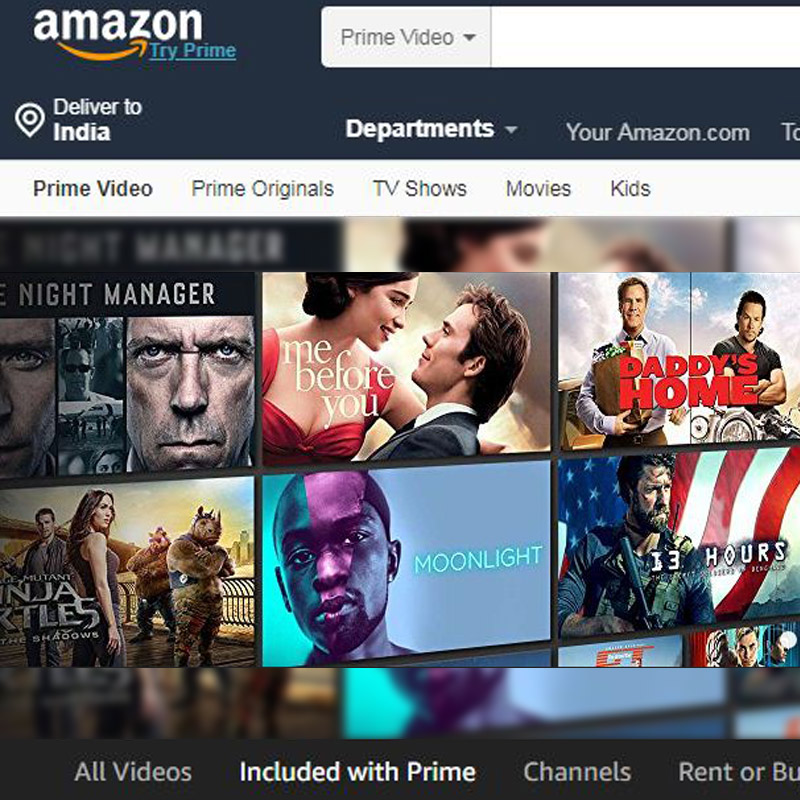
    MUMBAI: Amazon India has added a new monthly subscription plan for its Prime members available at Rs 129.

    With an auto-renewal mechanism activated by default, the payment methods for this subscription are currently limited to debit and credit cards only. While users can pay by any credit card, the payment option from debit card is limited to a select few.

    Earlier, Amazon India offered only a yearly subscription plan at Rs 999. However, consumers that have subscribed to it cannot switch to a monthly plan now.

    Amazon Prime users can access Amazon Prime Video, Amazon Prime Music store as well as get the facility of free and fast delivery. 

    Amazon Prime service was launched in India in 2016, three years after its  global launch.

    Also read:  India fastest-growing market in first year for Amazon: Jeff Bezos

    Netflix, Amazon may contribute to rising production cost in India


  • OTT players see subscription revenue as India’s future

    OTT players see subscription revenue as India’s future

    MUMBAI: Most Indian over the top (OTT) and even traditional mediums have assumed that Indian audiences aren’t willing to pay for content. But of late, discussions have shown that monetisation is happening at a slow pace. Though the return on investment (RoI) is not for the foreseeable future, the business minds are highly optimistic that the scenario will change in the next five years.

    Eros Digital COO Ali Hussein, SonyLIV EVP Uday Sodhi, Syntropic Systems managing partner Alap Ghosh, Atechnos founder Apurv Modi and Hungama Digital Media VP Soumini Shridhara Paul delved on the future of the industry at an OTTv Mumbai session.

    The session started with the age-old debate that Indian people don’t want to pay for content. The scenario hasn’t changed since last year’s panel.

    Hussein said the main challenge is not that people don’t want to pay but whether the platforms are able to grow a habit among consumers to return. “The question is to allow the whole ecosystem to pave the way for a feasible experience for the consumers to pay,” he said.

    Sodhi backed Hussein’s statement saying that everyone is paying for content in some way but it isn’t enough to allow evolution. 10 or 15 years ago, similar questions were thrown for traditional TV. He is optimistic in that next five years the scenario of the OTT industry will change too.

    “In the last two to three years, significant consumption appetite has been seen. Penetration of smartphone, easy access to 4g has activated this. Now some of us are encouraged to create content as we believe that some sort monetisation is coming through,” he said.

    Paul said, “When we come to down monetisation challenges, one has to look at how we can build something which is scalable.” She also thinks the quality of production makes a difference. Everybody cannot have $2 billion for content but ensuring the best product within budget is important. In spite of making some content similar, finding something different can really help.

    The reasons that make consumers hesitate to pay have never been found. Ghosh mentioned three reasons. One of the reasons is that people stop paying when they finish watching what they wanted to watch. The doubt on the validity of the expense also restricts them to pay again as the consumers are habituated to pay Rs 200 for 300 channels where they don’t have to think what to watch next.

    Whenever it comes to monetisation, everyone discusses subscription but it is advertising through which significant money can come through and that depends on good content. Going forward, revenue from both subscription and advertising will increase as the market will mature. As advertising is itself a complex ecosystem, there are bigger challenges for AVOD model to make money.

    While Modi said that there is enthusiasm from advertisers to engage in OTT platforms, Ghosh thinks that in the urge to be across platforms they choose to be on one or two select platforms like YouTube, Hotstar to create interest among viewers.

    Moreover, strategic partnerships for distribution also leave an impact to reach more consumers leading to better scaling as well as subscriptions.

    While monetisation has been the key challenge to Indian OTT industry, there are new avenues which can help to overcome the challenge. It’s important for the ecosystem to be able to allow growth of both advertising and subscription based models. The increased attention on statistics from optimising data can help the players to understand what is working and what needs to be changed to retain consumers.

  • Aim to take phase 3 ARPU to phase 1 value: Den Networks’ SN Sharma

    Aim to take phase 3 ARPU to phase 1 value: Den Networks’ SN Sharma

    MUMBAI: Den Networks has an ambitious plan charted out for its cable and broadband business for the coming two to three years. In an interview to Bloomberg Quint, Den Networks CEO SN Sharma highlighted the company’s plan to increase revenue and subscription.

    For the multi-system operator (MSO), digitisation of phase III in India was almost over 10 months ago and certain parts of phase IV were left by all operators. Sharma said that it may take six to eight months to wind this up. “In the last 12 months, we seeded close to five million set-top boxes (STBs) in phase III. Today, we have a tall figure of 11.5 million digital homes out of which 8.5 million are paying,” he said.

    The average revenue per user (ARPU) for Den has gone up substantially over the last two years. Even tier I and II towns had low ARPU of Rs 120 and Rs 80-90 a year ago. Two years ago, the ARPU for tier I and II towns was Rs 60-70 and Rs 50-60, respectively. Today, the ARPU is at Rs 144 for phase I and Rs 112 for phase II. Sharma also said that the company was able to make up 50 per cent of the subscription revenue from the cable operators from phase I while this was 40-45 per cent in phase II markets.

    Phase III ARPUs are still low at Rs 76 out of the ground rate of Rs 150-175. “As we move forward, cable operators know they have to catch up with phase I ARPUs and will gradually increase it with subscription and, accordingly, the same will be shared with us,” he added.

    The aim is to take the current ARPU of phase III up to Rs 144 in two years’ time. “The phase I journey has been successful and a confident path has been set. There is no reason this Rs 76 doesn’t move to Rs 140 level in 2-2.5 years’ time,” he said adding that 50 per cent of the digital universe was phase III and IV. Phase IV ARPU stands at Rs 66.

    Den is talking to broadcasters and peers to increase subscription levels in phase I areas and Sharma said that discussions were actively progressing. “There is headroom to increase this [subscription]. You will see changes in bouquets and packages offered so overall revenue can be taken up,” he shared.

    One of the ways to do this will be by focussing on HD STBs now. The target for the next 12 months is to convert 10 per cent of its SD base into HD, which will allow the MSO to add another Rs 60-70 per box. Another way is by gradually increasing the number of boxes seeded in phase IV that is currently at the rate of 40,000-50,000 a month.

    The company has a system to ensure that all reported boxes are activated. When a box doesn’t yield payment for more than three months, it is removed out of the declaration and considered a dead box. Here, Sharma lauds the system for being as efficient as telecom operators that withdraw service  if a subscriber doesn’t pay.

    The entrance of players like Jio, Airtel and Vodafone has definitely changed the broadband game for the company and Sharma admits this. Den’s broadband ARPU is currently Rs 550 with a speed of 50 mbps and unlimited data. He compared it to telcos who offer just 1 gb data a day with best case speed of 9 mbps.

    Over the years, data consumption on its platform has increased from 20 gb two years ago to 60 gb last year and is hovering at 80 gb today. “There is a data explosion courtesy Jio, Airtel and Vodafone. We are consciously aware of it and so we talk of unlimited data in high speed,” he said.

    Much of its broadband business is concentrated in Delhi with 2 lakh subscribers. However, the tariff war pulled down its ARPU to Rs 600. But the same in Kanpur is Rs 800. The plan is to increase subscribers by 6 lakh in three years taking the total to about 8 lakh.

    Sharma is confident that the entire business needs external funding since it is witnessing healthy growth in subscription and ARPU and no subsidy is being offered on HD boxes. Even the broadband business has been fibre infrastructure. About Rs 100-120 crore will be required for the coming three years, which will be managed through internal accruals.

    Also Read :

    Subscription revenue drives up Den’s PAT

    Den Networks appoints Himanshu Jindal as CFO

    TDSAT rules in favor of DEN Networks, directs ZEE entertainment to provide channels on RIO basis


  • JIB’s NHK World TV launches on Tata Sky in India

    JIB’s NHK World TV launches on Tata Sky in India

    MUMBAI: 24 hour English language news and entertainment channel NHK World TV from Japan International broadcasting has inked a deal to offer its channel on Tata Sky in India. Launched on May 6, the channel has so far seen four million Tata Sky subscribers watching it.

    “With the longstanding close cultural and economic ties shared between Japan and India, NHK World TV’s programs will further strengthen those bonds by offering subscribers a source of information from Japanese- Asian centric perspective. We are confident Indian viewers will find the channel useful as a first choice option for news from around Asia, and our lifestyle programs a source of quality entertainment,” said Japan International Broadcasting CEO and President Yoshihiko Shimizu.

  • JIB’s NHK World TV launches on Tata Sky in India

    JIB’s NHK World TV launches on Tata Sky in India

    MUMBAI: 24 hour English language news and entertainment channel NHK World TV from Japan International broadcasting has inked a deal to offer its channel on Tata Sky in India. Launched on May 6, the channel has so far seen four million Tata Sky subscribers watching it.

    “With the longstanding close cultural and economic ties shared between Japan and India, NHK World TV’s programs will further strengthen those bonds by offering subscribers a source of information from Japanese- Asian centric perspective. We are confident Indian viewers will find the channel useful as a first choice option for news from around Asia, and our lifestyle programs a source of quality entertainment,” said Japan International Broadcasting CEO and President Yoshihiko Shimizu.

  • Q3-2016: Videocon d2h YoY revenue up 22% on subscriber additions, higher ARPU

    Q3-2016: Videocon d2h YoY revenue up 22% on subscriber additions, higher ARPU

    BENGALURU: Videocon d2h Limited reported 14.8 per cent YoY increase in net subscriber additions and 8.2 per cent YoY growth in ARPU for the quarter ended 31 December, 2015 (Q3-2016, current quarter). The company’s revenue from operations (TIO) increased 21.6 per cent YoY to Rs 731.49 crore in Q3-2016 as compared to Rs 601.53 crore. Subscriber addition brings in higher activation revenue.


    The company achieved strong subscription and activation YoY revenue growth of 26 per cent at Rs 665 crore as compared to Rs 527.9 crore in the corresponding year ago quarter.


    Videocon d2h added 6.7 lakh gross subscribers and 4.3 lakh net subscribers during the quarter. Gross subscribers totalled 149.5 lakh and net subscribers totalled 112.7 lakh as of 31 December, 2015. The company says that monthly churn came in at 0.73 per cent for the quarter and 0.80 per cent for the nine months ending 31 December, 2015, which was marginally ahead of the company guidance.


    Note: 100,00,000 = 100 lakh = 10 million = 1 crore.


    Average revenue per user (ARPU) in Q3-2016 increased 8.2 per cent to Rs 211 as compared to Rs 195 in Q3-2015 and increased 2.9 per cent as compared to Rs 205 in Q2-2016.


    Videocon d2h reported 42.2 per cent YoY growth in adjusted EBITDA at Rs 201 crore for Q3- 2016 compared to Rs 141 crore in the corresponding year ago quarter. Net loss for the quarter declined to Rs 22.05 crore as compared to the net loss of Rs 79.8 crore in Q3-2015.


    Videocon d2h executive chairman Saurabh Dhoot said, “I am delighted the company reported EBITDA growth of over 42 per cent in the quarter compared to last year. This is a result of strong subscriber and ARPU growth and our continued focus on margin improvement, in line with our expectations. We believe we are amongst the fastest growing media companies in the world delivering exceptional performance quarter after quarter. During the quarter, we continued to strengthen our content offering and added new channels on our platform. We recently added two transponders ahead of schedule. This further strengthens our content offering, which is one of our key competitive advantages. With this additional bandwidth we will continue to add more regional and HD channels to our platform in times to come.”


    Speaking on the Phase III digitisation implementation, Videocon d2h CEO Anil Khera said, “Phase III digitisation has begun. The Ministry of Information & Broadcasting maintained their deadline and instructed broadcasters to switch off analogue signals in Phase III digitisation areas. In the first few days of January 2016, we saw strong pick up in subscriber additions in cities that come under Phase III digitisation. Recently, a few state high courts issued a stay order on implementation of Phase III digitisation for one – three months. This was in line with our expectations of the digitisation being a staggered process.”


    “We estimate around 50 million television homes come under Phase III digitisation, of which 24-25 million television homes are already on the digital platform. Thus, the target market under Phase III digitisation is the remaining 25-26 million television homes that are currently on analog cable,” he added.

  • Q3-2016: Videocon d2h YoY revenue up 22% on subscriber additions, higher ARPU

    Q3-2016: Videocon d2h YoY revenue up 22% on subscriber additions, higher ARPU

    BENGALURU: Videocon d2h Limited reported 14.8 per cent YoY increase in net subscriber additions and 8.2 per cent YoY growth in ARPU for the quarter ended 31 December, 2015 (Q3-2016, current quarter). The company’s revenue from operations (TIO) increased 21.6 per cent YoY to Rs 731.49 crore in Q3-2016 as compared to Rs 601.53 crore. Subscriber addition brings in higher activation revenue.


    The company achieved strong subscription and activation YoY revenue growth of 26 per cent at Rs 665 crore as compared to Rs 527.9 crore in the corresponding year ago quarter.


    Videocon d2h added 6.7 lakh gross subscribers and 4.3 lakh net subscribers during the quarter. Gross subscribers totalled 149.5 lakh and net subscribers totalled 112.7 lakh as of 31 December, 2015. The company says that monthly churn came in at 0.73 per cent for the quarter and 0.80 per cent for the nine months ending 31 December, 2015, which was marginally ahead of the company guidance.


    Note: 100,00,000 = 100 lakh = 10 million = 1 crore.


    Average revenue per user (ARPU) in Q3-2016 increased 8.2 per cent to Rs 211 as compared to Rs 195 in Q3-2015 and increased 2.9 per cent as compared to Rs 205 in Q2-2016.


    Videocon d2h reported 42.2 per cent YoY growth in adjusted EBITDA at Rs 201 crore for Q3- 2016 compared to Rs 141 crore in the corresponding year ago quarter. Net loss for the quarter declined to Rs 22.05 crore as compared to the net loss of Rs 79.8 crore in Q3-2015.


    Videocon d2h executive chairman Saurabh Dhoot said, “I am delighted the company reported EBITDA growth of over 42 per cent in the quarter compared to last year. This is a result of strong subscriber and ARPU growth and our continued focus on margin improvement, in line with our expectations. We believe we are amongst the fastest growing media companies in the world delivering exceptional performance quarter after quarter. During the quarter, we continued to strengthen our content offering and added new channels on our platform. We recently added two transponders ahead of schedule. This further strengthens our content offering, which is one of our key competitive advantages. With this additional bandwidth we will continue to add more regional and HD channels to our platform in times to come.”


    Speaking on the Phase III digitisation implementation, Videocon d2h CEO Anil Khera said, “Phase III digitisation has begun. The Ministry of Information & Broadcasting maintained their deadline and instructed broadcasters to switch off analogue signals in Phase III digitisation areas. In the first few days of January 2016, we saw strong pick up in subscriber additions in cities that come under Phase III digitisation. Recently, a few state high courts issued a stay order on implementation of Phase III digitisation for one – three months. This was in line with our expectations of the digitisation being a staggered process.”


    “We estimate around 50 million television homes come under Phase III digitisation, of which 24-25 million television homes are already on the digital platform. Thus, the target market under Phase III digitisation is the remaining 25-26 million television homes that are currently on analog cable,” he added.

  • Q3-2016: Ortel Communications’ YoY revenue up 22%

    Q3-2016: Ortel Communications’ YoY revenue up 22%

    BENGALURU: The Bibhu Prasad Rath led regional cable television and broadband internet player Ortel Communications Limited (Ortel) reported YoY revenue (Total Income from Operations or TIO) of 21.8 per cent at Rs 48.03 crore in the current quarter (quarter ended 31 December, 2015, Q3-15) as compared to Rs 39.44 crore and 4.9 per cent QoQ growth as compared to Rs 45.79 crore.


    The company reported PAT in Q3-2016 at Rs 3.89 crore (8.1 per cent margin) as compared to a loss of Rs 0.1 crore in Q3-2015 and 37.5 per cent higher QoQ PAT as compared to Rs 2.83 crore (6.2 per cent margin).


    Ortel provides services in the Indian states of Odisha, Chhattisgarh, Andhra Pradesh, Madhya Pradesh and West Bengal.


    Notes: 100,00,000 = 100 lakh = 10 million = 1 crore

    The numbers mentioned in this report are standalone.


    The company’s cable segment reported 17.3 per cent YoY growth in revenue at Rs 31.99 crore in the current quarter as compared to Rs 27.27 crore and 3.4 per cent QoQ growth as compared to Rs 30.93 crore. This segment reported 46.6 per cent YoY growth in operating profit of Rs 13.61 crore in Q3-2016 as compared to Rs 9.28 crore and 4.1 per cent QoQ growth as compared to Rs 13.08 crore.


    Ortel’s broadband segment reported 16.3 per cent higher revenue at Rs 8.28 crore as compared to Rs 7.12 crore in the corresponding year ago quarter and 1.7 per cent more than the Rs 8.14 crore in Q2-2016. The broadband segment reported an operating profit of Rs 4.78 crore in the current quarter as compared to Rs 4.52 crore in Q3-2015 and 9.1 per cent higher than the Rs 438 crore in Q2-2016.


    Ortel president and CEO Rath said, “I am delighted to share that our key strategy of LCO buyout is receiving huge response in our markets. Healthy addition to RGUs has led to strong growth of 38 per cent in bottom-line on a Q-o-Q basis. Given the strong pipeline of RGUs yet to be integrated, we are confident of improving upon this solid performance in the coming quarters.”


    “Broadband business continues to do well and remains a key focus area for us. We are working towards delivering notable growth in subscriber base, which would further augment our performance and overall profitability,” he added.


    “FY2016 will be one-of-the-best-years in the history of Ortel Communications backed by record RGU additions and solid visibility for LCO buyouts in the coming year. With more than 90 per cent subscribers on ‘last mile,’ we remain committed to this model and strongly believe it will create tremendous value for all stakeholders going forward,” Rath said.


    Ortel’s YoY revenue generating units (RGU) grew 19 per cent to 626,475 as compared to 526,551 and increased 9.6 per cent QoQ as compared to 571,834 in Q2-2016.


    Cable TV RGUs increased 19.3 per cent YoY in Q3-2016 to 558,766 as compared to 468,274 and increased 10 per cent as compared to 508,171 in Q2-2016.


    Ortel’s YoY primary digital cable RGUs grew 33.9 per cent to 127,098 in Q3-2016 as compared to 94,926 and grew 8.3 per cent QoQ to 117,401. The company says that its Cable TV penetration stood at 23.7 per cent and penetration in the current quarter.


    Broadband customers in the current quarter grew 16.2 per cent YoY to 67,709 as compared to 58,277 and grew 6.4 per cent QoQ as compared to 63,663.


    Ortel reported a slight drop in digital and analogue cable ARPUs in the current quarter. Digital cable ARPU in Q3-2016 was Rs 181; in Q3-2015 it was Rs 186 and Q2-2016 it was Rs 183. Analogue cable ARPU in Q3-2016 was Rs 141, in Q3-2015 it was Rs 147 and in Q2-2016 it was Rs 143. Broadband ARPU in Q3-2016 was higher at Rs 396, while in Q3-2015 it was Rs 394 and in Q2-2016 it was Rs 395.


    Cable Subscription, Connection and Channel carriage fees


    The company’s cable subscription fees in Q3-2016 increased 6.5 per cent to Rs 21.2 crore as compared to Rs 19.9 crore and was 3.2 per cent more than the Rs 20.6 crore in Q2-2016. Connection fees increased 32.7 per cent to Rs 1 crore as compared to Rs 0.70 crore and increased 33.8 per cent as compared to Rs 0.7. Channel carriage fees in the current quarter increased 48.3 per cent to Rs 9.8 crore as compared to Rs 6.6 crore in Q3-2015 and increased 1.4 per cent as compared to Rs 9.7 crore in Q2-2016.


    Let us look at the other numbers reported by Ortel:


    Total Expenditure in Q3-2016 increased 16.2 per cent YoY Rs 39.78 crore (82.8 per cent of TIO) as compared to Rs 34.24 crore (86.8 per cent of TIO) and was 2.8 per cent more than Rs 38.72 crore (84.6 per cent of TIO) in Q2-2016.


    The company’s programming cost in the current quarter increased 9.7 per cent to Rs 9.1 crore as compared to Rs 8.3 crore in Q3-2015, but declined 3.3 per cent as compared to Rs 9.44 crore in Q2-2016.


    Bandwidth cost in Q3-2016 increased 25.4 per cent to Rs 2.1 crore as compared to Rs 1.7 crore and increased 9.1 per cent as compared to Rs 1.92 in Q2-2016.


    Employee Benefits Expense in the current quarter increased 31.6 per cent to Rs 5.7 crore as compared to Rs 4.3 crore in Q3-2015 and increased 0.6 per cent as compared to Rs 5.64 crore e in Q2-2016.


    Lower interest costs


    SREI Equipment Finance Limited, the largest lender of the company, extended a prompt payment rebate (PPR) of one per cent on the company’s borrowings with effect from 1 October, 2015. This is in addition to the earlier rebate of 0.75 per cent, which would bring down the effective interest rate to 14.25 per cent.