Tag: subscription revenue

  • TV still has headroom for monetising from underpenetrated areas

    TV still has headroom for monetising from underpenetrated areas

    GOA: With the advent of OTT platforms, technological disruptions and change in content consumption trends, traditional linear TV has been facing a difficult time. Moreover, demonetisation and inclusion of GST also came as additional challenges in the recent past, with effects that lingered for long, while the biggest disruption – the new tariff order – is on the way. Due to the rapid changes, traditional players in the ecosystem are changing their strategy to stay profitable.

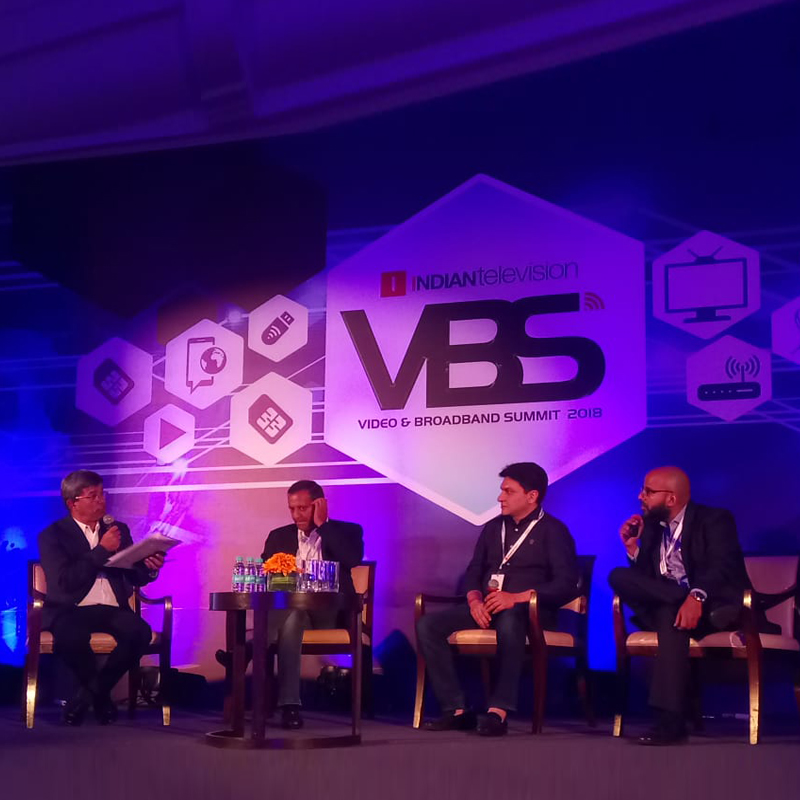
    In this scenario, Video and Broadband Summit 2018 held a session on monetising TV in times of transition. Zee Entertainment Enterprises Ltd (ZEEL) chief growth officer Ashish Sehgal, TAM India CEO LV Krishnan, KPMG India media and entertainment partner, deal advisory and head, Girish Menon took part in the session which was moderated by Indiantelevision.com founder and CEO Anil Wanvari.

    Wanvari kick-started the session asking what the monetisation trend in TV industry was in the last nine months. Menon, whose organisation KPMG published a report two months ago on the entire ecosystem, spoke about the increasing interest levels, contribution and demand from rural and regional markets on the advertising side which ensures that there is a growing deeper demand. He added that if someone is able to optimally monetise those options, the opportunities fairly exist for ad growth. He also added that a fair amount of traction in the FTA market is attracting brands there. On the subscription side, Menon said there’s enough headroom for growth as till now only 65-66 per cent households are penetrated by TV in India.

    ZEEL's Sehgal also endorsed Menon’s view on the growth opportunities for TV. “Across the industry, there has been a healthy double-digit growth which is happening. Even if you talk about the demonetisation and GST period, which stunted growth, even then the industry grew in single digit. It’s not like it had gone back to a certain level and then grew back,” Sehgal commented on the growth of the TV industry.

    Asked about tariff order, he said they still need to see how it’s going to pan out. But he mentioned that broadcasters like Zee and Star have come out with consumer-friendly packages which will help in ARPU growth. While he was asked whether users will start cutting cords if the price of subscription packages goes up too much, he answered that there’s no other better option available. According to him, to get the amount of content available on cable or DTH, users need to subscribe to ten other platforms.

    TAM India CEO Krishnan also agreed with Sehgal on the growth side of TV. He said that in the first 9 months of this year, TV showed around 11 per cent growth. Owing to the assembly elections, the growth may reach up to 12-13 per cent at the end of the year. Moreover, he added, it is the real revenue growth, not only volume growth.

    While the moderator asked if TV has got its real value, Krishnan said it definitely has brought in value itself from advertising and subscription. He also spoke about opportunities in hyperlocal advertising which is very much prevalent in print. There were 130,000 new advertisers just in the last 9 months compared to 2017 on the print medium which is coming from hyper-local editions of newspapers. But when that is being monitored in the adex data, those advertisers are still not translated into advertising on television or radio or digital yet.

    “On the other hand if I look at exclusive advertisers happening on digital and on TV it’s very comparable. There are around close to 16,000 advertisers uniquely positioned only on TV and around 12,000 unique advertisers on the digital adex. Now they are just 10 per cent of the overall volume that’s coming into print. If that translates slowly into regional television or digital OTT platforms for advertising, imagine the growth that TV and OTT can get,” he added.

    Sehgal believes that certain TV genres aren't getting a fair deal. “Average price across the genres are increasing. Yes, I would say there are certain genres which are still underpriced. For example, south channels are 90 per cent penetrated in terms of television. They are still underpriced. This pricing needs to be corrected. Kids' channels segment is underpriced. Hindi movie genre is highly underpriced while the value input behind purchasing movies is high, from advertising as well as subscriptions you are still not getting the value back,” he said.

    Where all the experts agreed was that sports content and TV premieres get higher value but when it was asked if it’s enough compared to other countries they said it’s linked to the purchasing power of the country. Moreover, they also said the growth rate in India is much higher than the US or China. It was also said that the pay-TV ecosystem in most of the developed markets are subscription led not ad led. India is always going to be a market where the rates of advertisement will be low but the fact is given the level of demand there is in the country from a consumption perspective, the growth will also be much higher than what can be seen globally.

    While most of the players work on volume rather than value, Sehgal said ZEE is working on the mix. “We have to start working with the real mix – how to get value and volume both together. Today, we are going 2X with the market only because we are not only getting the volume but also value. My price point from what it was last year to this year has increased in every channel. Now somewhere it has increased more and somewhere it has not increased more,” Sehgal said.

    On the question of how TV, cable or DTH can be monetised better, the experts think they should not shy away from the competition coming from digital. They think investment in technology, going back to advertisers with more value proposition is important. Though TV cannot engage like digital, they think brand building on TV is easiest. Unless a brand advertises on TV, building awareness becomes difficult.

  • Den Networks consolidated numbers grow in Q2-17; tests OTT platform

    Den Networks consolidated numbers grow in Q2-17; tests OTT platform

    BENGALURU: Indian multi system operator (MSO) Den Networks Ltd (Den) Cable business segment consolidated total revenue (pre-activation) increased 18 percent in in the quarter ended 30 September 2016 (Q2-17, current quarter) to Rs 258 crore from Rs231 crore in Q2-16. The company reported consolidated EBIDTA of Rs 34 crore in Q2-17 as compared to Rs 1 crore in the corresponding year ago quarter.

    Consolidated net loss in Q2-17 more than halved to Rs 48 crore as compared to a loss of Rs 99 crore in Q2-16.

    Twomain segments currently contribute to Den’s revenue: Cable distribution network segment (Cable, Cable business) and Broadband internet segment (Boomband). It has two other segments – TV Commerce and soccer. Den says that its OTT platform is undergoing tests and will be launched soon. The company says further that it has divested another 25 percent of its soccer business.

    Cable segment

    Cable subscription revenue increased 31 percent y-o-y to Rs140 crore in Q2-17 from Rs115 crore in Q2-16. Cable activation revenue increased 17 percent y-o-y to Rs 32 crore from Rs 27 crore. Placement revenue declined 13 percent y-o-y to Rs86 crore from Rs98 crore.

    The company reported 101 lakh DAS subscribers, of which 51 lakh were from DAS phases III and IV for Q2-17. The company had 76 lakh digital subscribers in Q2-16.Den has a cable subscriber base of 1.3 crore.

    Broadband segment

    Den’s Broadband segment revenue more than doubled (2.6 times) in Q2-17 to Rs 21 crore from Rs 8 crore in Q2-16. Please refer to the figure below for Den’s revenue break-up for Q2-17 and Q2-16.

    The company says that it has added about 25,000 subscribers in the current quarter, hence bringing its broadband internet subscriber base to 140,000.

    Broadband segment’s operating loss (EBIDTA) in Q2-17 was lower at Rs 2 crore as compared to an operating loss of Rs 11 crore in Q2-16 and an operating loss of Rs 9 crore in the immediate trailing quarter.

    public://DEN.jpg

    Other numbers for Q2-17

    Den’s consolidated total expenditure in the current quarter declined 4 percent to Rs 244 crore from Rs 256 crore in Q2-16.

    Content costs are a major component of Den’s expenditure- Content costs in the current quarter declined 8 percent in the current quarter to Rs 118 crore from Rs 128 crore in the corresponding year ago quarter.

    Employee(Personnel) costs increased2 percent in the current quarter to Rs33 crore from Rs 34 crore in Q2-16. Other operating expenses in Q2-17 declined4 percent to Rs 84 crore from Rs88 crore.

    Note: (1.1) The above report is based on Den’s investor presentation for Q2-17.
    (1.2) All numbers mentioned are consolidated unless stated otherwise.
    (1.3)    The figures mentioned above have been rounded off and based on the numbers presented by Den in the public domain.
    (2) The numbers in this paper are as per Indian Accounting System. (Ind AS)
    (3) The unit of currency in this report is the Indian rupee – Rs (also conventionally represented by INR). The Indian numbering system or the Vedic numbering system has been used to denote money values. The basic conversion to the international norm would be:
    (a) 100,00,000 = 100 lakh = 10,000,000 = 10 million = 1 crore.
    (b) 10,000 lakh = 100 crore = 1 arab = 1 billion.


  • Den Networks consolidated numbers grow in Q2-17; tests OTT platform

    Den Networks consolidated numbers grow in Q2-17; tests OTT platform

    BENGALURU: Indian multi system operator (MSO) Den Networks Ltd (Den) Cable business segment consolidated total revenue (pre-activation) increased 18 percent in in the quarter ended 30 September 2016 (Q2-17, current quarter) to Rs 258 crore from Rs231 crore in Q2-16. The company reported consolidated EBIDTA of Rs 34 crore in Q2-17 as compared to Rs 1 crore in the corresponding year ago quarter.

    Consolidated net loss in Q2-17 more than halved to Rs 48 crore as compared to a loss of Rs 99 crore in Q2-16.

    Twomain segments currently contribute to Den’s revenue: Cable distribution network segment (Cable, Cable business) and Broadband internet segment (Boomband). It has two other segments – TV Commerce and soccer. Den says that its OTT platform is undergoing tests and will be launched soon. The company says further that it has divested another 25 percent of its soccer business.

    Cable segment

    Cable subscription revenue increased 31 percent y-o-y to Rs140 crore in Q2-17 from Rs115 crore in Q2-16. Cable activation revenue increased 17 percent y-o-y to Rs 32 crore from Rs 27 crore. Placement revenue declined 13 percent y-o-y to Rs86 crore from Rs98 crore.

    The company reported 101 lakh DAS subscribers, of which 51 lakh were from DAS phases III and IV for Q2-17. The company had 76 lakh digital subscribers in Q2-16.Den has a cable subscriber base of 1.3 crore.

    Broadband segment

    Den’s Broadband segment revenue more than doubled (2.6 times) in Q2-17 to Rs 21 crore from Rs 8 crore in Q2-16. Please refer to the figure below for Den’s revenue break-up for Q2-17 and Q2-16.

    The company says that it has added about 25,000 subscribers in the current quarter, hence bringing its broadband internet subscriber base to 140,000.

    Broadband segment’s operating loss (EBIDTA) in Q2-17 was lower at Rs 2 crore as compared to an operating loss of Rs 11 crore in Q2-16 and an operating loss of Rs 9 crore in the immediate trailing quarter.

    public://DEN.jpg

    Other numbers for Q2-17

    Den’s consolidated total expenditure in the current quarter declined 4 percent to Rs 244 crore from Rs 256 crore in Q2-16.

    Content costs are a major component of Den’s expenditure- Content costs in the current quarter declined 8 percent in the current quarter to Rs 118 crore from Rs 128 crore in the corresponding year ago quarter.

    Employee(Personnel) costs increased2 percent in the current quarter to Rs33 crore from Rs 34 crore in Q2-16. Other operating expenses in Q2-17 declined4 percent to Rs 84 crore from Rs88 crore.

    Note: (1.1) The above report is based on Den’s investor presentation for Q2-17.
    (1.2) All numbers mentioned are consolidated unless stated otherwise.
    (1.3)    The figures mentioned above have been rounded off and based on the numbers presented by Den in the public domain.
    (2) The numbers in this paper are as per Indian Accounting System. (Ind AS)
    (3) The unit of currency in this report is the Indian rupee – Rs (also conventionally represented by INR). The Indian numbering system or the Vedic numbering system has been used to denote money values. The basic conversion to the international norm would be:
    (a) 100,00,000 = 100 lakh = 10,000,000 = 10 million = 1 crore.
    (b) 10,000 lakh = 100 crore = 1 arab = 1 billion.


  • Siti Q2-17 numbers up on higher restated subscription revenues

    Siti Q2-17 numbers up on higher restated subscription revenues

    BENGALURU: The Subhash Chandra led Siti Networks Limited (Siti) formerly known as Siti Cable Network Limited, reported 23.6 percent and 2.9 percent year-over-year (y-o-y) growth in operating revenue and EBIDTA including other income for the quarter ended 30 September 2106 (Q2-17, current quarter). The growth in revenue was led by a 33.3 percent y-o-y growth in restated subscription revenue on net billing basis of Rs 135.3 crore (46.8 percent of Total Income from Operations or TIO) as compared to Rs 101.5 crore (43.4 percent of TIO) reported for the corresponding year ago quarter.

    However, reported subscription revenue as per published financials in the current quarter increased by just 0.9 percent y-o-y to Rs 139.7 crore (48.3 percent of TIO) from Rs 138.5 crore (59.2 percent of TIO) in the corresponding year ago quarter.

    Siti reported TIO of Rs 288.98 crore in Q2-17 or a 23.6 percent y-o-y improvement from the Rs 233.87 crore in Q2-16. EBIDTA including other income for the current quarter was Rs 49.71 crore (17.2 percent margin), for Q2-16 it was Rs 48.30 crore (20.7 percent margin).

    Loss in the current quarter was higher at Rs 46.89 crore as compared to a loss of Rs 31.43 crore in Q2-16, but lower than the loss of Rs 53.62 crore in the immediate trailing quarter (Q1-17).

    Activation, Carriage and Broadband numbers

    Activation fees in the current quarter more than doubled (200.5 percent) y-o-y to Rs 38.3 crore (13.3 percent of TIO) from Rs 19.1 crore (8.2 percent of TIO) in the corresponding year ago quarter. Carriage revenue increased 25.5 percent y-o-y to Rs 75.7 crore (26.2 percent of TIO) in Q2-17 as compared to Rs 60.3 crore (25.8 percent of TIO) in Q2-16.

    Broadband revenue increased 167.7 percent y-o-y to Rs 24.9 crore (8.6 percent of TIO) in the current quarter from Rs 9.3 crore (4 percent of TIO) in Q2-16.

    The company’s cable TV customer base was stable at 1.22 crore in the current quarter as compared to the immediate trailing quarter. The company had 1.07 crore cable customers in Q2-16. The company says that is now present in 400 plus locations in India serving a total digital subscriber base of 87 lakh customers. For the last quarter the company had reported a digital subscriber base of 84 lakh and 59 lakh for Q2-16.

    Siti has added about 28,000 broadband subscribers in Q2-17 taking its subscriber base to 195,000 from 167,000 subscribers in Q1-17. It had a broadband subscriber base of 91,450 in Q2-16.

    Let us look at the other numbers reported by Siti

    Finance costs in the current quarter reduced to Rs 28 crore (9.7 percent of TIO) from Rs 34.76 crore (14.9 percent of TIO) in the corresponding year ago quarter. Total Expenditure increased 29.3 percent y-o-y to Rs 298.81 crore (103.4 percent of TIO) from Rs 231.04 crore (98.8 percent of TIO) in the corresponding year ago quarter. Employee Benefit Expense increased 21.2 percent y-o-y to Rs 20.7 crore (7.2 percent of TIO) in the current quarter from Rs 17.08 crore (7.3 percent of TIO) in Q2-16.  Carriage sharing, pay channel and related costs in Q2-17 increased 15.6 percent y-o-y to Rs 143.41 crore from (49.6 percent of TIO) Rs 124.01 crore (53 percent of TIO) in Q2-16.

    Company speak

    Siti executive director & CEO, V D Wadhwa said, “We continue to grow our digital subscriber base steadily with incremental improvements in monetisation seen in certain phases. This could have been significantly better but for the delay in digitization because of pending court cases, which continues to impact monetization in the phase 3 areas. Although the majority of the stay orders have been vacated by the Honourable Delhi High Court, the closure of the balance pending cases will lead to complete switch off of analogue signals, improve monetization and significantly spur the growth of the industry.

    The expected implementation of the new Draft Tariff Order will be a game changer and is more beneficial for the distribution platforms post execution. However, the success of the same will lie in its effective implementation.”

    Note: The unit of currency in this report is the Indian rupee – Rs (also conventionally represented by INR). The Indian numbering system or the Vedic numbering system has been used to denote money values. The basic conversion to the international norm would be:

    (a) 100,00,000 = 100 lakh = 10,000,000 = 10 million = 1 crore.

    (b) 10,000 lakh = 100 crore = 1 arab = 1 billion.


  • Siti Q2-17 numbers up on higher restated subscription revenues

    Siti Q2-17 numbers up on higher restated subscription revenues

    BENGALURU: The Subhash Chandra led Siti Networks Limited (Siti) formerly known as Siti Cable Network Limited, reported 23.6 percent and 2.9 percent year-over-year (y-o-y) growth in operating revenue and EBIDTA including other income for the quarter ended 30 September 2106 (Q2-17, current quarter). The growth in revenue was led by a 33.3 percent y-o-y growth in restated subscription revenue on net billing basis of Rs 135.3 crore (46.8 percent of Total Income from Operations or TIO) as compared to Rs 101.5 crore (43.4 percent of TIO) reported for the corresponding year ago quarter.

    However, reported subscription revenue as per published financials in the current quarter increased by just 0.9 percent y-o-y to Rs 139.7 crore (48.3 percent of TIO) from Rs 138.5 crore (59.2 percent of TIO) in the corresponding year ago quarter.

    Siti reported TIO of Rs 288.98 crore in Q2-17 or a 23.6 percent y-o-y improvement from the Rs 233.87 crore in Q2-16. EBIDTA including other income for the current quarter was Rs 49.71 crore (17.2 percent margin), for Q2-16 it was Rs 48.30 crore (20.7 percent margin).

    Loss in the current quarter was higher at Rs 46.89 crore as compared to a loss of Rs 31.43 crore in Q2-16, but lower than the loss of Rs 53.62 crore in the immediate trailing quarter (Q1-17).

    Activation, Carriage and Broadband numbers

    Activation fees in the current quarter more than doubled (200.5 percent) y-o-y to Rs 38.3 crore (13.3 percent of TIO) from Rs 19.1 crore (8.2 percent of TIO) in the corresponding year ago quarter. Carriage revenue increased 25.5 percent y-o-y to Rs 75.7 crore (26.2 percent of TIO) in Q2-17 as compared to Rs 60.3 crore (25.8 percent of TIO) in Q2-16.

    Broadband revenue increased 167.7 percent y-o-y to Rs 24.9 crore (8.6 percent of TIO) in the current quarter from Rs 9.3 crore (4 percent of TIO) in Q2-16.

    The company’s cable TV customer base was stable at 1.22 crore in the current quarter as compared to the immediate trailing quarter. The company had 1.07 crore cable customers in Q2-16. The company says that is now present in 400 plus locations in India serving a total digital subscriber base of 87 lakh customers. For the last quarter the company had reported a digital subscriber base of 84 lakh and 59 lakh for Q2-16.

    Siti has added about 28,000 broadband subscribers in Q2-17 taking its subscriber base to 195,000 from 167,000 subscribers in Q1-17. It had a broadband subscriber base of 91,450 in Q2-16.

    Let us look at the other numbers reported by Siti

    Finance costs in the current quarter reduced to Rs 28 crore (9.7 percent of TIO) from Rs 34.76 crore (14.9 percent of TIO) in the corresponding year ago quarter. Total Expenditure increased 29.3 percent y-o-y to Rs 298.81 crore (103.4 percent of TIO) from Rs 231.04 crore (98.8 percent of TIO) in the corresponding year ago quarter. Employee Benefit Expense increased 21.2 percent y-o-y to Rs 20.7 crore (7.2 percent of TIO) in the current quarter from Rs 17.08 crore (7.3 percent of TIO) in Q2-16.  Carriage sharing, pay channel and related costs in Q2-17 increased 15.6 percent y-o-y to Rs 143.41 crore from (49.6 percent of TIO) Rs 124.01 crore (53 percent of TIO) in Q2-16.

    Company speak

    Siti executive director & CEO, V D Wadhwa said, “We continue to grow our digital subscriber base steadily with incremental improvements in monetisation seen in certain phases. This could have been significantly better but for the delay in digitization because of pending court cases, which continues to impact monetization in the phase 3 areas. Although the majority of the stay orders have been vacated by the Honourable Delhi High Court, the closure of the balance pending cases will lead to complete switch off of analogue signals, improve monetization and significantly spur the growth of the industry.

    The expected implementation of the new Draft Tariff Order will be a game changer and is more beneficial for the distribution platforms post execution. However, the success of the same will lie in its effective implementation.”

    Note: The unit of currency in this report is the Indian rupee – Rs (also conventionally represented by INR). The Indian numbering system or the Vedic numbering system has been used to denote money values. The basic conversion to the international norm would be:

    (a) 100,00,000 = 100 lakh = 10,000,000 = 10 million = 1 crore.

    (b) 10,000 lakh = 100 crore = 1 arab = 1 billion.


  • Den Networks consolidated cable, broadband numbers up in Q1-17

    Den Networks consolidated cable, broadband numbers up in Q1-17

    BENGALURU: Indian multi system operator (MSO) Den Networks Ltd (Den) Cable business segment consolidated total revenue post activation increased 9 percent in in the quarter ended 30 June 2016 (Q1-17, current quarter) to Rs 251 crore from Rs 230 crore in Q1-16. Pre-activation revenue in the current quarter increased 3 percent to Rs 215 crore from Rs 209 crore in the corresponding year ago quarter.

    Two segments contribute to Den’s revenue: Cable distribution network segment (Cable, Cable business) and Broadband segment (Boomband).

    Den’s Broadband segment revenue more than tripled (3.55 times) in Q1-17 to Rs 18 crore from Rs 5 crore in Q1-16.

    Cable segment

    Cable subscription revenue increased 13.3 percent y-o-y to Rs 111 crore in Q1-17 from Rs 98 crore in Q1-16. Cable activation revenue increased 69 percent y-o-y to Rs 36 crore from Rs 21 crore. Placement revenue declined 15 percent y-o-y to Rs 87 crore from Rs 102 crore.

    Cable segment reported EBIDTA of Rs 53 crore in Q1-17 as against and EBIDTA of Rs 14 crore in the corresponding quarter of the previous year. Please refer to the figure below for Den’s revenue break-up for Q1-7 and Q1-16.

    The company reported 98 lakh DAS subscribers for Q1-17, as compared to 72 lakh in the corresponding year ago quarter and 94 lakh in the immediate trailing quarter (Q4-16). Den has a cable subscriber base of 1.3 crore.

    Broadband segment

    Den reported 329 percent growth in broadband customers in Q1-17 as compared to the corresponding year ago quarter Q1-16. Den reported 1,15,000 broadband customers in the current quarter as compared to 35,000 in Q1-16.

    In Q4-16 Den had a broadband subscriber base of about 95,000, hence quarter-over-quarter (q-o-q) broadband subscriber base growth in Q1-17 was 21 percent. Q-o-q broadband revenue increased 20 percent in the current quarter from Rs 15 crore in Q4-16.

    Broadband segment’s operating loss (EBIDTA) in Q1-17 was lower at Rs 9 crore as compared to an operating loss of Rs 18 crore in Q1-16.

    Consolidated numbers

    Den’s consolidated revenue increased 14 percent year-over-year (y-o-y) in the current quarter to Rs 269 crore from Rs 236 crore in Q1-16.

    Consolidated loss before tax in Q1-17 was lower at Rs 35 crore as compared to a loss of Rs 48 crore in Q1-16. Net loss in Q1-17 was slightly higher at Rs 52 crore as compared to a net loss of Rs 50 crore in Q1-16.

    The company reported positive post activation consolidated EBIDTA of Rs 44 crore for the current quarter as against a negative (operating loss) of Rs 4 crore in Q1-16.

    Den’s consolidated total expenditure in the current quarter declined 6.3 percent to Rs 225 crore from Rs 240 crore in Q1-16. 

    http://www.indiantelevision.com/sites/drupal7.indiantelevision.co.in/files/styles/large/public/image.png?itok=r5-KoOw4

    Content costs are a major component of Den’s expenditure – Content costs in the current quarter declined 7.4 percent in the current quarter to Rs 112 crore from Rs 121 crore in the corresponding year ago quarter.

    Employee (Personnel) costs declined 19.4 percent in the current quarter to Rs 25 crore from Rs 31 crore in Q1-16. Other operating expenses in Q1-17 increased 2.5 percent to Rs 81 crore from Rs 79 crore.

    Goldman Sachs to pick up 1.58 crore Den equity shares

    As reported, the company’s existing shareholder Goldman Sachs is picking up 1.58 crore equity shares at a price of Rs 90 per share via a preferential allotment. This will take Goldman Sachs’ equity stake in DEN up from 17.79 per cent to 24.49 per cent and involve an injection of much needed capital to the tune of Rs 142.43 crore.

    Note: (1) All numbers mentioned are consolidated unless stated otherwise.

    (1.1)     The figures mentioned above have been rounded off and based on the numbers presented by Den in the public domain.

    (2) The numbers in this paper are as per Indian Accounting System. (Ind AS)

    (3) The unit of currency in this report is the Indian rupee – Rs (also conventionally 

    represented by INR). The Indian numbering system or the Vedic numbering system has been used to denote money values. The basic conversion to the international norm would be:

    (a) 100,00,000 = 100 lakh = 10,000,000 = 10 million = 1 crore.

    (b) 10,000 lakh = 100 crore = 1 arab = 1 billion.

  • Den Networks consolidated cable, broadband numbers up in Q1-17

    Den Networks consolidated cable, broadband numbers up in Q1-17

    BENGALURU: Indian multi system operator (MSO) Den Networks Ltd (Den) Cable business segment consolidated total revenue post activation increased 9 percent in in the quarter ended 30 June 2016 (Q1-17, current quarter) to Rs 251 crore from Rs 230 crore in Q1-16. Pre-activation revenue in the current quarter increased 3 percent to Rs 215 crore from Rs 209 crore in the corresponding year ago quarter.

    Two segments contribute to Den’s revenue: Cable distribution network segment (Cable, Cable business) and Broadband segment (Boomband).

    Den’s Broadband segment revenue more than tripled (3.55 times) in Q1-17 to Rs 18 crore from Rs 5 crore in Q1-16.

    Cable segment

    Cable subscription revenue increased 13.3 percent y-o-y to Rs 111 crore in Q1-17 from Rs 98 crore in Q1-16. Cable activation revenue increased 69 percent y-o-y to Rs 36 crore from Rs 21 crore. Placement revenue declined 15 percent y-o-y to Rs 87 crore from Rs 102 crore.

    Cable segment reported EBIDTA of Rs 53 crore in Q1-17 as against and EBIDTA of Rs 14 crore in the corresponding quarter of the previous year. Please refer to the figure below for Den’s revenue break-up for Q1-7 and Q1-16.

    The company reported 98 lakh DAS subscribers for Q1-17, as compared to 72 lakh in the corresponding year ago quarter and 94 lakh in the immediate trailing quarter (Q4-16). Den has a cable subscriber base of 1.3 crore.

    Broadband segment

    Den reported 329 percent growth in broadband customers in Q1-17 as compared to the corresponding year ago quarter Q1-16. Den reported 1,15,000 broadband customers in the current quarter as compared to 35,000 in Q1-16.

    In Q4-16 Den had a broadband subscriber base of about 95,000, hence quarter-over-quarter (q-o-q) broadband subscriber base growth in Q1-17 was 21 percent. Q-o-q broadband revenue increased 20 percent in the current quarter from Rs 15 crore in Q4-16.

    Broadband segment’s operating loss (EBIDTA) in Q1-17 was lower at Rs 9 crore as compared to an operating loss of Rs 18 crore in Q1-16.

    Consolidated numbers

    Den’s consolidated revenue increased 14 percent year-over-year (y-o-y) in the current quarter to Rs 269 crore from Rs 236 crore in Q1-16.

    Consolidated loss before tax in Q1-17 was lower at Rs 35 crore as compared to a loss of Rs 48 crore in Q1-16. Net loss in Q1-17 was slightly higher at Rs 52 crore as compared to a net loss of Rs 50 crore in Q1-16.

    The company reported positive post activation consolidated EBIDTA of Rs 44 crore for the current quarter as against a negative (operating loss) of Rs 4 crore in Q1-16.

    Den’s consolidated total expenditure in the current quarter declined 6.3 percent to Rs 225 crore from Rs 240 crore in Q1-16. 

    http://www.indiantelevision.com/sites/drupal7.indiantelevision.co.in/files/styles/large/public/image.png?itok=r5-KoOw4

    Content costs are a major component of Den’s expenditure – Content costs in the current quarter declined 7.4 percent in the current quarter to Rs 112 crore from Rs 121 crore in the corresponding year ago quarter.

    Employee (Personnel) costs declined 19.4 percent in the current quarter to Rs 25 crore from Rs 31 crore in Q1-16. Other operating expenses in Q1-17 increased 2.5 percent to Rs 81 crore from Rs 79 crore.

    Goldman Sachs to pick up 1.58 crore Den equity shares

    As reported, the company’s existing shareholder Goldman Sachs is picking up 1.58 crore equity shares at a price of Rs 90 per share via a preferential allotment. This will take Goldman Sachs’ equity stake in DEN up from 17.79 per cent to 24.49 per cent and involve an injection of much needed capital to the tune of Rs 142.43 crore.

    Note: (1) All numbers mentioned are consolidated unless stated otherwise.

    (1.1)     The figures mentioned above have been rounded off and based on the numbers presented by Den in the public domain.

    (2) The numbers in this paper are as per Indian Accounting System. (Ind AS)

    (3) The unit of currency in this report is the Indian rupee – Rs (also conventionally 

    represented by INR). The Indian numbering system or the Vedic numbering system has been used to denote money values. The basic conversion to the international norm would be:

    (a) 100,00,000 = 100 lakh = 10,000,000 = 10 million = 1 crore.

    (b) 10,000 lakh = 100 crore = 1 arab = 1 billion.

  • FY-16: Dish TV adds 15 lakh subscribers, subscription revenue Rs 2,827 crore

    FY-16: Dish TV adds 15 lakh subscribers, subscription revenue Rs 2,827 crore

    BENGALURU: This is the second consecutive year that direct to home (DTH) company Dish TV India Limited (Dish TV) has reported growth across important financial and operational parameters including operating revenues (TIO), profit after tax (PAT) and subscription numbers. Last fiscal and quarter (year and quarter ended 31 March, 2015, FY-15 and Q4-15), Essel Group’s DTH operator Dish TV Limited turned the corner with a consolidated profit after tax (PAT) of Rs 3.14 crore and Rs 34.94 crore (margin 4.8 per cent) respectively. The company has followed this up with improved numbers for the subsequent two quarters of FY-16, and rendered a fait accompli of sorts in the final quarter with the largest ever subscription numbers add in a quarter in Q4-16, as if to reiterate – Profits are here to stay!.

    Dish TV says that so far it is the only company in the Indian DTH sector to have achieved net profitability. 

    Dish TV reported subscription revenue of Rs 2,827.5 crore in the fiscal ended 31 March 2016 (FY-16, current year). Operating revenue in the current year increased to Rs 3,059.9 crore from Rs 2,687.9 crore in the previous year.

    Dish TV reported PAT of Rs. 692.4 crore in FY-16, including deferred tax expense of Rs. 436 crore.

    During FY-16, Dish TV says that it has achieved the full year guidance of 15 lakh subscribers. In Q4-16 (quarter ended 31 March 2016, current quarter) Dish TV added 5.08 lakh subscribers. The company also reported higher Rs 174 in Q4-16 as compared to Rs 172 in Q3-16.

    Note: The unit of currency in this report is the Indian rupee – Rs (also conventionally represented by INR). The Indian numbering system or the Vedic numbering system has been used to denote money values. The basic conversion to the international norm would be:
    (a) 100,00,000 = 100 lakh = 10,000,000 = 10 million = 1 crore.
    (b) 10,000 lakh = 100 crore = 1 arab = 1 billion.

    Operating revenue for Q4-16 increased 9.5 percent year-over-year (y-o-y) to Rs 799.3 crore from Rs 729.9 crore and increased 3.6 percent quarter-over-quarter from Rs 771.5 crore in Q3-16.

    EBIDTA in the current year increased 39.8 percent to Rs 1,024.9 crore from Rs 733.1 crore in FY-15. EBIDTA in Q4-16 at Rs 260.8 crore increased 18.1 percent y-o-y from Rs 220.9 crore in Q4-15 but declined 1.7 percent q-o-q from Rs 265.4 crore in Q3-16.

    Dish TV managing director Jawahar Goel said, “Fiscal 2016 was yet another year that saw global economic uncertainty take centre-stage all throughout. Notwithstanding that, the Indian economy registered good economic growth as the government focused on development through reforms. With the macro economy showing early signs of pick-up and the Met department predicting an ‘above normal’ monsoon, fiscal 2017 has already started on an optimistic note. So far as the DTH industry is concerned a strong agrarian economy, further supported by government initiatives like 100% village electrification,  and prospering urban areas, with 24×7 power supply, shall certainly ensure growth for the industry going forward.”

    Talking about subscriber additions during the quarter, Goel, said, “We had a well-defined plan in place to target these markets. Our campaign ‘Set-Top-Box Matlab Dish TV’ had the desired impact while the specially designed sports packs ensured that sports fans didn’t go elsewhere during the cricket season. Higher investments behind the brand not only ensured higher brand scores but a stronger brand recall as well. To further strengthen our connect with the customer, we upgraded our existing service infrastructure and enhanced distribution in areas that were not up to the mark. Thus covering newer territories.”

    Talking about the fourth quarter results, Goel said, “Healthy subscriber additions and a higher ARPU improved the subscription revenues by 12.6 percent over the corresponding quarter last fiscal. EBITDA of Rs. 260.8 crore recorded an 18.1 percent jump over the corresponding quarter. Net Profit for the quarter was Rs. 482.8 crore as against Rs. 34.9 crore in the fourth quarter last fiscal. The resultant free cash flow was Rs. 104.7 crore. Churn for the quarter remained steady at 0.7 percent per month.”

    The company also added 8 new channels to its platform during the month of April 2016 taking its total offering size to more than 525 channels and  services. To further enhance the digital TV experience for subscribers and build an affordable and fast deployment model for itself, Dish TV
    selected Wyplay’s Frog as the Middleware for its next generation Set-Top-Boxes. Wyplay is an HTML5 browser based system and incorporates all features required for traditional linear broadcast TV consumption, on-demand content and applications distributed over the internet.

    Talking about these developments, Goel said, “We had our share of ups and downs during the year, but I am glad that we came out as winners at the end of it all. The fast paced dynamism of technological, regulatory and industrial developments kept us productively occupied and brought the best out of us.  We are in tune with the environmental shift around us and are motivated to be ahead of the curve as complex changes take place.”


  • FY-16: Dish TV adds 15 lakh subscribers, subscription revenue Rs 2,827 crore

    FY-16: Dish TV adds 15 lakh subscribers, subscription revenue Rs 2,827 crore

    BENGALURU: This is the second consecutive year that direct to home (DTH) company Dish TV India Limited (Dish TV) has reported growth across important financial and operational parameters including operating revenues (TIO), profit after tax (PAT) and subscription numbers. Last fiscal and quarter (year and quarter ended 31 March, 2015, FY-15 and Q4-15), Essel Group’s DTH operator Dish TV Limited turned the corner with a consolidated profit after tax (PAT) of Rs 3.14 crore and Rs 34.94 crore (margin 4.8 per cent) respectively. The company has followed this up with improved numbers for the subsequent two quarters of FY-16, and rendered a fait accompli of sorts in the final quarter with the largest ever subscription numbers add in a quarter in Q4-16, as if to reiterate – Profits are here to stay!.

    Dish TV says that so far it is the only company in the Indian DTH sector to have achieved net profitability. 

    Dish TV reported subscription revenue of Rs 2,827.5 crore in the fiscal ended 31 March 2016 (FY-16, current year). Operating revenue in the current year increased to Rs 3,059.9 crore from Rs 2,687.9 crore in the previous year.

    Dish TV reported PAT of Rs. 692.4 crore in FY-16, including deferred tax expense of Rs. 436 crore.

    During FY-16, Dish TV says that it has achieved the full year guidance of 15 lakh subscribers. In Q4-16 (quarter ended 31 March 2016, current quarter) Dish TV added 5.08 lakh subscribers. The company also reported higher Rs 174 in Q4-16 as compared to Rs 172 in Q3-16.

    Note: The unit of currency in this report is the Indian rupee – Rs (also conventionally represented by INR). The Indian numbering system or the Vedic numbering system has been used to denote money values. The basic conversion to the international norm would be:
    (a) 100,00,000 = 100 lakh = 10,000,000 = 10 million = 1 crore.
    (b) 10,000 lakh = 100 crore = 1 arab = 1 billion.

    Operating revenue for Q4-16 increased 9.5 percent year-over-year (y-o-y) to Rs 799.3 crore from Rs 729.9 crore and increased 3.6 percent quarter-over-quarter from Rs 771.5 crore in Q3-16.

    EBIDTA in the current year increased 39.8 percent to Rs 1,024.9 crore from Rs 733.1 crore in FY-15. EBIDTA in Q4-16 at Rs 260.8 crore increased 18.1 percent y-o-y from Rs 220.9 crore in Q4-15 but declined 1.7 percent q-o-q from Rs 265.4 crore in Q3-16.

    Dish TV managing director Jawahar Goel said, “Fiscal 2016 was yet another year that saw global economic uncertainty take centre-stage all throughout. Notwithstanding that, the Indian economy registered good economic growth as the government focused on development through reforms. With the macro economy showing early signs of pick-up and the Met department predicting an ‘above normal’ monsoon, fiscal 2017 has already started on an optimistic note. So far as the DTH industry is concerned a strong agrarian economy, further supported by government initiatives like 100% village electrification,  and prospering urban areas, with 24×7 power supply, shall certainly ensure growth for the industry going forward.”

    Talking about subscriber additions during the quarter, Goel, said, “We had a well-defined plan in place to target these markets. Our campaign ‘Set-Top-Box Matlab Dish TV’ had the desired impact while the specially designed sports packs ensured that sports fans didn’t go elsewhere during the cricket season. Higher investments behind the brand not only ensured higher brand scores but a stronger brand recall as well. To further strengthen our connect with the customer, we upgraded our existing service infrastructure and enhanced distribution in areas that were not up to the mark. Thus covering newer territories.”

    Talking about the fourth quarter results, Goel said, “Healthy subscriber additions and a higher ARPU improved the subscription revenues by 12.6 percent over the corresponding quarter last fiscal. EBITDA of Rs. 260.8 crore recorded an 18.1 percent jump over the corresponding quarter. Net Profit for the quarter was Rs. 482.8 crore as against Rs. 34.9 crore in the fourth quarter last fiscal. The resultant free cash flow was Rs. 104.7 crore. Churn for the quarter remained steady at 0.7 percent per month.”

    The company also added 8 new channels to its platform during the month of April 2016 taking its total offering size to more than 525 channels and  services. To further enhance the digital TV experience for subscribers and build an affordable and fast deployment model for itself, Dish TV
    selected Wyplay’s Frog as the Middleware for its next generation Set-Top-Boxes. Wyplay is an HTML5 browser based system and incorporates all features required for traditional linear broadcast TV consumption, on-demand content and applications distributed over the internet.

    Talking about these developments, Goel said, “We had our share of ups and downs during the year, but I am glad that we came out as winners at the end of it all. The fast paced dynamism of technological, regulatory and industrial developments kept us productively occupied and brought the best out of us.  We are in tune with the environmental shift around us and are motivated to be ahead of the curve as complex changes take place.”


  • Subscription is biggest contributor to TV industry revenues: TRAI

    Subscription is biggest contributor to TV industry revenues: TRAI

    MUMBAI: India is one of the most profitable and growing markets when it comes to the television ecosystem. In terms of the broadcasting sector consisting of television and radio, India has the world’s third largest TV market after China and USA.


    The annual report of Telecom Regulatory Authority of India (TRAI) for the year 2013-14 has detailed out activities of the Authority, which was presented in the Lok Sabha and the Rajya Sabha in March this year.


    According to the annual report, as on March 2014, of the 270 million households, around 169 million have been projected to have television sets catered to by cable TV systems, DTH services, IPTV services and the terrestrial TV network of Doordarshan, put together.


    While DTH has 64.5 million registered subscribers (37.2 million active subscribers), IPTV caters to around half a million subscribers. On the other hand, cable TV is estimated to have around 99 million subscribers, whereas the terrestrial TV network of Doordarshan covers about 92 per cent of population of the country through a vast network of terrestrial transmitters. The broadcasting and cable television services sector consists of 55 pay broadcasters, an estimated 60,000 cable operators, 6000 multi system operators (MSOs) (including 144 MSOs registered in DAS), six pay DTH operators, apart from pubcaster – Doordarshan, having free-to-air DTH service.


    There were 793 TV channels registered with the Ministry of Information and Broadcasting at the end of financial year 2013-14 out of which 187 were SD pay TV channels and 34 HD Pay TV channels. India’s TV industry grew from Rs 37,010 crore in the year 2012 to Rs 41,720 crore in the year 2013, thereby registering a growth of around 12.7 per cent.


    “The subscription revenue accounts for the major share of the overall revenue of the TV industry. The subscription revenue grew from Rs 24,500 crore in the year 2012 to Rs 28,100 crore in the year 2013. The advertisement revenue in the TV sector in India grew up from Rs 12,500 crore in the year 2012 to Rs 13,600 crore in the year 2013,” states the report.


    The last decade has significantly changed the dynamics of the Cable and Satellite (C&S) TV market. One of the most significant developments has been the digitisation of the cable TV sector in India. The process of digitisation is underway, in a phased manner. By the March 2014, more than 22 million Set Top Boxes were deployed. While implementation of digitization with addressability is going to be a game changer and would drive the growth of the broadcasting and cable TV services in the country, the DTH sector is registering a growth of around one million subscribers per month. This clearly indicates the growing popularity and acceptability of digital addressable platforms, which have a lot more to offer to all the stakeholders.


    Stakeholders in cable and satellite TV service sector


    As of March 2014, the total number of TV channels registered with the Ministry of Information and Broadcasting was 793, which include 187 SD pay channels, 34 HD pay channels and four advertisement free pay channels. These channels are owned by around 350 broadcasters (content owners), out of which 55 are the pay TV broadcasters.


    Satellite TV channels


    The number of satellite channels permitted by MIB has grown from 449 in 2009 to 793 in 2014. The number of pay SD channels has grown from 130 in 2009 to 187 in 2014. The report states that there are total 33 operational HD channels in India till 2013.


    DTH Services


    Since its inception in 2003, DTH operators have been adding new subscribers at a rate of around one million per month, attaining a registered subscriber base of around 64.82 million subscribers of pay DTH services catered by the six DTH operators by March 2014. This is besides the viewership of the free DTH services of Doordarshan. In March 2009, there were a total of 13.09 million DTH subscribers. This number grew to 21.30 million, 35.56 million, 46.25 million, 56.48 million to 64.82 million subscribers for the years 2010, 2011, 2012, 2013 and 2014 respectively.


    Cable TV Services


    Cable TV service is the largest television service sector with an estimated subscriber base of around 99 million subscribers. From 52 million subscribers in March 2004 it has risen by 58 million, 66 million, 72.5 million, 80 million, 84 million, 88 million, 92 million, 94 million and 99 million cable TV subscribers from 2005 – 2013 respectively.


    Digital addressable Cable TV systems


    As per data provided by various MSOs, there were around 85 lakh STBs deployed in the first phase areas of DAS implementation covering four metros namely Delhi, Mumbai, Kolkata and Chennai. In the second phase of DAS implementation, covering 38 cities, approximately 142 lakhs STBs were deployed as on March 2014.


    Trends in the tariff in the Broadcasting sector


    In order to provide cost effective broadcasting services to the consumer, TRAI has laid down regulatory framework, from time to time, in the form of tariff orders. The tariffs for areas served through non-addressable systems, notified DAS areas, and that for the addressable systems such as DTH, HITS and IPTV etc are governed by respective tariff orders issued by TRAI.


    Further, the wholesale pricing has been prescribed with a certain cap, linked to non-addressable platforms tariff ceilings. With these provisions at the wholesale and retail levels, a trend is likely to emerge where the subscription pattern is consumer specific rather than defined by the service providers.