Tag: subscription revenue

  • Pocket FM’s Rs 1,000 crore revenue milestone: Growth soars 500 per cent YoY

    Pocket FM’s Rs 1,000 crore revenue milestone: Growth soars 500 per cent YoY

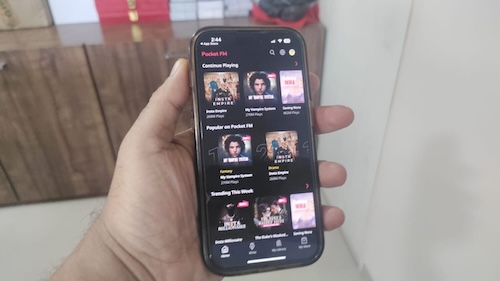
    Mumbai: Imagine a world where your favorite stories come alive—not on screens, but in your ears, whispering adventures and drama as you multitask through life. When binge-watching wasn’t an option, Pocket FM became your storytelling savior, transforming mundane chores and long commutes into thrilling escapades. Today, the platform that brought you gripping audio series at the tap of a finger is basking in the spotlight, shattering records with its meteoric rise.

    In an extraordinary leap, Pocket FM has surged past the Rs 1,000 crore revenue milestone in FY 2024, marking an awe-inspiring 496 per cent year-on-year growth from Rs 176.36 crore in FY 2023. This groundbreaking success cements the company’s status as a trailblazer, combining innovative storytelling, microtransactions, and global ambition to rewrite the rules of entertainment. As it inches closer to profitability, Pocket FM’s journey serves as an inspiring masterclass in turning sound waves into success stories.

    Pocket FM reported a global revenue of Rs 1,051.97 crore, bolstered by significant growth in subscription and advertising revenue. This rapid expansion comes alongside a 21 per cent reduction in global losses, from Rs 208 crore in FY 2023 to Rs 165 crore in FY 2024, highlighting its strategic push towards operational efficiency.

    Financial highlights: A year of remarkable transformation

    Subscription Revenue Growth:
    The platform’s subscription revenue skyrocketed, increasing nearly sixfold from Rs 160.05 crore in FY 2023 to Rs 934.73 crore in FY 2024. This growth reflects the platform’s ability to build a thriving community of paid users, largely driven by its innovative microtransaction model.

    Advertising Revenue Expansion:
    Advertising revenue increased over seven times, from Rs 12.5 crore to Rs 89.34 crore, underscoring the platform’s growing attractiveness for advertisers.

    Enhanced Operational Efficiency:
    Pocket FM’s expense-to-earnings ratio improved significantly, from 2.18 in FY 2023 to 1.16 in FY 2024, illustrating the company’s disciplined approach to cost optimisation.

    Loss Reduction:
    Losses decreased by Rs 43 crore, down from Rs 208 crore in FY 2023 to Rs 165 crore in FY 2024, reinforcing the company’s commitment to profitability.

    Pocket FM

    Pocket FM has reshaped entertainment through its serialised audio storytelling model. Over 30 audio series have each surpassed the Rs 10 crore revenue milestone, with seven series crossing Rs 100 crore—a testament to the platform’s robust content pipeline. Additionally, the platform leveraged artificial intelligence (AI) to produce over 40,000 audio series, contributing Rs 25 crore to its revenue.

    With over 100 billion minutes of streaming powered by its 200-million-strong listener community, the platform has also recorded 45 million transactions through its microtransactions model.

    While India remains a core market, Pocket FM is making aggressive strides in global markets like the United States, Europe, and Latin America. The company’s investments in localised content, advanced technology, and strategic user acquisition have bolstered its international footprint, positioning it as a global leader in entertainment innovation.

    “This growth reflects our relentless efforts to redefine the entertainment landscape. With a sharp focus on leveraging AI, we are not only enhancing operational efficiency but also creating smarter processes that optimise content delivery and monetisation. Our vision remains clear: to establish Pocket FM as a global entertainment platform that consistently pushes the boundaries of content experiences.” said Pocket FM, CFO, Anurag Sharma.

    Anurag sharma

    Pocket FM’s success is an inspiring example of a tech-driven company prioritising scalability while staying on the path to profitability. As it continues to redefine the entertainment landscape, the company’s disciplined growth strategy, innovative storytelling approach, and global ambitions place it on an upward trajectory in the ever-evolving world of digital content.

  • Zee Media’s Q1 FY23 revenues up by 21.6 per cent and ad revenues soars 23.7 per cent YoY

    Zee Media’s Q1 FY23 revenues up by 21.6 per cent and ad revenues soars 23.7 per cent YoY

    Mumbai: Zee Media Corp Ltd (ZMCL) announced its first quarter financial results for the financial year 2023 on 29 July. The company reported total revenues of Rs 206.96 crore compared to Rs 170.18 crore during the corresponding quarter last year up by 21.6 per cent.

    ZMCL’s advertising revenues for the quarter stood at Rs 196.53 crore, up by 23.7 per cent YoY. Subscription revenue declined by 10.2 per cent to Rs 8.93 crore.

    ZMCL’s earnings before interest tax depreciation and amortization (EBIDTA) dipped marginally to Rs 39.84 crore from Rs 45.32 crore year-on-year (YoY).

    The company reported profit after tax of Rs 8.19 crore compared to a loss of Rs 9.04 crore YoY.

    The news broadcasting company’s operating expenditure increased by 33.8 per cent to Rs 167.12 crore versus Rs 124.86 crore in the corresponding quarter last year. The company’s operating costs went up by 58.2 per cent to reach Rs 36.02 crore and employee benefit expenses went up by 35.6 per cent to reach Rs 66.92 crore. Its other expenses increased by 29.8 per cent to reach Rs 44.84 crore.

    ZMCL operates 14 TV news channels comprising one global, four national and nine regional language channels, together with five digital channels, 17 digital brands and is one of the largest news networks in the country.

    Its flagship Hindi news channel Zee News had 9.2 per cent market share as per Broadcast Audience Research Council (Barc) data for Week 26 2022 (four week rolling average), Hindi-speaking market (HSM) 15+ audience, 0600-2400 hours. It recorded 15 minutes ATSV (average time spent per viewer).

    Zee News YouTube channel garnered 660 million video views during the April-May-June quarter and reached over 60.1 million viewers through continued focus on innovative programming.

    Its global channel Wion was awarded 13 prestigious News Television (NT) awards recognising the channel’s unbiased and non-cluttered approach towards news. The channel enjoyed 7.9 minutes ATSV and is the No. 1 English news channel on YouTube based on video views.

    Source: BARC, All 22+ Male AB, India Urban, 0600-2400 hrs, WK 26’22 (4 weeks rolling average)

    The network’s Hindi business channel Zee Business has 58.6 per cent market share, an average weekly reach of 1.32 million and 25.6 minutes ATSV as per Barc data, All 22+, Male ABC, HSM, 0600-2400 hrs WK 26’22 (4 weeks rolling average).

  • Uptake of free DTH has come down since major broadcasters left: Punit Goenka

    Uptake of free DTH has come down since major broadcasters left: Punit Goenka

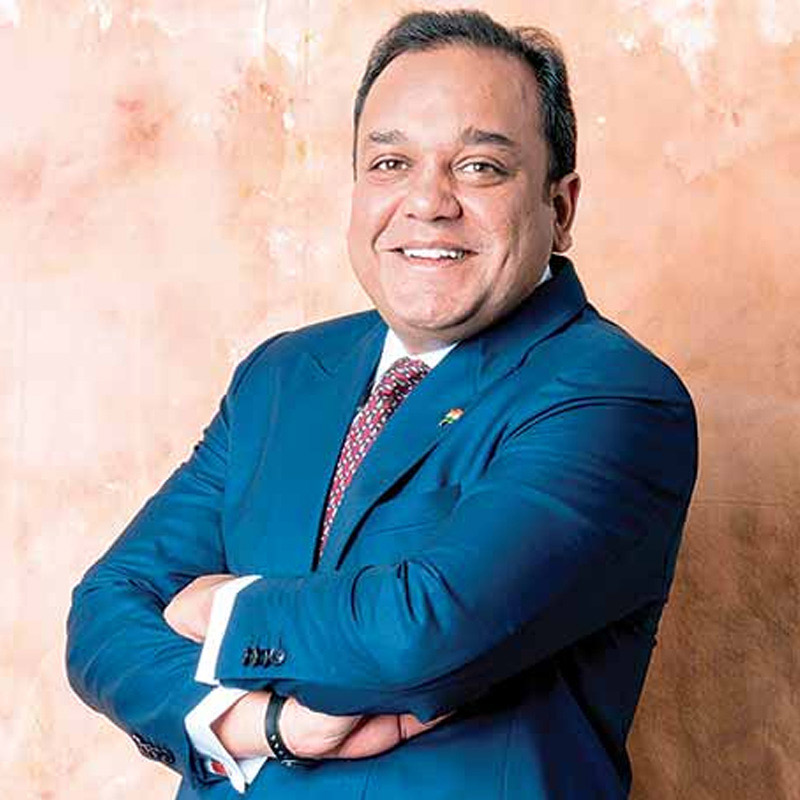
    Mumbai: The uptake of free direct-to-home services has come down since the major broadcaster networks collectively left the platform on 1 April, stated Zee Entertainment Enterprises Limited managing director and chief executive officer Punit Goenka during an earnings call.

    The company reported its fourth quarter and yearly results for the financial year ended 31 March. Goenka said, “Cord-cutting has slowed down now that GECs (general entertainment channels) have come out of the Free Dish platform. So far, the decline in subscription revenues has been because we were losing subscribers. The good thing is we’re not losing subscribers to digital but rather subscribers are migrating from pay linear to free linear TV.”

    On merger with Sony Pictures

    Goenka also shared an update on the merger process between Zee and Sony Pictures Networks India. The two companies had signed a definitive agreement in December 2021 and submitted key documents with the stock exchanges for the necessary approval. Analysts queried Goenka whether the timeline for completion of the merger would remain at eight to nine months as the company was still awaiting approval from the exchanges.

    “My speculation is that because this is a large merger there have been a significant number of queries by the stock exchanges that we have been answering. It has been two weeks or ten days since we last got any query from the exchange and I am still positive towards the eight to nine months timeline,” replied Goenka.

    Zee is expected to be one of the major contenders for the Indian Premier League (IPL) media rights auction that is set to begin on 12 June. With the merger process still underway, analysts asked Goenka whether Zee was in a position to bid for the media rights without the capital infusion of $1.57 billion (~Rs 12,000 crore) from Sony.

    “We have a healthy balance sheet and we can participate (in the IPL media rights) on our own,” said Goenka. He also noted that the TV and digital rights package being sold separately “doesn’t preclude us from bidding for either part of all of the rights packages being sold.”

    Goenka stated that the company is still evaluating its strategy concerning IPL media rights.

    Zee expects its advertising revenues to face pressure in the coming quarter due to the inflationary situation that has impacted FMCG advertisers who account for up to 53 per cent of ad spend on the network.

    The company also expects to see a short-term impact on ad revenues after pulling its GECs from the Free Dish platform. “This will be a transitional impact and we expect to recover as intended benefits accrue on the pay side of the business,” remarked Zeel chief financial officer Rohit Gupta.

    He added, “In FY23 from a quarter-on-quarter progression perspective we expect the margins to improve as we progress through the year.

    The first quarter will have the most immediate impact in terms of inflationary dynamics. FTA drop, accelerated investments and seasonal expenses such as increments etc., will have an impact on revenues. As revenues scale up in subsequent quarters, we expect margins to start inching up in the later part of the year.”

    The embargo on NTO (New Tariff Order) 2.0 continues to impact the broadcast industry in terms of subscription revenues. However, the management of Zee expects to see a positive quantum in terms of revenue growth for FY23 now that the pandemic has subsided.

    Zee reiterated its commitment to scale investments in content, technology and product. The company is particularly increasing investments on OTT content with more regional content in the pipeline and partnering with global studios, independent creators and premium content production houses. Zee5 saw 31 per cent growth in revenues for FY22 and its global monthly active users (MAUs) stood at 104.8 million. Average watch time on the platform increased to 214 minutes.

    Following the success of “Kashmir Files” that grossed Rs 200 crore in the box office, Zee Studios is gearing up to release 20-25 movies this year.

    On the linear TV side, the company plans to increase investments in its Hindi, Marathi and Tamil portfolio of channels to grow market share.

    Linear TV market

    Zee’s linear TV market share declined to 17.1 per cent in Q4 2022. Zee has also considerably brought down its debt to Dish TV India from Rs 5.8 billion in March 2020 to Rs 2.4 billion in March 2022.

    The company reported operating revenue of Rs 8189.3 crore up by 14.1 per cent year-on-year. Its profit after tax increased by 31.7 per cent and stood at Rs 964.4 crore. Advertising revenue stood at Rs 4396.5 crore in FY22 up by 18 per cent year-on-year. Subscription revenue remained stable at Rs 3246.6 crore. The company’s expenditure for the year came up to Rs 6467.3 crore out of which operating expenses stood at Rs 4044.9 crore. The company’s programming and technology costs increased year-on-year driven by higher theatrical revenue, continued investments in Zee5 and new launches across the market.

  • Fresh content, new subscribers vital for long-term growth: Zeel

    Fresh content, new subscribers vital for long-term growth: Zeel

    KOLKATA: An unstable regulatory environment compounded by an unprecedented global pandemic has stymied growth in FY21 for the already-ailing broadcasting sector. In some ways, the second half of the year could be better for the industry, with advertising coming back. Zee Entertainment Enterprises Ltd (Zeel) has also pinned its hopes on the last two quarters, especially Q4.

    Zeel CEO and MD Punit Goenka said in an earnings call that the company has seen significant improvement, but acknowledged that the ad pricing has not returned to pre-Covid level yet. Goenka estimated that it would normalise in Q3 and start seeing growth in Q4.

    “Q3 and Q4 base anyways are soft but we expect that in Q3, we will only be able to maintain what we had received last year; very insignificant, moderate growth if at all possible. But Q4 certainly will have heavy growth over the last year,” he remarked.

    While Zeel has been able to stay ahead of the pack in some markets in terms of viewership, it has fallen behind in regional spaces like Marathi and Bengali. Goenka is of the view that a new and improved content pipeline could be a cure for this.

    “Obviously, the current pipeline seems jaded to the viewers and therefore they have chosen to go and consume more on the competition. But the good part is we have not lost reach on the channel as yet, therefore we will have to revamp the content there,” he said.

    He did go on to add that Zeel is already seeing a recovery in the Bengali market and it will clock faster growth in the next couple of months. For the Marathi market, the company expects a recovery in the next one or two quarters. However, Goenka is sanguine about making a comeback with their audience.

    “Certainly the new line-up that competitors have introduced post the lockdown has refreshed content for them and the consumers may have preferred that over the legacy shows that we have been serving. As you know, there is always an up and down in this kind of a business so we are confident that we will regain our viewership back,” he said.

    In terms of domestic subscription growth too, FY21 would be difficult for the company. It has cited instability of NTO 2.0 as a key reason because it has frozen the pricing for the year. But going forward, it hopes double-digit to low-teens is quite possible as the directive should be out of the way, either implemented or disposed of.

    “What has happened is when we implemented NTO 1.0, we had a complete blueprint of how we were going to take up pricing and how product launches would happen over a period of time and how we will drive our subscription revenue. In fact, in the third and fourth quarter of last year we launched four new channels. So that was also a part of it. Now because of NTO 2.0, all the plans of our bouquet as well as taking up the pricing is on hold and that is the reason why subscription revenue for this year would be impacted on the domestic broadcast side,” Zeel FPA and investors relations, corporate strategy head Bijal Shah commented.

    In the long term, the network sees a two-fold opportunity in the domestic broadcast sector. There are around 100 million homes in the country that do not have TV yet, which could be a significant opportunity for a deeper subscriber base. On the pricing side, it thinks that the ARPUs are pretty low. ZeeL has already planned price increases in some of the markets. Moreover, the company aims to launch more products.

    On EBITDA margin, Zeel hopes to see an improvement every quarter. Once FY22 proves to be a normal year without any disruption on the advertising side or subscription side, the margin trajectory should gradually return to normal.

  • ZEEL Q2: Ad revenue recovers, ZEE5 drives subscription revenue growth

    ZEEL Q2: Ad revenue recovers, ZEE5 drives subscription revenue growth

    KOLKATA: Zee Entertainment Enterprise Ltd (ZEEL) has reported operating revenue of Rs 1,727.7 crore for Q2 FY21. The broadcaster’s advertising revenue stood at Rs 902.8 crore and domestic revenue has grown by 10.6 per cent to Rs 800.3 crore.

    The company has witnessed a massive decline of 77.2 per cent in profit after tax to Rs 94 crore from Rs 413.2 crore compared to corresponding quarter last year.

    While the domestic subscription revenue has grown by 2.3 per cent year-on-year, it has been primarily driven by an uptick in ZEE5 subscription revenues. Advertising revenue has started recovering, as the number declined by 26 per cent compared to 66 per cent in Q1.

    The network which commands 19 per cent of all India entertainment share in Q2 claims to have made a strong rebound in ratings across the markets with the resumption of original content.

    Its digital arm ZEE5’s global MAUs and DAUs stood at 54.7 million and 5.2 million respectively in September. ZEE5 users spent an average of 152 minutes per month on the platform, which has grown by 36 per cent quarter-on-quarter.

  • ZEEL’s Punit Goenka expects advertising growth to be back in H2, moderate sub growth for FY 21

    ZEEL’s Punit Goenka expects advertising growth to be back in H2, moderate sub growth for FY 21

    KOLKATA: The unprecedented Covid2019 crisis has had a major impact on media and entertainment business, the leading player Zee Entertainment Enterprises Limited (ZEEL) reported a revenue decline of 34.7 per cent YoY in the first quarter (Q1) of the financial year (FY) 21, led by the sharp decline in ad revenues. As the economy has started showing signs of slow recovery, ZEEL MD and CEO Punit Goenka expect the growth of the advertising to be back in the second half of the year.

    “On the advertising side, our outlook is quite positive. We do expect the growth to be back in the second half of the year. We are targeting growth from the third quarter itself. We have factored in IPL into the same number. I don’t want to comment on what IPL is going to do, what is the industry going to do. It’s a very normal feature now,” Goenka stated in an investors call after declaring Q1 results.

    The company executives stated that the recovery has already begun and the advertisers are coming back as consumer spending has started again. ZEEL is seeing improvement in ad revenue on a month-on-month basis. 

    Goenka also mentioned that FMCG is the largest sector of advertisement that ZEEL gets. Hence, this sector is the first one to start moving for the broadcaster to have any semblance of growth coming back. 

    “If we look at the initial days, almost all discretionary companies completely stopped advertising and advertising was primarily dominated by FMCGs in the month of April. So, as things have progressed, FMCGs have been scaling up their investments. On top of that, we are seeing discretionary categories like Auto, Handset all are coming back. But primarily, it is FMCG where the rebound is strong. As festive seasons kicks in we will expect other categories like telecom, consumer durables, e-commerce to scale up their investment. And on the basis of that, we are projecting that we will see acceleration starting September,” ZEEL corporate strategy and investor relations head Bijal Shah said.

    ZEEL does not predict any major enhancement in CAPEX for the FY. Although it will be better positioned to guide the EBIDTA margin at the end of Q2 given the persisting uncertainties, it emphasizes that there will be an improvement compared to Q1. ZEEL expects the margin to improve sequentially every quarter, gradually inching back to 30 per cent. If everything is normal, it expects the margin to be at 30 per cent or above at FY 22. 

    The broadcaster will go back to its normal run rate on content cost in q2 itself because all channels have started going back to normal production level which was before pre-COVID. However, the content cost-revenue ratio may go up for this FY given the drop in advertising revenue. 

    “We have been really working on collections. While the receivables went up last year, we will see our receivables coming up as things settle down. In the coming quarters of FY 21, our receivables should be in line with what there were in earlier years,” ZEEL CFO Rohit Gupta said.

    “ In terms of domestic subscription revenue, we have factored in several price increases in channels and bouquets. Since a stay has been put on NTO 2.0, we have not been able to take those hikes. We do expect the domestic subscription growth will be moderated for the current year. NTO 2.0, whenever implemented, will have very short term impact as we do believe our content has the ability for consumption pull. Our ZEE5 subscription growth will also aid the growth,” Goenka commented. 

  • Ad revenue growth drives Zee Media numbers up in Q1 FY20

    Ad revenue growth drives Zee Media numbers up in Q1 FY20

    BENGALURU: The Essel group’s Zee Media Corporation Ltd (ZMCL) reported 29.7 per cent growth in consolidated operating revenue for the quarter ended 30 June 2019 (Q1 2020, quarter or period under review) at Rs 200.66 crore as compared to Rs 154.69 crore for the corresponding year ago quarter Q1 2019 (y-o-y). Growth in numbers was led by 35.7 per cent y-o-y growth in advertising revenue in Q1 2020 at Rs 185.90 crore as compared to Rs 136.97 crore in Q1 2019. Subscription revenue for Q1 2020 increased 1.6 per cent y-o-y to Rs 11.28 crore from Rs 11.10 crore. Other sales and services declined 47.5 per cent y-o-y to Rs 3.47 crore during the period under review from Rs 6.62 crore.

    However, the company’s consolidated profit after tax (PAT) for Q1 2020 declined 52.9 per cent to Rs 26.07 crore from Rs 55.38 crore in Q1 2019. It must be noted that ZMCL had sold off its entire equity stake in Ez-Mall Online to a related party effective 30 June 2018 and the company has arranged for impairment as per Ind-AS-109 for its investments in Diligent Media Corporation Ltd. For further details please refer to the company’s financial statements. Consolidated operating EBITDA for the quarter under review increased 83.6 per cent y-o-y in Q1 2020 to Rs 65.88 crore from Rs 35.88 crore.

    Let us look at the other numbers reported by the company

    Consolidated total expenditure for Q1 2020 increased 13.4 per cent y-o-y to Rs 134.78 crore from Rs 130.45 crore. Operating costs increased 41.7 per cent y-o-y in Q 2020 to Rs 36.12 crore from Rs 25.49 crore. Employee Benefits Expense in Q1 2020 increased 21.8 per cent y-o-y to Rs 42.40 crore from Rs 34.81 crore. Marketing, distribution and business promotion expenses in Q1 2020 increased 7 per cent y-o-y in Q1 2020 to Rs 22.23 crore from Rs 20.77 crore. Other expenses during the quarter under review declined 9.8 per cent y-o-y to Rs 34.03 crore from Rs 37.74 crore.

  • New tariff order helped ZEEL’s strong domestic subscription revenue growth in Q1 FY20

    New tariff order helped ZEEL’s strong domestic subscription revenue growth in Q1 FY20

    MUMBAI: Zee Entertainment Enterprises Ltd (ZEEL) experienced strong growth in domestic subscription revenue in the first quarter of FY 2020 where the new tariff order played an important role. The leading broadcaster has guided for domestic subscription revenue for the overall year to grow in mid-twenties.

    “The implementation of the new tariff order has allowed us to price our channels in line with their popularity, thereby leading to a sharp improvement in monetisation. Additionally, uniformity in pricing across platforms and increased transparency have led to a step jump in this quarter’s subscription revenue growth,” ZEEL MD and CEO Punit Goenka said in an earnings call after Q1 results.

    The broadcaster also witnessed sharp growth in subscription revenue in the southern market too. Apart from the digitisation of the Tamil market, the new tariff order also played an important role here.

    Goenka, talking about the growth in the Southern market, mentioned that either ZEEL channels were free in certain markets or their pricing was not proportionate with their viewership share while the new pricing regime gave them the opportunity to re-price content.  He pointed out that the tariff has been frozen since the last 16 years and no price change was done since then for any of the channels after launch.

    “Despite having built significant viewership over the last several years, our channels were really not priced in line with their popularity. Under the old tariff order, it would have been a long journey but the new tariff order gave us a chance to reset this pricing. So, that has allowed us to significantly improve our monetisation,” ZEEL corporate strategy and investor relations head Bijal Shah commented on the overall subscription growth.

    “And on top of this, in this tariff order, discrimination between the platforms is not possible, which has also led to an improvement in subscription revenue growth. So, this is much more on expected lines. In fact, for the last 2-2.5 years, we have been guiding that tariff order will allow us to properly monetise the viewership which we have, and we are seeing that evolving the way we had envisaged,” he added.

    However, the broadcaster did not outline any clear guidance in terms of advertising growth but Goenka did mention that ZEEL would beat the industry growth.

    Goenka said this fiscal year also will not be very high on free cash flow generation despite slight improvement. But next year onwards, there will be a lot more cash conversion from the company’s bottom-line to cash with an actual ramp-up in free cash flows.

    “It is the first quarter right now, so a bit difficult to give you an exact amount, but total working capital investment in FY20 will be in the range of Rs 500-700 crore, that is the kind of increase we will see in total in working capital in full year FY20. It could be closer to the lower-end of the range but we just want to keep some buffer for ourselves right now,” Shah noted.

  • Paying OTT subs to reach 30-35 mn by 2021, only 2x growth in ad revenue

    Paying OTT subs to reach 30-35 mn by 2021, only 2x growth in ad revenue

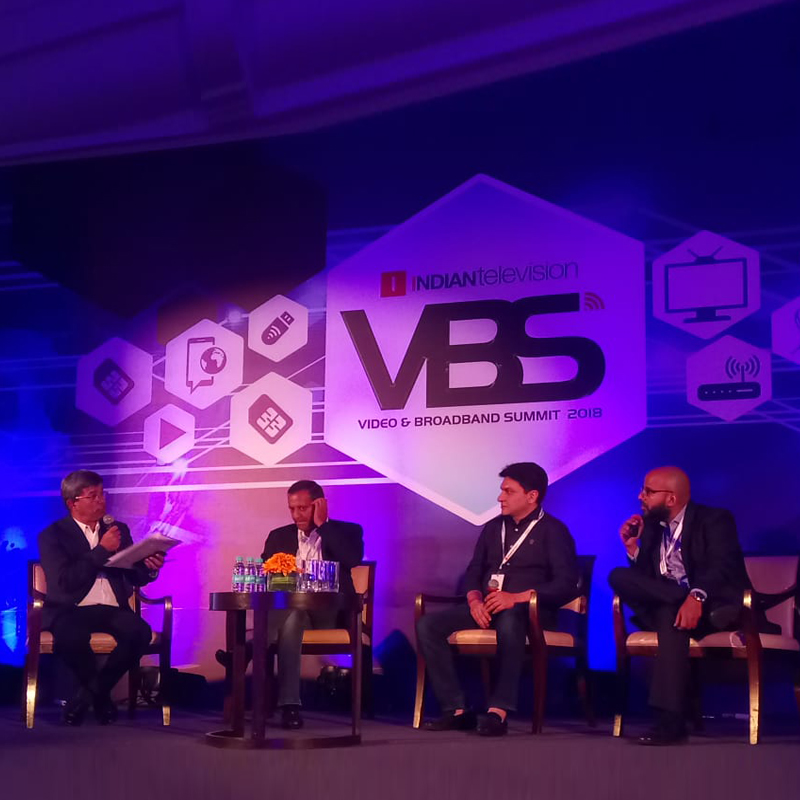
    MUMBAI: Digital media is set to overtake filmed entertainment in India this year in terms of revenue. While TV will retain its pole position as the largest segment, digital will also overtake print by 2021 to reach $5.1 billion, according to a report from FICCI and EY report on ‘How a billion screens can turn India into a media and entertainment powerhouse’.

    In this overwhelming growth of digital media, telecom operators will be the future MSOs. As per the report, while 60 per cent of total consumption today is through telco bundles, it is estimated to grow to over 75 per cent by 2021 and cater to over 375 million subscribers. Smartphone penetration is just 36 per cent in 2018, leaving massive room for growth. 30 per cent of phone time is dedicated to entertainment.

    “While watch time could grow 3 to 3.5x over the next five years, resulting in a massive inventory growth, advertising revenues will grow only around 2x. CPMs will correspondingly fall during the period for non-premium inventory,” the report added.

    Along with growth in advertising revenues, subscription revenue is also projected to grow. The report predicts 30-35 million paying OTT video subscribers and 6-7 million paying audio subscribers by 2021.

    “Digital segment will benefit from the growing popularity of e-sports, AR/VR technologies, online gaming and fantasy sports, all of which are “Generation Z” products,” it added. “With its massive base of internet users, India’s digital media market is attractive to global streaming platforms looking to capitalise on the country’s fast-growing digital consumption. This is especially true as competitively priced 4G services become more widely available.”

    The report went on to mention that despite the growth in digital media consumption, piracy threat is
    “likely to restrict full monetisation of content as well as large-scale acceptance of SVoD in India”. It mentioned, “Indian market is highly price-sensitive and is driven majorly by advertising revenues. Several sectors such as print, digital, television and radio derive major share of their revenues from advertising.”

    The report highlighted that consolidation will be needed for platform profitability as contest costs will remain high as each platform produces or acquires content to meet its needs. It also added that post the new tariff order regime, OTT platforms are sure to benefit due to increased parity between television and OTT content choice and costs.

  • Subscription drives Network18; TV18 revenues, EBITDA up

    Subscription drives Network18; TV18 revenues, EBITDA up

    BENGALURU: Network18 Media & Investments (Network18, N18) reported 10.8 pe rcent increase in consolidated operating revenue for the quarter ended 30 June 2019 (Q1 2020, quarter or period under review) as compared to the corresponding year ago quarter (y-o-y). TV18 Broadcast (TV18), a publically listed subsidiary of N18, is a major contributor to Network18’s numbers. TV18 reported 9.7 percent y-o-y increase in consolidated operating revenue for Q1 2020 as compared to Q1 2019. Subscription revenue increased 48.3 percent for the quarter under review to Rs 424 crore from Rs 286 crore.

    Company speak

    Network18 says in an earnings release that New Tariff Order (NTO) implementation pains have smoothened as the value-chain adjusts to the new regime, and its subscription income has received a boost. Nevertheless, some flux in distribution and viewership is lingering, which N18 expects to taper away in the near term. As consumers make their pack/channel choices, the company believes that strong content propositions and distinctive brands will continue to gain traction. The company says that its bouquet is well-placed to benefit, through leading channels and improved distribution tie-ups.

    Network18 chairman Adil Zainulbhai said: “Amidst a challenging advertising environment and the implementation of a new tariff regime, we have continued to focus on creating great content for all media. Our regional portfolio continues to grow across both broadcasting and digital, and we believe that the connect our growing brands enjoy with the diverse Indian populace shall stand us in good stead.”

    Speaking as chairman of TV18, Zainulbhai said “Our channel brands have witnessed a strong uptake in the new tariff regime which places the consumer even more at the center of the broadcasting business model. Class-leading value, genre-defining content and a pipe-agnostic approach are the tenets which we believe will continue to propel our portfolio forward.”

    Let us look at the numbers reported by the company

    Network18 operating revenue grew to Rs 1,245 crore in Q1 2020 from Rs 1,124 crore in Q1 2019. Consolidated operating EBIDTA for the quarter under review more than doubled (grew 137 percent) to Rs 46 crore from Rs 19 crore.

    The company says that operating revenues from its News business (TV18 standalone) grew 29 percent y-o-y to Rs 298 crore in Q1 2020 from Rs 232 crore in Q1 2019. The company reported a positive EBIDTA from its News business of Rs 20 crore in Q1 2020 as compared to a loss of Rs 1 crore in the corresponding year ago quarter.

    Revenue from its Entertainment business (Viacom18, AETN and Indiacast) grew 5 percent y-o-y in Q1 2020 to Rs 899 crore from Rs 857 crore in Q1 2019.

    TV18 consolidated revenue for Q1 2020 grew 10 percent to Rs 1,198 crore from Rs 1,088 crore in Q1 2019. Consolidated EBIDTA for Q1 2020 grew 96 percent y-o-y to Rs 77 crore from Rs 39 crore in Q1 2019.

    Network18’s Digital, Print, Others Business and intercompany eliminations (Digital) grew 32 percent to Rs 48 crore from Rs 32 crore. EBIDTA increased to a loss of Rs 128 crore in Q1 2020 from a loss of Rs 112 crore in Q1 2019.

    Network18’s total expenditure increased 10.8 percent y-o-y to Rs 1,308 crore from Rs  1,308 crore from Rs 1,181 crore. The company reported 11 percent higher operating costs for Q1 2020 at Rs 574 crore as compared to Rs 517 crore in Q1 2019. Marketing and distribution expenses during the quarter under review increased 33.3 percent y-o-y to Rs 252 crore from Rs 189 crore. Finance costs in Q1 2020 increased 53.7 percent y-o-y to Rs 63 crore from Rs 41 crore. Other expenses for the quarter under review declined 21.3 percent to Rs 100 crore from Rs 127 crore.