Tag: Subhayu Roy

  • The new paradigm of selling sport…

    The new paradigm of selling sport…

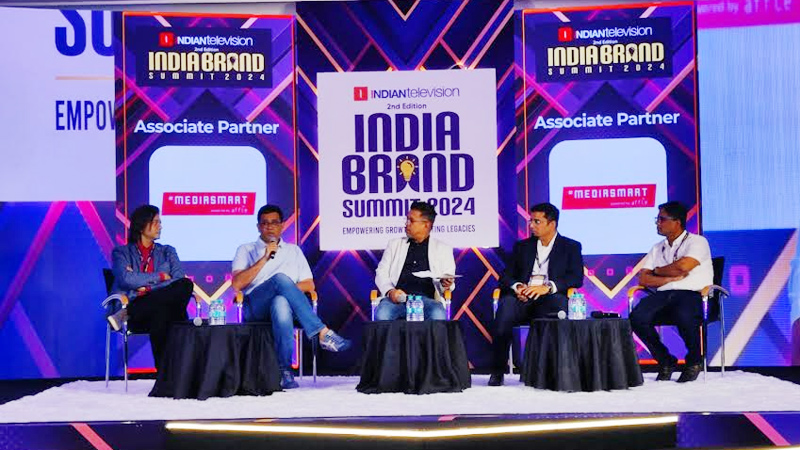
    The India Brand Summit 2024 hosted a riveting panel discussion featuring prominent voices in the sports industry. The discussion explored innovative strategies to market sports content effectively and adapt to the evolving demands of advertisers and focused on how sports marketing has evolved, particularly in attracting advertisers by localising sports content.

    This session was moderated by Indian Television Dot Com group’s founder, chairman and editor-in-chief Anil NM Wanvari, GroupM India, managing director of content, entertainment & sports, Vinit Karnik, Polycab’s lead of category marketing B2C, Amit Sethiya, CricViz India’s Director of Sales, Subhayu Roy and Dentsu X India, senior partner for client leadership, Prabhat Naik.

    Vinit Karnik highlighted the significant growth of non-cricket sports like Pro Kabaddi League (PKL) and volleyball. He emphasised that these sports, which started as niche activities, have managed to sustain themselves for over eight years, marking a shift in the sports marketing landscape. “Things have changed dramatically in sports marketing,” Karnik stated. “The fact that many people are playing and watching these sports—whether on the ground or streaming platforms—indicates a growing interest that attracts advertisers. The market size has grown exponentially, from ₹1,500 crore to ₹20,000 crore in less than two decades.” Karnik’s insight underscores how sports beyond cricket are becoming valuable advertising platforms due to increased viewership, signalling the industry’s wider acceptance of sports as integral to pop culture.

    Amit Sethiya explained how sports marketing has moved beyond simple inventory buying. He pointed out that in earlier days, cricket was the go-to platform for brands. However, with leagues like PKL and Indian Super League (ISL) gaining traction, marketers now leverage rich data to make informed decisions. “Today, it’s no longer about just buying inventory,” Sethiya noted. “The focus is on how brands can utilise the data accumulated over years of these properties. Broadcasters and organisers are helping brands see the potential of connecting with audiences in Tier 2 cities, even with limited budgets.”

    This shift has democratised sports marketing, allowing smaller brands to associate with emerging sports without needing deep pockets. The ability to analyse data and understand audience demographics allows advertisers to invest strategically in sports marketing.

    Subhayu Roy emphasised the role of data in driving value for advertisers. He explained how CricViz collects up to 60 data points during events, offering insights that enhance viewer engagement and inform advertisers. “For example, when Virat Kohli is at the crease, data suggests that Royal Challengers Bangalore (RCB) have never lost a match in the second innings,” Roy shared. “This type of analysis helps retain viewership by keeping fans engaged, thus preventing them from switching channels.” Roy also discussed how data is used to create new monetization streams for advertisers. “From selling ad slots to monetizing player stats, the ability to quantify performance data opens up various revenue avenues for broadcasters and brands alike. This approach allows advertisers to make calculated investments, ensuring their marketing spend delivers the maximum impact.”

    Prabhat Naik highlighted the shift from traditional media to digital platforms, attributing it to the growing trend of on-demand content consumption. “Victory lies in the flexibility that digital platforms offer,” Naik said. “While television demands appointment viewing, digital content is always accessible, anytime, anywhere,” Naik stressed that while television still holds its ground, the future of sports marketing lies in adapting to a more digital-first approach. This flexibility is driving advertisers to focus more on digital, making it an essential part of their marketing mix.

    The discussion at the India Brand Summit demonstrated that sports marketing is rapidly evolving. With new sports gaining popularity, rich data driving advertiser decisions, and digital platforms offering unmatched flexibility, the industry is embracing innovative ways to engage audiences and deliver value to advertisers. As Vinit Karnik summarised, “Sports is no longer just entertainment; it’s a cultural phenomenon. The way we sell and market sports has changed, and it will continue to grow as an essential platform for brands.”

  • School app Notebook launches “Jeb main Classroom” campaign

    School app Notebook launches “Jeb main Classroom” campaign

    MUMBAI: Notebook, which is India’s fast-growing after school app, is an initiative born out of the responsibility to encourage the process of learning and goes beyond being a digital product.

    With a responsibility to let every child learn, the Notebook campaign "Jeb main Notebook" celebrates every child’s right to quality education. Notebook educates for the need for digital education to be better tailored to meet student needs. Notebook’s interactions with students, parents, and teachers across the current 90,000+ users gave it unique insights into the very personal issues faced by students and parents in today’s education system.

    Campaign Video Links:

    Notebook’s interaction with students and parents is personally managed at a senior management level as the team believes in customer-centric product development and delivery. It was from these interactions that Notebook founder and CEO Achin Bhattacharyya, first came up with the idea for a series of short videos to illustrate the issues Notebook addresses. This was added to with feedback from various people within the team. For instance, the decision to make vertical videos came from some of the youngest team members who emphasized that content would have to be mobile-friendly. At the same time, senior educators helped identify the trouble students face in managing tuition classes and class workload.

    Jeb Mein Classroom campaign has several shorts showcasing different situations where Notebook can help students and parents to learn with fun. Notebook co-founder Subhayu Roy added, "In today’s world, we are faced with a content surfeit. It is a common phenomenon amongst Millennials to feel that products and services delivered to them do not really understand them. Careful use of regular common faces instead of popular brand ambassadors also reinforces this oneness of the brand with real-world people as opposed to a make-believe world."

    One of the series opens up where a student is trying to write quickly to match the Speed of the faculty but cannot grab his speed and thus he cannot copy everything from the blackboard. Whereas the other series shows a stack of books a girl needs to read before her exams.

    The videos have no spoken lines as these issues are common to students and parents across the country, and should not be restricted by language.

    In the video series, we can see, the camera is never static in the film, it's always moving along with the character, as a mere spectator trying to keep up with the character. The instrumental effect on each series holds the rhythm – alternating between fast and slow cuts depending on what is required.

    The campaign thus aims to encourage its audience to enjoy complete coverage of their school syllabi on time with the help of Notebook.

    The in-house notebook team has worked for the successful outcome of these videos. The production was managed by the same team at Notebook that produces high-quality educational video content for the product.

    Thus, these videos are created with the express purpose of making these young students and their parents know that someone out there does, indeed, understand them and their day to day challenges.