Tag: Subhashish Mazumdar

  • IMCL’s Subhashish Mazumdar steps down as SVP

    IMCL’s Subhashish Mazumdar steps down as SVP

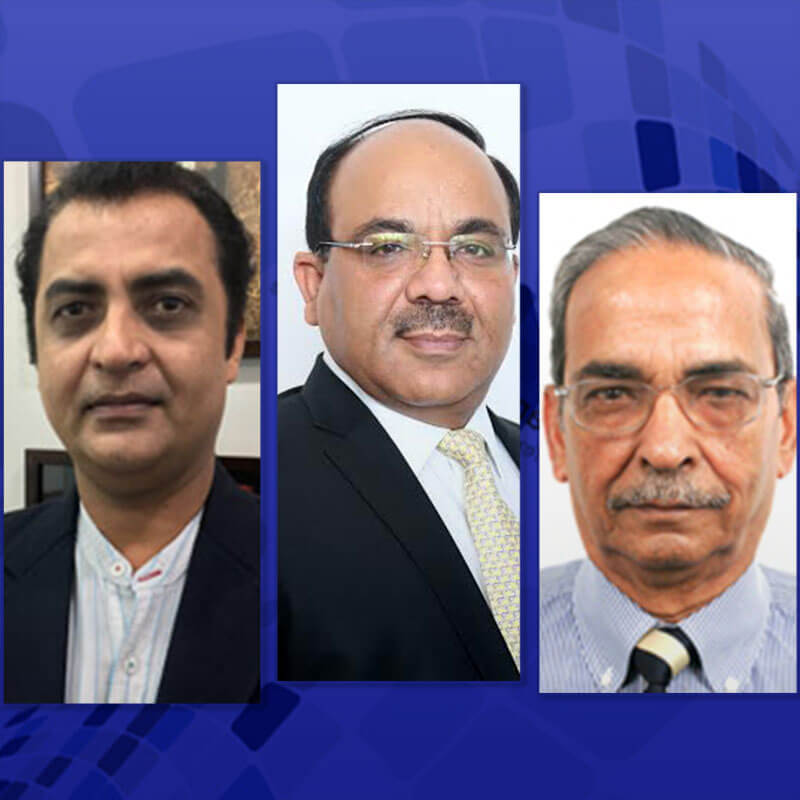
    MUMBAI: IMCL's senior vice president – operations and head of customer care, mar-com and regulatory affairs Subhashish Mazumdar has stepped down from his role, Indiantelevision.com has learnt. 31 July was his last working day at IMCL. Mazumdar is likely to exit the cable television business and move into a new domain in a leadership position.

    He joined as chief marketing officer for CAS in Hinduja Media Group in 2003 and subsequently based on various restructuring of the Hinduja Media Group’s IMCL, worked as head of business development for foreign content, regulatory policy head, customer care and process management head, marketing, operations and sales, senior regional head for north and east, head of JVs etc.

    He has been with the Hinduja Group for over 16 years. Mazumdar been involved in strategic work on content on various digital delivery systems in cable and HITS satellite. He was part of the launch of HITS platform as well.

    The veteran executive was also responsible for bringing South Korea’s key international English channel Arirang TV in India. He has played a very valuable and key role in the entire digitisation process of the cable sector. He has an overall career spanning now over 32 years in middle and senior management levels in almost all aspects of business functions like marketing, sales, finance, operations, people management, customer relations, regulatory among others in diverse industry sectors.

    Mazumdar is a post graduate in management from IIM-A.

  • No going back on DAS despite difficulties in P-IV: MIB

    No going back on DAS despite difficulties in P-IV: MIB

    NEW DELHI: Even as he admitted the fourth phase of digital addressable system for cable television was the most difficult, advisor (DAS) in the information and broadcasting ministry Yogendra Pal has said there is “no going back on the deadline of 31 March 2017.”

    Pal said that there were difficulties because several MSOs were reluctant to set up headends in far out rural areas, as the fourth and final phase only covers rural areas. He said the 60-plus cases pending in Delhi High Court relating to Phase III had been disposed of with the exception of three which challenged section 4A of the Cable Television Networks (Regulation) Act 1995, and all stay orders had been vacated.

    However, Pal admitted that a new case had been filed in Telengana to the effect that while there was clear reference to switching to DAS in Section 4A, there was no reference to switching off analogue signals. He said this case had been filed by a party not involved with the cable TV business.

    However, cable TV veteran Lt. Colonel V C Khare (retired) who chaired the session on ‘DAS implementation – miles to go before we sleep?” claimed that just around 22 per cent seeding of set-top boxes had been achieved in the third phase as against government claims of almost total seeding.

    Siticable Networks CEO V D Wadhwa also agreed that there were ‘gaps’ in Phase III, and Siticable had yet to seed another 2,50,000 STBs. But, he welcomed DAS, though he felt monetisation was still a challenge.

    Wadhwa said that while the objective of the consumer getting channels of his choice had been achieved, the industry was cable of overcoming soon the problems about SMS or receipts not being issued which had been raised by Khare in a presentation earlier in the day when he showed various loopholes in the DAS legislation.

    Khare had also pointed out that DAS in effect was aimed at involving only the broadcaster and the multisystem operator, conveniently keeping out the LCO who had built the industry.

    Other speakers in the session were unanimous that the cable TV industry had achieved in four years something that the direct to home industry had not been able to do in twelve years.

    In a session on “Business Model and Regulations”, there was general unanimity that the industry needed regulation but it did not have to come from a government regulator. The speakers favoured industry-led regulation.

    Eminent lawyer Kaushik Moitra of TMT Practice who moderated the session said that the Telecom Regulatory Authority of India (TRAI) had been given the additional burden of broadcasting only till a Broadcasting Regulatory Authority of India is set up but this had not happened. He said there was a certain need to move towards self-regulation. He also raised the question of whether TRAI was working to unite the LCOs.

    However, he applauded the growth of the industry with the last five years showing the growth of the highest number of television channels.

    Indiacast EVP Amit Arora said regulation was welcome, but it should not mean “jumping in at all times – this kills enterprise”. Even as no other country had achieved the kind of growth that local cable operators had shown in India, the regulator had to show greater responsibility towards the last mile operator. He also wondered why the MSOs and LCOs could not handle broadband while dealing with cable TV.

    Prag News CMD Sanjive Narain said that the regulator was only mean t to “ease movement” and not strictly regulate. It should solve problems before waiting for them to arise. He said that though TRAI consulted stakeholders, everything was often’pre-decided’.

    He said the primary problem before the industry was one of revenue sharing. Once that was out of the way, things would move smoothly.

    VuClip consultant Sisir Pillai said a regulator is needed, particularly in view of newer technologies like OTT. Referring to the growth of OTT, he said that the aim was to deliver content in whatever manner the subscriber wanted and find revenue for this.

    Answering a question later, he said that wired delivery was still the best medium even if video had to be sent to mobiles or other platforms.

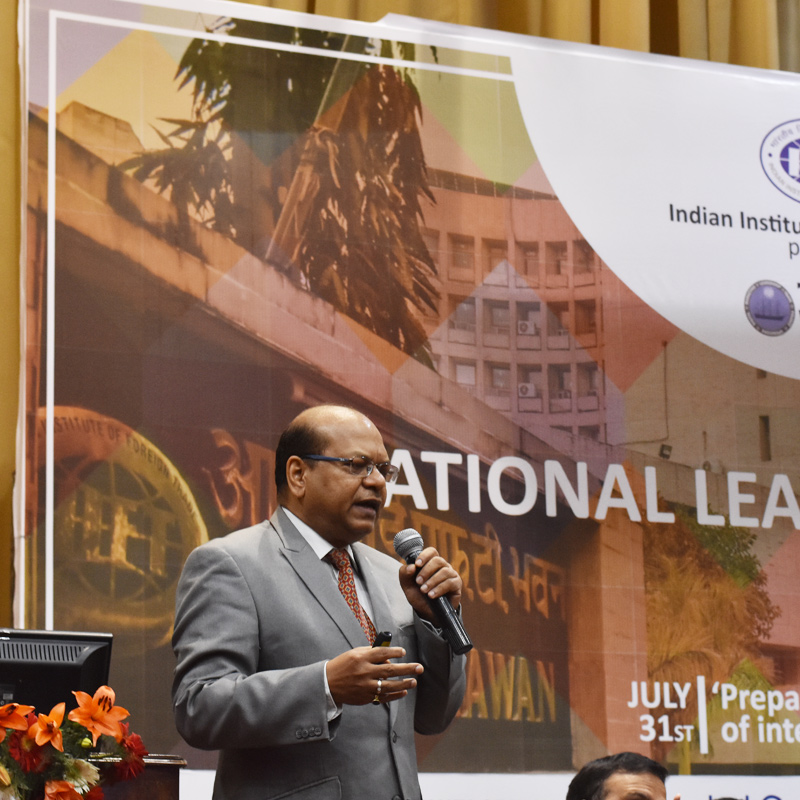
    InDigital senior VP – operations and head of regulatory Subhashish Mazumdar said there was no regulator when the LCO began with VCRs and built the industry. This meant that the last mile operator and multi-system should be capable of solving their own problems. The industry was now geared up for this, he said.

    Agreeing that the primary problem was one of revenue sharing, Mazumdar said that the issue of unity among stakeholders to solve such problems had to come from the top.

    Earlier, Dr A K Rastogi of Aavishkaar which was among the organizers said that the primary problem was one of unity among stakeholders and a step had been taken in this direction with the formation of the Media Club of India.

    A session later on “Significance of wireline operation in Digital India” moderated by Castle Media ED Vinsley Fernandes was unanimous that there was no better technology than wireline.

    The session was addressed by Cisco CTO Gulshan Khurana, Siti Networks COO Anil Malhotra, Ortel Communications President and CEO Bibhu Rath, Suresh Sethiya of ICNCL of Kolkata, and StoreSay founder and CEO Raman Kalra.

  • Broadcast Bill Darbaar raises lively online debate

    Broadcast Bill Darbaar raises lively online debate

    MUMBAI: The Broadcast Bill needs to adequately address the changing dynamics in a converging world; and the sector regulator (the proposed Broadcast Regulatory Authority of India – Brai) needs to be an autonomous body – one that is neutral and not managed by the government.

    These were the key points that came through in an online debate on the proposed Broadcast Bill Draft 2006, organized today by Indiantelevsion.com. “Broadcast Bill Darbaar”, with guest participants Sunil Lulla, CEO, Times Global Broadcasting Company Ltd (Times Now) and Subhashish Mazumdar, head – business development, IMCL/INEL (Hinduja Media Group), saw a lively debate on the vexing issues impacting the industry on account of the Bill. The chat session was conducted between 3 pm and 4 pm this afternoon.

    Said Lulla, “The industry has asked the government to have an open dialogue. As the industry and the government have a common interest – growth of the business and protection of consumer interests.”

    Both Lulla and Mazumdar stressed on the need for technology neutral regulations and licensing. Referring to content regulations, Lulla pointed out, “So how do you control one and not the other, when content, be it in text, visual or audio form could be on any or all of these platforms (terrestrial, cable – analogue and digital -, DTH, mobile TV, IPTV).”

    An issue that constantly came up was about the pressing need for limits being placed, particularly on the kind of content that news channels were dishing out. The general argument being that the maddening race for TRPs has made news channels break quite a few rules of decency. Therefore, why shouldn’t the government regulate such irresponsible behaviour?

    Said one participant, “There has to be some broad guidelines and which are flouted day in and day out. If the industry cannot show responsibility, blaming the government seems funny.” To this Lulla responded, “No one is blaming the government for a content code. The code already exists. No one is opposing that. What we ask is for an autonomous body to determine, build, set and regulate the code if it wishes too. That’s all the Industry is stating.”

    On the side of the cable industry, the need for a new license regime was an issue that came up frequently. “We should also have competition among cable operators. Suppose I don’t like to shift to DTH or IPTV, which anyway is a distant option,” one participant pointed out. “Circles should be established as is the case in telecom (to break cable monopolies),” said another.

    Defending the cable industry, Mazumdar said, “We are not against licensing per se, but licensing should be technologically neutral and the basis of licensing is already there in cable, by the way. The licensing regime needs updation like making sure of PAN etc. But no one would like to have a licensing raj for an industry which is servicing 64 million households.”

    Both Lulla and Mazumdar came out strongly against the proposed cross media restrictions. “For looking ahead, we feel these restrictions are meaningless. If someone asks you to limit your market share by law or regulation, that is not acceptable,” Mazumdar said.

    Said Lulla: The Indian owned media industry is a fragile industry. It does not have the resources of global giants. In today’s day and age, growth of industry and especially the media industry needs to be encouraged. Hence the potential to apply brakes on what can be a significant business in India, is self limiting. Industrialists who are funding these businesses should be able to leverage their investments; hence cross media restrictions of the kind one is hearing about will not create a growth oriented climate, when the rest of the business climate is oriented towards growth.

    Neither could adequately answer this poser though: “Why did the industry accept cross media restrictions in DTH, and are now crying foul over the move?”

    In summation, Lulla said, “This country has respected freedom of expression and the industry is seeking it be respected. Regulation with dialogue which is inclusive and is autonomous is always welcome.”