Tag: Subhash Kamath

  • Depiction of women in ads matters, but their absence also tells a story: ASCI’s Manisha Kapoor

    Depiction of women in ads matters, but their absence also tells a story: ASCI’s Manisha Kapoor

    MUMBAI: The Advertising Standards Council of India (ASCI) and Futurebrands have announced the launch of their first-ever deep, immersive dive into gender depiction in Indian advertising. The study titled ‘GenderNext’ aims to provide actionable insights that can positively shape the gender narratives in advertising. It is the first of several initiatives that ASCI will undertake this year. The full report is expected to be out by September.

    In a free-wheeling discussion with indiantelevision.com’s Anupama Sajeet, ASCI secretary-general Manisha Kapoor talked about the skewed portrayal of women, gender roles in Indian advertising and the idea behind the initiative.

    Edited excerpts:

    On the objective of the study.

    We wanted to examine the portrayal and the narratives around women in advertisements and their roles, the vocabulary that is used – whether they are shown to be with family, friends, or alone, at home or at work. Then, use this information to bring about a much more positive depiction of the narrative. We felt that advertisers need to be given a different starting point to explore gender narratives in advertising, in a more relatable way that’s also inspirational and progressive. It is not just for advertisers, but policymakers, for academia, the government, and civil society. The study is not an audit. We are not trying to audit advertising, we are trying to learn through observations of what could be a better way of saying things and open up newer ways this conversation could be taken ahead.

    On whether the ad industry is losing connect with consumers with changing times.

    Advertisers and brands do realise that consumers have changed. However, the change is complex, it is not simple to understand. To illustrate my point, why is it that every time we need to show something traditional we resort to showing a homemaker – a homemaker today may not necessarily see herself as traditional. This points to an indirect manner in which advertising has thought of women. Some brands have tried to break the mould and succeeded.  There is a larger shift that’s happening globally and the idea is to bring that larger shift into focus. Society and ads- both influence each other. Ads will show the truths that they pick up from societal changes and vice-versa. So, there is a need to be more responsible as well as progressive. 

    On plans to deal with the continued objectification of women in ads.

    ASCII already has guidelines that say that ads cannot be derogatory or demeaning to women. So in cases where it is quite evident, we process complaints against these ads. Depending on what has been said or depicted we could uphold the complaint against such an advertisement. Now the challenge lies in what is permissible and what’s not outright derogatory.  So within that, what are the positive narratives that we can pick up?; it's not just about correcting a wrong, we are trying to move the needle in terms of more aspirational, relatable, positive depiction. We want advertisers to make better ads.

    On tackling ingrained, stereotypical gender roles in Indian ads.

    There are five enquiry frameworks that we are using in the study. First, we will culturally decode advertisements. We will look at ads from different regions and different categories over some time and try to understand what is the gender dynamics that are being depicted in the ad. This involves decoding advertisements that are already out there in the public domain. Second, we will talk to consumers about how they perceive certain ads. We’ll do in-depth qualitative research across 10 centres with groups of consumers to this effect. Next, we’ll talk to the creators of the ads- to the brands, advertisers, leading creative voices in the industry, to understand their perspective. The fourth part will be to talk to the policymakers, social activists and those who have worked in the gender space.

    Finally, we will look at what our partner in this initiative – Futurebrands – brings to the table. Futurebrands has an ongoing primary study for 11 years now, which has covered more than 200 small and large towns in India. It’s called Bharat Darshan and it maps the changes in Indian society. This will provide the foundation on which we will review some of the information which we assimilate now.

    On guidelines for the ad industry post the study.

    We may draft certain guidelines in future which could be helpful to advertisers to navigate this space. Our code already provides for the fact that advertising should not be derogatory to women, but we may offer more by way of explanation, examples and illustrations and certain more specifics. We are looking at a broad spectrum of categories, it includes categories that have traditionally spoken to women, as well as, those which have not. Thus, even the absence of women in certain categories of ads is something to be noted. While the presence of women and their depiction matters, the absence also tells a story. Hence with GenderNext, we hope to provide an insight that will help advertisers navigate these conventional tropes.

    On ASCI’s plan to focus on gender initiatives.

    Gender is the big focus and our flagship initiative this year. To further this agenda, we are looking at the formation of more alliances and collaborative efforts with other organisations, like the kind we have done with Futurebrands, which will be revealed in time. This is only a beginning. We will have much more coming up as the year goes by. Companies have stepped forward to fund the study. Nobel Hygiene is one of our principal sponsors. GenderNext is a first-of-its-kind study and expected to be of significant value to advertisers and creative agencies, as well as academia, policymakers and advocacy bodies.


  • ASCI upheld complaints against 257 misleading ads in June & July

    ASCI upheld complaints against 257 misleading ads in June & July

    MUMBAI: In the months of June and July 2020, the Advertising Standards Council of India (Asci) investigated complaints against 363 advertisements, of which 76 were promptly withdrawn by advertisers. The independent Consumer Complaints Council (CCC) of Asci evaluated the remaining 287 advertisements, of which complaints against 257 advertisements were upheld. Of these, 150 belonged to the healthcare sector, 40 to education, 20 to food and beverages, four to GAMA complaints, 12 to personal care and 31 to the other category.

    Covid2019, continued to be the biggest fight which in turn led to a rise in the false claims of cure and prevention from Coronavirus. Holding hands with the Ministry of AYUSH, Asci is continuously working towards eliminating such false claims for the betterment of the society. In the month of May – June 97 such cases were flagged to the regulator.

    Read more news on Asci

    Asci chairman Subhash Kamath says, “There has been a flood of advertisements with dubious claims about COVID-19 cures and preventions. Especially at this time when consumers are feeling more vulnerable about the virus, it becomes more important for us as regulators to ensure that these ads don’t exploit the consumer’s anxiety.  We understand that such claims can adversely affect consumers and we are committed to work closely with the Ministry of Ayush to help eliminate such malpractices from society.”

  • Subhash Kamath elected as ASCI chairman

    Subhash Kamath elected as ASCI chairman

    NEW DELHI: BBH & Publicis Worldwide India Chief Executive Officer Subhash Kamath has been elected chairman of the board of governors of the Advertising Standards Council of India (ASCI). The vote was held at the board meeting that followed the thirty-fourth annual general meeting this afternoon. Kamath is an industry veteran, having spent more than 32 years building brands across various sectors. 

    Ketchum Sampark P. Ltd MD NS Rajan, was elected the vice-chairman, and IPG Mediabrands India P. Ltd CEO  Shashidhar Sinha was reappointed as an honorary treasurer at the same meeting. 

    The Board of Governors includes Abanti Sankaranarayanan, co-chairman & Board Member, ISWAI;  D Shivakumar group executive president, Aditya Birla Management Corporation P. Ltd; Girish Agarwal, director, Dainik Bhaskar Group; Harish Bhat, Director, Tata Consumer Products Ltd; KV Sridhar, chief creative officer (Global), Nihilent Ltd; Madhusudan Gopalan, CEO, Procter & Gamble Hygiene and Hbealth Care Ltd; Rohit Gupta, president – network sales & international business, Sony Pictures Networks India P. Ltd; Prof SK Palekar, Centre For Developmental Education, IFIM Business School; Priya Nair, executive director Beauty, and  Personal Care, Hindustan Unilever Ltd; Prasun Basu, president – south Asia, Nielsen (India) P. Ltd; Sivakumar Sundaram, president revenue, Bennett Coleman & Co. Ltd; Umesh Shrikhande, CEO, Taproot India Comm. P. Ltd. 

    Incoming chairman, Subhash Kamath said: “It’s a genuine privilege to accept this role as chairman of ASCI. Having served ten years on the board, I have had the honour of working and learning from very senior and experienced leaders of the industry. More importantly, I have learned the immense value of self-regulation and the far-reaching impact of the work ASCI has done over the years. Our industry today is at a crucial stage. With the digital revolution influencing brand messaging and engagement with consumers, advertising is evolving rapidly. And with the recent formation of the Central Consumer Protection Authority constituted by the government, self-regulation will be even more crucial in promoting consumer confidence and trust. As I have always said, with great creative power, comes great responsibility. So I look forward to working closely with the ASCI team to continue the good work set up by my predecessors and to introduce some newer, more future-facing initiatives as well.”

    Recalling his year-long tenure at ASCI, outgoing chairman Rohit Gupta, said: “I thank all my colleagues, ASCI members and everyone who was part of this incredible journey. I am glad I was given an opportunity to drive the body that spearheaded important changes in the advertising industry. This year has been the most eventful for ASCI as we tackled several challenges. The pandemic saw many misleading ads, which were dealt with immediately. The Ministry of AYUSH reached out for help in flagging misleading advertisements regarding prevention and treatment of COVID-19.  We also signed up with TAM to monitor 3,000 digital portals for misleading claims. We successfully met the three objectives we had set: increasing our consumer base, monitoring the digital space, and working closely with government bodies. I wish Kamath and the board the very best.” 

    Over the past year, ASCI’s independent Consumer Complaints Council met 45 times and deliberated on complaints pertaining to 3,773 advertisements.

    ●      Complaints were upheld against 2,126 advertisements (versus 1,486 in 2018-19) while those against 298 were not Upheld as the advertisements in question were not considered to be in contravention of ASCI’s codes

    ●      192 advertisements were found to be prima facie in violation of The Drugs and Magic Remedies (DMR) Act or The Drugs and Cosmetics Rules (Schedule J). These were promptly escalated to the Ministry of AYUSH or the Ministry of Health for their immediate attention

    ●      In several cases, state AYUSH officials, the FDA or the Central Council for Indian Medicine issued show-cause notices to the advertisers.

    It concluded with a touching tribute to Brahm Vasudeva, the non-executive chairman of Hawkins Cookers and the first chairman of ASCI, who passed away in July. His commitment to self-regulation in advertising and to the ASCI cause was recalled fondly.

  • Brands shouldn’t be mindlessly global or needlessly local: Subhash Kamath, BBH

    Brands shouldn’t be mindlessly global or needlessly local: Subhash Kamath, BBH

    MUMBAI: Born British but adapted to India. That’s the way full service global creative agency Bartle Bogle Hegarty (BBH) functions. You may not know the name but you’ve definitely caught sight of the latest ads of Tinder or Behrouz Biryani.

    The agency’s first ad was for Levi’s and it showed a black sheep going against the herd. It became the agency icon and coined the phrase, “When the world zigs, zag”. It was a challenge to get this ad out, because all jeans ads of the time had people and here you had Levi’s showing off a sheep! But the bet paid off.

    Founded in 1982 by British ad men John Bartle, Nigel Bogle, and John Hegarty, BBH today has offices in London, New York City, Singapore, Shanghai, Mumbai, Stockholm and Los Angeles and employs more than 1000 staff worldwide.

    When BBH took the mandate for Johnnie Walker, the campaign “Keep Walking” boosted brand sales from 13 per cent of the global market when the campaign broke in 2000, to over 20 per cent at the end of 2013 according to IWSR.

    When BBH decided to open its India office in 2008, one of the first hires for the agency was former Bates group CEO Subhash Kamath. He joined the agency with a vision to get rid of hierarchies and corporate silos. Kamath juggles between being an advertising professional and entertaining audiences with his guitar playing skills. BBH recently completed 10 years in the Indian market. In a free flowing conversation with Indiantelevision.com, BBH India CEO and managing partner Subhash Kamath talks about the agency’s journey, his views on creativity in advertising, his passion and much more.

    You’ve been with BBH for a decade now. Do these ten years seem like a lifetime or the beginning of the journey?

    When BBH started its India business in 2008, India was the only country where BBH didn’t bring the expat management and rather wanted a local management. You can’t treat the Indian audience the same way you would treat any other country as there is so much cultural influence here. All of us here have come from bigger agencies and networks and we had the opportunity to work in a different organisation here. We all knew the good and bad about larger networks and would always complain about too much structure and hierarchy. We at BBH wanted to create an organisation without any of that. Despite being a decade old, I still think of BBH as a startup. We like to think of ourselves as a small-big agency where we have big agency thinking in a small agency of nimble size. I honestly don’t ever want to change that and I hope we never grow far too much that we have to change this structure.

    How do you choose your clients?

    We are very choosy about whom we want to work with. While we want to grow, we are very clear that we don’t want to work with every kind of client. We do a lot of soul searching before we decide on a client. It is not out of arrogance but just out of humility because if you decide to work with a wrong client, it may spoil the agency culture.

    So what is great creativity for you?

    Traditional pure creative awards are more about the craft. BBH has been known for the impact that the creative has on business. For me, great creative comes when a client is genuinely interested in building a brand and not just looking out for tactical outcome in the short term.

    Is that why BBH stays away from awards?

    It is not that we stay away from awards but, yes, if you look at the creative awards in India, 90 per cent of the print and OOH work is scam. As a culture, we don’t do scam. We do not believe in putting out work only for awards.

    What’s your ratio between project base v/s retainer clients?

    In recent times, we have seen more work coming in on project basis. But we still have 80 per cent of the business coming in from retainers. We have also diversified our business into design, agile production, content and animation in the recent years and these businesses have more project-based work.

    What’s your male to female ratio in the agency?

    When we started off BBH in India, the male to female ratio was 90:10 but it has come up to a 50:50 ratio now. Our biggest client today is Marico which has over five types of hair oil. We need a female creative person in such a team and can’t have only men making ads for a beauty care product.

    Do you think your clients have changed or evolved over the years?

    I don’t think that clients have changed a lot but there is one disturbing trend at client’s end is that there are too many structural changes in companies on the marketing end. The CMOs, brand managers keep changing every two to three years. These brand managers and CMOs then want to change the agency or campaign thinking that, “We must do something new”. I find this a little disturbing as at the end of it, the brand gets affected because everyone questions what the past person has done. That’s why in India, we don’t see a lot of long running campaigns.

    How do you ensure BBH always comes up with out-of-the-box creatives?

    It is a constant pressure that we take upon us as to how we come up with new innovative campaign ideas and question everything.

    Looking at a larger picture, what do you think about the advertising scenario in India right now? Everyone is always talking about how international concepts and campaigns don’t work here.

    It’s not that international campaigns don’t work here. We launched the international Lee jeans campaign in India, the jeans that built America, and it worked because the consumer wanted to buy American products. When it comes to international brands, I think the globalism of the brands works well in India. Do you buy an Audi or a BMW because of its Indian connection? No! But there are categories when you can’t just borrow an international campaign. McDonald’s and Amazon are great examples for that where they have had to Indianise their brands. Brands need to Indianise the creative whenever necessary but they should neither be mindlessly global nor needlessly local. Brands need to find the right balance.

    How would you explain digital advertising in one sentence?

    An ex-colleague of mine once told me that, “You don’t need digital ideas, you only need ideas for a digital world”.

    You are credited to be one of the few CEOs who are passionate about advertising. So what keeps Subhash Kamath going every day?

    I realised fairly early in life that work isn’t everything. In the initial years of my career, I was too focused on climbing the corporate ladder but realised later that there are other things in life which are equally important. My family is extremely important to me. I am very interested in movies, books, music, travel and food and I make sure I create enough time for these things. You shouldn’t take yourself so seriously in life. People have made it a virtue to work till late in the evening, which is so not right. I used to stay back in the office till late, but not anymore. I encourage people not to come to office on weekends unless there’s an important pitch. I believe if you have other interests in life, it helps you to write better and be a better creative person.

  • Diamond Producers equate precious moments with diamonds

    Diamond Producers equate precious moments with diamonds

    MUMBAI: The Diamond Producers Association, an international alliance of the world’s leading diamond mining companies has launched their integrated marketing campaign ‘Real is rare, real is a diamond’ in India. Created & executed by BBH India, the campaign focuses on celebrating the precious moments which mark the journey of a relationship between couples.

    This campaign marks the first ever category marketing initiative in the diamond industry since a decade. Through extensive research and learnings, the DPA and BBH team discovered a primary insight that couples tend to celebrate anniversaries and birthdays as milestones, when there are other, mostly unrecognised moments of bonding and intimacy that actually form the foundation of their relationship. These moments are unique and rare to each couple and therefore deserve to be recognised and celebrated. Inspired by real stories, the ‘real is rare, real is a diamond’ campaign has recreated such moments of intimacy and bonding which couples can relate to and recognise as milestones.

    Diamond Producers Association CEO Jean-Marc Lieberhe says, “India is an important market in the global consumer market and presents a significant opportunity for us. We are thrilled to announce the ‘Real is Rare. Real is a Diamond’ campaign which links diamonds to the precious moments between young Indian couples. The announcement is also to work closely within the sector to revitalise category marketing, focusing on the younger generation and catering to their specific needs and aspirations”.

    Diamond Producers Association India managing director Richa Singh adds, “’Real is rare, real is a diamond’ focuses on a diamond’s billion-year-old natural heritage and equates that with what is most authentic and real in our lives. The campaign expresses the real and rare moments between couples and beautifully connects it to the unique quality of diamonds”.

    BBH India CEO and managing partner Subhash Kamath says, “Our mandate was to reinterpret the idea of “Real is Rare” for the Indian market, and root it in a cultural truth. We’re not trying to promote any particular brand here, but make people see diamonds in a whole new light. It’s a long term goal and we’re thrilled to be partnering the DPA on this journey”.

    The ad aims to connect with the younger generation in a personal and emotionally relevant way while emphasising that diamonds are a symbolic expression of emotional commitment. It is a story that is real, that is theirs and that is rare, with the diamond being a true symbol of what the relationship is all about.

    The campaign has been launched through an integrated marketing communications mix of TV, cinema, digital, PR, mobile and social media.

  • BBH India releases health campaign with real cast and crew

    MUMBAI: In a unique attempt to create realism, BBH India has released an ad film for the pharma firm Abbott Healthcare Pvt Ltd on TV and digital on 22 May, featuring the real cast and crew of the film who come together to overcome a specific health condition.  

    The film extends to create an integrated approach to story-telling with each of the eight key cast and crew telling his or her own story. The campaign became possible because of their spirit, backed by modern healthcare and Abbott’s breakthrough products.

    Talking about the campaign, Abbott regional marketing officer Joshua Grace said, “Helping people live their healthy and full lives is why we come to work. We have been creating breakthrough health products for over 125 years, and we recognize the unstoppable spirit of people, who are getting on and living amazing lives, despite the health challenges they face. This campaign is about telling the story of their spirit and inspiring others to feel they too can do the same.”

    BBH India CCO and managing partner Russell Barrett said, “It’s so much more persuasive to do instead of saying. That’s what we’ve managed with this campaign. Instead of merely capturing an actor, in a situation, we’ve turned the camera inwards and demonstrated how amazingly resilient and unstoppable people are when confronted with health challenges. It was a huge challenge to create a film like this and that we succeeded is a testament to the brilliance of the cast and crew behind the ad.”

    The campaign story focuses on how modern healthcare has helped people to push past the seemingly impossible to have a life full of rich experiences and fulfilling moments. In line with Abbott’s philosophy, ‘Life.to the fullest’, this campaign builds on Abbott’s 2016 campaign by BBH India. The TVC naturally extends from last year’s activity also created by BBH India, which received an overwhelming response from across the industry.  Last year’s radio campaign showcased three real people who recorded live radio ads while rafting through rapids, paragliding, or running the Ladakh marathon, despite facing heart disease, diabetes and the challenge of ageing healthily. It was the first ever radio campaign to be recorded live.

    BBH India managing partner and CEO Subhash Kamath said, “I think we’re onto something really big and long lasting. Real stories of real people, living life to the fullest, were something we started last year on radio and online video. We are taking it to the next level this year by creating a real story for television too.”

  • BBH: Why stereotype beauty

    BBH: Why stereotype beauty

    Mumbai: Nihar Naturals Coconut Hair Oil, the market leader in east India, launched its latest campaign challenging the culture of beauty stereotyping ingrained in society.

    Women are often subjected to perceptions of being ‘more capable’ or ‘less capable’ based on their physical appearance and their choice of hairstyle. Nihar Naturals has always been at the forefront of challenging stereotypes. In 2015, Nihar partnered with Neilson to launch a nationwide study #IAMCapable, to build awareness amongst women about this culture of beauty stereotyping. The report drew attention to the biases faced by Indian Women today – 64% of Indian Women have agreed that judgements passed on them has affected their ability to reach their true potential.

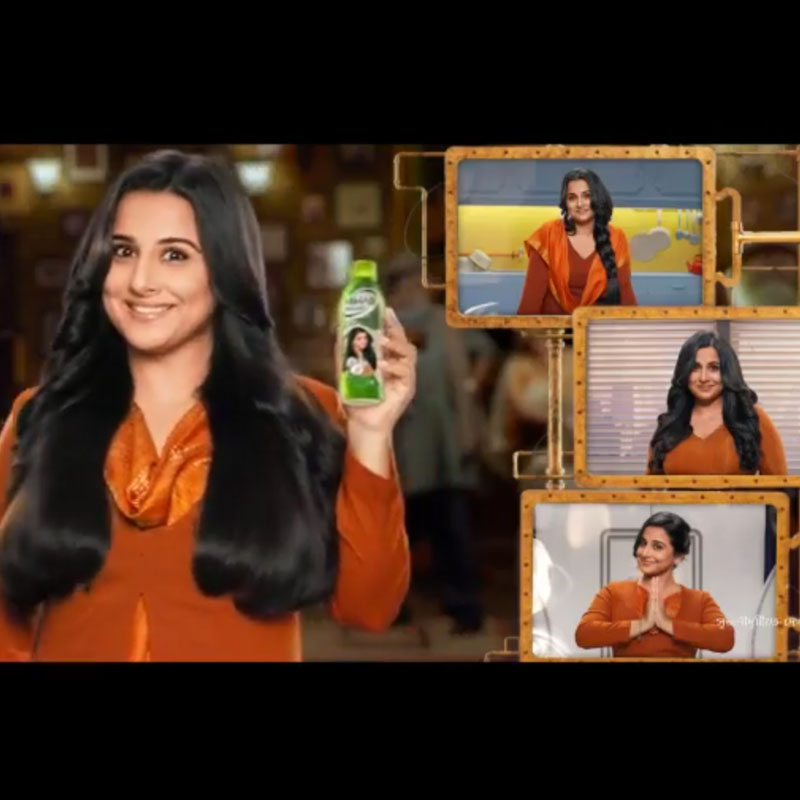
    BBH has conceptualised the campaign, which reiterates Nihar Natural’s brand purpose & takes the conversation a notch higher. Featuring long-term brand ambassador Vidya Balan, the campaign drives a strong message that a woman’s capability should not be judged based on the choice of her hair style. It goes on to state that beautiful hair is not a sign of capability, it is only a sign of a potent hair oil.

    Marico Limited CMO Anuradha Aggarwal said, “Over the years Nihar Naturals through its various campaigns has communicated that a woman’s hair cannot be a parameter of judging her or her capability in anyway. This year’s campaign talks about how ‘Beautiful hair is not a sign of a woman’s capability, it is only a sign of a potent hair oil.’”

    Vidya Balan added “This film through different creative sequences beautifully tries breaking yet another stereotype of judging women and their professions basis their hairstyles.”

    BBH India CEO & managing partner Subhash Kamath said, “Nihar Naturals’ hair care category is a very competitive and cluttered one. So it’s quite a challenge to create a differentiated brand idea.”

    BBH India executive creative director Rajesh Mani added, “Nihar Naturals has, over the years, taken a humorous dig at societal judgements on women’s hair and equating it with their capability. So the TVC is like a playful theatre of the absurd. The photo studio and the changing of backgrounds according to a woman’s hair style bring about the subconscious judgements that people make about women.”

  • BBH: Why stereotype beauty

    BBH: Why stereotype beauty

    Mumbai: Nihar Naturals Coconut Hair Oil, the market leader in east India, launched its latest campaign challenging the culture of beauty stereotyping ingrained in society.

    Women are often subjected to perceptions of being ‘more capable’ or ‘less capable’ based on their physical appearance and their choice of hairstyle. Nihar Naturals has always been at the forefront of challenging stereotypes. In 2015, Nihar partnered with Neilson to launch a nationwide study #IAMCapable, to build awareness amongst women about this culture of beauty stereotyping. The report drew attention to the biases faced by Indian Women today – 64% of Indian Women have agreed that judgements passed on them has affected their ability to reach their true potential.

    BBH has conceptualised the campaign, which reiterates Nihar Natural’s brand purpose & takes the conversation a notch higher. Featuring long-term brand ambassador Vidya Balan, the campaign drives a strong message that a woman’s capability should not be judged based on the choice of her hair style. It goes on to state that beautiful hair is not a sign of capability, it is only a sign of a potent hair oil.

    Marico Limited CMO Anuradha Aggarwal said, “Over the years Nihar Naturals through its various campaigns has communicated that a woman’s hair cannot be a parameter of judging her or her capability in anyway. This year’s campaign talks about how ‘Beautiful hair is not a sign of a woman’s capability, it is only a sign of a potent hair oil.’”

    Vidya Balan added “This film through different creative sequences beautifully tries breaking yet another stereotype of judging women and their professions basis their hairstyles.”

    BBH India CEO & managing partner Subhash Kamath said, “Nihar Naturals’ hair care category is a very competitive and cluttered one. So it’s quite a challenge to create a differentiated brand idea.”

    BBH India executive creative director Rajesh Mani added, “Nihar Naturals has, over the years, taken a humorous dig at societal judgements on women’s hair and equating it with their capability. So the TVC is like a playful theatre of the absurd. The photo studio and the changing of backgrounds according to a woman’s hair style bring about the subconscious judgements that people make about women.”

  • BBH India expands to Delhi

    BBH India expands to Delhi

    MUMBAI: The BBH network has launched its new office in Delhi to strengthen the agency’s presence in India. BBH’s first office in India, BBH India (Mumbai) launched in 2008.

    The agency has named Shreekant Srinivasan as general manager, Vasudha Misra as executive creative director and Ankit Singh as strategy director to lead the Delhi office.

    “The BBH brand has real momentum across Asia. The region is an increasingly important part of both our commercial and creative agenda. We see opening in Delhi as a natural next step and are excited by the opportunities that lie ahead,” said BBH global CEO Neil Munn.

    “Delhi has become a very important market for our industry. Given the recent growth & success of our business, it felt like the right time to establish ourselves here. In Vasudha, Shreekant and Ankit, we believe we have the right kind of people that make the BBH brand anywhere in the world: tremendous talent & experience, but above all, integrity and honesty. I’m looking forward to working closely with them to establish the Blacksheep in this market,” BBH India CEO and managing partner Subhash Kamath added.

    BBH India chief creative officer and managing partner Russell Barrett said: “Delhi is an exciting market, filled to the brim with amazing brands and opportunities, so why wait this long to open up? We absolutely had to find the right people. I’m really very excited to work with this team and help them make this new BBH office exactly the same at heart, yet strikingly different from any BBH office anywhere in the world.”

    “I have always gravitated towards working with people and organizations that inspire me. BBH is exactly that space – an agency with a very clear point of view, from office culture to perspectives on the business. My task is to build the culture of “good people, great work” in Delhi/NCR, and deliver work truly represents the black sheep,” Srinivasan stated.

    Both the BBH Mumbai and Delhi offices will operate as one BBH India entity, giving Delhi based clients easy access to the full BBH offer.

    BBH has already built a strong base in Delhi with clients like real estate portal Makaan.Com and Philips and has several new business projects in progress.

  • BBH India expands to Delhi

    BBH India expands to Delhi

    MUMBAI: The BBH network has launched its new office in Delhi to strengthen the agency’s presence in India. BBH’s first office in India, BBH India (Mumbai) launched in 2008.

    The agency has named Shreekant Srinivasan as general manager, Vasudha Misra as executive creative director and Ankit Singh as strategy director to lead the Delhi office.

    “The BBH brand has real momentum across Asia. The region is an increasingly important part of both our commercial and creative agenda. We see opening in Delhi as a natural next step and are excited by the opportunities that lie ahead,” said BBH global CEO Neil Munn.

    “Delhi has become a very important market for our industry. Given the recent growth & success of our business, it felt like the right time to establish ourselves here. In Vasudha, Shreekant and Ankit, we believe we have the right kind of people that make the BBH brand anywhere in the world: tremendous talent & experience, but above all, integrity and honesty. I’m looking forward to working closely with them to establish the Blacksheep in this market,” BBH India CEO and managing partner Subhash Kamath added.

    BBH India chief creative officer and managing partner Russell Barrett said: “Delhi is an exciting market, filled to the brim with amazing brands and opportunities, so why wait this long to open up? We absolutely had to find the right people. I’m really very excited to work with this team and help them make this new BBH office exactly the same at heart, yet strikingly different from any BBH office anywhere in the world.”

    “I have always gravitated towards working with people and organizations that inspire me. BBH is exactly that space – an agency with a very clear point of view, from office culture to perspectives on the business. My task is to build the culture of “good people, great work” in Delhi/NCR, and deliver work truly represents the black sheep,” Srinivasan stated.

    Both the BBH Mumbai and Delhi offices will operate as one BBH India entity, giving Delhi based clients easy access to the full BBH offer.

    BBH has already built a strong base in Delhi with clients like real estate portal Makaan.Com and Philips and has several new business projects in progress.