Tag: Subhash Ghai

  • TISS & Whistling Woods International team up to offer graduate degrees

    TISS & Whistling Woods International team up to offer graduate degrees

    MUMBAI: In their endeavour to ensure proliferation of film and media education, Whistling Woods International (WWI) has partnered with the Tata Institute of Social Sciences (TISS).


    The coming together of the academic pedagogy of TISS and the practical rigour of WWI’s education promises to form a partnership to ensure that the best film and media education is offered to students.


    Talking about the association, WWI founder and chairman Subhash Ghai said, “A lot of thought and meticulous planning has gone into finalizing the curriculum, faculty and the practical nature of the education at WWI. It is regularly updated keeping international standards in mind. Associating with TISS, an institution of high academic pedagogy, is a step in the same direction; to enhance the quality of programs offered at WWI.”


    TISS director Parasuraman added, “Filmmaking, communication and media studies are as much a part of society as any other field. Over the years, TISS has always delivered progressive education in all the social sciences. We have closely observed WWI, interacted with the management team of WWI and observed that they demonstrate the same degree of quality consciousness as TISS.We at TISS felt it appropriate to partner with WWI to offer degree programs in filmmaking, communication and media studies.”


    The various degree programs offered under the WWI – TISS association are as follows:


    B.A. in Filmmaking with specialisation – Acting

    B.A. in Filmmaking with specialisation – Screenwriting

    B.Sc. / B.A. Filmmaking with specialisation – Cinematography

    B.Sc. / B.A. Filmmaking with specialisation – Direction

    B.Sc. / B.A. Filmmaking with specialisation – Editing

    B.Sc. / B.A. Filmmaking with specialisation – Producing

    B.Sc. / B.A. Filmmaking with specialisation – Sound Recording and Design

    B.Sc. / B.A. Filmmaking with specialisation – Visual Effects for Motion Pictures

    B.Sc. in The Art & Technique of Animation

    B.B.A / B.A. in Media and Communication Studies

    B.A. in Fashion Design


    Admissions for these courses commenced in January 2015 and classes will commence in July 2015.

  • Mukta A2 Cinemas launches first property in Bhopal

    Mukta A2 Cinemas launches first property in Bhopal

    MUMBAI: Mukta Arts has launched its 10th high tech multiplex in Bhopal on 14 November at People’s Mall.

    Commenting on the launch, Mukta Arts chairman Subhash Ghai said, “My hearty congratulations to our brilliant team of Mukta A2 Cinemas on the opening its 10th high tech multiplex in Bhopal on November 14, 204. This year, Mukta Arts has recently celebrated its 37th anniversary in show business of India and its feels great that Mukta A2 Cinemas is launching its 10th property in the same year.”

    Spread across 23,000 square feet with four screens and a seating capacity of 775, the theatre boasts of comfortable recliner seats at affordable prices, which is an exclusive offering to the movie going audience in Bhopal. The property also offers state-of-the-art technology with Dolby digital sound complimented by a soothing ambience with comfortable seating and an exciting variety of F&B options.
    In terms of marketing, the brand is reaching out to movie lovers by means of hoardings, bus branding, television tickers and newspaper advertisements.

    Speaking about the launch, Mukta Arts MD Rahul Puri commented, “It’s with great pleasure that Mukta A2 Cinemas opens its 10th property in the wonderful city of Bhopal. The people of this terrific city can now enjoy great movies in the comfort of a world class theatre at extremely competitive prices. The theatre is also in the heart of the City – People’s Mall, poised to be on the city’s retail hotspots.”

    Mukta Arts is one of the leading players in the Indian film production and distribution industry. It has also ventured into launching its own brand of multiplex theatres, Mukta A2 Cinemas, which is spread across 28 screens in India. The existing screens located in Ahmedabad, Baroda, Gulbarga, Vishakapatnam, Banswara, Sailu, Hyderabad and Sangli has received a tremendous response and strengthened the company’s goal to provide an enriching movie-watching experience.

    As part of their impending plans, Mukta A2 Cinemas aims to launch in cities like Mumbai, Gurgaon, Dehradun and Aurangabad, promising the best movie experiences to movie lovers.


  • Marketing costs and independent films, an uneasy mix, says Rahul Puri

    Marketing costs and independent films, an uneasy mix, says Rahul Puri

    How many of us actually watch small films? Films that perhaps don’t have the big star cast or the big directors. Maybe there are films that don’t have the backing of big studios and will rely heavily on word of mouth from the target group, referring it to peers. How many of us really go to the theatre, pay Rs 250+ and watch these films?


    I doubt the answer to my question is, many, if we are being honest. The reality is that in spite of most of us moaning about the quality of storytelling in films, we generally base our film watching decisions on factors like star cast and the amount of marketing visibility. The small films usually lack these ingredients and therefore, they are not top-most in the minds of the viewers when it comes to choice for consumption. And this is usually despite the potential of their story.


    Forgive me for this roundabout way of getting to the point. There is a huge issue of marketing films in our business and the smaller, independent films (the films a lot of people laud as ‘good cinema’) usually ends up with the short end of the stick. An old time distributor would call these films ‘art-house’ or say they aren’t commercial and therefore, they can’t be marketed well. But there is a distinction between something that is targeted to a niche and something that is completely unmarketable.


    One of the large issues that our business has to address over the next few years are niche films and how we deal with them and create a viable business model for them. The West has art house theatres and a thriving independent circuit including channels, festivals and markets where films out of the mainstream can find a way to be commercial in nature.


    India has to find a way to resolve this issue too. We have many terrific films that don’t make it to theatres and therefore, we deprive our audiences of seeing some really great films. Look at the films that win National Awards. How many of us actually see them outside their home state? Would it not make sense for the rest of the country to see them? Are these stories that wouldn’t resonate with other Indian audiences? I can’t say the answer is yes for sure but in general it has to be true.


    Marketing costs and promotional expenses is one of the main bone of contention here. A film is considered impossible to release if it can’t justify a certain spend on marketing and promotion. The absolute amount of this figure has grown over the years thanks to increase in prices of media as well as the growth of media outlets and platforms. Today a film is deemed to have had a poor release if it doesn’t do the latest reality shows, launch a motion poster at a 5 Star hotel or do an eight city tour for press and promotion. All this, plus traditional forms of advertising and other marketing tools costs money. Lots of it. Where do little, independent films get this money from?


    Moreover, if a small film does get this finance, how do they decide what is actually effective and what is not? Marketing campaigns have a template to them these days and all agencies try to enforce this upon producers stating previous successes or competitors spend. This sometimes is relevant but mostly it’s about consuming the all important inventory that most of the agencies, channels and platforms need to exhaust in order to enhance profitability. Whether it’s needed, effective or even useful for a particular film is secondary at times. Thus, a small film is over burdened making it more unprofitable thus perpetuating the cycle that these films are generally a huge risk.


    So what’s the solution? Well, better and more innovative marketing planning, campaigns and execution. Most of which is probably available and there are agencies and marketing gurus out there capable of delivering. It will just take a producer or a studio the gumption of saying no to the herd mentality and giving it a real shot. The filmmakers really deserve it.

  • “Govt. doesn’t recognise the importance of cinema”: Subhash Ghai

    “Govt. doesn’t recognise the importance of cinema”: Subhash Ghai

    Born to a dentist father in Delhi, Subhash Ghai entered the film industry in 1970 after attaining his diploma from Film and Television Institute of India (FTII). The film director, producer and screenwriter, known for his works predominantly in Bollywood has given notable films like Kalicharan (1976), Karz (1980), Hero (1983), Meri Jung (1985), Karma (1986), Ram Lakhan (1989), Saudagar (1991), Khalnayak (1993), Pardes (1997), Taal (1999) and Black & White (2008).


    In 2006, he set up his own film institute Whistling Woods International in Mumbai. The institute trains students in filmmaking: production, direction, cinematography, acting, animation. Ghai has done brief cameos in his directorial ventures.


    Mukta Arts managing director Rahul Puri spoke to Ghai to know about changing times, new vertical of the business, the market scenario and much more.


    Excerpts:


    Tell us about the differences in the film industry today from when you joined? How has the influence of branding and other media (like television and digital) changed the way that the film industry is perceived now?


    The main difference in the film industry is that now it has become broad in terms of media, technology, and communication from what it was in 1970s. Earlier in 70s, films were the only mass media to entertain people whereas today there is a huge growth in terms of content and reach in television, radio, digital and social media, which has taken entertainment to a different level. Nowadays, branding has become ‘THE’ thing for today’s generation. A sports man, a fashion designer or a chef, everyone has turned themselves into brands and tell me who hasn’t? Film industry might be only one dimension of the entertainment world, but it still holds a major importance and impact in media.


    The film industry continues to be iconic yet the size and scale of the industry is comparatively smaller than many others. Is the mindspace the industry occupies today in terms of influence and marketing justified? 


    No. The film business is a showmanship and a business we term as ‘Showbiz’, which influences all other industries like television, digital, music, events, fashion, and festivals with a big dividend. So, if you have a look at the film business in the theaters, it is very discouraging. But on the other hand, we are also involved in other aspects of media business such as satellite rights, music, events, branding, franchising that brings more money than theater business. Henceforth, marketing has become a bigger gamble to attract initial draw towards theaters and even to other aspects of media. 


    Where do you see the film industry reaching in the next decade? Will this growth/change come from new content or new delivery platforms (digital/theatres/mobile)? Where is the best hedge for risk in the industry today?


    Film industry always survived because of its bigger frame images in cinema halls. Cinema experience is a social bonding for people, it is a collective gathering, it is an event, a festivity! It can cover many weekends if the movie is really brilliant, and to create its presence such films run in maximum theaters. And now with the changing technology and improving higher standards, we will see a drastic change in theaters with 180/360 angle big screens to draw audiences from their homes. 3D, 4D and 5D theaters, mobiles, big watches and so on, the digitisation will bring Rs 100 crore to Rs 200 crore on first day of release in theater and television screens simultaneously. Content will be improvised accordingly, and more fantasies genre will be touched upon as I firmly believe that ‘a child in a man will never die’.


    People talk about a new type of content coming into to Indian films. Is this a hype? Are we actually telling newer stories or is the format of our storytelling changing but the core remains the same?


    Content keeps developing with time. Film content will soon adapt the following and some of which are already taking place such as:

    1.     Real life issues/biopics
    2.     Super star fantasies in mainstream style treatment
    3.     Science fiction
    4.     Animation – mythology/kids fantasies


    India has a lot of rich content in terms of stories in its heritage; soon, maybe by 2015, it would dominate internationally with its content. Though, it is said that there are only 36 plots in human drama, Shakespeare and Mahabharta says it all.


    There is a trend today about remakes. Some of your own films are being remade. How do you feel about that and do you think the remake trend is causing original content to suffer?


    Honestly, if you ask me I think nothing is original. Art itself is an imitation of universal existence and its various versions thereafter. A film like Aurat in 1940 was made Mother India in 1957 which was remade as Dewaar in 1975. We all should look at remake as an adaptation, transformation, inspirations of same plot which touched millions of hearts and souls… and the adaptation from a different filmmaker’s perspective makes the content looks fresh. Every remake comes with new packaging as ‘old wine in a new bottle’, but only classic stories will be repeated like our epics which are evergreen.

    What is the key to being successful in the content creation business? There are so few people who are able to sustain it. What do you attribute your success to?


    According to me the key factors are – develop your skill for the business, do market research, have a talent for ideation and innovation! My quest is to observe life and to present current and old dishes in new plate and that is my strength.


    You are very active on social media platforms. What do you feel is the benefit of this media and is it really something that will revolutionise marketing of entertainment?


    My only personal factor in being active in social media is to connect with the people I do not know as it widens my horizon and I can express directly to them. So we talk about our work to people and take feedback from strangers too, it develops your skill to improve as well. Such open platforms are good ways to communicate.


    What are your hopes from the new government, both at the centre as well as in Maharashtra. The film industry, as mentioned, is iconic in brand and has a lot of brand value but this doesn’t always deliver incentives to the industry from the government. Do you think this will change?


    Unfortunately, the government at the center or state level has never recognised film industry what it deserves, they don’t share the vision as it can be powerful media to influence people. It’s a major device to develop a culture in children of tomorrow. With the government, it’s not only the financial issue; it’s the issue of recognition of ‘importance of cinema’ that the government needs to look into. Please study what American cinema has done to its own country and how it has influenced other major countries and India is nowhere close to it, yet. Cinema speaks about your country, culture and brings tourism and business.


    The government has set up a new Skills Ministry. Given your involvement with education at Whistling Woods, what do you think will be the benefit of this to the film industry?


    This is the first positive step taken by the new government, which brings big hope to fulfill my dream to see India to be known as the ‘Big Think Tank’, an ‘ideator’ rather than just a doer. Whistling Woods has been doing this since its inception in 2003. If you look at most of our alumni, they all are actively working towards bringing a new change in cinema and media industry.  They are doing brilliant in their respective cinema and media jobs. I only hope and wish that government should be able to recognise this soon.


  • Subhash Ghai to get Lifetime Achievement Award at Delhi International Filmfest

    Subhash Ghai to get Lifetime Achievement Award at Delhi International Filmfest

    NEW DELHI: Even as the entries for the third edition of the Delhi International Film Festival (DIFF), to be held in December this year, were called for, one thing which is clear is that versatile showman Subhash Ghai will be honoured with the Lifetime Achievement Award at the Festival.


    The Minar-e-Dilli Award is proposed to be presented to Ghazal Maestro Gulam Ali, and Pakistan is expected to be the partner country for the festival to be held from 20-27 December.


    DIFF 2014 is an initiative by “The Social Circle, A Society for Cause and – A step toward inclusiveness” to showcase the best of Cinema, Art and Literature from across the globe.


    Started in 2012, the advisory board for this festival is headed by Dada Saheb Phalke awardee Adoor Gopalakrishnan. Working closely with him are some of the greats of Indian Cinema including the national award winning directors Tigmanshu Dhulia, Anurag Kashyap and Anooj Kapoor, Mohan Agashe, Manoj Bajpai, Mandira Bedi, Shriram Raghwan, Jimmy Shergill, N. Chandra, Sandeep Marwah, Shailesh Lodha, Yashpal Sharma and Arvind Gaur, apart from Satish Anand from Pakistan.


    Now in its third edition, the festival hopes to showcase 200 films from around 45 countries as against 170 in the previous years.


    The earlier editions also showcased 100 paintings and sculptures from India. The two editions also had a literature section with 100 NRI poets displaying their work at the venue. The second edition of the festival saw the addition of Fashion, Singing, Band events and Sufi night by Nizami Brothers, thus making DIFF the only festival in the world with so many sections and live events every evening during the seven days of the festival.


    The other events during the festival include ‘Band of the Year’ with participation of more than 25 bands from all over India; ‘Singer of the Year’, a tribute to Mohammed Rafi, ‘Face and Designer of the Year’, daily seminars and workshops and book launches on various aspects of cinema, art and literature.


     To promote cinema, art and culture, the festival has associated itself with French and Israeli Embassies in New Delhi along with HUNERKADAA, well known Visual Arts and Performance Institute and EVEREADY GROUP, one of the leading film distribution company from Pakistan.

  • Mukta Arts elevates Rahul Puri

    Mukta Arts elevates Rahul Puri

    MUMBAI: Mukta Arts has elevated its executive director, Rahul Puri as the new MD for the company. Subhash Ghai shall work in the power of chairman of the media and entertainment company. The company has welcomed this transformation as a way to introduce constructive innovations.


    Also in a filing to the BSE, the board of the company has decided to conform with the provisions of Section 203 of the Companies Act, 2013 as per which an individual cannot be chairman and MD of the company at the same time.


    The BSE-listed Mukta Arts is largely into movie production and distribution business that has now entered the movie exhibition business with Mukta A2 Cinemas.


    “After working for 30 years as managing director of Mukta Arts, I feel pleased today that the responsible chair of managing director of Mukta Arts has been entrusted to Rahul Puri by board of directors. I share this collective decision proudly since like others, I am aware of the capacity and capability of Rahul Puri who has been working with Mukta Arts for years as a director,” said Ghai.


    “Rahul Puri is a man of great integrity, quality and responsibility and possesses a complete knowledge of this business in terms of art, commerce and finance.  Especially being a finance man himself he will take the company to the newer heights, I am sure. I convey my best wishes to him for every success in Mukta Arts with a great future ahead,” added Ghai.

  • Shotformats, today unveils Kaanchi Music APP

    Shotformats, today unveils Kaanchi Music APP

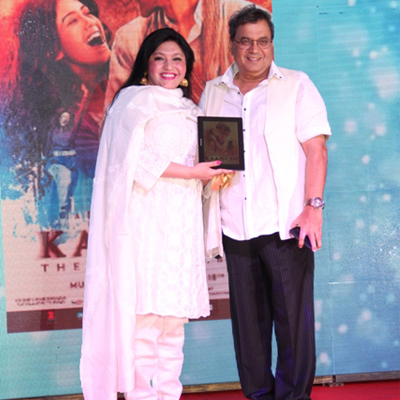
    MUMBAI: Shotformats, one of the top 2 New-Age Digital Distribution Company in India, launched The Digital Music album in an offline app format for the most awaited movie Kaanchi –The Unbreakable. The music app was unveiled by the hands of the noted film-maker Subhash Ghai whose romantic flick – Kaanchi, set against the backdrop of breath-taking rural locales and her fight against the power, is set for a National release next month.

    The launch witnessed live performances of Kaanchi songs by Anwesha, Ankit Tiwari and Salim-Sulaiman composed by Ismail Darbar and Salim-Sulaiman. They captivated the audience with the breath-taking numbers in presence of the Mishti, the lead actress, Kartik, the lead actor of the film, Salim – Sulaiman, Ismail Darbar, Irshal Kamil and Jackie Shroff.

    On the occasion the Showman – Subhash Ghai said, “I am glad to unveil this First-ever in India, the Digital Cassette from Shotformats. I love to be upbeat with the latest technological advancements. Not only this, I have also used Auro 11.1 sound technology in the film. The music in Kaanchi is majorely drum based and with Auro 11.1, it will enable the powerful sound impact while you watch the film.”

    Commenting at the event, Niyati Shah – MD & CEO of Shotformats says “I am glad to be a part of this event. I have worked very closely with Subhash Ghai ji since my Tips music days and today sharing a stage with him and he unveiling the very first Digital Cassette in India for Shotformats is a huge honor for all us”
     

    With the evolving App Era, Shotformats has been revolutionizing the concept of the applications by going the offline way. It has various offline applications under the brand name – Biscoot; a desi version which has several movie apps, movie gaming apps and various utility applications. Shotformats caters across the sectors and age-groups. They also have several awards to their credits for bringing in the innovation in the digital distribution sector.


  • Trendspotters.tv is the online channel partner for Subhash Ghai’s ‘Kaanchi’

    Trendspotters.tv is the online channel partner for Subhash Ghai’s ‘Kaanchi’

    MUMBAI: India’s first online digital channel, Trendspotters.tv has entered into an alliance with Mukta Arts as their online channel partner for their forthcoming production – Kaanchi – The Unbreakable. This will be the channel’s first ever film association as an online digital channel partner. In accordance with the treaty, Trendspotters.tv shall be associated with the film for special promotional activities of the film in March and April. The film is scheduled to hit the cinemas on 25 April 2014.


    Trendspotters.tv founder Kunal Kishore Sinha wants to engage the audience with fresh developments in the world of entertainment. “Bollywood being a much loved genre of films among our target audience, collaboration with the production house that has given some of the biggest hits of the industry is indeed a significant one. It is a matter of pride for us to have bagged the opportunity to endorse an upcoming film from the Mukta Arts banner. Film buffs can enjoy the first look, trailer and music of the film on Trendspotters.tv,” he said.


    Trendspotters.tv will partner for special promotion including revealing ‘Behind the Scenes’ stories of the film. Furthering these offerings, the online channel shall also be webcasting the pre-release interview of Subhash Ghai along with the star cast. The romantic film stars Kartik Aaryan Tiwari from Pyaar Ka Punchnama along with newcomer Mishti in the lead. In supporting roles are seasoned actors of the industry like Rishi Kapoor and Mithun Chakraborty. Kaanchi is a story of the inner power of a woman who represents millions of suppressed youth against injustice in the country.


    The film will also launch the revolutionary Auro 11.1 3D sound in a Hindi film for the first time in India. The technology creates maximum immersive sound through minimum speakers and amplifiers. This generates natural lifelike sound with sound waves coming from all directions like it occurs in reality.

  • The first ever ‘Stree Sanman Award’ goes to Farah Khan at Lux Cozi Zee Cine Awards 2014

    The first ever ‘Stree Sanman Award’ goes to Farah Khan at Lux Cozi Zee Cine Awards 2014

    MUMBAI: It is rather challenging for a woman to emerge as a power to reckon with in a field dominated by men. In Bollywood, more often than not, women are often relegated to donning the greasepaint and serving as an arm candy for the film hero. Barring the role of an actress, most profiles within the film industry such as editor, director, producer or technician are ruled by men. For having managed to find her own footing in the frenzied world of Bollywood and carving a distinct niche for herself first as a successful choreographer, then as a film director and producer, Farah Khan recently bagged a distinctive award at the Lux Cozi Zee Cine Awards 2014. The ‘Stree Samman Award’ is a first-of-its-kind initiative at a film awards show aimed at recognizing the contribution made by industrious, enterprising women in a male-dominated industry.

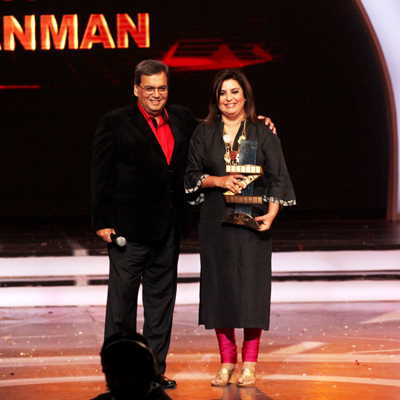
    Farah received the prestigious award at the hands of veteran film-maker, the Great Showman Subhash Ghai. As she went on stage to accept the award, Farah said, “They say behind every successful man, there is a woman. But let me tell you, behind this successful woman, there are a hundred men.” She went on to thank all the men who have stood by her side as a pillar of strength in the course of her journey in Bollywood. She also thanked Shah Rukh for having been a mentor and a dear friend. Subhash Ghai thanked the Zee group for coming up with this unique award.

    Farah’s first stint as a choreographer began with ‘Pehla Nasha’ from Aamir Khan starrer, ‘Jo Jeeta Wohi Sikandar’. As a choreographer, Farah has received 25 prestigious awards in the course of her prolific career. Later, her penchant for entertaining the masses saw her direct and produce popular blockbusters like Main Hoon Na and Om Shanti Om. She is easily amongst the most successful commercial female filmmakers in Bollywood. As a director, her movie Om Shanti Om became the highest grossing Hindi film ever at the time of its release. Currently in the news for her upcoming multi-starrer ‘Happy New Year’, Farah is delighted on receiving this recognition. She tweeted, saying she was grateful to the jury of Lux Cozi Zee Cine Awards 2014 for choosing her for her efforts in the industry.

    Catch the most stunning spectacle of entertainment as the world’s biggest viewers’ choice awards – Lux Cozi Zee Cine Awards 2014 powered by Dabur Vatika Enriched Olive Hair Oil and Karbonn Mobile airs at 8 PM on 23rd February on Zee TV, Zee Anmol and Zee Tamizh.

  • Social Media to set a red carpet for sports and entertainment

    Social Media to set a red carpet for sports and entertainment

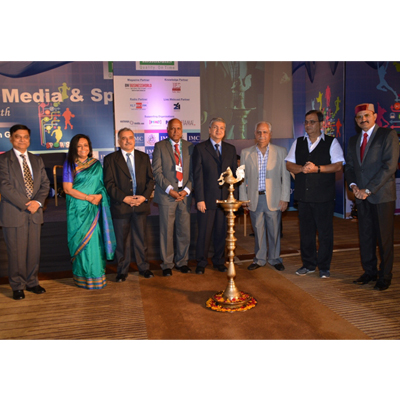
    MUMBAI:  IMC FUSION 2014, a conference presented by Indian Merchant’s Chamber (IMC), was followed up with a series of panel discussions on the major roles played by the social media in today’s three most dynamic sectors – Entertainment, Media and Sports industry.  Ramesh Sippy and Subhash Ghai were most honourable guests inaugurated this third edition of IMC Fusion 2014. This conference was divided into six sessions which focused on several trending social media topics in this generation. It also witnessed the launch of a Knowledge Paper on Multi Screen Behavior: A Study on Emerging Consumer Dynamics. 


    The IMC FUSION 2014 Conference was organized under the auspices of IMC’s Entertainment, Media & Sports Committee chaired by Mr. Manmohan Shetty and co-chaired by Ms. Bharathi Pradhan, Mr. Sanjoy Chakrabarty and Mr. Mir Ranjan Negi.  As in the first two editions, Mr. Kabir Bedi was the Host of IMC FUSION 2014. 


    The first session included an in-depth discussion on the urgency of software for today’s media content. ‘What prevents Indian media content to extend globally?’ This question received several views from the panelists. Indian media needs to bring in more variety of local and adventurous content at the same time. Gajendra Singh, Founder of Saai Baba Telefilms Pvt Ltd. said, “In order to make the Indian content globally known, the Indian media needs to pay attention toward showcasing an interesting content, helping the marketing team, co-producers to make the Broadcasters buy it and promote it eventually.” 


    The Broadcasters go forward with a long term investment into a show only if it creates TRP’S but instead it should also turn its attention to a simple and multi-lingual content at the same time. Anupam Mandoloi, Managing Director of Freemantle India, added, “The fact is that India does not have a distribution network and sufficient bandwidth to tap content across the world.” Siddharth Basu, Managing Director, Big Synergy Media Ltd, highlighted further, “Media Partnership between the Government and the Broadcasters can increase the scope of Indian content worldwide.” 


    ‘Does social media affect Traditional Journalism?’ To this, Suchitra Iyer, Editor of Society Magazine, said, “It has in a way challenged the print media, as celebrities leak out their latest happenings using social media platforms.” Harshil Karia, Co-founder Foxymoron, said, “The mobile device reaches out faster than any other media device.” It in fact helps print media to reinvent news, which proves that social media and print media are the two important wheels of mainstream media.” 


    ‘Major role of social media for sports’, the most trending topic for new generation media was also analysed. Digital platforms, especially ‘Twitter’ has proven to be a branded content mechanism in giving out a wider media coverage to sports. Vinod Bhanushali, President, Marketing, T-Series said, “Social media not only adds a spice to sports but also helps the music industry which includes Youtube and Twitter.” 


    New Delhi Television (NDTV), a pioneer leading in India’s news television, was presented with the Excellence Award in Media. Mr. Sreenivasan Jain, Managing Editor, NDTV was present to receive the award and thanked the IMC Fusion Jury. While accepting the award Mr. Sreenivasan Jain added, “Receiving a prestigious award actually creates a standard and encourages us to even improve and set new standards for the content of news overall.” 


    The different business aspects of the Indian cinema were also highlighted by Komal Nahta, Editor, Film information, Mukesh Bhatt, Producer / Director, Ramesh S Taurani, Producer, Tips Industries Limited. The availability of multi-screen theatres has led to the change in the normal mindset of Indians who prefer to experience the movie first in the theatres