Tag: Subhash Chandra

  • Digital cable heart of Zee’s WWIL story

    Zee Telefilms chairman Subhash Chandra is on a roll. The resurgence of flagship Hindi entertainment channel Zee TV has come after years of slippage since Kaun Banega Crorepati catapulted Star plus into leadership position.

    But this is not just about Zee TV‘s prime time assault on Star Plus; it is also about how Chandra is preparing for the big fight against Rupert Murdoch in the direct-to-home (DTH) space which will determine who will dominate the broadcasting business.

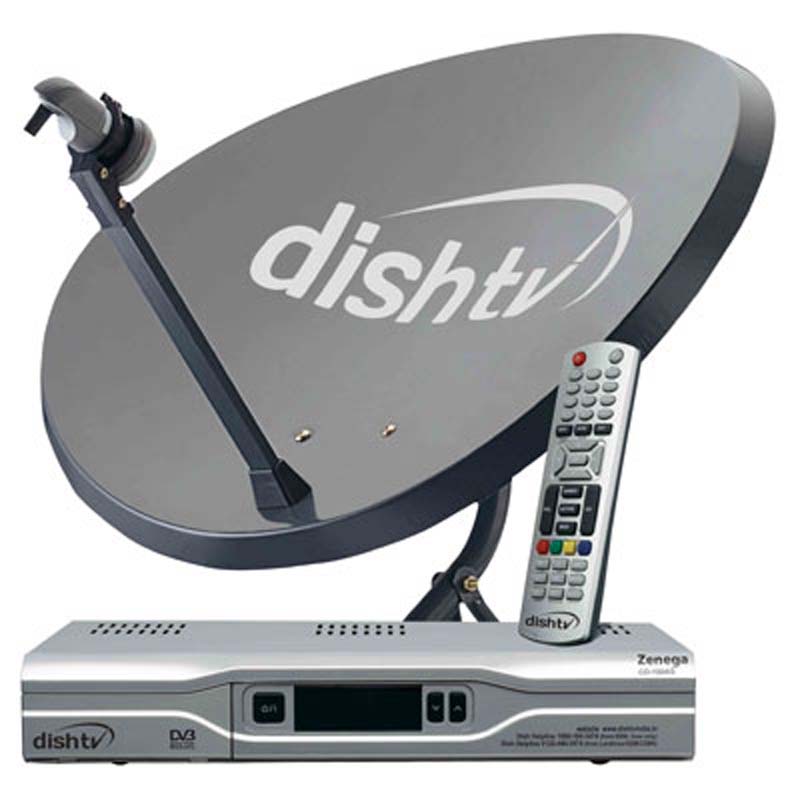
    Laying the preparatory ground, Chandra has streamlined his media empire to give it the right focus, resources and value. His announcement on 29 March: Zee Telefilms will be de-merged into four separate entities. While cable business will come under Wire and Wireless India Ltd (WWIL), Dish TV will handle the DTH operations. News and regional channels are being consolidated in Zee News Ltd. Under the umbrella of Zee Telefilms will be the newly launched Zee Sports.

    The “sum total of the parts” concept ignited the scrip which, once hovering around Rs 130-150 in mid-2005, has breached the 200-mark and closed today at Rs 227.

    In the first of a four-part series, Indiantelevision.com takes an in-depth look into the de-merged cable business of Zee Telefilms.

    Subhash Chandra sees a golden opportunity in the cable TV business becoming a crown jewel in his media empire. His new mantra: digitalisation, broadband and Voice over Internet Protocol (VoIP).

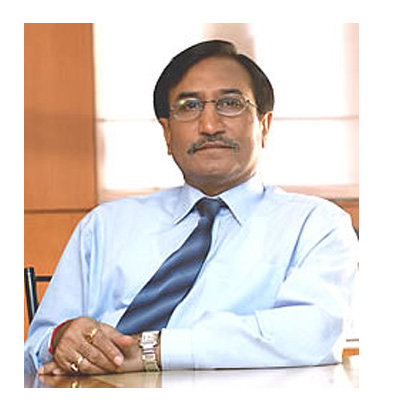
    Media czar Subhash Chandra

    Having built the largest network in the country with a base of 6.8 million subscribers, Chandra has set upon himself the task of refashioning the business model to discover hidden value. His first step: to hive off the cable assets into a separate company, Wire and Wireless India Ltd (WWIL), as it would allow for better allocation of capital and management resources.

    Jagjit Singh Kohli, a doyen in the industry, is put at the steering wheel to chalk out a comprehensive business plan. “We have identified cable distribution as a thrust area. We are building a separate team under Kohli to work out the full plan. Digital cable will help push up the ARPUs (average revenue per user). We can also share the infrastructure with telecom companies for voice services,” Chandra told analysts at a meeting after announcing his de-merger plans.

    Chandra is weary of the fact that multi-system operators (MSOs) have been incurring historical losses in an unorganised sector dominated by last mile operators (LMOs) who terribly under-report subscriber numbers. For the fiscal ended March 2006, Zee‘s cable business barely managed to post an operating profit of Rs 17 million on a revenue of Rs 1.5 billion. Lack of addressability in the industry has, in fact, dragged down valuations of analogue cable networks.

    Making digital cable the heart of WWIL‘s growth strategy, Chandra has earmarked an investment of Rs 5 billion over three years to charge up the business. “The minimum we will be pumping in this fiscal is Rs 600 million. But we are working on two models and if we are able to push digitalisation in a big way, we will actually be investing Rs 1.3 billion this year,” says Essel Group CEO of corporate strategy and finance Rajiv Garg.

    After Delhi, a digital headend is being set up in Mumbai, a lucrative market where WWIL currently has a small presence. Kolkata, Bangalore and Hyderabad are some other cities which will also inhabit the digital map.

    That does not mean that analogue expansion will be abandoned. WWIL is best poised to take up this role as, with a huge pile up of Zee channels, there are broadcasting interests to protect in an environment where cable bandwidth is choked. Siticable (earlier name of Zee‘s cable company), in fact, swung into action last year to snap up RPG-promoted Indian Cable Net, the biggest MSO in Kolkata. Spoiling Kalanithi Maran‘s SCV plans, the acquisition established Siticable as the leading MSO with a market share of over 60 per cent.

    Siticable has also taken on lease two prominent cable networks of Bangalore, Ice Network and Atria Network. In Hyderabad talks with Maran to tie up against Hathway Cable & Datacom were initiated but failed. Expansion through affiliation schemes to existing cable networks is also much on the agenda.

    By aggressively pursuing such plans, Chandra feels his cable business is sure to find a pot of gold. He has put WWIL‘s valuation in the region of $800-900 million (Rs 36-40.5 billion).

    Just over six years back, Chandra had bought out News Corp‘s 50 per cent stake of Siticable at a valuation of Rs 15 billion. So how does he arrive at such a steep rise in valuation now?

    The calculation runs somewhat like this: Siticable gets paid for a million homes which, according to Chandra, can attract a valuation of $500 (Rs 22,500) per subscriber. For the balance 5.8 million subscribers (for which Siticable is not paid), he puts a value of $50 (Rs 2,250) per subscriber, taking the total worth of the network to around $800 million.

    Since the buyout in 1999, Chandra believes a turnaround in valuations is possible for two basic reasons: conditional access system (CAS), which will ensure rollout of digital cable TV in the country; and potential of cable to get into the arena of triple play convergence – voice, data and video.
     

    “We are bullish about our cable business. We can attract investors in our distribution businesses in cable and direct-to-home (DTH),” Chandra had told Indiantelevision.com soon after announcing de-merger of Zee Telefilms into four individual entities.

    On annual revenue of Rs 1.5 billion, investors have to really bet their money on future earnings of the cable industry. The ARPU is around $3.5 a month, meaning a massive scale up has to take place.

    A question that analysts ask is: how does he put a value of $50 for the 5.8 million subscribers which WWIL is not paid for?

    A research firm has put the enterprise value (EV) of WWIL at $670 million (Rs 30.15 billion). This is based on EV per subscriber of $100 (with 6.7 million subscribers).

    Traditional cable valuations have been high but not at the level Chandra is looking at. Hathway was valued at $225 million and Star took a 26 per cent stake for $75 million, paying for a presence in distribution after exiting from Siticable and hype on IP-driven content. Even after adding size to the network, digital cable to a small extent and broadband growth, analysts put Hathway‘s current valuation at $400-500 million. Hinduja-owned Incablenet has also got on Intel and Kudelski to invest at huge valuations, but these have been small stakes in the company.

    What has changed this time, though, is CAS. This changes the business model of MSOs as it gives them direct control of the last mile subscribers.

    For getting an investor at the valuation that Chandra wants, WWIL will have to get in digital cable. Besides, it needs to have more control over the LMOs. The pot of gold, after all, resides in the last-mile system. CAS, or addressability, will instantly ignite valuations when it comes, but at the moment it looks some distance away.

    Chandra‘s corporate restructuring, however, has come at the right time. Telecom majors like Reliance Infocomm are feeling the need of getting access to the last mile through the chain of cable operators for rollout of IPTV. And, if CAS is mandated, international players like Liberty and Comcast will be keen to invest into the existing MSOs as an entry strategy. Private equity investors will also find cable worth putting their bets on.

    WWIL CEO J S Kohli

    Some investment bankers feel Hathway is handicapped in a way as, with Star as a 26 per cent partner, the MSO will find it difficult to woo in strategic investors. Even getting in private equity participation will require the approval of Star. Incablenet, on the other hand, may find reason to opt only for a strategic investor as it does not have any broadcast ownership.

    Chandra can find a business case in expanding analogue business, particularly in territories where it can rake in carriage fees from broadcasters, with the strategy of putting digital later on the platform. In this arena, WWIL can be more aggressive than rival networks Incablenet and Hathway and may not even face competition from them. For Incablenet, the focus will be on converting its existing network into digital cable. As for Hathway, future expansion strategies will depend on how much Star is prepared to invest to support these plans. With Tata Sky, Star also has an interest in promoting its DTH business.

    The tough question is: where and how can WWIL find the space to expand its footprint?

    In the southern region, Tamil Nadu and Kerala will be impossibly tough territories to crack with Maran‘s SCV and Rajan Raheja‘s Asianet Satellite Communications Ltd. having a dominating presence. As for Andhra Pradesh, WWIL will have to regain lost ground in Hyderabad where it has not been getting signals from Star and Sony-Discovery bouquets after Hathway was appointed as distributor of these channels. Karnataka is a different story as WWIL has a sizeable presence in Bangalore, though it is yet to roll out digital services.

    “We are plotting plans to revive our network in Andhra Pradesh. We will soon have a strategy in place,” says a Siticable joint venture partner in Hyderabad.

    In Madhya Pradesh, the main markets of Bhopal and Indore are dominated by Bhaskar Multi Net Ltd, promoted by print media giant Bhaskar group. Rajasthan Patrika owners have also diversified into cable. Though Kolkata is under the grip of WWIL, it will be difficult to extend the footprint in the eastern region. Orissa is dominated by Ortel and the other markets may not be attractive.

    WWIL has scope to expand in the smaller towns of western and northern India where it already has a well spread out presence. “It is nice to talk of expansion, but the market reality is different. In Karnataka there is scope to expand but ARPUs are low. It is also difficult to get carriage fees in the southern states where there is no appetite for Hindi content. WWIL can spread its wings in the northern and western regions but has to be careful if it wants to step into non paying and unstable markets,” says a trade analyst.

    The main challenge is to gain market share in Mumbai and Delhi. “WWIL will have to start a war in Mumbai and Delhi by dropping feeder rates to poach distributors and local operators. These will be two big digital markets. If WWIL goes on the offensive, we may have a land grab like situation,” says the analyst.

    Some analysts feel WWIL will have a distinct advantage in case of a fast digital rollout growth. “They have the widest presence and have the largest cable network in the country. They can take advantage of the digital environment and launch a headend-in-the-sky (HITS) platform,” says a market analyst.

    What Chandra needs is to pump in money. As the ideal debt-equity ratio for WWIL is 1:1, getting an investor in would help though it is not imperative. “The net worth of the company currently is not that strong to support that size od debt. We are, after all, planing to invest Rs 5 billion to expand the business,” says Garg.

    Trust the maverick Chandra to make the right move at the opportune moment. Unlike in 2000, Chandra has one advantage in roping in an investor this time. With WWIL getting listed, the piece of cable business in his media empire can be an attractive buy.
  • Zee to launch dubbed movie channel in Russia

    Zee to launch dubbed movie channel in Russia

    MUMBAI: One area where Zee Telefilms is clearly ahead of rivals Star and Sony is in channel initiatives internationally. Keeping that tradition alive, Zee is launching a 24-hour movie channel in September that will air Indian films dubbed in Russian.

    Zee group chairman Subhash Chandra revealed his channel plans to Hindu Business Line on the sidelines of an address he gave to the Madras Management Association in Chennai yesterday.

    Considering how well Hindi movies in particular have been received in Russia (the late Raj Kapoor’s films were a rage there), it would surprise no one if Zee has a winner here.It was on 13 March that the Network began beaming Zee in Indonesia. There too the channel was dubbed in the local language Bahasa. Zee is available on the multi-channel satellite pay-television platform Astro Nusantara as a package.

    In Indonesia, the channel’s content is sourced from the flagship channel Zee TV library and localised with Bahasa Indonesia dubbing and Bahasa Melayu subtitling, to reflect the different language, lifestyle and viewing habits of audiences in the three countries Indonesia, Malaysia and Brunei.

  • Sony takes Dish TV basic tier pricing up by Rs 38

    Sony takes Dish TV basic tier pricing up by Rs 38

    NEW DELHI: Subhash Chandra’s Dish TV has increased the price of its basic tier of DTH service by Rs 38 after Sony-Discovery One Alliance came on board earlier this month.

    The basic tier would now cost a consumer Rs 180, plus taxes. Earlier it was priced at Rs 142, exclusive of taxes.

    The new pricing is a fair indicator as to the money that Dish TV is paying One Alliance for its channels per subscriber.

    However, AXN has been kept out of the basic tier, which includes all the other One Alliance fare and the likes of Zee TV, HBO and three sports channels (ESPN, Star Sports and Ten Sports).

    Dish TV’s other packages include Dish Plus package, which comes packed with a wide selection of national and international channels at Rs 125 per month and offers channels like Zee Studio, HBO, TCM, MCM, Reality TV; Dish Bioscope, which features Zee Premier, Zee Action, Zee Classic and Pakistani film channel Filmazia and costs Rs 55 per month. News is packaged in Dish News with Zee Business, Euro News, Euro Sports News, NDTV 24×7, CNBC TV18, Awaaz and CNN Headlines News. The cost: Rs 60 per month.

    Dish Pick is an a-la-carte package that allows subscribers to pick and choose extra regional channels. Two channels come for Rs 30 per month, five channels for Rs 50 per month and all regional channels come for Rs 100 per month. (All the prices listed here are exclusive of taxes.) Channels included in this package include Zee TV, Sahara One Zee Punjabi, ETV – Rajastan, ETV – UP, ETV – Bihar, Geo TV, Zee Telugu, Jaya TV, Jeevan TV, Akash Bangla, Zee Bangla, Zee Gujarati and Marathi, India TV and NDTV India.

  • Dishtv selects Scopus Video Networks to increase transponder capacity

    Dishtv selects Scopus Video Networks to increase transponder capacity

    MUMBAI: Subhash Chandra’s Dishtv has expressed serious intent to increase its channel offerings on the direct-to-home (DTH) platform. The company has selected Scopus Video Networks, a provider of digital video networking products, to support this expansion.

    The technology will help Dishtv pack up 28 channels per transponder, eight more than its current capacity. “We will be implementing this technology within a month. It is a better compression system without sacrificing the quality,” Essel Group director technology Amitabh Kumar tells Indiantelevision.com.

    Dishtv has seven transponders on NSS-6, offering a total of 130 channels. “We are building up the capability to offer more channels on our DTH platform,” Kumar says.

    Dishtv will use Scopus products to enhance its transponders’ utilization and expand its already fast growing DTH market share throughout the Indian subcontinent. The decision to tie up with Scopus comes ahead of Tata Sky’s DTH launch expected in July.

    The deal brings to Dishtv’s headend Scopus’ full line of products including E-1200 encoders, IRD-2900 decoders, IVG-7100 intelligent video gateway (IVG) platforms and network management system software. Scopus is a Nasdaq-listed company.

    Scopus’ IVG platform will provide advanced video processing capabilities including joint transrating, grooming and bit rate shaping. 

    India is beginning its transition to digital TV in which the number of digital subscribers is expected to grow ten-fold within the next five years.

    Says Kumar commented, “We operate in a complex web of multiple satellites and multiple carriers and the unique capabilities offered by Scopus’ product line such as the Intelligent Video Gateway will help us optimize operations while minimizing cost and enhancing reliability in our operations. Scopus has also helped Dish TV achieve very high satellite utilization and bring down costs on a per channel basis.”

    Scopus VP sales Eitan Koter stated, “We are honoured and delighted to continue doing business with the Essel Group, India’s leading media conglomerate. This achievement is a testimony to our on-going commitment to our customers’ success. Scopus is the only vendor that offers a full product portfolio under one roof, enabling us to provide simple solutions to complex requirements such as the ones posed by Dishtv.”

  • Essel Group to expand media education venture

    Essel Group to expand media education venture

    MUMBAI: Subhash Chandra-promoted Essel Group is planning to expand its media education venture, Zee Institute of Media Arts (ZIMA). The company will invest about Rs 350 million in the venture over a period of three years.

    “Zima was launched as a high level pilot project and we are planning a major expansion of the project now. We will keep adding new courses to the curriculum apart from bolstering the facilities. The whole process will take at least three years to complete,” states Zee Interactive Learning Systems Ltd (ZILS) CEO Arun Khetan.

    According to Khetan, Zima will be trying to position itself as a complete media institute through the new initiatives. “We are looking to introduces courses in the areas of radio, mass communication and various other new media segments evolving. We will be doing training programmes on Intellectual Property Rights (IPR) as well,” he says.

    Essel Group launched Zima in the banner of ZILS in November 2004, on an initial investment of Rs 30 million. The institute presently offers one year diploma, six months advanced certificate and six months certificate courses in the streams of direction, acting, production, editing, cinematography, writing, sound and animation-visual effects. The fees charged by Zima range from Rs 60,000 to Rs 150,000 depending on the course.

  • Sony-Discovery reach agreement with Dish TV

    Sony-Discovery reach agreement with Dish TV

    NEW DELHI / MUMBAI: It’s been a long time coming but after endless rounds of discussions, India’s first direct-to-home service Dish TV has finally reached mutually agreeable terms with the Sony-Discovery One Alliance distribution bouquet to carry their channels.

    The two parties arrived at a memorandum of understanding today and the official signing will happen anytime in the next few days, sources close to the developments tell Indiantelevision.com.

    The One Alliance channels will begin beaming off the Dish platform within the next few days and the billing cycle is effective from 1 July on. The financial terms that the two parties have agreed to were not available at the time of filing this report.

    For Dish TV, this resolves one half of the problem it has been facing ever since its launch – its inability to offer subscribers channels from the One Alliance and Star bouquets.

    With the addition of the Sony bouquet, Dish TV can look forward to a major ramp up in subscriber numbers. Two key events that are expected to drive acquisitions in the immediate term are the ongoing India-West Indies Test series and the Fifa World Cup. The Word Cup kicks off in Munich, Germany, on 9 June while the second Test in St Lucia, West Indies, will take place between 10 and 14 June. ESPN Star Sports (already on the Dish network) has exclusive rights to the World Cup while Ten Sports – part of the One Alliance bouquet – is exclusively airing the cricket in the Caribbean.

    A contentious issue that automatically gets resolved with Sony’s sign-up on Dish is the legal spat that Subhash Chandra’s DTH service has been having with Viacom channels MTV and Nick since last year. Both channels are part of the One Alliance.

    In a letter sent to the information and broadcasting ministry last month, Dish TV had petitioned that despite the sector regulator’s directive on making available content to all platforms and a favourable judgement from disputes tribunal TDSAT, the “conduct of MTV” has been “clearly in violation” of the interconnection regulation of 2004.

    Dish TV’s parent ASC Enterprises’ contention was that despite carrying on commercial negotiations with MTV Networks India for several months, the content provider and its distributors in India (One Alliance) had stalled any fruitful conclusion of such talks.

    ASC Enterprises, an Essel Group company, holds the licence for a DTH service in the country, which is marketed under the brand name Dish TV.

  • ‘Consolidation in news business is an inevitability’ : Laxmi Goel – Zee News Ltd director

    ‘Consolidation in news business is an inevitability’ : Laxmi Goel – Zee News Ltd director

    Laxmi N Goel, director Zee News Ltd and the second of the three brothers of Essel Group chairman Subhash Chandra, is not given to hype and hoopla.

    Even when he has to announce his organisation’s achievements, true to his style, he’s most likely to hold the event in modest surroundings. A case in point being the launch of the book Pehal, which he authored, done in Federation of Indian Chambers of Commerce and Industry auditorium in Delhi instead of a five star hotel. As he says, every paise or penny saved is that much earned, which can be reinvested into the company.

    He doesn’t have any formal training in business management or television programming, but has still managed to oversee the functioning of Zee News channel quite successfully over the years after it was decided to do away with professional CEOs at the helm to manage news.

    These days Laxmi Goel spends more time discussing annual budgets and increments of his colleagues than on the exercising cycle. After all, the restructuring of Zee Telefilms has landed him added responsibilities of all the Zee family regional channels, which have been hived off into Zee News Ltd to conform to government guidelines on foreign investment in television news entities. “I wish I could find some more time for my daily walks,” Goel rues.

    In an interview with Indiantelevision.com, held at the Zee News’ headquarters in Noida on the outskirts of Delhi, Goel discusses some aspects of the restructured Zee News.

    Excerpts:

    Why was the de-merger of Zee News necessary?
    When the organization becomes big, this type of de-merger helps in better control of various aspects of business. However, for me, things still remain the same. We have to do well and show good results to our shareholders. That was the theme earlier. It’s still so.

    Have you settled down in your new role and what would be the agenda now?
    It’s still early to spell out agendas as it’d take five to six months for things to settle down completely.

    But, as I said earlier, the basic process remains by and large the same. We have started a Bengali news channel (24 Ghanta or 24 Hours) and we would evaluate our expansion options as the market pans out.

    The Bengali channel seems to be a case of the Right shaking hands with the Left. Zee’s promoter family are said to be Bharatiya Janata Party and parent RSS sympathizers, while Bengali channel partner Akaash Bangla owners are known backers of the Left parties. Comment.
    I don’t understand what political ideologies, if at all there is one, has to do with business decisions? 24 Ghanta was a business decision where Zee News thought Akaash Bangla to be the right business partner. Moreover, as Akaash Bangla is an existing TV channel, its owners had the advantage of understanding the TV business.

    What would you like to do with the organization now that you have more properties to look after, apart from Zee News and Zee Business?
    The functioning of the organization remains more or less the same. It has just taken a different avatar. What is remarkably different is that there would not be any consolidated profit and loss account for Zee News any more. You journalists can say that we would not be able to hide behind Zee Telefilms with our financial performance any more. Now, that’s a challenge too. We would have to continue showing good results and keep our shareholders happy by nurturing the bottom-line.

    Apart from that, we are now free to take independent decisions on expansion, which will always be guided by market forces. At the moment, we are not actively considering any addition to the present crop of channels, but I cannot predict the future. If a sudden need arises to have a product in a certain segment of television business or geographical area, we can consider it then.

    Do you feel that so many news channels, including those from the Zee News stable, will survive in the long term?
    India is a growing market where increasingly people are formally getting educated. A combination of this has fuelled consumption of news. The trick lies in delivering news quickly and in a manner that is consumer friendly.

    But such mushrooming of news channels all over is unlikely to be supported by the market in the long term. The process of consolidation has started.

    We would have to continue showing good results and keep our shareholders happy by nurturing the bottom-line

    Will the economics of running news channels force consolidation?
    Partly yes. Let’s take, for example, a news channel that aims to have a national presence. On an average capital expenditure on national news channel can range between Rs 800 to Rs 900 million. At times it can go beyond that too. Then the running expense per month for a national news channel comes to approximately Rs 80 million, which would include expenditure on news gathering and marketing activities. Now these figures are not small, though not huge either.

    As different news channels have different business models, over the years mounting expenses will force consolidation. This can happen in the form of mergers and acquisitions or can result in cutting down cost on news gathering and infrastructure by evolving a model where some sharing is done by various players in the industry.

    Carriage fee that most TV channels pay to cable operators, coupled with growing employee wage bill in news organizations, also add to the cost. To outsiders, these costs might not look very important, but let me assure you that carriage fee and increasing pay packets of TV journalists do weigh down a TV news organization.

    Since the Indian news market is still very active, the exact shape of consolidation is difficult to predict accurately. But consolidation is an inevitability.

    How is Zee News Ltd addressing the problems of carriage fee and bloating wage bills?
    We are not as aggressive as other news channels in holding back people who want to leave for another channel for a better pay packet. We do talk to people who want to leave and try to reason out the advantages of Zee News Ltd. However, we feel that beyond a point it’s futile to negotiate on remuneration as the demands and wish list of some people just don’t seem to end. Such people would leave anyway. If not today, then tomorrow.

    In such cases, Zee News lets people go for the larger benefit of the company and its bottom-line. And, there have been innumerable cases when former Zee News employees have requested to be taken back at the salary that they had been drawing at the time of leaving.

    As far as carriage fee is concerned, we feel CAS is the solution. Newer technologies like CAS and DTH would help in arresting the demands of cable operators, which can be unreasonable at times.

    What is the revenue mop up level for Zee News and Zee Business channels?
    A majority of the revenue, of course, comes from Zee News, which is in the range of Rs 10-20 million per month. Out of this, subscription revenue is more than advertising money.

    How are the regional channels doing financially and ratings wise?
    Most of the channels are doing well, but the actual process of consolidation is still on. Only after the formal work is complete, we’d get down to evaluate the prospects of each channel in our company (which include Zee Bangla, Zee Telegu, Zee Gujarati, 24 Ghanta, etc).

    How many news channels do you foresee in the next two to three years?
    At the national level, I foresee 2-4 channels surviving in the next three to five years time.

  • ‘Fanaa’ no show: Fun Cinemas deny rift with Yash Raj

    ‘Fanaa’ no show: Fun Cinemas deny rift with Yash Raj

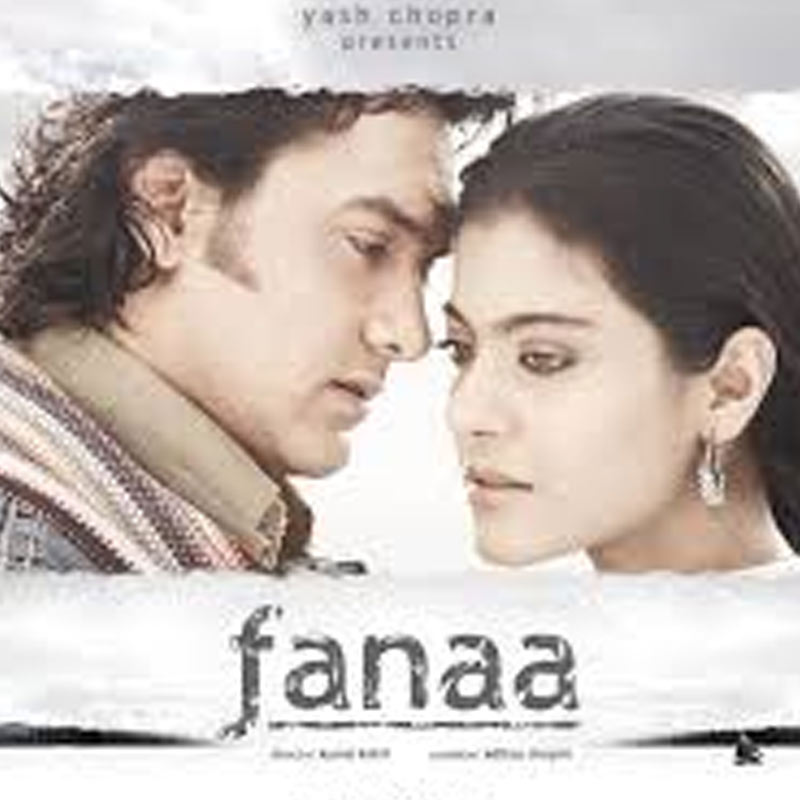
    MUMBAI: Subhash Chandra promoted Fun Cinemas (the multiplex brand of Fun Multiplex Pvt Ltd), which along with Inox are the only two cinema chains not screening the Aamir Khan blockbuster Fanaa, has categorically denied any differences with producer Yash Raj Films.

    A statement issued today by E-City Ventures (the corporate brand representing the Essel Group’s out-of-home leisure interests) made the following clarifications:

    a. There exist no differences between The Essel Group or E-City Ventures and Yash Raj Films (the producers and distributors of Fanaa). All such indications prevailing in the entertainment industry are being spread out of malafide intent, through parties that could have vested interests in this matter.

    b. The revenue model of film exhibition works in a way that films with assured commercial success pay for films that do not justify the exhibitor’s overheads. It is therefore necessary for the exhibitor to price both of them in a way that is acceptable to the audience. This assures a longer shelf life for the given film and ultimately benefits the producer and distributor.

    All the points that The Essel Group and E-City Ventures brought to the table while negotiating terms with Yash Raj Films, were motivated by this strong belief.

    c. The Essel Group and E-City Ventures currently have exhibitory control over 70 single screen cinemas and 40 movie multiplexes. The repercussions of the terms negotiated between Fun Cinemas and Yash Raj Films were to affect all these cinemas. It is not that the exhibitors respect the premium value offered by the producer any less – but they care more for the purchasing power of their audience.

    Thus, the fact that both the parties could not agree on common terms, is a pure business deadlock and not a confrontation of any kind.

    The statement concludes by saying that any subsequent releases from India’s most powerful studio would be “negotiated as an independent premise”. This is a significant point because for the remainder of 2006, Yash Raj Films has a virtual lock on all the big Hindi blockbusters that are slated for release. The A-list movies in its kitty include home productions Dhoom 2 and Kabul Express, as well as the year’s other two biggies – Rakesh Roshan’s Krrish and Dharma Productions’ Kabhie Alvida Na Kehna.

  • ‘Zee Telefilms to see ad revenue growth of 12 – 15% in FY07’ : Rajiv Garg – Essel Group CEO of corporate strategy and finance

    ‘Zee Telefilms to see ad revenue growth of 12 – 15% in FY07’ : Rajiv Garg – Essel Group CEO of corporate strategy and finance

    Cable and direct-to-home (DTH) is where Zee Telefilms Ltd (ZTL) chairman Subhash Chandra is planning to put the accelerator on. Wire and Wireless India Ltd (WWIL), the cable outfit, will enjoy an investment of Rs 5 billion to lay out a digital platform, gear up for triple play and expand in value-added services. And to fight Tata Sky in the DTH business, he will pump in Rs 2.5 billion over two years.

    Zee News Ltd. (ZNL), which will have news and regional channels under its umbrella, is looking at a turnover of Rs 2.5 billion this fiscal. The listing of these demerged companies is expected to be in September-October.

    In an interview with Indiantelevision.com’s Sibabrata Das, Essel Group CEO of corporate strategy and finance Rajiv Garg talks about the reasons for the demerger and the expansion plans of these separate entities.

    Why did Zee Telefilms Ltd (ZTL) decide to demerge its businesses into separate entities?
    The driving argument for demerger was that all these businesses had become big in themselves. Huddled together under Zee, they were not given the right strategic focus as the company was very broadcast-oriented. In cable, for instance, we felt that we were not doing justice to its growth potential. Also, in certain lines of activity the government regulations were impinging upon the growth prospects of the company. The idea was to see if we could create that focus and comply with the government guidelines. With so many technological advances taking place, we felt it was the right environment to carry this out. We decided to create independent governing structures and managements, delink cable from broadcasting, and put together certain news-bearing channels into an independent entity.

    Why was the direct-to-home (DTH) business housed in complex structures which did not allow for tax efficiencies?
    The idea was to provide specialist services in specific entities. As the competencies lay in them, the DTH business was spread across three outfits. Integrated Subscriber Management Systems Ltd, for instance, has an expertise in such areas like subscriber billing. Siticable has been negotiating content from the time the cable industry began in India. New Era Entertainment formed the marketing and ad sales arm. The aim was to create a revenue-sharing arrangement with ASC Enterprises Ltd (Ascel), the DTH license holder. When we did this structuring, there was no service tax applicable to the industry which was introduced later. We did not anticipate taxation developments to happen so quickly and cause financial inefficiencies. Besides, demerger will provide clarity of structure and add value to shareholders.

    Since regulation allows for a broadcast cap of 20 per cent, why didn’t ZTL hold stake in the DTH business?
    It would have happened in due course. We were in no hurry as we wanted to present the DTH platform as broadcast neutral. The internal intention was to acquire equity once the key relationships came in.

    What does the demerger process in the DTH business involve?
    In the first stage, Siticable will hive off its cable TV business into Wire and Wireless India Ltd (WWIL). The residual Siticable and its wholly owned subsidiary New Era Entertainment Network Ltd will then merge with Ascel, thus consolidating all the DTH operations under one company. Zee Telefilms shareholders will get 23 shares of Ascel for every 10 shares held.

    How did you arrive at this exchange ratio and why did you prescribe for a subsequent cancellation of shares?
    It is the independent valuer (Deloitte Haskin & Sells) who came up with this ratio. As for cancelling three of every four shares held in Ascel, this is to bring back the capital base to the pre-merger level. The paid-up equity of Ascel would have bloated to around Rs 1.66 billion after the merger, up from the base of Rs 411 million. This would have been too large an equity for a company of this size. So we wanted to compress the capital base. We could have given a predetermined base, but didn’t know the ratio the valuer would arrive at.

    DTH revenues will touch Rs 8 billion in FY08 as subscribers rise to 3.15 million and ARPU to Rs 310

    Zee’s operating revenues from the DTH line of business was Rs 818 million in FY06 while losses stood at Rs 790 million. What is the investment plan and how do you see subscribers and average revenue per user (ARPU) size up over the next two years?
    The net expense for DTH operations so far is Rs 3.8 billion. We are planning to pump in a further Rs 2.5 billion over the next two years. But we are sitting on a dynamic model and if Tata Sky and us are aggressively competing, there is a possibility of the subsidy amount further increasing. It is a factor of what strategies we adopt to develop our subscriber base. By the end of FY06, we reached close to one million subscribers. We project a gross revenue of Rs 3.2 billion in FY07 on a subscriber base of 2.4 million and an ARPU of Rs 250 (up from Rs 190) mainly because of the launch of value-added services. And in FY08, we see ourselves growing to a revenue of Rs 8 billion as subscribers rise to 3.15 million and ARPU to Rs 310.

    When do you expect to sign up with Sony and how do you see content growing?
    We expect Sony to happen within a month. Gradually, the content kitty is filling up. We are also looking at creating new DTH channels. Our plan is to expand to 200 channels.

    Will transponder space be a limitation?
    We will have to find space. We may have NSS when Doordarshan’s DD Direct vacates the satellite to move to Insat 4B. We are also talking to Isro (Indian Space Research Organisation) to launch a dedicated satellite for us.

    Are your Korean set-top vendors planning to set up a manufacturing facility in India?
    I don’t think it is viable at this stage. The volumes are too small for us to ask our STB vendors to manufacture in India. When we scale up to five million (boxes a year), then it may be a feasible project.

    Which do you think will attract investors first, the DTH or cable company?
    Both have attractive growth paths. We are looking at a mix of debt and funding coming from strategic or private equity investors.

    Are you looking at a small dilution initially of up to say 26 per cent?
    It all depends on what is the offer. Yes, if you initially dilute a small stake you have the advantage of discovering value as the company grows. But we have a flexible approach and it all depends on how lucrative the proposal is.

    Have you started talking to investors?
    We have been approached by many, but nothing is imminent yet.

    Will WWIL infuse massive capital towards digitisation of cable and triple play?
    We know the cable business has a lot of undiscovered value and will be giving it a big push. WWIL has a business plan which would take in an investment of Rs 5 billion over three years to drive digitisation, broadband and triple play rollout. It is a classic example of how the focus has been lacking and we have not taken advantage of the technology advances. We are looking at a million digital cable subscribers in the first year as we bundle service and hardware together in some form of subsidy. We also plan to make the network available to telecom operators for voice. Valuation of the cable business can only go up as the industry is badly suppressed. Conditional access system (CAS), digitisation and triple play will liberate the industry and growth in revenues can be rapid.

    How much debt you will raise to fund the expansion?
    We are looking at a debt-equity ratio of 1:1. The net worth of the company currently is not that strong to support that size of debt. We are, after all, planning to pump in Rs 5 billion to expand the business.

    What was the need for restructuring Zee News again?
    The restructuring started a couple of years ago when the uplinking guidelines were changed. Since we had a substantial foreign holding in ZTL, broadcasting of news and news-bearing channels were placed on a separate footing. Gradually as a response we shifted news gathering and uplinking to a separate company, Zee News Ltd, which was in compliance with the guidelines.

    But in the last few months, we have been mutilating this model as we found that there is a lot of strategic gap or clarity between the thinking of the producer (Zee News), the distributor (Zee Telefilms) and the team that exploits the commercial rights (Zee Telefilms) to such channels. So we thought we would close the gap and put everything in an entirely separate entity. All strategic decisions should be taken in an integrated manner by one team – be it production, news gathering, programme slotting, distribution or commercial exploitation.

    So what were the strategic gaps?
    The differences sprung because there was a revenue sharing arrangement between the two, but I can’t give you the minute details. It is not a good idea tactically to unite even if both of them are part of the same family.

    Zee news and regional channels had a combined turnover of Rs 2 billion in FY06. Were regional channels brought under Zee News Ltd (ZNL) because they could add to the company’s topline growth?
    The main reason for this kind of arrangement is that they are news-bearing channels; the regional channels have a strong component of current affairs and news programming. One of the consequences of this combination, of course, can be fattening of the topline. We are projecting a revenue of Rs 2.5 billion in FY07 and Rs 2.9 billion in FY08.

    As part of the restructuring, 137 ZNL shares will fetch 100 shares in ZTL. But with the total foreign shareholding in ZTL at 54.69 per cent, how does ZNL fall within the regulatory cap of 26 per cent?
    ZTL chairman Subhash Chandra will be transferring his foreign holdings (22.77 per cent is foreign promoters holding in ZTL) to an investment company in India. Also, foreign institutional investors (FIIs) will be given preference shares to bring the cap under limit (FIIs hold 31.51 per cent in ZTL).

    When are you planning the launch of Tamil and Malayalam language channels? How much are the new southern channel launches consuming as investments?
    The two channels should see launch in the current fiscal and in FY08. Along with the Kannada launch, the total investments would be in the region of Rs 350 million.

    With the demerger, won’t the topline of core Zee Telefilms see an erosion?
    Even after physically transferring the topline out, there is enough of a mandate to register growth. We have the number two and three (Zee Cinema and Zee TV) channels in the country. If they continue to focus on the products they have, their growth path is mandated. The flagship channel, Zee TV, is seeing a surge in ratings and ad rates.

    For core ZTL (after demerged businesses), we expect an advertising revenue growth of 12-15 per cent in FY07. While international business will sustain its 10-12 per cent growth (adding of channels and gain from Middle East), domestic subscription will stay steady. Overall, the core ZTL (after demerged businesses) will see a growth of 10 per cent in the current financial year.

    Will the bottomline look healthy after hiving off the loss-making businesses?
    The pullout is of minor loss-making businesses. The impact will largely even out as Zee News and the regional channels were profit-making. Still, there will be some positive outcome.

    How will Zee Sports play out on ZTL’s bottomline, particularly after bagging at a whopping price of $219.15 rights to 25 offshore cricket matches over five years?
    Zee Sports is at a development stage and there will be investments made for the long term development of the channel. There is a particular sequence in which we have to pay and the outgo for the first year will be $5.04 million per match. That will give us reasonable time to drag on the investments and build the channel. Besides, we will be bidding for other major sports properties including the ICC World Cup which is coming up for grabs.

  • Chandra’s foreign holdings to be transferred to Indian investment company

    Chandra’s foreign holdings to be transferred to Indian investment company

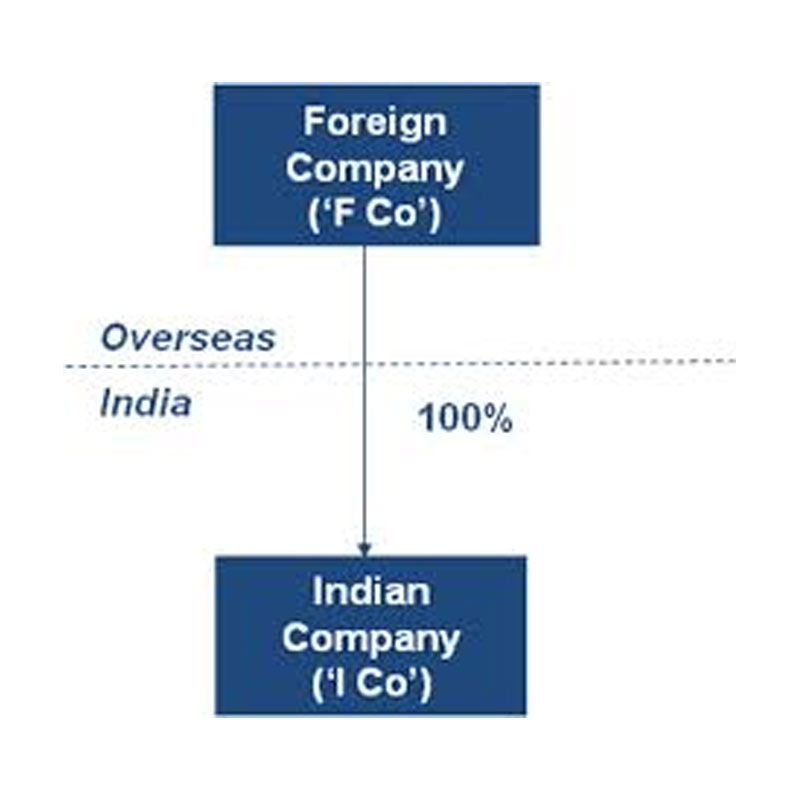
    MUMBAI: Zee Telefilms Ltd. (ZTL) chairman Subhash Chandra will be transferring his foreign holdings to an investment company in India. Under ZTL’s demerged restructuring into separate entities, this is seen as a move to comply with the uplinking regulations on foreign holdings in news channels which are capped at 26 per cent.

    The total foreign shareholding in Zee Telefilms is 54.69 per cent. While the holding of foreign promoters is 22.77 per cent, foreign institutional investors (FIIs) have 31.51 per cent.

    As part of the corporate restructuring, ZTL is spinning off its news and regional channels into Zee News Ltd (ZNL). According to the formula that has been worked out, 137 ZNL shares will fetch 100 shares in ZTL.

    “Chandra will be transferring his foreign holdings to an Indian registered investment company. This will help Zee comply with the uplinking guidelines for the news business,” says Essel Group chief executive officer of corporate strategy and finance Rajiv Garg.

    The shares to be issued to FIIs in ZNL will have to fall within the 26 per cent cap. Foreign shareholders will, thus, be given preference shares of equivalent value to bring it under limit. Along with this, the promoters’ foreign holding will be transferred to an investment vehicle in India.

    The foreign holding of promoters is primarily through Delgrada Ltd. which has 19.98 per cent stake in Zee Telefilms. Delgrada is an overseas corporate body (OCB) owned by Chandra. The balance 2.79 per cent is held by Lazarus Investments Ltd.

    In the fiscal ended 31 March 2006, Zee posted a turnover of Rs 2 billion from its news and regional channels line of business and a net profit of Rs 161 million. “Zee News Ltd targets a turnover of Rs 2.5 billion in FY07 and Rs 2.9 in FY08,” says Garg.