Tag: Subhash Chandra

  • Essel Group picks up stake in UNI

    NEW DELHI: The Subhash Chandra-promoted Essel Group, which is the co-owner of DNA newspaper along with the Dainik Bhaskar group, has joined the United News of India (UNI) board as a shareholder.

    News agency UNI has shareholding from about nine big media organisations who also form the board of the news organisation formed in 1961.

    Confirming the development, Essel Group senior vice-president Ashish Kaul said, “We are on the board of UNI now as a shareholder, but the quantum of the holding cannot be disclosed at this point of time.”
    Kaul also clarified that Zee Telefilms, also an Essel Group enterprise, has nothing to do with the UNI deal. The other shareholders and board members of UNI include media outfits like HT Media, Times of India group, Ananda Bazar Patrika and The Hindu.

    Chandra has used his investment vehicle, Mediawest, to conclude the UNI agreement.

    Launched in March 1961, UNI has grown into one of the largest news agencies in Asia. today it serves more than 1000 subscribers in more than 100 locations in India and abroad. They include newspapers, radio and television networks, web sites , government offices and private and public sector corporations.
    The agencies communication network stretches over 90,000 kms in India and the Gulf states with bureaux in all major cities and towns of India.

    UNI has collaboration agreements with several foreign news agencies, including Reuters and DPA , whose stories are distributed to media organisations in India.

    Apart from that, UNI has news exchange agreements with Xinhua of China, UNB of Bangladesh, Gulf News Agency of Bahrain, WAM of the United Arab Emirates, KUNA of Kuwait News Agency, ONA of Oman and QNA of Qatar.
    The terrestrial TV area also will include a demonstration of the Harris/Neural Audio MultiMerge for DTV. MultiMerge uses intelligent detection to blend any audio (mono, stereo, matrix encoded stereo (L/R), and 5.1 discrete content) into a seamless, uninterrupted 5.1 surround sound stream.

    Harris began developing terrestrial transmission platforms for mobile TV in 2004 after participating in early demonstrations and the development of the DVB-H standard. The company’s recent acquisition of Leitch Technology adds a range of servers, routers, switchers and processing equipment to Harris® NetVX video encoding and distribution systems, providing the infrastructure for bringing content into the mobile TV headend. Meanwhile, equipment from the Harris Software Systems business unit adds a complement of broadband software and distribution equipment for network management, traffic scheduling, digital asset management and ad insertion, among other applications.


  • Dish TV CEO Sunil Khanna quits

    Dish TV CEO Sunil Khanna quits

    MUMBAI: ASC Enterprises has announced that Dish TV CEO Sunil Khanna has decided to move out of the company on completion of his two-year contract at the KU-band direct-to-home platform, promoted by Subhash Chandra.

    According to an official release issued, the Dish TV board had offered Khanna a renewed contract but he has decided to pursue other interests.

    Information available with Indiantelevision.com indicates that while Khanna will be “remaining in the broadcast sector, he will be taking up a new challenge”.

    Khanna has been with the Zee Group since its inception. He started his career with the group while driving the distribution venture Siticable. He subsequently spearheaded the pay TV business and lead Zee Turner. Before joining Dish TV as CEO, he also had a stint as president of Zee Telefilms.

    At Dish TV, his contribution has been in developing and building the first addressable digital platform. During the last 15 months, Dish TV accelerated the process of subscriber acquisition and now is established as the leading digital brand with 1.3 million subscribers.

    Dish TV, today offers 160 satellite channels along with other value added services and has string network of 8,000 distributors/dealers.

  • Dish TV set to create niche channels to beat the competition

    Dish TV set to create niche channels to beat the competition

    NEW DELHI: With a second player in the DTH arena round the corner in the form of Tata Sky, Dish TV is finalizing creation of new channels for its subscribers.

    According to Dish TV CEO Sunil Khanna, work has started on new niche channels to be introduced on the DTH platform over the next 12-24 months.

    Pointing out that the target is to have a between 190-200 channels on Dish TV, Khanna said, “Some of the new channels would be created within the Zee group, while few may be brought in as part of third party distribution.”

    The reason behind creating niche channels instead of importing products from outside India is that not all niche channels available are suited for Indian viewers.

    For example, Khanna said, if Dish wants to introduce a premium gardening channel, there was no use getting one from outside as the weather conditions and local environment is different in India.

    “To give an instance, if we have a gardening channel, then it’s best to create it in India and in-house. This way we would also be able to study the feasibility of such niche channels, which may have limited, but loyal viewership that would be ready to pay even a premium,” Khanna said.

    Dish TV, country’s first pay TV platform, is managed by the Subhash Chandra-controlled ASC Enterprises that is the DTH licence holder. Another Chandra company, Zee Network, has a programme supply agreement with ASC.

    Dish TV, which is pumping up the noise around the usefulness of subscribing to a DTH service, is also increasing its investment in the project.

    “We have spent around Rs 3.5 billion in the DTH project till now, out of which a major part has been spent on customer acquisition,” Khanna said.

    He added that investment would be upped “as needed from time to time to expand operations and offerings.”

  • Zee Telefilms’ Q1 consolidated net slips 28% at Rs 562 million

    Zee Telefilms’ Q1 consolidated net slips 28% at Rs 562 million

    MUMBAI: Zee Telefilms has posted a 27.8 per cent fall in consolidated net profit at Rs 562 million for the first quarter ended 30 June, 2006, as against Rs 779 million in the corresponding period last fiscal

    Total income, however, rose 24 per cent to Rs 3.884 billion, up from Rs 3.131 billion.

    The consolidated operating profit stood at Rs 726 million, after factoring in initial investments in new activities viz. Zee Telugu, Zee Smile, Zee Sports and others, amounting to Rs 571 million (14.7 per cent of consolidated revenues). As a result, consolidated operating profits of continuing businesses were Rs 1.297 billion. These are higher by 8.4 per cent as compared to the corresponding quarter last year.

    “The growth rate is subdued mainly due to investments in programming and marketing focused on long-term buildup of mainline channels. Profit before tax for the first quarter of the fiscal 2007 was Rs 672 million while net profit was Rs 562 million,” Zee said in an official release.

    On a standalone basis, Zee Telefilms has posted a 50.8 per cent fall in net profit to Rs 156 million for the quarter ended 30 June, 2006, as compared to Rs 306.80 million for the corresponding period last year. Total income has increased to Rs 2.440 billion for the quarter ended 30 Jun, 2006, up from Rs 1.777 billion for the corresponding period last year.

    Commenting on the results, ZTL chairman Subhash Chandra said, “We are pleased to report the strong recovery in our market position and continuing uptrend in ratings on the flagship channel. The performance reflects our success in delivering superior content to viewers and stronger relationship with our consumers.” “We are also happy about some recent developments relating to our business. The Delhi High Court has ordered the Union Government to issue a revised notification for implementation of CAS in the notified areas of Mumbai, Delhi and Kolkata by 31 December, 2006. This will additionally help in bringing about addressability on cable. On DTH, DishTV enhanced its offering from June when The OneAlliance bouquet was also made available to subscribers. Also, the TDSAT order has directed Star to provide their content to DishTV within 15 days. All these have extremely positive and long term impact on our business,” Chandra added.

    Commenting on the restructuring exercise, Chandra continued, “The restructuring exercise is expected to be completed by September/ October 2006, subject to necessary approvals. This shall create four focused, pure play, listed companies ready to exploit the vast emerging opportunities in each line of business. It would result in streamlined operations in each area and would also clear the ground for acquisitions and strategic or financial partners in the demerged businesses, apart from unlocking shareholder value. The next several years would provide tremendous growth opportunities for all these four businesses.”

    Punit Goenka, Zee Telefilms whole time director and responsible for content creation, said, “Zee TV continued to increase its viewership share from 21 per cent in 4Q FY2006 to 25 per cent during 1QFY2007, along with a significant growth in time spent. During the quarter, average gross ratings points (GRPs) of Zee TV have crossed 200 and for the last week it was at 240 GRPs, giving Zee a channel share of 29 per cent. The growth momentum has been led by widespread success of Saat Phere and Kasamh Se, which rank 5th and 6th among the top programmes on television, across genres. Zee TV now has leadership in the 9 pm to 10 pm time band, for the last six weeks.”

    “Zee Cinema continues to be the number one movie channel, and increasingly is becoming a reach channel for advertisers. Zee Marathi has also considerably narrowed the gap with its competitor (ETV Marathi). Zee Sports continues to build on the back of Football and ODI Cricket matches. We will continue to reinforce our competitive advantage and deliver more value to viewers and shareholders,” Goenka added.

    Elaborating on the performance, Zee Telefilms CEO Pradeep Guha said, “During FY2006, the yield per spot of ten seconds was the lowest in the history of Zee TV. Zee TV has introduced many initiatives, which focus on improving inventory utilization, attracting higher yielding categories of business and increasing effective rates across time bands. These efforts have resulted in a revenue growth faster than that of industry. Also, we have been able to establish Zee Cinema as a reach channel instead of a frequency channel, which will help us garner more advertising revenues.”

    The Board of Directors in its meeting held today, has taken on record the unaudited consolidated financial results of Zee Telefilms Limited and its subsidiaries for the quarter ended 30 June, 2006.

    REVENUE STREAMS:
    Zee’s advertising revenues increased to Rs 1.729 billion, a 31.5 per cent growth as compared to the corresponding quarter last fiscal. “This growth in advertising revenues was a result of higher average rates on most of the network channels. During this quarter, Zee Sports telecast the two One Day (ODI) Cricket matches played between Indian and Pakistan, which has
    contributed to the growth in advertising revenues,” the company said.

    Overall, subscription revenues stood at Rs 1.798 billion, registered an increase of 2.8 per cent over the corresponding quarter last fiscal. Domestic pay revenues, including Siticable, stood at Rs1.039 billion. Other sales and services grew to Rs 357 million.

    EXPENDITURE:
    Overall, the cost of goods and operations went up 60.6 per cent compared to a year-ago period, mainly due to investments made in new channels like Zee Sports, Zee Smile, Zee Telugu and Zee Jagran. A large part of the incremental cost was on account of programming cost of Cricket rights on Zee Sports, states the company release.

    Personnel cost were also up, 26 per cent higher than the corresponding period last year. Other costs, particularly marketing costs have increased by 23.2 per cent. As a result, total expenses were higher by 47.6 per cent.

    From FY2006, the Company has accelerated its investments in the development and expansion of its network. There have been substantial marketing and content improvement initiatives on one hand, and on the other, number of new channels have been launched.

    “As a result, Zee is in a phase in which the initial investments have been made and expensed fully, while the corresponding revenue build-up is to be realized in the next several quarters. The immediate impact is on operating profits, which we hope to recover in successive quarters through increasing revenues and progressive reduction in costs, the release adds.

    Zee’s Q1 segment-wise revenues are indicated in the table below:

    *Content Business includes all Broadcasting and content production companies in India and abroad of Zee Telefilms
    Limited, ETC Networks Limited.
    # Access Business includes Siticable, Zee Turner and distribution segment of ZTL.

    OTHER HIGHLIGHTS

    Sports
    During the first quarter, Zee Sports telecast two ODIs between India and Pakistan played at Abu Dhabi. These were the first two matches in the contract with BCCI for overseas Cricket. In football, National Football League matches were telecast during the quarter. Building on the Football World Cup fever, Zee Sports commissioned ‘Goal 2010’, an initiative to see India in the World Cup of 2010.

    Cable Network
    The cable business is poised to pursue new technology opportunities with renewed focus including digitization of cable, broadband and ‘triple play’ offerings. As per the Zee release, Siticable is the only MSO that would be deploying state-of-the-art Headend In The Sky technology, which would allow it to cover the entire country, not just the CAS notified areas. The recent regulatory and legal developments look set to lead to a roadmap for digitisation initially in the metros. The Delhi High Court has ordered Union Government to issue a revised notification to implement conditional access system (CAS) by 31 December 2006 in the notified areas of three metros i.e. Delhi, Mumbai and Kolkata. There is more visibility now on the path of transition in the cable business towards digitisation, which would result in greater transparency and accountability, the release further adds.

    Direct Consumer Services business
    DTH services continue to make inroads into Indian homes. The service offerings have been expanded by adding SET Discovery’s The OneAlliance bouquet from June 2006. The service revenues from DishTV continue to generate good response.

    The subscriber numbers have crossed 1,200,000 and are growing at the rate of about 3,500 per day. We are poised to execute market expansion strategies which would lead to a ramp up of subscription from the urban markets, based on value added services not presently available on cable.

    Recently the Telecom Disputes Settlement and Appellate Tribunal (TDSAT) came out with an order, instructing Star to provide its channels to DishTV within 15 days. This would further enhance the present content offering of DishTV, Zee said in the release.

    Restructuring in Zee Telefilms
    Application for the restructuring has been made to the High Courts. The scheme of arrangement would require approval of shareholders of Zee and of Bombay High Court. The whole process is expected to be completed by September / October 2006. Zee News Limited, ASCEL and WWIL would be listed on all stock exchanges where ZTL is listed.Based on the unaudited results of ZTL (consolidated), Zee News Ltd. and ASCEL, the following table sets forth the proforma financials of each line of business for 1Q FY2007, as they would appear in a demerged scenario.

    The company’s investment in 25 FPS Media Pvt Ltd, a subsidiary engaged in production of television programming for the Zee Telefilms, is intended to be disposed off. Accordingly, its financials are not consolidated in these results. Previous year’s figures are also not comparable to that extent, the company said in a posting on Bombay Stock Exchange (BSE).

    At the Bombay Stock Exchange today, the Zee scrip opened at Rs 251.70 and closed at Rs 249.75, down Rs 1.95 from the previous day’s close.


  • IBF, IMG meet I&B secretary Arora on Broadcast Bill

    IBF, IMG meet I&B secretary Arora on Broadcast Bill

    NEW DELHI: The Indian Broadcast Federation (IBF) and the Indian Media Group (IMG) today met the Information & Broadcast secretary S K Arora for an interaction on the Broadcast Bill 2006.

    IBF has opposed the cross-media holding restrictions and the so-called Draconian clauses in the bill. It said, the draft bill should be discussed with the industry, before having taken to the cabinet and Parliament.

    The draft bill has covered four major areas in its ambit, which would call for major corporate restructuring by media companies, foreign and domestic, operating in India. These include content, cross media ownership, subscriptions and live sports feeds (which are already part of the downlink norms).

    The bill introduces restrictions on cross media holdings in all electronic ventures capping it at a maximum 20 per cent. While print media companies have not been included in the ambit of the bill for the present, this could be later extended to them as well.

    IMG also criticised the cross-media holding restrictions, but most importantly, it has argued that, electronic media should be brought under the Press Council of India. It also demanded that the proposed Broadcast Regulatory Authority of India (Brai) should be free from any government intereference. Making its stance clearer, it said the CEO of Brai should not be a government official or a government nominee.

    Zee Telefilms chairman Subhash Chandra, after attending a meeting with Arora on behalf of IMG, said, “We are against cross-media holding restrictions. We also oppose the government’s agenda to interfere on how news should be reported on TV.”

    He added, “The regulatory norms for the electronic media, the print media and the online media should be same and similar without any discriminatory in any one of the media segment.”

  • GSLV to launch Insat-4C on 10 July

    GSLV to launch Insat-4C on 10 July

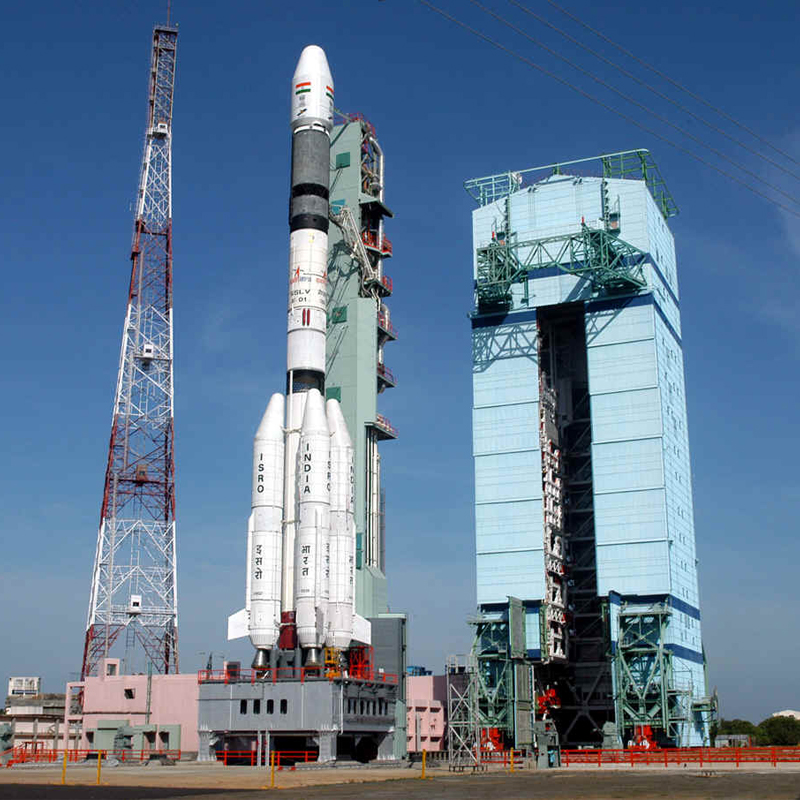
    MUMBAI: The countdown is on for the launch of GSLV-F02, which will be carrying the state-of-the-art communication satellite Insat-4C into space. The launch is expected to take place around 4:30 pm on Monday, 10 July, the Indian Space Research Organisation announced today.

    Preparations for the launch are proceeding satisfactorily at Satish Dhawan Space Centre (SDSC) SHAR, Sriharikota from the second launch pad. The launch vehicle systems have been integrated and checked out, Isro said in a statement issued today.

    Insat-4C was transported from Isro Satellite Centre, Bangalore to SDSC SHAR in the first week of June 2006 and since then, it has undergone detailed checks. After propellant filling, the spacecraft has been integrated with GSLV.

    The Mission Readiness Review is planned on 6 July, 2006 followed by the meeting of Launch Authorisation Board which will clear the launch. In the next few days, a complete checkout of the fully integrated launch vehicle along with satellite will be carried out. The final countdown and fuel filling for the liquid propellant stages are expected to commence on the morning of 9 July.

    Insat-4C is the second satellite in the Insat-4 series. The first, Insat-4A, was launched in December last year, from the spaceport of Kourou in French Guiana by an Ariane5 vehicle, which also carried the Meteosat weather Satellite for Eumetsat.

    Isro spokespersons have been pointing out that using indigeneous launch vehicles will result in a saving of about 30-40 per cent or Rs 1.5 billion in expenses per launch. With four satellites to be launched by GSLV Mark II and Mark III, the savings thus will be substantial. Isro will, however, be using the services of Arianespace to launch the Insat 4B satellite from Kouru next year.

    “With the commissioning of the Rs 3.5 billion ($75million) second launch pad at Sriharikota, India is the only country to have such a state-of-the-art facility to launch different types of vehicles Ranging from PSLV (polar satellite launch vehicle), GSLV Mark-1, GSLV Mark-II to the upcoming GSLV Mark-III in the four-tonne class,” a top Isro official is reported to have said sometime back.

    It’s for the first time that India’s space agency is putting into orbit a two-tonne class satellite. Equipped with 12 high-powered Ku band transponders (Like the earlier Insat-4A), the 2,180 kg spacecraft is designed for a mission life of 10 years.

    Insat-4C is designed to provide direct-to-home (DTH) television services, facilitate video picture transmission (VPT) and digital satellite news gathering (DSNG) as well as to serve the National Informatics Centre (NIC) for its VSAT connectivity. The 2,168 kg Insat-4C has a mission life of ten years.

    Insat-4C will be used for broadcasting 150 TV channels through the DTH platform. Kalanithi Maran’s Sun Group has booked space on Insat 4C for its DTH venture Sun Direct. All the Ku-band transponders on the Insat 4A satellite, meanwhile, have been leased to the Tata-Star consortium, which will soon be launching the Tata Sky DTH service.

    Other than Tata Sky and Sun Direct, there is also Anil Ambani’s DTH venture Reliance Bluemagic, which will be rolling out in due course.

    At present, DD Direct Plus managed by the pubcaster Prasar Bharati and the Subhash Chandra owned Dish TV are the two operators offering DTH services in the country.

    Salient features of Insat-4C:

    Orbit: Geostationary (74 degree East Longitude)
    Co-located with Insat-3C, KALPANA-1 and EDUSAT
    Lift-off Mass: 2,168 kg
    Mission: 10 years
    Communication Payloads: 12 Ku-band 36 MHz bandwidth Transponders employing 140 W Travelling Wave Tube Amplifiers (TWTAs) to provide an Effective Isotropic Radiated Power (EIRP) of 51.5 dBW at Edge of Coverage (EOC) with footprint covering Indian mainland; Ku-band Beacon as an aid to users to lock on to the satellite signal

  • Indian television advertising is very much underpriced’ : Joy Chakraborthy – Zee Network executive VP Network Sales

    Indian television advertising is very much underpriced’ : Joy Chakraborthy – Zee Network executive VP Network Sales

    Joy Chakraborthy took charge of Zee Network as ad sales head in early 2005, at a time when Zee TV was going through a crucial phase. Chairman Subhash Chandra was strategising a turnaround for the flagship channel and a number of big ticket shows were being readied, with the expectations of re-writing Zee TV's fortunes in the Hindi GEC arena.

    As Network sales head, Chakraborthy's first challenge was to project Zee in a new light. "Zee had a perception problem in the market and a section of the trade had written it off. We wanted to create a new impression and build on that," Chakraborthy says."There couldn't have been a better time for me to head the network's sales team," he gushes.

    Speaking to indiantelevision.com's Bijoy A K, Chakraborthy elaborates on the strategies that worked for Zee, future plans and on the industry scenario.
    Excerpts:

    You have completed a year as the sales head of Zee network. Please elaborate on the key industry learnings you could gather during this period?
    A crucial lesson we have learnt is on the significance of soaps in the GEC prime time game. We have learnt that GEC is all about soaps, but different from Saas-Bahu sagas. People buy a channel for consistency and not for spikes only. In the industry, on an average, 70 per cent revenue is tied up on a long-term basis and only soaps can fulfill that promise. Innovative programming is fine, but they should be scheduled and timed very effectively. When you innovate, it should not be just a programming decision but a collective decision including sales, marketing and programming.

    Everybody had written Zee off. But we could pull off a turnaround — what seemed impossible until some time back – through team work, discipline, passion, accurate timing and by keeping the faith intact. As expected, the trade has responded to this change very positively, and now we enjoy the backing of the entire market. This is because of the strong relationships we had built during this period. What I am driving at is the fact that, relationships play a key role in this industry. This period also showed us who are our real friends and who are opportunists. Also, it has been a learning for me that both, people and organizations are important, and one cannot exist without the other.

    How is the industry evolving? Give us a low down in the recent developments and the trends?
    Indian television advertising is very much underpriced and we have decided to bring this issue into focus, under the banner of the Indian Broadcast Foundation (IBF). In a couple of months, we are planning to come out with certain guidelines on pricing, which would hold a lot of significance for the industry. Our main concern is the underpricing of television. It is a powerful medium and it should get its due, especially at a time when the costs of programming and marketing have skyrocketed. All network sales heads are now represented in IBF and we are united on this cause.

    The present scenario is very confusing. Television is booming, but clients are very tentative to take a call on TV as compared to the print as television research is more confusing and dynamic and changes everyday. I think an increase of 15 per cent to 20 per cent in rate is due immediately. It should also be noted that cricket of late has not affected GEC/Hindi movies viewership, which are the primary revenue drivers in C&S. The Hindi movie genre is still very much underpriced and same is the case with regional channels.

    I keep hearing that the English entertainment space is shrinking, but I don't agree with this as this is the genre with least wastage and where even an advertiser is a viewer.

    Does GEC still hold an edge over other genres when it comes to delivery and demand? Or has there been a change in the pattern?
    GEC will always hold the edge as maximum revenue comes to this genre. For any client, the reach build up and in some cases, frequency by smart scheduling comes from GEC. According to me, the genre pecking order would remain as: GEC, Hindi Movies, Regional, News, Sports – in that order.

    In the last two years, unique content channels have seen so much of a price cut that the FCT has increased drastically and revenue in the genre has hardly moved. I sometimes wonder how they are still surviving in business.

    Regional television space holds a lot of potential though it faces tough competition from print. The key segments driving growth in regional are: Retail, education and real estate, in addition to general categories like FMCG, telecom services, consumer durables etc.

    Zee has already started working on all these segments. We have started roping in retail clients and our next focus is on the real estate and education. Though there is a slow transition of main print category advertisers to television, the good news is that these clients have realised the power of television.

    Did the recent stock exchange fluctuations impact sales?
    The fluctuations haven't affected us at all. Actually, Zee recorded better sales during this period of May-June. June-July usually has a lean period tag attached to it, but this year, it was different. This is one change in the normal pattern. These days, there is nothing called lean or peak period. This is due to the boom in categories such as telecom, services, finance and the perennial FMCG.

    Today, advertisers are not limiting themselves to a particular genre due to media fragmentation. Most clients are there in almost all the channels/genres. Earlier, there used to be a particular set of advertisers for particular genres, such as premium products for English entertainment channels. These days, even FMCG brands are keen on English channels. It is a trend of aspirational marketing.

    'With the good performance, our viewer base has also expanded and this, in turn, helps us to better our performance on a consistent basis'

    The last one year saw Zee TV pulling off a turnaround in Hindi GEC, by reaching the second position. Could you briefly outline what happened during this eventful phase?
    During this period, the sales team was able to initiate a lot of changes successfully. To start with, we decided to remove the paid bonus system and agreed to reduction of ad sales inventory. This helped to change the general perception that, Zee has unlimited inventory. Then, we made it a point to keep away from attempting any innovation in terms of sales. This is because, the delivery of innovations take too much of time for the value we generate. Also, I have observed that in spite of doing innovations, the clients/agencies are always unhappy with the implementations, however good you might do. So why do innovations?

    We also focused on doing more client/agency meetings and met people at all levels. The Zee Network had a perception problem in the market, and the sales team has positively addressed this. I felt a lot of our positives were not known to the market. We had been very firm in our decisions and we always made it a point to abide by our well-defined sales policy. I have ensured all commitments/deliverables are in writing and not verbal, as this avoids conflict when people change at channel/agency side. When it comes to deals, the attempt has been to create win-win situations. We reduced our FCT to an effective level to create demand and initiated a very transparent sales policy.

    We also introduced the Matrix system, which played a key role in bettering the network performance. We appointed individual sales heads, responsible for strategy, revenues and targets of their channels. We have senior people as branch heads in the business deployed in key markets such as Delhi, Kolkata and the South whose roles are more tactical and they ensure revenue spread across all channels and have their branch targets. Both sales heads and branch heads work very closely with themselves and with me.

    For me, Zee has turned out to be a great place to work. It is a place with total freedom and great empowerment. I would say internal stability in Zee is very high. All decisions are discussed and not pushed down your throat. We have the best bunch of professionals, both at senior and junior level.

    Please comment on your face-off with Star. Star recently initiated its counter strategy to block your surge in the 9-10 pm time band. What impact has it made on your game plan?
    You feel happy when the leader reacts. Zee has pioneered the strategy of launching soaps with innovative media breaks. Seeing Star also doing the same for their show has been an ego booster for us. Coming to the second part of your question, it felt even better when the leader's tactics didn't affect our numbers and the market demand.

    With the good performance, our viewer base has also expanded and this, in turn, now helps us to better our performance on a consistent basis. Earlier, when we launched a show, rating in the range of 1 TVR to 2 TVR was considered as satisfactory or good. Now, our new launches pick up very fast and the shows even record an opening rating of 2+ TVR on an average basis. This has inspired us to fight Star in its own bastion – the 10 – 11 pm band – with non-soaps such as Johny Aala Re and Sabash India.

    So what is the next big idea? What will be Zee's next focus?
    We have now settled ourself comfortably in the 6 pm – 8 pm and the 9 – 10 time bands. You will be seeing some more launches in the months to come which will strengthen our FPC even further. The programming, marketing and sales wings are now working on the strategies to strengthen the 8-9 pm band.

    What is the strategy you follow to sell Day Parts?
    We have made lot of efforts to increase the demand for the Non Prime Time (NPT) band. Each sales package has got a mix of PT and NPT. We ideally would love to sell at 30:70 for PT/NPT. We have also been selling early NPT and late night slots for religious/tele shopping properties. As a result of focusing on NPT, our inventory FCT consumption has doubled in NPT.

    Which are the client segments that top your delivery list these days?
    Still FMCG is number one, though there has been a major upswing in Telecom/Services/Auto/ to name a few. The concern has been the consumer durable category with a few big players not clear about their plans. Additionally, SMS has emerged as a key revenue driver for us for our interactive shows.

    Speaking about the network performance, what is the scorecard?
    Zee TV is on top followed by Zee Cinema. Zee TV was underpriced when I took over, and now we are steadily moving in the right direction of rate. We activated rate corrections twice for the network during the six months and now, as the festival season is coming, you can expect another correction soon. For some channels, it will be across all day parts and for some it will be programme based.

    Revenue wise, maximum share comes from Zee TV followed by Zee Cinema, Zee Marathi, Zee Bangla, Zee English cluster, Zee Music and Zee Smile. The beginning of the year has been very good and I am sure we will touch a new high this fiscal.

    Now let us take it one at a time. To start with, please comment on the performance of Zee Cinema. What is the plan for this year?
    As a sales person, I can't ask for a better channel than Zee cinema which has been consistently delivering for years in the face of stiff competition. My colleagues in programming and marketing have given us a product which is a must have in all media plans, specially if it is targeting the "cow" belt (Hindi heartland). Since the last two years, the Amitabh movie band Shaniwaar ki Raat Amitabh Ke Saath has been our key driver. This year, we have introduced a youth block – Klub. We have our own share of blockbusters for the year also.

    Zee Smile has been keeping a low profile these days. Is the channel in an orphaned state, or is there a plan on the anvil?
    You will soon know our plan for Smile. But for sales, Smile has been a great help to get incremental revenues. The channel is very well distributed in non traditional markets and hence, you will find lots of brands advertising on Smile.

    Speaking about regional channels, you are in charge of sales of two key players Zee Bangla and Zee Marathi. How did these two channels fare in the last one year period?
    This year, we have practically re-launched Zee Bangla with a slew of new programmes and this will boost its sales potential. We are again going to do sales initiated programmes like Durga Pooja and Jatra.

    Zee Marathi has now become the clear number one. We are there in almost all plans. We have also set up a separate sales team to develop retail and non traditional advertisers like educational institutes, real estate, local jewelers, classified etc and the results are showing.

    Comment on the delivery of your event properties.
    During the last one year, there has been an extra thrust on good events, and the efforts have paid off very well, I would say. We have converted the Saregama finals as an on-ground event and the attempt has met with great success. This had inspired us to take the Saregama Ek Mein Aur Ek Tum finals to Dubai. Apart from winning a global appeal, going to international venues helps sales also. Zee Cine Awards, Mauritius and even the Zee F- Awards, have done very well for us.

    We have Zee Astitva Award, Zee Marathi Awards, Zee Gaurav Puraskaar, Zee Amader Gaurav, Zee Songeet Puroshkaar to name a few, lined up in the next few months across various channels.

    Have you retained Amap's service as an alternative rating agency to Tam?
    Yes. We need to have two meters because the industry needs competition in this realm also. It is always good for the trade. It brings out the best of everyone. According to me, each of them can coexist, triggering healthy competition. I am not making a judgment here, but for the betterment of industry, we need two parallel rating systems. The earlier we acknowledge this, the better it would be for all of us.
  • Insat-4C satellite launch fails; Sun’s DTH plans hit

    Insat-4C satellite launch fails; Sun’s DTH plans hit

    MUMBAI: India’s attempt to enter the elite “space club” has received a setback. The launch of the country’s first commercial communications satellite from home soil has ended in failure. The GSLV-F02, carrying the state-of-the-art communication satellite Insat-4C, crashed into the Bay of Bengal a short while after lift-off at 5:38 pm from its launch pad at the Satish Dhawan Space Centre (SDSC) SHAR, Sriharikota.

    The launch of the completely indigenous Insat-4C communications satellite on the Geosynchronous Satellite Launch Vehicle (GSLV) was delayed twice before its final failed attempt due to unspecified technical reasons. The launch was originally scheduled for 4:30 pm this evening. 

    The three-stage 414-tonne launch vehicle of the Indian Space Research Organisation (Isro), started under-performing right from the start and veered off its path after travelling a few kilometers into the sky.

    Isro chairman Madhavan Nair admitted the failure of the satellite. “The mishap happened in the first stage of the separation. We have activated and analysed the data and we will get to the bottom of it,” Nair said, adding, “today’s happening is a setback, especially after we had 11 continuous successful launches.”

    Insat-4C, which cost Rs 4 billion, was the second satellite in the Insat-4 series. The first, Insat-4A, was launched in December last year, from the spaceport of Kourou in French Guiana by an Ariane5 vehicle.

    It was for the first time that India’s space agency was putting into orbit a two-tonne class satellite. Equipped with 12 high-powered Ku band transponders (like the earlier Insat-4A), the 2,180 kg spacecraft is designed for a mission life of 10 years. Insat-4C was designed with the capability to broadcast 150 TV channels through the DTH platform.

    If succesful, this mission would have taken India to being one of the five major satellite launch countries in the world. With this failure, Isro’s strategy of taking satellite contracts from other countries has also received a setback.

    As regards the Insat-4 mission, Isro will now have to look ahead to the launch of the third satellite in the series – Insat-4B. The GSLV’s failure will in no way influence that launch however, because Isro will be using the services of Arianespace to launch Insat-4B from Kouru next year.

    The failure of this mission is not just about the challenge it throws up to India’s space ambitions though. Immediately hit will also be Kalanithi Maran’s Sun Group, which had booked space on Insat 4C for its DTH venture Sun Direct.

    At present, DD Direct Plus managed by the pubcaster Prasar Bharati and the Subhash Chandra owned Dish TV are the two operators offering DTH services in the country.

    All the Ku-band transponders on the Insat 4A satellite, meanwhile, have been leased to the Tata-Star consortium, which will soon be launching the Tata Sky DTH service.

    Other than Tata Sky and Sun Direct, there is also Anil Ambani’s DTH venture Reliance Bluemagic, which will be rolling out in due course.

  • Zee Telefilms mulls an entry into China

    Zee Telefilms mulls an entry into China

    MUMBAI: Foreign media companies seem to have hit a wall when it comes to China. Star Group, for example, continues to bleed in that market despite pumping in big money for years. This, however, has not stopped global firms from eyeing a slice of the cake that a 1.3 billion population promises.

    Subhash Chandra is the latest media baron willing to throw his hat in the ring. Zee Telefilms Ltd. (ZTL) is planning to enter China, the toughest market to crack with its tight controls on foreign media.

    “We will be entering that market. We have not yet applied for the landing rights. It will take time and we expect it to happen sometime towards the end of this fiscal,” says Essel Group chief executive officer of corporate strategy Rajiv Garg.

    Though Zee plans to have a presence in China in the broadcasting space, it has not yet finalised on what content and channel it should set up to lure viewers. ZTL chairman Chandra recently said Zee would launch a dubbed movie channel in Russia.

    ZTL also plans to launch in Afghanistan, Cambodia and Indonesia to expand its international operations which account for almost one-fourth of the company’s revenues. Running businesses which have matured in the UK and US, Zee’s strategy is to launch dedicated channels in certain markets which it has identified. The company has stitched a deal with Malaysia’s multi-channel pay TV operator Astro to create a channel with Hindi content drawn from Zee TV, Zee Cinema, Zee Music and Trendz for the Indonesian, Malaysian and Brunei audiences. For tapping youth audiences in the Arab region, Zee also has launched Zee Arabiya, a music and lifestyle channel.

    Global media companies like News Corp, Time Warner and Viacom see China as a fertile revenue market in the long term, though it is currently spoilt by heavy-handed regulation on foreign media.

  • Isro sets the launch of Insat 4C for mid-July

    Isro sets the launch of Insat 4C for mid-July

    MUMBAI: Indian Space Research Organisation (Isro) is targeting to launch Insat -4C in the second week of July, the latest in the Insat 4 series. The launch of this satellite is being seen as a big boost for the DTH operators.

    Kalanithi Maran’s Sun Group has booked space on Insat 4C for its direct-to-home (DTH) venture.

    Insat 4C will be put into orbit by the Geo-synchronous Satellite Launch Vehicle-5 (GSLV), which will blast off the from the launch pad at the Satish Dhawan Space Centre at Sriharikota. Insat 4C satellite will be used for broadcasting 150 TV channels through the direct-to-home platform. 

    “Preparations are on for the launch from the second launchpad,” Satish Dhawan Space Centre director Shar M Annamalai said.

    Isro officials say launch from a homegrown rocket meant cutting launch costs by one-third – if the same was to be launched from the spaceport of Kourou in French Guiana by an ariane vehicle, India has to pay 30 to 35 per cent more.

    According to media reports, it’s for the first time that India`s space agency is putting into space a two-tonne class satellite. Equipped with 12 high-powered KU band transponders, the 2,180 kg spacecraft is designed for a mission life of 10 years.

    On 22 December, last year, Isro had successfully placed Insat 4A in the Geostationary orbit with the Launch provider Ariane. 

    Launcher Ariane 5G also carried Meteosat weather Satellite for Eumetsat along with Insat 4A. This also marked Ariane the only commercial launcher in service capable of simultaneously launching two payloads.

    At present, besides DD Direct Plus managed by the pubcaster Prasar Bharati, the Subhash Chandra owned Dish TV and the soon to launch Tata-Sky service from the Tata-Star consortium, has leased all 12 Ku-band transponders on the Insat 4A satellite enabling to provide about 150 channels.