Tag: Subhash Chandra

  • Videocon mulls entry into DTH market

    Videocon mulls entry into DTH market

    HONG KONG: After aborted attempts to start a television channel, Indian consumer electronics major Videocon Industries Ltd now is trying to cobble together a DTH dream.

    And, what’s more, the Dhoot-promoted company thinks the DTH project can be commissioned in a year’s time, which would make it some time in 2007.

    “We have undertaken a project report (on DTH) and feel that the venture can be started as it has a lot of synergy with some our existing businesses,” an executive of Videocon Industries told Indiantelevision.com here on the sidelines of the three-day annual convention of Cable and Satellite Broadcasting Association of Asia (Casbaa).

    According to the company executive, if undertaken prudently, a DTH project can be put together at a cheaper cost than what has been touted till now by Tata Sky and the Subhash Chandra-controlled Dish TV, the two private sector DTH service providers in the country at present.

    “The cost should not be over $ 100 million,” the executive said, pointing out that it could even be done at almost three-fourth of that cost ($ 75 million).

    The synergies that Videocon Industries, manufacturers of TV sets and other consumer durables, sees in starting a DTH operation is that it already makes analog set-top boxes and has a widespread distribution network in India, which can be exploited for sale of DTH hardware.

    However, industry observers are sceptical about Videocon’s claims as in the media sector the company’s track record hasn’t been much to right home about. “That is exactly the perception we would like to change,” the Videocon executive asserted.

    Videocon has twice announced plans — the first being in the late 1990s — to start a television channel, which have never seen the light of the day and later were taken as abandoned.

  • Scat gets a more focussed response

    Scat gets a more focussed response

    MUMBAI: Scat India 2006, which positions itself as being India’s largest exhibition for the Indian satellite and cable TV industry concludes today 14 October 2006 at the World Trade Center.

    Scat Media and Consultancy executive director Dinyar Contractor says that the biggest improvement this year has been more focus. “Exhibitors appreciate the fact that there was a clear focus on cable television.

    Earlier we had other focus areas as well but this time around there was a clear focus on the digital arena. The feedback we received from the exhibitors was that the trade visitors were well informed and clued in.

    “They have done their homework which indicates that the digital arena is coming off age in India. One firm from Europe says that the questions that he has been asked about his products have been more knowledgeable and intelligent compared with some other tradeshows.

    While earlier people would ask about what a product does now they ask whether a product has a certain feature. Visitors were hapy that weer big international names at the event.”

    Scat is now in its 15th year. Zee Telefilms chairman Subhash Chandra inaugurated the exhibition. By the time the event concludes it would have had around 12,000 attendees. There are 80 stalls and Contractor adds that at least 30 per cent of the exhibitors have confirmed that they will return next year. Some of them have booked bigger stalls.

    The firms that took part included 2nd Wave Technology, Aditya Broadband, AlJazeera International, Beijing Swt Optical Comm. Catvision, Conax Systems, D-Link, Kieth Electronics, Micronas, Motorola, Finolex Fitel, Fujikura, Scientific Atlanta and Shenzhen Coship

    A key product that the trade fraternity focussed on was digital headends. These will be needed for the deployment of conditional access (Cas) on 1 January 2007 in certain areas of Mumbai and Delhi. Normally headends are expensive. However at Scat Chinese vendors will display headends that are at a cost effective and competitive rate.

    It was not just operators in areas where Cas will be rolled out in January 2007 that are interested. Contractor adds that even operators in small towns are interested. Though it is a bit expensive they know that once Cas comes in the problems between them and the broadcasters over under declaration will not exist. Hence they are willing to invest. The mood of the trade fraternity at Scat he says is confident that Cas will be rolled out smoothly.

    Some operators are mentally gearing uop for Cas though it has yet to be mandated for their areas he adds. Therefore the interest in digital equipment is not surprising.

    Other technology products that were on display include DVB-S and DTH Products, DTT, DVB-S and DVB-c test and measurement equipment, Fibre Optic products from global firms were also be on display.

  • Malaysia’s RTM to associate with CCTV: Report

    Malaysia’s RTM to associate with CCTV: Report

    MUMBAI: The Malaysian national broadcaster Radio Television Malaysia is expected to ink a tie-up with China Central Television (CCTV), Xinhua News reports quoting a company executive.

    The deal will have CCTV and RTM exchanging economic, cultural and tourism-related programs, Information minister Zainuddin bin Maidin has been quoted as saying in the report. CCTV will be keeping a safe distance from political programmes.

    According to Zainuddin, China Radio International (CRI) is also keen on joining hands with RTM to strengthen its Malay language service in China.

    It can be noted that, Subhash Chandra’s Zee Network in September signed an agreement with CCTV for entering China. As per the deal, CCTV has licensed to Zee Network, the use of news and other programs from CCTV International (CCTV-9). It has also authorised Zee to pick up their signals and transmit it over the Zee Network. Zee Network in turn will license to CCTV the use of its news and programs. Both the networks will exchange news programmes, documentaries and feature programs introducing each other’s culture, history, geography and economy for telecast.

  • Liberty actively exploring India entry options

    Liberty actively exploring India entry options

    MUMBAI: If everything falls in place, India could well be the next operational port of call in Asia after Japan for the John Malone-controlled Liberty Media.

    Says Shane O’Neill, SVP, chief strategy officer and board member, Liberty Global, “Over the last six years, we haven’t looked too closely at this market. But now I want to get a more informed view.” When queried over the credible buzz that had surfaced at one time that Liberty might buy in to the Hinduja Group’s InCableNet, but that the deal fell through over valuations, O’Neill dismissed it as market speculation.

    Asked as to what Liberty’s entry route into the Indian market would be, O’Neill said those calls had still to be taken but it was “highly unlikely we would enter without (an Indian) partner”.

    “Currently India is the best opportunity in Asia, even more than China. We have the appetite to invest in these markets and are not worried about the complexities that exist,” O’Neill avers.
    There are four key issues that Liberty has identified as being critical to its India rollout plans:

    1. Figure out a partnership strategy;

    2. Garner a complete understanding of the regulatory environment in the country.

    3. Understand the government’s attitude to foreign investment in the sector;

    4. Come up to speed on the ground situation.

    O’Neill also raised the point about a the need for a level playing field as regards investment opportunities. The same set of rules should apply to telcos / cable and satellite companies, he said.

    As regards the cable scenario, his view is that FDI and channel pricing are the two issues that really need to be looked into. On pricing, O’Neill opines that government intervention should only be as regards the basic service; for everything else it should be left to the market.

    Asked about the impact of CAS, he said that the rollout of addressability would certainly incentivise the likes of Liberty to enter India.

    O’Neill did stress however, that Liberty was not going to rush into anything but would not be conservative in its thinking either. According to him, the media major’s mantra was “Informed aggression, not instinctual aggression.”

    Subhash Chandra has stated that WWIL (erstwhile SitiCable) will be pumping in $ 200 million over the next two years as part of an aggressive growth strategy that is underpinned by the switchover to digital delivery. Could Liberty facilitate that effort? Time should tell.

  • Subhash Chandra to address Bombay Chamber

    Subhash Chandra to address Bombay Chamber

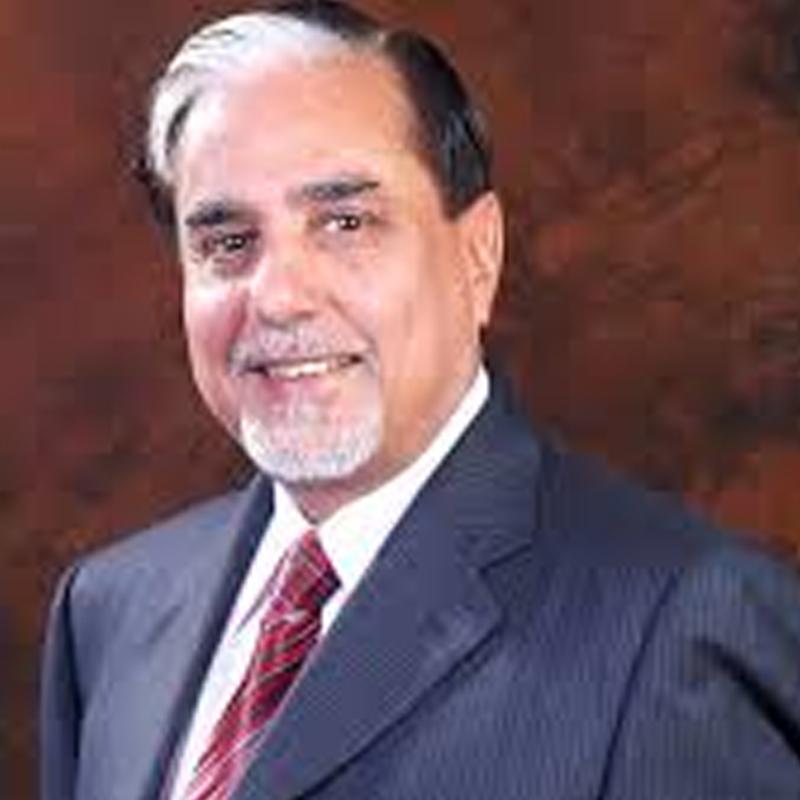
    MUMBAI: Essel Group of Industries chairman Subhash Chandra Goel will address the Bombay Chamber’s Managing Committee members on 10 October. The topic that he will throw light on through his own experiences and insights is ‘Leadership in Media and Entertainment Business’.

    Subhash Chandra is a business leader, also known as the media Czar, the founder chairman of Essel Group of Industries having a market capitalisation of approx US $1.7 billion. The Essel Group of Industries is into diversified businesses like, entertainment parks, satellite television, cable TV distribution, movie production, multiplexes, education, animation, publishing, packaging, satellite and latest online Lottery.

    His distinguished audiences will include leading corporate honchos and business tycoons, informs an official release.

    This talk is the part of the series of meetings planned by the Bombay Chamber with the aim of bettering the business environment and to equip its established members to conquer newer heights.

  • Chandra exhorts industry to sink differences

    Chandra exhorts industry to sink differences

    NEW DELHI: While exhorting broadcasting industry to sink differences for collective benefit, Zee Telefilms chairman and maverick media entrepreneur Subhash Chandra today posed several issues before the government and sector regulator, including level playing field vis-à-vis telecom companies.

    “Let us all work together for long term benefits as blaming each other will not help. Let us work in partnership,” Chandra appealed to various constituents of the industry while delivering a keynote address at the India Broadband Digital Networks Forum organized here by Indiantelevision.com and Media Partners Asia. 

    Citing the example of CAS, Chandra wondered if all the stakeholders felt that addressability is good for the industry, how come it hasn’t yet become a reality in India.

    “Simply because vested interests (including broadcasters and cable fraternity) worked against CAS’ implementation since 2003,” Chandra said.

    Though he sought a more liberal regulatory regime both in terms of pricing and policies in the presence of I&B secretary and Trai chief , he agreed with both of them that comparison of the Indian market with the likes of US and UK is uncalled for as the former has its own needs and peculiarities.

    “If we had followed the American model, it would have needed investments worth $ 150-200 billion to bring the cable TV market to a level it now enjoys in terms of penetration, revenue and employment generation in India,” Chandra said.

    Earlier, information and broadcasting secretary SK Arora in his keynote address made a fervent pitch for digitalization of broadcasting services, which is imperative to keep pace with global trends and changing business models of media companies.

    “In terms of size and magnitude, the potential of the Indian broadcasting industry remains…and it’s quite a challenge to identify the impact that emerging technologies would have on business models of companies,” Arora said.

    Pointing out that India needs to design its own “solutions” keeping in mind the socio-economic scenario (read good services at low prices), Arora said regulations would be guided by the principle that “consumer is king.”

    According to the government official, in the 11th Five-Year Plan, the work on which is presently underway, the government is attempting to address the issue of digitalisation through “public-private partnership.”

    “We are encouraging and nudging them (the industry players) to move towards digitalisation,” Arora said, adding the first phase of it is expected to be completed by 2010 coinciding with Delhi playing host to the Commonwealth Games.

    Concurring with Arora, Telecom Regulatory of India (Trai) chief Nripendra Misra said arrival of digital technology, which gives more choice to consumers, and rapid convergence of services like telecom, infotech and broadcasting were two major trends of the television industry.

    However, Misra admitted that unregulated growth and lack of addressability had thrown up its own problems for the broadcast and cable industry.

    In such a scenario, DTH and CAS will have far-reaching impact on the industry, Misra said.

    Unfazed by widespread criticism of some pricing diktats of Trai earlier, Misra said that the regulator’s endeavour is to spread level playing field for all and formulate policies that are based to encourage efficiency, financing, development and equality.

    Though he admitted various legal lacunae is hampering a move towards unified licencing (whereby one single licence would enable delivery of telecom and broadcast services) at present, he envisaged in future cable networks might provide telecom services and give competition to telecom companies.

    “Convergence is being seen as an opportunity (in India)…but any development globally has to be seen in the Indian context,” Misra said, adding Trai will be coming out soon with a consultation paper on IPTV again.

    Meanwhile, at the start of the event, Indiantelevision.com founder and editor-in-chief Anil Wanvari and MPA executive director Vivek Couto gave a snapshot of the Indian broadcast industry and the trends that have emerged over the last few years increasingly leading towards convergence.

    The morning session was attended by industry luminaries and senior government officials, including John Malone-controlled Liberty Media board member Shane O’ Neil.

  • Zee Telefilms to launch Marathi news channel ’24 Tas’

    Zee Telefilms to launch Marathi news channel ’24 Tas’

    MUMBAI: Zee Telefilms Ltd. chairman Subhash Chandra is giving his news business a big push. His latest plan of action: to launch a Marathi news channel by the end of this year.

    Zee News Ltd (ZNL), the company which houses the news and regional channels, plans to invest Rs 1 billion over three years for this venture. 24 Tas (24 hours), as such, will become the first channel in the Marathi news space.

    “We plan to launch the Marathi news channel by December-end. Our projected investment for this is Rs 1 billion over a three-year period. We are putting the equipment in place,” says Zee News Ltd. director Laxmi Goel.

    More local language news channels are on the agenda. Goel had earlier told Indiantelevision.com that the company would launch news channels in the southern languages. Zee already runs a Bengali news channel through a joint venture with Akash Bangla.

    ZNL, will also be appointing a chief executive officer soon, said Goel. The company is also planning to launch a Tamil and a Malayalam channel to cover up all the southern language states.

    The company expects to post a 33 per cent compound annual growth rate (CAGR) over the next five years to touch revenue of Rs 8.7 billion by FY 2011, up from Rs 2.01 billion in FY 2005-06. ZNL’s operating margins, which stood at 16 per cent, are expected to expand to around 30 per cent during this period.

    ZNL has a networth of Rs 1.7 billion. The capital employed (as of 1 April 2006) is Rs 2.31 billion with loan funds standing at Rs 612 million.

    Chandra’s expansive news plans include the recent acquisition of a majority stake in United News of India (UNI), a news wire agency, which will give him access to a widely spread out infrastructure.

  • Essel targets January 2007 launch of digital venture; plans web portal

    Essel targets January 2007 launch of digital venture; plans web portal

    MUMBAI: Subhash Chandra-promoted Essel Group will unveil a set of digital initiatives under the banner of its newly-formed digital arm Digital Media Convergence Ltd (DMCL) by January 2007, including a web portal.

    The plan is to explore new media platforms such as mobile and IPTV and the online space in a full-fledged manner to distribute various formats of digitised content.

    “We will be unveiling our initiatives in three months time. We are going to create various in-house formats and shows. Apart from this, we are speaking to various foreign players as well to acquire internationally acclaimed formats. We are sending a special programming delegation for the upcoming Mipcom session. Though the stress is on delivering fresh content, we are keen on the Zee digital library as well,” says DMCL CEO Abhijeet Saxena.

    DMCL will concentrate on acquiring, digitising and making available content on various delivery platforms. “Apart from our library products, we are keenly looking at providing our services to all the content owners who want to distribute their content in these platforms. The company will also be exploring the interactivity segment to tap the potential this space offers to the maximum,” Saxena adds.

    To enrich its platforms, DMCL will be creating special interest content, apart from making use of the Zee Network library on a selective basis. DMCL has already initiated talks with various Indian as well as international companies to acquire programming formats and various genres of content.

    According to Saxena, the company is thinking beyond mobisodes and other existing mobile value added services (VAS). He says the plan is to launch multiple formats of shows, targeting various segments of the consumer.

    “We have thought about the viability of the services from a consumer point of view and the practicalities of making it a popular medium. Hence, we will offer various price rates depending on the duration and uniqueness of the formats. For example, we are working on multiple formats for movies, not just abridged versions. To market these multiple segments, we have classified the services into premium and mass oriented,” Saxena offers.

    DMCL expects to contribute to the mobile VAS in a significant manner with the initiatives. “The existing mobile VAS market size comes about $500 million and this space is expected to reach $10 billion by 2010. DMCL expects to be a major contributor to the expansion,” says Saxena.

    DMCL has recently roped in Intel and IBM for its back-end technology support. The company has already brought most of the telecom operators on board for the initiative.

  • ICC rights bidders to be called to Dubai by month-end

    ICC rights bidders to be called to Dubai by month-end

    MUMBAI: The International Cricket Council (ICC) says that this month will mark the next stage of its sale of media and sponsorship rights for events from late 2007 to 2015.

    Information available with indiantelevision.com indicates that potential commercial partners that meet the ICC’s criteria for bidding will be invited to Dubai at the end of this month. The aim is to to further progress the process that began in April when the ICC’s Executive Board decided the host for its tournaments in that eight-year period.

    The period will have 18 ICC tournaments. The five big ones are the two World Cups, in Asia (2011) and Australia/ New Zealand (2015) respectively, and a minimum of three Champions Trophy tournaments. The deal will also include the first two, Twenty World Championships, in South Africa (2007) and England (2009). The latter takes place in the ICC’s centenary year.

    Potential partners who meet the ICC’s qualification criteria that have already made expressions of interest will shortly be receiving correspondence detailing when they will be able to meet ICC officials for talks.

    The ICC says that any interested parties yet to express interest in the rights can still do so by contacting, the ICC.

    The ICC’s team of negotiators will include former President Ehsan Mani, who played a key role in securing the current agreement with Global Cricket Corporation (GCC), which is owned by News International Limited.

    That agreement, which began in 2000 and ends with the ICC Cricket World Cup 2007 in the West Indies next March and April, includes two ICC Cricket World Cups and four ICC Champions Trophy tournaments. The GCC had paid out $550 million to secure the rights after a fierce bidding war with Subhash Chandra’s Zee Telefilms. At the time of bidding the GCC was a 50:50 JV between News Corp and World Sport Nimbus (itself a 50:50 JV between Harish Thawani’s Nimbus and the UK-headquartered World Sport Group). News Corp subsequently bought out WSN’s stake in the JV.

    ICC CEO Malcolm Speed said, “The sale of the ICC’s commercial and broadcast rights makes this a hugely significant and exciting time for cricket. That sale gives us the opportunity to place cricket on a sound financial footing for the next eight years and, by doing that, it will provide all our members with the chance to both sustain and grow the game.

    “We have been gratified and encouraged by the expressions of interest we have already received. We are now looking forward to meeting our potential partners and have only one aim in mind – securing the best deal for cricket.”

    The ICC has also included two women’s World Cups in the timeframe. One takes place in Australia in 2009 and the other takes place in India in 2013.

  • Play TV to launch ‘Quizmaster’ on 9 September

    Play TV to launch ‘Quizmaster’ on 9 September

    MUMBAI: Starting 9 September, the interactive and gaming channel PlayTV will launch a show named Quizmaster. The one hour show, will air at 8 pm.

    The show Quizmaster, according to an official release, it will no more be a theoretical, intellectual event, rather be a fun filled game of luck and intelligence that involves the entire family at the comfort of one’s home.

    Participating in the show is stated to be simple and if the six questions are correctly answered, one can win the jackpot amount of Rs 1 lakh. A participant will have to answer five questions correctly to be eligible for the sixth question for jackpot.

    After answering the first three questions correctly, a participant wins Rs 3,000. Even if he answers the fourth question incorrectly, he can take home Rs 3,000, informs an official release.

    On answering the fourth question appropriately, the participant wins Rs 5,000 and if he answers the fifth question correctly, he wins Rs 10,000. However if he answers the sixth jackpot question incorrectly, he will lose whatever he won on the show, informs the release.

    The show introduces a unique concept of using a Randomizer to select the live caller. That is not all, the show also has a play-along round where in if the caller is unable to answer the question the same is open for viewers to answer and win Rs.1000 at the comfort of their living room.

    Speaking on the launch of Quizmaster, Play TV MD Amit Goenka said, “PlayTV has a loyal set of young viewers who enjoy this new genre of entertainment where interactivity is an integral part of television viewing. Quizmaster is a show that will appeal to viewers across age groups. It is a family activity that everyone can sit together, watch and participate in.”

    Play TV is the first 24 hours interactive and gaming channel, managed by Dakshin Media Solutions, which is an enterprise of the Subhash Chandra-promoted Essel Group.