Tag: Subhash Chandra

  • FY-2105: Dish TV in black; adds 1.5 million subscribers

    FY-2105: Dish TV in black; adds 1.5 million subscribers

    BENGALURU: Last quarter (Q3-2015, quarter ended 31 December, 2015), India’s largest DTH operator, Dish TV Limited had reported a lower loss at just Rs 2.87 crore as compared to double-digit crore loss numbers in the previous or like-to-like quarters.


    However that is now a thing of the past as the company has reported a standalone net profit after tax (PAT) of Rs 35.01 crore in Q4-2015 and a standalone PAT of Rs 1.01 crore in FY-2015 as compared to a standalone loss of Rs 154.21 crore in FY-2014.


    This probably makes Dish TV the first among listed DTH companies in the country to report a profit after tax as opposed to the operating profits reported by a segment of the other goliaths for whom DTH services is just another small segment. Dish TV’s consolidated PAT for FY-2015 was Rs 3.14 crore as against a consolidated loss of Rs 157.61 crore in FY-2104.


    Note: 100,00,000 = 100 Lakh = 1 crore = 10 million


    The company also added 1.5 million net subscribers in FY-2015 and closed the year with a subscriber base of 12.9 million. With the addition of 4.04 lakh subscribers in Q4-2015, Dish TV maintained the tempo it had set in the previous quarter (Q3-2105) by adding a slightly higher number of subscribers at 4.16 lakhs.


    Dish TV also reported higher average revenue per user (ARPU) of Rs 179 in Q4-2014 as against Rs 177 in Q3-2015 (1.13 per cent increase in ARPU). In Q4-2014, the company had added 2.26 lakh net subscribers and its annual ARPU was Rs 170 (Q4-2105 ARPU increased 5.3 per cent as compared to Q4-2014).


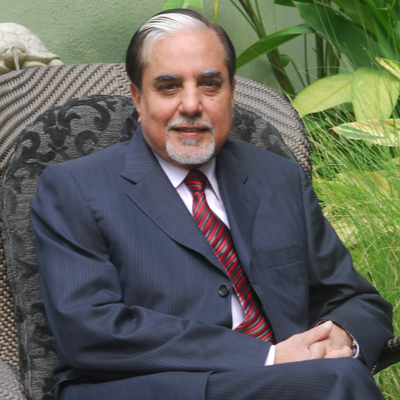
    Dish TV chairman Subhash Chandra said, “The DTH sector is a direct beneficiary of a positive consumer sentiment. Dish TV achieved a strong, sector leading, subscriber growth of 1.5 million net subscribers during the year. Fiscal 2015 also saw Dish TV swing to net profit, a first for any DTH company in India. Through this milestone to the next and thereafter, Dish TV remains committed to outperform the industry growth rate and create shareholder value while continuing to entertain its subscribers with rich content and compelling value added services using updated modes of delivery.”


    Dish TV managing director Jawahar Goel added, “During the quarter, we garnered net subscribers that were almost equal to the numbers during the festival quarter of October – December 2014. While Zing gained ground in Phase 3 and 4 markets, high definition (HD) driven sports offerings were the mainstay, in Rest of India, during the Cricket World Cup 2015.”


    Let us look at the other numbers reported by Dish TV:


    Dish TV’s standalone and consolidated net Total Income from Operations (TIO) in FY-2016 at Rs 2781.64 crore was 10.9 per cent more than the Rs 2508.97 crore in FY-2014. Standalone TIO in Q4-


    2015 at Rs 754.72 crore grew 18.5 per cent as compared to the Rs 636.91 crore in the corresponding year ago quarter and was 10.3 per cent more than the Rs 684.26 crore in Q3-2015.


    As mentioned above, net profit for Q4-2015 was Rs 35.01 crore as against a loss of Rs 149.05 crore in Q4-2014 and a loss of Rs 2.87 crore in the immediate trailing quarter.


    The company’s EBIDTA in FY-2015 increased 17.5 per cent to Rs 733.1 crore as compared to the Rs 624 crore in FY-2014. EBIDTA in Q4-2015 at Rs 221.9 crore was a whopping 72.1 per cent more than the Rs 128.9 crore in Q4-2014 and 16.1 per cent more than the Rs 191.2 crore in the preceding quarter.


    The company’s total expenditure (TE) in FY-2015 increased 8.7 per cent to Rs 2048.5 crore as compared to the Rs 1884.9 crore in the previous year. TE in the current quarter increased 4.9 per cent to Rs 532.8 crore as compared to the Rs 508 crore in the corresponding year ago quarter and was 1.9 per cent more than the Rs 522.7 crore in Q3-2015.


    Programming, content/other costs (programming) in FY-2015 increased 2.9 per cent to Rs 800.75 crore from Rs 778.44 crore in FY-2014. Programming cost in Q4-2015 at Rs 207.63 crore was three per cent more than the Rs 201.57 crore in Q4-2014 and 4.4 per cent more than the Rs 1988.86 crore in Q3-2015.


    License Fees in FY-2015 increased 10.5 per cent to Rs 288.83 crore from Rs 261.38 crore in the previous year. Dish TV paid 16.7 per cent higher license fees in Q4-2015 at Rs 78.17 crore as compared to the Rs 66.98 crore in Q4-2014 and 5.1 per cent more than the Rs 74.35 crore in Q3-2015.


    Advertisement expense in Q4-2015 at Rs 11.5 crore was 10.6 per cent more than the Rs 10.4 crore in Q4-2014, but declined 7.3 per cent from Rs 12.4 crore in Q3-2015.


    Consolidated Employee Benefit Expense (EBE) in FY-2015 increased 14.1 per cent to Rs 101.75 crore as compared to Rs 89.16 crore in FY-2014. EBE in Q4-2015 at Rs 25.71 crore was 17.6 per cent more the Rs 21.02 crore in Q4-2014 and was 4.3 per cent lower than the Rs 25.83 crore in Q3-2015.


    Summing up Dish TV’s performance, Goel said, “Fiscal 2015 was a satisfying year. Our single-minded devotion to being the leader in the DTH industry along with uncompromised financial discipline enabled us to reach the net profitability milestone much ahead of our peers. With cost line items under control, the resultant EBITDA for the quarter increased by a strong 72.1 per cent y-o-y. EBITDA margin improved to 29.4 per cent. PAT of Rs 35.01 crore resulted in Free Cash Flow (FCF) of Rs 70.2 crore for the quarter. Churn for the quarter was maintained at 0.7 per cent per month.”
     

    Click here to read the financial statement  

  • FY-2015: Increased ad revenue propels Zee income by 10.4%; PAT up 9.6%

    FY-2015: Increased ad revenue propels Zee income by 10.4%; PAT up 9.6%

    BENGALURU: The Subhash Chandra led content and broadcast player Zee Entertainment Enterprises Limited (Zeel) reported a 9.8 per cent hike in PAT to Rs 977.50 crore (20 per cent of Total Income from Operations or TIO) in FY-2015 (year ended 31 March, 2015, current year) from Rs 892.08 crore (20.2 per cent of TIO) in FY-2014.


    The company’s advertising revenue increased 11.8 per cent in the current year to Rs 2660.30 crore (54.5 per cent of TIO) from Rs 2380.05 crore (53.8 per cent of TIO) in the previous year and consequently, Zeel TIO increased 10.4 per cent in FY-2015 to Rs 4883.65 crore from Rs 4421.70 crore in FY-2014.


    Note: 100,00,000 = 100 lakh = 10 million = 1 crore


    The other revenue streams that add to Zeel TIO are subscription revenues and other sales and services (other) revenues. Zeel’s subscription revenues were almost flat (down 0.5 per cent) in FY-2015 at Rs 1793.48 crore (36.7 per cent of TIO) from Rs 1802.22 crore (40.8 per cent of TIO) in the previous year. Other revenue increased by 79.5 per cent to Rs 429.87 crore (8.8 per cent of TIO) in FY-2015 as compared to the Rs 239.43 crore (5.4 per cent of TIO).


    Let us look at the other numbers reported by Zeel for FTY-2015 and Q4-2015:


    Zeel PAT in Q4-2015 improved 6.1 per cent to Rs 230.77 crore (17.1 per cent of TIO) as compared to the Rs 217.58 crore (18.8 per cent of TIO) in the corresponding year ago quarter, but declined 25.2 per cent as compared to the Rs 308.61 crore (22.6 per cent of TIO) in the immediate trailing quarter.


    Zeel TIO in Q4-2015 at Rs 1347.05 crore was 16.2 per cent more than the Rs 1158.81 crore in Q4-2014, but declined 1.2 per cent as compared to the Rs 1363.72 crore in Q3-2015.


    Advertising revenue in Q4-2015 increased 15 per cent to Rs 669.66 crore (49.7 per cent of TIO) as compared to the Rs 582.36 crore (50.3 per cent of TIO) in Q4-2014, but declined 9.8 per cent as compared to the Rs 743.60 crore (54.5 per cent of TIO) in Q3-2015.


    Subscription revenue in Q4-2015 increased 10.2 per cent to Rs 510.77 crore (39.9 per cent of TIO) in Q4-2014 and increased 14.5 per cent from Rs 446.13 crore (32.7 per cent of TIO) in the previous quarter.


    Zeel says that during Q4-2015, domestic subscription revenues stood at Rs 417.5 crore, while for FY-2015, it stood at Rs 1424 crore. Adjusting for the difference due to accounting changes necessitated by change in the Telecom Regulatory Authority of India’s (TRAI) content aggregator regulation like-to-like growth for the full year FY-2015 is in low teens.


    Further, during Q4-2015, international subscription revenues stood at Rs 93.3 crore. Due to change in arrangement with various operators across international territories, the reporting of subscription revenue for the current year has undergone a change and hence previous year figures are not comparable with that of current period. For the full year FY-2015, like-to-like growth in rupee terms was in mid-single digit.


    ‘Other’ revenue in Q4-2015 increased 47.6 per cent to Rs 166.62 crore (12.4 per cent of TIO) as compared to the Rs 112.91 crore (9.7 per cent of TIO) in the corresponding year ago quarter, but declined 4.8 per cent as compared to the Rs 174.99 crore (12.8 per cent of TIO) in the previous quarter.


    The company’s Total Expenses (TE) in FY-2015 increased 13.2 per cent to Rs 3697.27 crore (75.7 per cent of TIO) as compared to the Rs 3267.54 crore (73.9 per cent of TIO) in FY-2014. TE in Q4-2015 increased 26.3 per cent to Rs 1093.70 crore (81.2 per cent of TIO) as compared to the Rs 866.15 crore (74.7 per cent of TIO) in Q4-2014 and increased by 6.5 per cent as compared to the Rs 1027.36 crore (75.3 per cent of TIO) in Q3-2015


    Zeel’s operation cost in FY-2015 at Rs 2139.34 crore (43.8 per cent of TIO) was 3.4 per cent more than the Rs 2068.79 crore (46.8 per cent of TIO) in FY-2014. Operation cost in Q4-2015 increased 13.9 per cent to Rs 620.09 crore (46 per cent of TIO) as compared to the Rs 544.42 crore (47 per cent of TIO) in the corresponding quarter of last year but was 4.9 per cent lower than the Rs 645.57 crore (47.3 per cent of TIO) in Q3-2015.


    The company’s Employee Benefits Expense (EBE) in FY-2015 increased 15.2 per cent to Rs 449.83 crore (9.2 per cent of TIO) as compared to the Rs 390.52 crore (8.8 per cent of TIO) in the previous year. EBE in Q4-2015 at Rs 120.89 crore (9 per cent of TIO) was 21.1 per cent more than the Rs 99.84 crore (8.6 per cent of TIO) in Q4-2014 and 10.6 per cent more than the Rs 109.27 crore (8 per cent of TIO) in Q3-2015.


    Zeel’s advertisement and publicity expenses (ad expenses) in FY-2015 increased 50.1 per cent to Rs 372.2 crore (7.6 per cent of TIO) as compared to the Rs 247.93 crore (5.6 per cent of TIO) in FY-2014. Ad expenses in Q4-2015 more than doubled (2.23 times) to Rs 132.46 crore (9.8 per cent of TIO) as compared to the Rs 59.42 crore (5.2 per cent of TIO) in Q4-2014 and was 54.2 per cent more than the Rs 85.92 crore (6.3 per cent of TIO) in Q3-2015.


    Company speak


    Zeel chairman Subhash Chandra said, “With a stable government at the centre, the Indian economy has shown some signs for optimism and is expected to see a positive growth trajectory. New initiatives like the Make in India campaign and other reform measures have boosted confidence among investors in the successful and sustainable growth of the economy. Introduction of GST in the coming future should be a positive for the media sector. With the aforementioned developments in the economic environment we hope that the media industry will see improvement in the revenues.”


    Chandra added, “Our performance in this quarter is reflective of the investments we are making to further enhance of market position. We continue to pursue opportunities in existing and new markets that will yield long-term growth. Since, financially we are in a sound position, we are confident that we will benefit from exploring such growth opportunities in the coming year.”


    Zeel managing director and CEO Puneet Goenka said, “This quarter, our performance has been satisfactory. As expected, advertising spends increased during the quarter backed by consistent performance of our channels. We also witnessed a sustainable growth in our subscription revenues in this period and with the implementation of digitization in Phase III and IV we expect to see our subscription revenues grow further in the future.”

  • Subhash Chandra to adopt ‘glocal’ strategy for second innings in cricket

    Subhash Chandra to adopt ‘glocal’ strategy for second innings in cricket

    MUMBAI: For every Sachin Tendulkar there are more than a 1000 deserving cricketers who were denied an opportunity due to various reasons, for every MS Dhoni there is a Amol Muzumdar, for every Ishant Sharma there is a Ranadeb Bose. Indian cricket is not a story full of fortunes, there are many such unfortunate incidences, which cannot have a cricketing justification. Targeting such unfortunates, Essel Group chairman Subhash Chandra is all set to start his second innings in the field.


    Pertinent to note here is that Chandra was viciously defeated in his first stint against the Board of Control for Cricket in India (BCCI) and his rebel cricket venture Indian Cricket League (ICL) was abruptly shut. Players were accused of being under-paid, various match fixing allegations cropped up against teams and the ICL was wiped out. BCCI suspended all the players associated with ICL, Kapil Dev was sacked as chief of National Cricket Academy and no ground was allowed to host a ICL match with a notice that grounds hosting ICL matches will never get an international or Ranji match. However, Essel Group’s effort aroused BCCI’s thoughts of expanding cricket and a similar cricket league was launched eight years back, which is today known as the Indian Premier League (IPL) – BCCI’s biggest revenue generating entity.


    Years later Dr. Chandra rose from the ashes like a phoenix and became a nightmare for cricket boards across the world as he made his interest to venture into cricket official. Various meetings were held across boards to figure out his strategy. “India is a country where youth are passionate about three things Cricket, Sachin Tendulkar and television. Well one who loves cricket and is passionate about it will play domestic cricket, then IPL and eventually make his way through to the Indian cricket team. But again the number that successfully manage to do that is very less compared to the number of youth who play cricket passionately. So if you can start a platform where you give money for playing cricket and feature them on television, you will obviously get huge representatives besides the presence of IPL and other BCCI organised tournament,” says a renowned cricket historian and writer.


    Reportedly the Essel Group has registered various cricket leagues in India and has aspirations of holding inter-city cricket leagues, a Times of India report quoted Essel Group head of finance and strategy Himanshu Modi as saying, “The format we are building will be a T20 format, home and away games, across 10 – 12 cities, we are not looking at a short time frame. It could be a year away or even a little more. We know the timing is right but we are equally aware of the pitfalls where BCCI can hit us and are much wiser today. We had four grounds in India during ICL and we got players even from Pakistan, so I do not see both as a problem at all. On the grounds front, during ICL, we fell short with just four grounds in four cities. Also, we learned we needed eight to 10 teams. So, this time round, we will have to ensure we have more grounds.”


    Commenting on Essel Group’s vision, the cricket historian said, “To drive Indian crowds to cricket, you need quality players, idols and close finishes. On the grounds front, being one of the richest group if Essel is not allowed, they can create a ground but the problem will be with players. BCCI pays a hefty amount to retired players too and hence having idols playing will be a concern and if they can manage that they will have a good future and the avenue will help many families financially too.”


    A marketing expert, who manages many on-ground and television sponsorship, added, “Broadcasters creating leagues in India is becoming a trend. We saw Star and Sony doing it in the recent past and there is nothing surprising about Essel also venturing into something similar. There are many sponsors who fail to use the IPL or World Cup as a platform for promotion due to premium rates. They will use the new league. So sponsorship won’t be a problem for them provided they organize when team India is actively playing.”


    Essel has already registered entities in Australia, New Zealand, Scotland and with this revelation of inter-city cricket league, the group made it clear that while they are thinking global they are acting local too. It remains to be seen if the ‘glocal’ strategy becomes a substantial challenge to rattle BCCI and reduce the pitch of the IPL.

  • Essel registers various entities, rebel league to unfold soon?

    Essel registers various entities, rebel league to unfold soon?

    MUMBAI: Gone are the days when cricket was played between 22 players, officiated by two umpires on a lush green cricket field. The sport is way bigger now and involves entities galore. An increase in the number of television channels changed the entire playing field and slowly but surely the game emerged as a million dollar pie that everyone wanted their fingers in.


    While Star India has the broadcasting rights of Indian cricket, it is also a strong contender to acquire the telecast rights to the Indian Premier League (IPL) when it is up for grabs in 2017. On the other hand, Multi Screen Media, which currently is the official broadcaster of the IPL, will try every possible trick in the trade to keep the goose that lays golden eggs to itself. 


    However, cricket is not a one on one battle anymore. Dr. Subhash Chandra founder of Essel Group and the father figure in Indian television industry has also evinced his interest in cricket and hinted towards establishing a new cricketing entity, which makes cricket a triple threat battle.


    Essel Group has reportedly registered various companies in different countries and also established a domain called www.worldcricketcouncil.co.in, which supposedly is a rebel entity of the International Cricket Council (ICC). 


    A detailed report in The Guardian reveals that “the domain names registered by the Essel Group including worldcricketcouncil.co.in and cricketassociationofengland.co.in and that their origins have all been traced back to a Ten Sports employee-senior IT manager Deepak Srivastava.”


    The group speculatively approached heavyweight players like Micheal Clarke, Ross Taylor and Correy Anderson. Not surprisingly, the developments have irked ICC officials and this was a prime point of discussion when they met for a board meeting in Dubai. The ICC has voiced its concern on the developments and declared investigation against rebel registrations. Apart from company registrations, ICC is said to have begun investigating the registration of website domain –worldcricketcouncil.co.in by an employee of Ten Sports. Moreover, there is growing concern within the ICC about the formation of a rebel world cricket body. 


    “In fact, Cricket Australia was the first to bring to notice these fishy proceedings when they objected to the registration of a new company – Australia Cricket Control Limited, late last year. Other company names bearing resemblances to New Zealand Cricket, Cricket Scotland and website domains similar to that of the England and Wales Cricket Board (ECB) have been registered since then,” ICC said in a bulletin.


    When questioned about the developments, Ten Sports – the sports venture of Essel Group – CEO Rajesh Sethi tells Indiantelevision.com, “First things first, there is no new league coming up. We need to get that clear. We as a group (Essel Group) keep exploring new territories and our research signifies sport as one of the interesting areas. And while we speak of sports, football and cricket certainly hold the pole position. So it’s just something that we have been doing since a long time and there is nothing new. It’s immature to call it a league at this stage.”


    According to a cricket expert, a new global cricketing entity, if established properly, will certainly impact the pitch of IPL, which is the largest source of income for the Board for Control of Cricket in India (BCCI) and that can be one of the prime motive behind Dr. Chandra’s aggressive push for cricket. “Essel Group in the past also made various efforts to challenge fast growing BCCI and Indian Cricket League is one of them, which ignited the thoughts of a tournament like IPL. Chandra’s vision cannot be questioned. However, on the other hand BCCI won’t make life easy for him as we witnessed during the ICL days. Essel Group has tasted failure once and this time they are certainly aware of what can go wrong or where the risk lies so this time it won’t be that easy to put them down. Overall it will be a worthy scenario to witness,” the expert opined.


    The year 2014 saw the emergence of numerous sporting leagues, which are all directly dependent on advertisements and sponsorship. In a scenario like this, the biggest question that arises is whether there is enough room to accommodate Dr Chandra’s second innings in cricket.


    Sharing his viewpoint of how advertisers would react to a development like this and if brands would like to associate themselves with a rebel entity, Maxus managing partner head of the north and east regions Navin Khemka says, “Well, whether the league is rebel or pro has no impact on advertisers. Promoters want a platform that can ensure exuberant reach and that will only come if you have competitive matches and quality players. The way the sporting calendar is currently shaped, I don’t see room for one more cricket league because it will be very tough to find a slot where key players are available.”


    Another senior executive from the media planning fraternity adds, “A new cricket league will find it extremely difficult to fit into the current competitive scenario and advertisers, who want cricket as platform will go for the likes of IPL, Champions League, T20 World Cup and other available flagship cricket tournaments. If a brand wants to explore beyond cricket, then there are many other emerging leagues that are promising enough. In my opinion, unless it has something new and exclusive to offer, one more cricket league will find it difficult to make a mark on advertisers.”      


    No doubt that the entire sports fraternity will be keenly focused on what unfolds from the Essel Group stable over time and whether Chandra succeeds in making a substantial mark in his second innings. 

  • Essel Group to enter global sports biz; focus on cricket

    Essel Group to enter global sports biz; focus on cricket

    MUMBAI: Essel Group has rubbished media reports stating that the Subhash Chandra owned company was registering entity with names that appear to be rival national cricket boards.


    It may be recalled that way back in 2007, Essel Group had launched the Indian Cricket League, which did not meet with success.


    In an official statement, Essel Group pooh-poohed reports, which said that Ten Sports Network was registering certain entities pertaining to cricket as a sport.


    “We would like to clarify that the same is not true, since Ten Sports Network has no connection to this initiative, it being a sports network owned by Zee Entertainment Enterprises Ltd., a publicly listed company on Indian stock exchanges. Ten Sports Network holds the broadcast rights for five major cricketing boards namely South Africa (CSA), Zimbabwe (ZC), West Indies (WICB), Sri Lanka (SLC) and Pakistan (PCB) and many other premier sporting events like UEFA Champions League, US Open and WWE. It is a dominant player in the cricket broadcasting and production arena,” the company said.


    That said, Essel Group, however has been analysing the sports market and is looking at entering the sports business at a global level, with a focus on cricket.


    “The reports reflect an extremely positive trend, indicating our nation as a sports-loving nation, than just a cricket-loving nation. Our nation has produced several sports heroes in the realm of badminton, tennis, wrestling, golf, air rifle, etc. that have earned significant reputation not only for themselves but also for India. In order to enhance the overall sports business, we look forward to the entry of other Indian business houses as well. Essel Group is now geared up to enter the sports business at a global level, focusing on cricket, since it has been limited to Commonwealth countries. Our research reflects that there is an immense opportunity to make it a global sport,” the company said.


    The official statement also clarified that Lalit Modi had no linkage whatsoever with Essel Group in this initiative. “Essel Group is independently taking up this initiative on its own accord,” it added.


    The statement further read, “Essel Group takes immense pride in being the pioneer to grow and develop the domestic cricket market in India, with the launch of Indian Cricket League way back in 2007. Indian Premier League followed the footsteps of Indian Cricket League. Essel Group also owns the Mumbai Football Club for the last seven years.” 

  • Apollo’s 3% stake sale in Dish TV earns it a profit of Rs 135 crore

    Apollo’s 3% stake sale in Dish TV earns it a profit of Rs 135 crore

    MUMBAI: US based alternative assets manager Apollo Global Management part sold its three per cent stake in direct to home (DTH) operator Dish TV for Rs 262.5 crore, through an open market transaction on 10 April. 


    The stake comprising 32 million shares of an average price close to Rs 82, as compared to their original purchasing price of approximately Rs 39, was picked up by an investment unit of Citigroup and a mutual fund under Birla Sun Life.


    With the sale purchase, Apollo will see a profit of Rs 135 crore. The Private Equity (PE) firm is now left with eight per cent stake in the company through its outstanding global outstanding depository receipts (GDR). This stake is valued at Rs 721 crore.


    It was in 2009 when the PE firm invested $100 million to gain an 11 per cent stake in the company, which was the firm’s first investment in the country. Dish TV is part of the Subhash Chandra owned Zee Network with approximately 12.5 million net subscribers. With a strong range of 470 television and audio channels, it has 43 High Definition (HD) channels under its kitty. For the quarter ending 31 December, 2014 the company’s net loss stood at Rs 2.9 crore.

    Meanwhile the ESSEL group through its continuation of an earlier intimation dated 26  August last year,  informed the BSE that the Board of Directors of the Company at their meeting held on August had considered and approved to transfer the Company’s non-core business (including set top boxes, dish antenna, and related services) to its Wholly Owned Subsidiary – ‘Xingmedia Distribution Private Limited’ (presently known as ‘Dish Infra Services Private Limited), subject to necessary approvals and as per the applicable provision of the Companies Act, 2013. 


  • &TV pens successful opening story; industry reacts

    &TV pens successful opening story; industry reacts

    MUMBAI: The past one year has seen oodles of action in the general entertainment channel (GEC) space. New programming, new channels, second and third channel launches from existing players – the highly competitive genre saw it all.  Viacom18 was the first off the blocks.  Just as 2014 was being rung in, it launched Rishtey – a channel it had flagged off in the UK earlier.


    It was in June 2013 that Subhash Chandra’s Zee Entertainment Enterprises (Zeel) adopted a new brand positioning with ‘Vasudhaiva Kutumbakam – The World is My Family’. It was this message that the network wanted to spread which led to the launch of Zindagi, on 23 June 2014. With the best of content from Pakistan, the channel was for viewers with a progressive mindset.


    A couple of months later, 1 September 2014 to be precise, Multi Screen Media (MSM) launched a third GEC – Sony Pal for the traditional, yet modern Indian woman. While Sony Pal appealed to certain quarters, it did not generate the viewership numbers that were expected. The Sony management reacted quickly, put the plug on the money drain, and repositioned it as a re-run channel airing older successful shows.


    A further couple of months later, 19 November 2014, to be exact, came another launch – that of Epic TV, which had billionaires Mukesh Ambani and Anand Mahindra as backers.

    Even as Indian audiences were still absorbing the content of Zindagi, Zeel unveiled a third massier appeal GEC on 2 March 2015. And it chose to deviate from the Zee branding for the new launch; opting for the ‘&’ brand instead.  The choice of programming; the glitzy launch,  the depth of distribution, the marketing overdrive – all drew oohs and aahs from industry observers. The cynics, however, cluck-clucked from the sidelines and hurled gibes stating that  Zeel boss and chairman Subhash Chandra’s son Punit Goenka was throwing away good money. (The group has set aside an estimated budget of Rs 500 crore for &TV).


    Came the ratings on 12 March 2015, and the doubting Thomases and naysayers had to bite their tongues and swallow their barbed comments. Reason: &TV reported fabulous opening week viewership numbers of 90,612 GVTs, making it the year’s most successful new channel launch – and that too in the hyper-competitive GEC space. What it made more remarkable is the fact that the first week in the channel’s launch consisted of only five and a half days.


    As compared to &TV’s numbers the other debutantes during the year did not fare as well. Sony Pal generated opened with only 11,000 GVTs, as per TAM data. Zee Zindagi reported 28,700 GVTs in week one, overtaking even the 14-year old channel, Sahara One. Epic in its debut week garnered 1,240 GVTs (ratings of four days).


    A bet that worked


    The channel is the first GEC from Zee’s sub-brand ‘&’, after the launch of &Pictures in August 2013.


    It was a challenge for the newbie to make its mark in the tough market where other big broadcasters are already ruling the roost. However, one man who took up the challenge and stood strong was Rajesh Iyer who quit Colors in March 2014 to join Zeel as business head, new initiatives, Hindi broadcast. It was after almost a year of brainstorming and  pitches from producers, management and research meetings on creatives, positioning and execution that &TV’s vision document was finally in place. Iyer’s aim was to further develop and strengthen the Zeel brand with a new offering and the bet has paid off well.


    Zeel MD and CEO Punit Goenka had pinned high hopes on the new channel and it seems that his targets have been met. Expressing his happiness on Twitter, Goenka tweeted, “Congratulations team @AndTVOfficial for a successful opening week! First time that a GEC channel has opened at 90612 GVTs!”


    With the philosophy ‘Jashn Jeene Ka’ (celebrating the spirit of life), &TV stands for binding people, ideologies and philosophies and aims to mirror the thinking and values of an evolved, ‘new age’ India.


    Exploring the same lines, the content of the channel, according to the company, turned out to be contemporary and contextual, depicting viewers’ progressiveness. It started with three and a half hours of content on weekdays with the original programming starting at 7.30 pm.


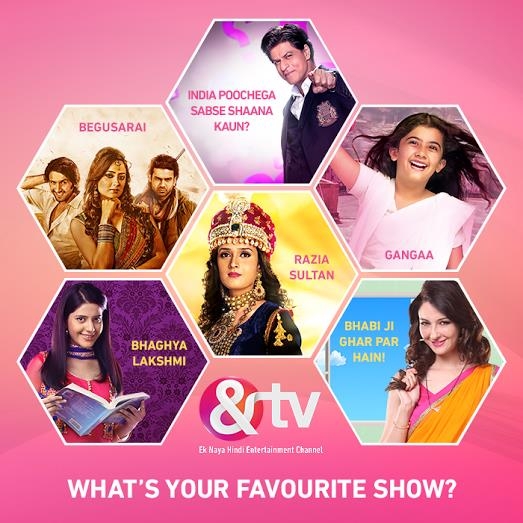
    Be it &TV’s flagship show hosted by Shah Rukh Khan, India Poochega – Sabse Shaana Kaun? or the strong fiction line up with shows like Razia Sultan, Bhaghyalakshmi, Gangaa, Begusarai, Bhabi Ji Ghar Par Hai!, and the weekend offerings with Killerr Karaoke and Tujhse Naaraaz Nahi Zindagi; the programming seems to have irked the curiosity of audiences enough to tune in and spend time on the channel’s fare. 


    Innovative ad strategies


    The network strategized its ad sales differently for &TV. Rather than choosing to sell spots, the team roped in advertisers as “presenting” or “powered by” or “associate sponsors” for almost all of the new shows and allocated all the FCT to them, depending on the show. A media planner reveals that 40 per cent of ad inventory per episode was reserved for associate sponsors while the rest was for the title sponsor.


    For instance, Unilever India’s Rin was signed on as  the presenting sponsor for its flagship property, India Poochega- Sabse Shaana Kaun, while,  Pan Vilas and DHFL opted to become  ‘powered by’ sponsors. Then for  Raziya Sultan, the channel got on board Venus as the presenting sponsor and Clean and Dry as the ‘powered by’ sponsor. Begusarai, meanwhile, is presented by Pan Bahar and powered by Quickheal and Ghadi Detergent. Vicco is the presenting sponsor for Gangaa and the show is powered by Libero and Ghadi.


    On the social media front, the &TV team left no stones unturned to create the buzz. The &TV Facebook page had got over 133,253 likes, while its twitter handle @AndTVofficial had more than 11,000 followers, at the time of writing this article. The YouTube landing page had &TV splashed all over it; as did indiantelevision.com on 2 March.
     

    Promos for its shows have been hitting sister channels &Pictures and Zee TV with high regularity. A high decibel out of home campaign across Hindi speaking markets has been working as a strong reminder medium for potential viewers.

    With a distribution and marketing budget of around Rs 100 crore, Zeel managed to get great placement on almost all the major distribution platforms: DEN Networks, Siti Cable, Hathway, Incable, Tata Sky, Videocon d2h and Dish TV. In fact, on most networks it was placed even before Star Plus and Zee TV.


    Industry reacts


    Helios Media managing director Divya Radhakrishnan believes that &TV has got a decent combination of reality shows, mythology, regular fiction and comedy shows. “&TV ratings have been exactly what I forecasted. The channel managed to do well and the distribution was excellent. They launched a great marketing campaign and had a key differentiator in the Shah Rukh Khan show. For a person who is going to sample a new channel, there has to be something, which is compelling enough to switch on the TV and watch the new channel. Such experiments obviously bring them initial eyeballs,” Radhakrishnan says.


    She further explains that in week 10 of TAM TV in 2015, the viewership ratings in the GEC space have grown by five per cent. According to Radhakrishnan, the channel has clocked around 42 GRPs on a five and a half day basis, which is roughly about 55 GRPs over a seven day prorata basis.


    “That is exactly the same amount of GRPs the genre has grown by. GECs have grown by 55 GRPs. This doesn’t mean that people switched from one channel to another. It means they also have included 42 GRPs into the consumption and it is quiet acceptable in the GEC space, because the people who watch GECs are the ones who watch a lot of TV and they will happily include something new to their TV mix if the content interests them.”


    A senior executive from a rival channel believes that 42 GRPs is a good number to open with. “This shows that there is more elasticity in the sector and it also opens it up  to newer players and gives them hope that the GEC space has legs,” the executive says.


    It may be recalled that during the launch Goenka was confident that the channel would break even in three years if it does exceptionally well and five years if it does reasonably well. On the same lines, a senior executive from a rival channel feels that if the channel continues at the same pace it might break even in the next three years.


    Going by its opening numbers, it looks like a success story is beginning to be penned in the  Indian television space. And as Colors CEO Raj Nayak puts it, that while the channel has had a decent launch, it is imperative that it builds from here on and carves a continuous mindspace for itself in the cluttered Hindi GEC space.

    Well, that will be team &TV’s next big challenge! Watch this space!

  • Marketing, promotion the &TV way

    Marketing, promotion the &TV way

    And in 2015 a new benchmark has been set on how to launch a new channel in the hyper competitive and challenging Indian TV ecosystem. We are referring to the effort that is being put behind the unveiling of Zee Network’s &TV on 2 March.


    In what could be labelled as an extremely well coordinated exercise, the brand has been in your face everywhere you go… in the streets, on television, in print, on radio, online and in social conversation. Estimates are that the network has laid out an advertising and marketing war chest of more than Rs 100 crore. All that is left is for Prime Minister Narendra Modi to come out and endorse it! Or the once again emerging common man’s political and social poster boy – Delhi’s chief minister Arvind Kejriwal to mention it.


    India’s oldest and most successful television and media industry monitor Indiantelevision.com has also been roped in as a partner by India’s oldest television network for the &TV launch. Hence, you will see a coordinated activity on the site. The ‘Indian’ in our masthead has been merged with one of the key messages it is trying to convey: television in our country will now be referred to as &ndiantelevision. Every ‘and’ reference in our stories has been replaced by the channel’s logo. We were more than willing to partake of this marketing and social experiment, as it is only for a day.


    It is a messaging and marketing innovation, which we believe has not been done before, and will definitely merit a case study going forward. We believe the more discerning and progressive will see it as such. It is an era of partnerships, and who else but Indiantelevision.com (which has been serving at least two generations of leadership and several more generations of low – and mid-management in the privately run television industry since it started in the early nineties) would dare to venture to take this pioneering step.


    Clearly, what was once perceived as a conservative and ‘Lala’ media group has engineered a campaign that would do any of the more experienced marketing mavens in Unilever India or Procter & Gamble or Coke or Pepsi proud.


    There is ample reason for the Subhash Chandra promoted and now run by his son Punit Goenka, Zee Network to go into a marketing overdrive for &TV. The channel is launching in the thick of cricket season: the exciting World Cup is on and Dhoni’s team has once again found its form. This is exciting India’s cricket mad TV viewers to start visualizing and wanting another India victory in the prestigious once in four years prize. Ratings for Star Sports have been like never before and around half of the Indian TV viewing audience stayed glued to their TV set to watch our men in blue thrash the boys in green from Pakistan in India’s opening match. Even repeat telecasts were tuned in to later in the evening, as were the analysis and magazine shows on Star Sports.


    While the World Cup will culminate end-March, it will soon to be followed by the slam bam version of the gentleman’s game the money spinning Indian Premier League (IPL) on the Sony Entertainment network in April. Even though riddled with controversy, the cricket league has been attracting eyeballs over the years. And should continue to do so in the 2015 season too.

    If one were to be a critic and point out a single flaw in the &TV campaign, it could be the over dependence of the channel on projecting one programme – the Shah Rukh Khan-hosted India Poochega Sabse Shaana Kaun. While it is a good strategy to use arguably India’s best known Bollywood face and the second richest actor in the world, it also means the show will have to measure up and meet the expectations it has raised in the minds of viewers. Yes, two other shows Razia Sultan and Begusarai are also being promoted but the decibel levels are lower than that for the Shah Rukh show. And Shah Rukh has not really set the small screen on fire in his earlier sojourns as the host of shows like Zor Ka Jhatka, Kaun Banega Crorepati or Kya Aap Paanchvi Pass Se Tez Hain, though the telecast of his films on TV has been good reason for viewers to stay put at home in the past.


    However, Goenka like his father is emerging as a business executive who is willing to take risks – some may say an expensive one. But the fact is that if the show catches on, he could well end up getting loads of praises and advertising dollars. If it doesn’t it could well prove a driver for other shows on the channel.


    Colors used this strategy at the time of its launch: Akshay Kumar became its  face, and though his Khatron Ke Khiladi did not get very high numbers as one would have expected, it worked like a magnet and drew audiences into the channel’s other shows and positioned Colors in the minds of viewers as an edgy and differentiated channel.


    If that is the strategy that Goenka and the &TV team lead by Rajesh Iyer are following (Iyer was associated with the Colors launch as well), then the other shows will have to really deliver. Prima facie the Zee Network seems to have raised the bar on production values if one looks at the shows on its new offering. The effort has been to keep the story telling and narrative for its fiction shows differentiated. Hopefully, India’s general entertainment viewers perceive the effort as such with &TV too.


    The new GEC is also launching at the time when a new TV viewership measurement system BARC is about to start rolling out its services. Who knows what surprises it may throw up as it has used newer metrics for placing its viewership meters in its 20,000 strong universe. The surprises could well end up working in the Zee Network’s and &TV’s favour.


    However, recent efforts to innovate in India’s Hindi general entertainment genre with linear channels have met with a rather tepid response. Star’s Life OK shone briefly, Zee TV’s Zindagi got critical acclaim but limited audiences and Sony Entertainment’s Pal was not well received by viewers.


    We will know soon enough whether &TV has what it takes. For that, it’s over to the audience.

  • Q3-2015: Dish TV reports improved performance, lower loss

    Q3-2015: Dish TV reports improved performance, lower loss

    BENGALURU: In its earnings release today, India’s largest DTH operator, Dish TV Limited (Dish TV) informed the bourses that its net subscriber base in Q3-2015 had gone up to 1.25 crore, the company says that it has added a net of 4.16 lakh subscribers in this quarter. In Q3-2014, the company has added net 2.2 lakh subscribers in Q3-2014 and 3.78 lakhs subscribers in Q2-2015. The company says further that its average revenue per user (arpu) is Rs.177, versus an arpu Rs 166 in Q3-2014 and Rs 172 in Q2-2015.


    Note:  100,00,000 = 100 Lakh  = 1 crore = 10 million


    Dish TV’s total income from operations (TIO) has gone up by 16.5 per cent in Q3-2015 to Rs 713.88 crore from Rs 612.82 crore in Q3-2014 and was 6.2 per cent more than Rs 672.35 crore in Q2-2015. During 9M-2015, Dish TV’s TIO at Rs 2026.93 crore was 13.6 per cent more than the Rs 1783.78 crore in 9M-2014.


     The company has reported a lower loss of Rs 2.87 crore in Q3-2015 as compared to a loss of Rs 38.25 crore in Q3-2014 and a loss of Rs 15.07 crore in Q2-2015. In 9M-2015, Dish TV’s loss at Rs 33.98 crore was less than half the loss of Rs 84.63 crore in 9M-2014.


    The company reported subscription revenue for the quarter was Rs 655.4 crore up 17.4 per cent y-o-y.


    Let us look at the other figures reported by Dish TV :-


    Dish TV’s Total expenditure (TE) in Q3-2015 at Rs 684.26 crore (95.9 per cent of TIO) was 8.5 per cent more than the Rs 630.68 crore (102.9 per cent of TIO) in Q3-2014 and 3.4 per cent more than the Rs 661.92 crore (98.5 per cent of TIO) in Q2-2015. In 9M-2015, TE at Rs 1975.07 crore (97.4 per cent of TIO) was 8.5 per cent more than the Rs 1819.87 crore (102 per cent of TIO) in 9M-2014.


    The company’s programming content and other costs (programming cost) in Q3-2015 at Rs 198.86 crore (27.9 per cent of TIO) was almost the same as the Rs 198.87 crore (32.5 per cent of TIO) in Q3-2014 and 3.1 per cent more than the Rs 192.87 crore (28.7 per cent of TIO) in Q2-2015. 9M-2015 programming cost at Rs 593.13 crore (29.3 per cent of TIO) was 2.8 per cent more than the Rs 576.87 crore (32.3 per cent of TIO) in 9M-2014.


    Dish TV paid 18.7 per cent higher license fees at Rs 75.35 crore (10.6 per cent of TIO) in Q3-2015 as compared to the Rs 63.48 crore (10.4 per cent of TIO) in Q3-2014 and 7.8 per cent more than the Rs 69.87 crore (10.4 per cent of TIO) in the immediate trailing quarter. License Fees in 9M-2015 at Rs 210.66 crore (10.4 percent of TIO) was 13.5 percent more than the Rs 185.56 crore (10.4 percent of TIO) in the corresponding period of last year.


    The company’s commission expense at Rs 69.07 crore (9.7 per cent of TIO) was 37.1 per cent higher than the Rs 50.37 crore (8.2 per cent of TIO) in Q4-2013 and 13.7 per cent more than the Rs 60.74 crore (9 per cent of TIO) in Q2-2015. Commission expense in 9M-2015 rose 39.3 percent to Rs 185.33 crore (9.1 percent of TIO) from Rs 133.02 crore (7.5 percent of TIO) in 9M-2014.


     Dish TV’s other selling and distribution expense for Q3-2015 at Rs 43.99 crore (6.2 per cent of TIO) was 26.8 per cent more than the Rs 34.69 crore (5.7 per cent of TIO) in Q3-2014 and 18.2 per cent lower than the Rs 53.8 crore (8 per cent of TIO) in Q2-2015. In 9M-2015, other selling and distribution expense t Rs 135.65 crore (6.7 per cent of TIO) was 17.2 per cent more than the Rs 115.76 crore (6.5 per cent of TIO) in 9M-2014.


    The company’s costs is Q3-2015 increased 59 per cent to Rs 47.86 crore (6.7 per cent of TIO) from Rs 30.10 crore (4.9 per cent of TIO) in Q2-2014 and was 12.6 per cent more than the Rs 42.51 crore (6.3 per cent of TIO) in Q2-2015. The company’s costs in 9M-2015 increased 29.8 per cent to Rs 129.84 crore (6.4 per cent of TIO) from Rs 100.04 crore (5.6 per cent of TIO) in 9M-2014.


     “Dish TV recorded marked improvements in its key financials while maintaining market supremacy during the third quarter of fiscal 2015. Overall, the DTH industry led by Dish TV recorded a healthy 29 percent y-o-y growth in gross additions compared to the corresponding quarter last fiscal,” said Dish TV chairman Subhash Chandra.


    Highlighting Dish TV’s third quarter performance Dish TV managing director Jawahar Goel said, “We continued to strengthen our reach in phase 3 and 4 towns much ahead of the government mandated revised deadline for digitisation in those markets. Our bouquet of offerings including fully loaded sports packs and High Definition (HD) packages helped us fill in the expectation gap in phase 1 and 2 households as well. The recently launched ‘Zing’ has been a successful product and now caters to eight regional markets with the latest being Tamil Nadu.”

  • Q3-2015: Zeel PAT up 44.5%; income up 14.8%; ad revenue up 8.5%

    Q3-2015: Zeel PAT up 44.5%; income up 14.8%; ad revenue up 8.5%

    BENGALURU: The Subhash Chandra-led content and broadcast player Zee Entertainment Enterprises Limited (Zeel) reported a 44.5 per cent hike in y-o-y PAT to Rs 308.61 crore (22.6 per cent of Total Income from Operations or TIO) in Q3-2015 from Rs 213.59 crore (18 per cent of TIO) in Q3-2014 and a 36 per cent increment from the Rs 227 crore (20.3 per cent of TIO) reported in the previous quarter. The company’s year to date (YTD) PAT at Rs 746.73 crore was 10.7 per cent higher than the Rs 674.5 crore during 9M-2014.


    Zeel reported 14.8 per cent higher TIO in Q3-2015 at Rs 1363.72 crore as compared to Rs 1188.36 crore in the corresponding quarter of last year and 22 per cent more than the Rs 1117.82 crore in Q2-2015. TIO for 9M-2015 at Rs 3536.60 was 8.4 per cent more than the Rs 3262.89 crore in 9M-2014.


    The company’s advertisement revenue in Q3-2015 at Rs 742.6 crore (54.5 per cent of TIO) was 8.5 per cent more than the Rs 683.41 crore (57.6 per cent of TIO) in Q3-2014 and 18.6 per cent more than the Rs 625.94 crore (56 per cent of TIO) in the immediate trailing quarter. During 9M-2015, ad revenue increased 10.7 per cent to Rs 1990.64 crore (56.3 per cent of TIO) from Rs 1797.69 crore (55.1 per cent of TIO) in 9M-2015.


    Let’s look at the other results reported by Zeel:


    Zeel reported a 2.3 per cent drop in subscription revenue to Rs 446.13 crore (32.7 per cent of TIO) from Rs 456.49 crore (38.4 per cent of TIO) in Q3-2014, but reported 5.1 per cent higher subscription revenue than the Rs 424.45 crore (38 per cent of TIO) in the immediate trailing quarter. Zeel says that due to a change in arrangements with various operators across international territories, the reporting of subscription revenue for the current year has undergone a change and is not comparable to the with the figures of previous years.


    The company’s other income in Q3-2015 more than tripled (up 3.68 times) to Rs 174.99 crore from Rs 47.56 crore in the corresponding quarter of last year and more than doubled (up 2.6 times) the Rs 67.43 crore in Q2-2015. Other Income in 9M-2015 at Rs 263.25 crore more than doubled (up 2.1 times) as compared to the Rs 126.52 crore in 9M-2015.


    Zeel’s Total Expenditure (TE) in Q3-2015 at Rs 1027.36 crore (75.3 per cent of TIO) grew 12.8 per cent from Rs 911.10 crore (76.7 per cent of TIO) in Q3-2014 and was 26.7 per cent more than the Rs 810.75 crore (72.5 per cent of TIO) in Q2-2015. 9M-2015 TE at Rs 2603.57 crore (73.6 per cent of TIO) was 8.4 per cent more than the Rs 2401.39 crore (73.6 per cent of TIO) in 9M-2014.


    Operation cost in Q3-2015 at Rs 645.57 crore (47.3 per cent of TIO) was 5.9 per cent more than the Rs 609.50 crore in Q3-2014 and 32.3 per cent more than the Rs 470.30 crore (42.1 per cent of TIO) in Q2-2015. Operation cost in 9M-2015 at Rs 1519.25 crore (43 per cent of TIO) was 0.3 per cent lower than the Rs 1524.37 crore (46.7 per cent of TIO) in 9M-2014.


    Zeel’s Employee Benefit Expense (EBE) in Q3-2015 at Rs 109.27 crore (8 per cent of TIO) was 14 per cent more than the Rs 95.86 crore (8.1 per cent of TIO) in Q3-2014 and was 1.2 per cent more than the Rs 107.96 crore (9.7 per cent of TIO) in Q2-2015. EBE during 9M-2015 at Rs 328.94 crore (9.3 per cent of TIO) was 13.2 per cent more than the Rs 290.68 crore (8.9 per cent of TIO) in 9M-2014.


    Zeel chairman Subhash Chandra said, “Our quarterly performance reflects the investments that Zee is making to grow its business and market share. We will continue to pursue growth opportunities, which would enhance long term shareholder value.”


    Zeel managing director and chief executive officer Punit Goenka added, “We had a good quarterly performance reflecting the industry wide trend. On the domestic subscription front, we grew in low double digit figures during the quarter. On a sustained basis, we are growing in high single digits on domestic subscription revenues. Implementation of digitization in the remaining parts of the country will push the growth momentum further.”