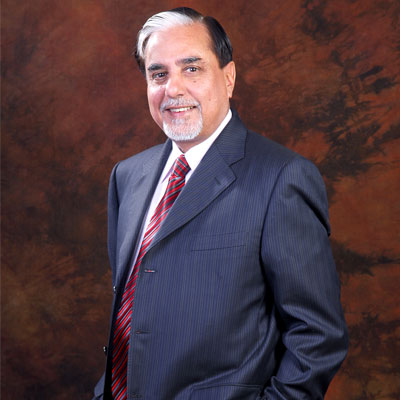
Tag: Subhash Chandra

  • Q2-2016: Higher ad & subscription revenues drive Zeel income up by 17%; EBIDTA up 22%

    Q2-2016: Higher ad & subscription revenues drive Zeel income up by 17%; EBIDTA up 22%

    BENGALURU: The Subhash Chandra led content and broadcast player Zee Entertainment Enterprises Limited (Zeel) reported a 26.8 per cent YoY hike in advertisement revenue in the quarter ended 31 December, 2015 (Q3-2016, current quarter) to Rs 941.88 crore (59 per cent of of Consolidated Total Revenue or TR) as compared to the Rs 742.60 crore (54.5 per cent of TR) and 11.7 per cent higher QoQ from Rs 843.31 crore (60.9 per cent of TR). Subscription revenue in the current quarter also increased 17 per cent YoY to Rs 521.80 (32.7 per cent of TR) as compared to the Rs 446.13 crore (32.7 per cent of TR) and 8.9 per cent higher YoY as compared to the Rs 479.14 crore (34.6 per cent of TR).


    Note: 100,00,000 = 100 lakh = 10 million = 1 crore


    EBIDTA in the current quarter increased 21.8 per cent YoY to Rs 439.19 crore (27 per cent margin) as compared to Rs 353.33 crore (25.9 per cent margin) and was 21.3 per cent higher QoQ as compared to Rs 356.43 crore (25.6 per cent margin).


    Profit after Tax (PAT) in Q3-2016 however declined 10.9 per cent YoY to Rs 275 crore (17.2 per cent margin) as compared to Rs 308.61 crore (22.6 per cent margin), but increased 11.2 per cent QoQ as compared to Rs 247.4 crore (17.9 per cent margin).


    The company’s TR in Q3-2016 increased 17 per cent YoY to Rs 1595.08 crore as compared to the Rs 1363.72 crore and increased 15.2 per cent QoQ from Rs 1384.90 crore.


    Zeel’s TR during the nine-month period ended 31 December, 2015 (9M-2016) increased 22.1 per cent to Rs 4319.84 crore from Rs 3536.60 crore in 9M-2015. Advertising revenue increased 28.9 per cent to Rs 2656.13 crore (59.4 per cent of TR) in 9M-2016 from Rs 1990.64 crore (56.3 per cent of TR) in the corresponding year ago period. Subscription revenue in 9M-2016 at Rs 1463.46 crore (33.9 per cent of TR) increased 14.1 per cent from Rs 1282.71 crore (36.3 per cent of TR) in 9M-2015.


    PAT for the current nine-month period increased 2.6 per cent to Rs 766.16 crore (17.7 per cent margin) from Rs 746.73 crore (21.1 per cent margin) in 9M-2015.


    Let us look at the other results reported by Zeel for Q3-2016 and 9M-2016:


    Total Expense (TE) in Q3-2016 at Rs 1185.01 crore (74.3 per cent of TR) increased 15.3 per cent YoY from Rs 1027.36 crore (75.3 per cent of TR) and increased 12.9 per cent QoQ from Rs 1050.05 crore (75.8 per cent of TR).


    Zeel’s operating cost increased 8.8 per cent YoY to Rs 702.34 crore (44 per cent of TR) as compared to the Rs 644.57 crore (47.3 per cent of TR) and increased 16.4 per cent QoQ from Rs 603.62 crore (43.6 per cent of TR).


    Other expense in Q3-2016 increased 25 per cent YoY to Rs 211.97 crore (13.3 per cent of TR) from Rs 169.63 crore (12.4 per cent of TR) and increased 18.4 per cent QoQ from Rs 126.70 crore (9.1 per cent of TR).


    Advertisement and Publicity expense in the current quarter increased 41.7 per cent YoY at Rs 121.77 crore (7.6 per cent of TR) from Rs 85.92 crore (6.3 per cent of TR) and was 0.7 per cent more QoQ than Rs 120.90 crore (8.7 per cent of TR).


    Company speak


    Chandra said, “Zee saw an impressive performance in the third quarter. We grew ahead of the market through improved performance of our existing channels as well as new channels. Our vision is to provide long term sustainable growth to our shareholders. Our investments continue to provide us with positive results. We will continue to identify and pursue profitable investment opportunities that will enable us to join the ranks of world’s leading media companies and become the first Indian media company to do so.”


    Zeel managing director and CEO Punit Goenka added, “Continuing in line with our robust performance in the previous few quarters we have witnessed steady growth in the third quarter of fiscal 2016 as well. The advertisement market growth continued its upward trajectory this quarter further aiding our growth while the subscription market witnessed steady growth as well. This quarter saw the rollout of BARC in the rural areas, which demonstrated the strength of our channels in the hinterlands of the country.”


    Speaking about the outlook of the business, Goenka continued, “With more than 210,000 hours of content Zee is the leading content player in the Indian TV industry offering quality entertainment to audiences both home and abroad. Our chief focus will remain on creating innovative and high quality entertainment that can be delivered to audiences across consumption platforms. We believe that providing excellent content will remain key for monetising revenues, from both advertising and subscription standpoint. Going forward, we will further enhance our offerings on various platforms.”

  • Essel’s Living Foodz plans HD channel; eyes APAC expansion

    Essel’s Living Foodz plans HD channel; eyes APAC expansion

    MUMBAI: It’s been three months since Subhash Chandra’s Essel Group launched its international food and lifestyle channel Living Foodz and plans are already afoot for expansion.

    The channel is planning to launch its High Definition (HD) version in the coming year with separate programming. What’s more, with an emphasis on increasing the genre size and brand visibility in 2016, the channel is also planning to expand its footprint into the Asia Pacific region.

    “The key player behind our success is the differentiated programming on our channel. The expansion will help us broaden our viewer base as well as increase subscription revenues. Expanding the client base here will be one of the key challenges in the coming months, but with Helios Media as our revenue partner, we are confident of setting new benchmarks in monetisation,” Living Foodz business head Amit Nair tells Indiantelevision.com.

    Living Foodz has outsourced its ad sales to Helios Media, a specialty services company for broadcasters headquartered in Mumbai. “Helios understands the clients well and manages to give them effective solutions. They cover a bunch of clients, which has led to an increase in the revenues,” adds Nair.

    The Living brand will manifest itself as a multi-platform brand business across various avenues like television, web, social platforms, mobile, etc.

    On the content front, Living Foodz has ambitious plans in place for the food space in terms of reality and experiential cooking. The channel plans to launch big ticket properties every quarter and buzz creating shows in 2016. These key tentpole properties will drive viewership in a way that the audience finds the stories intriguing and entertaining. According to Nair, the audience needs Indian food stories with interesting anchors and chefs. “We are strategically targeting at the Indian subcontinent with an aim of supplying 100 per cent original home-grown content to our viewers,” he says.

    Moving out of the confines of a conventional kitchen into a world of entertainment and adventure, the channel will be exploring the evolving social status of food in the food ecosystem.

    While Nair strongly feels that technology is not a barrier in India, lifestyle products or feature entertainment are still in a nascent stage to make the shift into 4K. “The infrastructure and the content that is available in India are not sufficient enough for a 4K conversion,” he adds.

    The food space has seen exponential growth and interest across the board from food technology to food discovery to the myriad food festivals that have become part of the calendar. “Today, audiences are willing to sample exotic culinary by travelling to that region. They are ready to push their boundaries to experiment. I think food as a lifestyle has arrived this year on. Celebrity chefs are now at the same level as a movie star or a sportsperson and it’s tremendously rewarding to see TV channels like Living Foodz playing such an important role in driving this zeitgeist,” adds a media planning and buying veteran on condition of anonymity.

    On the advertising front, Living Foodz has a diverse number of clients ranging from FMCG, automobile segment, home electronics, e-commerce, broadcasters, office equipment and pure lifestyle products along with the regular food category clients that advertise on the channel.

    “Living Foodz ticks all the right boxes when it comes to the quality of content, packaging and exciting set of anchors and chefs. It all nicely comes together in what we like to call food-tainment. Advertisers have always played an aggressive role behind the success of a channel and are always looking out for premium audiences in the right space,” says Nair.

    Brands like Philips, Canon, Fitbit, Fortune, General Motors, HCL, Toyota and Go are already a part of the channel’s inventory. “The fact that food is lifestyle has now been established in the market with our meticulous positioning exercise. All the channels in the lifestyle segment have a substantial time devoted to food based content. Hence a lot of brands, which were earlier advertising in the lifestyle segment have started advertising with us,” adds Helios Media COO Bala Iyengar.

    Come February 2016, Living Foodz is also planning to launch its website with unique culinary experience for viewers. Additionally, keeping the constant partial attention of consumers in mind, the channel will also unveil a mobile application for the convenience of its viewers. This will enable consumers to lap up content on the go. The mobile application is also expected to be launched in early 2016.

    Launch plans for Living Entertainment’s four other channels, which were announced earlier this year, will be disclosed in 2016.

  • Zee TV strengthens weekend with Janbaaz Sinbad

    Zee TV strengthens weekend with Janbaaz Sinbad

    MUMBAI: The general entertainment channel of media mogul Subhash Chandra’s media conglomerate, Zee TV, is all set to take Sunday programming one notch higher with its new offering Janbaaz Sinbad at the 7pm time slot.  


    The new fiction show has been pitched against Star Plus’ top rated prime time soaps Saath Nibhaana Saathiya and Yeh Hai Mohabbatein. This could just be a beginning of a new era in television. So far only Star was experimenting with original content on Sunday, but with the entrance of Zee, the competition is sure to to heat up. There are other GEC’s too which are exploring weekend opportunities according to sources. 


    “Jointly produced by Sagar Pictures and Ashvini Yardi, Janbaaz Sinbad will be a one hour long weekend show. The show will hit TV screens from 27 December,” informed a source close to the development. 


    Speaking to Indiantelevision.com, Sagar Pictures producer Meenakshi Sagar said, “Janbaaz Sinbad is about the adventure of Sinbad and good versus. evil. So audiences will see a very different side through this show that they haven’t watched yet on Indian television. The fantasy and adventure genre has not been yet explored much on Indian television since a very long time, so to capture that market we came up with Sinbad.


    Meenakshi informed, “It will be longer than a 45 mins show because every episode is like a movie, and that cannot be shown in a shorter duration. There is drama, adventure and action which required more than 45 mins.”


    Janbaaz Sinbad is set in the realms of fictional fantasy – the story of an adventure hero on a voyage to discover the undiscovered. Sinbad the sailor gets thrown into a tumultuous journey across every sea, through dangerous face-offs with wizards, sorceresses, strange tribes and creatures. His quest is not one of tiding over the mere manifestations of evil, but uprooting evil itself. 


    “Advertisers are looking for eyeballs, so its up to the audience whether they accept the time band or not. As of now, in terms of viewership for early evening time slot that I can recall, the numbers are not lucrative,” said a senior media planner on the condition of anonymity. He further added, “Ads rates are based on viewership and keep changing. Higher the viewership, higher will be the ad rates.”  


    &TV has no original content airing on the Sunday 7pm time slot, while Life OK airs Savdhaan India: India Fights Back repeat telecast at 7pm. Sony Entertainment Television has a CID repeat telecast on during the same time band. Sab TV telecasts Tarak Mehta Ka Oolta Chashma (Repeat) and Colors starts its original programming at 8 pm time band with its new weekend fiction show Naagin.    


  • Gaurav Seth teams up with Suleman Quadri to start Purple Canvas Creation

    Gaurav Seth teams up with Suleman Quadri to start Purple Canvas Creation

    MUMBAI: The speculations are over, ex Sony India senior vice president Gaurav Seth who exited Sony on September after a six and half year stint with the broadcaster has started his own ventures Purple Canvas Creations. He is the Co- founder and partner in the venture. Ex-creative director of Sony Suleman Quadri is the other partner involved in the venture. 


    Purple Canvas Creations is a new content creation powerhouse formed by two partners, hungry to create differentiated content across platforms. With it’s first TV series, about to get underway, Purple Canvas Creations aims to quickly establish a toehold in the media eco-system as a content provider both in the commissioned and original space.


    “We are currently working on Crime Patrol for Sony, this is our first project. We will also foray into digital in near future” says Seth speaking to Indiantelevision.com.


    Seth started his career with ESPN-Star Sports as marketing manager in 1997. After six years in the organisation, he moved to Altavista Inc as country head in 2003, where he was responsible for brand development, website traffic growth and advertising revenue.


    In 2004, he moved to join Zee Telefilms (now Zee Entertainment Enterprises Ltd) as vice-president, marketing. At Zee, he took care of the group’s sports brands and business.


    Seth then moved on to join Subhash Chandra-led Essel Group new venture Indian Cricket League, India as vice-president in 2007, where he headed the marketing and communications role.


    Merely a couple of months after that, he moved on to join Vyas Giannetti Creative Sports as business head in 2008. At the end of 2008, he joined SET India as senior vice-president, marketing for Sony Max.

  • Q2-2016: Siti Cable revenue up 6.8% at Rs 234.2 crore

    Q2-2016: Siti Cable revenue up 6.8% at Rs 234.2 crore

    BENGALURU: The Essel Group’s Subhash Chandra led Siti Cable Network Limited (Siti Cable) reported 6.8 per cent YoY growth in operating revenue (total income from operations, or TIO) for the quarter ended 30 September, 2015 (Q2-2016, current quarter) at Rs 234.21 crore from Rs 219.25 crore and a 2.7 per cent QoQ increase from Rs 228.09 crore.


    Note: 100,00,000 = 100 lakh = 10 million = 1 crore.

    (2) All numbers in this report are consolidated unless stated otherwise.


    EBIDTA including other income in the current quarter increased 12.5 per cent YoY to Rs 51.53 crore (22 per cent margin) from Rs 45.79 crore (20.9 per cent margin) and increased 35.2 per cent QoQ from Rs 38.10 crore (16.7 per cent margin).


    The company reported a loss of Rs 22.92 crore (almost flat) YoY as compared to the loss of Rs 22.87 crore, but lower than the loss of Rs 27.71 crore in Q1-2016.


    Subscription numbers


    The company says that it added 3.30 lakh digital video subscribers in the current quarter as compared to two lakh additions in the immediate trailing quarter. Its digital cable subscriber base has increased 59 lakh from 56 lakh. Overall the company claims a cable subscriber base of 107 lakh, same as the corresponding quarter of last fiscal.


    Subscription revenue in the current quarter increased 2.6 per cent YoY to Rs 138.50 crore from Rs 135 crore and increased 7.4 per cent QoQ from Rs 129 crore. Carriage revenue in the current quarter increased 2.7 per cent YoY to Rs 60.30 crore from Rs 58.70 crore but reduced 17.3 per cent QoQ from Rs 72.90 crore. 


    Activation revenue in the current quarter increased 78 per cent to Rs 19.40 crore from Rs 10.90 crore in the corresponding year ago quarter and increased 48.1 per cent from Rs 13.10 crore in the immediate trailing quarter.


    Siti Cable says that it has added 16,950 broadband subscribers in Q2-2016, taking its broadband subscriber base 91,450 from 74,500 in the previous quarter. Broadband revenue increased 50 per cent YoY in Q2-2106 to Rs 9.30 crore from Rs 6.20 crore and increased 3.3 per cent QoQ from Rs 9 crore.


    Let us look at some of the other numbers reported by Siti Cable:


    The company’s Total Expenditure in the current quarter increased 9.2 per cent YoY to Rs 228.09 crore (97.4 per cent of TIO) from Rs 208.89 crore (95.3 per cent of TIO) and was flat (declined 0.05 per cent) QoQ as compared to Rs 228.21 crore (100.1 per cent of TIO).


    Pay channel costs in the current quarter increased 5.8 per cent to Rs 124.01 crore (52.9 per cent of TIO) as compared to Rs 117.23 crore (53.5 per cent of TIO), but declined 8.6 per cent QoQ from Rs 135.70 crore (50.5 per cent of TIO).


    Other expenses increased 4.8 per cent in the current quarter to Rs 50.07 crore (21.4 per cent of TIO) as compared to Rs 47.77 crore (21.8 per cent of TIO) and increased 15.6 per cent from Rs 43.32 crore (19 per cent of TIO) in Q1-2016.


    Siti Cable’s finance costs in the current quarter increased 15.8 per cent YoY to Rs 34.27 crore (14.6 per cent of TIO) from Rs 29.58 crore (13.5 per cent of TIO) and increased 1.1 per cent QoQ from Rs 33.90 crore (14.9 per cent of TIO).


    Company Speak


    Siti Cable executive director and CEO V D Wadhwa said, “A focus on improved operational performance resulted in EBITDA growth of 35.2 per cent and EBITDA Margin at 21.2 per cent, an expansion by 467 bps sequentially. We are looking to further streamline our Broadband operations to provide stellar customer experience. Our commitment to digitisation of Phase 3 areas remains and we expect this to gain further momentum in the coming quarter.”

  • ‘If you can’t take people to theatre, take theatre to people:’ Shailja Kejriwal

    ‘If you can’t take people to theatre, take theatre to people:’ Shailja Kejriwal

    A pioneer in the Indian media and broadcast industry, Zee Entertainment Enterprises Ltd chairman and Essel Group promoter Dr Subhash Chandra has been a major force to reckon with for more than two decades now. With his exemplary vision and forward thinking, he has always been a step ahead in the game.


    While over the years, he has consistently demonstrated his ability to identify new businesses and lead them on the path to success; this time round too, Chandra has deftly raised the curtains on something that no one else has done before in India. In a bid to restore theatre’s glory and culture in India and give it its due, Chandra has launched a new vertical called Zee Theatre, which will not only boost the art form in the country but will also make it available across platforms.


    It wouldn’t be incorrect to say that television, films, video, satellite and digital’s gain has been theatre’s loss in more ways than one. It was also the lack of facilities, infrastructure, less revenue and diminishing audience, which led to theatres being converted into movie cinema halls. And therein rose theatre artists like Nasseruddin Shah, Om Puri, Shah Rukh Khan, Nawazuddin Siddiqui, Shabana Azmi and their ilk, who then stepped into the film world.


    In conversation with Indiantelevision.com, Zeel chief creative – special projects Shailja Kejriwal speaks about the new vertical and the company’s plans ahead.


    Excerpts:


    Was the idea behind this initiative? Why Zee is showing interest in theatre? 


    Zee as a broadcaster has been known for doing new things in cable satellite television. We are constantly trying to create something new for the audience in terms of content. These days the entertainment industry is trying to outsource content from overseas and remake it. We want to change that and look in our own country for content, which has not yet been used and is ignored.


    Firstly, we want to invert the cycle of importing content. Our aim is to show the world the rich traditional culture of India. Secondly, while earlier people had to travel to see and enjoy theatre, now they can watch it on the internet, mobile, DTH, television, in-flight as well as at screenings in multiplexes. If they want to watch it live, they have also the option of watching the live shows that we will be doing.


    Our idea is to take theatre to the maximum number of people so that everybody can enjoy the content.


    What kind of content will Zee Theatre focus on?


    We will be starting with India first. We have a very rich culture in theatre with plays in multiple languages like Marathi, Gujarati, Bengali etc. With over 5000 year old traditions of Natya Shashtra, India has numerous plays right from Kalidasa to absolutely modern plays. 


    Our focus will be on Indian plays first and then of course later we will open up to the rest of the world. In the beginning, we want to offer all kind of theatre content to our audiences and later we will be looking at some plays, which we can adapt in Hindi. We have classic plays like Hamida Bai Ki Kothi and Sandhya Chhaya, as well as musicals like Piya Behrupiya to modern ones like 30 Days of September.


    Will plays be adapted from other languages?


    Yes, absolutely! We are doing the production from the ground. We are going to take the script and translate it to Hindi, then we will cast for it, rehearse, do the whole production and then we will film it. That is the reason why we are ready to do live theatre as well as film theatre. We’ve started to make plays in Hindi first and then they can be subtitled and dubbed in all parts of the world.


    How is the response from founder sponsors and advertisers?


    Everybody is very positive and quite excited about the initiative. It is a new kind of content. We need to see more content, which is based in India. It boils down to the question of how long the audience will see the same kind of song and dance, chat shows and stand-up comedy. It has to change. It’s about time that the audience got something new apart from film and television. 


    Theatre has new genre of content; it has new kinds of stories, which have not been told before on films and television. Plays have relevant social messages and genres include comedy, news, musicals, tragedy, psychological thriller, fillers and more. So, advertisers are showing good interest for this project. We will be rolling out in early 2016 and will collaborate with sponsors then but as of now, brands that we have spoken to, have evinced interest.


    So far, Indian theatre has been under indexed and under pushed. Are you going to raise the bar for theatre production in India?


    Yes, that is exactly the reason why we ventured into this area. With our investment in theatre, we want to make grand sets and beautiful costumes. The biggest names in theatre are working with us and guiding us on how theatre works.


    For each play, we have two directors – a filming director and a theatre director. We are following the process involved in a film production so we will have a casting director, costume designer, set designer and every aspect to make it grand and raise the production quality. I believe audience will be happy to see a marked change in visual production quality.


    Is Zee Theatre looking at starting any festival of theatre plays?


    Yes, we are planning to start festivals for plays. We will be doing these on-ground and on-air too. Gradually we will be doing live theatre festivals as well as on cinema screens. Right now, we just want to make our intention in the space known and in 2016 we want to release it out on digital, cinemas, live and broadcast and take it forward.


    International theatre companies provide world class production quality. What are the new innovations you will be investing in for bringing in advanced technology and better quality production?


    We have a very skilled set of people who will be ideating on how to raise the bar for theatre in India. We have our crew from the movie business comprising sound recorders, set designers and fashion designers. On the other hand, most of our casting directors and actors have theatre as well as film background.


    Names like Uttara Baokar, who will be seen on television after 20 years is associated with us. We have theatre doyennesses like Mahasweta Devi, Dr Vijaya Mehta and Ranjeet Kapoor on board with us. Dr Mehta is a noted Indian film and theatre director, who will be directing a play after 1993.


    We sit with these stalwarts along with designers, light designers and everyone else involved while producing the plays. It has been very challenging because it is a new thing that we are trying to do.


    How will the production logistics work? Will you be working with other production houses?


    For now we are co-producing all the plays. We have people who will produce with us but as producers, we will take it forward.


    We are working with people who are from theatre and those who produce theatre, along with a set of expertise from television, for example people like Mukud Upadhayay and Romanchak Arora.


    A motley bunch of creative talent from television, theatre and films like cinematographers, editors and music directors have come together to make it possible.


    Who will own the play and script rights that are produced under Zee Theatre?


    We are going to take scripts from the biggest names in theatre from all parts of India and translate them it in Hindi for the production. We have acquired play rights from the likes of Vijay Tendulkar, Jaywant Dalvi, and Mahasweta Devi amongst others.


    Disney recently brought Broadway to India with superior quality production. Are there any plans to bring production from abroad?


    We want to take our culture abroad. Personally I don’t understand why we have to constantly look abroad to bring content here. Why can’t we take our content overseas? Our prime focus is on how we can take our content abroad. We do have a huge audience for theatre abroad, so why shouldn’t we take classics like Abhigyan Shakuntalam abroad? Our culture and theatre should go abroad rather than getting their content here.


    Are there any deals in place with any of the platforms – online, flights, cable etc?


    The advantage for us is that we are available across all the platforms in any case. That’s the advantage of being a multi-media broadcaster. So whether it’s cinema, online or broadcast, we can do it on our own platform.


    Additionally, to syndicate and distribute the content, we have offices around the world. The plays will be subtitled, dubbed and then showcased.


    As of now we have not struck any deals because we have just announced our intention. The process will start soon and by next year, we will have a list.


    Zee Theatre plans to have 100 productions over a span of three years. How will the releases span out? When we see the first production going live?


    We will be rolling it out next year. Since our intention is to make the plays available across all platforms namely digital, cinema, television and theatre, we are looking at early 2016. 


    We have stories on varied topics like internet romance, old parent left alone by their children and girl child abuse. These are very relevant plays that are about subjects in society, which is not usually discussed in cinema or on television. These subjects need to be discussed in an entertaining way and with good story telling. We want to have social relevance through entertainment.


    Will you also be looking at promoting street plays and outdoor plays with Zee Theatre? Will it include college theatre? 


    We have 15 plays right now, which are under various stages of production. We are very proud that we were able to manage 15 productions; it’s like having 15 films with two hour content each. Working with such scale is quite challenging. Our plan is to do 100 productions over three years and we will be experimenting all sorts of things but one after the other. Then we will focus on the outdoors. Yes, we are planning to take it to schools and colleges too; the youth needs to see it. We are tying up with schools and universities to keep screenings for them.


    Will there be programming on theatre plays? For example; talk shows and behind the scenes programs.


    We want to make people see the process in terms of what happens behind the scenes. We have interviewed directors, actors, set designers and will do programs capturing the process. We have also shot the rehearsals, where directors are talking about the play and how it works in the theatre production. The material is being prepared, which will definitely  be shared with the audience through programs.


    What kind of audience are you targeting in India? Will you be looking at the South market too?


    The content we have created is for everyone as the issues are very social and people can relate to them. We have selected topics, which are universal in nature. I believe this will be new form of entertainment; people are a bit tired of seeing the same kind of shows on all channels. As there is less variety in terms of content, it will give them a choice.


    I think people will welcome this change and it will give entertainment an alternative. Theatre needs to become a viable option. It should come out as refreshing change like we did with Zindagi. People are ready to accept fresh content and that too which is from their own country. While it won’t be very easy for the audience to accept it but theatre will grow on them and the audience will become habitual to it as they did to daily soaps and comedy shows.


    Is Zee Theatre a cultural move or a commercial move? Are you planning to monetise it aggressively?


    These cannot be separated from each other. There’s no cost for revising our tradition and culture. We have to take it to our future generation. We invested in whatever was required.


    Firstly, we want to create good content for our viewers, but then great content can get commercialised. The audience should enjoy the content first. We are trying to reach out to more people. We are not in a hurry. Our aim is to let the culture flourish and it will become great archival material sometime in the near future.


    There are limited quality theatre halls in Mumbai like NCPA and Prithvi. Will Zee be investing in building infrastructure for theatre halls and auditoriums too?


    Bombay still has infrastructure for theatre but to do live theatre, it needs certain amount of investment for good quality. For more investment, people need to get the investment back to make more plays. Because of the legacy of theatre in Maharashtra, we have theatres in Pune also. But as cinema came in, all the theatres were converted into movie theatres.


    The vision and aim behind starting this initiative was that if we can’t take people to the theatre, then let’s take theatre to people. We will give people an option of watching quality plays from the comfort of their homes as well as theatres. 


    We do plan to invest in the infrastructure but that will depend on the reaction and reach this initiative gets.


    Mumbai’s Prithvi Theatre has a legacy like no other and is one of the most recognized players in the space. Are there any plans to collaborate?


    We are ready to collaborate with anyone who is ready to collaborate with us. We want to reach to the audience in all parts of the country. Our main focus was to finish the productions first. After that, we will get out in the market and collaborate with whoever is interested.

  • Q2-2016: Dish TV PAT at Rs 87 crore; adds 3.38 lakh subscribers

    Q2-2016: Dish TV PAT at Rs 87 crore; adds 3.38 lakh subscribers

    BENGALURU: This is the third consecutive quarter that direct to home (DTH) company Dish TV has reported growth across important financial and operational parameters including operating revenues (TIO), profit after tax (PAT) and subscription numbers.


    Last fiscal and quarter (year and quarter ended 31 March, 2015, Q4-2015), the Subhash Chandra led Essel Group’s DTH operator Dish TV Limited turned the corner with a consolidated profit after tax (PAT) of Rs 3.14 crore and Rs 34.94 crore (margin 4.8 per cent) respectively. The company followed this up with even better numbers in the previous quarter (Q1-2015). Dish TV was the first among listed DTH companies in the country in FY-2015 and Q4-2015 to report PAT as opposed to the operating profits reported by a segment of the other Goliaths for whom DTH services is just another small segment.


    Note:

    (1)100,00,000 = 100 Lakh = 10 million = 1 crore

    (2) With effect from April 1, 2015, Dish TV says that it has started netting-off certain collection fees paid to its trade partners from its topline. This has resulted in the company’s topline getting shrunk by around four per cent, with a similar number being decreased from the middle line. The values for the prior comparative periods have also been recast to reflect the same.

    (3) Dish TV recently transferred its non-core business (including set-top boxes, dish antenna and related services) to its wholly owned subsidiary Dish Infra Services Private Limited (formerly known as Xingmedia Distribution Private Limited) on 1 April, 2015 on a going concern basis.


    For the current quarter ended 30 September, 2015 (Q2-2015), Dish TV has reported Operating revenue of Rs 752.42 crore, hence registering a 15.8 per cent YoY growth as compared to Q2-2015’s number of Rs 649.90 crore and a 2.1 per cent QoQ growth as compared to Rs 736.68 crore.


    The company reported PAT of Rs 86.96 crore (11.6 per cent margin) for the current quarter as compared to a loss of Rs 14.2 crore in the corresponding year ago quarter and a whopping 60.4 per cent growth in profit as compared to the Rs 54.21 crore (7.4 per cent margin) in the previous quarter.


    The company’s subscriber base in Q2-2016 increased by 3.38 lakh to touch 137 lakh as compared to the 133 lakh reported at the end of the previous quarter (Q1-2016).


    Dish TV reported a YoY growth in Average Revenue Per User (ARPU) to Rs  171 as compared to the Rs 166, but a QoQ decline from Rs 173 in the previous quarter.


    Dish TV chairman Subhash Chandra said, “Dish TV further reinforced its leadership position during the quarter. The company, while being at the forefront of the DTH industry in India, reached out to television viewers with innovative products that promise to enhance their television viewing experience. Dish TV’s improving financial strength coupled with its passion to be ahead of the curve, should be an advantage to further enhance its presence in the vast and still untapped analogue and free-to-air television markets in the country.”


    Let’s look at the other numbers reported by Dish TV


    Dish TV’s total expenditure in Q2-2016 at Rs 630.44 crore (83.8 per cent of TIO) declined 1.5 per cent as compared to the Rs 639.90 crore (98.5 per cent of TIO) in Q2-2015 and declined 4.4 per cent as compared to the Rs 659.69 crore (89.5 per cent of TIO) in Q1-2016.


    A major expense head is content cost comprising programming, content and other costs. In Q2-2016 content cost at Rs 203.54 crore (27.1 per cent of TIO) was 17.1 per cent more than the Rs25.27 crore (29.7 per cent of TIO), but was 14.7 per cent lower than the Rs 212.01 crore (28.8 per cent of TIO) in the previous quarter.


    Employee Benefit Expense (EBE) in Q2-2016 at Rs 29.58 crore (3.9 per cent of TIO) increased 17.1 per cent as compared to the Rs 25.27 crore (3.9 per cent of TIO) in Q2-2015, but declined 14.7 per cent as compared to the 34.67 crore (4.7 per cent of TIO) in Q1-2016.


    Dish TV’s selling and distribution expense in Q2-2016 declined 26.1 per cent to Rs 68.09 crore (nine per cent of TIO) as compared to the Rs 92.09 crore (14.2 per cent of TIO) in the corresponding year ago quarter, but was 2.6 per cent more than the Rs 66.34 crore (nine per cent of TIO) in the immediate trailing quarter.


    Dish TV managing director Jawahar Goel said, “Dish TV continued to actively contribute to the ‘Digital India’ movement by digitising analog TV homes in DAS phase 3 & 4 markets. A unique product mix and a strong brand recall enabled us to add a healthy 338 thousand net subscribers in a seasonally weak quarter. Our regional offering ‘Zing’ is now available across eight states and continues to be in high demand in its target markets.”


    Goel added, “Sticking to our guiding principle of growth with profitability, we enhanced operational efficiencies in the business and are pleased with an all-time high EBITDA margin of 33.9 per cent recorded during the quarter. We were positive at the net level as well and had a free cash flow of Rs. 84.9 crore. As we move ahead, we stay convinced about our pole position being related to our value for money offering and intend to constantly work on it for long term sustainable growth.”

  • Dish TV CEO RC Venkateish resigns

    Dish TV CEO RC Venkateish resigns

    MUMBAI: There’s change coming at the top in India’s oldest DTH operator Dish TV India. The company informed the Bombay Stock Exchange (BSE) a short while ago that its CEO R.C. Venkateish has resigned following a board meeting earlier today.


    The meeting also saw the elevation of managing director Jawahar Goel as Dish TV chairman, and the resignation of non-executive promoter director Subhash Chandra from the board.


    Venky or RC as he is commonly called was Dish TV CEO for the past five years and his resignation will be effective from 31 October, 2015, while Chandra’s resignation comes into effect by end of today.


    RC shall however continue to be associated with the company in an advisory role specifically in areas relating to content, legal and regulatory affairs. He shall also continue to represent Dish TV in the DTH Association and before industry and regulatory bodies.


    Under his leadership, among other achievements, Dish TV more than doubled its revenues, increased market share and launched various new services including a  sub brand – ‘Zing’ for the regional market as well as turned profitable.


    Said Goel, “On behalf of the Board of Directors and the entire company, I want to thank Mr. Venkateish for his outstanding work and leadership in continuing the growth and success story at Dish TV. His term as Chief Executive was marked by outstanding business performance and exemplary leadership in the challenging environment that the DTH sector operates in. Venkateish lead the company with strength, resolve and passion. Dish TV shall benefit with his continued association with it in an advisory role.”


    Added RC, ”I have enjoyed every moment of my stint at Dish TV and it was a great experience to lead the company for over five years through a highly complex business environment and to build it to its current position as a strong profitable leader in the DTH space in India. I look forward to seeing the company continue to build on its successful track record of executing on its plans, innovating and expanding the business and remain very confident about its future prospects. I shall continue my association with Dish for the specific projects.”


    Meanwhile the company has announced its Q2FY-2016 results. Details of that will follow shortly.

  • ‘Self regulation of media hasn’t failed Indian news completely:’ Dr Subhash Chandra

    ‘Self regulation of media hasn’t failed Indian news completely:’ Dr Subhash Chandra

    MUMBAI: In this era of ‘byte journalism,’ where media is either accused of paid news or being sold out for advertisement revenue, how to balance compulsion and competition was the question of the hour raised at the recently held IAA Conversations.


    Spearheaded by journalist and author Shankkar Aiyer, the discussion saw media mogul and Essel Group chairman Dr Subhash Chandra analyse if news neutrality is but a myth in our country or is it an achievable fete. Stating that the role of media is to inform rather than reform, Chandra emphasised that news anchors should refrain from becoming arbitrators of news.


    While Chandra’s take on ‘Google’ journalism isn’t very positive, he certainly credits the digital medium for revolutionising the way news is consumed.


    “Digital medium has helped us in the news business tremendously. You not only get news in 140 words, but you can also gauge what news consumers are engaging in. It is no longer just an editorial call, but the nerve of the news consumers can be gathered through various social network engagements. That is where news media comes in. We pick up those pointers, and then give them more information around it. To some extent it also safeguards the interest of the consumers as the decision to what to pick up and what not to is more on the public’s hand,” he says, adding that the follow up by print and broadcast media is very essential as digital media doesn’t have the tool of infrastructure to do such in depth elaboration of the news.


    According to him, the key factors that work against news neutrality, especially in broadcast news is the lack of transparency in their ownership as well as faulty editorial regulation from within the system.


    “I can bet that 70 per cent of owners of the 300 something news channels airing in our country are not eligible to do so. The country’s law is very clear that no political party or religious group should own any channel. But still they do,” says Chandra adding that he wouldn’t be surprised if two of the channels are owned by notorious criminals like Dawood Ibrahim.


    The way ahead, according to him, is to suggest to the government of India to look deeper into the actual ownership and investigate the stakeholders of media organisations and ultimately have their ownership transparent to the viewers, who can then decide for themselves.


    When asked about his thoughts on the allowance of 49 per cent foreign direct investment (FDI) in news media in India, Chandra was prompt to reply that he is all in for ‘100 per cent FDI in news media’ as long as the foreign nationals allow the same stakes for Indian investors in their media. “If a US company is to own 100 per cent in a news media company here, Indian companies must be allowed to do the same in the US,” he says.


    It is interesting to note that Chandra doesn’t find it wrong that a big corporation owns a certain media organisation, as long as the corporate veil is lifted to the public. “Corporate ownership is not illegal as per our law, though it may become unethical,” he says.


    Chandra explains the latter issue of self-regulation by citing an example from within his own organisation. “I am aware of the unethical practices that have seeped within Zee News as well. Recently, I was informed of a stringer from Zee News in Hoshiarpur Punjab, who would collect evidences of corruption against builders, administrators, politicians and businessmen and blackmail them for money through agents. You see, it’s very easy to find scoop against such people. They ask for Rs 5,000 for not running it and Rs 1,000 for running it,” revealed Chandra, even congratulating the media who were successful in busting the scam.


    On another instance, news brokers have been heard of sitting outside police stations in Haryana, looking out for victims whose FIRs have not been filed or other discrepancies by the police. “They promise to highlight their story through media in exchange for some money,” Chandra informs. While one may think of this as a social service in favour of the victim, Chandra is of the opinion that this goes against the ethics of a journalist and is no better than paid news.


    The problem doesn’t only exist at the grassroots level of a media organisation. “This happens across levels – even at editor and sub-editor level,” reflects the media honcho. There are plenty of cases when a report, filed by a reporter becomes completely different by the time it is published or aired. “Those who report and file a story are at the very base of the news chain. The same report then goes through input and output editor. Then there is the entire organisation’s editorial that gives its own colour to the story. The publishers then add the final touch on whatever is left of the story,” Chandra adds wryly.


    There are countless examples of how news media manipulates the truth, or in some cases become part of it, and Chandra regretfully admits that he hasn’t been able to put a stop to it.


    While Chandra recognises their evils of news media colouring the news with opinion and judgements, he still doesn’t think there is any need of an external regulatory body. As per him, self regulation hasn’t completely failed Indian journalism, and he still has faith in it.


    “We have put technological engines in place, which will be used post January 2016,” Chandra says while introducing a new self monitory mechanism that Zee News will put in place. “The moment somebody starts working on a story or any news – there is no way it won’t get recorded through the technological engine itself. And what happens with the story up to what level will be available. We feel this will help us control biases about the story by about 90 per cent.”


    Chandra signs off from the conversation pregnant with ideas of a news analysis program that not only reviews the headlines on newspapers every morning, but also dissects the prime time news discussions of the previous night.

  • Zee’s Subhash Chandra plans succession; names Amit Goenka as head – international biz

    Zee’s Subhash Chandra plans succession; names Amit Goenka as head – international biz

    MUMBAI: In a bid to steer to company towards the future, Zee Entertainment Enterprises Ltd’s (Zeel) Next Gen is stepping into pivotal roles. While Zeel chairman Subhash Chandra had pulled in his elder son Puneet Goenka into the firm a decade ago, he is now shoring up the senior management by bringing in his younger son Amit Goenka as CEO of Zeel’s international broadcasting business.


    Even as Puneet has steered Zeel to greater heights as its managing director and CEO, Amit, who was earlier the non executive chairman of the company, has been entrusted with the responsibility to provide clear focus to the company’s international operations. 


    To this effect, Zeel is reorganising its overseas broadcasting operations of all international channels, excluding sports, English channels and uplinking activities, under a wholly owned subsidiary of its company Asia Today Ltd (ATL). Currently, these operations are housed under Zeel’s overseas subsidiaries ATL, Mauritius (being renamed as ATL Media Ltd) and Zee Multimedia Worldwide (Mauritius) Ltd and their respective subsidiaries.


    Additionally, Zeel has also got board approval to write-off of an investment of GBP 3.25 million (equivalent to Rs. 33.06 crore) made by ATL, in 2013 for acquiring a minority stake in MirriAD Ltd., UK. This write-off was on account of continuing losses and consequent capital reduction and restructuring in the latter.


    “Bringing in Amit is a good move by Chandra as he has successfully been working behind the scenes at the Essel Group on innovations and business development despite heading Playwin as its CEO. He has a good deal of experience under his belt, which should help Zeel achieve Chandra’s global vision for Zee,” says a media observer. “It’s good succession planning by the savvy mediapreneur. And it’s quite akin to what his former partner Rupert Murdoch has done in recent times by bringing in his elder son Lachlan in a non-executive capacity as News Corp co-chairman and 21st Century Fox. His younger son James has been running 21st Century Fox as its CEO much earlier.”


    A techie at heart, Amit has more than 10 years experience and is the CEO of Pan India, which runs the online lottery business under the Playwin brand. Some of the other projects where he is involved are ITZ Cash, animation division, wireless mobility, 7575 short code business, Digital Media Convergence Limited, Mumbai Football Club, All Sports Bar and All Sports Magazine amongst others. Amit has also worked with Zee Telefilms and was closely associated with the group’s investment and restructuring of the ICO project, a global mobile telephony project during his early days.


    Additionally, Zeel executive vice chairman Subodh Kumar has resigned from his post with immediate effect. He will, however, continue as a non-executive director on the Board of the company.