Tag: streaming

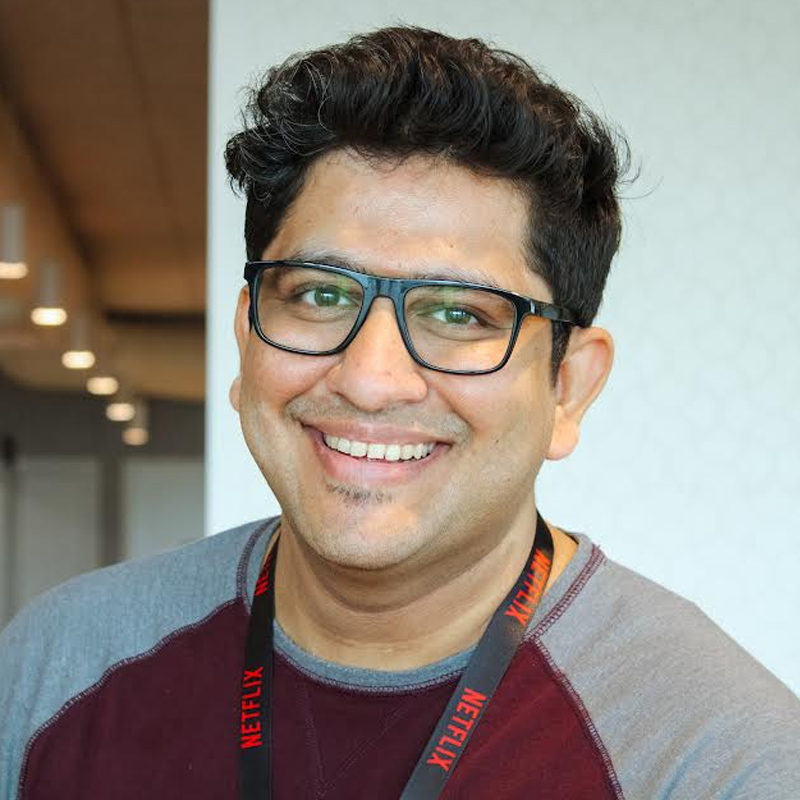
  • Local language content drives higher audience engagement: Netflix’ Patrick Fleming

    Local language content drives higher audience engagement: Netflix’ Patrick Fleming

    Mumbai: Southeast Asia users consume two times more Netflix content than the global average, and India leads the charts, said Netflix, director of product innovation, Patrick Fleming at the ongoing virtual APOS summit on media, telecoms, and entertainment.

    The streaming giant currently has over 209 million paid subscribers globally out of which 27 million subscribers are from APAC markets. While that is a fraction of the total user base, it should be noted that two-third of its paid subscriber growth was driven by the APAC market in 2020. “We know that a substantial part of future subscriber growth is going to come from outside of the US,” said Fleming.

    Talking about the mobile-only plan, Fleming said, it has not been a success in all markets. The plan was first launched in India followed by Malaysia, Indonesia, Philippines, and Thailand, followed by markets across Asia and Africa. “We introduced the mobile plan in markets only after experimenting with the right entry price and discerning the demand for video content on mobile,” he added.

    Fleming said, “It is important for Netflix to speak more languages to cater to the APAC market. We now offer our content along with subs and dubs across 30 languages, so that a great show may travel anywhere in the world. For example, Thailand prefers dubbed content while South Korea prefers subs.”

    While a show like “Money Heist”, “Bridgerton” and “Emily in Paris” has done well in markets like India and Southeast Asia, local language content consistently outperforms in terms of audience engagement, he observed. In India, that means local language films and, in South Korea and Japan that means K-dramas and anime. Launching more payment modes has also increased adoption. Netflix recently enabled autopay via unified payments interface (UPI) in India and GoPay in Indonesia.

    The streaming giant has introduced a slew of nifty features that individually may seem like marginal improvements but are incredibly important to a mobile customer. The ideas first came in India and were then tested globally, noted Fleming.

    These features include a native brightness, playback speed and lock screen functionality. Currently, the OTT giant is experimenting with a function that plays a short vertical video clip when the user hovers above a title. “The idea is to capture the shorter moments of consumption on mobile devices. The user may not sample the content immediately but may put it in his watch list for later consumption,” said Fleming.

    Not just mobile, Netflix can be streamed across 1700 devices and Android and iOS operating systems (OS). Coding efficiency is vital when it comes to mobile customer experience. It was important that the Netflix mobile app was always in a ‘ready to watch’ mode, emphasised Fleming. Features like ‘smart downloads’ and ‘downloads for you’ were introduced to minimize memory usage and ensure that customers transitioned to the next piece of content seamlessly.

    Netflix has also partnered with over thousand local internet service providers (ISPs) to join their open connect network so that it may deliver a high-quality video viewing experience. It has purpose-built boxes called open connect appliances that have been deployed at interconnection locations to localise substantial amounts of traffic by ISPs.

    “Technology has come a long way in ten years,” said Fleming. “A decade ago you could transmit 1.5 hours of content with 1 Gb of data, in 2015 you could transmit 2.5 hours of content or an entire movie in 1 Gb, today you can transmit 6.5 hours of content or the entire first season of “Stranger Things” in the same amount. The same quality, fewer bits.”

    In terms of product innovation, Fleming is bullish about interactivity and branching narratives. “Audiences have loved our interactive content like “Puss in Book” and “Black Mirror: Bandersnatch”. We’re working on an interactive mindfulness series with Headspace and there is the expansion into gaming” noted Fleming.

    Netflix has launched two mobile games based on the “Stranger Things” franchise in Poland.

    “Mobile audiences are wonderfully impatient,” remarked Fleming when speaking about the need to deliver top notch customer experience on mobile. “We’re not just competing with other long form content platforms but any platform that offers a unique mobile experience.”

  • Over 66% of CTV users subscribe to more than one OTT app says new report

    Over 66% of CTV users subscribe to more than one OTT app says new report

    Mumbai: India is undergoing digital transformation and consumers are steadily moving away from traditional linear TV to Connected TV and OTTs – a change that presents an untapped advertising opportunity for brands and advertisers. As many as 78 per cent of people own a Smart TV and 93 per cent of these smart TV users access internet-based content found mediasmart- an Affle company in its latest report.

    The survey – ‘India CTV Report 2021 – Mapping Connected TV (CTV) Viewership in India and the Opportunities for Brands’ released this week documented this changing media consumption patterns of the Indian consumer with an expert view on the possible advertising potential of the CTV medium. According to the report, mobile-first, active, and aware CTV consumers are young, urban adults who are already mobile-first and are actively engaging with diverse apps.

    Nearly 89 per cent of the respondents are social media users, and 82 per cent are e-commerce, 44 per cent are gamers and more. Over 59 per cent of respondents prefer downloading apps via Smart TV App Store, while 26 per cent respondents primarily consume content via pre-installed apps and a small section (15 per cent respondents) use the dongle to stream content on TV.

    Close to 70 per cent of respondents spend between one to four hours on CTV watching movies (91 per cent), streaming music (64 per cent), playing games (47 per cent) or watching news (64 per cent).

    In terms of the pending ability and OTT preferences, over 65 per cent of respondents subscribe to more than one OTT app.  There is over 40 per cent adoption for the leading eight OTT apps in India: Disney+Hotstar, Amazon’s Prime Video, Netflix, Zee5, MXPlayer, Sony LIV, VOOT , and Alt Balaji. The inclination on app usage is also heavily dependent on seasonality and timing

    There are limited barriers to viewership and adoption. Unlike mobile usage of the internet, which requires literacy levels, CTV consumption cuts across age, language, and city barriers. By going vernacular, advertisers can engage with users in ads of their language

    Mediasmart, senior director, Nikhil Kumar said, “The world is moving towards immersive watching experiences and CTV is an exciting space to be at. It is interesting to see leading advertisers in the country adopt CTV advertising as a critical new addition to their media mix. CTV advertising is here to stay and with evolutionary solutions provided by mediasmart on Household Sync technology, we are powering brands to engage with relevant consumers across the connected devices.”

    India is a young market with tremendous potential for CTV adoption. CTV inherently is more engaging than traditional TVs and brings together the twin strengths of (a) engaging storytelling associated with CTV advertising and (b) targeting associated with Programmatic & Digital advertising. 

    According to Interactive Avenue CEO Amardeep Singh advertisers globally – and in India – are lapping up the CTV opportunity as it continues to grow as an exciting medium for digital advertising. “We have seen great results and ROI for some of our top clients who are already using the CTV ad technology from mediasmart. This research is a step in the right direction to build standard industry metrics, even as technologies like Household Sync make CTV more measurable and impactful,” said Singh.

  • DocuBay goes live on US-based streaming service Struum

    DocuBay goes live on US-based streaming service Struum

    Mumbai: DocuBay, the global documentary platform by IN10 Media has partnered with the US-based streaming service Struum to offer the OTT’s SVOD content to the US market.

    Under this partnership, the aggregation platform created by senior-level Disney and Discovery executives will allow consumers to discover and consume content from DocuBay’s library via a credit-based exchange system with a single subscription.

    DocuBay’s premium (SVOD) factual entertainment content across multiple genres like biographies, sports, nature, science, technology, and more will be made available. Some of the flagship documentaries are “Himalayan Gold Rush”, “The Creepy Line” and “WHO is in control”.

    The partnership will enhance DocuBay’s growth plans to increase the availability to more audiences – around the world, expanding its global presence and growing its user base, it said in a media statement.

    DocuBay, vice president, strategy, Girish Dwibhashyam said, “The digital streaming ecosystem has been evolving for some time and content curation, aggregation is increasingly playing an important role in helping users to find what to watch. DocuBay’s content reaches out to a vast set of audience from across the globe and this partnership with Struum will help viewers in the US sample our premium content.”

    Struum CEO Lauren Devillier said, “Premium content like DocuBay is an excellent addition to Struum with its broad library of documentaries from filmmakers across the globe. With this new offering, Struum subscribers will have the opportunity to explore an incredible array of films they might have not otherwise been able to discover outside the Struum streaming service.” 

  • The Hollywood Conflict: Streaming vs Theatrical

    The Hollywood Conflict: Streaming vs Theatrical

    Los Angeles: Any screenwriter in Hollywood will tell you that screenplays are all about conflict. Conflict should be in every scene, in every act, and on every page. The more layered, the better. So, when actor Scarlett Johansson, star of the Marvel superhero movie Black Widow sued the Walt Disney Company, alleging that the company breached her contract, she added yet another layer of conflict to the streaming vs. theatrical battle currently being waged in the movie industry due, in large part, to the coronavirus pandemic.

    Johansson argued that when Disney offered Black Widow on streaming at the same time it played in theatres, it breached her contract, and that this dual release reduced her compensation, which was based partly on box office receipts from what was supposed to be an exclusive run in theatres. While Disney argued that the release of the movie on its streaming platform had significantly enhanced Johansson’s ability to earn additional compensation. This case will surely be closely followed by industry insiders since it publicly begins a debate on how talent and filmmakers should be compensated as the industry business models shift between streaming and theatrical.

    In early 2020, as Covid-19 began its deadly march, movie theatres started getting shut and the box office plummeted 80 per cent. At the same time, over-the-top (OTT) media services grew by 37 per cent. The popularity of these platforms became attractive to subscribers because of instant and limitless access to high-quality content at a time many became insulated at home due to the pandemic.

    Popular OTT providers include Netflix, Hulu, Amazon Prime, Disney+, HBO Max among many others. In addition, many studios began releasing films directly to consumers via premium video on demand (PVOD) or on their own streaming platforms.

    With the introduction of Covid-19 vaccines, the United States and countries worldwide are now looking to emerge from the grip of the coronavirus pandemic. Movie theatres are reopening with certain mask-wearing and social distancing mandates. Around 85 per cent of the US cinemas have reopened, according to Comscore, which is the highest percentage since March 2020. Yet, recent theatrical openings have fallen short of expectations.

    Only Black Widow ($80 million), F9: The Fast Saga ($70 million) and A Quiet Place Part II ($47 million) came close to the opening weekend hauls that would have been expected prior to the pandemic and still fell short of their expected blockbuster prospects in that they were all sequels in popular, pre-existing franchises.

    In addition, all three movies had disappointing second-weekend drops. Black Widow saw a 68 per cent tumble in its second weekend, the worst-ever for a Disney released Marvel title, F9: The Fast Saga had a 67 per cent decline while A Quiet Place Part II saw a 59 per cent drop.

    Hollywood has now been dealt a new headache with the spread of the Covid-19 Delta variant which may have played a role in recent disappointing box office takes. In a poll conducted 1 August by The Hollywood Reporter, where prospective viewers were asked if they were comfortable going to a movie theatre, across all demographics, percentages were down. In all movie-goers, the poll came in at 70 per cent down from 81 per cent on 11 July. This drop, in less than three weeks, reveals just how the Covid-19 pandemic is making it virtually impossible for studios and movie theatres to formulate a business plan.

    As far as the debate on which is more profitable, theatrical or streaming, the answer is complicated and fluid. Not only do production and marketing costs need to be considered but also the ever-changing landscape ushered in by the coronavirus pandemic and its potentially far-reaching effects. When this dark pandemic cloud has lifted, will the consumers be ready for dinner and popcorn movie nights out again, or has being comfy at homes streaming movies with the kids taken a hold? Maybe a bit of both but to what degree?

    In Screenrant, Stephen M. Colbert makes the case that movie ticket sales were drying up pre- pandemic while streaming is becoming more profitable, especially for studios with their own streaming service. In addition, studios share around half of their box office with theatres, whereas they get to keep the lion’s share of streaming revenue for their own content on their own platform.

    In Investopedia, Dina Zipin observes that major Hollywood studios can bring in $250 million in profits from a single film, while a respected cable network like HBO can make money off a huge hit like Game of Thrones, which costs millions to shoot. Since unsuccessful projects and financial flops are par for the course, there is no guarantee which shows or potential franchise will be the year’s great moneymaker.

    A case study of the hybrid streaming/theatrical model could be illustrated by A24’s release of the medieval fantasy, The Green Knight starring Dev Patel. A24 pumped up the social media buzz about the movie which also benefited from Patel as a huge draw as a leading man. A24 chose not to put it on PVOD but waited until the perfect time as restrictions eased to release the film in theatres. Then, in a new mixed release strategy, slated a one-day streaming event. The film opened No. 2 in theatres on 30 July 30, right behind Jungle Cruise, outperforming expectations with close to a $7 million weekend take. The data from the one-day streaming event on 18 August has not yet been released.

    With FDA granting full approval of the Pfizer vaccine and with increased calls for proof of vaccinations by employers, as well as by restaurants, gyms, bars, concerts, and sporting venues and movie theatres, it adds a new layer in our return to “normal.” The page on how talent, studios, streaming services, movie studios, and others in the industry will deal with this is yet to be written.

  • Netflix announces its first-ever global fan event on 25 September

    Netflix announces its first-ever global fan event on 25 September

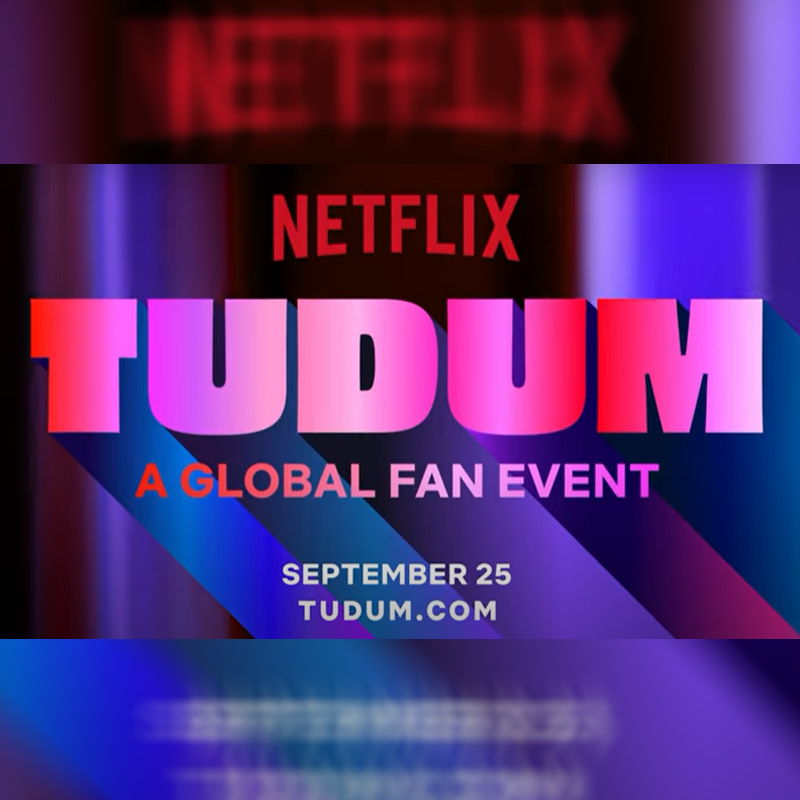
    Mumbai: ‘TUDUM’ is the first beat one hears when they watch a show or a movie on Netflix. And it’s the inspiration behind the OTT platform’s inaugural ‘TUDUM: A Netflix Global Fan Event’, which is all set to be held in September.

    The global streaming platform has announced that the virtual fan event to be held on 25 September will feature the biggest stars and creators of a variety of Netflix projects representing over 70 series, movies and specials. “The goal of ‘TUDUM’ is to “entertain and celebrate Netflix fans around the world,” it stated in its blog.

    The three-hour virtual live stream will start at 9:30 p.m. IST in addition to its social media handles- Twitter and Twitch around the world. It will also be broadcast on Netflix’s YouTube channel. The pre-show, which spotlights Korean and Indian series and movies, will be on a specific channel at 5:30 p.m. (Pacific Standard Time) / 5 AM (Pacific Standard Time) / 8 AM (Eastern Standard Time) / along with animated content. It will be held at 12:00 pm (Greenwich Mean Time) / 9:00 pm (JST and KST).

    “Fans will be the first to hear breaking news and see first looks, new trailers and exclusive clips during interactive panels and conversations with the creators and stars from Netflix,” stated the OTT platform.

    Some of the Netflix TV shows and movies to be featured include –‘Aggressive Retsuko: Season 4’-‘ The Witcher Away’-‘ Travels Demi Ventana’-‘Mystery’-‘ Army of Thieves’ -‘Black Crab’-‘Big Mouse’-‘Bridgerton’-‘ Bright: Samurai Soul’-‘ Hurt’-‘Chestnut Man’-‘ Cobra Kai’-‘ Black and White Colin’-‘ Cowboy Bebop’- ‘Crown’-‘De Volta Aos 15’-‘Do n’t Look Up’-‘ Emily in Paris’-‘Extraction’-‘ Finding Anamika’-‘ Floor is Lava’-‘The Harder they Fall’-‘ Helbound ‘-‘ Heeramandi’-‘ Human Resources’-‘ Interceptor’-‘ Inside Job’-‘ La Casa de Papel’-‘ Old Guard’-‘Oscrodeseo’-‘Ozark’-‘ Mardibus’-‘ My Name’-‘ New World’-‘Pretty Guardian Sailor Moon Eternal: The Movie’-‘ Rebelde’-‘ Ritmo Salvaje’-‘Red Notice’-‘ The Sandman’-‘Sex Education’-‘ The Silent Sea’-‘ Soy Georgina’- ‘Stranger Things’-‘ Super Crook’-‘ Ultraman: Season 2’-‘ Umbrella Academy’-‘ Viking: Valhara’-‘The Witcher’-‘ The Witcher: Blood Origin’ and ‘Young and Famous African’.

    According to Netflix, those interested in hosting a co-stream can also sign up for TUDUM.com to respond to their personal Facebook, Twitch, or YouTube channels.

  • Understanding ALTBalaji’s ‘under 35 viewers’ with Divya Dixit

    Understanding ALTBalaji’s ‘under 35 viewers’ with Divya Dixit

    As ALTBalaji senior vice-president – marketing and revenue, Divya Dixit has played a pivotal role in driving the company’s vision in the fast-growing and dynamic OTT sector. She carries over two decades of experience in business, marketing and brand building across the digital, OTT, broadcast, telecom, music, and retail industries. Before joining ALTBalaji in 2018, she was with ZEE5 where she conceptualised and developed the brand ‘ZEE5 ‘and ‘ZEE5 Originals’, as well as launched the platform and multiple original shows.

    At ALTBalaji, Dixit looks after marketing budgets and recovery via direct subscription revenue. She is also responsible for the overall growth of the platform, program scheduling, and analytics as well. Under her leadership, ALTBalaji has been one of the top three grossing OTT apps, having doubled its direct revenue YOY in the years 2018-19 and 2019-2020.

    On Tuesday, Balaji Telefilms announced its financial results for AMJ 2021, as per which ALTBalaji sold a total of 1.8m subs, up 35 per cent QoQ. Its direct subscription revenues stood at Rs 17cr. Boasting a current active subscriber base of 2.4m (excluding subscribers on partner apps), AltBalaji continues to drive growth for the Company.

    Interestingly the platform is also turning younger everyday with 80 per cent of the current viewers being less than 35 years of age. The brand has registered a 100 per cent YoY growth with respect to the same, especially in the hinterland markets. According to Counterpoint Research’s Survey, AltBalaji’s 25-35 audience accounted for 59 per cent of its users in 2019. The development is significant because ultimately it is this age group which drives the OTT market.

    Indiantelevision.com’s Ashee Sharma got into a freewheeling conversation with ALTBalaji, senior VP – marketing and revenue, Divya Dixit to understand this under-35 viewer base and more.

    Edited Excerpts

    On ALTBalaji’s young viewer base and the value it holds for the brand

    Youth programming continues to be our focus at ALTBalaji. We are striving constantly to keep the stories as young, inclusive, and as vibrant as possible in the hope of making a difference to the future of society. Some of our top viewed shows in this category have been Broken But Beautiful Season 3, Puncch Beat, Dev DD, Crashh, Dark7white, and LSD.

    We are here to make disruptive content that breaks stereotypes and is relatable to New India, and this development is significant for us because it implies that our brand has been able to crack the code for the youth and those young at heart. It has made ALTBalaji the benchmark for other OTT platforms. We expect a steady surge in viewership, especially among the 18-35 year olds who are leading the binge-watching trend today.

    On the difference between this audience and the rest in terms of consumer behaviour

    Most of OTT consumption happens with viewers under the age of 35 years who are far more tech-savvy, however also most often the busiest. Shorter attention spans seem to be a universal thing with this demographic unless their interest is piqued. So it becomes necessary for us to create content that catches the viewers’ attention right from the get-go. Nowadays, content is all over the internet, and with the intense competition, cracking the code to a viewer’s interest is most important. We believe we have been successful in this regard. Our engagement metrics have gone up from 48 minutes a day in FY18-19 to 83 minutes currently and the audience comprises 21.29 per cent women, with men dominating at 78.71 per cent. 

    On the content and marketing strategy for the <35 yrs TG

    At ALTBalaji, digital marketing is an important element of the marketing mix. Associating with like-minded brands, engagement across short format apps, using actors’ social media reach, and activities with youth influencers for content promotion, have been our primary approaches.  We have a robust analytics platform with a live dashboard that provides us information on views and engagement, as well as the demographic details of our subscribers. This helps us in understanding behavioural consumption patterns, and drives our content and marketing strategies.

    The youth has most definitely made a shift towards OTT platforms over traditional means of entertainment. However, the debate over their preference for movies or shows is still on. ALTBalaji has noticed the people under 35 lean in favour of shows that break stereotypes and have unique narratives, and so we continue to launch shows across genres such as thriller, crime, romance, and drama, all the while maintaining our focus on out-of-the-box story ideas.

    Moreover, our content is tailor-made to attract larger audiences. Currently, in India, the most widely spoken language among approximately 70 per cent of the population is Hindi which has been the priority for ALTBalaji. 95 per cent of our content is Hindi originals, although various other shows have been dubbed to ensure that the content is not limited to the Hindi-speaking populace. . Our recent shows like Broken But Beautiful, Mai Hero Boll Raha Hu, His Storyy, and The Married Woman have given us a massive surge in viewership. 

    On the thought process behind targeting this age-group 

    This age group is the one that sparks maximum creativity among writers and content creators, and that’s because they have a voracious appetite for unique narratives. Also, it made sense to cater to an audience that is well-versed with technology, willing to experiment and pay upfront for content. The phenomenon of Binge-watching actually started them, and so, it was only reasonable for us to work with the low hanging fruit first. We saw a huge increase in subscriptions, with growth percentages doubling in multiple cities including Lucknow, Rohtak, Ludhiana, Srinagar, Guwahati, Shimla, and Ranchi, to name a few.

    On the impact on advertising revenue, and if attracted similar brands to the platform – brands that catered to younger audiences.

    In 2020 alone, ALTBalaji has partnered with almost 25-30 brands for various shows. Our marketing strategy includes brand collaborations as it helps us to reach out to a larger audience. The partnerships have also kept our existing users incredibly engaged with all the collaborated offers they receive. 

    Young brands including Imagicaa, Pipo Popcorn, My Imagine Store, Growfitter, Ferns N Petals, and Ixigo have recently partnered with us for our youth drama Puncch Beat 2. These associations include value-added services to our existing customers. For instance, Ferns and Petals, our official gifting partners for Puncch Beat 2, provided a 20 per cent discount coupon to our viewers on their next billing. Ixigo is associated with us as the travel partner allowing 20 per cent off exclusively for ALTBalaji subscribers. The offering is based on the insight that the youth love discovering the world. Growfitter, the fitness partner for our recent shows, provided free one-month Growfitter Premium Subscription to the ‘fitness-conscious’ contest winners. In addition, brands like Imagicaa, Pipo Popcorn, and My Imagine store have been roped in as entertainment, snack, and gadget partners, respectively, thus encouraging the new audience to get on board.

    On the evolution of the business and subscription models of ALTBalaji

    Brands are increasingly starting to be aware of the growing popularity of OTT. Associating with the right brands would be a win-win for both partners by gaining visibility among the right target audience through in-show integrations and surround marketing. In 2020 alone, revenue from mobile internet advertising in India was Rs 7331 Cr and is predicted to rise to Rs 22,350 Cr in the next five years, increasing at a 25.4 per cent CAGR as per PwC’s Global Entertainment & Media Outlook 2021-2025. Utilising this fast-paced growth to the maximum potential will prove highly lucrative to businesses. However, the revenue model is still evolving. Constant innovation and timing are both the key and the challenge in this sphere. Getting it right could prove extremely fruitful for both players in the partnership.

    Talking of subscription models, there is a consumer out there for every content choice. AVOD/SVOD/TVOD are business models and the only choice the consumer has to make is if he/she wants an ad free experience or is comfortable with ads interrupting the viewing experience. As far as TVOD goes, it’s yet to see some traction in India as OTT platforms are still priced very economically. However, in developed countries where SVOD is largely the order of the day, TVOD as sampling for a particular piece of content works very well.   

    I believe in the long term SVOD is a more sustainable model, and the good news is that more and more audiences are willing to pay for content which has moved the SVOD needle up from 5 per cent, three years ago to almost 25 per cent currently. Our subscription model is priced at INR 300 annually while our quarterly plan costs 100, and half-yearly is set at 180. This is not just for youth but for democratisation of content in the country.

  • Content Hub 2021: How OTTs met the burgeoning demand for content in 2020

    Content Hub 2021: How OTTs met the burgeoning demand for content in 2020

    Mumbai: Any talk of content in a post-pandemic world is incomplete without deliberating on the impact it has had on the OTT industry and vice versa.

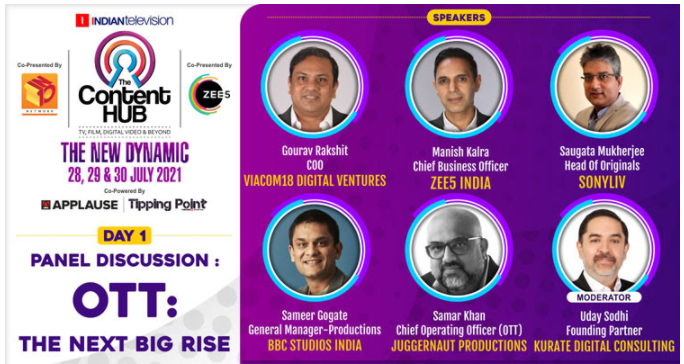
    The fifth edition of the ‘Content Hub 2021 – TV, Film, Digital Video, and Beyond’ organised by Indiantelevision.com brought together the heads of three of the country’s leading OTT platforms – Viacom 18 Digital Ventures, COO – Gourav Rakshit, ZEE5 India, chief business officer – Manish Kalra, and SonyLIV, head of originals – Saugata Mukherjee – and renowned content producers – BBC Studios India’s general manager (production), Sameer Gogate and Juggernaut Productions’ COO (OTT), Samar Khan, to throw light on the evolving phenomenon. Kurate Digital Consulting, founding partner, Uday Sodhi moderated the discussion.

    The impact of the pandemic on the OTT industry is not lost on anyone. As the lockdown-induced demand for new content skyrocketed, people were motivated to sample OTT platforms. As a result, the evolution of consumers in terms of OTT adoption which would have otherwise taken at least a couple of years to happen, transpired within the course of a few months.

    The more noteworthy aspect of it, however, was that people were now willing to pay for content. According to industry experts, this marked a huge milestone as far as consumer behaviour is concerned, more so in the Indian market which was hitherto believed to be largely AVOD-driven for OTT players.

    Viacom’s Gourav Rakshit called it the second “tipping moment” for the industry, next only to cheap data. The development was extremely positive, but it came along with a big challenge of retaining consumers by providing them new, relevant and engaging content, which meant bringing quick and drastic changes in content strategies. The growth in consumer appetite for content was thus accompanied by a proportional rise in the risk-taking ability of OTT players.

    “If we didn’t genuinely think that everyone is just a mouse-click away from joining OTT, we would have never put a property like Bigg Boss on digital alone,” asserted Rakshit.

    “Despite the production troubles and scarcity of right content, the demand gave us the confidence to take big bets. For the first time we decided to bring a blockbuster like Radhe on TVOD. Although we were quite sceptical of TVOD as a model and about Indians paying for a one-time rental, the results were pleasantly surprising. 30 per cent of our Radhe consumption happened on TVOD. In the process, we kind of ‘forcefully’ moved our content strategy to movies and regional,” added Kalra.

    SonyLIV’s Saugata Mukherjee agreed that the pandemic was a huge learning curve for the industry, and the changes (VOD consumption, consumer willingness to pay, OTT movies, and long-format shows) affected by it are here to stay. “Starting out with half-a-million subscribers on 18 June, today we have crossed six million. The pandemic has really expedited OTT adoption, and we have managed to keep pace with it by dropping new shows every month despite the difficult production scenario. There have been a few good shows like ‘Maharani’ and we also had ‘Scam’ walking away with all the glory. Both were well received across segments, signifying that the right kind of story will have takers everywhere.”

    With the requirement of content growing every day, content producers found themselves in a tough position having to deal with the challenge of coming up with fresh story ideas at a mind boggling rate. “So many stories were being told that it became quite challenging for us to find the next big idea. Moreover, with every success the bar kept getting higher,” stated Juggernaut Productions’ Samar Khan.

    Gogate of BBC Studios shared a slightly different perspective. “While I don’t think there is scarcity of ideas and talent, the way we tell stories needs constant reinventing. This effectively means that the ‘premiumness’ of content in terms of writing and making, not the cost, has to get better. The second big challenge is to keep resetting the mix in accordance with the predicted demand scenario for at least six months hence. The game has become far more dynamic than what it used to be,” added Gogate.

    Talking about how the content mix on their respective platforms is changing, Kalra’s shares an interesting finding from ZEE5’s research which reveals that viewers look at OTT as a ‘buffet’. “What people watch at any given point of time is a function of their mood, and hence it is important for us to cater to all taste clusters,” he said.

    As regards the ‘buffet menu’, the panelists agreed that there is currently an overdose of ‘high-concept’ and crime shows on OTT platforms making them slightly metro and male-skewed. There’s not enough content to service the staggering demand for tentpole premium dramas suited for family viewing. Both Gogate and Khan shared the opinion that comedy, being a difficult genre, is most underserviced at present.

    Crystal gazing at the next 18 months, Kalra remarked that, “already 65 per cent of our consumption is happening on connected TV, so most of the demand is going to come from the family-viewing space. Big-screen viewing, tier two and three audiences, and regional content will be on the rise.” As believers in the potential of regional content, Rakshit and Mukherjee also agreed that the authentic and relevant stories and characters that they are looking for will come from the tier two and three, regional markets.

    “Regional scripted as a genre hasn’t taken off yet, but there is a lot of work happening on it. It could well be the next frontier in the coming six to eight months. Regional markets have a lot of talent and stories, but they are essentially individual-driven. If we can get the discipline of the big companies to percolate into these markets through collaborations, things will change overnight,” said Gogate. 

    Coming to the big question around the comparative demand for series and films and whether OTT theatricals can become a phenomenon, trends so far have shown that the demand for series is far higher. However, with an exception of Samar Khan who believes that the direct-to-digital release wave was a function of theatres remaining closed and a significant chunk of the audience will go back to them when the situation normalises, others on the panel were more hopeful about it.

    Contending that “movie-making and film distribution will not be the same again”, SonyLIV’s Mukherjee noted, “While theatres will always be around, there’s going to be some demarcation as far as the medium is concerned. A lot of scripts which didn’t find a theatre or platform to showcase will possibly come to OTT. This, in itself, is a big market opening up. Theatrical experience will become somewhat limited to the slightly bigger spectacle movies, with the more midlist category films looking for a direct-to-digital release.”

    Mukherjee and Gogate also held that being quite a young industry, the ‘OTT movie making’ grammar is still evolving, as is the grammar around making eight-hour long form series. The answers to these questions will emerge as and when more and more content starts getting made specifically and exclusively for the OTT platforms. 

    Adding to the conversation, Kalra shared that Zee5 witnessed considerable demand for regional theatricals coming from the tier two and three markets. “Although theatres shutting down had the greatest impact, producers have surely developed an appetite for risk-taking. What remains to be seen is whether the phenomenon will continue as ‘direct-to-digital’ or ‘delayed-from-theatrical’. That is something we will learn in the process.”

    Last but not the least, talking of government regulation the panelists maintained that it hasn’t disrupted life and work for them in any significant manner yet. The impact will become clear only when the first 10-15 cases arise. That being said, Rakshit opined that “one of the positive rub-offs of it is that dissent gets centralised and doesn’t run into unnecessary PILs and courts all over the country which is just negative for the industry. On that note, it’s actually quite welcome.”

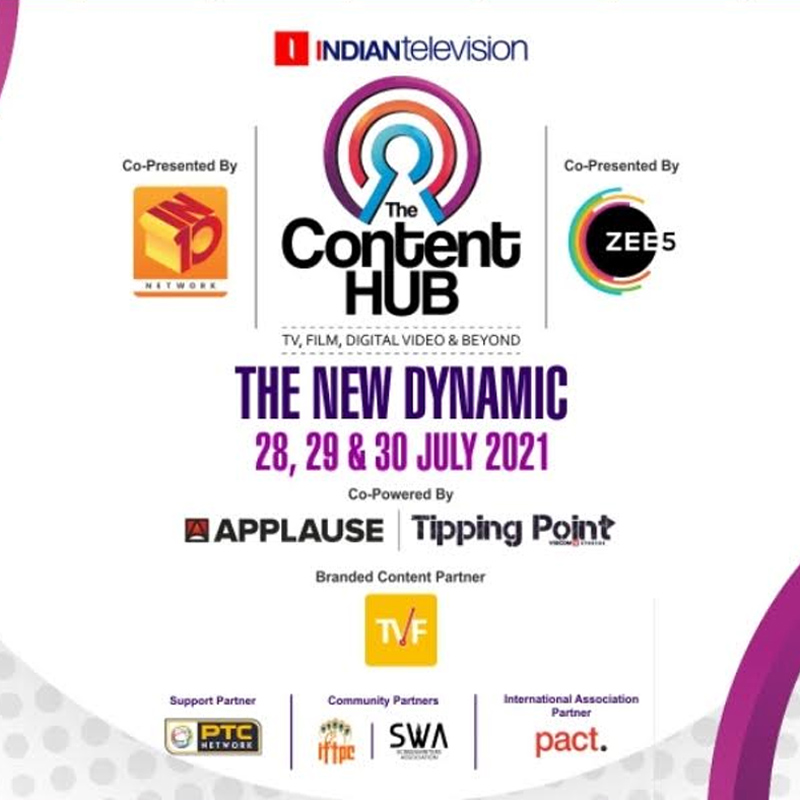
    The fifth edition of Content Hub 2021- ‘TV, Film, Digital Video, and Beyond’ was co-presented by IN10 Media Network and ZEE5, and co-powered by Applause Entertainment and Tipping Point, the digital content unit of Viacom18 Studios. PTC Network is the supporting partner. 

  • Content Hub 2021: Stage is set for the mega gathering of content creators

    Content Hub 2021: Stage is set for the mega gathering of content creators

    New Delhi: The stage is set for one of the biggest gatherings of content creators from across media platforms. The fifth edition of Indiantelevision.com’s biggest initiative- Content Hub 2021- ‘TV, Film, Digital Video, and Beyond’ begins on 28 July (Wednesday), 11 AM onwards.

    The three-day summit is co-presented by IN10 Media Network and ZEE5, and co-powered by Applause Entertainment and Tipping Point, the digital content unit of Viacom18 Studios. PTC Network is the supporting partner.

    Centred on the theme – ‘The New Dynamic’, The Content Hub 20201 will witness insightful sessions with industry stakeholders deliberating on how the new forces are transforming the way content is created and stories are told. It will also delve upon the impact of these changes on the business models for the world of films, TV and OTT.

    Day One will begin with the virtual panel discussion on ‘The challenges & opportunities before India’s content creators’, where Endemol Shine India, CEO, Abhishek Rege, Contiloe Picture Pvt Ltd, chairman-MD, Abhimanyu Singh, Emmay Entertainment, director and screenwriter, film producer Nikkhil Advani and film director, writer-producer, Siddharth P Malhotra will be in conversation with Indiantelevision.com Group, CEO and editor-in-chief Anil Wanvari.

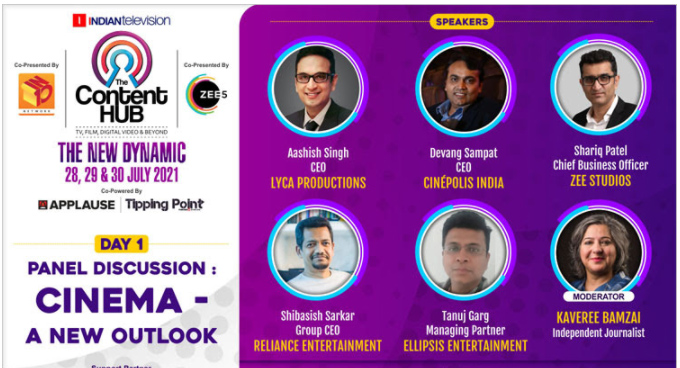
    This will be followed by a session on ‘Cinema-A new outlook’, where the industry stakeholders will discuss the changing dynamics of the cinema industry in the aftermath of the pandemic, with representatives from Lycra Productions, Cinepolis India, Zee Studios, Reliance Entertainment and Ellipsis Entertainment. Another session – ‘Television: A Twist in the Tale’ will witness insightful chat on the evolving television industry, and how the leading production houses are gearing up for the evolution. 

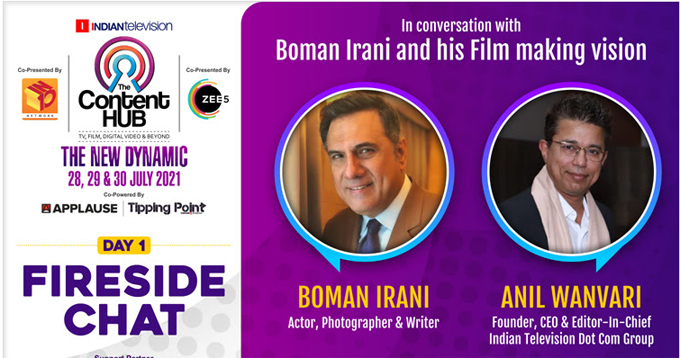
    There will also be fireside chats with actor Boman Irani on his film-making vision, Discovery Communications India, South Asia, managing director Megha Tata on the rising surge of factual entertainment and Arrow International Media, executive producer, Stuart Pender on the art of documentary making.

    The Content Hub 2021 will also bring together industry stakeholders for a session on ‘Regional Content: Storytelling at its best’. The session will have participation from Vaishnave Media Works Ltd & Arpad Cine Factory Pvt Ltd, MD and chairman, Kutty Padmini, PTC Network, MD and president, Rabindra Narayan, Guru Group, founder and CEO, Sunitha Tati and Mumbai Movie Studios, CEO, Naveen Chandra. Industry stakeholders will also deliberate upon ‘The Rise of OTT’ in one of the sessions, which will be attended by representatives from Viacom18 Digital Ventures, ZEE5 India, SonyLIV, BBC Studios India, Juggernaut Productions and Kurate Digital Consulting.

    The session on ‘The Growing Relevance of Language Personalisation in OTT Advertising’ will witness invigorating discussion among brands and broadcasters on the need for language personalisation. Lenskart, brand media head, Anupam Tripathi, Myntra, vice president, and head-marketing, Achint Setia, Zee Entertainment, COO Revenue, Rajiv Bakshi, Dabur, head of media, Rajiv Dubey, Rebel Foods (formerly FAASOS), co-founder, Sagar Kocchar, and ESSENCE India, managing director, Sonali Malaviya will be in conversation with Indiantelevision.com Group, CEO and founder, Anil Wanvari.

    The event will also be live-streamed on our social media handles. Join us for a series of insightful sessions starting 11 AM.

    To know more, visit: https://thecontenthub.in/index.html

  • Disney+ Hotstar unveils 2021 slate, Ajay Devgan’s digital debut series on the list

    Disney+ Hotstar unveils 2021 slate, Ajay Devgan’s digital debut series on the list

    New Delhi: Streaming platform Disney+ Hotstar on Tuesday unveiled its latest content line-up for 2021 with engaging original series and movies across genres and featuring several noted actors. 

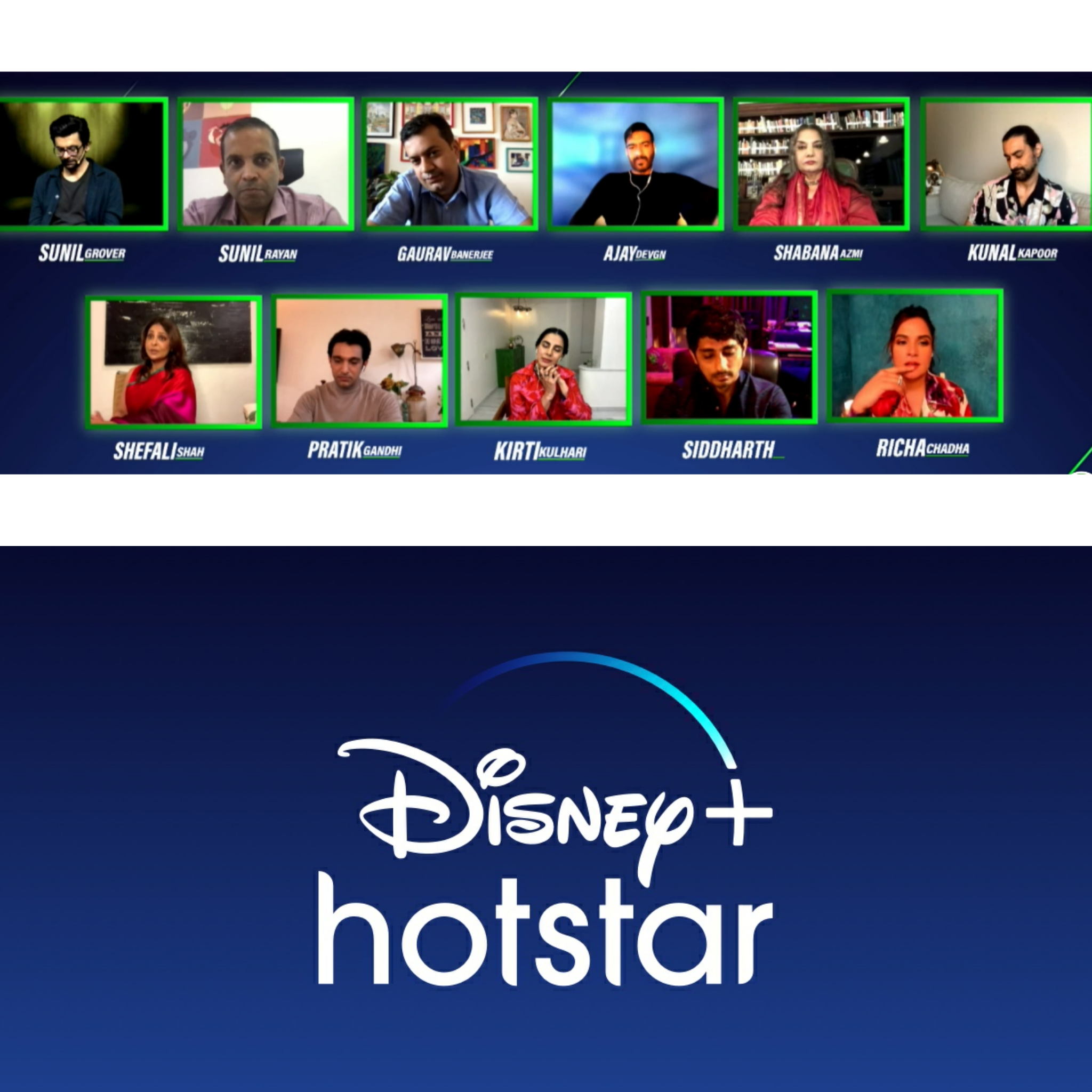
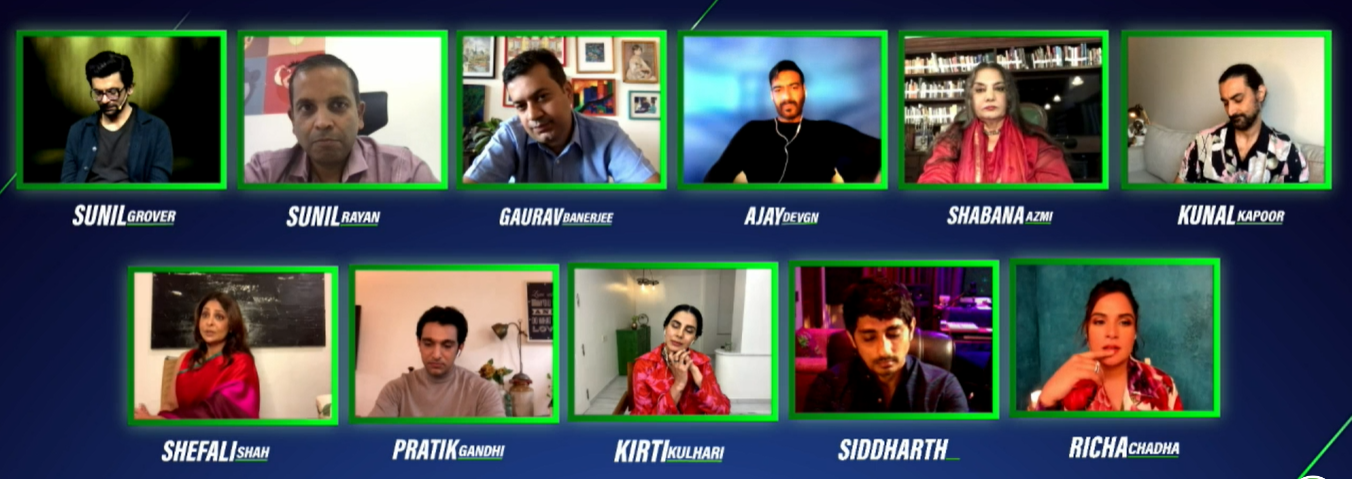
    The new line-up includes high-magnitude productions like the period-action drama magnum opus series The Empire helmed by Nikkhil Advani and starring Kunal Kapoor, Dino Morea and Shabana Azmi, and crime-drama series Rudra – The Edge of Darkness which marks the digital debut of megastar Ajay Devgn, and Esha Deol.

    Some of the new movies that are set to be available on the OTT platform include: Ajay Devgan starrer war-epic Bhuj: The Pride of India, chaotic comedy Hungama 2 starring Shilpa Shetty Kundra, Crime thriller Collar Bomb starring Jimmy Shergill and horror comedy Bhoot Police starring Saif Ali Khan.

    The platform is also expanding its subscription offering. Starting 1 September, it will add three new subscription plans, namely – Mobile plan for Rs 499 per year (single device, mobile-only plan), Super for Rs 899 per year (access to two devices across mobile, web and living room devices) and Premium for Rs 1499 per year (access to four devices across mobile, web and living room devices).

    Disney+ Hotstar, president and head, Sunil Rayan said the 2021 content slate demonstrates the company’s relentless pursuit of bringing original and locally relevant stories to its consumers. “With our fresh slate of movies and shows, we are proud that India’s top stars and industry stalwarts have chosen to debut with us to present stories that are genre-defining clubbed with high-quality production that makes Har Watch, Top Notch.”

    The platform has also scaled up stories featuring strong characters and women-centric narratives including the second season of Aarya featuring Sushmita Sen, Fear – a supernatural thriller starring Tisca Chopra, and medical drama Human starring Shefali Shah and Kirti Kulhari. The line-up also includes the ‘Special Ops Universe’ where multiple characters, stories and seasons will co-exist within a universe in a multi-series format; starting with Kay Kay Menon-starrer Special Ops 1.5.

    Star India, president and head, Hindi and English entertainment, Gaurav Banerjee said, “At Disney Star, we believe in the power of great storytelling. We have always challenged conventions and been at the forefront of content creation with powerful and category-defining stories ranging from strong women-centric narratives, mythology to history and contemporary tales. We’re thrilled to expand our offering on Disney+ Hotstar by adding an incredible array of blockbuster movies and multilingual original series in Telugu and Tamil.”

    The line-up also includes murder mystery Six Suspects starring Pratik Gandhi and Richa Chadha, the tech-thriller Escaype Live, political dramas City of Dreams (Season 2) and Gharshana, bestselling novel adaptation Those Pricey Thakur Girls, dance reality series Dance+, the third chapter of popular franchise Criminal Justice starring Pankaj Tripathi.

    In addition to these shows and movies, the subscribers will also have access to Disney library titles, Disney+ shows and movies as well as sports content through LIVE streams of the biggest cricket tournaments, including the VIVO IPL 2021 and the ICC Men’s T20 World Cup – all within the next six months (as per current schedule). The platform will also showcase LIVE streams of upcoming Tennis, Football and F1 tournaments.

    Actor Ajay Devgn, who makes his digital debut with crime-drama series Rudra – The Edge of Darkness said, “The quality of entertainment being delivered via digital platforms has opened up avenues for filmmakers to experiment and scale-up. The sheer scale of production of these projects has multiplied significantly in the last few years. My upcoming series Rudra – The Edge of Darkness is bigger than anything I’ve done before.”

    CONTENT LINE-UP:

    New Shows:

    1.      Historical fiction The Empire starring Kunal Kapoor, Dino Morea, Shabana Azmi and Drashti Dhami,

    2.      Crime drama Rudra: The Edge of Darkness starring Ajay Devgn and Esha Deol, Family crime drama Aarya (Season 2) starring Sushmita Sen

    3.      Medical drama Human starring Shefali Shah and Kirti Kulhari

    4.      Murder mystery Six Suspects starring Pratik Gandhi, Richa Chadha, Ashutosh Rana

    5.      Political drama City of Dreams (Season 2) starring Priya Bapat, Atul Kulkarni, Eijaz Khan, Sachin Pilgaonkar

    6.      Tech-thriller Escaype Live starring Siddharth, Javed Jaffrey, Ritvik Sahore

    7.      Supernatural thriller Fear 1.0 starring Tisca Chopra, Saurabh Shukla and Rajesh Tailang

    8.      Crime drama Gharshana starring Naveen Chandra, Sarath Kumar and Jagapathi Babu

    9.      Family drama My Perfect Husband starring Sathyaraj

    10. Mystery thriller Family Matters starring Murali Sharma, Nandu, Akshara Gowda and Sonia Agarwal

    11. Romantic comedy Those Pricey Thakur Girls starring Akshay Oberoi, Saher Bamba, Raj Babbar and Poonam Dhillon

    12. Live animation series The Legend of Hanuman (Season 2) with voice by Sharad Kelkar

    13. Dance reality series Dance+ with Remo D’souza

    14. Crime-drama series, Criminal Justice (Season 3) starring Pankaj Tripathi

    15. Espionage thriller Special Ops 1.5 starring Kay Kay Menon

  • Netflix sets up its first Music Creative and Production team in Mumbai

    Netflix sets up its first Music Creative and Production team in Mumbai

    New Delhi: Streaming giant Netflix on Tuesday announced the setting up of its first Music Creative and Production team in Mumbai.

    Ramprasad Sundar, who will lead the team at Netflix for Music Creative and Production said, “I am excited to lead this new Music and Creative Production team in India. Bringing viewers closer to the stories we tell through the magical combination of sight and sound is very inspiring. I can’t wait to get started.”

    This is the first such facility in the Asia-Pacific region, where the team will partner with composers, producers, labels, publishers, and artist management teams to bring incredible music to its series and films from India for members across the world.

    “Music is a powerful universal language. At Netflix, we believe that music is critical to building an emotional, intrinsic connection to a story no matter where that story comes from,” said the company in a statement. “As we grow in India, we are committed to making a universe of exciting and authentic stories from all corners of the country and in all languages, including Hindi, Tamil, Telugu, Malayalam, and more.”

    The idea behind the launch is to provide exceptional production support to the creators in India and connect them with local music talent. The team will be engaged in creating an instantly recognisable sonic brand for titles, like the theme song to Sacred Games, and drive conversations around titles such as the Tamil blockbuster film Jagame Thandhiram, through soundtracks and music promotions.

    The Music Creative and Production team will also partner with organisations across the country on bespoke programs and a range of initiatives, including workshops for training music supervisors and music editors. With the aim of developing the next generation of music supervisors and specialists, the team will work towards building a more inclusive talent pipeline of individuals from underrepresented groups, said the company.

    In June, the streaming platform also announced Mumbai as the home to its first fully owned, live-action, full-service post-production facility globally. The facility which will become operational by 2022 will have 40 offline editing rooms designed as a flexible, collaborative and inspiring environment for showrunners, directors, editors and sound designers to create their best work.