Tag: streaming

  • Disney to pull the plug on southeast Asia/HK networks

    Disney to pull the plug on southeast Asia/HK networks

    New Delhi: In what may come as a huge surprise for viewers in southeast Asia and Hong Kong, Disney is mulling over closing as many as 18 channels in the region from October this year. The end-of-an-era move could have a major impact on the entire video entertainment supply chain in the region.

    Disney staffers were told about the decision at a town hall out of Singapore on Tuesday, according to sources close to the development. The efforts are aimed at enabling the organisation “to align its resources more efficiently and effectively to current and future business needs.” However, an official statement is yet to be released.

    The move is believed to be part of The Walt Disney Company’s global efforts towards a direct-to-consumer-first model and further stimulating the growth of its streaming services.

    A senior mediaperson said India is unlikely to be affected by the move, which, while unfortunate, is not entirely unexpected. Last year, the M&E colossus restructured its global operations; this involved separating its India and Asia Pacific businesses after APAC president and Star & Disney India chairman Uday Shankar’s departure, and hiring new talent to spearhead its SVoD push in the southeast region.

    With Disney pulling the plug, as many as 18 channels could disappear from the airwaves, which includes Fox, Fox Crime, Fox Life, and FX, movie channels including Fox Action Movies, Fox Family Movies, Fox Movies, and Star Movies China and some sports channels — Fox Sports, Fox Sports 2, Fox Sports 3, Star Sports 1, Star Sports 2. Popular kids channels including Disney Channel and Disney Junior, music channel Channel V and actual services Nat Geo People; and SCM Legend could also go off air in the region. This leaves a question mark over how the other pay-TV platforms will fill the void.

    The multimedia giant is quickly gaining in the streaming space. Since its launch over a year ago, Disney+ has transformed itself into a streaming leader, with membership numbers flying past long-term forecasts.

    So far, Disney has rolled out Disney+ in Singapore along with a separate Hotstar app, and hybrid service Disney+ Hotstar in Indonesia. Launches in other parts of southeast Asia and Hong Kong are likely this year. Disney+ has 2.6 lakh paying subscribers in Singapore as of April 2021 and 4.5 million in Indonesia, according to estimates presented by regional industry analysts Media Partners Asia.

  • Streambox-US Video technology pioneer to enter India

    Streambox-US Video technology pioneer to enter India

    New Delhi : Streambox, the industry leading pioneer in delivering unique IP based video streaming solutions over low bandwidth connections, has announced the opening of a new sales office in Mumbai to address the vibrant post-production markets in India and southeast Asia.

    “We are truly excited to launch in India, one of the largest and most active markets in the post-production and television broadcast industries," said Streambox CEO and co-founder Bob Hildeman. "Streambox products are a perfect fit for India’s rapid growth in media production and associated activities, such as film, post production and broadcast.” 

    Streambox offers end-to-end solutions for remote collaboration across a wide range of workflows, including editorial reviews, colour grading reviews and audio. According to the company, the collaborators can view and hear a live, colour-accurate audio/video stream in their edit suites, at home on cloud-based workstations, or even using an iPad or iPhone. 

    The company has appointed Sanjeev Kr Sinha as the country sales manager for India and southeast Asia. Sinha brings more than 15 years of experience in sales and marketing in the broadcast, cable TV, OTT post-production, and education industries, said the company on Wednesday.

    "We are thrilled to have Sanjeev join our team and taking a leading role in our business expansion in southeast Asia" said Hildeman.

    Sinha added, “I am very excited to work for a global pioneer like Streambox. I see huge potential for Streambox products in the post-production and video market in India and southeast Asia, which is the hub of post-production, broadcasters and film production activity in this region.”

    Streambox has developed optimised technology that can pack functionality like HDR and 12 bit 4:4:4 RGB processing into pixels, and intelligent utilisation of available network paths to achieve higher rates of transport and playback based on its proprietary leading edge ACTL – Advanced Compression Technology Level 3/5 codec and state of the art Low Delay Multi-Path Protocol.

  • India is a ‘speculative’ investment: Netflix’s Reed Hastings

    India is a ‘speculative’ investment: Netflix’s Reed Hastings

    KOLKATA: It is not easy to win over Indian consumers given the diversity of the market – be it in terms of language, income or preferences. Since its foray into India, streaming giant Netflix has taken several measures from the dual point of view of content and pricing. While top executives remain bullish about the India market, there’s still a lot of work to be done by the streamer.

    Netflix has already seen huge success in some Asian markets like Japan, South Korea. The APAC region has contributed to a third of its subscriber growth in Q1 and has seen healthy revenue growth, including average revenue per member. However, it is “still figuring things out” in India, Netflix co-CEO Reed Hastings said in an earnings call.

    “Investment takes some guts and belief forward-looking. But the other investments you should think of, just like rich European countries, content exports really well and we are just getting a little better every month on it,” he added.

    While comparing India’s growth story to that of other Asian countries, Hastings averred that investing here still remains a "speculative" venture as they're still working out the kinks in their overall content strategy.

    “I would say we are still mostly focused on getting a content fit and getting broader content. So that’s why I would say that one is a more speculative investment than, say, Korea or Japan, which again, five years ago was very speculative. But we are over the hump on that,” he detailed.

    India is a tremendous opportunity for Netflix; moreover, the platform offers great scope for the creative community to connect with the enormous audiences, Netflix co-CEO and chief content officer Ted Sarandos said.

    “It’s just like all great opportunities. It’s a long journey, and it’s a challenge. And we think it’s worth it. And that’s why we’re investing early and trying to stay ahead of it. And I think we will be able to see those kinds of results that we’ve seen in other places in the world as we continue to learn more and more and more,” he stated.

    Of all its markets, India was the first one where Netflix launched its mobile only plan. Recently, it started testing Mobile+ plan at Rs 299 per month. Netflix COO Greg Peters said they would work more and more on such plans that have the right balance of features and pricing. The streaming platform is working on bringing in price points that are low enough for more and more of the world’s population to be able to access the service.

    Along with sachet plans, partnerships with market leaders have also yielded good results for the platform. “Jio is a great example of a partner we’ve been working with there to really bring the service to a new demographic at a very, very low price associated with low-cost mobile plans that they are offering as well as home-based IPTV plans. And those have been successful for us as well,” Peters said.

  • Lionsgate Play marches into Indonesia market

    Lionsgate Play marches into Indonesia market

    KOLKATA: Global streaming platform Starz has launched its direct to consumer OTT app Lionsgate Play in Indonesia, expanding its presence in Asia following a successful launch in India.  With this, Lionsgate Play’s deep library of Hollywood blockbusters, film franchises and first-to-Indonesia original series and boxsets are immediately accessible to a wide Indonesian audience.

    Lionsgate Play Indonesia will bring blockbuster film franchises including The Hunger Games and Twilight Saga, the star-studded global box office hit Now You See Me, Academy Award-winning films from other studios like The Aviator and Babel, romantic drama Remember Me and acclaimed original television series Weeds, Power, Mad Men, and The Spanish Princess directly to Indonesian consumers.

    Starz president and CEO Jeffrey A Hirsch said: “Indonesia is an exciting market for us. The large and diverse population, increased data usage in urban and rural markets, and adoption of OTT across all demographics created an exciting opportunity for us to launch Lionsgate Play. We’re confident that our unique, exclusive and exceptionally curated content will generate a great response from Indonesian audiences.”

    The service has also launched with an attractive price point in Indonesia, making the app available as part of two subscription models, IDR 35 per month and IDR 179 for a year, price points that give Indonesian consumers the opportunity to enjoy the best of global entertainment affordably and at their convenience. Lionsgate Play content will also be made available through various bundle offerings with key partners such as Telkomsel and Telkom. The attractive price points and flexible availability give Indonesian viewers multiple convenient options to enjoy Lionsgate Play.

    Lionsgate Play Indonesia general manager Guntur Siboro believes that the combination of the OTT app launch and the previously-announced partnership with big players Telkomsel and Telkom will bring a seamless customer experience and easy access to Lionsgate Play content for their subscribers. “The partnership allows us to give more Indonesians the best entertainment experience. With a diverse audience reach, Lionsgate Play can be exposed to various levels of society. Everyone can enjoy Lionsgate Play content. Stay tuned for more exciting announcements,” he said.

  • The future belongs to creator-led franchises: James Murdoch

    The future belongs to creator-led franchises: James Murdoch

    New Delhi: Creator-led franchises will be more powerful and more profitable in the years to come if they can take a little more risk and own their IPs, said James Murdoch former chief executive officer of 21st Century Fox and now the founder & CEO of private holding company Lupa Systems.

    As the streaming war rages on, Murdoch said it will put a lot of pressure on the content creators, leading to a huge demand for their services in near future. “The real question is what the creative output is going to look like in these conglomerates. There will be more value for creators in the future, not just in terms of selling for a high price and on a work for hire basis,” he detailed while delivering the keynote address at the annual APOS conference which began virtually on Tuesday.

    According to Murdoch, author ownership will become common, as more creators would not want to sell their work forever and a day.

    Talking about the Indian market, he noted that while some multinationals may be frustrated by bureaucracy or having the wrong local partners, ultimately India is a transparent marketplace, not very top-down but driven by ideas and entrepreneurs, and a consumer economy that is going to grow for a long time.

    “I see a lot of opportunities there, especially when you get into towns and villages where distribution revolution is most profound. Digital connectivity will open vast opportunities for society, logistics, education and it is going to be exciting for entrepreneurs as well as customers if done right,” he said. “The broader media sector is continuing to grow, but it is going to be a chaotic and tumultuous few years in terms of how it shapes in India. There is cutthroat competition in down streaming, complexities of legacy distributions, it is a very disaggregated production environment. But it will be interesting.”

    The one-time scion exited his family's media empire to found his own holding company Lupa Systems in 2019. Early this year, he announced his new venture along with former chairman & CEO of Star India and president of Walt Disney Company Asia Pacific Uday Shankar, to explore technology and media opportunities in emerging markets.

    Highlighting how several big media companies have been seeking to scale to compete in the streaming environment, Murdoch said, the question is not if it's right to scale, but how many of these companies will be more profitable than they were in the past. “Avoiding the loss of value is great, but near survival does not create value. The downstream competition is going to be intense for a long time whether it's Amazon or Netflix. If you try to compete with the mass market, you have to have an amazing user experience and lots of good programming,” he added.

    On founding Lupa Systems in 2019, Murdoch said he wanted to explore areas of long-term consequences. “The more exciting opportunity was to do something entrepreneurial with a small team, but also focus on future questions, especially with all legacy businesses adopting digital,” he shared.

    Run by the regional consultancy Media Partners Asia, the three-day conference kicked off on Tuesday, with the keynote address by Murdoch. Asia's influential media and entertainment industry conference is traditionally organised in Indonesia, but is being held virtually this year due to pandemic restrictions.

  • Netflix adds 3.98 mn subs in Q1, to spend $17 bn on content this year

    Netflix adds 3.98 mn subs in Q1, to spend $17 bn on content this year

    KOLKATA: After a year of astounding growth, Netflix has missed the subscriber addition estimates in the first quarter of 2021. The company has added 3.98 million subscribers globally in contrast to its six million guidance. It has estimated even lower gains for the next quarter – one million with almost zero growth from US, Canada, Latin America.

    The Los Gatos-based streaming platform has cited the pull-forward growth in 2020, a lighter content slate due to delayed production as the reasons for slowdown in subscriber addition. “We don’t believe competitive intensity materially changed in the quarter or was a material factor in the variance as the over-forecast was across all of our regions,” it stated in a letter to shareholders.

    However, it has topped analysts’ expectations in terms of revenue and earnings per share. The entertainment giant has posted $7.16 billion revenue compared to $7.13 billion expectations and $3.75 earnings per share versus estimated $2.97.

    “We compete with many activities for consumers’ entertainment time, ranging from watching linear TV, video gaming, and viewing user generated content, just to name a few. Against this backdrop, the entertainment market is huge, giving us plenty of room to grow, if we can continue to improve our service. We believe we are less than 10 per cent of TV screen time in the US and even smaller in other regions and when including mobile devices,” it added.

    The streamer expects paid membership growth will re-accelerate in the second half of 2021 thanks to its strong slate with the return of big hits like Sex Education, The Witcher, La Casa de Papel (aka Money Heist), and You, as well as number of original films including the finale to The Kissing Booth trilogy, Red Notice, Don’t Look U. It also promises a comprehensive local language offering including Too Hot to Handle for Brazil and Mexico, Dhamaka for India along with others.

    Netflix will spend $17 billion cash on content this year compared to $11.8 billion last year. The company is also testing a crackdown on password sharing. It is working on making sure the people who are using a Netflix account are the ones who are authorised to do so, Netflix COO Greg Peters said.

    “We’ll test many things, but we’ll never roll something out that feels like turning the screws,” co-CEO Reed Hastings said.

  • Gaming revenue surged 20% in 2020, audience more diverse: Essence report

    Gaming revenue surged 20% in 2020, audience more diverse: Essence report

    MUMBAI: Last year, the world stayed at home. Outdoor divertissements like live sports and events, and catching a movie at the multiplex were off the table, owing to the Covid2019 pandemic. People had to find new ways to distract themselves from the grim reality; apart from online video streaming, gaming saw a marked uptick in adoption. In fact, 2020 was a breakthrough year for the gaming industry, with revenue spurt of 20 per cent over the previous year, according to a report published by global media agency Essence, a part of GroupM.

    The 'Gaming in the 2020s: Reach, rewards and the new meditation' report is aimed at brands and will help marketing heads understand the full scale of the opportunity presented by this up and coming category, and what they can expect to gain from their efforts. 

    "In recent years, the gaming sector had been steadily growing in note amongst the marketing community but was yet to become a mainstream consideration. It had neither been seriously appraised for its reach potential nor wholeheartedly embraced as a lever for driving brand connection," wrote Essence in their study report. 

    The report stated that an enforced focus on home entertainment and folks spending more time with their children due to the shelter at home guidelines has played a crucial role in elevating the popularity of the gaming sector. 

    Contrary to the previous belief, the Essence report suggested that gaming is not just confined to young people –  it is considerably more diverse, and 83 per cent of all women, and 85 per cent of all men can be classed as gamers. The study report also noted that a massive 71 per cent of 55-64 year-olds engage in the gaming space. 

    "Mobile gaming, in particular, has broad appeal across genders and age groups, and it’s here that older generations certainly feel most comfortable," the report claimed. 

    One of the many effects was a huge increase in exposure to and exploration of gaming, resulting in a greater understanding of its appeal amid widespread news coverage of family-friendly, stand-out titles such as Animal Crossing. All of a sudden, gaming exploded into the general consciousness of consumers and marketers alike. 

    Essence suggested two main reasons for brands to engage, which in turn determine how building gaming touchpoints into the communications plan should be approached. 

    · Incrementality for non-endemic brands — gaming touchpoints should be evaluated in line with any other video, display or out-of-home opportunity.

    · Building equity in the service of growth —  gaming touchpoints can be leveraged in the service of campaigns that are not specifically relevant to the genre, just like all kinds of campaigns can sit happily on the cinema screen, for example.

    Key highlights of the report 

    The global gaming market was valued at $151.55 billion in 2019 and is expected to reach revenue of $256.97 billion by 2025. The pandemic helped spur a revenue surge of 20 per cent to $179.7 billion in 2020.

    For marketers engaging with the gaming sector for the first time, there is an appreciation that gaming is not a ‘channel’ but a form of entertainment around which a unique set of consumer behaviours have been built. These behaviours are broad and exhibited across a hugely fragmented space, inclusive of vastly differing devices, platforms, locations and types of content.  

    NewZoo estimates that the global audience for esports – organised forms of competitive gaming using tournaments or leagues – totalled 495 million in 2020 and will rise to 646 million in 2023, with around 45 per cent watching at least once a month. 

    Beyond esports, streaming has been harnessed by individual players who also broadcast their gaming to live audiences. Users typically employ one of three major platforms, which vary in popularity around the globe. YouGov claims that 49 per cent of Indian gamers engage with YouTube Gaming.

    When it comes to the choice of engaging with rewarded ads versus making an in-app payment, a vast majority of mobile gamers prefer consuming the ad. However, as per a proprietary Mobile Annoyance study conducted by Essence India, mid-game banner ads scored the highest on the Annoyance Index when compared to a range of other mobile ad formats (served both in-game and across other types of publisher content).

  • As podcasts take off in India, how can the medium win more consumers & brands?

    As podcasts take off in India, how can the medium win more consumers & brands?

    KOLKATA: There are stories to listen to, lessons to learn, advice to follow – podcasts have all sorts of content in store. The plethora of genres, the intrusive experience are among many reasons that have made the audio format fairly popular all across the world, especially with millennials. Though podcasts kicked off the block in the Indian market relatively later, they have nevertheless amassed a loyal following here. India has emerged as the third largest podcast listening market, after the US and China, according to reports.

    Podcasts might be relatively novel and known to a fewer number of people here, but the country has a long history of listening to content disseminated through the spoken word. Audio has been widely accepted by the Indian audience as well as brands at large. But are businesses showing interest in the podcast trend? Aawaz.com CEO Sreeraman Thiagarajan believes the medium offers an interesting avenue to reach consumers.

    “Every single person loves anything audio whether its podcast, whether its audio stories, audio shows, they are really committed to listening to those,” said Thiagarajan during a panel at Pixels 2021, hosted by IAMAI and moderated by Hubhopper CEO & founder Gautam Raj Anand.

    “It may not be as big as video. Podcast definitely appeals to an affectionate audience. It is longer in format and can be curated by the users as per their own choice. You need to think of telling an audio story, creating compelling audio experiences, living your brand into it and not just think of it as ad insertions, not equate it with a display campaign, performance campaign,” he added.

    Gaana podcasts & monetisation products VP Vipul Bathwal noted that when music streaming platforms introduce podcasts, there is some sort of captive audience available to leverage the medium. It may not be as large as the user base that turns up solely for music, but there is an overlap that can be leveraged. The role a platform like Gaana has to play, he said, is of taking this format to a larger audience.

    Although a small portion of music listeners engage through podcasts but those who do, they engage very deeply, shared Bathwal, basing this nugget off of the trends they have witnessed. Hence, the metric brands should look at advertising via podcast should be more related to a very strong brand recall from the audience which is highly engaged but may not have the same sort of volume as music. It is more about quality of the audience rather than the quantity, he explained.

    “If I am an advertiser, my goal is to reach the audience. Most of our targeted campaigns are across formats. Music is bigger than any format. But each format offers some sort of advantages in exposing the brand to a certain set of audience but does the brand care through which format I am reaching? Not till now,” he highlighted.

    Opportunity for creators has also increased as podcasts are easier to produce. Hungama senior vice president Soumini Sridhara Paul mentions that good storytelling and authenticity are extremely important for this format. It is also important to build a community and good content library for small podcasters to monetise their content. Moreover, they should look at collaborations as well.

    At the initial stage, podcasts are going to need some popular faces to get more attention from consumers as well as to give ideas about what can be created. From a business point of view, and platform point of view, there is a need to have content with popular faces whether that is from Bollywood or other fraternities. While creativity and uniqueness are mandatory, there is no harm in a novelty value, be it face or a name, opined Paul.

    While all other online content is gradually marching towards interactivity with the audience, interactive podcasts are still a tough nut to crack, mentioned Thiagarajan. Either there is synchronous communication like Clubhouse or asynchronous communication like podcasts. Anything that comes in between should look at features like polls, Q&A, comments for interactive experience, he suggested. Another way to do this is creating a podcast by getting people to offer ideas on what they want to hear. However, podcast as a content format is meant to be heard uninterruptedly, she emphasised.

  • 63rd Grammy Awards to stream in India exclusively on SonyLIV

    63rd Grammy Awards to stream in India exclusively on SonyLIV

    KOLKATA: From grooving to their foot-tapping tracks to finding respite in those soothing melodies or gazing at their mind-blowing music videos, musicians have kept us entertained round the year. And now, it’s time to celebrate their work and honour them at one of the most prestigious music award ceremonies ever. 

    Music industry’s biggest night, the 63rd Grammy Awards presented by The Recording Academy will stream on Monday, 15 March 5:30 am IST, exclusively on SonyLIV. Signifying the epitome in music, the award ceremony will be hosted by comedian Trevor Noah. SonyLIV’s transmission of the 63rd Annual Grammy  Awards is co-presented by Black & White.

    The annual presentation ceremony will not only showcase the world’s most prominent artists competing in various categories but will also feature captivating performances by spectacular names across pop, classical, jazz, rap, R&B, and rock music genres. Grammy’s top nominees include Beyoncé (nine), Dua Lipa (six), Roddy Ricch (six), Taylor Swift (six), Brittany Howard (five), John Beasley (four), Justin Bieber (four), Phoebe Bridgers (four), DaBaby (four), Billie Eilish (four), David Frost (four), and Megan Thee Stallion (four).

    While we just can’t wait to know who all will take the Grammy home, but the biggest and brightest names like Black Pumas, Cardi B, Brandi Carlile, DaBaby, Doja Cat, Mickey Guyton, Haim, Brittany Howard, Miranda Lambert, Lil Baby, Chris Martin, John Mayer and Post Malone will be taking the centre stage at the celebrated awards night.

    Sony Pictures Networks India digital programming and new initiatives head Amogh Dusad said: “Grammys are the most renowned and coveted awards within the music industry.  We’re sure that music aficionados in India will be excited as SonyLIV exclusively streams the award night in India.”

    Taking India to the international awards are Neha Mahajan and Anoushka Shankar. Mahajan has been credited for the song Mi Sangre, which is one of the tracks of Ricky Martin's album, Pausa, that has been nominated in the Best Latin Pop or Urban Album category. Whereas sitar player Anoushka Shankar's album Love Letters has been nominated in the Best Global Music Album category. For the album Love Letters, singer Shilpa Rao has collaborated with Anoushka.

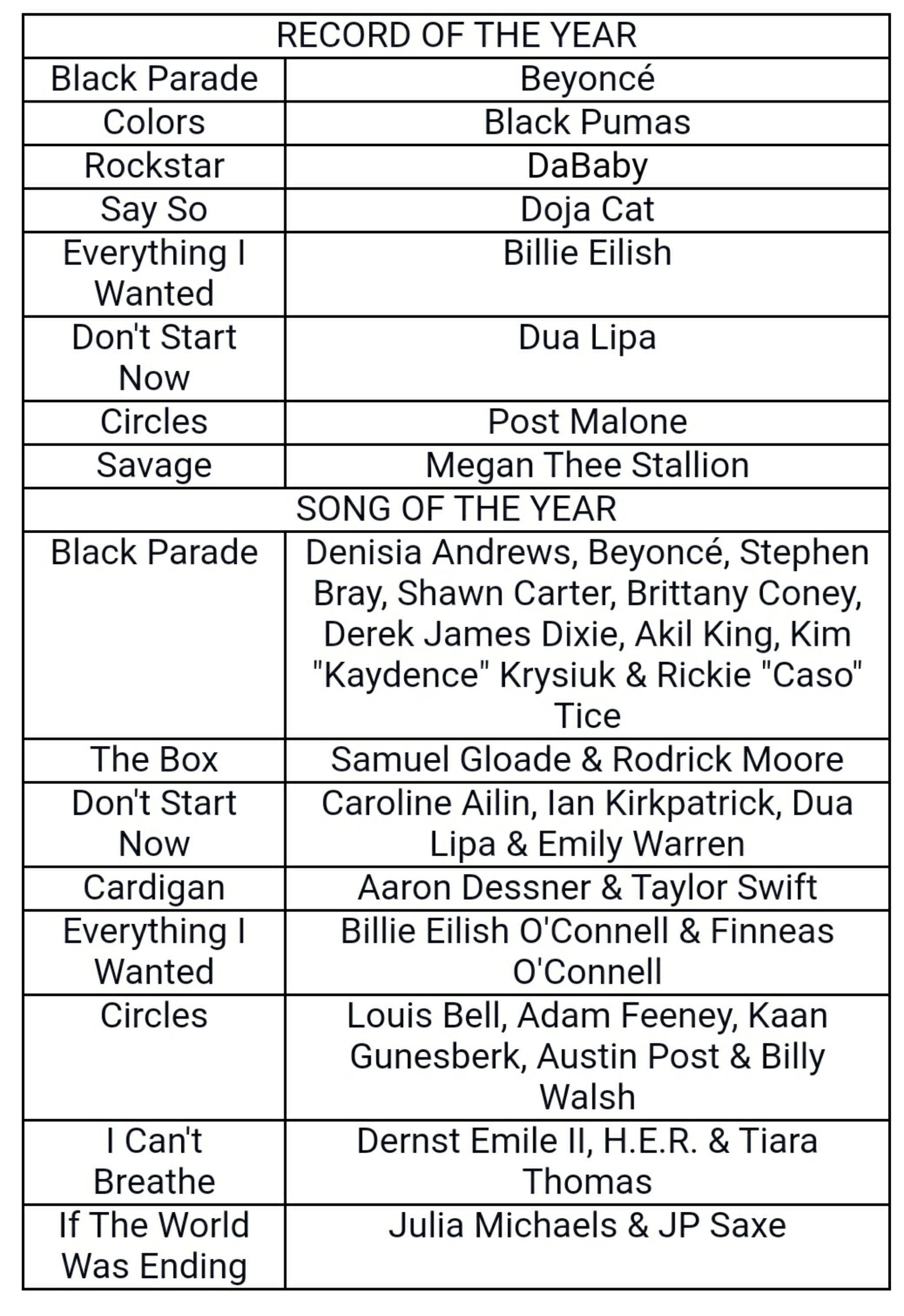
    Below is the list of nominations under the much-anticipated category – Record of the Year and Song of the Year.

  • Disney+ surpasses 100 million subscribers

    Disney+ surpasses 100 million subscribers

    KOLKATA: In the last one year, the direct-to-consumer (d2c) segment has been prioritised by The Walt Disney Company more than ever before, and it has yielded results for the media giant. Its d2c streaming platform Disney+ has surpassed 100 million subscribers, Disney CEO Bob Chapek stated during its annual meeting of shareholders.

    “The enormous success of Disney+, which has now surpassed 100 million subscribers, has inspired us to be even more ambitious, and to significantly increase our investment in the development of high-quality content,” Chapek said.

    Disney+ was launched in November 2019 and has reached the impressive 100-million mark in 16 months. He also noted that the incredible success of the streaming platform in its first year prompted them to accelerate their pivot to d2c first business model. In fact, at the peak of the pandemic, the company reorganised its media and entertainment businesses –  separating content creation from distribution – to boost d2c growth strategy.

    Further, Chapek has revealed that the mouse house has set a target of 100+ new titles per year, and this includes Disney Animation, Disney Live-Action, Marvel, Star Wars, and National Geographic. While the d2c business is the company’s top priority, the robust pipeline of content will continue to fuel its growth, he added.

    Disney+ launched the general entertainment brand Star on 23 February in Australia, New Zealand, Canada and Western Europe. As Chapek shared, the response has been overwhelmingly positive in all the markets. Moreover, the company will drop an exclusive Star+ service in Latin America this summer, as well as Disney+ including Star in other European markets.

    Disney+ Hotstar has also seen rapid growth in India. While India is expected to remain a major growth driver for overall Disney+, the rebranded Disney+ Hotstar is projected to end 2021 with more than 50 million subscribers, a recent Media Partners Asia (MPA) report stated.

    Chapek had expressed his confidence at a recent conference that Hotstar would scale from 30 million to 100 million paid subs by 2024, pointing out to the investment in programming that the company is making.