Tag: Streaming Services

  • OTT platforms may see scarcity in long-format premium content in H1- FY22

    OTT platforms may see scarcity in long-format premium content in H1- FY22

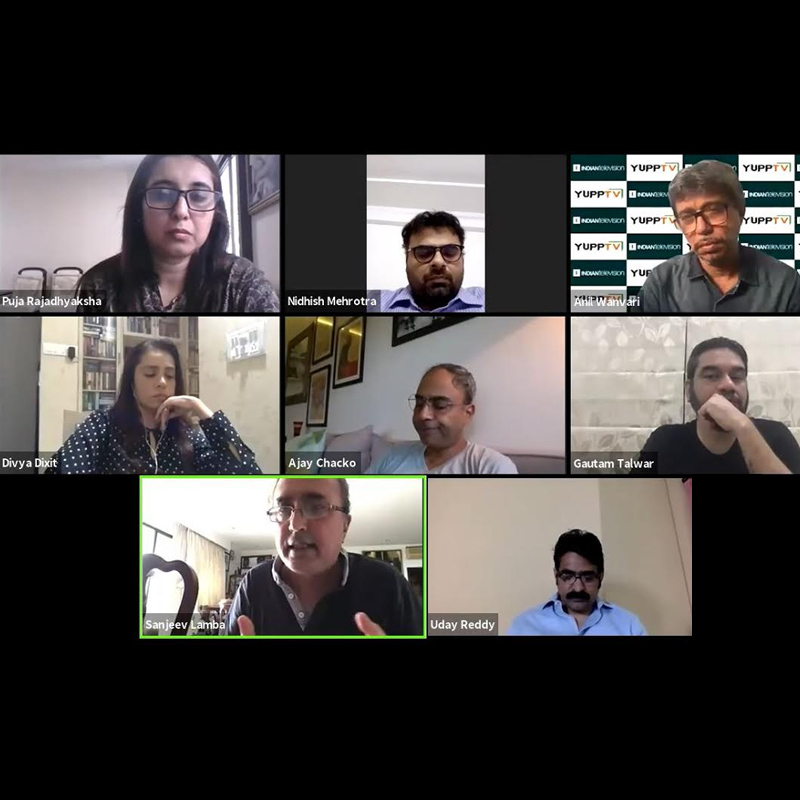
    KOLKATA: It may be the heyday of over-the-top (OTT) platforms but it’s not like the pandemic will not have any impact on their operations. While everything appears great on the surface, the constraints of shooting large-scale projects are going to affect the pipeline of long-format premium originals in the first half of FY22, according to executives who spoke at ‘Future of OTT content and its evolution in India’, hosted by Indiantelevision.com. Being cautious of the situation, the platforms are going to evolve content formats which can be shot amid all the constraints.

    MX Player chief content officer Gautam Talwar accepted that it would run out of shows which were shot before lockdown by the end of the year. The platform is trying to see if it can change the narrative and also trying to explore if there are shows which can be produced within the given constraints. He added that it would look at smaller shows which can be put together in fewer locations with fewer artists, but with interesting stories. Talwar emphasised that OTT platforms have to adapt to the environment. Hence, MX Player will get into the shoot with smaller shows.

    The other players also agreed that there will be a lag in long-format premium content at least for the first half of next financial year.

    Arre co-founder and CEO Ajay Chacko said that the impact of the pandemic will actually be felt in the next financial year from a release perspective. He stated that six months of not being able to shoot would definitely reflect on the content line up of FY 22. While asked if shooting in international locations is a viable idea, he clearly stated that would not be an economic model.

    Hungama Originals executive producer Sanjeev Lamba agreed to his peers’ views but also highlighted that it also depends on what kind of business the platform is in. According to him, the way people are getting affected is going to be different.

    “We believe in mixing up shows. We don’t believe in mega, large scale forever. For us, a small set of shows have worked really well. It’s actually the mass India that is growing for us constantly and mass India loves that. For us, the shoots have already started. We will start launching two-three originals month-on-month from November itself. The idea is to reverse the track of feeling the financial pinch in the Q1 of next FY,” said ALTBalaji marketing, analytics & direct revenue SVP Divya Dixit.

    Eros Now content head Puja Rajadhyaksha said that the industry and the format will evolve with the situation. She added that Eros Now will also look at doing shorter format which can be shot in the next four-five months. Talwar added that the lag in long-format content would not impact users as there is a demand for all types of content with good stories. 

  • ZEE5 records over 50% increase in WoW viewership

    ZEE5 records over 50% increase in WoW viewership

    KOLKATA: During the lockdown, ZEE5, as India’s Entertainment Super-App has continued to entertain and engage diverse audiences by serving bespoke content across languages and a spectrum of devices. The platform’s popularity surged further as the week-on-week viewership soared by 52 per cent for all the shows, reinforcing itself as India’s most preferred destination for digital video entertainment.

    With the extended lockdown, citizens have been confined to their homes looking for a source of entertainment. And amidst this lockdown, leading the digital video entertainment space, ZEE5 has been catering to their diverse audiences through various initiatives and shows across genres and languages. This exceptional surge in viewership has been recorded for shows such as Pavitra Rishta, Trinayani, Rahichi Rahibi Tori Pain, Neeyum Njanum, Ninne Palladhata, Agga Bai Sasubai, Ratris Khel Chale 2 and numerous other shows that recorded a significant surge in views.

    Amongst all, Telugu content recorded the maximum rise in viewership with 157 per cent WoW, followed by Hindi with 106 per cent. Other languages like Bengali, Malayalam and Oriya also witnessed a significant surge.

    With Unlock 2.0, production studios are coming back to a new way of shooting; thus, ensuring consumers get their daily dose of entertainment. ZEE5 is gearing up to continue serving fans with their favourite shows by adding new episodes from 13 July 2020.  And as more people turn to OTT platforms in the current scenario, due to increasing preference for digital platforms, the platform is ready to address this massive traffic for these shows.

  • Dailymotion announces return to normal for streaming quality

    Dailymotion announces return to normal for streaming quality

    MUMBAI: Earlier, Dailymotion made the decision to reduce the bandwidth required to broadcast videos on its platform to mitigate the risk of network saturation. The end of the confinement period in France marks a return to normal for the platform which will again broadcast its videos in UHD definition (4K), Full HD (1080p) and HD (720p).  

    "As network conditions continue to improve, we will remove the definition limitation introduced in March, country by country,” says Dailymotion COO Guillaume Clément. “The goal is to bring back the highest quality of viewing to our users worldwide by 20 May 2020.”

    To prevent network saturation during the Covid2019 pandemic, video portal Dailymotion had rolled out limits to video quality available for streaming on its platform in March. With millions of people under the shelter-at-home directive, the world's internet infrastructure was under stress. To reduce the pressure, major streaming services including Netflix, YouTube made video qualities to SD

  • Global streaming viewership skyrockets 57% in Q1 2020

    Global streaming viewership skyrockets 57% in Q1 2020

    MUMBAI: Streaming viewership saw rapid increase in the first quarter of the year with time spent up by 57 per cent globally year over year. On-demand content drove the lion’s share of this growth, as per a report from Conviva. Moreover, March proved a turning point in the acceleration of streaming, as stay-at-home orders rolled out in countries and regions around the world.

    “On demand content carried the lion’s share of growth, up 79 per cent and capturing 72 per cent share of viewing time in Q1, up from 63 per cent share in Q1 2019. Live programming grew more modestly, up just 19 per cent overall and lost market share to 28 per cent from 37 per cent the previous Q1,” the report said.

    Growth was led by Europe, up 70 per cent, and the Americas, up 57 per cent, while Asia and Africa saw 30 per cent and 25 per cent viewing growth respectively.

    The report also stated that as viewers stayed home in March, consumption habits shifted rapidly. In the span of a single month, comparing February 2020 to March 2020, overall time spent streaming grew a stunning 20 per cent with on demand viewing up 28 per cent.

    However, missed ad opportunities rose up to 26.9 per cent in Q1 as compared to Q4 of 2019 in the wake of Covid2019 pandemic. For 46.3 per cent of missed streaming ad opportunities, the most common issue was the lack of ad demand. While the report predicted that advertising will continue to be dampened by the evolving situation, it will return with fervor in 2021 and beyond. The advertising data included in the report is based on an analysis of 12.5 billion ad attempts in Q1.

  • Netflix adds whopping 15.77 mn subscribers during lockdown, warns of future growth decline

    Netflix adds whopping 15.77 mn subscribers during lockdown, warns of future growth decline

    MUMBAI: Netflix has brought good news for its investors with a high jump in subscriber growth. The streaming service added a net 15.77 million paid streaming customers in the first quarter of 2020, much higher than the previous guidance, due to the worldwide lockdown. However, it has also warned of a decline in viewing and growth further down the road as governments will lift the home confinement orders with progress against COVID-19.

    “Our internal forecast and guidance is for 7.5 million global paid net additions in Q2. Given the uncertainty on home confinement timing, this is mostly guesswork. The actual Q2 numbers could end up well below or well above that, depending on many factors including when people can go back to their social lives in various countries and how much people take a break from television after the lockdown,” the company stated in a letter to its shareholders.

    “Some of the lockdown growth will turn out to be pull-forward from the multi-year organic growth trend, resulting in slower growth after the lockdown is lifted country-by-country. Intuitively, the person who didn’t join Netflix during the entire confinement is not likely to join soon after the confinement,” it added.

    Netflix founder-CEO Reed Hastings later said in an earnings call that the long-term implication is still tough to predict as the world is grappling with uncertainty. But he also added that they are certain about "internet entertainment's" growth in people's lives and it will be gradually more important in the next five years.

    In its first quarter report, the streaming service reported revenue along the line of guidance despite nearly double growth of subscribers as sharp rise in dollar has offset international revenue. The revenue for the quarter was at $5.77 billion, while net income stood at $709 million with EPS of $1.57. 

    As it has paused most of its productions across the world in response to the crisis, the impact will be less cash spending this year as some content projects are pushed out. This will shift out some cash spending on content to future years. Netflix hopes this dynamic may result in more lumpiness in its path to sustained free cash flow profitability. 

    “The one thing that's not widely understood is that we work really far out, relative to the industry, because we launch our shows all see all episodes at once, and we're working far out all over the world. So our 2020 slate of series and films are largely shot, and we are in post production remotely in locations all over the world. So, and we're actually pretty deep into our 2021 slate. So we're not anticipating big moving things around,” Netflix chief content officer Ted Sarandos commented in an earnings call on the production stoppage’s impact on Netflix.

    However, the streaming giant remains equally uncertain about when production will resume. But it has emphasised that it will look for the ability to test for the virus, work with production partners and local governments. It will also try to learn from its current experiences in Iceland and South Korea where productions are still on and will apply the same to other geographies, as Sarandos shared.

  • Indians watched a mix of digital content: BARC-Nielsen

    Indians watched a mix of digital content: BARC-Nielsen

    MUMBAI: There is no formula to catch the audience online. Lately, many of the streaming players have been stating that every genre has different audiences and there’s not just one genre which works better. The latest report by BARC-Nielsen establishes the fact that the top five content for digital audience is a mix of fiction, history, mythology and supernatural. 

    BARC-Nielsen have put together the fourth session in the insights series assessing the impact of COVID-19 on television consumption and smartphone usage. January has been referred to as the pre-Covid-19 period, compared to recent weeks.

    What did India watch?

    Money Heist by Netflix, which caught the attention of streamers, has ranked as the top content in the week. Other trending shows are Mahabharat, Devon ke Dev..Mahadev, Big Boss, Panchayat, Yeh Rishta Kya Kehlta Hain, How I Met Your Mother, Savdhaan India along with news.  Mission Mangal, Angrezi Medium,  Housefull 4, Arjun, The Lion King, Aladdin, Frozen II, Good Newzz, Shikara are the most watched movies online. The report has been made based on content of Amazon Prime, Hotstar, MX Player online, Netflix, Voot and ZEE5. Money Heist, Stranger Things, Out of Love, Special Ops, Little Things, Sex Education, Asur, Hostages, Narcos, Tom Clancy’s Jack Ryan were among the top ten original series.

    How did the consumption go up?

    As per the report, overall VOD consumption is at four hours per week, up by 12 per cent. However, the 35-44-year age group’s consumption has seen the highest jump at 34 per cent. While the consumption in metro cities has gone up by 19 per cent, the growth in non-metro city is 23 per cent.

  • OTT: The new kid in town for brands to reach their TG

    OTT: The new kid in town for brands to reach their TG

    MUMBAI: OTT consumption has been on a steep upward curve in India for the last three years. Now, after the country has entered a lockdown phase, taking social life out of lives, the media and entertainment industry is suddenly abuzz with a new wave of growth. More people are maintaining social-distance and staying at home, tasting new content and exploring new platforms in this unprecedented crisis. While the staggering change in the M&E landscape is already underway, the sudden lifestyle change is truly a bonanza for OTT platforms. 

    According to the latest BARC-Nielsen report, the time spent per user on video streaming apps excluding YouTube grew by 11 per cent in the second week of lockdown. Original series has driven the growth, followed by movies. The statistics only reaffirms that the new-age viewers don’t let go of any opportunity to binge, be it a lockdown, a vacation or even commute time during a busy day. 

    Therefore, it’s not surprising that advertisers and agencies, who have been riding the AVoD bus, rolling out campaigns or getting into branded integration deals with the streamers, will take more OTT platforms into consideration for media planning. That is good news for India's media and entertainment companies like Star, Zee, Sony and Viacom18. Their linear television business model has been hit by economic static, especially as production has stopped and advertising revenue will see a bump.  

    Despite the huge reach of linear TV, the new-age urban audience have already been considering streaming services as its source of entertainment. IPSOS Predictions 2020 also state that 72 per cent of urban Indians watch more TV from streaming services opposed to cable TV. This shift to OTT is now being accelerated by the stay-at-home direction, especially as theatres have been shut down and leading GECs are unable to churn out fresh content.

    Even before this sudden surge in viewership, brands are looking at OTT platforms primarily because of these factors for the last couple of years to reach out to end consumers. They also look for brand safety, integration opportunities, full video views, and indeed, the ability to sharply target a specific set of consumers/cohorts. Home-grown players like ZEE5, Hotstar, VOOT, MX Player and SonyLIV are gradually taking space in the media mix of brands. Moreover, now that live events and big sporting tournaments are getting cancelled, coupled with the absence of new content on TV, advertisers can potentially shift ad spend to digital despite scaling back on the expense. The platforms can increase ad-inventory based on an increase in viewing hours as well as revenue per user. 

    ZEE5 has seen a staggering 22 per cent increase in MAU and a 15 per cent increase in DAU compared to last month. The platform has witnessed the upsurge in viewership across all geographies. Because viewers have plenty of free time, the streaming service has seen the highest increase in binge-watching with double-digit growth in long-form content consumption. Moreover, the platform has revealed its content lineup for April with a mix of popular old shows, Korean shows, and digital original films.  

    "In the era of social distancing and limiting exposure to the external world, consumers and viewers are turning to forms of digital entertainment and Eros Now is playing its part. We have seen an increase of 200 per cent in paid subscribers on a daily basis and App Annie shows a 78 per cent increase in daily traffic on the platform,” Eros Now CEO Ali Hussein said.

    The platforms are experimenting with the pattern of content offering, too. ZEE5 has made some of its premium and new original content available for free, breaking down the paywall, the first player in the industry to do so. Amazon Prime Video has also rolled out a similar strategy making a selection of kids and family content available free to watch for all Amazon customers. Eros Now consumers can access two months of free Eros Now subscription if they subscribed prior to 31 March.

    While a social cause is undoubtedly driving such decisions, OTT platforms are going to see a jump in users even after the crisis is over. As more audiences are getting to taste the premium content, many of them will later opt for subscriptions. Other than that, if this lockdown continues for more than a month, a significant chunk of ad spend will also start moving towards OTT from TV as the latter will be bereft of fresh content for a long time. As brand-building activity has suddenly stopped, many brands will look at OTTs to reinitiate the spending given the recent boost in viewership. However, we will see more clarity in the space in due course of time.

    According to the FICCI-EY 2020 report, digital advertising grew to Rs 191.5 billion in 2019, 24 per cent higher than in 2018. Ad growth was driven by increased digital media consumption across social media, news, gaming, sports and entertainment, leading to a growth in sellable inventory.

    GCPL media services head Subha Sreenivasan Iyer said that the ability to target a specific set of consumers/cohorts is what makes sense for brands while choosing OTT platforms. She also added that there's a wide variety of content, multiple types of readily-available audience, enabling sharper targeting across OTTs.

    Loreal media head Neel Pandya pointed out the factors which drive brands to OTT platforms: brand safety, ability to drive full video views, content associations and partnerships that can go beyond advertising and more creative and out-of-the-box thinking.

    He added that apart from conventional video buying options, there are opportunities in OTT platforms that can be used to influence consumers across the journey. The key factors include building salience through associations and integrations, building advocacy by creating content and leveraging celebs that also have massive social media following. He added that OTTs help drive consumers to the brand's online shop through innovative formats designed to drive traffic.

    GroupM change planning and transformation principal consultant Vishal Jacob noted that while all the brands are depending on TV, they don’t mind expanding their spend to online video. He noted that when it comes to online video, predominantly there are two options –YouTube and OTT.  But, he added, OTT players provide full visibility to the ads and a stronger brand safety environment. According to Jacob, OTT advertising is largely dominated by CPG players like Colgate, Unilever, GSK, Pepsi, etc.

    GroupM India partnerships and trading president Ashwin Padmanabhan stated that as OTT platforms have started engaging a huge number of consumers, significant ad spend is moving there. He added that brands like ZEE5, Hotstar, Voot, SonyLIV are investing in technology, leading to higher engagement and brands are looking at capitalising that.

    “In essence, content on OTT is quite similar to TV in its audio-visual and storytelling but with a large scope of multi-level targeting by way of multiple cohorts. So categories that choose TV are a natural fit for OTTs as well,” GCPL’s Iyer added.

    However, there are a few existing challenges. As Indiantelevision.com spoke to experts, all of them mentioned the need for a single currency to measure ROI. “A single currency is the need of the hour,” as Iyer puts. GroupM’s Jacob also added that a lot of brands are now questioning the effectiveness of OTT platforms as it has been taken largely on words till now. 

    “Duplication among OTT and other digital platforms is very high. And currently, there is no major platform where we can do unified targeting reducing this duplication and bring about efficiencies,” Loreal’s Pandya echoed the tone. However, this challenge bothers linear TV, too. 

    “Another (challenge) is the cost-effectiveness; it’s important to remember that running longer films/edits may not really be a viable option given the costs,” Iyer added. Pandya said that keeping aside tentpole properties, the platforms still lack the scale that some of the large platforms have.

    However, leaving aside the challenges, ad spends on OTT are set to grow. According to experts, advertising on OTT will see an increase between 10 to 15 per cent in 2020 (the numbers may be revised after the COVID-19 impact is taken into account). The future looks more promising as 26 per cent growth is expected by 2025.

  • Lockdown binge-watching a boon for OTT

    Lockdown binge-watching a boon for OTT

    MUMBAI: This unprecedented crisis called COVID-19 has turned out to be a blessing in disguise for OTT platforms. With people locked indoors, the only refuge has been their smartphones, giving way to, possibly, the next wave of growth for OTT companies. New-age entertainers, such as ZEE5, MX Player, Voot, Netflix and Amazon Prime Video, seem to be the obvious beneficiaries as people stay cocooned in the comforts of their homes for weeks.

    Will ad and subscription revenue go up along with the viewership?

    According to the BARC-Nielsen report, the time spent on smartphones, the main device to consume online content in India, has increased by almost three hours per week in week 2 of COVID-19 disruption. Time spent on video streaming apps also grew by 11 per cent which was driven by original series and movies. Hence data has proved what experts predicted at the beginning of the crisis.

    “There will be an impact on all industries. OTT is one of the few sectors which will have a silver lining. Bandwidth for data consumption for telcos will also shoot up. A lot of reality shows and soap-operas which are on a running model have suddenly dried up for short to mid-term and TV channels have to show alternate content. However, when you are confined at home, content consumption both on TV and OTT will go up dramatically. While the supply chain has certainly been affected, content creators and media players will have to be smart enough to see how they build their business continuity plan of content and how they maximise the increased TV or OTT viewership,” says PwC India media, entertainment and sports advisory, partner and leader Raman Kalra.

    SBICap Securities institutional equity research head Rajiv Sharma reaffirms that this is a great thing for the sector. He believes the industry will see a quantum jump in OTT viewership and consumption. Sharma adds that while TV channels are running out of content, OTT platforms have a lot of content which has not yet been consumed by all viewers. According to him, some platforms like Netflix can always have more English content. He, however, reminds that if the lockdown gets prolonged to three to six months, then OTT platforms too will struggle to churn out fresh content.

    Sharma adds that movies can play a role here. Those that were slated for a theatrical release, but had to be called off due to the current situation, can be released digitally through OTT platforms. Irrfan Khan-starrer Angrezi Medium had a short run in theatres before it decided to make its digital debut on Disney+ Hotstar.

    Kalra believes that the situation could even boost subscription for OTT platforms. As more people consume content, some of them will get converted into paid subscribers, bringing in revenue to the digital medium. Sharma also believes that these new subscribers will rake in the moolah for OTT platforms once the situation stabilises.

    The next 90 days will witness growth for the space, according to Sharma. Ad spends will shift to digital, but at a lower rate than the normal. According to him, overall ad sales combining TV and digital may decline by 15-20 per cent if COVID-19 disrupts the business for more than 30 days.

    “With this surge in traffic, telecom operators are struggling to provide adequate bandwidth. When bandwidth consumption reaches the threshold, the user experience gets affected. At this point, companies wouldn’t want to show ads because that will put an extra burden. Currently, ad-dollar is down and no brands want to push them. The only ones that can break through are those that can create relevant content around COVID-19,” says DigitalKites senior vice president Amit Lall says.

    The promise of innovative offerings

    Eyeing opportunities, some platforms have opened up their premium content for free viewing during this period. Some others are trying to push their content to television or partnering with payment gateways. These are inorganic growth mechanisms that are being targetted.

    Amazon Prime Video has brought out a special catalogue of children and family content, available for free; and ZEE5 has also made an array of premium content available on the AVOD side. Eros Now is offering a free two-month subscription. Three of Alt Balaji's shows are being run on Zee TV.

    While media planners laud the social cause behind these moves, they also mention that this is a big opportunity for the SVoD players to get consumers to sample premium content. Media professional Lalit Agrawal says that this sampling will help consumers make an informed choice about the quality of content when they would want to subscribe in the future after the turmoil is over.

    Lall says, “For two to three months, consumers will get to taste the content and since everybody has a sizable inventory in terms of content, once viewers are habituated, they can stick. These people who are now getting into the wheel will move up to pay.”

    Indeed, this phase, caused by a sudden change in lifestyle, is scripting a new chapter for online content with more consumers adapting to streaming services and existing ones increasing the uptake and sampling more platforms. Both AVOD and SVOD platforms will try to convince new floating users with not only great content but also volume. 

  • Small, mid-budget movies may take OTT route before landing in theatres amid COVID-19 crisis

    Small, mid-budget movies may take OTT route before landing in theatres amid COVID-19 crisis

    MUMBAI: A number of countries have come to a standstill along with major industries as the number of COVID-19 infections keeps increasing unabated. Theatres across India have shut down amid a 21-day-long lockdown and scheduled film releases in the country too are cancelled. Since the theatrical window is now a closed option, some of the producers and distributors might look at streaming platforms for an early release. Many major Hollywood studios have decided to make their movies available on streaming services in the US. Will India follow the pattern? Not immediately.

    The economics of movies are far from simple. Production budget is not the only major investment for a movie and ticket sale is not the only source of revenue anymore. Hence, experts believe that large-scale films in India will wait for this crisis to get over to have a proper theatrical release but mid-scale or small-budget films have higher chances of looking at streaming releases.

    SBICap Securities institutional equity research head Rajiv Sharma says that  some of the movies which are ready to release and can not be released may find themselves with OTT names. Sharma says if this lockdown is beyond 14 April, producers and distributors will need liquidity, particularly the regional film makers as they will  need to pay stuff, production costs. Hence, he thinks as such something needs to happen there.

    Elara Capital VP – research analyst (Media) Karan Taurani thinks only the smaller-budget films of Rs 10-15 core range might come but larger-budgets will still wait for theatres to open. He thinks  large-budget films will not come directly to TV or digital because the economics is very different, and too much money is at stake. Moreover, if budgets are very high, digital or satellite would not be able to compensate that budget.

    “OTT players, especially deep-pocket ones like Netflix and Amazon, will be willing to  pay for such movies as they are building their local /regional content libraries. This is a time to build that loyalty but the problem is Netflix or Amazon may find it easy but for other broadcasters who also have their OTT business may find it tricky given sharp pressure on the ad revenues on the TV side of the business. Nonetheless, they will attempt to pick a few, at least on the regional side, if possible,” Sharma adds.

    During the lockdown, over-the-top platforms have already emerged as beneficiaries as viewers now don’t have any other option of entertainment. Some of the major platforms even have pushed a few premium content for free. While content-driven digital-only films are already turning out as big trend, the platforms might even look for direct releases of the ones which have postponed release for indefinite time. According to the FICCI-EY 2020 report,  the filmed entertainment segment grew because of increased domestic theatrical revenues and growth in both rates and volume of digital rights sold. Digital rights continued to grow in 2019 with an increase in revenues from Rs 13.5 billion in 2018 to Rs 19 billion in 2019. Considerably, around 50 films made direct debut on digital platforms.

    Taurani mentions that it all depends now on how many cases develop in the next 15 days and that is the deciding factor. Also, we have to see if people will move out or the government doesn't lift the lockdown. He also cited the example of China which has opened around 1000 screens and they have slowly started revising the ticket prices downwards to motivate people to come to cinemas.

    Until there are no cases of infection or proper clarification that cases won’t rise in india,  people will probably have second thought about going to the cinema. According to him, the occupancy of cinemas, which operates 30 per cent for the multiplexes, wil get at 8-10 per cent for start which will also lead to losses.

    “Low-cost producers will be more interested in releasing on streaming platforms. Other than that, if they can get at least Rs 50-60 crore, they won’t mind. Later, they can even go for a theatrical release for lower but additional revenues,” Sharma states. Taurani is of the view that small-budget films will be able to easily recover the cost.  

    Members of the producers' guild, however, refused to comment when reached.

    Big films like Sooryavanshi have postponed their releases in this unprecedented situation. Theatres across the country did not have to shut down for such long time except during the 1984 riots. As the media and entertainment industry is now in uncharted water, there are several pressing questions which will need more time to be answered.

  • Multi-territory video streaming service Hooq files for liquidation

    Multi-territory video streaming service Hooq files for liquidation

    MUMBAI: Multi-territory video streaming service Hooq said last week that it has filed for liquidation as giant players are looking more into streaming services and the competition intensifies across the globe.

    The service was launched in 2015 by the Singapore-based telecom company Singtel and was also backed by Warner and Sony. Along with India, Hooq was also available in the Philippines, Thailand and Indonesia.

    “Singapore Telecommunications Ltd (“Singtel”) wishes to announce that HOOQ Digital Pte Ltd (“HOOQ”), a joint venture company in which Singtel has an indirect 76.5 per cent effective interest, has commenced a creditors’ voluntary liquidation. The liquidation of HOOQ is not expected to have any material impact on the net tangible assets or earnings per share of Singtel,” it said in a stock exchange filing.

    According to media reports, Hooq said in a statement that it had been unable to grow fast enough to keep up with global and regional rivals, and also noted “significant structural changes” in the over-the-top (OTT) video market in the five years since its launch.

    “Global and local content providers are increasingly going direct, the cost of content remains high, and emerging market consumers’ willingness to pay has increased only gradually amidst an increasing array of choices,” said Hooq.

    “Because of these changes, a viable business model for an independent, over-the-top distribution platform has become increasingly challenged,” it added.

    Hooq has appointed Messrs Lim Siew Soo and Brendon Yeo Sau Jin as its joint and several provisional liquidators. A shareholder meeting and creditors’ meeting have also been set for 13 April.

    Back in 2018, Hooq struck a unique deal with India’s leading streaming service Hotstar. Under the partnership, HOOQ’s 6,000 hour catalogue of Hollywood TV shows and movies were made  available for Hotstar Premium users. It also started offering more than Pay TV channels to their premium offering in partnership with brands across Asia.

    Experts already warned about upcoming consolidations and exits in the media industry. Towards the end of 2019,  Hong Kong-headquartered PCCW Media’s Asian video streaming service Viu also  decided to fold its India operations.