Tag: Streaming service

  • Netflix tests ‘Mobile+’ plan in India priced at Rs 299 a month

    Netflix tests ‘Mobile+’ plan in India priced at Rs 299 a month

    KOLKATA: Over the last two years, streaming giant Netflix has been experimenting with its pricing model as well as marketing strategy in India. After seeing massive success of its first mobile only plan, the company is testing “Mobile+” plan at Rs 299 per month.

    “We launched the mobile plan in India to make it easier for anyone with a smartphone to enjoy Netflix. We want to see if members like the added choice Mobile+ brings. We’ll only roll it out long-term if they do,” a Netflix spokesperson told Indiantelevision.com.

    The Rs 299 plan lets users stream content in HD quality on one screen at a time, be it mobile, tablet, or desktop/laptop.

    India was the first country where the streaming service launched its mobile only plan at Rs 199 per month in July 2019. The existing mobile plan supports streaming in SD only on a single mobile device at a time. Notably, Netflix members in India watch more on their mobiles than subscribers anywhere else in the world. Post the launch, the streamer stated the ambitious low-priced mobile plan saw better uptake than the initial testing suggested.

    All markets or households don’t have wired broadband connection yet but most of them have a good smartphone and high-speed mobile data. Hence, the new plan, if launched, will give more options to consumers. However, if consumers don’t find value in it, Netflix will not roll it out more widely.

    Netflix recently unveiled its impressive 2021 line up of 40 plus originals. “Everyone has different taste, different preferences, different moods and they watch Netflix on different devices. Whether you are watching alone or with your family, whether you have 20 minutes or two hours, we work hard to make sure Netflix always has something great for you. This is exactly why we create so many stories across genres, languages, formats for you to choose. This year we are ready to take our next big leap to entertain India,” Netflix India vice president content Monika Shergill said.

  • #Throwback2020: The rise of hyperlocal OTT platforms

    #Throwback2020: The rise of hyperlocal OTT platforms

    KOLKATA: A number of pure play language-specific over-the-top (OTT) platforms entered the streaming space across the country throughout the year, with deep-pocket big streamers also expanding into major regional languages. Notably, the new platforms have been launched not only in major regional markets but in long-tail ones too.

    Of all the new entrants, Aha has emerged as the most eye-catching. The Telugu OTT entered the market in early 2020 but with the onset of the pandemic, it had to push back some of its plans. It is owned by Arha Media and Broadcasting Pvt Ltd, a joint venture by Geetha Arts and My Home Group, one of the largest construction groups in south India. During its official launch in November, the promoters vouched that they would pump a high amount of money into the platform.

    While it is targeting 50 million Telugu speaking internet users who are already consuming online videos, the huge appetite for language content has helped it to five million downloads and 18 million unique visitors in a few months. Aha has fixed a price point of Rs 365 per year, a cheaper and more affordable price point compared to bigger players.

    A dedicated Malayalam OTT platform also entered the landscape this year. Studio Mojo, the team behind India’s first OTT platform iStream.com, launched the independent OTT platform Koode in September. Koode was born with the vision to help Malayalis across the world discover content they love. Along with creating premium content, the service aims to focus on curating content from other social media platforms too.

    However, unlike other niche platforms, Koode has not adopted a subscription-based business model. Based on the learnings from iStream.com, Studio Mojo has kept the content free for users. Going forward, it will have branded content and pay-per-view model as its revenue stream.

    South Indian languages, Bengali, Marathi have always been at the forefront of media and entertainment revolutions. Surprisingly, few OTT platforms catered to or made a mark in long-tail markets. Hoping to buck this trend is CityShor.TV, another language-specific OTT platform that debuted in the Gujarati market.

    Although the quantity of content offered by CityShor.TV is not at par with services like Aha or Hoichoi, it has promised to bring at least one original each month for its users. Initially in a bid to lure viewers, the platform is running a promotional offer of Rs 100 in December for its yearly subscription plan, to be hiked by Rs 50 each month till February.

    Another OTT platform which is ready to hit the market very soon is Planet Marathi. The Marathi service, which looks to cater a target audience of 100 million globally, will offer a wide range of content including films, theatre, TV shows, and infotainment. Further, it will also stream content like karaoke songs, recipes, yoga, health, and live-fitness videos. Singapore-based Vistas Media Capital recently announced its plans to invest up to $5 million in Planet Marathi.

    In addition to that, a second Marathi OTT Letsflix is all set to enter the arena.

    It may seem like these new entrants have a minimal audience but the next wave of OTT growth is coming from the hinterlands of India. The annual media and entertainment report by the Boston Consulting Group (BCG) states that 35-40 per cent of the consumption on streaming services happens in local languages. Even the hours of original content in vernacular languages have gone up by 3X in 2020 from 2018. No doubt, this year has registered the rise of the regional OTTs, and it’s only onwards and upwards for these platforms from here on.

  • #Throwback2020: The year the world of TV changed

    #Throwback2020: The year the world of TV changed

    KOLKATA: If there's one signal that 2020 strongly gave: it was that consumption of content via streaming, both video and audio, is here to stay. And media and entertainment organisations globally have to pivot around that change in viewing that has taken strong root; that they have to go direct to consumer.

    Yes, the doomsayers have for a few years been shouting from the rooftops that the days of TV are numbered, considering the rash of consumers who have cut the cord on cable and satellite TV. Yes, media conglomerates have been pottering around with digital, not fully confident that Netflix’s streaming gambit is the future. But the Covid2019-induced lockdown, which accelerated digital adoption by a few years, not only allowed OTTs to take flight and soar, it also gave linear TV a new lease on life.

    For traditional broadcast outfits, cable, satellite and terrestrial transmissions are not the only modes of distribution – wherein they have to go through intermediaries to get their content to viewers – it has become crucial, a question of survival to deliver content via IP directly to viewers who watch what they want to watch and whenever they want to. Streaming is at the forefront of change that they are undergoing.

    Global media giants overhaul organisational structure:

    The OTT revolution was started by Netflix a decade ago and the platform has led the change for years now. But following the success of the Reed Hastings-led streamer and Amazon Prime Video, large media conglomerates which traditionally offered TV content and owned rich movie libraries are placing big bets on their digital arms. The Walt Disney Co (Disney) is the greatest example of this.

    While the media empire was already embracing a new future gradually under its new CEO Bob Chapek, it accelerated the reorientation due to the challenges posed by Covid2019. In October, the company revealed its plan to centralise its media businesses into a single organisation that will be responsible for content distribution, ad sales and Disney+. Kareem Daniel has emerged as the star of the re-organisation as he has been promoted to lead the new media and entertainment distribution group. After the announcement, Chapek also acknowledged that Covid accelerated the rate at which they made this transition, albeit the transition was bound to happen anyway.

    Later at its investor day, the entertainment giant shared some glimpses of “tremendous success” achieved through its portfolio of streaming services with 137 million subscribers worldwide. Riding high on this humongous wave, it now expects its streaming services to hit 300–350 million total subscriptions by fiscal 2024.

    Moreover, a new service is also in offing, from the international general entertainment content brand Star. Hence, it is clearly inevitable that Disney will put all its money behind streaming over in the next few years.

    Warner Bros is another media giant raising the stakes in the digital game, as it recently unveiled its plan to launch its slate of 2021 films on HBO Max on the same day they’re released in US cinemas. It could be seen as a crisis-led response but it indicates how streaming could significantly shorten the theatrical window overall in reaction to rapidly changing consumption habits. Like Disney, WarnerMedia also rejigged its organisational structure this year under new CEO Jason Kilar. He said the changes were meant to help WarnerMedia successfully reach consumers amid accelerated direct-to-consumer demand during the pandemic. While the two Hollywood giants made a buzz recently, other media companies like NBCUniversal, ViacomCBS, Discovery are also experiencing the same wave of reorganisations and betting their futures around streaming video.

    Indian media companies rejig organisation too:

    Cut to India. Zee Entertainment Enterprises Limited (ZeeL) has been investing highly in its streaming business in the last couple of years. ZeeL CEO and Punit Goenka announced that the company would gather all of its digital assets under a single umbrella, which includes Zee5 (domestic AVOD+SVOD), Zee5 Global, SugarBox and digital publishing to align with its future strategy. As a part of the restructure, Amit Goenka took over as digital businesses and platforms president. 

    In line with the global overhaul, another major broadcaster Star India (a part of Disney post 21st Century Fox acquisition) is also facing major shake-up at the top executive levels. Star & Disney India president Uday Shankar announced his departure from the organisation and Star Sports CEO Gautam Thakkar also called it quits just a few days after Shankar’s resignation. A separate head of Disney+Hotstar, Sunil Rayan, was roped in after a global search to replace Ajit Mohan, who left to head Facebook India.

    Many industry sources indicated that Disney Star India would reduce its spend on TV, and its sports content catalogue and increase its focus on Disney+Hotstar. Expect considerable muscle to come behind Disney+Hotstar as its subscribers makes up 30 per cent (26.8 million subscribers) of the total subscriber base of parent Disney+.

    Traditional broadcasters put more money in online content:

    Another noticeable trend in 2020, other than the restructuring that has swept through the Indian streaming services, is higher investment in content. Sony Pictures Networks India (SPN) entered the streaming war on the back of its TV content and sports portfolio. With more global and homegrown rivals ramping up their spends, it was not able to make a mark in the race. In mid-2020, SPN relaunched its digital service SonyLIV 2.0 with increased spends on original content and a fresh brand identity. With the rebranding, SonyLIV has emerged as the dark horse in the Indian OTT space, especially due to successful shows like Scam 1992 which have been appreciated widely.

    Among other broadcaster-led streaming platforms, Viacom18 also upped its game in premium content with the launch of subscription service Voot Select. Regional broadcasters like Sun TV are also not far behind. The south-based network is planning to invest around Rs 200 crore in its digital venture SunNXT. Not to be outdone, Public broadcaster Doordarshan is also building up its digital portfolio through its YouTube channels.

    What do the numbers say?

    The reason for everyone moving their guns in one direction could be explained through numbers. The OTT market is expected to grow at a CAGR of 28.6 per cent over the next four years to touch revenues of $2.9 billion, a report from PwC forecasts. Moreover, the pandemic has tuned more consumers to pay for subscription-based services as the segment has registered a 55-60 per cent year-on-year growth in India in 2020. Further, more than half of these new users are likely to continue using the service, according to the annual M&E report by the Boston Consulting Group (BCG). Even the pay-per-view model is also gaining traction as mental barriers for online payment are slowly lifting. To grab a slice of this growing market, all the traditional players are also trying to secure a place for themselves in the consumers’ consideration sets.

    For Indian companies, the story may play out differently as compared to their western counterparts. They will be surfing two concurrent waves: the digital one and the traditional linear TV, as they cannot overlook the latter courtesy its potential to grow further.    
  • ‘Value proposition’: Why OTT platforms are here to stay

    ‘Value proposition’: Why OTT platforms are here to stay

    KOLKATA: The Covid2019-induced lockdown was boom time for over-the-top (OTT) players. Making obvious gains at the expense of shut theatres and lack of fresh content on television, SVoD services drew in millions of subscribers who were more than willing to pay for their entertainment, which is why experts believe that there will be no significant churn post-pandemic, thanks to the value proposition offered by OTT platforms.

    Consequently, the pressure has been on the streaming services to provide more content and ensure they keep delivering to users, pointed out Disney+Hotstar president Sunil Rayan. However, the streamer has taken multiple bets like launching direct-to-digital movies as multiplexes were closed. Although it has been a hectic nine months, it has led to the point where it’s normal for people to come to OTT platforms for most of their entertainment needs.

    “Leaving aside the concerns for OTTs, this platform has grown in clarity and prominence. It has been a great opportunity for talented people in the country, huge opportunity for actors, singers, musicians and technicians to present their skills,” ministry of information & broadcasting (MIB) joint secretary Vikram Sahay said at Confederation of Indian Industry’s (CII) ninth edition of the Big Picture Summit 2020.

    Amazon Prime Video country general manager Gaurav Gandhi mentioned that the sector has already seen huge interest in the last few years and the last few months have only accelerated the change. According to him, customer habits are transforming rapidly, and for good. Moreover, users haven’t missed the fact that streaming services are trying to bring a very different premium quality content experience for them – after all, the Indian consumer is very value-conscious, quipped Gandhi. Hence, this adoption is not short term and there would not be a significant churn after people go back to their normal lives, he added.

    One of the trends that OTT platforms have seen is a shift towards watching in the living room as opposed to mobile device viewing, highlighted Rayan. “So that has helped us prepare for more traffic, higher bit rates and all. Will these trends continue? Maybe, maybe not, but the good news is it helps us deal with multiple behaviours. Predominantly a lot of people used to watch OTT on mobile devices and now they are moving to living rooms. Maybe they will come back to mobile devices, though the good news for OTT is that it is accessible on all these different platforms,” he remarked.

    Gandhi also agreed, but qualified this observation by mentioning that mobile viewing is also going deeper. As Amazon Prime Video has subscribers in over 4,300 cities, it indicates subscription service is not confined to a limited part of the country, he noted.

    Overall subscription has seen higher adoption during this period, especially as users have become more accustomed to online payment. “While our ad revenue based business was looking very well, it (SVoD) was completely challenging for us because it was a service that was born in the pandemic. We could map how users migrated from free service to subscription service and that acceleration was significantly higher than we thought,” Viacom18 digital ventures COO Gourav Rakshit shared.

    While investment in OTT content is at its peak right now, the comparatively smaller players believe staying true to their value propositions will help them to create a viable business model, Shemaroo Entertainment CEO Hiren Gada said. Eros Digital general counsel and legal head Bishwarup Chakrabarti echoed the sentiment, adding that it’s not about choosing X or Y, but going for “and.” According to him, consumers are trying to get a feel for what they have access to.

    However, amid the rapid growth of OTT platforms, the fear of censorship has also risen online content has been brought under the ambit of the MIB. Allaying concerns, Sahay stated that there shouldn’t be scepticism around the government’s decision. But he averred that certain sensibilities, especially of children, need to be protected. “Therefore, we will continue to be in touch with the industry to work out a (regulatory) model which is acceptable to all of us, so that nobody can say India has a large amount of content which it cannot be proud of,” he concluded.

  • In with the new: Zee5 Global to end 2020 with a bang

    In with the new: Zee5 Global to end 2020 with a bang

    KOLKATA: Zee5 Global has lined up a fresh slate of originals to wind up 2020 with a bang. The OTT platform is ending the year with the robust content flow it has maintained throughout the year.

    Darbaan premiering on 4 December is inspired by a Rabindranath Tagore short story on love, loyalty and sacrifice. This Zee5 original film features Sharib Hashmi and Sharad Kelkar in lead roles.

    Lined up for release in the second half of the month is a remake of popular Nordic television series Black Widows, with an ensemble star cast that includes Mona Singh, Raima Sen, Swastika Mukherjee, Shamita Shetty, Sharad Kelkar, Parambrata Chattopadhyay, and Aamir Ali. Bisra Dasgupta has directed this highly-anticipated story of three oppressed women taking the bull by the horns to put an end to domestic violence. Black Widows premieres on 18 December exclusively on Zee5.

    Also lined up for release on 18 December is the world digital premiere of the Bangla movie Password. And on 29 December, Milind Soman and Shaheer Sheikh are set to share the screen in a magnum opus period drama Paurashpur, a Zee5-Alt Balaji collaboration.

    Apart from these, marking its second anniversary, Zee Keralam will be streaming two new serials – Kaiyethum Doorath that premiered on 30 November, and Manam Pole Mangalyam set to release on 21 December.

    Other new TV shows available on Zee5 are the much-awaited Zee Bangla show Aparajita Apu, which debuted on 30 November, Zee Tamil show Thirumati Hitler launching on 14 December, and Zee Punjabi fiction show Maava Thandiyan Chavan, releasing on 15 December.

    The streaming platform will also premiere Zee TV’s latest daily soap Kyun Rishton Mein Katti Batti, the story of a married couple who begin to have differences in their relationship, on 14 December, featuring new episodes every day.

    Among its year ender specials, Zee5 will air the popular Zee Rishtey Awards 2020 on 27 December. The streaming platform is also hosting a Global Content Festival through December, inviting entries for feature films, documentaries and shorts from independent film makers across the world, giving them a chance to showcase their content on Zee5.

  • StreamFest is here for Indians to ‘Netflix & Chill’

    StreamFest is here for Indians to ‘Netflix & Chill’

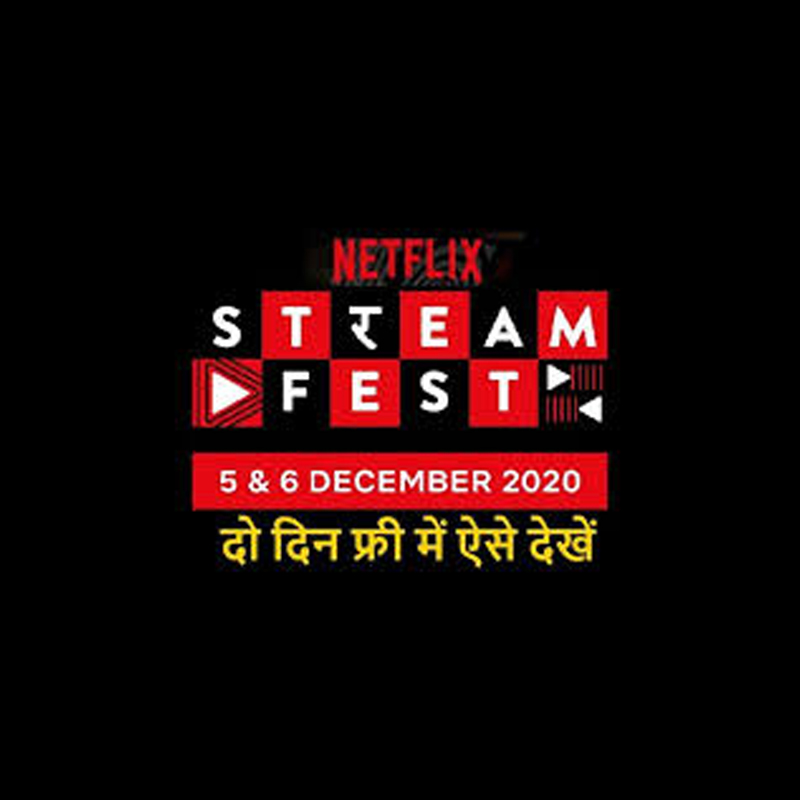
    KOLKATA: The much-hyped Netflix StreamFest is finally here. The global streaming giant is offering Indian users free access to its vast content portfolio during this weekend (5-6 December).

    "At Netflix, we want to bring the most amazing stories from across the world to all fans of entertainment in India. It's why we're hosting StreamFest: an entire weekend (5 December 12.01am – 6 December 11.59pm) — of free Netflix," Netflix India vice president (content) Monika Shergill said in a blogpost.

    Non-subscribers to Netflix can sign up with their name, email or phone number, and password and start streaming without any payment. However, those who sign up for StreamFest will get access to only one stream in standard definition. This has been done to ensure everyone who comes in gets the best experience.

    "So, during StreamFest, if you see a message saying ‘StreamFest is at capacity’, don't worry. We'll let you know as soon as you can start streaming," Shergill noted.

    Netflix has been promoting StreamFest aggressively through television and its social media platforms for over a month. It has released ad films featuring Anil Kapoor, Yami Gautam, and Nawazuddin Siddiqui. A recent promotional video featuring prominent content creators including Tanmay Bhat, YouTuber Ashish Chanchalani, former FilterCopy actors Ahsaas Channa and Aisha Ahmed, and vlogger Kusha Kapila was released on social platforms.

    “That’s right, it’s time to cancel your plans and settle in to watch Netflix. We don’t need any payment details – just your love and undivided attention,” the streaming service said on its website.

    “We think that giving everyone in a country access to Netflix for free for a weekend could be a great idea to expose a bunch of new people to the amazing stories we have and hopefully get a bunch of them to sign up. We will try that in India and we will see how that goes,” Netflix COO and chief products officer Greg Peters said earlier in an earnings call.

    Elara Capital VP research analyst (media) Karan Taurani said this is a good marketing strategy and a mode of substitution to the monthly free trial which Netflix used to offer earlier. According to him, Netflix has to get new subscribers at the end of the day through some kind of free trial. He added that two days is ample for users to sample a good amount of content. Taurani noted that the streaming giant has to keep rolling out such attractive promotion plans to increase its subscriber base.

  • Eros Now reaches 36.2 mn paying subscribers

    Eros Now reaches 36.2 mn paying subscribers

    KOLKATA: Eros Now, the OTT platform owned by ErosSTX, has reached 36.2 million paid subscribers and 211.5 million registered users worldwide as of 30 September. This represents 6.9 million net new paid subscriber additions over the past six months.

    This subscriber growth has been powered by its investment in technology and the larger partnership with Microsoft. In a recently completed project, Eros Now uploaded content to a central content repository, built on Microsoft Azure, that can quickly process large volumes of data to distribute to hubs via satellite. Consumers then connect to these hubs to securely download content to their mobile devices without internet connectivity. By using this system, consumers in low connectivity regions can access Eros Now’s rich media content and pay for services in modes they prefer. Enabling video distribution via satellite could be game changing for the OTT business in developing markets like India, South East Asia and Africa where more than 50 per cent of the population has intermittent access to internet and internet video.

    Another major attribute to the platform’s growing popularity has been the Eros Now Original Series. The recently released and critically acclaimed original series Flesh, starring Swara Bhaskar, generated the highest ever time spent viewing by Eros Now consumers – more than any other original series so far. Overall engagement on the platform has increased dramatically so far this year and is approximately double the pre-lockdown engagement.

    This festive season, Eros Now has partnered with Paytm to offer 100 per cent cash back to the digital payments app’s consumers in India who subscribe to the Eros Now’s monthly pack of Rs 49 and to unlock #DilwaliDiwali and enjoy the best of movies, original series and more.

  • US, India to account for around 50% of Disney+ subscriber base in 2025

    US, India to account for around 50% of Disney+ subscriber base in 2025

    KOLKATA: With an overwhelming surge of users on over-the-top (OTT) platforms, the global SVoD users are growing significantly. Analyst firm Digital TV Research expects five global platforms to have 678 million paying SVoD subscribers by 2025 based on September results.

    While Disney+ has already added over 73 million subscribers, it will add another 112 million subscribers between 2020 and 2025 to reach 194 million. The report adds that Netflix will increase its subscriber base by 73 million.

    “Much of Disney+’s initial growth came from the US, mainly due to the attractive bundle of Disney+ with ESPN+ and Hulu. More recently, India’s Disney+ Hotstar subs count has rocketed due to its coverage of IPL cricket. The US and India will account for nearly half of Disney+’ subscriber base by 2025,” Digital TV Research principal analyst Simon Murray says.

    According to the report, the streaming giant Netflix will take its revenue up to $37 billion and its rival Disney+ will generate $13 billion in revenue by 2025. The report adds this is a lot lower than Netflix due to lower ARPUs charged in developing markets.

  • Even amidst a pandemic Netflix’s content slate is full

    Even amidst a pandemic Netflix’s content slate is full

    KOLKATA: Wall Street was busy yesterday discussing one of its most favourite stocks in recent years. While Netflix executives spoke about cashflow, subscribers and competition, what interests the audience more is the upcoming content slate. Although production has halted in major parts of Netflix markets, fans don’t need to worry since the streaming service is not going out of new content for 2020 at least.

    What’s new in store?

    Other than returning seasons, Netflix is launching a few brand new shows. On 17 July itself, a day after streaming giant announced its q2 results, Cursed premiered. The brand-new series stars Katherine Langford from 13 Reasons Why and reimagines the King Arthur legend.  It is also coming up with Project Power, an action movie starring Jamie Foxx.

    The platform has a sequel to one of its biggest movies, Kissing Booth 2, the one which led to re-birth of rom-com on the back of Netflix.  One of its most global and most successful series, Umbrella Academy’s new season will be dropping in Q3.

    Film acquisitions like The Trial of the Chicago 7 from Aaron Sorkin and The Spongebob Movie: Sponge on the Run will also amuse viewers later. Moreover, it has also acquired nearly completed seasons of unreleased original series like Cobra Kai (seasons 1, 2 and a brand new season 3) and Emily in Paris starring Lily Collins. 

    What the world watched?

    Never Have I Ever, a fun, young adult dramedy from Mindy Kaling, broke through with 40 million households in its first four weeks. New comedy Space Force also reached the same number of households. 

    In original films, 27 million households chose to watch Spike Lee’s Da 5 Bloods, which was celebrated as a “soul stirring film for the ages.” Extraction (starring Chris Hemsworth) and The Wrong Missy, a comedy starring David Spade and Lauren Lapkus, were also big hits with audiences as 99 million and 59 million households, respectively, chose to watch in their first 28 days.

    Along with scripted shows, Netflix members have loved non-scripted shows which can be added to the watch list.  On the heels of Love is Blind, Too Hot to Handle and Floor is Lava are among the latest buzzy unscripted shows. 

    Wave of protests broke out globally against discrimination following the killing of George Floyd in the US. While a number of people are raising their voices to eradicate white supremacy, they are also turning to anti-racist collection. Some older titles like 13th, American Son and Dear White People – part of its Black Lives Matter Collection saw increased viewing.

    Last but the one of most famous shows were La Casa de Papel (aka Money Heist): Part 4, launched on 3 April, was watched in 65 million households through its first 28 days. If a Netflix member has not watched it, it should go straight to his or her watchlist now.

  • Netflix adds 10.1 mn subscribers in Q2; warns of slow Q3 growth

    Netflix adds 10.1 mn subscribers in Q2; warns of slow Q3 growth

    KOLKATA: It’s not a surprise that Netflix has added 10.1 million paid subscribers in the second quarter of 2020. With the massive shelter-at-home mandate brought in by the Covid2019 pandemic leading to another phase of digital acceleration, the streaming services have emerged as beneficiaries. Although it has beaten the expectations for this quarter, the third quarter subscriber addition guidance is low as the world is gradually adjusting to the pandemic effect and may not jump onto new subscriptions to fight social distancing.

    It forecasts 2.5 million paid net adds for the third quarter compared to 6.8 million in the prior-year quarter. “As we indicated in our Q1’20 letter, we’re expecting paid net adds will be down year over year in the second half as our strong first-half performance likely pulled forward some demand from the second half of the year,” Netflix said in a statement.

    Netflix has added 26 million paid memberships in the first half of 2020 while it achieved 28 million in the year 2019. However, it has mentioned that the growth is slowing as consumers get through the initial shock of Covid2019 and social restrictions. 

    The streaming giant has reported $6.15 billion revenue, 25 per cent growth year over year, while quarterly operating income exceeded $1 billion. Average streaming paid memberships in Q2 rose 25 per cent year over year while streaming ARPU increased 0.4 per cent year over year. Netflix has given a third-quarter estimation of $6.33 billion. 

    “Since our content production lead time is long, our 2020 plans for launching original shows and films continue to be largely intact. For 2021, based on our current plan, we expect the paused productions will lead to a more second-half weighted content slate in terms of our big titles, although we anticipate the total number of originals for the full year will still be higher than 2020,” it said on the pandemic impact on the content slate.

    It also spoke of competitors like WarnerMedia, Disney along with mentioning that Apple, Amazon have been growing their investment in premium content while also regarding TikTok as a competitor given its 'astounding' growth. However, it mentioned that Netflix continues to improve content and service at a faster pace compared to others.