Tag: Streaming Platforms

  • Mipcom 2025: Glance to crack the code on what audiences actually want

    Mipcom 2025: Glance to crack the code on what audiences actually want

    PARIS: In a media landscape where Netflix and YouTube hoover up nearly half of all US streaming hours, knowing what audiences want isn’t just useful—it’s survival.

    Glance, the TV and video market intelligence outfit, will lay bare the winning formulas at Mipcom Cannes 2025 next month, drawing on audience data from more than 120 territories to answer the industry’s most vexing question: who’s watching what, how and why?

    Frédéric Vaulpré, senior vice-president, and Maryam Ramassamy, international research director, will lead the session on 13  October, tackling how content creators can stand out as linear TV withers and streaming platforms multiply like rabbits.

    The presentation will dissect BVoD strategies including TF1+’s digital ad revenue surge, and explore the curious phenomenon of “co-petition”—traditional broadcasters cosying up to the very streaming giants eating their lunch. With advertisers fixated on the golden 25-49 demographic and revenues under pressure, the old rules no longer apply.

    Glance will showcase how hyper distribution—flinging content across AVoD, Fast, SVoD and linear channels simultaneously—often trumps exclusivity. The session will also examine how content is tapping into geopolitical anxiety, evolving gender norms and early-2000s nostalgia, whilst high-concept formats embrace AI and other shiny new tech.

    “The media landscape is more fragmented than ever, yet the need for precise audience intelligence has never been greater,” said Vaulpré.

    Ramassamy added: “Our industry is trying to cope with a fundamental change in how audiences consume TV, in both substance and form. The storytelling needs to be closer to audiences’ current state of mind.”

    Glance, part of Médiamétrie, delivers official ratings for more than 7,000 channels and works with over 100 data providers and 230 major broadcasters, streaming services and production studios worldwide. The Paris-based firm employs over 700 people and notched  a turnover of €103.5m in 2024.

    The session takes place at 9 am on 13 October in the Grand Auditorium at the Palais des Festivals.

  • “Indian music scene to mirror the US where independent music/artiste are mainstream”: Artiste First’s Rohit Sobti

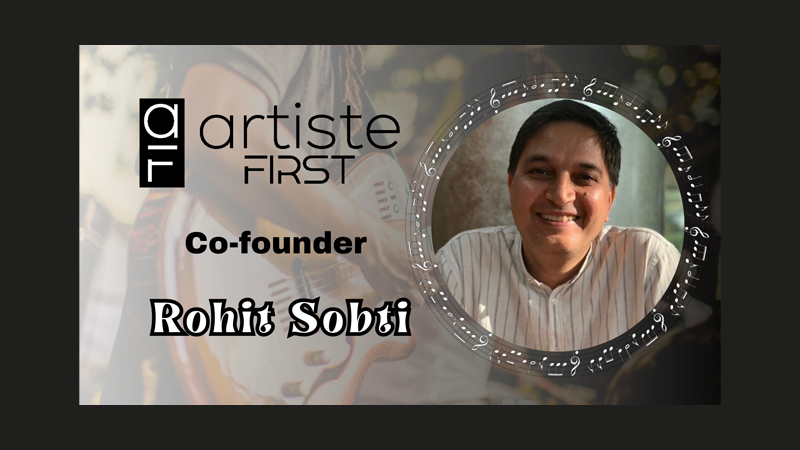
    “Indian music scene to mirror the US where independent music/artiste are mainstream”: Artiste First’s Rohit Sobti

    Mumbai: Imagine, if there was no existence of music, the world would have lost half of its color and beauty. In a celebration of this artistic essence, the world recently celebrated Independent Artist Day on 3 April, honoring talented individuals who dare to dream, create, and express themselves independently.

    Among them stands Artiste First, a dynamic label dedicated to promoting independent music and empowering artists. Led by co-founder Rohit Sobti, a multifaceted leader with over 25 years of experience in finance, music, and technology, Artiste First puts artists first, providing a platform for diverse voices and supporting their creative visions.

    Delving deeper into the world of independent music and artists, Indiantelevision.com in conversation with Artiste First’s co-founder Rohit Sobti discussed about the uniqueness of their label, the role of independent labels evolving in the future, common challenges Indie artists face in the competitive music industry and much more…

    Edited Excerpts:

    On the inspiration behind starting Artiste First, and its differance from traditional music labels

    It was started by Tarsame Mittal during Covid. He always wanted to do this for a long time and during covid he found time. His objective was to bring new artists to the industry in an honest, transparent, and passionate way and support them with industry insights and his knowledge. We had collaborated in November 2022 together to co-create it. It is an artist’s first platform. We seek a balance between their indulgence as an artiste and audience, we co-create music(audio/video with them) in a beautiful, open, collaborative environment where we trust each other’s instincts and professionalism.

    On the role of independent labels evolving in the future, with the rise of streaming platforms

    According to me today it is about music. It doesn’t matter to the audience whether the song is of film or an independent artist/label. Independent labels are here acting as a catalyst for the consumer and educating them about how music can be discovered from other platforms and not only from films in India. A song doesn’t need to be on a film to be known and trending.

    Independent labels are becoming the discovery platforms for newer artists, and genres. Like we have explored the Kashmir artiste (where no other independent/mainstream label has worked consistently).

    We have seven very talented artists from Kashmir who have the potential to reach a global audience and the first artiste Faheem Abdullah’s songs are trending in Pakistan, UAE, Saudi Arabia, and other countries apart from India.

    Independent labels are also bringing new-age ways of marketing the song and using art and science (tech) to do so.

    On some common challenges Indie artists face in the competitive music industry, and key tips that you would give them to sustain and thrive

    The most common challenges are –

    a. finding their sound

    b. finding their right audience

    c. finding a platform (record label etc ) to release their music

    d. finding other collaborators to co-create the song. if you are a singer – you need a composer/lyrics/music producer/mix/master engineer etc

    We are building an artiste-first community on Instagram and Discord where we conduct regular sessions with the artiste community to help with the above-mentioned challenges. In our discord community, they have started interacting within themselves.

    On the strategies that you find most effective in reaching diverse audiences, in promoting genre-neutral music

    We need to find the core of the song and a corresponding audience on the digital medium that can act as a community for the music and interim help to spread to larger audiences. We have understood that Instagram is the new platform for discovery and people from all audiences are discovering music from platforms like Instagram, YT Shorts, and in India apps like Josh and Mauj. We try to break the marketing templates with every song release. Our marketing team led by Garishma (supported by Laksh & Deepank) are deep into it.

    On technology shaping the landscape for independent musicians, and what opportunities does it present for them

    Tech is helping in many ways with audio, video, promotions, and fan data. Collaborations have become easy. We can understand the global trends/sounds that are working; and reach out to musicians. Inter-dependence on creative people in order to create an album art or a visualiser. AI helps in everything. Platforms like Musixmatch are helping artists to create visualisers with lyric videos to help them promote their music.

    ⁠In your opinion, do you believe that having a foundation in Indian classical music can benefit artists, regardless of their genre or style? If so, what aspects of Indian classical music do you think are particularly valuable for indie artists seeking to innovate and diversify their sound?

    Right now in 2024, we see artists with learnings from their childhood with a foundation in music and we also see artists who have literally turned their hobby into a profession and the third type we see are music producers coming up with no background in music and learning everything from Youtube as the internet provides you with all sort of learnings.

    It really helps in the long run if you are trained with a good learning foundation of music. Some artists call it “AAMAD” – God’s gift to them then the education doesn’t matter – they are a vessel and music flows through them.

    We work with both these kinds of artists and enjoy working with both.

    On the future of independent music, and Artiste First contributing to its growth and evolution

    We think the Indian music scene will become like the US where independent music/artiste are mainstream. Currently, it is 50:50 approx (mainstream: independent). It is going to tilt towards 75:25 in the next two -three years. You will see a lot of independent artists dominating the mainstream as well because they will have a huge fan base. New streaming/digital platforms are all artist-centric and give them a lot of tools to develop their fanbase and understand deeply to quickly find their orbit of music.

    Artiste First is putting the artiste at the forefront with an honest, passionate, transparent platform to grow their audiences in India and the world and create an open community to help every talented artiste to go to the next level. 

  • 64% Indian streamers are more receptive to ads on streaming platforms than social media: Magnite report

    64% Indian streamers are more receptive to ads on streaming platforms than social media: Magnite report

    Mumbai: Magnite, the independent omnichannel sell-side advertising platform, on Tuesday released a study entitled “India Embraces the Streaming Era” that found ads on streaming platforms capture more attention than ads on social media. Nearly two-thirds of India’s streamers (64 per cent) are more responsive to advertising on streaming platforms, with many stating they often search for the product (48 per cent) and make a purchase (33 per cent) after the fact.

    The study also found that free or ad-supported content is preferred to paying for an ad-free experience. 80 per cent of streamers prefer to watch ad-supported content versus subscribing to an ad-free platform for a monthly fee.

    “OTT is unmatched in its ability to engage viewers, and we commissioned this study to better understand consumption patterns across the rapidly growing Indian streaming audience,” said Magnite managing director, Asia Gavin Buxton. “One of the study’s key findings shows that OTT advertising outperforms other mediums like social media when it comes to attention and purchasing power. With three-quarters of video viewers streaming more now than a year ago, advertisers should be actively exploring this channel to reach the right audiences.”

    According to the study, two thirds of streamers prefer to watch streaming services over traditional TV, and streamers rank the quality of content, platform usability, and content discovery as the top factors driving their decision to stream. The majority (75 per cent) of streamers are streaming more video content than a year ago, and 66 per cent expect to stream more next year.

    “We are witnessing the next stage in streaming’s evolution—one where the lines between SVoD, AVoD, and FAST are being blurred as we see audiences continue to fragment,” said Samsung Ads, India senior director Prabhvir Sahmey. Whilst globally we’re seeing the major streaming giants introduce ad-funded and hybrid models, locally we’ve seen the adoption of these freemium models in India gain considerable viewership. It is exciting to see such a promising future for ad-supported streaming confirmed both recently in our TV ad engagement study and validated in this new report from Magnite.”

    “The migration of audiences from linear TV to streaming signals an opportunity for our clients who are looking to invest in CTV and incorporate TV buys into their overall advertising strategies with screen-agnostic planning,” said Omnicom Media Group chief digital officer, APAC Bharat Khatri. “With the breadth of available inventory increasing and the preference for streaming across India according to Magnite’s research findings, advertisers should take note of where viewership is moving and invest in OTT to reach highly engaged viewers watching their favourite shows. At the same time, we are seeing a big shift happening on the measurement front, with viewability amounting to three seconds or half of an ad flashed on rapidly scrolling screens. It’s easy to see a growing gap between the opportunity to be seen and actually being seen, thus the need of the hour is to start optimising based on attention to generate incremental value across creative, media planning, and buying, and in turn improve brand health and performance.”

    Additional key findings from Magnite’s study include:

     ●  Mobile commands the majority of streamers’ time, and 88 per cent of viewers reported a positive viewing experience on smartphones, comparable to the number that reported a positive viewing experience on TV screens.

    ●  Mobile is the top streaming device, but time spent streaming on CTV is growing as smart TVs are introduced into Indian homes. 59 per cent of streamers are now watching CTV and spending an average of eight hours per week streaming content on a big screen.

    ●  Live streaming is becoming mainstream. Nearly all streamers (86 per cent) said they watch live content through streaming platforms, with streaming being particularly prevalent across news, sports, and reality content. Streamers are more likely to watch live programming on streaming platforms than on traditional TV.

    Check the full report here. ( https://www.magnite.com/research/india-streaming-era/).

  • Stage is set for ‘OTT Advertising and Connected TV Summit’

    Stage is set for ‘OTT Advertising and Connected TV Summit’

    New Delhi: The streaming platforms have taken the world by storm, opening up vast avenues for advertisers and brands to connect with viewers through digital means. The business is now no longer limited to traditional media channels but has expanded to the vast universe of OTT platforms.

    However, this evolution has come with its own challenges. Unlike the age-old relationship that advertisers share with traditional media, OTTs face the challenge of forging new publisher-agency-brand partnerships. So, what is the scope of OTT advertising? How is it growing? What strategies need to be adopted so that a greater share of the pie can move towards OTT?

    All these questions will take centre stage at the ‘OTT Advertising and Connected TV Summit 2021’ being organised by Indiantelevision.com on 7 & 8 October, 2.30 pm onwards. The two-day event is co-powered by Mediasmart, an Affle company, and summit partner – The Q, and will witness stakeholders from across the industry engaging in insightful discussions on the dynamics of OTT and CTV advertising.

    The event will explore concerns around data privacy, and the metrics that advertisers can use to select the OTT platforms. It will also look at the reach of connected TV in India and how fast it is growing. The panelists will also deliberate upon the advertisers’ perception of the medium. There will be presentations from advertisers and agencies as well on how successfully they used OTT and CTV solutions effectively.

    One of the biggest virtual events of digital publishers, it will be attended by representatives from Patanjali Ayurved, The Q, Mediasmart, Airtel, Samsung Ads, Pyxis One, The Q, UPSTOX, NXTDigital, ALTBalaji, MX Player, Omnicom Media Group, Madison, Affle, Adobe, Ernst and Young, Essence, Social Beat, Kurate Digital Consulting, Shemaroo Entertainment and many more noted persons from the industry.

    For more information: https://indiantelevision.com/events/oact-summit-2021/

    To watch LIVE: https://www.youtube.com/channel/UCHHZMAXmHG0hkUgjzof0qzQ

  • AcneStar face wash collaborates with music streaming platforms

    New Delhi: AcneStar face wash from the house of Mankind Pharma has collaborated with music streaming platforms- Gaana, Wynk, Spotify, and Saavan to engage with music lovers from different demographics and create high recall value for the brand.

    The new campaign is based on the #ThankYouHaters campaign, which was rolled out last year to fight against the rise in online trolling on social media. 

    The brand said it has come up with this month-long campaign, keeping in mind the current situation and growing popularity of audio streaming platforms. “This will help us to create high recall value amongst the people who are multi-tasking, switching between household chores and professional engagements, to the sound of music,” it said in a statement.

    As part of the campaign, it has roped in 50 influencers from different demographics to engage including Sanjana Singh, Shezali Sharma, Hashneen Chauhan, and Rehmat Rattan.

    Mankind Pharma, general manager- sales and marketing, Joy Chatterjee said, “Recoiled out of everyday drives, music has now arisen as the favoured stress buster for the large numbers of people who are working from home and playing a therapeutic role for these multi-tasking times. We all have observed how individuals prefer to stay active on audio platforms while relaxing, sleeping, or other activities. Audio streaming has grown to 30-40 per cent in India in 2020-21 and with the rise of internet connection there has been a rise of regional language music which now contributes 39 per cent of all streams.”

  • Password sharing costs US streamers $25 bn every year, report says

    Password sharing costs US streamers $25 bn every year, report says

    KOLKATA: Several reports suggested recently that Netflix is testing a feature to curb widespread password sharing. It makes sense for the streaming giant, as it is losing about $6.2 billion each year due to the prevailing trend of multiple unauthorised people using the same account. Overall, the issue has led to a loss of $25 billion for US streaming platforms.

    According to media reports, Citi Global Markets analyst Jason Bazinet said in a note it is going to be an important issue for HBO Max, Disney+, Peacock, Spotify as well. “As streaming services move to center stage, thwarting this theft will be of growing importance for shareholders,” he wrote.

    Research firm Magid recently said that Netflix could significantly increase its slow domestic subscription growth by cracking down on password sharing. It also added that 33 per cent of US SVoD subscribers share passwords.

    Recently, another research note from Bank of America also said that a significant portion of users share their passwords with non-subscribers. Hence, an attempt to curb the practice will be definitely helpful.

    “In our streaming survey, we asked a pool of Netflix subs if they shared the service with another household…and 26 per cent said they did, and 50 per cent of these said it was shared with family in multiple locations,” it added.

    Last week, reports emerged that Netflix is in the process of trialling a crackdown on ineligible users who access the streamer's content through password sharing. Some users have reported seeing a screen saying, "If you don't live with the owner of this account, you need your own account to keep watching." Studies over the years have estimated that the number of password freeloaders on Netflix number in the millions.

    "This test is designed to help ensure that people using Netflix accounts are authorised to do so," the BBC quoted a Netflix spokesperson as saying.

  • Karnataka High Court rejects plea to regulate online content under Cinematograph Act

    Karnataka High Court rejects plea to regulate online content under Cinematograph Act

    MUMBAI: The films, serials and other multimedia contents transmitted, broadcast or exhibited through internet platforms an donline streaming platforms like Hotstar, Amazon Prime, Netflix and Alt Digital, cannot be regulated under the Cinematograph Act, 1952. The Karnataka High Court on Wednesday held the order while rejecting a plea made in a public interest litigation (PIL), according to a report in The Hindu.  

    The petition was filed by a Bengaluru resident Padmanabh Shankar which was heard by a division bench comprising chief justice Abhay Shreeniwas Oka and justice Mohammad Nawaz.

    The division bench said that he act of exhibition of films, serials and other content perhaps amounts to transfer of files based on requests by users as per  the concept of internet and its operation. Hence, transfer of files or films, serials through the internet can not come under the purview of Cinematograph Act.

    However, the bench said that it hopes that the union government will find a solution in public interest within the four corners of the law if the petitioner submits a representation seeking regulation of content of online streaming platforms.