Tag: streamers

  • Australia forces Netflix and Disney+ to bankroll local content

    Australia forces Netflix and Disney+ to bankroll local content

    MUMBAI: Australia has stopped asking nicely. The government will introduce legislation this week forcing streaming platforms to invest in Australian drama, children’s shows, documentaries and educational content—or face the consequences.

    Any service with more than a  million Australian subscribers—Netflix, Disney+, Amazon Prime and others—must commit at least 10 per cent of their local expenditure, or 7.5 per cent of revenue, to homegrown productions. It’s a quota system that puts streamers on par with free-to-air and pay television, which have long faced similar obligations.

    The rules were meant to arrive in July last year but got tangled in trade politics. Concerns about how they would mesh with Australia’s free trade agreement with America led to a pause. The government blamed difficulty negotiating with Washington during an election year. After Donald Trump’s victory, questions swirled about whether the quotas could trigger retaliatory tariffs.

    With both elections now behind them and the US-Australia relationship stable, Canberra has pushed ahead. Tony Burke, arts minister, and Anika Wells, communications minister, framed the move as a jobs safeguard for an industry increasingly threatened by artificial intelligence.

    “Since their introduction in Australia, streaming services have created some extraordinary shows,” Burke said. “This obligation will ensure that those stories—our stories—continue to be made.”

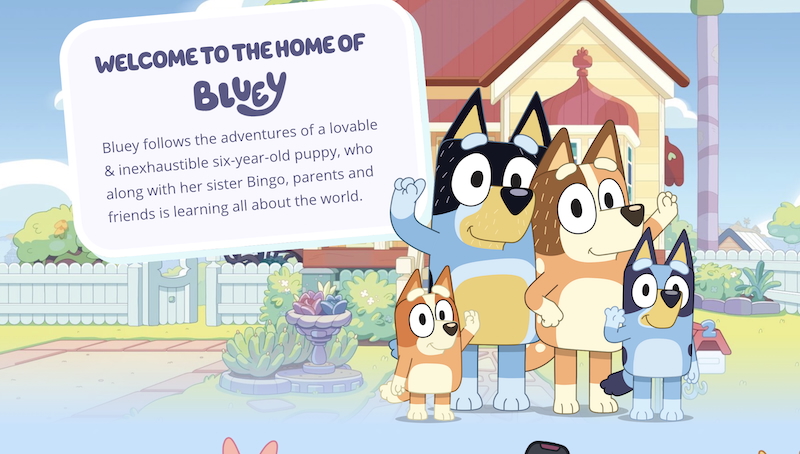
    Wells pointed to Bluey, the children’s programme that became a global phenomenon, as proof of concept. Australian content connects people with “who we are” and shares that with the world, she said.
    The government hasn’t explained how it will calculate the two quota options—10 per cent of expenditure or 7.5 per cent of revenue—leaving room for future friction with the platforms.

    The Australian model raises an obvious question: could India impose similar quotas? While Netflix, Amazon Prime Video and Lionsgate Play are commissioning o9r acquiring local content, it’s unclear whether they’re hitting anything close to a 10 per cent threshold. Indian regulators have repeatedly failed to enforce local quotas on television channels, making it unlikely they’ll succeed with streamers.

    But the precedent matters. If Australia can strong-arm global platforms into funding local productions without sparking a trade war, other markets may feel emboldened to try. For now, India’s streaming landscape remains a free-for-all—heavy on local content by choice, light on obligation by design. Whether that changes depends less on regulatory ambition than political will. And in India, that’s always been in short supply.

  • IBC 2025 brings the future of media to Amsterdam

    IBC 2025 brings the future of media to Amsterdam

    AMSTERDAM: Amsterdam’s RAI convention centre will become the global capital of media and technology from 12–15 September when IBC 2025 opens its doors to broadcasters, streamers, studios and tech firms from around the world.

    The show will run 10:30–18:00 on opening day, 09:30–18:00 across the weekend and close at 16:00 on Monday. Organisers have built the edition around the theme of innovation, with a newly minted Future Tech hub in Hall 14. Here visitors can test emerging tools such as artificial intelligence, cloud-native production workflows, augmented reality, virtual sets, immersive audio-visual formats and sustainability-driven hardware.

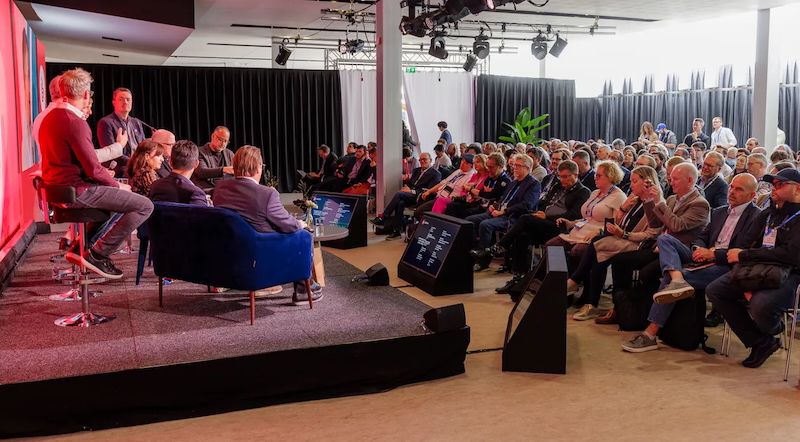
    A three-day conference, from 12–14 September, features more than 300 speakers drawn from major broadcasters, global streaming platforms, technology vendors and creative studios. Panels will probe platform evolution, revenue models, AI integration and the next wave of interactive storytelling. JioStar’s Prashant Khanna is one of the headlined speakers being featured at IBC this year. 

    Elsewhere, the IBC Innovation Awards will celebrate cutting-edge deployments, while the Accelerator Media Innovation Programme offers collaborative trials of experimental tech. Free-to-attend theatres and showcase stages promise continual demos and debate on content delivery, rights management, talent development and the fast-changing business landscape.

    Beyond the exhibition floor, organisers are pitching IBC 2025 as a working laboratory: a place where engineers, producers and executives can handle new kit, swap ideas and chart the next phase of global media transformation.

  • Indian government wants streamers to develop a social conscience

    Indian government wants streamers to develop a social conscience

    MUMBAI: Most creators have been singing hosannas about how streaming platforms have allowed them to express themselves freely. But how freely? That’s a question that the  ministry of information and broadcasting (MIB)  is posing. Especially in light of its observation that “certain streaming content available on OTT platforms is inadvertently promoting, glamorising or glorifying the use of narcotic drugs and psychotropic substances through such portrayal by the main protagonist and other actors. Such a portrayal has serious repercussion, particularly regarding the potential influence on young and impressionable viewers.”

    In advisory to the industry, the MIB has advised  OTTs to  stop portraying drug use or abuse as fashionable or acceptable to society especially when it is part of the narrative of a series or film. And it has also cautioned them that should the streamer or content creator choose to portray misuse of psychotropic substances, liquor, smoking, tobacco or any behavior that is  likely to incite the commission of any offence, including infliction of self-harm, and that children and young people may potentially copy, then they should place the film or series in a higher classification of self-certification. 

    The ministry has directed the platforms to  put in place measures like carrying public health messages and disclaimers about the dangers of drug abuse, especially in programs in which it is part of the story line. Then it has requested them to arouse their corporate social responsibility conscience and make and popularise content and documentaries which highlight how substance abuse is health-harming in the long term. Accepting that OTT content is beginning to impact public opinion and behaviour, it has reminded them of their social responsibility and how their content helps shape culture and society. 

    The advisory also warns that in case they find any streamer crossing the red line, strict regulatory scrutiny will follow  under the provisions of the Information Technology Act, 2000 read with the Narcotic Drugs and Psychotropic Substances Act (NDPS), 1985. And if evidence is found conclusive, then strict penalties will apply.

    Are the writers and creators and commissioning editors in streaming platforms listening? As well as the standards and practices guys?

  • GEMS: How talent agencies help young streamers grow & stay relevant

    GEMS: How talent agencies help young streamers grow & stay relevant

    KOLKATA: Shagufta Iqbal aka Xyaa, a young YouTube game caster, quit her job as a computer engineer to stream full-time. Iqbal mainly focuses on Call of Duty but makes sure her streams are a mixed bag. She described herself as more of an entertainment streamer. During a panel discussion at GEMS 2020, Iqbal joked: “I don’t know what to do if streaming fails.” However, she has a back-up plan, which involves branching into vlogging and podcasts.

    Another YouTuber, Ketan Patel, has amassed a following of 7 lakh plus gaming enthusiasts on his K18 gaming channel. Patel rose to prominence with the casting of PUBG tournaments before the game got banned in India. Now, the 22-year-old has ventured into vlogging too. “I am more of an entertainment gamer,” Patel said.

    Clearly, instances of millennials like Iqbal giving up a traditional career to make a living out of gaming are on the rise. According to a KMPG report, the number of online gamers in India was nearing the 400 million mark as of July 2020. It’s a testament to the popularity of online gaming and streaming in the country.

    Both Iqbal and Patel stated the importance of having a positive headspace in order to click with viewers. “You need to have a positive personality for your audiences. It does not to be too fancy but they should get something positive out of it,” added Patel.

    While streaming, gamers can’t let their emotions run away with them either. Iqbal said she doesn’t use expletives and always maintains proper language since there are many minors who tune in to watch.

    Young Indians are earning thousands by turning video games into a spectator sport. Yet, at the outset, many remain unaware of the obstacles they may encounter down the line; or after a certain point, they may flounder to stay relevant.

    Now, these emerging stars are turning to talent agencies to help them work towards their goals. Loco VP operations Firasat Durrani said that the streaming platform is aiming at creating a better product for millions of new gamers. “We have had a huge inrush of casters for the last few months. We have also seen people who were not big on any other platform on social media or had never live-streamed on any other platform actually match up to the number of live streamers who are big on other platforms. We are not just offering a service but also trying to create a level playing field,” he claimed.

    “At the start, no content creator knows that he/she will be a success right from the get-go; everyone starts from zero. And, the idea that you will be prepared to manage expectations is something like a dream and a vision at the beginning. This is one of the hardest parts of the job that we as managers have to do,” added Durrani.

    Trinity Gaming India managing director Abhishek Aggarwal termed his job as “streaming or gaming a viable career for talents”. He went on to say how the industry has grown multi-fold in just two years. Back in 2018 when Aggarwal started his career, there were only two or three live streamers. Now, platforms like Loco alone have a database of 300-400 live streamers. Hence, it is important to keep the talents financially motivated to make them stay in the industry for a long time.

    Talking about the role of talent management agencies, he said that they work as enablers. “We make them do what they want to do. We provide them with whatever facilities they need like creative support, design support, social media manager. We have an in-house business development team that goes out and pitch brands for the talents to help with connections and partnerships,” he explained.

    “Currently, we have 21  partners who are streaming through Loco. We are looking after their KPIs whatever provided by Loco. We are helping them deliver a minimum number of streaming hours, social media shoutcasting, social media partnerships, etc.” Aggarwal added.

    Agreeing with him, Loco’s Durrani cited an example. A streamer from Nepal wanted to get on board with Loco. Since Loco never had a streamer from abroad, the team was full of doubts and questions. The streamer lacked knowledge on how to make money in such a situation. Aggarwal’s agency mediated to help both the creator and the platform.

  • Defence ministry says armed forces-themed movies, shows need its NoC

    Defence ministry says armed forces-themed movies, shows need its NoC

    MUMBAI: Censorship by any external regulatory body is something streamers and viewers in India are averse to. But there is at least in one area where they might have to yield to clipping scissors: how they depict the defence and armed forces in their shows and films. The Indian ministry of defence (MoD) has written to the Central Board of Film Certification directing production houses to get the former’s clearance for any show the story line of which features the armed forces or is themed around them before putting it out for viewing to the public.

    The letter – signed by the MoD’s undersecretary of state Sudershan Kumar additionally to the MeiTV and the I&B ministry – states that some “shows and films are distorting the image of the Indian army….they may also be advised to ensure that any incident which distorts the image of defence forces or hurts their sentiments may be prevented.”

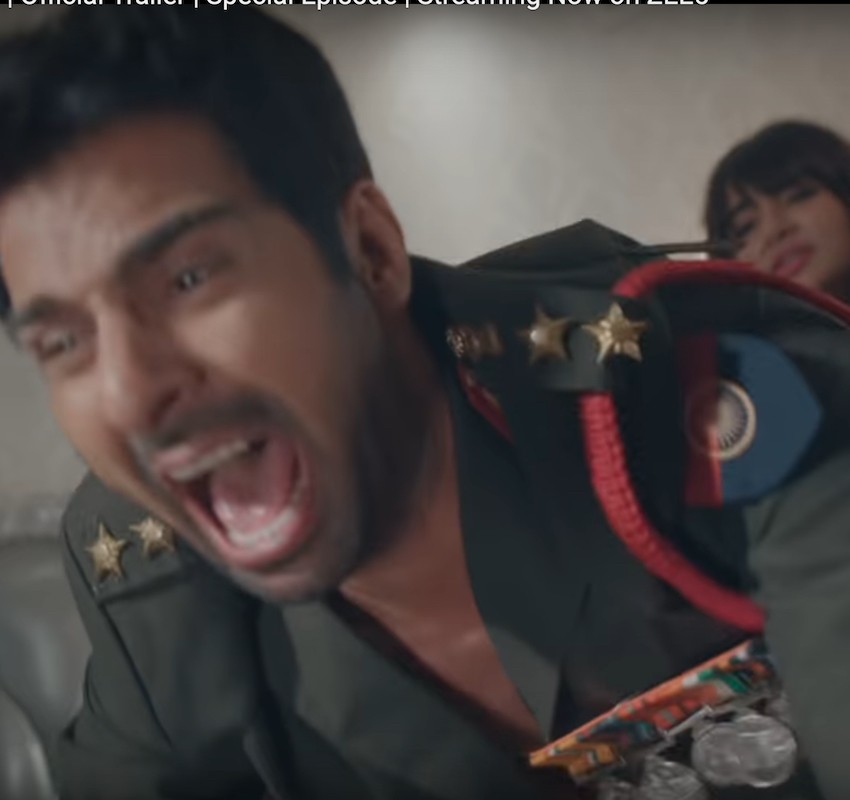
    The MoD letter makes special reference to the depiction of “Indian army personnel and military uniform in a distorted manner in “XXX – Uncensored Season 2” and urges producers to acquire a no objection certificate from it before releasing shows on the defence on their platforms.

    XXX Uncensored Season 2 is available on ALT Balaji and has been facing protests from certain groups for the manner in which a woman character forces “a man to wear the Indian Army uniform, which has the national emblem on its flaps, and then tearing it.”

    The MoD says it too has received several complaints.