Tag: Strategy Analytics

  • Smart TV ownership to surpass 50% of homes globally by 2026, says report

    Smart TV ownership to surpass 50% of homes globally by 2026, says report

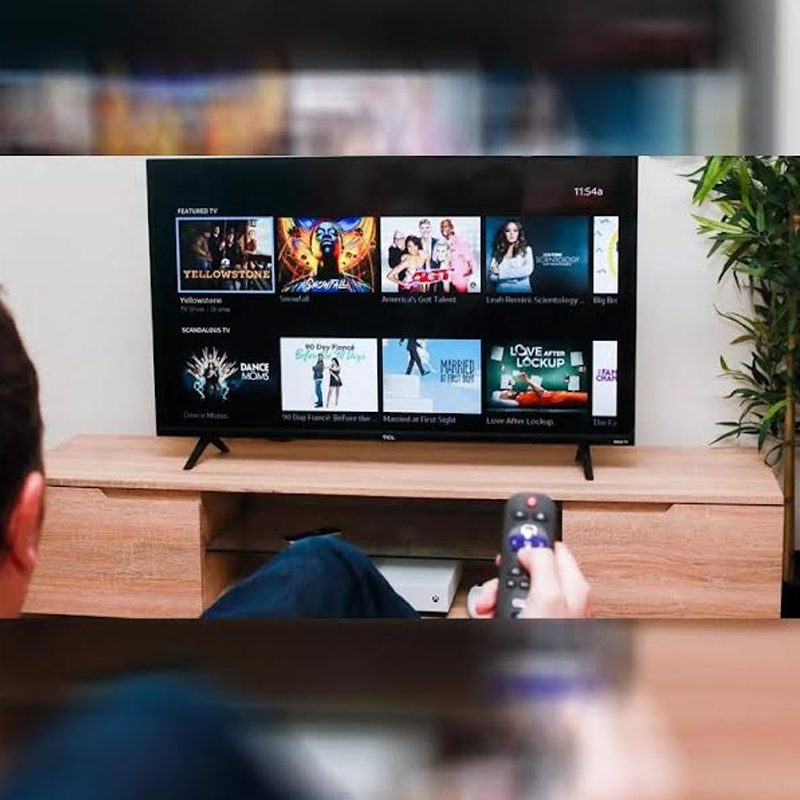
    New Delhi: Over 665 million global households owned a Smart TV by the end of 2020 accounting for 34 per cent of the total households, said the US- based firm Strategy Analytics in its latest report.

    According to the report, ‘Global Smart TV Forecast for 88 Countries 2011-2026′, the penetration of Smart TV is set to rise to 51 per cent by 2026 when Smart TV ownership will reach 1.1 billion homes. While the demand for smart TVs was growing anyways, the pandemic-induced lockdown accelerated the sale further. As per the data collected by the firm, annual shipments reached 186 million units during 2020 representing 79 per cent of all TVs shipped worldwide. The shipments are expected to break through 200 million units per year in 2022 it stated further.

    The strongest growth was witnessed in North America. According to the report, this could also be due to the government stimulus cheques which helped to drive an increase in spending on home entertainment products as consumers found themselves spending more time at home due to Covid-19 related restrictions.

    Samsung, TCL and LG emerged as the world’s leading smart TV brands and represent over 40 per cent of the market between them, up from 33 per cent in 2015. Samsung led in terms of annual sales units for the ninth straight year in 2020 while TCL climbed above LG and into second place for the first time. Meanwhile, the Smart TV market continues to coalesce around a handful of TV streaming platforms or operating systems.

    The report found that Samsung’s Tizen leads the way but major third-party software platforms such as Android TV and Roku TV OS have made strong gains in recent years.

    “Smart TV is a standard fit feature of most flat panel TVs sold today and so smart TV household penetration will inevitably continue to grow as consumers replace old sets with new modern smart-enabled versions,” said Connected Home Devices senior analyst, Edouard Bouffenie. “As smart functionality is no longer a point of differentiation but has become a checkbox necessity, smart TV manufacturers have had to make a choice between maintaining their own software and application ecosystems or licensing a software platform from a third-party partner.”

    While many have decided to partner with the likes of Google’s Android TV and Roku in order to avoid the ongoing costs of maintaining their own platform, others like Samsung, Vizio and LG are going alone to capitalise on the fast growing Connected TV advertising business.

    “However, the current Connected TV landscape in the home is incredibly complex and consumers may have multiple devices in multiple configurations to choose from”, said Media and Intelligent Home Practice, vice president, David Watkins. “Factor in different viewing habits amongst different members of the household and it’s clear that TV streaming platform providers face a significant challenge in driving engagement and ensuring that TV viewers remain on their platform and do not switch to another source. Smart TV OS providers must look to influence the TV viewer’s journey through improved content discovery capabilities, advanced analytics and advertising platforms and the development of an intuitive and user-friendly UI.”

    The report forecasts global smart TV shipments, installed base, households and household penetration by six major regions and 88 countries from 2011 to 2026.

  • Only 3% of Indian households paid subs of SVoD services: Global study

    Only 3% of Indian households paid subs of SVoD services: Global study

    NEW DELHI: Ground data doesn’t match the hype around streaming video services in India. Only three per cent of Indian households are paid subscribers of such services, while the corresponding figure for the US is 59 per cent, according to a new global market study released recently that was done over 2017.

    The number of households worldwide, which pay for various streaming video services such as Netflix and Amazon, has now breached the 250 million mark, research from Boston-based Strategy Analytics’ TV and Media Strategies service indicates.

    The report, Home Video and OTT Video Forecast – Global, predicts that the number of homes paying for subscriptions to streaming video services will reach nearly 300 million by the end of 2018 and more than 450 million by 2022.

    Interestingly, in China the percentage of paying households of video streaming services is not very high if the population and size of the market are taken into account. The Chinese figure is 12 per cent, while Japan (29 per cent) is the only Asian country to find a mention in the top-10 list. Smaller countries such as Norway (46 per cent) and Sweden (45 per cent) have a higher percentage of paying households.

    Some of the other key findings from the research include the following:

    ∙         Average monthly household spending on streaming video services increased by 5 per cent in 2017 to $9.46.

    ∙         The total number of streaming video subscriptions reached 345 million by the end of 2017.

    ∙         Households paying for streaming video services used on average 1.39 services.

    ∙         The US has the highest penetration of streaming video services, with 59 per cent of households using at least one service at the end of 2017.

    Percentage of Households Paying for Streaming Video Services, Dec 2017

    public://list_6.jpg

    Source: Strategy Analytics’ Media Strategies Group, Feb 2018

    “Streaming video is rapidly becoming a normal part of people’s entertainment options,” TV & Media Strategies director Michael Goodman said in a statement put out on 28 February 2018.

    According to him, “Usage is already at around half of households in the most mature markets and is likely to reach those levels in many other countries in the near future. Clearly, market leaders like Netflix and Amazon will benefit from this trend, but there are also major opportunities for media companies, which currently focus on more traditional pay TV and content development business models.”

    In this research, according to an official statement, pay-TV-like services such as NowTV and DirecTV Now were not included. Major services analysed included Netflix, Amazon Prime Video, Hotstar, IVI.ru, Hulu, Viu and iFlix.

    Though the research did not specify it, but observers of Indian media and entertainment sector explained the low percentage of paid subscribers for streaming or OTT services could be because India has always been a price sensitive market for entertainment services. And, most homegrown OTT platforms’ services are only partially or not at all behind a paywall.

    ALSO READ:

    Indian online video to grow to US 1.6 bn at 35 percent CAGR by 2022

    Indian pay-TV expanding by 10.6 pc, 77 pc to be digitised, ARPUs to rise by ’22: MPA

    MPA: India & China power APAC ad rev, ads in largest medium TV still robust

  • Reliance Jio, China’s Omnicom fuel massive global mobile data traffic

    Reliance Jio, China’s Omnicom fuel massive global mobile data traffic

    NEW DELHI: Global mobile data traffic growth reached a six-year high in the third quarter of 2017, increasing by 115 per cent worldwide year-on-year with China and India—riding on Reliance Jio primarily—accounting for half of all traffic growth globally, according to new report released yesterday.

    According to Strategy Analytics’ latest `Wireless Operator Performance Benchmarking’ database and accompanying report, Reliance Jio, China Unicom and Vodafone drove accelerated mobile data traffic growth in Q3 2017.

    India and China accounted for half of all traffic growth globally with Jio’s continued disruption in India and strong growth in unlimited data plans in China driving both of those markets. In Europe, Vodafone has enjoyed healthy early traction for its zero-rated Passes, the report said.

    Strategy Analytics provides competitive edge with advisory services, consulting and actionable market intelligence for emerging technology, mobile and wireless, digital consumer and automotive electronics companies. With offices in North America, Europe and Asia, Strategy Analytics delivers insights for enterprise success.

    Other key findings of the report include:

    — Reliance Jio was carrying more data traffic than any mobile operator globally within six months of launch, but its disruptive impact on the market has meant profitable traffic growth has been hard to find.

    — Unlimited plans have accelerated traffic growth in China, up 166 per cent year-on-year in Q3 2017 and have generated a healthy recovery in both service revenue and EBITDA.

    — Vodafone had eight million customers using Passes by the end of September 2017, with a positive impact on ARPU and usage. It has delivered 2.6 times growth in traffic in Europe over the last two years with near-flat opex.

    Phil Kendall, report author and director, Service Provider Group, in a statement said, “It is encouraging to see more success stories from operators using unlimited or zero-rated pricing to unlock growth in both revenue and profitability. The success of China’s Unicom’s unlimited plans and collaborations with local internet giants highlights the importance of partnering with content providers to add value to data plans.”

  • Mobile based ad expenditure to touch $425 billion by 2021: Strategy Analytics

    Mobile based ad expenditure to touch $425 billion by 2021: Strategy Analytics

    NEW DELHI: Consumer and advertising expenditure on handset-based mobile media is slated to rise 12 per cent in 2015 and is poised to reach $425 billion by 2021.


    According to a study by Strategy Analytics, mobile advertising is set to account for 24 per cent of total digital advertising expenditure in 2015 with advertisers increasingly targeting mobile phone users.


    A strong growth in smartphone penetration, combined with ubiquitous data connectivity via mobile and WiFi networks, and latent consumer demand to access popular Internet services continues to drive the consumption of content on mobile devices.


    Consumer demand for accessing popular internet services and apps on mobile phones, including Facebook, YouTube, Spotify, and mobile games, among others, continues to increase, supported by the growing penetration of rich media smartphones and improving data connectivity, via LTE and WiFi networks.


    Strategy Analytics director of wireless media strategies Nitesh Patel said, “At the end 2015 the Asia Pacific region will account for just over half of worldwide data subscriptions.”


    A report by the research team said mobile operators stand to benefit from rising demand for mobile data. The total number of mobile data subscriptions will reach 2.3 billion by the end of 2015 equating to almost half of unique mobile users. 


    Patel added, “Not surprisingly, we are seeing strong growth in emerging mobile data markets, and in particular where smartphone ownership is rising fast.”


    Strategy Analytics vice president David Kerr added, “The strong growth in mobile advertising is being driven by a combination of factors, which includes increasing consumer dependence on their mobile phones for accessing popular internet services and apps, greater participation by brands and business in engaging users via their mobile phones, and an increasingly mature mobile ad-buying ecosystem, particularly with respect to programmatic advertising.”

  • Over 500 million mobile broadband users by 2010: Strategy Analytics

    Over 500 million mobile broadband users by 2010: Strategy Analytics

    MUMBAI: New alternative technologies will contribute just six percent of the forecast 500 million mobile broadband users globally by 2010, according to research firm Strategy Analytics.

    Despite all the hype surrounding alternative technologies like WiMAX, it is iterations of existing technologies which will dominate the mobile broadband arena in the short term, said the research firm.

    Technologies such as mobile WiMAX and UMTS TDD will lead the alternative technology camp, but enhancements to existing technologies, including HSPA and EV-DO Revision A+ will comprise the bulk of the market and are where the money lies in the short-term, asserts an official release.

    Strategy Analytics senior industry analyst Sara Harris said, “We’re not likely to see technologies like mobile WiMAX or indeed, anything else, really take off until the next decade. However, HSPA and EV-DO will be more than acceptable for most users, giving them the speed and flexibility they want to use their fixed Internet applications on the move.”