Tag: Stories

  • Alexa doubles time with kids: Animal sounds to folktales

    Alexa doubles time with kids: Animal sounds to folktales

    Mumbai: From listening to Indian folktales to playing animal sounds, Indian households with young kids who use Alexa at home are two times more engaged than other users. Parents of young kids take Alexa’s help in managing their day-to-day parenting tasks and keeping their kids engaged by asking Alexa for rhymes, stories, games, GK-related questions, and more. Users enjoy the ease and convenience of giving simple voice commands to Alexa in Hindi, English, and Hinglish – making the AI a great aid for parents and a companion for kids.

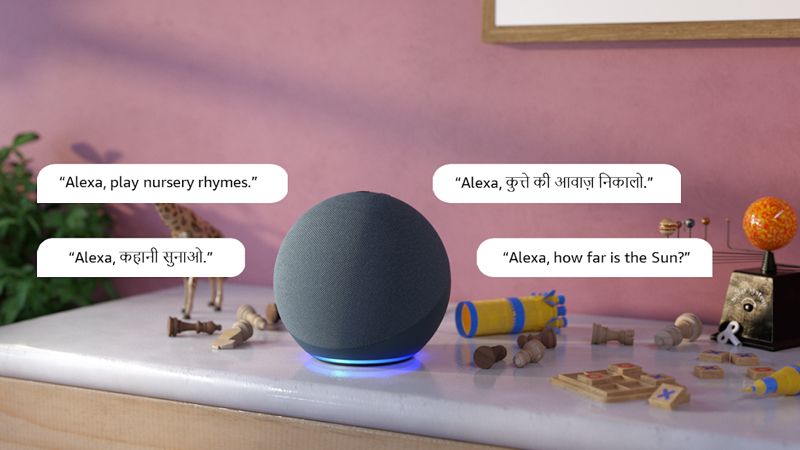
    Alexa’s ability to produce animal sounds through the Wild Planet skill recently helped save a 13-year-old girl and her 15-month-old niece from a monkey attack in Basti, Uttar Pradesh. By asking “Alexa, kutte ki awaz nikalo”, the girl was able to scare away the monkeys.

    “Parents often tell us how Alexa has become a companion in their parenting journeys. The option to access a number of useful kid-friendly experiences with simple voice commands makes Alexa a great addition for a family with young kids,” said Alexa Amazon India director and country manager Dilip R.S. “While it is a great learning and entertainment tool for kids, Alexa can help parents manage their day-to-day tasks better. Whether it is controlling smart home appliances with voice while juggling numerous tasks or asking for a bedtime story as part of their child’s daily routine, Alexa’s right there to help them.”

    Today, families across India are asking Alexa for information, games, quizzes, music, managing day-to-day tasks, stories, and much more. In fact, weekends are family time with Alexa – last year there was a 15 per cent increase in requests to Alexa over the weekends in requests for music with many of them being for kids’ music. The top five, most popular songs for kids on Alexa are Baby Shark, Lakdi Ki Kathi, Johnny Johnny Yes Papa, Wheels on the Bus, and Twinkle Twinkle Little Star. Indian folktales, like Akbar Birbal, Tenali Raman, and Panchatantra stories, see high interest from customers, especially in Hindi. In 2023, customers asked for these stories on an average of 34 times every hour.

    With numerous voice-first engaging experiences for kids, parents can introduce their children to Alexa smart speakers like Echo Dot or Echo Pop that are safe because of on-device privacy settings and control over personal data usage via the Alexa privacy hub.

    For young parents looking to introduce Alexa to their children, here are some things to try:

    ●  Improve kid’s listening skills and their attention span 
       Kids can listen to bedtime stories in both English and Hindi. Parents can just say, “Alexa, tell me a bedtime story”, “Alexa, open Amazon Storytime”, or “Alexa, बच्चों की कहानी सुनाओ”.

    ●  Engage and entertain them with kids’ music, animal sounds, and nursery rhymes 
       Parents can ask Alexa in English, Hindi, and Hinglish to play popular nursery rhymes including Baby Shark, Lakdi ki Kathi, Nani Teri Morni, and Twinkle Twinkle Little Star. From kids’ music to mainstream hits, parents can put up songs for their kids to dance, sing, and have fun at home.  Introduce them to animal sounds with Wild Planet by just asking, “Alexa, make lion sound” or “Alexa, शेर की आवाज सुनाओ”.

    ●  Encourage curiosity about the world by asking for information 
       Parents can nurture their children’s inquisitiveness by asking Alexa questions about history, science, general knowledge, geography, sports and more. Asking for information is as easy as saying, “Alexa, what is the capital of Spain?”, “Alexa, how far is the sun?” or “Alexa, how do I spell technology?”.

    ●  Make learning fun with conversational games and quizzes 
       Just say, “Alexa, open games for children” and choose from a range of games for kids including Animal Game, Chhota Bheem Adventures, Number Guessing Game, True or False, and more. By asking, “Alexa, open 1-2-3 Math” or “Alexa, teach me English”, parents can help kids apply mathematical concepts and hone their vocabulary and grammar.

  • Zee Ganga’s ‘Jai Chhathi Mai’ to screen festival stories with Manoj Tiwari, Dinesh Lal Yadav

    Zee Ganga’s ‘Jai Chhathi Mai’ to screen festival stories with Manoj Tiwari, Dinesh Lal Yadav

    Mumbai: Festivals always call for special celebrations and Zee Ganga knows how to make such times memorable for its viewers. Understanding the pulse of the audience, this number one GEC Bhojpuri channel is all set to add to the festivities, up the happiness and fun with their special programme titled “Jai Chhathi Mai – Yug Yugaantar ki Aviraal Chhath Leela.” 

    The two-hour-long non-stop entertainment will showcase beautiful stories of different time zones in the form of play on 10 November, between 5 p.m and 7 p.m. The biggest superstars of the Bhojpuri film industry, Manoj Tiwari and Dinesh Lal Yadav, will be frontlining these narratives along with other stars from the Bhojpuri region. 

    Along with this, viewers are definitely in for much more fun and frolic as their favourite Bhojpuri superstars will entertain them with their devotional singing and dancing performances. The show will be co-hosted by Manoj Tiwari, Dinesh Lal Yadav and Ritesh Pandey.

    Celebrating Chhath Puja fervor, the special show “Yug Yugaantar ki Aviraal Chhath Leela” will screen different stories— Satyug, Tretayug & Dwapaaryug — highlighting the times, as well as the essence and significance of it. While Satyug is the story Mata Parvati performing Chhath vrat for her son Kartik’ victory over demons, Tretayug narrates Siyaram Ka Chhath, the folklore of Mata Sita who performed this ritual, Dwaparyug’s tale is based on Draupadi’s Chhath Vrat to regain the lost kingdom of Pandava and finally culmination with dance performances and celebration. Apart from the big stars, many other popular singers and performers from the regions of Uttar Pradesh and Bihar such as Ritesh Pandey, Akshara Singh, Rani Chatterjee, Rinku Ghosh among others will also be a part of these acts.  

    Speaking on “Jai Chhathi Mai,” chief channel officer- Bhojpuri Amarpreet Singh Saini said, “Zee Ganga is launched with the brand premise of Har Pal Aviral and there is nothing more symbolic and celebratory about this unstoppable spirit of every Bhojpuriya than the biggest festival of the region – Chhath. This year’s Chhath event is an ode to this resolute spirit through ages through its unique theme of Yug Yugaantar Ki Aviral Chhath Leela. These narratives not only symbolise the rich cultural journeys that the region believes in deeply but also epitomises the pride around its most core and beloved festival which is unique and standalone. With a unique format of bringing narrative musical acts on Chhath for the first time, like every year we are confident that this insightful, celebratory and grandeur filled offering will once again find a deep connect with our viewers and will enjoy their unwavering attention.”

  • It is time for Good News Today

    It is time for Good News Today

    Mumbai: Over the last year, people across the world have faced unprecedented challenges caused by the pandemic. All through this, television served as a window into the world, providing news of everyday events happening across the globe. The coverage across news channels documented the unsurmountable toll that the pandemic took on every aspect of our lives.

    Amid the gloom, there were stories of human sacrifice, hardships, and challenges that inspired people to step up and help others. Stories of Good Samaritans who delivered food to patients kept under isolation and mobilised oxygen supply to those who needed it the most. There were human-interest stories of dhabas that had been deserted during the pandemic and bounced back with the support of their ardent patrons.

    For the longest time, coverage of politics has taken precedence over other subjects for news channels. At a time, when the country is limping back to some sort of normalcy, perhaps it is these stories, that need to be told more than ever.

    “The trend in news media worldwide is to have a strong point of view and take a ‘stance’ in the country’s social-political scenario. That’s a classic way to get more eyeballs from the constituency the stance represents,” said renowned ad sales trainer and Marcom advisor to challenge brands, Shripad Kulkarni.

    There has always been a debate between giving what the audience wants over what you think they need. However, the chase for higher TRPs has led news channels into a rush for ‘breaking news’ and ‘sensationalist headlines’. Experts concur that over a long term, the content of news channels is largely responsible for attracting/ repelling audiences.

    The focus on negative stories also tends to create a bias towards a certain kind of worldview. Swedish statistician Hans Rosling demonstrated through tests that people believe the world is poorer, unhealthier, more dangerous than it actually is. He attributes this bias not to random chance but to a one-sided view of the world that is depicted in the media.

    “In-depth coverage and over the top coverage are not the same thing. There is a point by which too much becomes way too much. Honestly, I think Dilip Kumar (referring to his death) deserved more bandwidth than Raj Kundra – the young people need to know more about his story, from many different angles,” opined Social Access Communications’ founder Lynn De Souza.

    While the news genre continues to play the role of incremental reach builder/ frequency driver as per the structure of different markets, experts highlight that the recent changes in the news ecosystem have somehow diluted its attractiveness. Also, it is this nature of engagement with the news channels that the advertisers are also re-evaluating. 

    “Undeniably, content associations deliver the maximum value for advertisers but, the uncertain nature of content has made advertisers wary of associating with news as sponsors or as on-screen associates,” said Wavemaker India, chief strategy officer, Premjeet Sodhi, emphasising the need for more “regionalisation and localisation” in news coverage, as well as a need to appreciate the changes in mindsets of the small town/ rural consumers with their increased access to media.”

    In the era of the “attention economy,” each channel has created its own unique way of bringing news to the consumers and that may impact the viewers’ choice of channels. Maybe, it’s time, they explore good news as that differentiating factor to connect with their audiences.

    This also explains why the latest launch of channels like Good News from The India Today group offers a chance for the TV news genre to reinvent itself to bridge this widening gap. This also augurs well for brands and advertisers who are keen to invest in the news genre for maximum returns on value.

    “The ultimate product is the content and it is for the news channels to re-discover and re-define News and built their own unique approach to delivering news and analysis. And, this is something that has been done by these very channels in the past. The consumers’ expectations have changed; the market dynamics have changed and the news channels have to tune their strategic direction to the new reality,” added Sodhi.

    The latest example of that has been the coverage of India’s historic feat at the 2020 Tokyo Olympics. Stories that uplifted the morale of the nation in tough times, and gave them something to cheer about. It also drew attention towards the dreams and aspirations of Young India. There were so many backstories not just about Indian athletes but other treasured moments like the first joint gold that has not been properly featured on most of the news channels.

    “With respect to ROI for brands and advertisers, I think TV news is the genre that gives maximum return on value. News works out much more effectively because you can have a lot of frequency- and even in terms of CPR efficiency, nothing can come close to news so far. The only downside perhaps, is that a lot of planners think that you have reached stagnancy with the news. But we have experimented in the past that if you take the right path and expand your choice you can get an optimum reach with news,” says a senior media planner.

  • Stories that (Pod)cast a spell

    Stories that (Pod)cast a spell

    Let us set the scene. Imagine 3 women seated in a coffee shop on a frigid, rainy and cloudy Sunday afternoon,chatting casually with their hands wrapped around steaming cappuccinos. As an observer, what do you think they are talking about? Often, common stereotypes take the better of us and lead us to the conclusion that they are probably gossiping about their neighbours or discussing their recent shopping sprees.

    Contradicting these stereotypes,Franklin Templeton has created Meri PyaariSaheliyan, a podcast series designed for and by women with Hansi Mehrotra. In today’s global environment conversing about the role of money is often considered rude or a sensitive topic, however the series is designed as a vehicle for women to share and discuss the things that give them meaning in life. The series also presents their experiences in the real world, adversities they’ve faced, and the journey they embarked on to overcome them as well as the role that money has played in their lives.

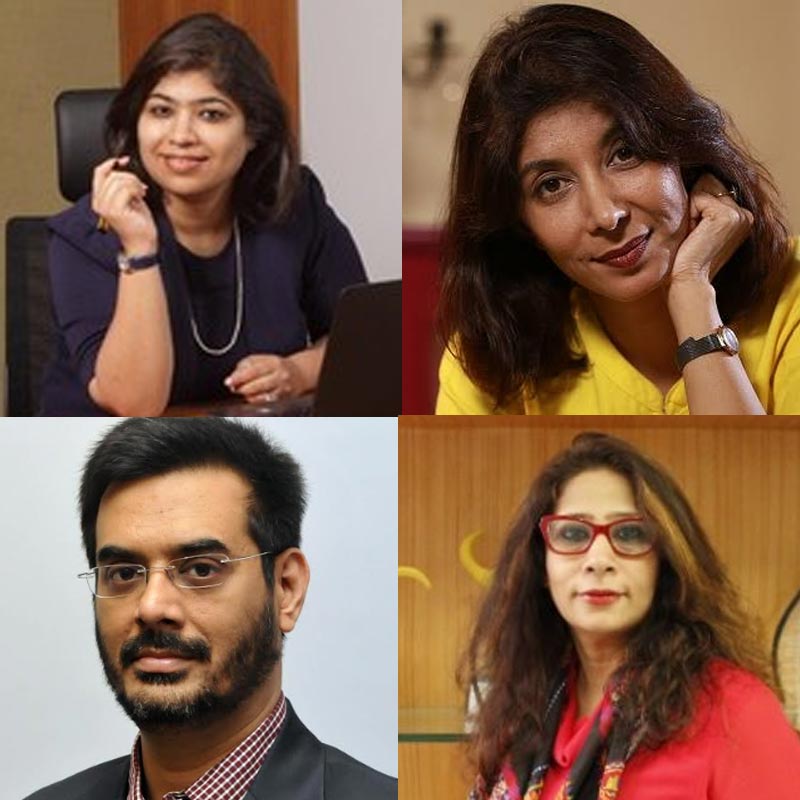
    JuzerTambawalla, (Director and Head of Marketing at Franklin Templeton, India) states that, “MeriPyaariSaheliyanis an incredible window into the lives of women in modern India. The podcasts provide a very immersive insight into their eventful and colourful lives. Such podcasts are extremely valuable for all listeners because it’s not everyday that we get the opportunity to listen in on heartfelt conversations and have the ability to learn from the stories within them. Being a part of this campaign has been enjoyable, inspiring and eye-opening. I hope you enjoy it as much as I have.”

    Furthermore, Geetanjali Sachwani, (AVP of Marketing at Franklin Templeton, India) says that, “The choice of podcasts as a medium for Meri PyaariSaheliyanis one that I feel is extremely important. In today’s era where screens surround us wherever we go, it can sometimes be overwhelming to take in all that information. Podcasts allow us to focus on the message that is trying to be conveyed without being distracted by other visual stimuli. Additionally, when looking at Meri PyaariSaheliyan where women discuss their lives, their experiences and their goals podcasts allow the listener to be engaged with and to an extent become a part of that engrossing conversation. Ultimately, the goal of the campaign is to make women comfortable talking about their experiences, aspirations and money and I feel that in an informal setting such as a podcast, this goal can really bear fruit.”

    The podcasts are written and hosted by Hansi Mehrotra, a well-established and distinguished mentor from the Finance industry. She is the Founder of The Money Hans. Speaking about the campaign, she says, “The Meri PyaariSaheliyan concept is based on my real life conversations with my real life girlfriends on real life issues. I hope it inspires women to talk openly with their girlfriends about money issues. “

    The campaign is spearheaded by Mumbai based Digital Agency Mirum India, a WPP group company. Naila Patel (Executive Creative Director, Mirum India)said, “MeriPyaariSaheliyan is an extension of our previous campaign 'Invest for Progress', where we urged women to not just learn to earn but also to learn to invest. These podcasts branch out from the same idea. We have created a series of conversationsaround problems that most women face when it comes to talking about money. These women conversing about life, money and investments, I believe normalises the issue at hand.”

    You can access the podcast series here:

    https://www.franklintempletonindia.com/investor/investor-education/meri-pyaari-saheliyan

    Meri PyaariSaheliyan is also available on popular audio podcast platforms such as Soundcloud, Spotify, Saavn, Audioboom, Pocket Casts and many more.

  • Share with Your Close Friends on Instagram Stories

    Share with Your Close Friends on Instagram Stories

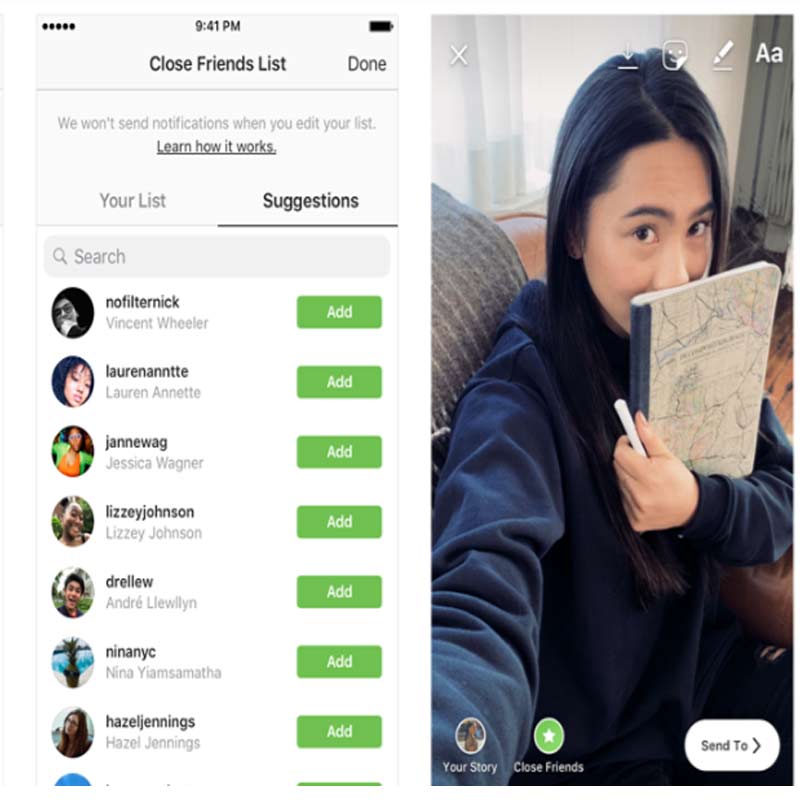
    MUMBAI: Starting today, you can make a close friends list on Stories and share with just the people you've added. Instagram Stories has become the place to express yourself and share everyday moments, but our community has grown — sometimes what you want to share isn't for everyone. With Close Friends, you have the flexibility to share more personal moments with a smaller group that you choose. 

    To add people to your list, go to your profile and tap on “Close Friends” in the side menu. Only you can see your close friends list and no one can request to be added, so you can feel comfortable adjusting it at any time. When you share to Stories, you'll see the option to share with just the people on your close friends list. If someone has added you to their list, you will see a green badge when you're viewing their stories. You'll also see a green ring around their profile photo in the Stories tray. 

    Close Friends will be rolling out globally today on the latest version of Instagram for iOS and Android. To learn more, check out the Instagram Help Center.

  • Good writers are hard to find, says the television industry

    Good writers are hard to find, says the television industry

    MUMBAI: The heartbeat of any television programme lies in its story and content. Developing good content through various ideas and imagination is a significant priority for television channels and producers. Story-telling, as they say, is an art and the small screen is constantly looking for compelling scripts that tell stories which entertain, engage and enrich the audience. Over the past few years, the Indian television industry has been exploring new formats and series of programmes in order to give the viewers an excellent TV viewing experience.

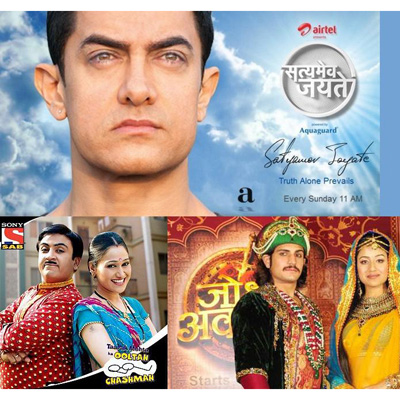
    Television director and creator of the unique chat show Satyamev Jayate, Satyajit Bhatkal says, “To be honest, we did not have any preconceived model for content creation or the kind of show we hoped to do. We made 6-7 documentaries on real life people and we realised that there was so much happening in the country. The common man faces so many problems and we needed to address these serious issues and give a 360 degree look to the matter.”

    However, except for a few who are willing to take up the challenge of creating something new, many are still stuck with the tried and tested.  According to Bhatkal, television, today, is way too cautious.  He elaborates, “It is a challenge that we have to cater to people of various education levels and social backgrounds. However, I feel we are not willing to move to a different level of aesthetics.”

    Director of many popular television series like Amanat, Kyunki Saans bhi kabhi bahu thi, and the current hit show Jodha Akbar, Santram Verma believes that there is a division amongst the audiences today as while some of the viewers want to watch fresh content, the older generation wants to stick to the same stories that were showcased years back. As a result, he feels that it is hard for the industry to evolve.


    He says, “Everybody is sticking to the safe formula of ‘saas-bahu’. Good writers are hard to find these days. Writers lack the fire in them to come up with fresh concepts. TV is not experimenting with novel ideas.”

    Speaking on the quality of writers, producer of the very popular show, Taarak Mehta Ka Ooltah Chashmah, Asit Kumar Modi says, “There is a lack of good writers. Generally speaking, channels go with writers that they have previously worked with. If we want to encourage new content, channels should have better adaptability for new writers and then, we can produce better content.”

    When asked whether broadcasters give the makers enough support and freedom, Modi informs that Sab played a good role in encouraging fresh content and promoting comedy shows like his on the channel.


    Bhatkal expresses that Star has been an extraordinary and participative partner for his show, “Star allowed us to feature the show on a Sunday morning instead of an evening prime time slot as we wanted the whole family to watch. Since it did not have a Telugu channel, the network gave the broadcast rights to its Telugu competitor as we wanted the programme to air in every Indian language. Star even permitted SMJ to be aired simultaneously on Doordarshan on the same day and at the same time, at the expense of its own traffic. What more could I ask for?”

    Talking about the concept of seasonal shows, Verma says, “Seasonal shows are the best. If implemented fully on Indian television, it will have a better emotional connect with the audience.”

    According to Modi, it is a good idea to have seasonal shows as after a point even the audience gets bored. However he is quick to point out that channels should also be convinced of the format.

    Channels need to have more confidence in seasonal formats and help in the distribution of the same. Modi emphasises that irrespective of ratings, losses and profits, one needs to constantly experiment on Indian television.

    To discuss more about the content on television, Indiantelevision.com is organising the ‘Content Hub’ that brings together writers, creators, producers, artistes and broadcast executives, both for TV and digital, all under one roof. This initiative is meant for all professionals, newbies and anyone who is keen to know about writing, producing and creating content for television and the digital space.