Tag: stores

  • Q1 FY26: Reliance Retail charges ahead with Rs 84,171 crore revenue blitz as profit surges 28 per cent

    Q1 FY26: Reliance Retail charges ahead with Rs 84,171 crore revenue blitz as profit surges 28 per cent

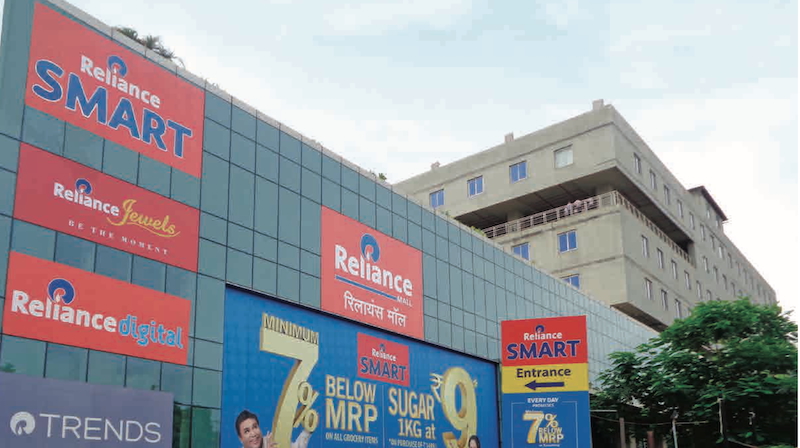
    MUMBAI: Reliance Retail has delivered a commanding first quarter performance, posting revenues of Rs 84,171 crore—an 11.3 per cent year-on-year surge—whilst profits catapulted 28.3 per cent to Rs 3,271 crore as the retail behemoth continued its relentless expansion across India’s consumer landscape.

    The company’s earnings before interest, taxes, depreciation and amortisation climbed 12.7 per cent to Rs 6,381 crore, with margins expanding 20 basis points to an industry-leading 8.7 per cent—cementing its position as India’s most profitable large-scale retailer.

    Reliance Retail’s physical footprint swelled with 388 new store openings during the quarter, taking the total count to 19,592 stores spanning 77.6 million square feet. The registered customer base hit 358 million, reinforcing the company’s claim as one of India’s most preferred retailers.

    The star performer was JioMart, which the company  described as “India’s fastest scaling digital grocery platform.” The hyperlocal delivery service registered explosive growth with daily orders surging 175 per cent year-on-year and 68 per cent quarter-on-quarter, now serving 4,290 pin codes through 2,200-plus stores across 1,000-plus cities.

    JioMart’s rapid-fire expansion included launching AJio Rush, a four-hour delivery service now live in six cities with 130,000-plus options. The initiative is delivering superior unit economics driven by higher average bill values and lower returns, according to the company.

    Fashion and lifestyle delivered robust growth, with emerging formats Gap, Azorte and Yousta registering 59 per cent year-on-year growth across 170 stores. Ajio’s new customer revenue share reached 18 per cent, up 150 basis points year-on-year, whilst average bill values jumped 17 per cent. The platform expanded its catalogue to 2.6 million options—44 per cent growth year-on-year.

    Consumer electronics faced headwinds from early monsoon onset impacting air conditioner sales, though average bill values surged 26 per cent with conversions up 200 basis points. The company bolstered its own-brand strategy by acquiring Kelvinator brand intellectual property for India.

    Grocery maintained its market leadership with broad-based growth across categories. Home and personal care grew 15 per cent year-on-year, as did fruits and vegetables, whilst packaged foods expanded 13 per cent. The Metro format delivered standout performance with home and personal care categories growing 25 per cent year-on-year.

    The quarter also saw strategic brand expansions including Shein crossing two million app downloads with 20,000 live options, whilst AJio Luxe grew its portfolio to 875 brands. Premium brands continued segment leadership with Hamleys expanding geographically and launching its Green Club sustainability programme.

    “Reliance Retail delivered resilient performance during this quarter driven by our relentless focus on operational excellence, geographical expansion and sharper product portfolio,” said executive director Isha M. Ambani “Our continued investments in cutting-edge technologies and differentiated product offerings have enabled us to serve our customers better and scale with agility.”

    The results underscore Reliance Retail’s dominance in India’s Rs 70 trillion retail market, with the company now processing 389 million transactions quarterly—a 16.5 per cent year-on-year increase—as it continues reshaping India’s retail landscape through aggressive digitisation and expansion.

  • FirstCry.com to expand offline footprint

    FirstCry.com to expand offline footprint

    MUMBAI: The last couple of months have been an exciting one for the blooming e-commerce sector. As more and more investors fund the e-commerce sites, the sector’s purple patch is here to stay for a long time.


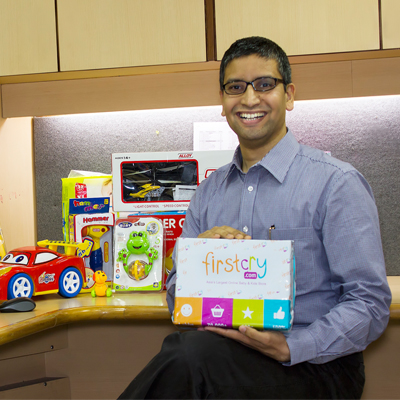
    However, the niche e-commerce sector, FirstCry.com, which was launched in 2010 to solve Indian parents’ problem of not having access to the best brands and products for their kids, is planning to take the offline route as well.


    The company feels that e-commerce’s future is looking promising in the country as more and more people come online and continues to be a big focus for us. “But what we see as a larger vision is to build an ecosystem of solutions for parents. Since, parents exhibit hybrid behaviour of shopping online and offline, we decided right at our inception that it was important to have offline stores as well. Today with a footprint in over 20 states with more than 70 stores, we are in a great position to offer the right variety of brands and products to parents,” says Firstcry.com founder and CEO Supam Maheshwari.


    With more than 95 per cent sales happening offline, there is still a large part of baby products market to be tapped, it has a vision of reaching 400 stores offline by December 2017. Currently, FirstCry stores have their presence in many Tier I, II and III cities in 45 cities.


    However, by entering into the untapped markets, where offline presence of baby products is low, it is highly optimistic about the company’s growth.


    On the marketing front, one of the key aspects of its strategy is to keep online and offline integrated. A parent who shops with FirstCry.com should be able to get the same experience online and offline. “We have a strong e-mailing program through which we are able to send personalised mailers making parents aware of store openings, promotions etc. In addition, we have introduced a highly innovative concept of a 32 inch digital Kiosk installed in each store – since a store is limited by physical space, we have used the Kiosk to allow parents to browse the large online variety and order what they like and the order will be delivered at the store. We also have a FirstCry Box program wherein we reach over 60,000 new parents each month with a complimentary gift box. Through this box, we make new parents aware of stores in their area and also offer a gift coupon which can be redeemed online or offline. Through a lot of such initiatives, we are able to ensure that we scale up our marketing plans with the highest ROI metrics,” says Maheshwari.


    Franchisee investment of about Rs 3,000 per square feet is required for setting up a store, which ranges anywhere from 1000 square feet to 2000 square feet. The stores act as experience centers, successfully tackling the touch-and-feel challenges faced in purchasing online.


    Overall, Firstcry keeps its model robust and scalable by controlling the franchisee’s investments, giving high return on investment and faster payback that has been instrumental in a break-even since inception. Firstcry.com along with its stakeholders looks forward to growing in terms of business and loyalty both.

  • NeuLion to demonstrate IPTV platform at NAB 2006

    NeuLion to demonstrate IPTV platform at NAB 2006

    MUMBAI: NeuLion will demonstrating its IPTV platform at NAB 2006 in Las Vegas from 22-27 April.

    The platform connects the Internet to the TV, delivering high-quality streaming content that the consumer can watch on wither the TV or PC. NeuLion says that it is is leading the evolution of video distribution with its patented iPTV Platform and will be demonstrating at NAB 2006 how it delivers high quality video to the home or business using existing high-speed Public Internet connections.

    NeuLion executive VP and co-founder Chris Wagner says, “iPTV is the hottest technology and is the future of home entertainment and business applications. NAB is the ideal venue to showcase the transformation that this technology will bring to the media industry.”

    The company adds that the market opportunities for IP based video services are exploding with new revenue opportunities. The convergence of broadband and broadcast delivery will inevitably disrupt existing telecommunications and television industries as they collide and collapse conventional boundaries.

    Today’s distribution/broadcasting of multimedia content is predominantly based on transmission over satellites, cable and terrestrial transmission systems. With these existing systems the interactivity is difficult to provide. By accelerating the introduction of fast data networks to end-users, a fourth method of direct access to users becomes possible, i.e. broadcasting via public broadband IP networks.

    NeuLion works with content partners to develop end-to-end solutions for multimedia IPTV services. The NeuLion IPTV platform encodes, delivers, stores and manages an unlimited range of multimedia content, and the Operational Support System (OSS) maintains all billing and customer support services.