Tag: Steve Martin

  • MGM plans Pink Panther reboot with Julie Andrews

    MGM plans Pink Panther reboot with Julie Andrews

    MUMBAI: Metro-Goldwyn-Mayer (MGM)’s chairman and CEO Gary Barber and president of motion picture group Jonathan Glickman announced on 31 March that it is currently in the process for producing a full-length hybrid animation and live-action feature film based on the animated Pink Panther character.


    Walter Mirisch, executive producer of the original Pink Panther films and television series will serve as the producer of the new film, along with Academy Award-winning actress, Julie Andrews (The Princess Diaries), wife of the late director Blake Edwards. David Silverman (The Simpsons Movie, Monsters, Inc.) will direct.  The Pink Panther character originated a remarkable fifty years ago.


    The new caper film will focus on the character, rather than inspector Clouseau, and will reminisce back to the tone shared by the original Friz Freleng and David De Patie cartoons as well as that of Blake Edwards’ films.


    “We are incredibly proud to re-introduce the Pink Panther to a brand new generation in such a fresh way. Even more exciting is the chance to work again with our dear friends Walter Mirisch and Julie Andrews, as well as the talented David Silverman, whose enthusiasm convinced us to ‘Think Pink!’,” said Glickman in a press statement.


    “I am delighted that the legacy of Blake’s iconic Pink Panther franchise will continue to grow in its new hybrid form. It is exciting that the quintessential ‘next step’ for our beloved Panther will be enjoyed by a fourth generation of audiences. I feel that Blake is encouraging us on,” said Andrews in the statement.


    For fifty years, the Pink Panther has been one of the most beloved characters in the history of film. There are a select few animated characters who have reached the level of popularity and longevity that the Pink Panther has achieved.  Next to James Bond, The Pink Panther movie franchise is one of the longest running in cinematic history, boasting 11 feature films, spanning five decades. The films have won 2 Academy Awards, 2 Golden Globe Awards and the Grammy Award-winning theme song by the legendary music composer Henry Mancini (Breakfast at Tiffany’s) still stands today as one of the greatest themes of all time.

  • Eddie Murphy to host 84th Oscar ceremony

    Eddie Murphy to host 84th Oscar ceremony

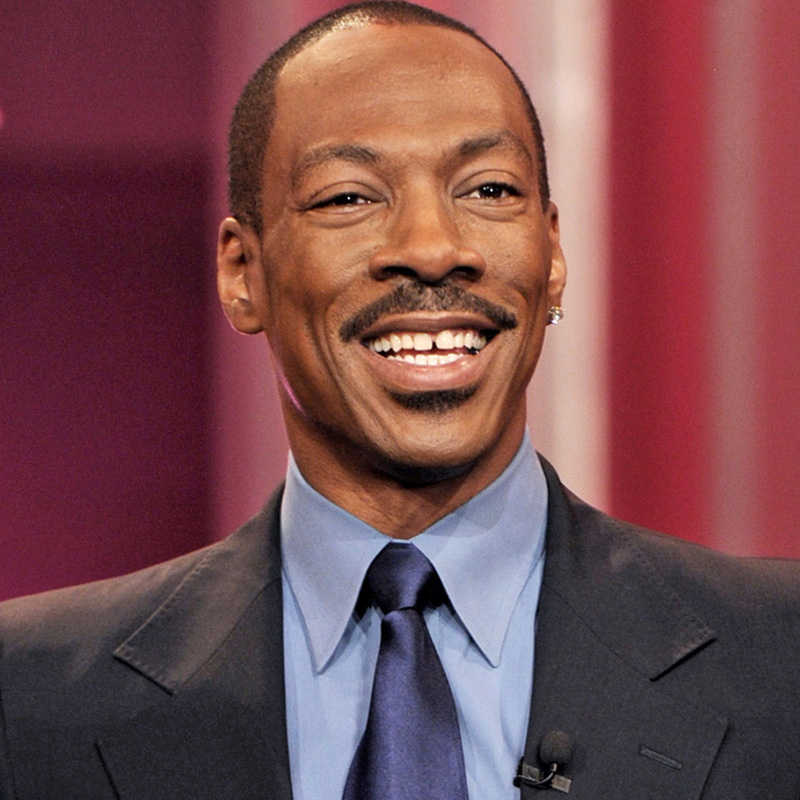
    MUMBAI: Eddie Murphy will host the 84th annual Oscar ceremony next year. The news was flashed by Academy producers Brett Ratner and Don Mischer.


    Ratner termed the 50-year-old entertainer “a comedic genius; one of the greatest and most influential live performers ever” while Mischer called Murphy “a truly groundbreaking performer” whose “quick wit and charisma will serve him very well as Oscar host.”
     
    This will be Murphy‘s first time hosting the Academy Awards. The actor said in a statement that he is “enormously honoured” to join the ranks of past Academy Awards hosts like Johnny Carson, Bob Hope, Billy Crystal, Steve Martin and Whoopi Goldberg.


    Murphy was last nominated for an Oscar in 2006 for his supporting role in Dreamgirls.

  • ’50 per cent of the challenge of filmmaking lies in marketing’ : Ashok Amritraj – Entertainment chairman and CEO

    ’50 per cent of the challenge of filmmaking lies in marketing’ : Ashok Amritraj – Entertainment chairman and CEO

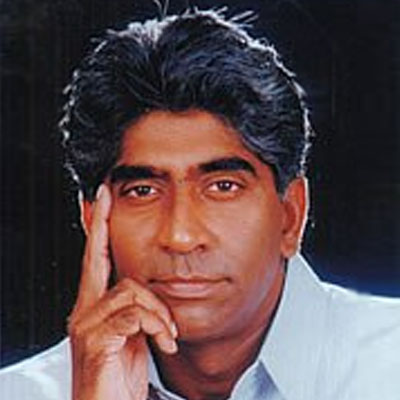
    Former tennis player turned Hollywood film producer Ashok Amritraj has reason to celebrate. Having spent 25 years in filmmaking, he was recently in India to collaborate with English movie channel Pix from the Sony stable to kick off a reality show titled ‘Gateway.’


    Amritraj’s new hunt: to discover the “hidden filmmaking talent in India.” His firm Hyde Park Entertainment will act as a platform for this talent to go international.


    In an interview with Indiantelevision.com’s Ashwin Pinto, Amritraj shares his insight into the business of filmmaking in the West, his relationship with studios and the experience of working with top talent in the industry like Bruce Willis and Steve Martin.


    Excerpts:

    What opportunities does the burgeoning Indian media and entertainment scene offer for Hyde Park?
    The good news for India is that the entertainment industry is growing. The television industry has seen enormous growth. The motion picture industry will hit a steep curve over the next five to seven years. The younger generation of filmmakers are much more globalised. They understand filmmaking in a different way compared with their predecessors.


    There are interesting opportunities in a growing industry. My business is in Hollywood first and foremost. But I have always felt a great affection and affinity for the country where I grew up. This year is the 25th anniversary of my being in Hollywood and I have made over 95 movies. It felt like the time was right to come back and do something here.

    How did the idea for ‘Gateway’ come about?
    Young Indian filmmakers have a lot of talent. Around a year ago over dinner with Sunder Aaron (Pix’s business head) I expressed an idea that involved a search for a talented aspiring filmmaker who would be given an opportunity to work with my company and make a Hollywood film.


    Pix was interested and so we started to evolve the whole idea. The concept got bigger and better. We are excited about seeing ‘Gateway’ come to fruition.

    In the US Mark Burnett and Steven Spielberg did a film-based reality show On The Lot which didn’t fare as well as had been expected. What went wrong and how confident are you that ‘Gateway’ will take off?
    I don’t think that anything went wrong. It comes down to a person’s take on a certain kind of a show. At the end of the day our show will pick a director and give him an incredible opportunity. Spielberg’s show was the same way.


    However, the way of getting there and the tasks that they go through the elimination process is completely different. In one way it is close to The Apprentice as I will act as a mentor. In another way it is also close to Project Greenlight, which was done by Ben Affleck and Matt Damon.


    There are different things being done. Our show is very India centric. It is for Indians. The aim is to make the path of a talented Indian filmmaker to Hollywood easier. We are looking to provide a platform for a young fresh Indian director to showcase his/her talent on the world stage. He/she is guaranteed a distribution of his movies between Sony and Hyde Park Entertainment.

    What brought you and Pix together?
    Our relationship with Pix is based on their tagline – We Tell Stories. This is the basis on which Pix was launched. A lot of what they do is story based. Top Hollywood producers also feel the same way.


    Money is available from a myriad of sources like hedge funds. However stories, talented and original storywriters are hard to find. When you do an initiative like Gateway you could find an extraordinary talent like an Ang Lee or an Alejandro Gonzalez Inarritu.

    What are you looking for in candidates?
    I often speak at schools and colleges and also at UCLA, AFI and so on in the US. I say that PQ plus CQ will always beat IQ which means that in films the passion quotient combined with the curiosity quotient will always trump the intelligence quotient.


    You also need abilities like how to handle actors, how to work with creativity, how to formulate a story, how to keep a producer happy. As you put all these pieces together and add to that a personality that can work, you try to frame the whole picture.

    Are you looking at other television projects?
    No! I am a film guy. I have not done television. Internationally Gateway represents my first foray into television. This project is personal. It is less about doing a TV show and more about finding hidden filmmaking talent in India.

    Last year you had mentioned that Hyde Park was looking at a JV with an Indian animation firm. Has anything happened on this front?
    Practically everyone has come to us to do something. We are going to make a film here in October called The Other End Of the Line. We will use an Indian actress who could be a newcomer or who has done a couple of movies. It is a question of finding talent. Hyde Park is looking to act as a platform for Indian talent to go international. Bollywood films may not crossover into Hollywood but I certainly think that Indian directors and actors can achieve this.

    In general what does Hyde Park look for in a project before giving the go ahead?
    Everything starts creatively. Our creative team in Los Angeles is presented with around 100 pitches each month. These include novels, books, videogames, comics, screenplays. We look at over 1000 projects a year. We develop a dozen and make three to four films. Those three or four films are chosen on the basis of creativity, gut feel and the kind of film we are looking to make.


    Secondly you look at the distribution paradigm and you look at who will want to watch this kind of a film. The distribution team gets involved and lets us know what will work and where. Then we get a casting director to tell us things like a certain project will only work if Brad Pitt is involved or it will only work with Kevin Bacon. All these pieces are put together which is why it comes down to only three to four films.

    When you work with a big star like Steve Martin on Shopgirl how much of a collaborative process is it?
    I am closely involved with every film we make which is why we only make three to four films a year. I could make ten movies a year but we do not as I would not be able to give enough attention to each one of them.


    The areas where I am very personally involved is developing the screenplay to a point where I as a producer am happy with it. I am closely involved with getting the principal cast and the director. Then I get hands on post-production. During the production period the director runs the project.


    We start with storyboards. So you have the movie laid out before you pretty much. We know where the camera angles are, where the locations are. We then do a read through with the whole cast. Sometimes we take a complicated scene from a camera point of view and computerise it. For me the post-production process in terms of the cutting, sound and music becomes very critical.

    Could you talk about some of your favourite experiences of working with creative talent?
    I have worked with a number of very talented actors over the years. Steve Martin is brilliant as he is a writer as well. We worked very closely together on Shopgirl as it was his novel which he entrusted to me. He wrote the screenplay and produced it with me. I also worked with him on Bringing Down The House which was a completely different experience. Queen Latifah was a complete pleasure to work with. She is a great character.


    I did Bandits with Bruce Willis, Billy Bon Thornton and Cate Blanchett. That was a dynamic experience as was working with Anjelina Jolie and Antonio Banderas on Original Sin. All these actors are extraordinarily professional. They arrive on time and treat their craft as a business. They are very disciplined which results in success.

    As a producer when you have a film like Bandits with more than one big star, how much of a challenge is it to deal with egos?
    Actors always have to check their egos. That is a task I have to deal with. It is also part of the director’s job. When we pick a talented filmmaker through our Gateway initiative, he is going to have to understand that managing actors is a large part of the job.

    Filmmaking is getting democratised with the use of mobile phones & Youtube

    How did a tennis player from India like you get accepted in Hollywood?
    The first six to seven years were an incredible struggle. Nobody wanted to make a movie with me as our family was not involved in the movie business at all.


    I got lucky in 1984. I met a young chap who was a limousine driver. I met him again in 1990 at the Cannes Film Festival. He said that out of 800 photographs he had sent, only I had responded. The person was Jean Claude Van Damme and we made Double Impact. Then people in the industry found messages that I had called two years earlier. They got back to me and things started to roll.

    You have been making films for two decades now. What is the biggest change you have noticed in the industry?
    There have been many. In 1984-85 when I started to make movies for half a million dollars, there was at that time a fight between two formats – VHS and Beta Max. VHS won in the end. Then the international market for Hollywood grew. Satellite movie channels became more prominent.


    The digital revolution is amazing. You just have to look at what George Lucas did with Star Wars. A more recent film 300 was shot against a green screen. It is an exciting time to launch Gateway as directors today have more tools at their fingertips.

    Would you say that filmmaking has become more democratised?
    Absolutely! Democratised is a great word to use. One can use a mobile phone to make a movie. There is Youtube through which you can get millions of film fans to view your film and comment on it. Anybody can make a film.


    You do not have to be the son or daughter of someone famous to enter filmmaking. You don’t need to have a huge film background to get into it. You need talent, vision and creativity. Gateway is a democratisation of filmmaking.

    Are new forms of distribution like VoD making it easier for a film producer to recover costs?
    It is another revenue stream. But I agree with guys like Scorcese and Tarantino that a film has to make money theatrically if it is to be anything on video or video on demand.

    When you started out you focussed on action and comedy. Are you looking to branch out further in terms of genres?
    I hate to sound egotistical but I have worked in all genres. I have done action films like Double Impact, action comedies like Bandits, serious films like Shopgirl, Moonlight Mile and family films like Dreamer. The thing that I like about Hollywood is that I can do different things.


    We just released Premonition with Sandra Bullock. We will release Death Sentence which is a gritty action film. It is not a ‘shoot them up’ film and I believe it will make audiences think a lot. It is about an ordinary man being put in an extraordinary position and to what extent he would go. It stars Kevin Bacon and Kelly Preston.

    You co-produce films with different studios. How would you describe your relationship with them?
    I have worked with pretty much every studio. My main deals today are with Fox and Disney. I have a first look deal with Fox and a second look deal with Disney. Death Sentence is being released by Fox on 31 August. I am also close with the guys at Sony and Paramount. I made Dreamer with Dreamworks. I have made ten movies with MGM.

    How does the Bollywood system compare with Hollywood in terms of creativity and professionalism?
    The Bollywood system has worked for many decades now. I think that they are now gravitating towards fully completed scripts before shooting commences. There are more storyboards in Bollywood now as you cannot shoot visual effects without them.

    Are films like the Oscar winner Crash a sign that Hollywood is becoming more multi-cultural now compared to the early 1980s?
    Definitely! When I started out 25 years back, I could not find another Indian guy. Today there are Indian agents, studio executives. There are Asians all over the place. Also, Hollywood is getting inspired by stories from Asia and so you have films like The Ring, Dark Water and The Grudge. Also you have Asian stars like Chow Yun Fat, Michelle Yeoh, Gong Li, Jackie Chan and Jet Li.

    Do you feel that there is a lack of respect for IPR in bollywood?
    I think what is lacking is good quality writers. Writers need to be encouraged more here. They are the lifeblood of the Hollywood business.

    Why can’t India have a global film like what China is doing with films like Crouching Tiger Hidden Dragon?
    I think that songs and dances in Bollywood films are a cultural barrier for someone in Idaho. However the way for Indian cinema to succeed overseas is to make films that emotionally resonate across the globe. That is what The Last King Of Scotland did. That film could have been made by anyone. Little Miss Sunshine and Letters From Iwo Jima did the same thing. The casting was also great. Emotionally resonant films come out of great stories and not necessarily from simply having a big star like Tom Cruise.

    Finally how much of a threat do you feel new forms of entertainment like gaming will be to films five years down the road?
    I know that I am not only competing against other films but also with other forms of entertainment. Marketing will have to become more savvy. At Comic Con which was recently held in Las Vegas, we gave away products to push our new film. That is one way in which you can differentiate yourself in a cluttered media environment. Fifty per cent of the challenge of filmmaking lies in marketing.

  • Sir Elton John receives Disney Legends award

    Sir Elton John receives Disney Legends award

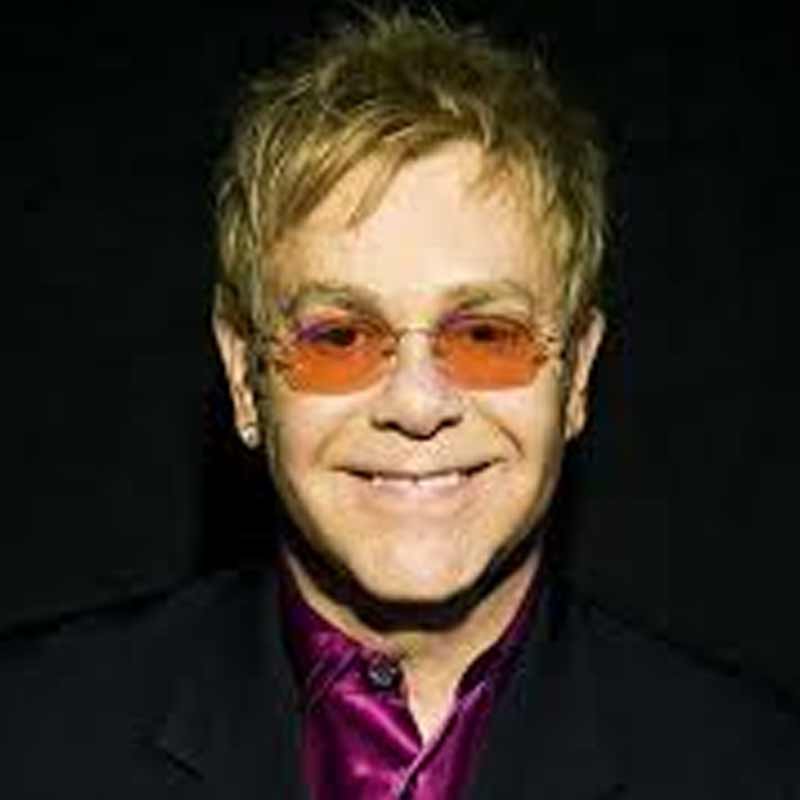
    MUMBAI: A couple of days ago US media conglomerate Disney honoured legendary songwriter and singer Sir Elton John, as well as 11 additional inductees, with the Disney Legends Award.

    Disney president and CEO Robert Iger says, “This annual ceremony, now in its 19th year, gives all of us at Disney a moment to remember the importance of our past achievements and to recognise those who embody this company’s constant focus on delivering unparalleled creativity, quality and innovation to our audiences around the world. As we continue the tradition this year, we also mark a special milestone as we welcome our 200th Disney Legend.”

    The other new Disney Legends include ABC News anchor Peter Jennings; Actors Tommy Kirk and Kevin Corcoran (Old Yeller, The Shaggy Dog, Swiss Family Robinson, Mickey Mouse Club); Actors Tim Considine and David Stollery (The Adventures of Spin and Marty); 
    Actress Ginny Tyler (Mickey Mouse Club) 
    and Disney and Pixar animation story artist Joe Ranft.

    The Disney Legends Award was established in 1987 to honour the men and women who have made significant contributions to the Disney legacy. The first recipient was actor Fred MacMurray (The Shaggy Dog, The Absent-Minded Professor, The Happiest Millionaire), and since that time 203 Disney Legends have been named, including this year’s recipients.

    Among the past Disney Legends are Julie Andrews, Steve Martin, Dick Van Dyke, Annette Funicello, Dean Jones, Angela Lansbury, Fess Parker, Kurt Russell, Tim Allen, Hayley Mills, Phil Collins, Art Linkletter, Tim Conway, Sir Tim Rice, Howard Ashman and Alan Menken.

  • ‘Key to successful radio programming is to know what territory you can own & defend against predators’ : Steve Martin – BBC World Service on-air editor

    ‘Key to successful radio programming is to know what territory you can own & defend against predators’ : Steve Martin – BBC World Service on-air editor

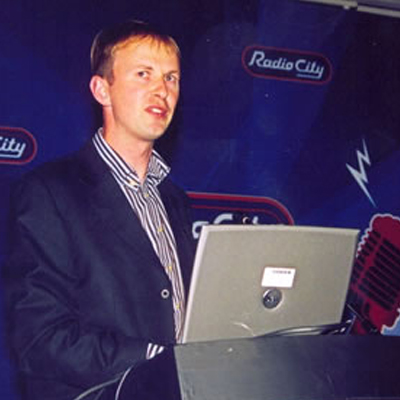
    BBC World Service on-air editor Steve Martin has been responsible for the present on-air image that BBC’s English Radio Network holds, be it the sound identity of the network or its on-air promotions. Radio, to Martin, is something that establishes a certain personal connection through what it offers.

    According to Martin, content should be strong enough to trigger emotional reactions among consumers. He emphasizes that the players should better know their audience, the better knowledge they have, more acceptable forms of presentation will be created.

    Martin has his own theory on the sales & promotion aspect, which goes beyond the commercial break. He says the content should be creating and raising awareness of the product or the service.

    On his way to London, BBC World Service on-air editor Martin spent two days in Mumbai, attending a seminar organized by FM channel Radio City.

    Indiantelevision.com’s Manisha Bhattacharjee caught up with Martin during his brief stay in the city, to get a perspective on the evolving business.

    Excerpts:

    Could you provide a brief of overview of the current radio status in UK?
    Today, it is an extremely mature and diverse radio market. BBC now operates 10 national networks some of which are only available on the digital platform, the rest of them on FM and AM in the traditional way. And we also operate a network of 38 local radio stations which is centered in all different cities and towns in England. We run two radio stations in Wales, two in Scotland, and two in Northern Ireland. So in any one place in Great Britain you are guaranteed to get at least five to six BBC radio stations. Plus you will get a similar number of commercial services in some places and in some places there are more. It’s a very developed market now.

    Now that is really diverse. Was there any kind of regulatory push, which also enhanced the market?
    In Britain, it is permissible for a radio group to own several radio stations in one market. This isn’t the case in India.

    When this happens you don’t find much similarities between two radio stations, because if you are going to own two radio stations in the same market, the last thing you want to be doing is exactly the same thing and cannibalizing the same audience. So you ensure that the two radio stations are broadly complementary. That makes good business sense and you ensure that on each radio station in a particular territory, which is not only hugely successful but it is also defensible against any other outside broadcaster. The key to successful radio programming is to know what territory you can own and defend against predators.

    That works for the public service as well. In BBC we are publicly funded and do not have a commercial imperative. We are all there to maximize revenues. However, because we are publicly funded, we have a duty to serve absolutely everybody of the UK population. So we have an obligation to ensure that our services are broadly complementary.

    For example: We run a national new music service, which specializes in breaking new music. It is a patronage in the arts in terms of supporting new talents in new music and it plays hits also of the popular culture.

    Please comment on BBC service radio networks’ programming strategy. How different is it from that of commercial radio stations?
    BBC service radio networks are distinctive from the commercial radio stations. It would be wrong to say that we solely do things that the market can’t support. Because we have an obligation to provide something to everybody, the services have to be popular. But these are absolutely distinctive.

    We would take creative risks with our programming such as of BBC Radio 2 – we will do a speech based consumer phone-in and discussion stations are doing that. On Radio 1 we will break great new music and we will take risks with that. We invest in social action programming, investigating issues that young people are facing in Britain today. And on BBC Radio 3 we support orchestras. So our patronage of the hour is not just something having on the plaque on the wall, it is actually real money going into supporting musicians creating music and support the cultural life of Britain today. So that some of the stuff that we do in music, commercial service radio stations don’t indulge in.

    In speech radio, we are the single biggest broadcast news gathering operation anywhere in the world. And in UK specifically, we run an intelligent speech radio station which is not just news and current affairs but includes drama, documentary and cultural programmes.

    Please comment on the competition between BBC and the commercial radio stations. How does it affect the market?
    Commercial radio is first and foremost a business and these radio stations will try to know the most profitable territories in programming terms. I think it is fair to say that because of the pressure of BBC, which is innovating in programming, the commercial radio stations have raised their game and are not going in for cutting the investment in programming and creating the cheapest programming possible.

    Because of the competition from BBC, we have got a healthy creative section within the commercial radio stations in the UK. Commercial radio stations invest heavily in research and keep us on our toes.

    Also, the regulatory framework ensures through the system of licensing that the stations are held to a particular format and have to comply with the terms of format licensing issues by the regulator. This ensures that there is a spread of different formats in any one market. But the commercial stations would want that in any case because they wouldn’t want two stations duplicating the same output.

    In the present scenario, how different is the US radio market from that of the UK radio market?
    They have a public radio network but that is quite different from what BBC is doing and it appeals to a particular niche audience. In recent years, the arrival of satellite radio through XM Satellite and Sirius Satellite Radio, which has made a huge number of formats available from coast to coast, which is great if you are driving. It allows one to listen to the same station through the journey.

    Last year, 25 % of UK radio revenues came from S&P activity

    The evolution of the radio industry, in particular it’s rapidly growing digital uptake, does that signify a threat posed by digital radio to terrestrial radio?
    More radio is good for the industry; it is good for the consumers, because, it gives more choice. You are more likely to hear what you want when you want it. That’s a positive force. BBC has been a pioneer in digital radio in UK, we have strongly welcomed it. It has enabled us to provide new services and are able to reach sections of the community which were otherwise being undeserved.

    It does mean that more communication radio stations will compete against us but that said that adds to the totality of choice available to UK radio listeners and that’s got to be healthy.

    I think where the challenge comes for the commercial stations is to manage the investment. You’ve got to invest in the new technology of rolling out the transmitter networks providing new radio services before getting enough listeners to turn a profit from those. So there is the issue of funding. That’s where the challenges lie from the business point of view.

    BBC has been leading the roll-out of digital radio infrastructure. So we have been an enabler for the commercial. Because every time you buy a digital radio set, not only do you have new BBC radio station but you have access to the new commercial stations as well.

    Radio is probably looking at greater fragmentation of its audience (like any other media). Is this an encouraging sign for the marketers or advertisers?
    If I was an advertiser and I knew there was a radio stations that supports on a functional and emotional level, with a clear voice to my target listeners. I know I will be able to buy just that station and eliminate waste on my ad spend. It is going to be good for advertisers as there is more choice on where to put spends.

    It may mean that in order to reach the audience you need more than one radio station but you can be selective in the stations you buy and eliminate waste.

    If you have only one station in the market, or all the stations sound the same, then you are guaranteeing to be wasting some of your advertisers’ spend. Because you will be talking to people who are not within your target audience or your advertising campaign. So, the more the fragmentation the easier it is to target the specific audience segment you are interested in.

    More relevant, from an advertisers’ point of view, is maximizing reach – the number of different people who listen in a week. But consumers generally hate advertisements as it is an interruption?
    Well, listeners don’t hate radio advertising. They primarily hate bad radio advertising. Secondly, the scene is changing, first there were advertising spots, and then came sponsorship. But now there’s S&P (sales and promotion) and its growing fast. Last year, 25 per cent of UK radio revenues came from S&P activity. It takes the client beyond the commercial break by creating and raising awareness of the product or the service.

    It can exploit the closeness and personal nature of radio for brands. It can also give brand endorsement from popular and trusted RJs and can create great radio entertainment for listeners. It can bring in new listeners for the radio station.

    Today, the Indian radio market is perceived as an industry which is booming. What’s your perception?
    At the moment of course, we have a situation where a lot of radio stations are broadcasting music, of course with a very similar play list. It is yet to be seen, if anybody has the guts or intelligent research in order to tone down or target their music specifically. That’s an inevitability. Whoever does that will be hugely successful in the market.

    Knowing that the radio FM market is at its nascent stage; doesn’t that give even more opportunities for the players to take risks as they are still craving a place for themselves?
    You have to be extremely brave indeed to say good-bye to a certain section of one audience. The industry is booming at the moment people are running successful businesses with this model. I believe the only question is as the radio market matures, how long the situation can continue before the audience will expect a degree of choice? But I think at the same time it would be wrong to suggest that there isn’t some choice there already.

    Though music is largely played, the individual stations have invested in individual personalities who will become listeners’ friends over time and they will be characterizing differently, between station A and station B. So it just doesn’t have to be just about music. It could be emotional qualities, personalities, attitude of the presenters or RJ’s on the air. There are a number of ways you can introduce to a radio station format something that is particular to your radio stations that is owned by you and over time you become famous for and that is about segmentation and building brands.

    Are players reluctant to experiment primarily due to lack of news and current affairs?
    In any market you have to accept the regulatory framework which is in place. And in India, that’s the regulation.

    In markets where it is allowed to broadcast different types of news on radio channels, it is a popular form of radio programming. And you will also find the people will have different news needs as the day continues.

    At breakfast time for example, people tend to want information, the kind of information they need to get into the day and through the day. Then, later in the day, people may want to think a little more about the issues and not just get information but come to their own conclusion about what it means for them. So, we talk about this journey through the day from information in the morning to an understanding in the evening and people have a need for or devote a lot of time to knowing in the morning and thinking in the evening.

    In the markets where we are producing speech programming through the day we produce a range of news programmes. We run a programme called World Today which is a fast moving double headed presentation programme by two presenters. Very high story counts and have live reports from correspondents from across the globe. It is fairly light in tone. Later in the day, News Hour is a longer broadcast with one or two big stories from the day so far with a range of perspectives from the other BBC correspondents and other figures who are involved in the news story.

    We produce news programmes in such a way that they are available to listeners at a time when they better satisfy their news needs.

    What is the strategy to have a successful station format and positioning of the radio channel?
    A key thing about radio is that it is an emotional medium. Radio is company, a complement for life, and so the key thing to be successful in radio, firstly you research in an audience. Know exactly whom you are talking too. What makes them tick. What their interests are. What kind of tone of voice you need to adapt and from there devising a radio format and delivering consistently. So that your audience knows exactly where to find the things that you are offering and you are rendering the whole thing up in a consistent tone of voice which becomes part of your brand identity.

    People around the world say what they love most about their favourite radio stations are personalities, the music, and the local information that helps get them through the day.