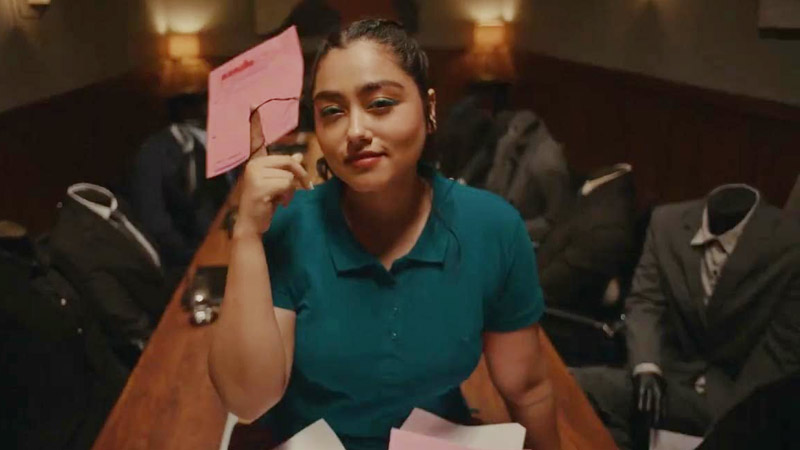
Mumbai: Dollar Industries has launched its latest campaign to promote its range of Athleisure – a category that is gaining a lot of traction recently. The campaign, conceptualised by Lowe Lintas, prompts the viewer to question stereotypes present in society when it comes to dressing for an occasion.
Dollar Industries MD Vinod Kumar Gupta said, “In an era of comfort and style, Athleisurewear has emerged as a dominant trend in the fashion world, prompting us to focus on an entire range of cool fashionwear – Tank Tops, Crew Necks, Henleys, Polos, Sweatshirts, Jackets, Hoodies, Bermudas, Capris, Track Pants, Joggers and Socks – which perfectly marry the young consumer’s desire for comfortable yet trendy and versatile clothing options which they can wear at multiple events and locations. What makes matters more interesting is that even professions that traditionally demanded suits, or at least a shirt and tie, are now relaxing their dress code policy as millennials move into positions of management and decision-making. Exactly what inspired us and Lowe Lintas to argue against acceptable social dress norms in our campaign and promote Dollar Athleisure as the perfect balance between casual comfort and chic style.”
The film, directed by renowned film director Manav Malhotra, is a stylised montage borrowed from walks of life demanding that we dress formally. From board meetings to college classrooms, from marriages to dining out – society expects to uphold certain dress codes. The film challenges the stereotype and promotes athleisurewear as an acceptable style for all occasions.
Lowe Lintas unit creative director Mohit Pasricha said, “As Coco Chanel once famously said, fashion fades, only style remains, and athleisure is definitely a fashion. But in saying that, it’s a very comfortable one, and once people get comfortable, it’s hard to change their minds. Simply look around us. The style on the street has changed dramatically. Women are sporting leggings, crop tops and sports bras, men are spotted in sweatpants, hoodies and sneakers. This emerging lifestyle emphasises one simple thing: The universal need to dress comfortably. And, that is what led us to challenge formal dress codes and celebrate informality as the new way of life.”
MUMBAI: Brand X “launches heart-warming video dedicated to all ‘Super Moms’” blares an accessories brand campaign…“Celebrating the superstar mothers”, says another. “Dedicated to mothers who like a superwoman…blah blah” reads yet another brand campaign.
Come Mother’s Day and one is inundated with ads showcasing heroic, self-sacrificing moms multitasking, juggling an over-abundance of chores while managing both the work and home fronts super efficiently, constructing an image of a super-human or a symbol of divinity with multiple pairs of hands. Brand after brand in ad after ad repeats the same tired tropes of a “super mom” effortlessly ‘doing it all’ or role-playing the selfless epitome of virtue and goodness in a bid to keep the domestic machinery well-oiled and running smoothly.
In a damning indictment of how we treat our women as a nation, a 2011 Nielson Survey found that women in India are the most stressed of all. The study conducted across 21 countries measured stress by asking women questions such as ‘If they often felt pressured for time’, ‘If they rarely had time to relax’, ‘If they felt stressed/ overworked most of the time’. An overwhelming 87 per cent of Indian women signalled that they felt stressed most of the time, and 82 per cent had no time to relax.
Ten years down the line, a cursory look at our ads and campaigns rolled out ahead of Mother’s Day makes it clear that little has changed in women’s lives, while also presenting a possible indicator of why this may be so.
Lifestyle & mobile accessories brand KDM has launched a ‘Karo Dil Ki Marzi Mummy with KDM’ video ahead of Mother’s Day, that starts with a young daughter introducing her mother who’s talented but sacrificed her dreams for the sake of her family. The film shows the mom busy dusting, cleaning, cooking and having no time to follow her passion. The key purpose of the campaign is to pay tribute to all the “selfless sacrificing mothers who need to also listen to their heart along with performing their jobs”. The ad, which probably has its heart in the right place, unfortunately, chooses to play to the gallery with all the mommy stereotypes in place.
A recent LG Dishwasher advert, although not strictly a mother’s day campaign – takes us right back to the 70’s era if not earlier with its brand film and tagline of ‘Love wife, Love LG Dishwasher’. Circa 1982, Prestige pressure cooker ad, anyone? The vintage ad for the Prestige pressure cooker brand had a similar sentiment to sell its brand of pressure cookers- “Jo Biwi se kare pyar, Woh Prestige se kaise kare inkaar”! And from the looks of it, the time has stood still for the LG dishwasher ad!
Coming back to 2022, LG’s latest depicts a seemingly modern-looking urban couple beginning their marital journey. The film goes on to show the new bride struggling and labouring over a pile of dirty dishes. That is, till her knight-in-shining-armour – the husband, decides to rescue her from the catastrophic fate by gifting her an LG dishwasher. The voiceover in the ad ends with a believe it or not- “Not only take care of your dishes but your wife’s hands too!” slogan, clearly implying that it’s only the woman’s job to keep the soiled dishes ‘spic n span’. If only the brand’s marketing team had some “modern” thinking to go along with the modern features it talks about inbuilt in the machine!
If you thought this was an aberration to the brand’s dishwasher campaigns, there’s more. In another advert of the same series, the film goes on to nominate the husband as “the best husband in the world” for being gracious enough to gift his wife an LG dishwasher. The ad spot goes on to commission the brand itself as “The true symbol of love and care” for “Keeping your wife’s hands soft and beautiful as ever”! Coming from a multinational conglomerate, and one of the leading names in consumer electronics and home appliances, one would have expected better. But alas..that was not to be.
A lot has been said about equal parenting, but the truth remains, in one way or the other, women do end up with a larger share of work at the domestic level and such advertisements and brand campaigns further drill into the trope of a woman-managing-it-all perfectly are not helping matters!
In a slightly refreshing mode, the latest Prega news campaign seeks to break the stereotypical image of a “perfect” mom while acknowledging that a mother can be humanly imperfect and not excel at every role laid out by society. The brand in its latest Mother’s Day campaign depicts a working mother undergoing guilt pangs because she feels she has let her baby down. The film goes on to emphasise the message that mothers need not be perfect all the time and “embraces the imperfection of a mother with the #SheIsImperfectlyPerfect campaign”.
On the flip side, the pregnancy detection brand’s International Women’s Day 2022 campaign appears to be at odds with its Mothers’ day messaging. It speaks about the same tired trope of celebrating the “boundless spirit of womanhood with its #SheCanCarryBoth” message, where it enunciates “the huge strength of women who do not shy away from any form of responsibility”. Here the brand attempts to examine via the life journeys of four women passing through a railways waiting room, whether being a mom while being “extremely rewarding”, takes a toll on one’s ambitions and dreams? While the concept and intent behind the campaign is to be commended, (as it says, “, it’s time to break free from the nay-sayers of society and bring in confidence to women that #SheCanCarryBoth!”) the ad ends up glossing over the challenges faced by new mothers in trying to single-handedly manage the baby, home and her career, with the daddys, as usual, nowhere in the picture.
However, to be fair, the brand has in the past highlighted important issues faced by women through its ads. It even threw light on an important matter such as postpartum depression (PPD) and how new mothers grapple with it, in its 2018 campaign, emphasises how PPD is a harsh reality and how we, as a society, can help mothers deal with it by being understanding and empathetic.
But sadly, such advertisements are exceptions rather than the rule, and the major part of the ads still depict women and mothers in conformist avatars. This, while adding to the not-so-subtle societal pressure on women, also takes away the culpability of the rest of the household to do their bit in easing the load on a single individual.
It’s 2022. High time we retired the “super-mom” from our ads? And bring them down from the ‘divine’ super-humanly pedestal we have bestowed upon them only to weigh them down with the crown of our expectations? Let’s keep hoping.
MUMBAI: It is not easy to define beauty for anyone as each person has its own definition. Beauty does not depend on the colour of the skin, physical abilities, or height or weight, but is a function of one’s inner radiance.
However, if we look around, the idea of beauty in the larger sense, across society, is subjected to rules and regulations. A large part of society defines beauty is defined in a certain manner and urges others to follow specific norms. The idea of beauty varies from culture to culture.
Several brands across the categories have found solace in this idea and tried to make a difference by sharing researches, creating campaigns and awareness in society.
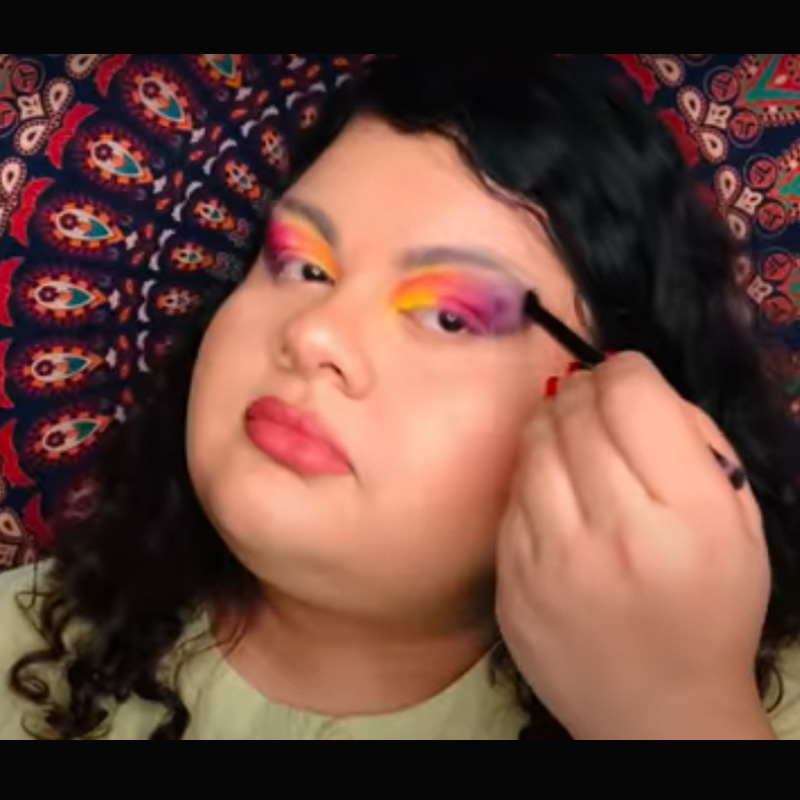
In the latest attempt, Shoppers Stop is trying to break this stereotype and use makeup as a form of expression and creativity. Through the videos, the influencers and role models breakthrough this clutter and stand out for who they are with beautiful representations from different walks of life.
Shoppers Stop, India’s beauty and fashion destination enthralled their audience with a series of videos attempting at breaking stereotypical beauty standards and perceptions.
Video from #StopTheBias series titled Being Me Is Delightful shows, stand-up comic and advocate of body positivity, Supriya Joshi talks about the world’s perception of beauty and its unrealistic expectations. In her video, she projects the boldest eye shadows and the most flawless makeup telling people that she is not interested in hiding behind the shadows, she is right here in the limelight. Joshi further goes on to say that she is most comfortable in her own skin and it does not matter what naysayers have to say about that.
Joshi says, “Growing up, I was an introvert with social anxiety. It took a lot for me to accept myself as who I am. Self-love is the most important thing which is why #StopTheBias was perfect for me. I have learned to love myself and grow into a more confident human being.”
Another video from #StopTheBias series titled Right To Look Fabulous features influencer and acid attack survivor, Anmol Rodriguez. The video showcases her as the strong independent woman she has become. How she chose to be a survivor, not a victim and not let the world tell her what she can or cannot do. She used her battle scars as her strength and became a positive social media influencer with her confidence and style.
Anmol Rodriguez says, “When life throws you down, all that you can do is pick up the pieces and keep fighting. I have been fighting for most of my life. It took a lot of failure, despair, and self-esteem boosting for me to be where I am today. In Shoppers Stop’s #StopTheBias video, I am who I am. I am not afraid of showing myself to the world because I know that I am one of a kind.”
Shoppers Stop chief marketing and customer officer Uma Talreja says, “The beauty industry has seen a shift during the pandemic. Lipsticks have dominated the segment but with the wearing of masks, the focus has shifted. Indian culture has been deep-rooted in the use of eye makeup and eye art, and there is plenty of cultural contexts that have been amplified in Bollywood and many other occasions. During the pandemic, we believe that eye makeup can open the doors to artistry and creativity in makeup and give women a feel-good factor while they wear a mask.”
Earlier, Shoppers Stop has launched similar kinds of women-centric campaigns. In 2019, the brand released a campaign on National Lipstick Day, focusing on the role of women and their place in the world as a mother. The campaign took a unique approach to celebrate Lipstick Day and beauty by breaking stereotypes around makeup and touches an emotional chord around beauty through the eyes of everyday interactions and relationships. It sent out a strong message.
1702 Digital associate creative director Pranay Bhan mentions that all three ads of Shoppers Stop have a powerful insight backing them up, so #StopTheBias does strike the right chord with the digital-savvy audiences. “Leveraging the topics of acid attack survivor glorification, embracing body positivity, and gender-neutral love for makeup and styling are all great talking points. However, the varying production quality for each film does raise the question of why each influencer or theme leveraged should not be given equal validation,” adds Bhan.
He further mentions, “When it comes to beauty standards in a country like India, breaking stereotypes is a tall order, and the current approach brings their existence to light. To break stereotypes, a brand must normalise what the masses would consider outrageous. The campaign’s positive messaging should work as a stepping stone towards a more consistent release of content that puts such influencers side by side with the typical choice of models. Just adopting the unexpected choice of the cast too may not be enough, and Shoppers Stop must continue with their efforts to form a more inclusive and progressive image in the market. If they stick to being an inclusive brand with hoardings and other retail assets also following suit in appropriate sales regions, the brand’s perception should change for the better with time.”
A couple of years ago, Make Love Not Scars, an NGO released a campaign in association with an agency that used models who had acid attack burns. They went on to share beauty tips with the people. The campaign was a huge hit because it focused on the inner beauty, strength and courage of the acid attack survivors.
Monk Media Network creative director Adrine D'mello says, “I have actually seen stuff from the #StopTheBias series by Shoppers Stop before in their lockdown shoot films. This one to hits the mark with breaking stereotypes about beauty. While being a film for the eye stopper property, they have not strayed away from their key communication which is good. You hear all the chatter about ‘Millennial behaviour’ and one of it taking a stand for something you believe in, these films bring out the inclusive side of the brand which in turn will pull the audience towards them.”
Infectious business head digital Upasana Naithani shares that there have been other fashion brands who have made such statements in the past and have reaped benefits. “#StopTheBias is a bold and very timely attempt by Shoppers Stop to join the diversity bandwagon. The brand is seen as inclusive and progressive and hence wins audiences across the diversity spectrum. Audiences today are not very forgiving of the brands who choose to remain silent or not make their stand clear. This campaign is in the same league as Levi’s I Shape my World taking the brand many notches higher in recall and sensitivity index,” shares Naithani.
MUMBAI: The Indian Air Force is known to overcome barriers with courage, strength and valour. Which is why, when the whole country was debating the role of women in society, and brands were trying to create a conversation around it, the Indian Air Force took a historic step and showed the way forward by commissioning India’s first batch of women fighter pilots. Walking the talk and shattering the stereotypes around what work women could or couldn’t do, in the process. In many ways, this is a definitive stamp of equality, coming from the Air Force – often perceived as a bastion of male–only bravado.
This film seeks to change our perception of what women are capable of. The campaign proudly boasts the achievement of its first women fighter pilots, and also sparks a conversation around the preconceived notions that many in society have about the role and place of a woman.
The campaign goes a step ahead by showcasing Indian Air Force as a place where there are equal opportunities for both men and women. Be it the fighter pilots, helicopter and transport pilots, ground staff and technical staff, the Air Force has a place for everyone. Because at IAF, the service of the nation knows no gender.