Tag: STBs

  • Manthan Broadband eyes customers in DAS phases I and II with lucrative deals

    Manthan Broadband eyes customers in DAS phases I and II with lucrative deals

    KOLKATA: The ongoing Cable TV Show 2014 in Kolkata became a platform for the Kolkata-headquartered cable TV multi-system operator (MSO) Manthan Broadband to make few lucrative deals to consumers. The show at the Netaji Indoor Stadium has witnessed an amazing response in the first two days and thus Manthan took an opportunity to woo the direct-to-home customers as it announced that any customer from the Digital Addressable System (DAS) phases I and II if switches to Manthan, he won’t have to pay anything for the set top boxes (STBs) and the installation charges.


    However, few terms and conditions apply as the customers will have to opt for the ‘Super Sunday Pack’ at Rs 320 per month. “As a fair offer, we have informed to all our affiliated local cable operators (LCOs) that customers will just have to pay five months subscription fees and can enjoy the Manthan cable services for six months,” said Manthan Broadband Services director Sudip Ghosh also adding that the offer is mainly aimed at high-end customers. “With this offer, a customer can save around Rs 1500 as of now,” he said.


    According to Ghosh, by the end of May, the MSO is aiming to poach around 50,000 connections. It is present in Kolkata, Howrah and Ranchi with around 7.5 lakh STBs in DAS I and II.


    Interestingly, cable TV analysts think that the region is going to witness such offers from more players in the region despite of DTH penetration being low in the region. The DTH connections in the region has just crossed the 5 lakh mark.


    “Last week Dish TV created a sub brand Zing to target regional markets and the STB offer was at a lower price.  And now cable TV industry players like Manthan waging a war on DTH players. More such announcement by different players can be expected to poach others’ customers,” said an analyst.

  • Dish TV launches Zing brand for regional markets; to also launch Dish Box Office

    Dish TV launches Zing brand for regional markets; to also launch Dish Box Office

    KOLKATA: Direct-to-home TV services provider Dish TV has embarked on a content strategy that differentiates its services from competitors.


    Dish TV today launched a brand called Zing for targeting regional markets where Phase III and Phase IV digitisation has opened up significant opportunity.


    The DTH TV provider would also soon launch Dish Box Office, an expanded movie-on-demand service.


    Starting with West Bengal, the DTH TV provider will start offering Zing in Odisha later this week and subsequently extend it to Gujarat and Maharashtra.


    Zing is part of Dish TV’s strategy to search for newer ways of reaching out to specific viewers and engaging with them through relatable content. With Zing, a customer in West Bengal will be able to choose from a number of packs which will include all available Bangla channels.


    The Zing packages are priced at Rs 175, Rs 249 and Rs 349. The company plans to spend Rs 7 crore on a 360 degree brand awareness and marketing campaign.


    “With more than 10 to 12 million analogue television homes in West Bengal to be digitised in phase III and IV, we would like to grow our business here,” said Dish TV CEO R C Venkateish.


     “Besides the content, all above-the-line (ATL) and below-the-line (BTL) advertising, packaging and other marketing activities will be available in Bangla,” said Dish TV India COO Salil Kapoor.


    As part of Dish Box Office, Dish TV would offer half-a-dozen movies through the day instead of just one movie on demand now. “As the reach of this offering is comparable to any movie channel, we hope to reach at least 50 per cent of our active subscriber base,” Kapoor said.


    Talking about phase 1 digitisation in Kolkata, Kapoor said DTH has a market share of around 30 per cent, of which Dish TV’s share of around 28 per cent. Dish TV has a subscriber base of around 11.8 million in India.

  • JAINHITS attains BIS certification for its set top boxes

    JAINHITS attains BIS certification for its set top boxes

    NEW DELHI: JAINHITS, India’s only HITS Platform based service in India, today announced that it has successfully attained the Bureau of Indian Standards (BIS) certification for its set top boxes. This certification is in line with the DeitY’s (Department of Electronics and Information Technology) recent mandate on compliance of all imported as well as locally manufactured products electronic goods across 15 categories to comply with BIS’ quality benchmarks.  


    The ruling has been brought into effect owing to the increasing demand for electronic goods in India and includes product ranges from set top box laptops to tablets, and TV sets to microwave ovens. With this outline, all such products will need to be BIS-compliant for sale, manufacture or importing in the country. 


    Adding to this, Devinder Singh, Head- Regulatory & Corporate Affairs, Noida Software Technology Park Ltd. said, “Any Certification by itself is a tedious and time taking process. Where the aspect of human safety is required it becomes all the more tedious. It not only involves monetary expenditure at various stages, but also requires time and extensive documentation, testing both in-house & various International Certification agencies like “CE”, “UL” etc. The equipments presently requiring BIS certification for import or manufacturing in India need to be tested by Govt. recognized laboratories for meeting all standards including safety and transmission. Besides BIS certified, our subscribers would get to choose from SD and HD quality, MPEG4 STBs.”       


    Motorola is the end to end technology partner providing end-to-end networks solution, including video core solutions, access network solutions and customer premises solutions (set-top-boxes). 

  • Meghbela Cable to seed 10 lakh STBs in West Bengal by December-end

    Meghbela Cable to seed 10 lakh STBs in West Bengal by December-end

    KOLKATA: Multi-system operator (MSO) Meghbela Cable & Broadband Services aims to seed 10 lakh set-top boxes in areas earmarked for digitisation in phase III and phase IV.


    The company has already installed around 1.26 lakh STBs in Kolkata city, where digitisation of cable TV services happened in phase I.


    Seeding of 10 lakh STBs will involve an expenditure of Rs 110 crore.


    While in areas which fall under DAS III and IV areas like Haldia, Bankura, Arambagh and Hooghly, the company has 10 lakh cable TV subscribers and the majority of them are on the analogue network.


    When asked about the source of funding for the 10 lakh STBs, Meghbela Cable Chairman, Indranil Bhattacharya, said 80 per cent of the cost of the STBs would come from the local cable operators (LCOs) who would be collecting the amount from their subscribers. The remaining 20 per cent would be arranged by Meghbela through loans from banks.


    “In DAS III and DAS IV areas, we have already started the digitisation process,” said Bhattacharya.


    “Our digital customer base is around two lakh now,” said Bhattacharya.


    “In phase III and IV, the company is looking at a market share of 8-10 per cent, which is achievable,” industry experts said.


    The company has four digital head-ends in different parts of West Bengal with more than 7,500 km of optic fiber and coaxial networks providing cable TV services. “With a plan to expand operations at Durgapur and Purulia, we are looking at two interconnected digital head ends in Kolkata,” he said.


    The company’s chairman further said the company apart from providing channel packages to the customers in Kolkata, did sign the revenue sharing agreements with LCOs and has raised the bill as per the packages chosen by subscribers from the month of August.


    Talking about the prospects in DAS III and DAS IV areas in the state, he said there is an opportunity to seed 1 crore STBs in the state by December 2014.


    Meghbela Digital TV Services currently offers 500 channels. It plans to expand its capacity to 781 channels going ahead.


    Meghbela Digital has been equipped with technical capability for providing services in digital form along with features like music on demand (MoD), video on demand (VoD), pay per view (PPV), STB supported gaming and electronic programming guide (EPG), he added.


    Talking about the company’s ISP business, he said the company offers services such as broadband, leased line, VPN etc.


    Industry experts said since Meghbela Digital has interconnected head-ends, it can easily make its affiliated LCOs serve customers well.

  • Industry welcomes reduction of CENVAT on STBs

    Industry welcomes reduction of CENVAT on STBs

    MUMBAI: The Union Finance Minister P. Chidambaram in his Vote on Account speech in Parliament today announced a proposed reduction of excise duty from 12 per cent to 10 per cent on all goods falling under chapter 84 and 85 of the schedule to the Central Excise Tariff Act for the period up to 30 June, 2014. With effect from today, CENVAT on Consumer Premises Equipment (CPE) has been reduced.


    The reduction in excise duty would be a great relief even to the DTH and TV industry. In fact, Dish TV welcomed the announcement as they hope this would give the DTH sector in India some respite from the levy of multiple taxes.


    The Direct to Home operator Dish TV which had been requesting the government to waive 12.36 per cent service tax till the rollout of GST and rationalise other taxes imposed on the DTH industry applauded the duty reduction move as its Set Top Boxes and other Consumer Premises Equipment fall under Chapter 85 of the Schedule.


    “This is a small relief. But any relief is welcome,” says Dish TV CEO RC Venkateish, further adding, “We still need to evaluate the reduction to be able to decide what it translates for the consumer and if they would see any reduction of cost for our services.” 


    Dish TV will evaluate the reduction in the next couple of days. “It is a highly taxed industry with dual taxation of entertainment and service tax. Major relief will be felt only if these two are reduced or one of them is eliminated,” says Venkatesh.


    “This reduction means that we will save some Rs 50-60 per Set Top Box (STB). So for a volume of say 2-2.5 million STB, we will save close to Rs 10-15 crore,” he informs.

  • “IndusInd to soon start pre-paid cable TV services”:  Tony D’silva

    “IndusInd to soon start pre-paid cable TV services”: Tony D’silva

    Almost a-year-and-a-half ago Hinduja Ventures Limited (HVL) brought Tony D’silva – a man with more than four decades of experience across sectors such as media, FMCG and pharma – on board as the president of the company to spearhead its Headend in the Sky (HITS) business.


    Now, D’Silva has been given responsibility as MD & group CEO of IndusInd Media &  Communications Ltd (IMCL)  with long time  MD &  CEO of HVL’s flagship cable company Ravi Mansukhani stepping down earlier this week. As he takes on a bigger role, he is looking at betterment of the company with introduction of newer services. He sounds quite optimistic while suggesting prepaid model for billing and doesn’t hesitate in saying that he wants to give the local cable operators (LCOs), the rightful ownership of their subscribers.


    In an exclusive interview with Indiantelevision.com’s Seema Singh, D’Silva talks about his plans for InCable and HITS.


    Excerpts:


    What does becoming the MD and CEO of IMCL and CEO of Hinduja Group-media mean to you? How is this development going to change Hinduja Group’s media businesses and your life professionally? What are your immediate challenges?


    I have mixed feelings because the challenges are very steep. The future is exciting but there are grey areas to be covered before we achieve the state of growth with digitisation and monetisation. While I am looking forward to the challenges, I am wary of the fact that many hurdles need to be crossed. Bringing along processes is difficult and ultimately to monetise this business, the only way is to go prepaid.


    The industry must refocus itself to become customer friendly and start customer care services. Everybody in the digitised world is looking at increased revenues. The only way to make more money is by starting packaging, bundling and including small packages with regional and sports channels. The customers need to be segmented. Those who can afford to pay more can take higher priced packages, while those who can’t can opt for the basic pack. Unfortunately, there is a mental block in the mind of the consumers towards cable TV. They are not ready to shell out much for cable TV experience, but there is no such block to pay for broadband or triple play or video on demand (VOD).


    That’s where the entire industry should move. They should look at offering more value added services (VAS) and TV Everywhere services. This is what needs to be monetised. My focus will be on bringing the infrastructure to meet these requirements, putting procedures and making the whole business transparent so that every stakeholder in the value chain gets a share of the revenue.


    As the Group CEO – media and MD & CEO of IMCL, you will be responsible for restructuring the entire media business and value creation, how are you planning to do that? 


    We have two-three different businesses. My role is to monetise all these businesses so that the value of the group’s media businesses can grow. While phase I and II of digitisation was all about packaging, bundling etc, phase III and IV is all about HITS. I am very clear that ultimately it is the local cable operator who should own the network. Even in the HITS business, Grant Investrade Ltd (GIL) will be the white label which will be a pure technology service provider, with VOD and VAS.


    My aim is also to push the broadband segment which is lagging so far. We have a vast infrastructure for broadband which hasn’t been utilised. It is one area we will start developing now. We are not using that broadband, we are renting it out and they are monetising it. Now, we will restructure that segment as well.


    I will look at restricting the business to area specific responsibility. Our focus will be on customer care, which involves interface with customers through call centres and backend support. We will also focus on the LCO: MSO relationship as cable operators are another crucial part of our business model. The third is the broadband and new services.


    I would also want to make all our centres, profit centres.


    As far as HITS is concerned, it is a separate business with a different team and focus.


    Recently, Grant Investrade Ltd announced an investment of Rs 300 crore in the cable distribution business. How do you plan to utilise that investment? Will your approach for the growth of the company be different from your predecessor? How will you ensure HITS turns out to be profitable?


    The previous management did a great job. There is no other way than HITS to deal with phase III and IV. With HITS, the average cost of delivering data that comes to be Rs 18 per customer through optical fibre will go down to Rs 8.


    The HD box is the future and we will give HD boxes in the price of SD boxes. The operator in the HITS business is competing with DTH. The LCOs have the money but they face difficulty in buying bulk boxes. Thus, we are giving them the option of cash and carry. The operator has the option of buying boxes as per his need.


    My profit is by profit of numbers. As my subscribers increase, my cost will come down. Initially, I may incur losses but then it’s a volume game for me. If we are serious about digitisation, the government should have first cleared our HITS project. We are saying the LCOs can own the consumers and can do the packaging. We will help them seed boxes. It is different than JAINHITS. We have three to four different boxes and they get an option to choose.


    How much has been invested in HITS? Is more investment needed? When do you see the licence being cleared by the Information and Broadcasting Ministry?


    We have been waiting since 14 months to get the licence. We have already spent close to $10 million in the technology which is handled by Castle Media and people. Another $100 million will be invested in HITS project. This investment will happen once we get the licence.


    We are suffering because of the wait. When we started the project, the dollar rate was close to Rs 43, now it is Rs 63. Who will take the responsibility to pay for the escalation?


    There is a turf war going on between the LMOs and MSOs? Are you looking at resolving these issues?


    We are losing the focus in this fight, which is the customer. Industry is beginning to realise that just having subscriber numbers is not enough. We may not be the largest MSO in the country, neither am I aiming for that. My mission is to make InCable the most respected MSO in India. And that’s what the business model should be.


    By when will the VAS and VOD services come in to effect? Will HITS benefit IMCL? Do you think the customer in phase III and phase IV will readily pay for these services?


    A lot of this is application and we have a full fledged plan. Hopefully, when we launch HITS we will launch it with these services. These services will also be provided on InCable. IMCL will be HITS’ customer. The values and charges will be the same for IMCL as for other LCOs.


    The content requirement differs in phase III and phase IV and so HITS becomes an important platform. We will provide different packages based on the requirement. In fact we are encouraging LMOs and MSOs to strike their own deal with broadcasters.


    The customers in phase III and IV has money as well. We are targeting 20-25 per cent of the phase III and IV market through HITS. And that market is available.


    Phase III and IV need 90 million STBs. How many of these will be seeded by IMCL? Is DTH a competition for phase I and phase II? Will you set up new headends for phase III and IV?


    We will not seed STBs if our licence is not cleared.


    It is true that in phase I and II cities, the MSOs have to up their antennas and come up with VAS services. 70 per cent of the boxes are SD boxes when the market world over is moving to HD. Are we expected to replace all the boxes later? That will be an expensive proposition. Most part of DTH and mobile is pre paid, so we should move towards that. This will promote transparency. We should be launching prepaid in couple of months. HITS will be a complete prepaid model.


    No new headends will be set up in phase III and IV.


    In how much time can we expect changes at IMCL?


    I have given myself two months to at least start changing the process, procedures and start customer friendly actions by upscaling our call centres like those of DTH players.


    By when will the ARPUs for MSOs go up? What would the increase be? Do you see it rising to Rs 500 in the next one year?


    The customer will pay if you give him the services he wants. He has no restriction on the amount of money he pays for his mobile phone services. So there is no restriction on the money he pays. But don’t expect the ARPUs to go up if you do not upscale your services.


    With gross billing, will there be more transparency in the system? Are you ready to share the carriage fee with LCOs?


    I have serious concerns with gross billing. Who is responsible for service tax and entertainment tax? I do not have a problem if it is a prepaid model. The authorities have to realise that relevant issues need to be addressed before gross billing begins.

    As of today, the carriage fee has supported the business model for the MSOs. We get the money from there. If the model changes, we will be happy to share the carriage fee.


    Can we expect the launch of local cable TV channels from your end? Any numbers you are looking at?


    We already have local cable TV channels. But now, as per regulation, these channels need to be encrypted. In InCable, we are revamping the system and encrypting the local channels. We have a separate company that deals with these channels.

    In HITS, the local cable TV channels will be handled by the LCOs.


    How do you plan to strengthen your broadband service? Any expansion plans in newer regions? Is there a plan to launch Docsis 3.0 broadband? What will differentiate you?


    Broadband is one of the key to monetising. We have broadband, but not well utilised. We will use DOCSIS 3.0 and promote it now. We need to focus on the requirements.
     

  • Hinduja Ventures media & communications segment q-o-q loss down for Q3-2014

    Hinduja Ventures media & communications segment q-o-q loss down for Q3-2014

    BENGALURU: IndusInd Media & Communications Ltd. (IMCL), a subsidiary of Hinduja Ventures Ltd. (HVL) and one of India’s largest integrated media companies contributed a lower loss to HVL’s balance sheet  during Q3-2014 as compared to the immediate trailing quarter.


     HVL reported almost half the loss (55.6 per cent) at Rs (-1.45) crore from its media and communication segment during Q3-2014, as compared to the Rs (-2.60) crore during Q2-2014. During the corresponding quarter of last year, HVL’s media and communications segment had reported a profit before tax of Rs0.41 crore. 


    However, this segment reported loss of Rs (-8.45) crore during the nine month period ended December 31, 2014 (YTD) as compared to a profit of Rs 1.67 crore during the corresponding period of last fiscal. During FY 2013, HVL’s media and communication segment had reported a profit of Rs 0.59 crore. 


    Let us look at the other figures vis-?-vis media and communications reported by HVL during Q3-2014


    HVL reported a 9.24 per cent increase in standalone total income of Rs 28.59 crore during Q3-2014 as compared to the Rs 26.18 crore during Q2-2014, but almost flat (1.07 per cent more) as compared to the Rs 28.31 crore during Q3-2013. YTD for the current fiscal, HVL reported a 9.8 per cent growth to Rs 81.39 crore as compared to the Rs 74.09 crore during the nine month period ended 31 December 2012. 


    During the quarter, HVL’s investment and Treasury segment was single largest contributor to revenue with revenue of Rs 28.58 crore, with Real estate and ‘Others’ contributing Rs 0.04 crore and Rs 0.0139 crore to revenue respectively. Contribution by HVL’s media and communication segment to revenue was NIL. Media and communication segment had contributed Rs 1.09 crore during Q2-2014 and Rs 1.46 crore during Q3-2013 to HVL’s total income.


    HVL reported PAT of Rs 23.54 crore during Q3-2014 as compared to the Rs 19.68 crore during Q2-2014 and Rs 23.83 crore during Q3-2013. 


    Capital Employed (segment assets minus segment liabilities) by HVL’s media and communication segment during Q3-2014 was more than triple (3.05 times) at Rs 295.79 crore as compared to the Rs 96.75 crore during Q3-2013, and  fraction (-0.18 per cent) lower than the Rs 295.31 crore during the immediate trailing quarter. 


    With an estimated 8.5 million subscribers across 36 major cities, HVL through IMCL offers over 350 channels in the digital mode. It claims to have a backbone of over 10,000 kms of hybrid fiber optic network through which it also offers broadband services with its national ISP license. IMCL has gone ahead with the first II Phases of the digital revolution being ushered in by Governments mandated policy of digitising the Cable Networks.  


    The Digital Addressable System (DAS) was introduced by Government on 1 November 2012 in phases and offers a unique opportunity to IMCL to make all its Subscribers addressable and monetize its subscription revenues manifold. HVL says that IMCL has planned new services for the digital cable foray, apart from the Broadband services like HD Services, Hybrid STBs for Cable and Internet, Value added services for Digital Cable.

  • MIB: Now on to DAS phase III & IV

    MIB: Now on to DAS phase III & IV

    MUMBAI: Within days of the Telecom Regulatory Authority of India (TRAI) giving out its fact sheet on how digital addressable system (DAS) phase I and II have progressed, the Ministry of Information and Broadcasting (MIB) directed all the stakeholders also known as  ‘the task force of digitisation’ to assess its progress and chart out a road map for the coming year.


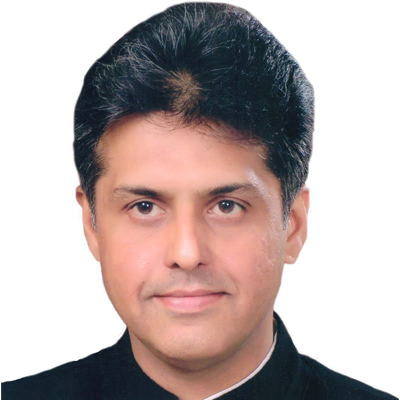
    The meeting saw minister Manish Tewari, secretary Bimal Julka, additional secretary Supriya Sahu, leading MSOs such as Den CEO S N Sharma, The One Alliance president Rajesh Kaul, LCOs, News Broadcasting Association (NBA) secretary Annie Joseph, Indian Broadcasting Foundation (IBF) secretary Shailesh Shah and Tata Sky CEO Harit Nagpal. After speaking to everyone about the issues faced in DAS phases I and II and Sahu’s presentation on the value that digitisation was creating in the country, Tewari gave the go ahead to implement the next two phases.


    However this time it won’t be with two deadlines but rather a one stretch implementation across the remaining parts of the country with just one deadline of 31 December 2014. Although the ministry was of the opinion that two deadlines should exist, the TRAI had voiced its opinion in 2011 that phase III and IV could be achieved simultaneously.


    All the stakeholders brought out the issues they had faced in the first two phases to which the minister warned them to sort out their own problems internally or this would lead to a postponement of complete national digitisation – which would not bode well for the industry.  He also told everyone to keep working in coordination even now – and iron out any wrinkles or resolve all problems so that digitisation can progress further.


    Tewari said that the upcoming elections may slow down the process but digitisation is here for good and there’s no stopping it now.  The IBF and NBA have been asked to once again air promos highlighting the importance of digitisation.


    Now that the green signal has been given, all stakeholders can now attack the rest of the country without having any boundaries. But this is the toughest part as the issues they will face in the interiors will be much higher  and more difficult to resolve than metros and towns. Phase I and II saw nearly 25 million set top boxes being seeded while phase III and IV will see about 75 million more boxes being put in place.


    The minister has also assured support saying that the issues in the previous phases will be addressed as they move towards the next ones. 

  • Videocon Industries plans new STB capacity by end-2014

    Videocon Industries plans new STB capacity by end-2014

    MUMBAI: The Indian government last year raised the import duties of set top boxes (STBs) from five per cent to 10 per cent in a bid to encourage Indian entrepreneurs to start making them indigenously. To no avail, Indian MSOs, DTH players, continued importing the boxes from China, Korea and Taiwan to meet the government mandate of digitising India’s cable TV sector.

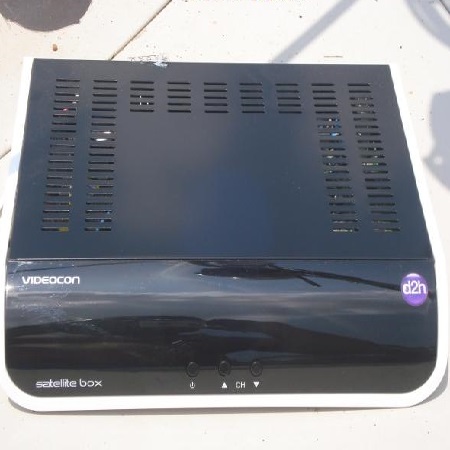
    At least one player yesterday announced that it had taken up the gauntlet: electronics major Videocon Industries. Director Anirudh Dhoot told Press Trust of India that his company is planning to set up a one million STB manufacturing plant by end-2014. Dhoot told PTI that the plant is likely to be set up in either Punjab or Madhya Pradesh. 


    The Videocon group also runs Videocon d2h – one of the fastest growing DTH players in India. 


    The digitisation of cable TV in phase III and phase IV towns is expected to require around 80 million STBs; of which 60 million will likely be rolled out this year itself, totting up to a business potential of an estimated  Rs 7,500 crore at factory prices. The second and third phases of digitisation are scheduled to be completed by end 2014, but everyone in the industry expects a delay of about three to six months. If Videocon manages to get its plant to start churning out STBs by end this year, it could meet some of that demand. 


    The Indian cable TV industry has deployed around 22 million STBs during the first and second phase of digitisation; even as DTH players have deployed around 45-50 million STBs collectively over the years since DTH launched in India.


    Most of these were imports. Videocon, on its part, upped the capacity at its existing STB plant from 700,000 per annum to one million during the festival season last year. Now it plans to set up a new plant. Other players who are involved in the manufacture of STBs domestically include: Noida-based Dixon Technologies and Kortek Electronics.

  • Kolkata to miss the 31 Dec TRAI deadline for gross billing?

    Kolkata to miss the 31 Dec TRAI deadline for gross billing?


    KOLKATA: The Kolkata multi-system operators (MSOs) are likely to miss the 31 December deadline given by the Telecom Regulatory of India (TRAI) to start gross billing.


    The cable TV sources in Kolkata feel that the MSOs will not be able to meet the deadline. “They are likely to start the gross billing for the month of December from 7 January,” say the sources.


    It should be noted that the 31 December deadline was granted, as the MSOs missed the earlier 15 December deadline to start gross billing in phase I areas. Says Kolkata based cable TV analyst Mrinal Chatterjee, “Kolkata missed the deadline since neither the MSO nor the last mile owner (LMO) are prepared for the process.”


    Kolkata has around 30 lakh cable television homes. “The MSOs updated the minister on the total process of digitisation and billing.  As of now we have ad-hoc billing, but soon billing as per package will start. Though customers are happy, the operators do not want the billing to be in place,” opines Siticable Kolkata director Suresh Sethia.


    Siticable has around 10-11 lakh STBs in Kolkata DAS I area.


    Explaining the nitty-gritty’s of bill payment, a MSO says, “If a customer has chosen a package of Rs 180, he will have to pay Rs 180, plus Rs 10 (amusement tax) and12.36 per cent service tax.”

       
    A LMO affiliated to Hathway Cable & Datacom informs that the MSO has sent the bills to him in a compact disk (CD) and expects him to take a print out and give it to customers.


    The way things are progressing, it seems like another deadline is on its way to be missed.