Tag: STBs

  • MSOs not ordering STBs, say manufacturers

    MSOs not ordering STBs, say manufacturers

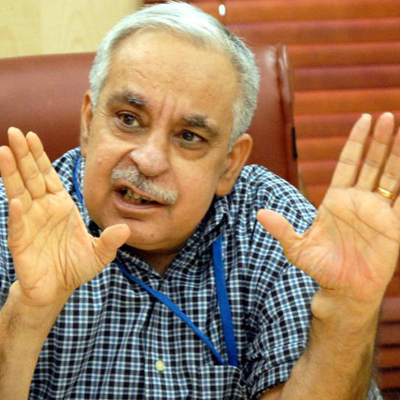
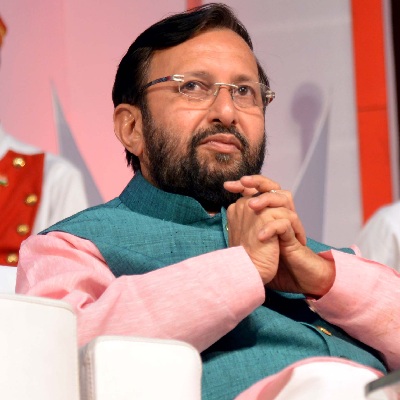
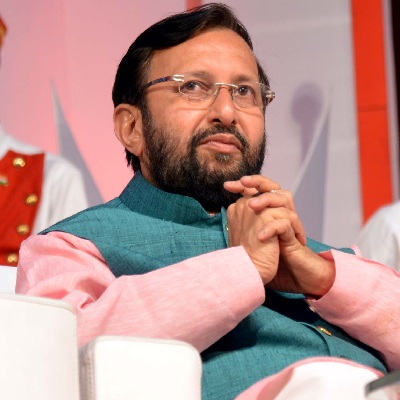
    MUMBAI: The former Information & Broadcasting (I&B) Minister Prakash Javadekar had emphasised the need for bringing in indigenous Set Top Boxes (STBs) and the new administration is also keen to do the same. It was with this in mind that I&B secretary Bimal Julka held a meeting with indigenous STB manufacturers recently.

    Julka said that the issue of C-Form had already been addressed by the government to ensure level playing field for the domestic manufacturers as compared to imported STBs. The meeting was to assess the readiness of the manufacturers to meet the 11 million STB requirements since they had stated that sufficient capacity had been installed.

    A meeting had also been held with the Prime Minister regarding availability of conditional access system (CAS). The issue of interoperability of STBs was also being scrutinised and a task force meeting on the same had also been held.

    The STB manufacturers informed that they have been in touch with operators for their requirements but their response has not been encouraging. According to them the operators are anticipating change in timeline of digitisation and a change in policy, leading to their slow uptake.

    The manufacturers stated that they are prepared to go head on with the imported boxes as well as have a penal clause on penalty. Since no order was coming from operators, it was a difficult task to prepare production since time was needed to receive the components from suppliers.

    Therefore, they manufacturers have requested the Ministry to facilitate a process so that MSOs look at indigenous STBs for phases III and IV of digitisation. A joint meeting between the three could be held to resolve concerns.

    Julka clarified that 2015 and 2016 are the final dates for digitisation, so there needs to be no apprehension on that front. Monitoring of the digitisation programme would be scaled up in accordance with the implementation strategy being set in the Ministry.


  • Germany’s Panaccess bets big on CAS in India

    Germany’s Panaccess bets big on CAS in India

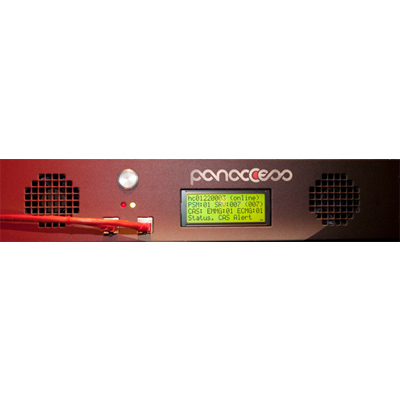
    KOLKATA: Panaccess, a German-headquartered company for CAS, SMS, billing and VoD, aims to promote CAS in India. The company is not only betting on business from the remaining phases i.e. III and IV, but is also approaching the multi-system operators (MSOs) in phase I and II.


    “There is good scope for CAS, SMS and billing in the next phases. And a few existing clients want to replace with our CAS and hence, we are approaching the MSOs in phase I and II along with newer ones,” informs Panaccess sales consultant GK Viswanath.


    “We have commissioned our conditional access system, subscriber management system and billing for a MSO in Pondicherry,” he answers, when asked about the work executed in the country.


    The company, which is slated to open a service centre in Bengaluru by April 2015, has already established its products and services in 32 countries across the world. It serves as a single window for a set of secured and revenue protected suite of solutions that complements and adds revenue streams to existing and new cable TV and DTH operations.


    After April, the company will start visiting all the major MSOs and plans to advertise a lot more as well. “We participate in all the major cable TV exhibitions etc,” he states.


    On the problems MSOs face with existing CAS system, he says, “They can resolve the problems by replacing with our CAS i.e. SMS and billing which are built in. Hence, there is no need for MSOs to go any anywhere else for these facilities. Apart from this, we also provide with solutions through broadband services.”


    In the coming months, the company, which currently employees around 15 people in the country, plans to recruit a few more.  “Next fiscal will see at least 10 for sales and 15 for technical and five for backend and five demonstrator appointments,” he says.


    On the extended deadline of cable TV digitisation in India from 2014 to 2016, he comments, “There are some people who had already started manufacturing STBs indigenously; they are the ones which have been affected by this decision.”


    “We can coordinate with the MSOs those who are planning to go for headends or STBs. We hope to capitalise the market early,” he concludes.


  • Govt will provide all facilities to local STB manufacturers for DAS: Javadekar

    Govt will provide all facilities to local STB manufacturers for DAS: Javadekar

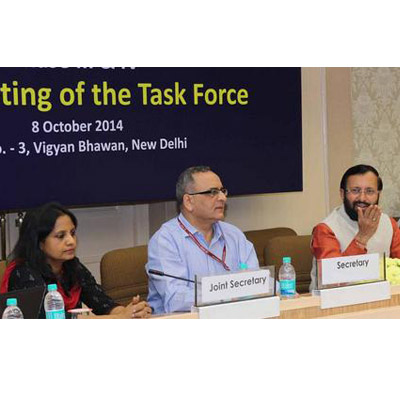
    NEW DELHI: Information and Broadcasting Minister Prakash Javadekar today clarified that the new dates for Phase III and IV for digital addressable system were the outer limits but all attempts would be made to achieve the target well before that.


    Reiterating that the main aim of the new deadlines was to encourage DAS with use of India-made set top boxes, he told the first meeting of the DAS task force for the final two phases here today that the Government has facilitated C form issue for indigenous manufacturers.


    At the outset, he said the entire digitisation programme was an integral part of Prime Minister Narendra Modi’s Digital India plan.


    He also pointed out that he represented the viewer and consumer, who had no voice unlike the other stakeholders who were present at the meeting.


    Javadekar said the cable TV digitisation process aimed at providing the consumer with greater choices and affordable and qualitative options. The overall objective was to be sensitive to the needs and choice of the consumer. The choice of the consumer was paramount in defining the inputs, strategies and roadmap for the remaining phases of the digitisation process.


    He called upon the manufacturers to innovate and explore new technologies for addressing the different consumer tastes and needs.


    The Minister added that in the next phase of digitisation, the price mechanism offered to the consumer would be a key determinant of the process, particularly as DAS was being extended to rural areas. As a consequence, it was mandatory for all stakeholders to sensitise the consumers on the benefits of the process in view of the rural outreach of the programme. 

    Regarding the indigenisation of STBs, the Minister said that the concerns of the industry had been taken up with the Finance and Communications and IT Ministries and STBs were declared as part of ‘telecommunication network’.


    The Minister said the task force ought to identify timelines for implementation so as to ensure the timely completion of Phase III and Phase IV. All issues concerning the key stakeholders needed to be debated at length so as to ensure the mainstreaming of the process with the existing policy. The need of portability of set top boxes so as to provide the option of interoperability to the consumers was an issue that could be looked into by the concerned stakeholders.


    Every meeting of the task force was critical as it identified critical inputs so as to ensure the effective implementation of the timelines and processes. Every viewer should be able to get the best viewing experience over the next two years, he added.


    He also wanted portability for STBs on the lines of portability for mobile phones and said the government and the task force will study this issue.


    Earlier speaking on the occasion, I and B secretary Bimal Julka said the task force provided an important platform to debate and overview issues related to the digitisation implementation. It also provided an opportunity to understand the concern of stakeholders.


    The experience of such meetings during the first and second phase of implementation of the programme had been extremely useful in streamlining the roadmap for effective implementation. He said the consumer is the judge of what he gets to see and content rules. He said a lot of complaints had been received from stakeholders during the implementation of the first two phases but he hoped to get more suggestions as well.


    The meeting saw various stakeholders raise issues concerning them. Taxation was raised by STB manufacturers and auditing was requested by consumer groups. The broadcaster suggested that the deadline should be reduced to 2015 for both phases. No TRAI member attended the meeting.


    Javadekar also assured that there will be sub committees that will monitor the process of digitisation.  

  • IDOS 2014: Are STBs high on QC?

    IDOS 2014: Are STBs high on QC?

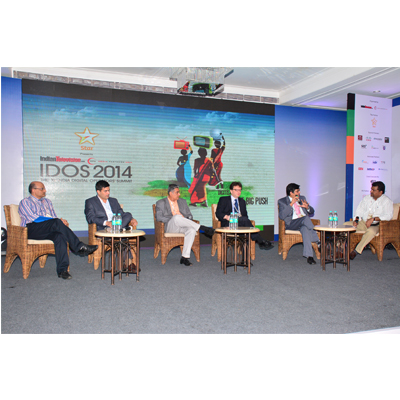
    GOA: As high as 38 million set top boxes (STBs) have been rolled out in phase I and II of digitisation, but as for the quality, a lot of these boxes were described as ‘dabbas’. Of the total number of boxes, a tiny percentage was high definition boxes and even of those, several were found faulty. The session on ‘Technology Shifts in Indian Pay TV’ during the recently concluded India Digital Operators’ Summit (IDOS) 2014 at Goa, started with these crucial facts.


    The government has decided to push digitisation of phase III and phase IV to December 2015 and December 2016 respectively, citing indigenous manufacturing of boxes as the main reason for the extension. The big question now is, ‘Are the Indian manufactures ready for the 100 million boxes needed in the next 24-30 months?’


    “Contrary to the expectations of many, yes, we are ready,” said Mybox executive director Amit Kharbanda.


    With the ‘Make in India’ concept, the government is not just promoting the Indian manufactures, but is asking the international manufacturers to come to India and create hardware here. “When you talk of manufacturing of STBs, the basic requirement, after the components, is the capacity for big production. According to our calculation, if there is a requirement for 100 million boxes, and we break it to 40-45 million boxes per year, the SMT capacity required is 26 machines, and if we remove all the big international manufactures, India will still have SMT capacity with an availability of 46 machines,” informed Kharbanda.


    The next question which many have been asking is how has the extension benefited the STB manufacturers? “We have been growing from the time we entered the manufacturing space. After digitisation, we knew we had to supplement the market and so we increased our capacity by about 30-40 per cent. Right now we have the capacity of 5 million boxes per annum, of which 60 per cent is utilised by our captive customers and 40 per cent is for other consumers. But considering the experience we have, we can easily expand our capacity,” said Videocon Group head trend electronics Jagdish Bangad.


    The question, according to Kharbanda is not about if we can manufacture 45 million STBs in one year, the question is, considering there are 300 components in a STB, “will we have those many Broadcom or other chips makers in India, and this, keeping in mind that we are not the only country buying it?” Kharbanda questioned.   


    For Broadcom MD Rajiv Kapur, the chip output is extremely high. “We produce more than two billion chips annually. The issue is not production of chips, neither is capacity an issue. The main thing now is that we should be a little careful about our expectations. One doesn’t want to go down the path of over preparing and over- producing and compromising on the maturity which is needed to develop quality in a supply chain,” said Kapur.


    He also cautioned the industry, that in order to achieve the target of the 100 million boxes in the given time frame, one should not start cutting the corners on quality.  


    Cisco, which works closely with a number of multisystem operators (MSOs) in the country and also the STB manufacturers, is agnostic to whether the boxes are made in India, China or Korea. “We welcome the move that the Indian government is keen to promote manufacturing locally,” said Cisco director John McCorkindale adding that they haven’t changed their strategy for the country with delayed digitisation.  


     According to Logic Eastern CTO Vineet Wadhwa, one needs to keep the backend support ready. “One of the key points is that most of us are just concentrating on the manufacturing skills or strengths. But, this is just a part. More thoughts need to go when one plans on scaling,” he said adding that the industry needs funding.


    “We are dealing with tier II and tier III markets. The amount of support needed for tier II and III markets don’t help me when I go to tier IV MSOs. For every three or four tier III MSOs, one needs at least one or two support personnel and for every five support personnel, you need one support manager,” informed Wadhwa.


    He also highlighted that with the different types of CAS, boxes, networks etc, the complexity of managing a network 500-2000 km away over mobile phone is difficult. This means that the manufacturers will also need to set up a support team. “They will have to have deep pockets,” he added.


    A very crucial point that came out during the session moderated by Castle Media director Vynsley Fernandes was that while the capability and technology exists in India, the fundamental challenge is that tier III and IV markets have huge pricing issues. One needs to understand from the LMOs, how much their subscribers will be ready to pay.


    Kharbanda pointed out that the industry which has a target of manufacturing 100 million boxes, if it could even produce 50-60 million boxes, will start a cycle that will help them in the long run. “The fact is that we have to come together as an industry and we need support from the MSOs as well,” said he.


    According to McCorkindale tier III and IV MSOs want to control everything on their own. “They want good quality and want more power to increase their ARPU,” he said.


    For Kapur, delayed digitisiation is actually good. “I feel we were going too fast. The benefit of this delay is that now we can look at the experience of the first 20-30 million boxes which have been deployed. The common approach from vendors in the first two phases was of cutting corners, while only thinking of price and compromising on the quality,” he said.


    MSOs, according to Kapur, have learnt a lot from the first two phases and are now upping their specs. “The difference in pricing of high quality and low quality boxes is not a very big dollar amount. One only needs to know what specs are needed for its STBs,” he added.  


    Another point which was highlighted during the session was that in the rush to seed boxes, no field trials were done in the first two phases. “This led to bad quality boxes being rolled out. Now we have the time to do all this and control the quality,” opined Kharbanda.


    A very important component of the STB cost is the warranty and the support charge per hour from the box company, CAS company and SMS company etc. “And my belief is that the MSOs of tier II and tier III will not compromise on the quality of the box. But they might not be able to afford the dollar per hour charges for support,” said Wadhwa.


    Kapur, is a firm believer that the STBs should have a long lifecycle. “India is a nation where TV moves from house to house but is never thrown, so we can’t be producing 100 million boxes, which are bad quality ones, with no support and element of future proof for different markets,” he said.

    The session concluded with the remark: It is time we move away from speed and cost. 
  • Govt sending wrong signals to foreign investors by delaying digitisation: Rahul Khullar

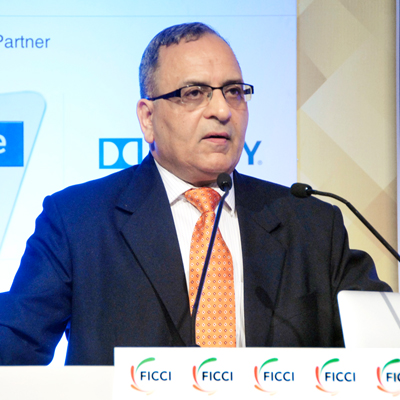
    Govt sending wrong signals to foreign investors by delaying digitisation: Rahul Khullar

    MUMBAI: Recently, a letter written by Telecom Regulatory Authority of India (TRAI) chairman Rahul Khullar pointed out that the government was committing a mistake by extending the deadline for digitisation. Khullar has many more points to present on the regulator and the industry.


    In a conversation with Bloomberg, he said that his views on digitisation were very clear. “It is a very bad decision to defer it. It is bad for digital India, broadband delivery and not in public interest,” he said.


    While the government says that its main aim is to push indigenous production of seven crore set top boxes (STBs) in two years, Khullar feels that this is a ‘pipe dream.’


    Khullar said that last year several investors met him and conveyed that it was a miracle that they managed to get two crore boxes digitised. They also asked that by when will digitisation be completed because they are desperately interested in investments in cable. “By delaying digitisation, you are sending a signal to foreign investors that India isn’t ready for investment yet. This does great harm to public credibility,” he said.


    Meanwhile, rumours are afloat that the government is mulling creation of a ‘super regulator’ that will oversee the communications sector. Khullar believes that it is necessary to keep content and carriage separate. “If your aim is to strengthen TRAI then you don’t need a super regulator, just empower the existing one. But if it is to regulate carriage and content, this is an experiment that hasn’t succeeded in the world,” he said.


    According to him, issues concerning content immediately ‘stir up a hornet’s nest’ that usually involves freedom of speech. “My own sense would be to keep carriage and content separate and ensure that the content regulator has nothing to do with the government. Then you have some sort of fighting chance of regulatory survival,” he said.


    Broadband is a growing medium of revenue that is catching the attention of all in media space. The TRAI is due to come out with a paper on ‘policy issues relating to broadband’ in the next 10 days. “Broadband and convergence is still five to 10 years away. If we are to deliver broadband we need to know how to do it in the cheapest way, who should be involved, what to be done in terms of application and software development,” he highlighted. It will focus on building infrastructure and delivering content.

  • Prakash Javadekar asks MSOs to deploy indigenous STBs

    Prakash Javadekar asks MSOs to deploy indigenous STBs

    NEW DELHI: Information and Broadcasting (I&B) Minister Prakash Javadekar has said the government has initiated efforts to promote greater production of indigenous set top boxes (STBs) so that Indian consumers stop using low-grade imported STBs as digitisation grows in the country.


    The Minister said that he had called a meeting of manufacturers in mid-August and was surprised to learn that good quality Indian STBs were not only being made but were being exported.


    He therefore wondered why multi-system operators and local cable operators only installed imported STBs for which there was no arrangement for servicing.


    Javadekar said that he expected another 120 million homes to be covered by digital addressable system (DAS) by the end of 2016 and he would prefer that they all install Indian STBs.


    He said that DAS will not only bring better quality television but also value added services.


    He regretted that the process of digitisation appeared to have slowed down in the last 15 months but said the new government will take quick action to overcome the delays.


    The Government has already announced that Phase III of digitisation will be completed by December 2015 and the final phase by December 2016

  • Fastway to deploy HD STBs with STMicroelectronics’ cable chipsets

    Fastway to deploy HD STBs with STMicroelectronics’ cable chipsets

    MUMBAI: Fastway Digital TV Services, the multi system operator (MSO) operating mostly in Punjab has teamed up with STMicroelectronics for its HD interactive USB DVR set top boxes. They will have STiH273 HD cable chipsets.


    This will enable Fastway deliver high quality HD content and access to several value added services including banner advertisements, interactive TV shopping and education services. It will also provide customers a better viewing experience with HD video and interactivity with advantages such as high integration, low power consumption and unmatched coordinated performance of CPU, video decoder and image quality processor.


    Key features of the STiH273 chipsets include 1300DMIPs application CPU; integrated 256kB L2 cache increasing CPU performance for rich applications such as HTML5 browser, user interfaces, HD picture-in-picture and PVR; integrated digital video broadcast (DVB-C) demodulator, optimised to work with high-performance external tuners to meet stringent RF performance requirements of Indian cable networks; 16-bit DDR3 SDRAM support, integrated ePhy, no heat-sink for significant bill-of-material saving; Faroudja image quality processing; high quality and robust 1080p AVC (advanced video coding) video decoder with advanced error correction and concealment capabilities; integrated standby controller offering 0.5W standby power consumption with super-fast resume time; and best-in-class advanced security for all major conditional access systems (CAS).


    Fastway Digital TV Services managing director Gurdeep Singh said, “Our new HD digital set top boxes benefit from STMicroelectronics’ feature-packed and flexible system-on-chip ICs, enabling an ideal platform to deliver innovative value-added services such as interactive education services, multi-genre digital music service, restaurants and events search guide and games to customers. With strong local support and cooperation from ST, we are well placed to drive digital migration and bring high quality TV solutions to our customers.”


    Fastway Digital TV Services CEO Peeush Mahajan added, “STiH273 is clearly the right choice for our latest generation of STBs. ST has helped us create a customised solution optimised for India that helps us enhance customer satisfaction and sustain our leadership edge in our areas of operation.”


    STMicroelectronics vice president Greater China and South Asia region and India Design Center director Vivek Sharma said, “We are proud to be part of Fastway’s digital set-top box roll-out that aims to deliver an enhanced viewing experience to millions of homes around India. Fastway’s selection of ST’s set-top box technology underlines our strengths and commitment to supporting the growth of the Indian digital TV market through cooperation with local key players.”


    The chipsets are manufactured using 40nm process technology and support an enhanced processing engine with integrated on-chip features that simplify STB design, along with the possibility of a two layer PC board design. It also allows STB manufacturers to use lower-cost memory and minimise system power consumption, optimising total cost of ownership.

  • Technicolor ships 11th million STB to Tata Sky; celebrates 10 years of partnership

    Technicolor ships 11th million STB to Tata Sky; celebrates 10 years of partnership

    PARIS: Technicolor  (Euronext Paris: TCH ; OTCQX: TCLRY) is proud to announce two special landmarks in its relationship with Tata Sky India’s leading direct to home (DTH) service provider and HD market leader – the 10 year anniversary of the partnership and the delivery of the 11 millionth Technicolor set-top box.

    These special milestones follow an announcement in May of this year for Technicolor to ship 4K set-top boxes in volume to Tata Sky from early 2015.


    “On behalf of Technicolor, I’d like to thank Tata Sky for its ongoing co-operation and congratulate the company on its achievements as India’s market leader. We look forward to continuing our partnership and helping to deliver even more successful and exciting services to consumers across India in future,” said Michel Rahier, President of Connected Home Division at Technicolor.


    Tata Sky MD & CEO, Harit Nagpal, added “Over the past 10 years Tata Sky’s vision has been to offer its customers the best, most compelling video experience. Technicolor has been a true partner in that quest, delivering high quality products and services. And 2015 will be a great year for our partnership as we deploy 4K STBs across the Indian market, once again, underlying our commitment to delivering the most recent technologies and the highest quality content.”

  • STBs considered as telecom equipment to encourage indigenous production: Javadekar

    STBs considered as telecom equipment to encourage indigenous production: Javadekar

    NEW DELHI: The Department of Telecommunications (DoT) has issued orders confirming that set top boxes (STBs) are part of telecommunication equipments. This has been done to promote indigenous production of STBs.

    Information and Broadcasting Minister Prakash Javadekar today informed the Lok Sabha that this was done after his ministry along with other ministries took up the constraints of Indian manufacturers in the production of indigenous STBs, in view of the fact that an estimated 110 million STBs would be required for the third and fourth phase of digital access system (DAS).


    While the earlier government had introduced digitisation in the country, it failed to chalk out a clear path for it, especially for boosting indigenous production of STBs. The new government had assured all the players that it would look at every sector’s problems and work on them. This thrust to indigenous STB makers seems to be a step forward in that direction.


    Javadekar also said that a task force has been set up to finalise the modalities and study the implementation of the last two phases of DAS which need to be completed by 31 December 2014. A Deloitte report prepared for ASSOCHAM recently said about 12 million STBs have been seeded and 80 per cent consumer application forms received as of December 2013. The Telecom Regulatory Authority of India (TRAI) claims 100 per cent digitisation has taken place in the second phase of DAS.

    TRAI has also said that recommendations on the new direct to home (DTH) licences would be brought out very soon. HITS licences have been issued to two players and are expected to enable digitisation in Phase III and Phase IV markets.

    Meanwhile, the report notes ‘complaints have poured in against STBs. People in the city are complaining about digital STBs installed in their residences and commercial organisations. Visual and sound disturbances coupled with channels going off air from time to time have left viewers unhappy.’


    It also noted that ‘in the haste to install STBs in the city, cable operators have overlooked a crucial step – that of filling in the conditional access form (CAF) before installation of the device. The purpose behind mandating DAS was to identify the actual number of cable viewers in the country. But with most customers not filling in the form, the purpose still remains defeated.’


    ‘With penetration of TV in India standing at approximately 65 per cent, at present, the country has close to 80 million non-TV households, which present a key opportunity for the television distribution players. This low level of penetration holds a great potential for players to increase their subscribers and revenues. Drivers such as rising incomes, decreasing household size, multi TV phenomenon and rising urbanisation would only provide a further fillip.’

  • Cisco’s technology in six million digital homes of Den Networks

    Cisco’s technology in six million digital homes of Den Networks

    MUMBAI: As India slowly inches towards 100 per cent digitisation, it is the various cable and multi system operators who are to be applauded for the increase of digitisation in the country. One of the well known technology companies, Cisco has announced that its services have reached to six million pay-TV homes on Den Networks.


    Cisco’s conditional access and middleware has been used by Den Networks since 2008 in its set top boxes. A range of Videoscape technologies from Cisco are used to cater to its subscribers. Den’s digital head-ends, networking routers, switches and set top boxes have been procured from Cisco.


    Earlier this year, Cisco expanded its Videoscape TV services delivery platform to include new cloud video capabilities. This would help media companies increase revenue, reduce operating expenses and enhance agility.


    Den currently has about 30 million viewers across the country and is looking at increasing that number through phase III and IV of digitisation. Commenting on the partnership Den Networks CEO SN Sharma said, “It gives me immense pleasure, in this highly competitive market, to reach out to more than 30 million viewers through our digital cable TV services. We expect this number to increase significantly with the completion of the remaining phases of digitisation. Cisco’s global expertise in managing the end-to-end delivery of digital pay-TV solutions gives us a strong competitive edge and empowers us to enable new services and advanced features, resulting in satisfied subscribers and encouraging growth.”


    Cisco Service Provider Video Software Solutions Vice President Sales Asia Pacific Sue Taylor said, “Cisco is excited by the success of its customers and would like to congratulate Den for reaching such a major milestone. We anticipate that the current digitisation drive will spur us on to achieve many greater milestones, both in roll-out volume and technology deployment, with the introduction of many new features using the latest designs and technologies. This will lead to overall customer enjoyment in terms of the TV viewing experience.”


    Den’s footprint now stretches over 200 cities in India covering markets such as Delhi, Uttar Pradesh, Karnataka, Maharashtra, Gujarat, Rajasthan, Haryana, Kerala, West Bengal, Jharkhand and Bihar.