Tag: STB

  • Final phase STB seeding is 35% even as deadline nears

    NEW DELHI: Even as the country has set a deadline of 31 March this year for full digitisation of cable TV, a Parliamentary Committee has been told that only 35 per cent seeding of set-top boxes (P-IV) has been achieved in rural India though the Parliament was told last week that 66.79 per cent (P III & IV) seeding had been achieved in the last two phases minus Tamil Nadu.

    Admitting that digitisation in the first phase is total minus Chennai, the Parliamentary Standing Committee on Information Technology which also examines issues relating to the information and broadcasting ministry has been told that digitisation has also not been done in one city – Coimbatore – of Phase II in view of court cases though the other 37 cities having more than one million population and spanning 14 states and one union territory had been covered.

    The committee recommended that the I and B Ministry follow up the issue of financial and technical viability in rural and remote areas, promote and increase share of iCAS (Indian Conditional Access System) to leverage ‘Make in India’ programme, popularise Doordarshan Free Dish in small town/cities/rural and remote areas, address the legitimate concerns of domestic STB producers and rigorously pursue interoperability of STB with the Telecom Regulatory Authority of India.

    The committee therefore expressed the hope that the I and B Ministry will be able to meet the targets of cable TV digitisation as almost all the pending cases have now been dismissed and there is no stay in any case except in case of Chennai and Coimbatore.

    Cable TV Digitisation in Phase III and Phase IV areas was to be achieved by 31 December 2015 and 31 December 2016 respectively, now extended to 31 January 2017 and 31 March 2017.

    Interoperability: TRAI working with IIT Bombay

    It was told that technical interoperability, as envisaged in the existing Direct to Home Guidelines has so far not proved to be effective due to various techno-commercial issues. The TRAI has decided to collaborate on the issue of technical interoperability with the Department of Electrical Engineering of Indian Institute of Technology, Bombay (IIT-B).

    To ensure commercial interoperability TRAI has notified tariff orders and this has been challenged by a couple of DTH operators in the Telecom Disputes Settlement and Arbitration Tribunal and the matter is sub judice.

    The Committee was given to understand that after the roll out of iCAS in January 2016, about 10 million STBs have been installed by multi-system operators out of which about 300,000 are with iCAS, which gives a market share of about 3%.

  • DAS deadline extension ruled out, govt claims 66% seeding done

    NEW DELHI: The Government reiterated today that there was no question of extension of the final phase of digital addressable systems for cable television in the country.

    Minister of state for information and broadcasting Rajyavardhan Rathore told the Parliament that Phase I, II & III of the Cable TV Digitisation have been completed successfully except in Tamil Nadu state, which is pending due to court cases.

    The fihal phase covering the Rest of India had originally been fixed for 31 December 2014 and later modified to 31 December 2016. It had now been further modified to 31 March 2017 on disposal of court cases.

    At the outset, he said Cable TV digitisation in the country is being implemented in four phases according to a Ministry notification of 11 November 2011 which had laid down the phase wise timelines which were subsequently amended.

    Phase I covering the Metro cities of Delhi, Mumbai, Kolkata and Chennai was originally slated for 30 June 2012 and modified to 31 October 2012. The second phase covering 38 cities (with population more than one million) was slated for 31 March 2013.

    The third Phase was to cover all other urban areas (Municipal Corporations/ Municipalities) and was originally slated for 30 September 2014 and modified to 31 December 2015.

    He said this cut-off date could not be achieved due to stay/extension granted by some Courts. On the disposal of the court cases in December 2016 and in order to provide time for transition of those subscribers who had not switched to digital mode of transmission, the Ministry allowed time upto 31 January 2017.

    For Phases I and II 100% requirement of set top boxes has been met except in Tamil Nadu. For Phase III & IV, the Ministry had developed a MIS online software for collection of seeding status of STBs. Since the area of Phase III & IV overlap, the combined state wise seeding progress for these two phases is 66.79 per cent minus Tamil Nadu.

  • What the Netflix, Vodafone, Videocon d2h and Airtel tieups mean

    MUMBAI: It clearly is looking at spreading its net far and wide, at least on the availability front. Global video on demand service Netflix has announced the signing of partnerships with three of India’s leading players in the DTH and mobile telephony space: Airtel, Videocon d2h and Vodafone.  

    CEO Reed Hastings was in Delhi yesterday and is expected to be in Mumbai over the next few days to probably make a few more announcements.  Said Hastings at the conference: “India is one of the top 3 markets for Netflix in terms of mobile usage. We’ve had strong growth here; it’s stronger than all of the other Asian nations. It’s a larger market. In terms of investments, we are investing heavily into content. The watch time of our shows has gone up significantly since the launch of Jio.”

    He added: “India is one of the most important and vibrant countries in the world, and we are delighted to be teaming up with three of its leading companies to make it much easier for consumers to enjoy Netflix. In the months and years to come, we look forward to bringing our Indian members more compelling stories from all over the world, and ever-improving viewing experience, and incredible joy.”

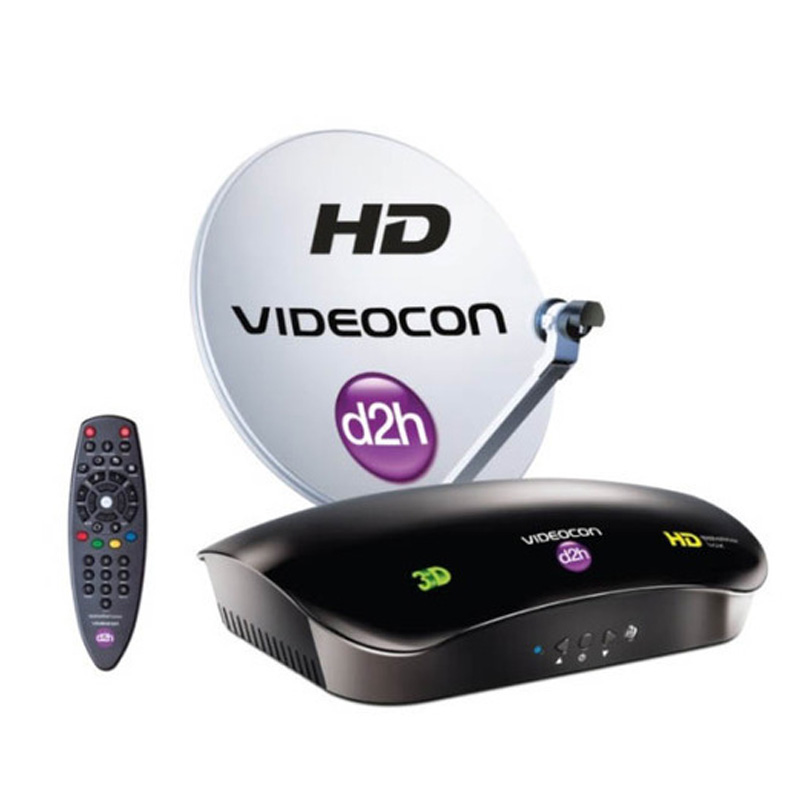
    Details of the Videocon d2h tieup were made available through a press release yesterday. It said that Videocon d2h consumers will be able to enjoy Netflix on a large screen by simply clicking a dedicated Netflix button on the remote control of HD Smart Connect set top box (STB).

     Netflix will be available through a dedicated app available on the connected Set top box, HD SMART STB  which converts any existing TV into a Smart TV besides showing more than 600 channels and services in high definition and standard definition. The HD Smart Connect set top box allows viewing in SD and HD, using the satellite feed like any other Videocon d2h set top box. It can be connected to the Internet through any Wifi or Ethernet connection in the home for accessing a curated set of applications available through the Internet. The minimum Internet speed needed is 2 Mbps. These apps, both free and paid cover a range of content genres and utility apps. By connecting the HD Smart Connect STB to any TV, the TV would become smart.

    The Airtel partnership is expected to be in the same vein. Hastings told journalists that “we are focussed on the set top box with them so that the device attached to the television has Netflix on it, so they can stream directly to the television. In case of Vodafone, it is a mobile partnership wherein payment for Netflix will be integrated via mobile billing or through pre-paid schemes.

    With more than 94 million members (read subscribers) worldwide, the tieups will give Netlflix access to  humungous potential audience numbers.

    Says a media observer: “It’s a master stroke of sorts.  Depending on whether the Airtel DTH partnership extends to the mobile parent;  whether the partnership with Videocon d2h extends to Dish TV when they merge, and to Idea when it partners with Vodafone, the potential member base could extend the Netflix service to around 500-600 million potential viewers. And around 300 million smart phone and DTH viewers. Clearly Netflix means business in India.”

    The media observer who was unwilling to be quoted stated that what Netflix will have to look at pricing in India if it wants to become a mass brand.

    “We will get to know over time whether it is playing the volume game or the premium niche game. Currently it is the latter. Rs 550 to Rs 700 per month is limiting its subscriber base. But the advantage of Netflix’s higher pricing is that it can share more with its partners on the other hand, apart from the data consumption revenue that will accrue to the telco,” she said. “Our estimates are that its paid subscriber base in India is sub-500,000. All the other players are priced much lower and are yet to take off. Even Hotstar is struggling despite having a great content offering. And Amazon is almost giving away its content for free with its 499 per year package. Netflix will  have to decide which route it is taking.”

    Hastings acknowledged this to the media saying that Netflix  could come up with other payment plans – like a weeky one or daily, keeping in mind the purchasing power in India. But the current model is working well with the top 10 per cent, he disclosed. ” Our main focus is on adding more content. What we really want to be is a content solution, where you can get almost all you want to view in one place on Netflix.”

    Media observers expect other announcements soon – possibly a partnership with Jio? An office is likely to be set up in Mumbai by 2018. Hastings is slated to meet some production biggies in Mumbai in the coming days apart from following up on the progress of Sacred Games Phanton Films is producing for it.

    Watch this space!

    (Updated on 7 March at 1:15 pm)

    Also Read :

    Netflix: 46% of streaming couples cheat & watch ahead of partners

    Videocon d2h partners Netflix for HD Smart Connect

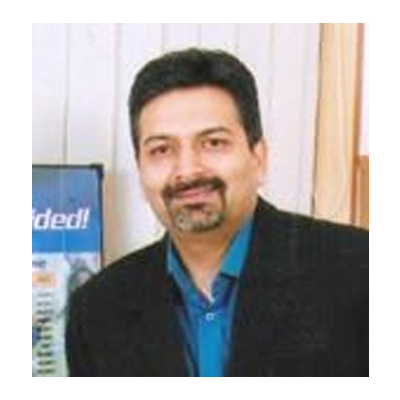
  • We believe the new cable TV tariff order will benefit everyone – Hathway Cable video CEO TS Panesar

    Tavinderjit  Panesar is in the hot seat. As the CEO of the video business of the listed MSO and Rajan Raheja group company Hathway Cable & Datacom, he has to steer it in challenging times.

    The company’s share price has been waddling around in Rs 30-40 price range despite being spoken of as one of the jewels in India’s cable TV sector, and attracting investment from international firms.

    But, digitisation has put the entire sector under pressure; especially phase III  and phase IV. Phase I and Phase II, while they have been reported as completed, have not resulted in the sector getting the same organised structure that the telecom sector is. Then, ARPUs from subscribers have increased only marginally, even as investments in infrastructure in terms of STBs, content from broadcasters, customer service, and programming have been going up.

    To top it all, Indian broadcasters have objected to the draft tariff order that the industry regulator TRAI has issued, and have taken the matter to court. Which has left the distribution sector between a rock and a hard place as no one knows which direction tariffs will take.

    In such a scenario, the feisty industry veteran will have to bring all his 13 years and more of TV distribution experience to bear in order to deliver what he has been brought in for. He took over as the CEO of the video business from Jagdish Kumar who departed from the company in November 2016.

    Indiantelevision.com’s Parvinder Sandhu got into a conversation with Panesar to discuss about the industry, its state and the way forward. Excerpts:

    How would you view the overall status of the cable industry?

    The pay TV industry is consistently growing year on year in India and digitization has given a further boost to this sector. BARC data  indicates that the total number of pay TV subscribers have risen to 183 million  this year from 152 million in 2016. And there is still much more potential in this industry and enough room for everybody to grow.   In spite of the growth prospects, MSOs are still facing a lot of operational challenges like increasing content cost, inefficient ground collection mechanism and many more. However, from last few years, MSOs have also started adapting to newer and improved technologies and automation systems, thereby able to offer services which are at par with DTH providers.

    Today, the MSOs main task is to improve operational efficiency by controlling or reducing the content cost which has reached to level where it neither can be absorbed by the business nor can be passed on to the customer and by improvising processes and systems on the ground. First time in the MSO industry, Hathway has implemented a portal for LCOs through which he can manage his business very efficiently. This has helped us in building trust with the LCO and resulted in improvement in collection efficiency for both, LCOs and us. We are hopeful that the new regulations which are currently being deliberated upon will be implemented thus helping everyone to become profitable across the industry.

    With the right steps, there is a bright future for all value chain members i.e. broadcasters, service providers and consumers.

    Are DTH services with their competitive pricing of services, threatening MSO business?

    Historically, cable TV provides more value for money than DTH. Today also, it is our constant endeavour to maintain the same.

    Cable TV has unique advantages over DTH, like personalised 24*7 service to customer by our LCO, no service interruption due to weather, no limitation of bandwidth & hence being able to provide better quality service etc.

    Hathway understands the ease of interaction DTH subscribers enjoy with them which MSO industry is also trying to develop through the LCO network using technology and automation. Hathway was the first to create an interactive portal called Hathway Connect for its LCOs making their lives easier, convenient and more efficient. Using this portal, LCO can provide DTH-like experience to customer during his interaction. An LCO has access to every information of their customer which is very useful while interacting with customers. He can do the transaction instantly for the customer through this portal thereby provide necessary comfort to him. This has helped the LCOs run their business efficiently and effectively, in turn offering better quality and high standard & customer delight.

    For online payments, we have also integrated our systems with various payment gateways like Bill Desk & Citrus along with wallets like Mobikwik, Free Charge, SBI Buddy, Oxygen, Airtel Money etc. to ensure ease of business for the LCOs and renewal for customers.

    We have also recently launched our Value Added Services — Hathway Special catering to customers looking for additional services over and above broadcaster channels.

    We have also expanded our HD channel offering matching the  DTH offering

    In short, cable TV has also started providing similar experience like DTH to their subscriber and hence there is no threat to cable TV from DTH.

    There has been lot of hype in India for the two years about Make In India, a pet initiative of PM Modi. Has it resulted in any gains for the set-top box manufacturing?

    The Government’s flagship ‘Make in India’ initiative has helped India garner visible momentum, energy and optimism in key sectors. India is on the path to becoming an elite manufacturing hub through this initiative and box manufacturers have also definitely got a boost. During the inception of digitization the I&B ministry was talking very proactively to ministry of micro, small and medium enterprises to work out ways for the Indian industry to take advantage of the digitization process. While there are many indigenous box manufactures in India, some of the critical components of the set top boxes are yet to be developed locally. This is why most of the set top boxes are still being imported currently.

    What percentage of STBs would be imported by Hathway? Does it source boxes from few Indian manufacturers?

    We look forward to using a completely made in India box. However, till many key components are not developed indigenously we will have to import boxes to maintain competitive pricing and quality of service

    Essel group chairman Subhash Chandra recently said that STBs being used in India are still very basic, a far cry from technological developments around boxes globally. Would you agree with such an analysis? And, if yes, does such basic boxes hinder in providing better consumer experience in India?

    A true visionary and media veteran Dr. Chandra has always envisioned positive growth for the sector. He was one of the first to acknowledge the fact that with superior set top boxes the industry will definitely see more progress. As he correctly said the set top boxes being imported are very basic, and that there are more advanced boxes which can help in creating a better viewing experience for the end consumers.

    Though India is considered a price sensitive market, what, according to you, does the Indian consumers really want — affordable products or high-priced products that can give better consumer experience and a plethora of services?

    India is definitely very prudent when it comes to pricing mainly due to affordability factor. However, the aspirational level of the Indian consumer is always very high, and hence he always look for advance technologies for better quality and ease of operation. Also, there is more younger population in India which is always looking for technology and innovations.

    Since inception, DTH is thriving more on technologies and hence expensive right from installation to monthly subscription compared to cable TV.Cable on the other hand is always more value for money than DTH, be it the pricing orchannel offering or the wider bandwidth thus offering better picture quality.  We can boast of personalized service which our LCOs offer to the end consumers. They are available 24/7 to address all consumer concerns. In last few years, the MSO and the LCO also have started improving service levels to consumer using various technological initiatives and streamlining processes thereby giving better value for money than DTH which the consumer is looking for.

    How is Hathway tackling the challenges of digitisation and technological developments in media that’s happening nationally?

    For a country as diverse as India, to bring about any change will, of course, have its own set of challenges. Although, mandatory digitisation of cable TV has opened up a whole new world of possibilities ensuring that the broadcasters reap benefits with strong growth in both advertising and subscriptions without any incremental investments, service providers like Hathway are at disadvantage the most with  increasing content cost for the same ground collection. While we have aligned our LCOs to streamline collections through our Hathway Connect portal, as much as possible, there is still scope for improvement. We are also ready for “cashless” operation and promoting it to support India’s central government initiative. Our systems can accept all types of online payments from LCO or customer. We are constantly realigning our business to be able to monetize on digitisation.

    What would be Hathway’s total subscriber base? Are they all direct subs or also through franchisees/JV partners, if any?

    We have a total subscriber base of more than 12 million including our JV partners and subsidiaries.

    Does Hathway prefer directly selling to consumers or likes taking the JV route?

    Both LCOs and JV partners have contributed to our growth and we acknowledge the positive impact both brings to Hathway. Each has their own strengths and we have been fortunate to be able to capitalize on the same. We will continue to operate using either LCOs or JV partners as per need to consolidate and strengthen our base.

    With new video delivery techs, like OTT, coming in and catching consumer’s fancy, how do traditional MSOs like Hathway remain relevant? What innovations do you need to do?

    With the surge of smart phone consumption in India, we have over the last few years noticed a shift in viewership patterns. Consumers today are very discerning towards the content they view. There is a paradigm shift in wanting to watch content on the go like news and sports as averse to a daily soap.  The shorter format content is preferred over hour or half hour duration content. This phenomenon is more wide spread with the millennial groups and it is only fair to look at OTT as solution for this. OTT has the potential to tap into this entire younger generation and will help in brand positioning. OTT is definitely in the pipeline for us and we will be launching the service soon.

    For an MSO, what are the other  areas of monetisation or earning revenues apart from traditional services like cable TV and broadband delivery into homes?

    In cable TV, we are looking at innovative way of increasing the top line with value added services.  We have already launched paid value added services under the umbrella brand as Hathway Special. These services will be ad free and can create good attraction for customers. We are planning to expand these services up to 30. Beside these services, we also have our in house channels which can generate ad revenue as additional revenue stream. We are also trying to find new ways to utilize our EPG properties for advertising which can be useful to build up revenue further. At the moment, business is not profitable for us and we are looking at many avenues to improve the revenues so that we can re-invest into the business.

    TRAI has floated a consultation paper on infrastructure sharing by various delivery platforms in India. is such a technically, financially and practically feasible?

    There has not been much movement in this. It’s a good initiative and we are open to it.

    That brings me to the issue of tariff structure proposed by TRAI, which has been put on hold due to a case in Madras HC, as to how does Hathway view the draft tariff proposals? Why are some stakeholders upset with the proposals?

    The tariff structure proposed by TRAI will help in creating a level playing field for all as the consultation paper reviews the existing tariff arrangements and seeks to develop a comprehensive tariff structure for addressable distribution of TV broadcasting services across digital broadcasting delivery platforms (DTH, cable TV, HITS, IPTV) at wholesale and retail levels. If implemented, it will bring in more transparency and fuel growth by regulating the broadcast distribution system. The order will help to create a more symbiotic ecosystem unlike current price unregulated one.

    Under the current dispensation, the broadcaster is free to negotiate every year with service provider for their content due to which there is year-on-year increase in content cost without any linkage to revenue generated by that content. It has reached to the level where it is becoming difficult for MSO to absorb this cost increase without affecting revenue from customer and market forces do not allow to increase revenue from customers.

    We are hopeful that the new regulation will put things in right perspective. The new tariff order gives the consumers the power to choose what they want to watch and ensure content is being distributed with fair trade margin, thus balancing the entire ecosystem. This might be leaving the broadcasters with the fear of losing out on market share or reach of their channels and hence advertising revenues because of which they are opposing the implementation.

    However, we feel that new tariff order will bring in much needed transparency in the distribution system in which every key member will be benefited. This forward looking order has been conceived to ensure growth in the industry while improving the current scenario for the broadcasters as well as for the DPOs. We are hopeful that the new tariff order sees the light of day and helps in regulating this entire ecosystem.

    What are the expansion plans of Hathway?

    While we are open to mergers and acquisitions, we will take viable and judicious financial decisions.  But, our main priorities are optimising our operational efficiency as it will help cut back on unnecessary costs for us. We are continuously devising innovative ways to increase efficiency while reducing cost. We are also continuously expanding and upgrading our technical infrastructure to improve customer delight and reduce customer churn.

    Does it make business sense for an MSO to have in-house TV channels also? Does it add value and add to the revenue kitty?

    This is one of the major differentiators between DTH and Cable TV. We are at an advantage over DTH due to adequate bandwidth that we have with the flexibility of adding in-house services. Not only does it help in creating niche content for our subscribers but also helps in generating additional revenue for us.

  • MobiTV powers Jio live, receives US$ 21m for IP-based video sans STB

    MUMBAI: MobiTV, a leader in IP-based video delivery solutions, yesterday announced it has closed US$ 21 million in funding from Oak Investment Partners and Ally Corporate Finance. The funding will accelerate expansion of the MobiTV Connect ™ Platform to enable IP delivery for Pay TV providers.

    The ability to scale are further demonstrated in the MobiTV powered Reliance live service in India.

    Given the rapidly changing technological revolution in video, MobiTV’s leading edge software-based solution is available now to address cable and broadband operators need to transition their Pay TV offerings to IP-based solutions.

    “We’re able to future proof the service providers’ Pay TV offerings through state of the art features and rich user experiences that are not constrained by the legacy STB ecosystem,” said MobiTV CEO Charlie Nooney. “Our ability to utilize widely adopted streaming devices allows real time enablement of new technologies like 4K/HEVC, Cloud DVR, replay TV, robust voice control, and other consumer preferences across all screens without the high cost of replacing legacy QAM STBs in the home.”

    Since the launch of Jio in September 2016, the live service has supported over 95 million unique users and has added as much as one million users per day. This service includes rich features like Cloud DVR, 7-day catchup, 400 live channels with support of massive scale live events.

    Companies such as C Spire, DirectLink and Citizens Fiber have signed on to use the MobiTV ConnectTM Platform in their move to IP delivery. “Our multi-tenant solution can be deployed through either a managed service or in-network offering, allowing us to address all operators of all sizes in a cost effective manner,” said MobiTV COO Bill Routt.

    MobiTV is currently exhibiting at NCTC’s Winter Educational Conference in New Orleans at booth 602. The company will demonstrate the MobiTV Connect™ Platform’s latest capabilities and Product Forum demonstration.

    Also Read:

    http://www.indiantelevision.com/iworld/telecom/jio-crosses-10-crore-subscribers-mark-170221

    http://www.indiantelevision.com/mam/marketing/brands/jio-brings-pokeman-go-to-india-ties-up-with-niantic-161213

    http://www.indiantelevision.com/mam/media-and-advertising/digital-agencies/jio-uber-partner-to-enhance-digital-experience-170221

  • Dish TV & ALi tie up – chipset tech vital for secure VAS, enriched viewing

    MUMBAI: India’s largest DTH operator Dish TV is tying up with ALi Corporation, a STB (set-top box) manufacturer, for launching its Liberty project.

    Also, ALi Corporation is integrating Conax robust cardless security client into HEVC series system on chip (SoC) family, expanding operator STB offering, which is aimed at emerging markets such as India, LatAm, APAC and Africa. The ALi HEVC family includes SoCs for Satellite, Cable and IPTV decoders.

    ALi’s project with Dish TV would be based on its system-on-a-chip technology to offer next-gen security, performance and flexibility while being cost-efficient needed for India. The aim of the project is to provide VAS to expand Dish TV’s market share, hike revenue and enhance user experience. ALi and Dish TV will launch the Liberty project to accelerate convergence and target future expansion opportunities. The Liberty project is based on ALi Corp.’s cutting-edge and sophisticated SoC technology.

    India is the largest DTH market in the world based on the number of subscribers. According to statistic reports in 2016, subscribers reached approximately 65 million in India. Since the introduction of the DTH service in 2003 by Dish TV, the market has experienced exponential growth through multiple digitalisation phases.

    Throughout Phase 1 and Phase 2, four metropolitan areas of Delhi, Mumbai, Chennai and Kolkata had gone digital in 2012. In Phase 3, most of the urban areas in India had gone digital and completed ASO (Analogue Switch-Off) process. As Phase 4 is around the corner, the operators are looking forward to the opportunity targeting at the households in rural areas and thus the whole country will be digitalised. For operators to stay ahead of the game, chipset technology plays a significant role in their capability to supply value-added yet secured services that will help them establish a wider subscriber base by offering enriched viewing experience.

    “Dish TV serves over 14 million subscribers by 2016, leading the Indian DTH market,” said Dish TV COO VK Gupta. “To maintain our market leadership and prepare for future opportunities, we implemented ALi Corp.’s SoC solution to launch the Liberty project, which will improve our DTH operations. ALi Corp. has the expertise to help us provide whatever it takes to realise the true spirit of the Liberty project.

    “Ranked among the world’s top 3 with a good chance to be further boosted amid the industry reshuffle, ALi Corp. has a proven track record in delivering high-performing and competitive STB chipset solutions,” said ALi Corp COO Tony Chang. “The Dish TV deployment of ALi Corp. SoC platforms further signifies recognition on our global achievements in helping partners go through ASO and digitalisation processes. We are confident to offer innovative and revolutionary features and services to Indian views and we will fully support Dish TV in their expansion,” Chang added.

    DTH satellite pay-TV sector in India is a growth-oriented industry. Media Partners Asia had forecast it will generate revenues of US$ 4.04 billion by 2018 and US$ 5.6 billion by 2023 in the country. The DTH active subscribers may increase to 60 million by 2018 and 70 million by 2023. This means a 39 per cent share of the overall market by ’23 and a 56 per cent of the digital pay-TV market.

  • DTH STBs: Interoperability to be ensured with MeiTY & BIS help

    NEW DELHI: The information and broadcasting ministry has decided to refer to the electronics and information technology ministry and the Bureau of Indian Standards the issue of ensuring interoperability of set-top boxes for the direct to home industry.

    Minister of State for I and B Rajyavardhan Rathore told the Parliament that the Telecom Regulatory Authority of India (TRAI) had on 23 July 2014 recommended replacement of license condition at clause 7.1 of the existing DTH guidelines.

    The clause stipulates that “The Open Architecture (Non-proprietary) Set Top Box (STB), which will ensure technical compatibility and effective interoperability among different DTH service providers shall have such specifications as laid down by the Government from time to time” and TRAI in its recommendations on “Issues relating to New DTH Licenses” wanted the clause to read: “The STB offered by a DTH service provider shall have such specifications as laid down by the BIS from time to time.”

    TRAI further recommended that BIS should come out with updated specifications for STBs from time to time and while doing so, BIS shall consult TRAI and that the license conditions should mandate the licensee to comply with the tariff order/scheme prescribed by TRAI for commercial interoperability.

    As reported in mid-December 2016, the Bureau of Indian Standards (BIS) had failed to come out with specifications with regard to interoperability of STBs (set-top boxes) meant for DTH (direct-to-home) platforms.

    An information and broadcasting ministry source was answering a question by indiantelevision.com in response to a reply in the Parliament.

    The minister had said the ministry had accepted recommendations of the Telecom Regulatory Authority of India (TRAI) that it should work with the BIS and the Department of Electronics and IT to ensure such set-top boxes.

    Also Read:

    http://www.indiantelevision.com/dth/dth-services/no-bis-specification-yet-for-interoperable-dth-boxes-161210

    http://www.indiantelevision.com/specials/year-enders/the-growth-of-dth-in-india-170116

  • No BIS specification yet for interoperable DTH boxes

    No BIS specification yet for interoperable DTH boxes

    NEW DELHI: The Bureau of Indian Standards (BIS) had so far failed to come out with specifications with regard to interoperability of STBs (set-top boxes) meant for DTH (direct-to-home) platforms.

    An information and broadcasting ministry source was answering a question by indiantelevision.com in response to a reply in the Parliament given by the minister of state Rajyavardhan Rathore.

    The minister had said the ministry had accepted recommendations of the Telecom Regulatory Authority of India (TRAI) that it should work with the BIS and the Department of Electronics and IT to ensure such set-top boxes.

    TRAI, in July 2014, on “Issues relating to New DTH Licenses” said: “The Open Architecture (Non-proprietary) Set Top Box (STB), which will ensure technical compatibility and effective interoperability among different DTH service providers, shall have such specifications as laid down by the Government from time to time” with “The Set Top Box offered by a DTH service provider shall have such specifications as laid down by the Bureau of Indian Standard (BIS) from time to time.”

    TRAI recommended that BIS should come out with updated specifications for STBs from time to time and while doing so, BIS will consult TRAI and that the license conditions should mandate the licensee to comply with the tariff order/scheme prescribed by TRAI for commercial interoperability.

    In the paper, the Authority had said that STB interoperability was not possible because of the different technologies adopted by the operators due to them entering the market at different times. TRAI thus asked the BIS to regularly keep updating the standard of STB technology.

    Then I&B Minister Prakash Javadekar had told the Parliament on 24 July 2014 that the interoperability of DTH customer premises equipment has not so far proved to be effective due to various techno-economic reasons. The interoperability had been envisaged in the DTH licence conditions, he said.

    The portability in DTH service can be achieved through technical interoperability or through commercial interoperability.

  • No BIS specification yet for interoperable DTH boxes

    No BIS specification yet for interoperable DTH boxes

    NEW DELHI: The Bureau of Indian Standards (BIS) had so far failed to come out with specifications with regard to interoperability of STBs (set-top boxes) meant for DTH (direct-to-home) platforms.

    An information and broadcasting ministry source was answering a question by indiantelevision.com in response to a reply in the Parliament given by the minister of state Rajyavardhan Rathore.

    The minister had said the ministry had accepted recommendations of the Telecom Regulatory Authority of India (TRAI) that it should work with the BIS and the Department of Electronics and IT to ensure such set-top boxes.

    TRAI, in July 2014, on “Issues relating to New DTH Licenses” said: “The Open Architecture (Non-proprietary) Set Top Box (STB), which will ensure technical compatibility and effective interoperability among different DTH service providers, shall have such specifications as laid down by the Government from time to time” with “The Set Top Box offered by a DTH service provider shall have such specifications as laid down by the Bureau of Indian Standard (BIS) from time to time.”

    TRAI recommended that BIS should come out with updated specifications for STBs from time to time and while doing so, BIS will consult TRAI and that the license conditions should mandate the licensee to comply with the tariff order/scheme prescribed by TRAI for commercial interoperability.

    In the paper, the Authority had said that STB interoperability was not possible because of the different technologies adopted by the operators due to them entering the market at different times. TRAI thus asked the BIS to regularly keep updating the standard of STB technology.

    Then I&B Minister Prakash Javadekar had told the Parliament on 24 July 2014 that the interoperability of DTH customer premises equipment has not so far proved to be effective due to various techno-economic reasons. The interoperability had been envisaged in the DTH licence conditions, he said.

    The portability in DTH service can be achieved through technical interoperability or through commercial interoperability.

  • ABS partners PT Sarana Media to launch Indonesian DTH FreeViews platform

    ABS partners PT Sarana Media to launch Indonesian DTH FreeViews platform

    MACAU: Leading satellite operator ABS has announced today that it will partner with PT Sarana Media Vision (SMV), using SMV’s DTH license to launch a consumer FreeView satellite service – FreeViewSat – across Indonesia in January 2017. The service will be called SMV FreeViewSat and will initially broadcast over 60 television channels via the ABS-2, ABS-2A and ABS-6 satellites in both Ku and C-band.

    For the first time in Indonesia, a free-to-view platform will be available throughout the entire country, allowing advertisers the opportunity to reach the full potential of the Indonesian audience.

    The FreeViewSat model will promote maximum distribution and the cost of the STB & dish will be less than US$35. Customers will only need to make this one-time purchase to enjoy all the TV channels on the platform (with no monthly recurring subscription fees).

    Tom Choi, CEO of ABS commented that “SMV’s FreeViewSat will be very attractive for Indonesia by providing great quality international and unique domestic programming to the entire country. The goal is to deliver high quality entertainment and educational content affordably to all – For the first time, everybody, not only the affluent or those in the urban areas, will be able to receive high quality programming for free, with just a one-time purchase of a set-top box and dish. FreeViewSat will also give advertisers the first real opportunity to reach the whole population of Indonesia, even in rural areas. ABS is delighted to be partnering and supporting this highly worthwhile venture.’’

    At launch in January, FreeViewSat will carry at least 30 local Free-to-Air channels and more than 30 high quality international channels. The number of channels will continue to grow to over 100 channels in the first 6 to 12 months as new and interesting content is added.

    FreeViewSat will be available via 75cm Ku band dishes from 75E on ABS-2 and ABS-2A, and via 1.6m C-band antennas from 156E on ABS-6 simultaneously, so that consumers have the choice of small dishes, or larger ones with better rain protection. Since Indonesia already has over 10 million C-band antennas installed, the adoption rate is expected to be rapid.

    ABS has selected the ABV conditional access and middleware system, along with Ali chips for its Set-Top Boxes.

    Confirmed channels for launch include:

    TV9 Nusantara, TVRI Nasional, DAAI TV, TV One, ANTV, Metro TV, Trans 7, Trans TV, SCTV, Indosair, Kompas TV, Net TV, Bali TV H2, Bloomberg TV, France 24, Fix & Foxi, Action Hollywood Movies, Pulse TV, Al Jazeera English, CCTV-News, CCTV-4, CCTV-9, Russia Today, MediaCorp Channel, Landscape HD, TRACE Urban and TRACE Sport Stars, B4U Music, B4U Movies, NDTV 24/7 and NDTV Good Times, and many more