Tag: STB

  • STB cos in India, China enhancing features, providing customised solutions, Technavio enlists top vendors

    STB cos in India, China enhancing features, providing customised solutions, Technavio enlists top vendors

    MUMBAI: The global STB market is characterised by intense competition as the market is saturated in developed countries. The market share of these players is declining because of the entry of new players. The STB companies are enhancing the features of STBs and providing customised solutions to retain their market share.

    Technavio, a technology research and advisory company, has enlisted the top five leading vendors in their recent global set-top box (STB) market report. This report also lists 45 other prominent vendors that are expected to impact the market during 2017–2021.

    There is a high demand for pay-per-channels used by customers who use gateways and multiscreen devices. The ongoing shift to the HD format contributes to the growth of the market. Digitisation in China, India, and Brazil contributes significantly to market growth. The ongoing shift from analogue to the digital platform in China and India has created the demand for HD STBs in these countries.

    Competitive vendor landscape: “The global STB market is characterised by intense competition as the market in developed is expected to be stagnant in future. The market is fragmented owing to the presence of a large number of small players. The entry of new players intensifies competition and reduces the profit margins of other vendors. The players are enhancing the features of STBs and providing customised solutions to retain their market share,” says Ujjwal Doshi, a lead consumer electronics research analyst from Technavio.

    The growth of the global STB market is driven by digitisation that has been taking place in developing countries, such as Argentina, Brazil, China, and India, since 2010.

    ARRIS International: ARRIS International offers STBs, digital video and IPTV distribution systems, broadband access infrastructure platforms, and associated data and voice equipment. The wide portfolio of the company offers end-to-end solutions that offer service providers a variety of choices to customize their approach to IP transition. The company focuses on expanding its product and solutions portfolio through organic development, partnerships, and acquisitions.

    Broadcom: Broadcom offers a range of consumer electronics products including STB, central office broadband access equipment, residential gateways, and stand-alone broadband access modems. Global service providers introduce new technologies and services in STBs such as HD content, transcoding, digital video recording, and increased networking capabilities.

    Pace: Pace provides technology solutions and caters to the subscription-based TV services providers and broadband industries. It offers a wide range of media servers, STB, gateways, software, optical transport and access control network solutions, and highly specialized services.

    Roku: Roku focuses on manufacturing streaming entertainment devices. The first product launched by the company was designed to secure movies from Netflix and feature them on TV with the help of the Internet. The streaming players can be connected directly to the user’s TV and grant access to movies, TV shows, games, music, and extra channels.

    Technicolor: Technicolor provides production, post-production, and distribution services to content writers, network service providers, and broadcasters. The company offers film processing, visual effects, and animation services along with the manufacture and distribution of digital video disks, Blu-ray disks, STB, and gateways.

    The emerging markets offer opportunities for growth to vendors as the developed countries have reached saturation, according to Technavio. The availability of affordable STBs fuels growth in the market.

    ALSO READ :

    IDOS 2017: Tech needed to integrate different media in a single box

    Dish TV presses HD button; introduces new cardless set top box

    BARC India to TRAI and MIB: Tweak legislation to make data tamper-proof

    TRAI workshop on interoperable STBs later this month


  • TN advisory: LCO licences may be cancelled if they bully Arasu subs into buying STBs

    TN advisory: LCO licences may be cancelled if they bully Arasu subs into buying STBs

    MUMBAI: A Tamil Nadu state advisory has informed subscribers of Arasu Cable not to pay money to the local cable operators (LCOs) for set-top boxes (STBs) which are actually being provided to all for free.

    Arasu Cable, as per a state government statement, is the only state-owned undertaking in the country to offer free STBs combined with internet services and digital cable TV, and a three-year warranty.

    Indiantelevision.com had reported that Arasu Cable (TACTV), which had early in September, claimed to have gone digital, was on 25 September asked to “confirm that you have already switched off analogue signals and are carrying only digital encrypted signals on your cable TV network.” In a letter to TACTV, sent by the ministry of information and broadcasting (MIB), the multi-system operator (MSO) was asked to reply within 10 days of issuance of the letter, “failing which your registration is likely to be suspended/revoked.”

    The state advisory, meantime, now has also cautioned subscribers of Tamil Nadu Arasu Cable TV Corporation (TACTV) against buying the STB from private dealers, the Times of India reported. If the LCOs were found to be bullying subscribers into paying for STBs, their licence could be cancelled, the state government has warned.

    The advisory has urged subscribers to report cases where LCOs had asked them to buy STBs from private dealers through the Arasu cable helpline.

    The state government had, a month ago, begun distribution of free STBs among Arasu subscribers. Chief minister Edappadi K Palaniswami had launched the service through the government-owned enterprise after inaugurating MPEG-4 upgraded control room for digital signal transmission.

    Arasu’s approximately 70 lakh subscribers would have access to around 180 channels in digital mode. There will be four packages with monthly subscription between Rs 125 and Rs 275 with option of both free and paid channels.

  • Govt steps helping APEJ STB market, global sales may expand at 7.5pc CAGR

    Govt steps helping APEJ STB market, global sales may expand at 7.5pc CAGR

    MUMBAI: Owing to increase in penetration of television and TV services within rural areas as well as urban areas, the set-top box market will receive a boost all across the APEJ region. Disposable incomes are on a rise in India and China, and this is helping the set-top box (STB) market turnover to grow, according to Reportlinker study. In China and India respectively, governments have taken initiatives to focus on HD pictures, HD channels and decline in TV prices. This has led to the growth of the set-top box market in the APEJ region.

    The global set-top box market is estimated to be valued at US$ 22,269 million in 2017 and is projected to reach US$ 46,091 Mn by 2027 end. Sales revenue is expected to increase at a CAGR of 7.5 per cent during the forecast period (2017–2027), the Reportlinker report added.

    Increasing demand for TVs from rural areas boosting the set-top box market in the APEJ region: Due to increase in penetration of television and TV services within rural areas as well as urban areas, the set-top box market will receive a boost all across the APEJ region. In the Asia Pacific region, consumers are more aware about the features, quality and pricing of the set-top box, helping the market achieve greater growth and acceptability.

    Increasing demand for IPTV STBs is fuelling the market for set-top boxes in North America: Increasing demand of 4K TVs is expected to provide support to the growth of the set-top box market in North America. It has been observed that the demand for IPTV based services has increased by 12 per cent and operators are viewing IP-based services as an opportunity to differentiate their products. IP transmission recording features and higher storage specifications are anticipated to support steady revenue growth of the North America set-top box market.

    Domestic production and low-cost products hampering the market growth in APEJ: In the Asia Pacific region, domestic production of set-top boxes by local companies is leading to an increase in price competition with global set-top box manufacturers. Emerging companies are acting as competitors to the established players in the market, thus making the smooth operation of this market difficult.

    Focus on HD videos and powerful interfaces with technology a growing trend in the global set-top box market: It has been observed that set-top box vendors are focussed on supporting devices that enable seamless rendering of high-quality video on a powerful user interface and set-top box vendors have started manufacturing operation systems and app based set-top boxes. The global market is moving towards the 4K android customised set-top box and smart set-top boxes. It has been observed that in the past few years, set-top box manufacturers have shipped a large number of 4K set-top boxes in the APEJ region, and consumers are more aware about the technology and features of set-top boxes in this region.

    Flexible policies and government support encouraging the use of set-top boxes in the APEJ regional market: In November 2015, the Chinese government banned 81 third party apps that allow users to turn television sets into internet streaming devices. The Chinese State Administration of Press, Publication, Radio, Film and Television proposed a rule for governing set-top boxes. In China and India respectively, governments have taken initiatives to focus on high definition pictures, towards HD channels and decline in TV prices. This has led to the growth of the set-top box market in the APEJ region. Manufacturers in this region have also utilised e-commerce retailers such as Alibaba, Ali Express, Amazon, Flipkart etc., and this has propelled the growth of this market.In terms of value, the North America set-top box market is projected to be the most attractive regional market in the global set-top box market during the forecast period

    However, the APEJ market is also poised to register high Y-o-Y growth rates throughout the forecast period. In terms of value, APEJ is anticipated to register a CAGR of six per cent during the forecast period. In 2016, the APEJ market was valued at US$ 6,067.4 Mn and is expected to witness sustained growth in terms of revenue throughout the forecast period.

  • TRAI workshop on interoperable STBs later this month

    TRAI workshop on interoperable STBs later this month

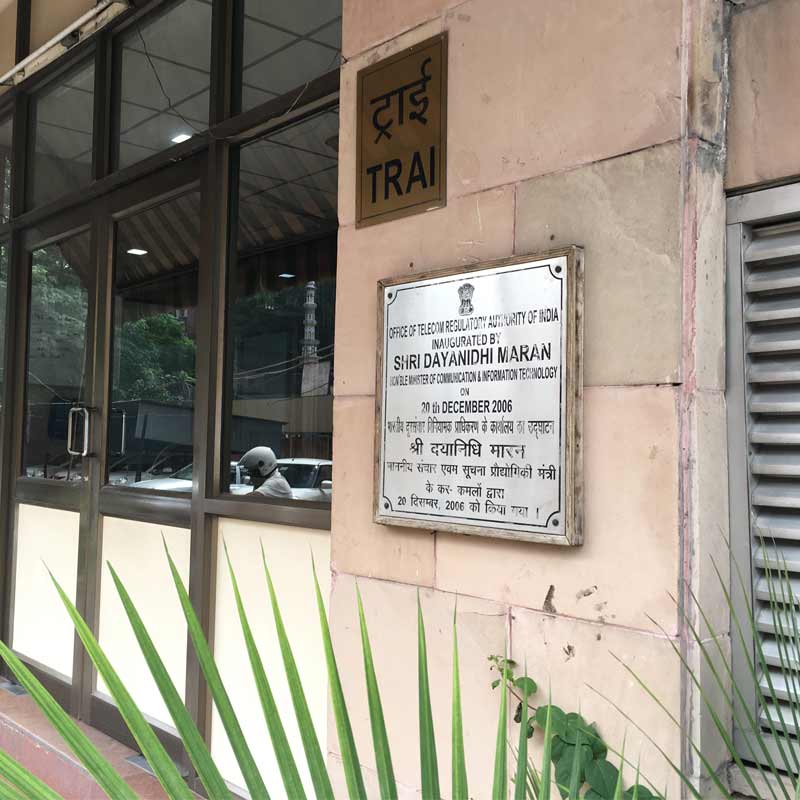
    NEW DELHI: Following the issuance of a consultation paper by it on 11 August, the Telecom Regulatory Authority of India has now organised a workshop on solution architecture for technical interoperable set top box on 26 September in the capital. The paper had been issued after responses to a pre-consultation paper issued on 4 April this year. 

    TRAI says it had suo moto taken up the issue of STB interoperability in the broadcasting TV sector. Presently, the Distribution Platform Operator (DPO) provides STB, which is compatible with his network to provide services to a subscriber. 

    Over a period of time, variety of technologies has been deployed by DPOs into the networks. It has led to a situation where STBs provided by one operator are not compatible with the system of the other operator. This impedes portability of a subscriber from one operator to another in case he wishes to do so. 

    In the perspective of subscribers, provision of switch-over from one operator to another without replacing the STB is known as technical interoperability, whereby the same STB can be used by the subscriber for availing the services of any other operator after authorisation form that operator. 

    Recognising the significance of choice to the subscribers to change their service provider, TRAI also approached various academia & research organisations to collaborate with them to find solutions for interoperability of STB.

    In response, IIT-Bombay came onboard and has been working on the issue. IIT Bombay was independently charged with studying the feasibility of open STBs and suggest possible paths towards its implementation. This study concluded that open STBs are indeed feasible and recommended that a programme towards its implementation should be undertaken. They suggested an open STB architecture consisting of a secure communication channel between the open STB and the operator dependent  CAS module based on asymmetric cryptography. The keys for such a system are to be managed by a central trusted authority.

    The telecom technology development Centre for Development of Telematics (C-DOT) came up with a framework for interoperable STBs based on Smart Card. Approaches suggested independently by IIT Bombay, and the architecture independently developed by C-DOT have strong similarities. 

    A total of 19 comments have been received.

    TRAI’s objective is to chalk out a framework to facilitate consumer choice, innovation, orderly growth and healthy competition in the industry. The framework should enable an ecosystem to give the market a chance to evolve at its own pace and independently respond to consumer demands.

    This workshop has been organised to deliberate on the proposed architecture solution. TRAI has also contemplated launching a pilot project with a short-term objective of development of a prototype of the interoperable STB & compatible Smart cards. The TRAI notice also contains the technical details of the interoperability framework.

    The workshop has been organised to discuss the feasibility of this pilot with the stakeholders. Objectives of the pilot are:

    1.    Demonstrate that separation of STB & operator specific CAS functionality is possible in a secure manner.

    2.    Frame out & test the specifications for interoperable STBs & SCs in real life conditions, and suggest improvements.

    3.    Jointly develop a business model that fairly allocates value to each provider.

    4.    Fine tune the architecture proposed by C-DOT and finalize the specifications based on pilot.

    5.    Test out integrated and swapping of SCs with STBs in a fully secure manner.

    Also read :

    TRAI starts process of STBs’ interoperability, issues consultation note


  • Japan’s KDDI adopts TiVo’s remote-recording service

    Japan’s KDDI adopts TiVo’s remote-recording service

    MUMBAI: TiVo Corporation, a leader in entertainment technology and audience insights, has announced that KDDI Corporation, a leading Japanese telecommunications provider, has selected TiVo’s remote recording service for G-GuideÒ and will also implement new voice control features to deliver one of the most advanced entertainment discovery experiences in Japan.

    KDDI has deployed TiVo’s latest G-Guide HTML on its Cable Plus Set-Top Boxes (STB) to provide customers with the ability to find and discover programming. This capability is an enhancement to KDDI’s existing deployment of the G-Guide HTML for IPTV STBs last year, enabling KDDI to deliver an expanded range of solutions to cable TV service providers.

    KDDI has also adopted TiVo’s remote recording service and mobile application, G-Guide xD, allowing subscribers to record programs at any time right from their smart phones, enabling greater convenience and accessibility to the latest entertainment. This feature is available to service providers for the first time in Japan.

    With the new voice control features, subscribers can find content quickly and change between channels by giving verbal commands to the cable STB remote control, thus connecting to their favorite entertainment with ease. This is the first deployment of the voice control feature for G-Guide HTML in Japan.

    “We are very pleased to be working with KDDI to introduce these advanced functions to the Japanese market,” said TiVo SVP & GM – user experience Michael Hawkey. “Japanese consumers are often ahead of the curve when it comes to technology adoption so this latest development is a testament to KDDI’s dedication to providing its customers with new functionality to enhance their entertainment experience.”

    ALSO READ :

    ThinkAnalytics focuses on India expansion, hires former TiVo & Zee exec Samir Narsiker

    Turner selects TiVo to provide enhanced electronic programme services

    TiVo renews IP licence with Foxtel, deliver ultimate experience in Australia

    Sky picks TiVo to search entertainment across linear TV & VoD using voice


  • Smuggled STBs & Indian DTH may be used, IBF advises Nepal to defer Clean Feed

    MUMBAI: Nepal had recently issued a clean feed policy. However, owing to unviable business proposition, it is felt that distribution channels may face discontinuation leading to rampant piracy all over Nepal. It was highlighted that in-cable operators may resort to using Indian DTH connections to re-distribute the signals. Viewers too may start buying Set-Top Boxes (STBs) and Viewing Cards of Indian DTH operators without knowing that the same may have been smuggled into Nepal. IBF has appealed that “the Government of Nepal ought to defer implementation of a “Clean Feed” policy until implementation of digitization so as to evaluate best ways to take advantage of the same as is being done by other countries.

    In the recent past, Government of Nepal issued clean feed policy pursuant to which downlinking licenses of foreign broadcasters is sought to be permitted only if foreign channels being distributed in Nepal do not contain any advertisements (“Clean Feed Policy”). The Clean Feed Policy is sought to be implemented by Government of Nepal from 16 July, 2017.

    To apprise the Government of Nepal on the possible fallouts of the proposed policy and its likely impact on the economic development of Nepal – particularly from the point of view of loss in revenue and employment in the Country, Indian Broadcasting Foundation (IBF) has had a series of discussions with Nepal Government officials. During the discussions, broadcast fraternity of India conveyed the technical and economic unviability of the proposed Clean Feed Policy in Nepal. Broadcasters also conveyed that consumers and various distribution platforms in Nepal would be adversely effected in case the proposed policy is implemented on the designated date.

    (a) It was highlighted to the Government of Nepal that any such policy ought to be framed only after holding transparent and holistic consultations involving all stakeholders in an environment where digitalization of distribution networks in Nepal has been completed and issues relating to implementation of anti-piracy laws have been put in place, as is not the case presently.

    (b) Launch of clean feed would inter-alia entail separate playout, uplink and downlink costs. Nepal being an emerging market with very low ‘Average Revenue Per User’ (“ARPU”), such exorbitant costs to create clean feeds are not justifiable from a business viability point of view.

    (c) Due to unviable business proposition, it is felt that distribution channels may face discontinuation leading into rampant piracy all over Nepal. It was highlighted that in cable operators may resort to using Indian DTH connections to re-distribute the signals. Further, in such a situation, viewers too may start buying Set-Top Boxes (STBs) and Viewing Cards of Indian DTH operators without knowing that the same may have been smuggled into Nepal.

    (d) The demand for ‘clean feed’ is at variance with and may be counter-productive to Government of Nepal’s laudable initiative for implementation of digitalization of distribution networks. This is so because digitization is a cost intensive exercise and any discontinuation of channels on account of implementation of Clean Feed Policy ought to have an adverse impact on revenues of cable operators (thereby affecting their ability to invest monies for digitization). It was submitted that such impact can have a cascading effect on survival of distribution platforms thereby, as a chain reaction affecting employment locally and also distribution / reach of local Nepalese channels.

    (e) Government of Nepal should first allow implementation of digitization before proceeding to evaluate need for introduction of a Clean Feed Policy. It was highlighted that digitization with addressability is a potent tool to keep in check on unaccounted cash transactions, which may not only cause losses to distribution platforms and broadcasters but, also to the Government exchequer in the form of lost taxes.

    (f) Proper and effective implementation of digitization will give an insight to broadcasters on type of content being consumed, and as a consequence, they will be able to evaluate consumer choice better. From Government’s point of view, digitization will also afford a line of sight on content being distributed in Nepal, revenues being generated by distribution platforms and consequential license fees / taxes that they are paying. Such license fees / taxes can be utilized by the Government inter-alia towards cross-subsidizing expenses of Nepalese broadcasters or other initiatives.

    Girish Srivastava, Secretary General of IBF, appealed that “the Government of Nepal ought to defer implementation of a “Clean Feed” policy until implementation of digitization so as to evaluate best ways to take advantage of the same as is being done by other countries. Meanwhile, with the renewal of channel licenses due on 15 July 2017 – we would request the Ministry of Information and Communication (MOIC) to allow existing/new channels to be distributed without the Clean feed condition – with the understanding that the license shall not be withdrawn for at least till the next term is due”. Adding further to his request, Srivastava stated that “entire Indian broadcasting fraternity attaches a great degree of significance to the existing deep cultural, linguistic, social, economic ties between the two nations and its commitment to further the same in times to come”.

  • FreeDish creates record, sells 11 slots for Rs 851 million

    NEW DELHI: Doordarshan’s FreeDish earned a record Rs 851 million in the 36th e-auction, auctioning eleven slots including three news channels.

    For the first time, the reserve price for general entertainment channels was Rs 80 million but the reserve price for news and current affairs channels was reduced to Rs 65 million.

    Doordarshan netted Rs 67 million as the highest for one of the news channels through the auction of the news channels, DD Director-General Supriya Sahu informed indiantelevision.com.

    Among the eight general entertainment channels, the highest bid received was for Rs 84 million.

    The channels that have successfully bid for a slot on FreeDish this time round include News18 India, Zee Hindustan, Zee News, Star Utsav, Zee Anmol, Rishtey, B4U Music, Housefull Movies and Bhojpuri Cinema.

    With the completion of MPEG4 trials, the total strength of the platform will go up to 104, expectedly the end of July. Earlier this year, Parliament was informed FreeDish had got approval to increase this capacity to 250 channels and DD sources had told indiantelevision.co that will happen in the third quarter of 2018.

    In line with the ‘Digital India’ and ‘Make in India’, DD has implemented Indian CAS (iCAS) on DD FreeDish Platform. iCAS (which is an initiative of the central government) was introduced in the auction held last month. The introduction of iCAS will provide enhanced viewing experience.

    DD officials said the existing viewers will continue to get 80 SDTV channels and 32 radio channels, but will have to obtain iCAS-enabled authorized set-top boxes for accessing all new channels.

    Although Free Dish will remain free-to-air with no monthly or periodic fee, the viewers will be required to register with DD FreeDish on getting the new STB from Doordarshan authorized STB dealers.

    DD officials said implementation of iCAS and authorisation of STB original equipment manufacturers (OEMs) by Doordarshan will give a major thrust to ‘Make in India’ and ‘Digital India’. At present, a majority of STBs are imported. However, the introduction of iCAS will help in standardization of STBs and encourage quality STB manufacturing in India.

    Also read

    FreeDish: English news channel among two come aboard (Updated)

    FreeDish auction on 4 July, different reserve prices for GEC and news


  • DAS: MSOs, LCOs give low figure of STB seeding, official sources admit it’s under 80%

    DAS: MSOs, LCOs give low figure of STB seeding, official sources admit it’s under 80%

    NEW DELHI / MUMBAI: Even as the nation has stepped into an era of full cable television digitisation, there are mixed reports coming in from around the country about the situation on the ground.

    While the government had issued a warning to all broadcasters, multi-system and local cable operators about action if they fail to switch off analogue, there are reports from almost every region that Phase IV covering rural India has still a long way to go before full implementation of digital addressable system happens.

    The Government had, in mid-January, told the Task Force that while the seeding of set-top boxes in Phase III was almost complete, the figure for Phase IV was 32 per cent. Minister of state for information and broadcasting Rajyavardhan Rathore told the Parliament in mid-March that around 67 per cent seeding of set-top boxes had been achieved in Phase III and IV while it was total in the first two phases, minus Tamil Nadu.

    A ministry source told indiantelevision.com that the figure had already crossed around 75 per cent in the final two phases. Not wanting to be named, the source ruled out any more grace period, and said that several MSOs and LCOs act only after a final warning, and therefore the chances were that the figure may be higher than those given by him.

    However, since there is no plan to help the poor acquire STBs, it is unlikely that the figure would be much higher.

    In Tamil Nadu, where there is a court stay in operation since Phase I, the state government run Arasu Cable TV Corporation (TACTV) warned MSOs and LCOs against switching off analogue signals anywhere in the state after 31 March 2017.

    Pointing out that the centre had refused to grant DAS licence to TACTV because recommendations of the Telecom Regulatory Authority of India do not permit state-owned TV or distribution networks, an MSO told indiantelevision.com that the case had been gong on for so many years primarily because the Central Government was not clearabout its stand and keeps taking adjournments.

    Meanwhile, in neighbouring Telangana and Andhra Pradesh, MSOs and LCOs said that around 40 per cent of Phase III had still to be fully seeded and the figure was bound to be higher in Phase IV areas. One MSO not wanting to be named said that there was an area in Hyderabad dominated by a particular community where even law had limited reach where analogue signals continued unchecked. “Whatever had been fixed a long time ago, remains,” the MSO said.

    Interestingly, a consumer body Citizens Welfare Society had moved the High Court for the twin states saying that, while the government had made it mandatory that DAS signals should be implemented, there was nothing in law to say that analogue has to be switched off and pleading that the two should be allowed to co-exist till people take to DAS voluntarily. Though the case was not admitted, the bench of the Court heard the viewpoints of several MSOs, LCOs, and consumer bodies over twenty hours for the few days and reserved its orders on 20 February 2017. This order is still awaited keenly by consumers as well as MSOs and LCOs.

    Siti Network Limited (Essel Group) executive director & CEO V D Wadhwa said that analogue signals had been switched off in the East Zone. Network 18/Viacom18 Group distributor Indiacast Media Group CEO (and Jio Media head – content acquisition/ alliances) Anuj Gandhi also said that analogue had been switched off in compliance with the deadline set by the Government. However, sources said that completely shutting off analogue signals in other zones may be a challenge.

    Meanwhile, an MSO in Assam said that while digitisation was complete in Guwahati, it had not even covered fifty per cent of rural Assam. In Madhya Pradesh and Chhatisgarh, MSOs and LCOs interviewed said around 40 per cent seeding had taken place in Phase IV but pointed out that the confusion because of the tariff orders had resulted in direct-go-home players targeting consumers.

    Reports from Uttar Pradesh and Uttarakhand said that while the broadcasters had switched off digital signals in most areas of Phase IV, tthis may trigger some protests over the next few days from consumers as the figure of seeding of set top boxes was very low. The DTH players were also active in these areas.

    Maharashtra Cable Operators Federation sources told www.indiantelevision.com that the broadcasters had switched off analogue signals, but rural Maharashtra which faced extreme poverty was still largely uncovered by DAS STBs. However, he said he would have a more tangible report over the next two days.

    Cable Operators Association of Gujarat president Pramod Pandya said that 80-90 per cent of the state had gone digital, but some broadcasters were still supplying analogue signals in certain areas. Meanwhile, it is learnt that Reliance Jio is planning to bring in cheaper STBs soon, though these may not have many fancy features.

    Phase I covering the Metro cities of Delhi, Mumbai, Kolkata and Chennai was originally slated for 30 June 2012 and modified to 31 October 2012. The second phase covering 38 cities (with population more than one million) was slated for 31 March 2013.

    The third Phase was to cover all other urban areas (Municipal Corporations/ Municipalities) and was originally slated for 30 September 2014 and modified to 31 December 2015 which was extended to 31 January 2017 and the final phase to 31 March 2017.

  • Smart STB: Videocon d2h partners SonyLiv

    MUMBAI: Videocon d2h, one of the fastest growing DTH service provider in India, has signed a deal with SonyLIV for its HD Smart Connect Set Top Box. This partnership will enable Videocon d2h’s HD Smart Connect Set Top Box customers to access a seamless broad selection of content available on SonyLIV app.

    SonyLIV, which is the first premium Video On Demand (VOD) service by Sony Pictures Networks’ (SPN), will enrich Videocon d2h’s customers with an array of movies, strong line-up of events across all sports, shows, music, TV Shows and much more.

    SonyLIV can be accessed through all Web Apps button on Videocon d2h’s HD Smart Connect Set Top Box. The Smart Connect Set Top Box works on connectivity management platform to deliver a variety of connected services that leaves the customer with wide choice for entertainment.

    HD SMART Set top Box (Connected Set top box) converts any existing TV into a Smart TV besides showing you 650 Channels & services in High Definition and Standard Definition. The DTH service allows one to watch their favourite channels in SD and HD, the Connected set top box allows one to browse content from applications residing on STB. These Applications will enhance the pleasure of accessing content on a bigger screen thus making it a family event rather than solo watching on a smaller screen. HD Smart Set Top Box will work as a tool for personalization, engagement and new customer experiences and with internet connectivity, one can convert one’s TV into a smart TV using it.

    Videocon d2h executive chairman Saurabh Dhoot said, “This collaboration would strengthen the entertainment apps available on our HD Smart Connect and provide our customers with a large range of entertainment.’’

    Videocon d2h CEO Anil Khera said, “Our partnership with Sony LIV is yet another step towards creating the highest-quality consumer experience. Innovative products like HD Smart Connect and rich entertainment content available delights next generation users. Our focused approach strives for delivering exceptional content and customer delight.’’

    Sony Pictures Networks India EVP and Head – Digital Business Uday Sodhi said, “Through this synergistic association, we will be entertaining and engaging the audience with the rich content portfolio that SonyLIV showcases. The partnership allows us to deliver a superior entertainment experience to Indian audiences across genres and multiple screens, and live up to our brand promise of ‘We LIV to Entertain’.”

  • Indian and Chinese companies tie up for pre-integrated VAS Ready STB

    Indian and Chinese companies tie up for pre-integrated VAS Ready STB

    NEW DELHI: Technology company specializing in digital media Corpus and Chinese digital products supplier Jiuzhou are to offer an STB solution bundled with Value Added Services (VAS) applications to enable operators monetize their digital investments and achieve faster ROI and profitability.

    This solution is available for MPEG-4 standard definition and high-definition version with ABV and NSTV conditional access systems.

    Thus, Indian cable TV Muti system operators can opt for the pre-integrated VAS Ready STB as it will increase their per subscriber valuation with revenue generation potential on each STB deployed.

    The STB comes with bundling of software for Adnet, Horoscope, Darshan, LifeStyle, Cooking, Box Office, TV Anywhere, and Real Estate.

    The pre-integrated VAS Ready STB from Jiuzhou offers ad revenue across STBs; additional benefits to user with VAS application; quick and easy development, rich UI and EPG; faster UI changes and a support system for STB software feature changes like barker channel, Mosaic, etc.

    Corpus Software Pvt. Ltd CEO Sachin Tummala said, “We are happy to be the trusted partner of Jiuzhou by delivering the right customer experience. This partnership is indeed proves fruitful in helping it expand the strategy for Indian MSOs both in terms of operations and delivering value to their subscribers.”

    Jiuzhou STB Business Unit GM Huangwei said, “Corpus is a forward-looking company capable of providing suitable and reliable solutions to blend with Jiuzhou products. As Jiuzhou localization plan goes deeper, we believe our mutually beneficial partnership with Corpus can be stepped to a higher level.”