Tag: STB

  • TRAI extends time to receive comments on STB interoperability consultation paper

    TRAI extends time to receive comments on STB interoperability consultation paper

    MUMBAI: TRAI has extended the deadline for receiving comments on the consultation paper ‘Interoperability of Set Top Box (STB)’ for digital TV broadcasting services by 10 days till 18 December. Earlier, the deadline for the same was 9 December.

    The consultation paper was issued by TRAI on 11 November.

    “TRAI had issued a consultation paper on "Interoperability of Set Top Box (STB)" for digital TV broadcasting services on 11 November 2019. The last date for receiving written comments from the stakeholders was fixed as 9 December and thereafter counter comments by 23 December. The stakeholders have sought extension of time for sending their comments on the Consultation Paper,” the regulatory body said in a statement.

    “In view of this, it has been decided to extend the last date for submission of written comments up to 18 December and counter comments by 30 December. No further request for extension would be entertained,” the statement added.

    The consultation paper was issued with a view to eliciting responses from all the stakeholders for suggesting the best solution to implement the interoperability of STB.

    The paper provided a brief overview of various available options and technical solutions for achieving interoperability of STB. It sought responses with detailed justifications for suggesting most optimal and cost-effective solution.

  • DTH companies against changes to KYC norms for STBs

    DTH companies against changes to KYC norms for STBs

    MUMBAI: DTH operators believe that there is no need to change the KYC process for set top boxes (STBs) as the current process is well-equipped to meet the requirements and the DTH industry is already adhering to a comprehensive KYC process, which has been working effectively till date.

    The DTH operators have commented on TRAI’s consultation paper on ‘KYC and e-KYC of DTH Set Top Boxes’. Dish TV commented, “We are of the strong opinion that initial KYC done by the company is adequate enough and no further KYC is required thereafter.”

    “Broadcasting of channels through DTH involves unidirectional communication only i.e. broadcast through satellites and does not involve any inherent risk or misuse by the customers. In view of the same, introducing any additional measures for KYC other than what is being currently followed, would only aggravate the financial stress on the industry and will consequently lead to higher prices for the consumer, without yielding any benefits,” Bharti Telemedia commented.

    It further explained that during the provisioning of a new connection, a CAF is filled by the customer which captures details like registered telephone number of the subscriber, Name And Address for installation etc. These details are then entered into the systems. Only after these processes are completed, an engineer is assigned, who visits the customer premises for installation and demonstration. Thus, in any case, the present system already meets the KYC requirement of capturing the customer’s identity and address.

    One of the objectives stated by the Ministry of Information and Broadcasting, in its reference to TRAI, is to stop the illegal smuggling of set top boxes to other countries. The operators believe that even this objective cannot be met by introducing additional KYC requirements.

    “Collecting proof of identity (Pol) and Proof Of  address (PoA) documents, as an alternate to Aadhaar, will add to the inconvenience and cost  of approximately 100 million subscribers (includes  private DTH and DD Free Dish) and  potentially another 100 million future subscribers. Conducting such a massive exercise for weeding out a miniscule set of smuggled boxes would be an unfair burden for all stakeholders,” said Tata Sky.

    On the question of whether location-based services (LBS) needs to be incorporated in the DTH set top boxes to track its location, Dish TV replied, “This issue has been dealt at length and for the stated reason we strongly oppose this suggestion.”

    “We submit that there is no need to introduce the LBS requirement for the DTH set top boxes. To the best of our knowledge, there is no such implementation of LBS for DTH services anywhere in the world,” opined Bharti Telemedia.

    Tata Sky believes that location-based services (LBS) – developing and deploying STBs fitted with a LBS solution would make the box expensive and would add to the cost borne by the subscriber. “Also, there would be several cases of non-receipt of signals on account of equipment malfunction or other reasons and not necessarily  due  to the STB having been smuggled out,” the company said.

    Replying to TRAI’s question on whether one-time KYC is enough at the time of installation or verification is required to be done on periodic basis to ensure its actual location? Bharti Telemedia commented, “We firmly believe that the current one-time KYC at the time of installation is more than adequate as it duly meets the essence of any KYC process. Therefore, there is no need to introduce a system of re-verification.”

    Further it said, “At the cost of repetition, periodic verification in case of DTH industry has no relevance as the services provided over DTH platforms pose no threats or risks as these services are unidirectional and are made available transparently to the customer. When the verification activity yields no productive outcome, there is no rationale in terms of mandating a periodic re-verification exercise as the same will simply translate into a sizeable financial burden on the DTH industry as well as wastage of resources for a non-productive exercise.”

    According to Bharti Telemedia, re-verification will be a daunting and insurmountable task due to the complexities involved in taking customer consent and appointment or unavailability of customer due to various reasons. “It should be considered that it will cause huge inconvenience to users and may raise their apprehensions about the services. Therefore, we recommend that there should not be any change in the existing processes and the system of re-verification should not be introduced,” the company said. 

  • TRAI floats consultation paper on KYC of DTH set top boxes

    TRAI floats consultation paper on KYC of DTH set top boxes

    MUMBAI: The Telecom Regulatory Authority of India (TRAI) issued a consultation paper on 'KYC of DTH Set Top Boxes’ in order to finalise a suitable mechanism for the same. The comments of various organisations, industry bodies, DTH operators, standardisation bodies, STB manufacturers, software providers, stakeholders, experts and individuals have been invited by 19 August 2019.

    The authority received a reference from the Ministry of Information and Broadcasting (MIB) in 2018 wherein TRAI had been requested to give its considered recommendations on desirability or otherwise of KYC for set top boxes in DTH services and, if desirable, a process for the same.

    Later, MIB provided information in another letter to TRAI regarding the safeguards that can be applied for restricting smuggling of DTH equipment illegally to other countries.

    “Filling of KYC form and verification of AadhaarcCard may be mandatory for any customer purchasing DTH equipment. In order to check the location in accordance with customer ID /Card ID, location-based services need to be made active in DTH set-top-boxes,” the letter read.

    One of the suggestions also included that MIB and TRAI may prepare KYC verification process to ensure that STB used by Indian DTH operators are only working in India.

    DTH broadcasting service was opened in the country in 2001 and the government issued the 'Guidelines for obtaining license for providing direct-to-home (DTH) broadcasting service in the same year. These guidelines prescribe the eligibility criteria, the procedure for obtaining the licence to set up and operate DTH services in the country.

  • Tata Sky reveals NCF of Rs 153 for secondary STB connection

    Tata Sky reveals NCF of Rs 153 for secondary STB connection

    MUMBAI: Days after removing the multi-system policy on a secondary TV connection, DTH operator Tata Sky has announced new changes. The secondary set top boxes for TV connections will now be priced with an NCF of Rs 153.

    In comparison, other operators aren’t charging more than Rs 80. With this, customers will be able to choose new channels on the secondary set top box (STB). Till now, Tata Sky was in violation of TRAI’s policy because additional STBs were showing the same channels that were chosen on the main STB.

    On the other hand, single connection users have it cheaper now with the rollout of Tata Sky Room TV which allows people to pick out single channels.

    Recently, Tata Sky reduced the price of its STBs. The new prices of SD and SD STBs were Rs 1399 and Rs 1499 respectively. The earlier rates were Rs 1600 and Rs 1800. This was done at the same time as other players also dropping their rates.

  • Dish TV reduces STB rate, offers 1-month free subscription

    Dish TV reduces STB rate, offers 1-month free subscription

    MUMBAI: DTH player Dish TV is looking at various ways to stay strong in the market. The latest move is to reduce the price of its set top boxes. Dish TV has slashed the rate of its most premium STB. Now, Dish TV NXT STB will be available for Rs 1590, which is Rs 50 less than the previous cost.

    Usually, the price would only cover the cost of the STB but now the DTH operator is also offering a free one-month subscription, lifetime warranty and coupons worth Rs 2000, according to reports. This means that subscribers won’t have to pay a penny for HD channels for one month.

    The NXT STB has a smart and easy user interface with intuitive functionalities. It also has multi-lingual support as well as games.

    Other DTH players have also taken similar steps recently. Airtel Digital TV slashed rates by Rs 200 while Tata Sky is offering both SD and HD STBs for Rs 400 less.

    These decisions by DTH players sound like strategies to counter the threat that is being posed by the giant in Jio. The upcoming Jio Home TV is said to rely on its own GigaFiber network to show TV channels. Rumours abound that Jio’s service will cost just Rs 600 where people can watch free channels and get 100 GB worth of data as well as free voice calls. The Jio Triple Play is what it is being called.

  • IMCL aspires to hit 7 mn subscribers in a year

    IMCL aspires to hit 7 mn subscribers in a year

    MUMBAI: At a time when the face of India’s multi-billion dollar cable industry is changing rapidly with the emergence of new players, IndusInd Media & Communication Ltd (IMCL), one of the oldest players in the industry, has announced a new offering ‘I Am Mumbai, I Am InDigital’. Consisting of premium 22-channel bouquet of ad-free content, the initiative is aimed at providing viewers with a 360-degree experience. The digital distribution platform standing with almost 5 million subscriber base predicts to reach 7 million subscribers over next four quarters.

    The newly announced expansive range of content under the “NXT Services” brand is available to InDigital customers as well as NXT Digital customers across India. From rhymes, cartoons and movies for kids to dubbed movies in regional languages, cooking, music, the bouquet has content from various genres. However, pricing for the ad-free premium channels has not been decided yet.

    “While we have technology pushing our bouquet and opening our channels, we have realised that we have to give people what they want, not what we want them to have. So we cater to each and every age group. Overall this has been our endeavour to upgrade our approach for our city of Mumbai,” IMCL CEO Vynsley Fernandes said.

    To cater to every customer based on their different requirement and affordability, InDigital has also presented a range of next-generation set-top boxes (STBs). The new products include Standard Definition (SD) Zapper, High Definition (HD) Zapper, HD basic hybrid, HD Dual Tuner, HD Advanced Hybrid, 4K Android Hybrid and along with OTT device from group company ONE Fiber with prices ranging from Rs 1000 to Rs 5000.

    For the OTT box, it has partnered with streaming platform Viu. Speaking about more tie-ups, ONEOTT iNTERTAINMENT LTD(OIL) CEO Yugal K Sharma said that more partnerships are in the pipeline. “As far as I can see today, there will be 10 more strategic alliances I have to do. We are not into the internet business anymore; it is called CDCA (Connectivity, Devices ecosystem, Content and Applications),” Sharma said.

    “The whole industry is now shaping up and moving towards intertainment (entertainment moving on to the internet). I firmly believe that all the Ps are given – product, pricing, placement, promotion, packaging and people strategy which is 97 per cent the same for everyone. We already had our underground fibre systems in Mumbai and all the major metros, which was built for cable TV. Now, we are leveraging that for broadband as well. We have fibre system ready in 32 cities. We have a slight edge over Reliance Jio because we started rolling out our 1 GB plans about two months back,” Sharma commented while asked about competition with Reliance Jio.

    While in broadband segment Jio FTTH is a prime competitor, DTH players pose a challenge to traditional cable players. However, IMCL is not losing confidence owing to its Headend-in-the-Sky(HITS) technology. The HITS platform is on C-band keeping it unaffected from any weather change. But DTH platforms being on the KU band are susceptible to any change in weather. Moreover, the channels provided under HITS technology are priced at low cost. Hence, the company claims HITS as the direct competitor of DTH services.

    Through the HITS services, the company also wants to grow a subscriber base in rural areas. However, other than pure penetration, the company is focusing on managed service business. The smaller MSOs, last mile owners who are keen to embrace digital distribution can migrate by using the technology, rather than making own investment. Even IMCL can take the existing technology and repurpose it.

    Other than technological changes, the new TRAI tariff order is going to disrupt the broadcast and cable industry. Though the matter is still sub judice in the apex court, Fernandes thinks technology readiness to provide so many packages is going to be a challenge for distributors. Moreover, as content preference varies from region to region, smart packaging and segmentation are going to be driving factors.

    Though IMCL is putting high focus on new technologies, the in-house engineering team has come up with innovative designs using minimal capex, even less than 100k. In the next one year, it will definitely like to target the sale of over 2 million STBs.

  • Aim to take phase 3 ARPU to phase 1 value: Den Networks’ SN Sharma

    Aim to take phase 3 ARPU to phase 1 value: Den Networks’ SN Sharma

    MUMBAI: Den Networks has an ambitious plan charted out for its cable and broadband business for the coming two to three years. In an interview to Bloomberg Quint, Den Networks CEO SN Sharma highlighted the company’s plan to increase revenue and subscription.

    For the multi-system operator (MSO), digitisation of phase III in India was almost over 10 months ago and certain parts of phase IV were left by all operators. Sharma said that it may take six to eight months to wind this up. “In the last 12 months, we seeded close to five million set-top boxes (STBs) in phase III. Today, we have a tall figure of 11.5 million digital homes out of which 8.5 million are paying,” he said.

    The average revenue per user (ARPU) for Den has gone up substantially over the last two years. Even tier I and II towns had low ARPU of Rs 120 and Rs 80-90 a year ago. Two years ago, the ARPU for tier I and II towns was Rs 60-70 and Rs 50-60, respectively. Today, the ARPU is at Rs 144 for phase I and Rs 112 for phase II. Sharma also said that the company was able to make up 50 per cent of the subscription revenue from the cable operators from phase I while this was 40-45 per cent in phase II markets.

    Phase III ARPUs are still low at Rs 76 out of the ground rate of Rs 150-175. “As we move forward, cable operators know they have to catch up with phase I ARPUs and will gradually increase it with subscription and, accordingly, the same will be shared with us,” he added.

    The aim is to take the current ARPU of phase III up to Rs 144 in two years’ time. “The phase I journey has been successful and a confident path has been set. There is no reason this Rs 76 doesn’t move to Rs 140 level in 2-2.5 years’ time,” he said adding that 50 per cent of the digital universe was phase III and IV. Phase IV ARPU stands at Rs 66.

    Den is talking to broadcasters and peers to increase subscription levels in phase I areas and Sharma said that discussions were actively progressing. “There is headroom to increase this [subscription]. You will see changes in bouquets and packages offered so overall revenue can be taken up,” he shared.

    One of the ways to do this will be by focussing on HD STBs now. The target for the next 12 months is to convert 10 per cent of its SD base into HD, which will allow the MSO to add another Rs 60-70 per box. Another way is by gradually increasing the number of boxes seeded in phase IV that is currently at the rate of 40,000-50,000 a month.

    The company has a system to ensure that all reported boxes are activated. When a box doesn’t yield payment for more than three months, it is removed out of the declaration and considered a dead box. Here, Sharma lauds the system for being as efficient as telecom operators that withdraw service  if a subscriber doesn’t pay.

    The entrance of players like Jio, Airtel and Vodafone has definitely changed the broadband game for the company and Sharma admits this. Den’s broadband ARPU is currently Rs 550 with a speed of 50 mbps and unlimited data. He compared it to telcos who offer just 1 gb data a day with best case speed of 9 mbps.

    Over the years, data consumption on its platform has increased from 20 gb two years ago to 60 gb last year and is hovering at 80 gb today. “There is a data explosion courtesy Jio, Airtel and Vodafone. We are consciously aware of it and so we talk of unlimited data in high speed,” he said.

    Much of its broadband business is concentrated in Delhi with 2 lakh subscribers. However, the tariff war pulled down its ARPU to Rs 600. But the same in Kanpur is Rs 800. The plan is to increase subscribers by 6 lakh in three years taking the total to about 8 lakh.

    Sharma is confident that the entire business needs external funding since it is witnessing healthy growth in subscription and ARPU and no subsidy is being offered on HD boxes. Even the broadband business has been fibre infrastructure. About Rs 100-120 crore will be required for the coming three years, which will be managed through internal accruals.

    Also Read :

    Subscription revenue drives up Den’s PAT

    Den Networks appoints Himanshu Jindal as CFO

    TDSAT rules in favor of DEN Networks, directs ZEE entertainment to provide channels on RIO basis


  • DEN readies Android-based STB for Feb launch

    DEN readies Android-based STB for Feb launch

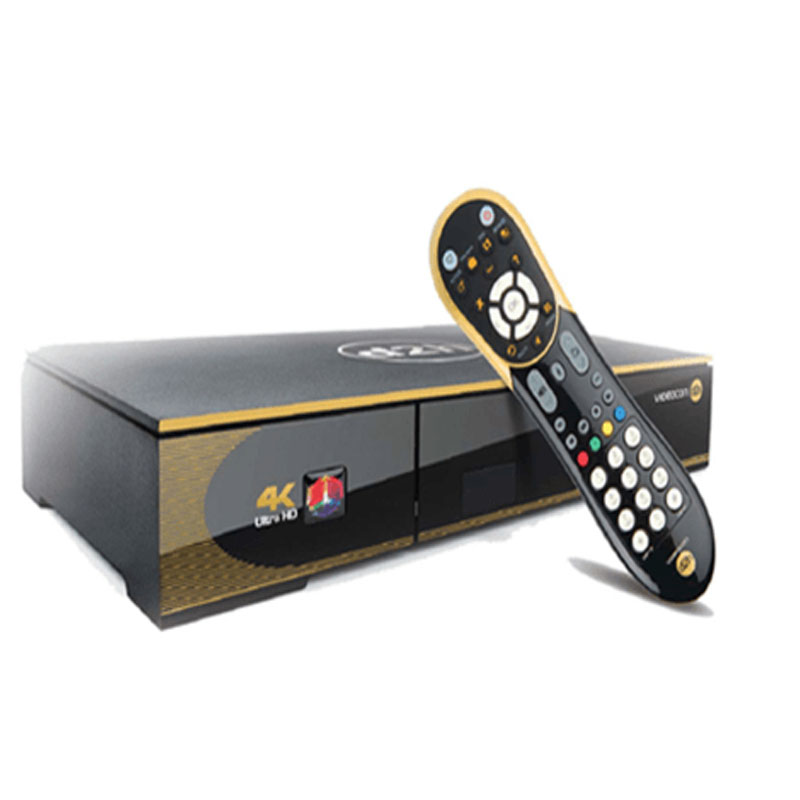
    MUMBAI: Multi-system operator (MSO) DEN is all set to revamp its old hybrid set top box (STB) into a smart STB. The new STB will support 4k HD as well as internet access. 

    A trial for the same is already in process is what DEN Networks CEO SN Sharma informed analysts. He added that the revamped STBs have been planted across the country and the response so far from the subscribers has been good. The trial will go on till February and the prices will be announced during the middle of the month itself. 

    The MSO is also in talks with two Indian broadcasting giants, Star and Zee. It also renewed deals with Sony and IndiaCast in 2017 for a span of two years.

    DEN, which has 13 million cable audience and 8.4 million active subscribers, is also planning to grow its broadband business. The company will be sharing its plan by the end of financial year 2017-18. DEN currently has a net subscriber base of 2.15 lakh with 60 per cent active subscribers. 

    Currently in only 10 select cities across 4 states of the country, MSO has plans to stretch in more 10 cities. 

    DEN Networks CFO Rajesh Kaushal predicted that the future expenditure will be more in broadband and less in cable, as most of the boxes are already lifted and the subsidy is very less on it. 

    DEN previously spent Rs.11 crore for seeding in the existing 10 cities and for expanding to more 10 cities the cost will be around Rs.10 crores.

  • Parliamentary panel pushes for TRAI’s empowerment

    Parliamentary panel pushes for TRAI’s empowerment

    MUMBAI: Parliament’s Standing Committee on Information Technology and Communications (SCIT) wants more regulations for the broadcast industry. Finding the current powers given to the Telecom Regulatory Authority of India (TRAI) inadequate, it has recommended that either the scope of its authority be increased or the broadcast industry be given its own regulator.

    In the committee’s report on ‘Status of Cable TV Digitisation and Interoperability of Set-top Boxes’, it noted that since 2004, when the TRAI was entrusted with the responsibility to oversee the broadcast sector, the industry has seen enormous growth in the number of satellite TV channels, DTH services, digitisation of cable TV networks, and TV ratings agencies. With its limited ability, TRAI has efficiently handled issues to bring about transparency and non-discrimination, improve the quality of service and allow the sector to grow.

    It noted that TRAI recommendations were the basis for the government to form several policy decisions. “The committee is, however, constrained to note that TRAI at present has got very limited powers due to which enforcement of its regulations, directions and tariff orders becomes difficult,” the panel mentioned.

    Several services providers have freely violated TRAI orders and cases against them were filed in pertinent courts. The committee doesn’t find this an effective way to get the broadcast industry to fall in line with rules. The TRAI’s recommendations of modifications to its Act are under consideration by the government.

    The committee has suggested the government to evaluate the need for a separate regulator for the broadcast industry and, until such a time, the TRAI be empowered for effective enforcement of its regulations.

    It appreciated the efforts taken by TRAI to regulate pricing of set top boxes, but strongly recommends for unbundling of hardware and associated services and making provision for itemised billing for hardware as well as associated services such as installation, activation and maintenance and providing more option to the customer to procure similar compatible hardware from the open market.

    The TRAI’s effort on addressing carriage fee details was also lauded by the committee. It stated that “despite extreme reluctance on the part of broadcasters to share the details of the carriage fee”, it has now addressed the issue in its new regulatory framework capping it at 20 paise per subscriber per channel and which is expected to further decrease till zero when 20 per cent of subscribers will be available on the platform who choose the channel. Though this decision is being scrutinised at the High Courts of Delhi and Chennai, the committee hoped the TRAI’s efforts will go a long way in addressing the issue to the satisfaction of all stakeholders.

    Also read:

    TRAI on carriage fee, other issues in draft interconnect guidelines

    TRAI tariff order’s impact on the industry

  • Airtel Digital and LG tie up, redefine home entertainment

    Airtel Digital and LG tie up, redefine home entertainment

    MUMBAI: Popular brands are coming together to share a symbiotic relationship.

    Airtel Digital TV, the DTH arm of Bharti Airtel, and LG Electronics India have announced an exclusive partnership to redefine home entertainment experience by bringing the best of online and satellite TV content to customers.

    Valid till 31 October, 2017 in select cities, on purchase of a new Internet TV along with the LG panel TV, customers can enjoy benefits of up to 25 per cent.

    Customers purchasing 43-inch and above LG UHD or OLED panel TV, will now be able to add to their ultra high-definition TV experience with Airtel Internet TV – India’s first 4K hybrid STB that offers online content plus over 500 TV channels.

    Airtel ‘Internet TV’ comes with inbuilt-Wi-Fi receiver, Bluetooth based remote control and is integrated with Google voice search feature. Customers can discover their favourite content by simply speaking into the remote and choose from a variety of content sources.

    Airtel ‘Internet TV’ STB enables live TV shows to be paused, recorded or even rewind on connected USB-drive (external HDD). Internet TV supports many digital output ports for consumers to enjoy Dolby ATMOS experience. Inbuilt Bluetooth allows users to connect their speakers or Bluetooth headsets for best-in-class experience.

    Airtel Internet TV requires a broadband or a 4G hotspot connection with a minimum recommended speed of 4 Mbps. Airtel Internet TV customers can also get additional 25GB with their Airtel Broadband plans via MyAirtel App.