Tag: STB

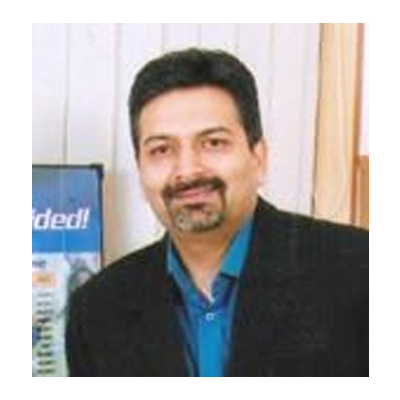
  • ‘Cable companies should start thinking like DTH operators’ : EVS Chakravarthy – You Telecom CEO

    ‘Cable companies should start thinking like DTH operators’ : EVS Chakravarthy – You Telecom CEO

    Having acquired a broadband company in 2006, Citigroup Venture Capital International has set its eyes on the cable TV business. You Telecom has floated a subsidiary to meet the FDI (foreign direct investment) guidelines for cable and acquired Bangalore-based Digital Infotainment, a small-sized cable network.


    You Telecom intends to invest Rs 7 billion over four years as it takes steps to enter the digital convergence space. Banking on building a Headend-In-The-Sky (HITS) platform, the company plans to invest Rs 1.2 billion in the first phase of infrastructure.


    In an interview with Indiantelevision.com’s Sibabrata Das, You Telecom CEO EVS Chakravarthy talks about the onslaught from direct-to-home (DTH) players to grab the digital space and the need for cable TV operators to up their services and invest in brand building.


    Excerpts:

    Since Citigroup Venture International holds 85 per cent in You Telecom India, how are you restructuring the foreign holding to stay within the regulatory cap of 49 per cent so as to kick start cable TV operations in India?
    We have set up a company called Digital Outsourcing where Citigroup holds 49 per cent. The balance 51 per cent is being held by high net worth individuals. We have done the capital restructuring in the cable TV company to meet the FDI guidelines.

    Did Citigroup buy out the Mumbai-based broadband company from British Gas in 2006 because it saw opportunity in expanding the footprint to cable TV?
    We will probably be the only pure broadband player to get into cable TV. Unlike Sify and the other ISP operators, we have built a cable-based infrastructure. So it is a logical extension for us.

    Are you looking at acquisition of cable networks as the entry route in different markets?
    Digital Outsourcing has bought 50 per cent stake in Bangalore-based Digital Infotainment. This is our entry into cable TV operations. We will be rolling out digital services in the next couple of weeks. In other markets, we are also looking at people who could partner with us through joint ventures where we will be offering multiple services.

    Why have you set up a headend in Delhi but not yet rolled out services? Is it that you don’t have a content tie-up with broadcasters?
    Though we have set up a headend in Delhi, we haven’t started operations. We are looking at opportunities like a JV or a 100 per cent buy out. We are also looking at an outsourced service model for digital solutions to cable operators as one option.

    You are banking heavily on the HITS model. How much are you going to invest in the venture?
    We will be investing Rs 1.2 billion in the first phase for setting up the HITS infrastructure. We are waiting for the government to come out with the regulations before we go ahead. We expect the Telecom Regulatory Authority of India (Trai) to come out with its recommendations on HITS in the next 2-3 weeks. For the digital solutions including set-top boxes, we will be using Scientific Atlanta. And for HITS, we will also be looking at Motorola.

    How much are you going to invest in the overall business?
    We plan to invest Rs 7 billion over four years. This will be in addition to Rs 4 billion that we have already put in for laying out the infrastructure for broadband. We will be doubling our footprint to 24 cities.

    Why are you so bullish on digital cable when there is a very low STB penetration in the Cas (conditional access system) belt?
    2008 will be the defining year for digital. After Reliance launches its DTH service, expect fireworks on the ground to start. The cable industry is not fully prepared to combat the DTH onslaught. Cable operators will have to figure out who is going to provide them with the right ammunition to fight DTH tomorrow.

    MSOs should have a one-million digital box seeding plan. Then everything will fall in place’

    What will you offer that will make cable operators come to you?
    It’s high time cable companies started thinking like DTH operators. Cable TV has to match DTH service standards – be it brand building, billing, marketing and services. Multi-system operators (MSOs) today are not concentrating on that. They will have to support the last mile operators with all these things. Otherwise, how are the operators going to fight DTH on behalf of the MSOs. The old mindset has to change. There has to be a complete revolution in digital cable and related services like broadband. If the old MSOs don’t do it, new players like us will show the way.

    Cable operators are willing to part with equity to those MSOs who are offering them more. Isn’t that the deciding factor?
    In the initial land grab situation, it is capital. But in the medium term, it will be quality of management and the systems and processes they work with. The valuations operators are asking for has gone up dramatically with new MSOs entering the field. But it is like the sensex; it will not last forever. We are not willing to pay exorbitantly just because we want to expand our size. In cable, it is important to remember that there is no case of first mover in the consumer’s mind. The future battle in cable will be for grabbing attention in the consumer space through brand building and quality of service. The MSOs have never thought of this as a strategy. And don’t forget that HITS will open up the smaller towns and networks. So the opportunities down close down for any new entrant.

    What brand building exercise you have put in place?
    We have an equity capital reserved for brand building. Bennett & Coleman Company Ltd (BCCL), the holding company of the Times of India, has a five per cent stake in You Telecom. We are looking at doing more such media deals. We are setting in a discipline by allocating equity for brand building.


    We have also invested in technology. We have introduced the Oracle-based billing system which we are willing to outsource to others. We have 170,000 broadband subscribers, spread across 12 cities including Mumbai, Bangalore, Chennai, Hyderabad, Gurgaon, Surat, Baroda, Ahmedabad, Rajkot and Pune. Our broadband ARPU (average revenue per user) is Rs 460. Our revenues will be Rs 1.10 billion this fiscal with just broadband in our business mix at this stage.

    Won’t the cable business require huge doses of capital?
    We realise that growth needs capital. Citigroup is committed to infusing capital to grow the business. We have a plan in place.

    But for a venture capital fund, isn’t analogue cable a matter of concern for its revenue leakages across the last mile?
    When Citigroup bought out the company from British Gas, they looked at the convergence space. We are uniquely positioned in that we already have a good broadband play. When we are in cable, we are only extending our laid out infrastructure to a new area of business. It is important to remember that a single service play is like an analogue video play. We see alliances emerging with broadcasters and cable networks across the value chain.

    What is the challenge for MSOs in digital cable?
    MSOs should have a one-million digital box seeding plan. It is possible with a well-evolved cable eco system. Once an MSO has such a deployment, then everything will fall in place. It will be like building a long lasting real estate value – with multiple services including broadband, cable TV, gaming and VoIP. Later we will see bigger cable companies converting carriage fee into equity in broadcasting networks.


    What are your views on Trai’s regulation for non-Cas areas?
    The regulator has given it some shape. If the MSOs had implemented Cas more successfully and effectively, then Trai perhaps would have been confident of extending it to other areas.

  • ‘We are keen on bringing in more channels’ : Deepak Shourie – Discovery Networks India MD

    ‘We are keen on bringing in more channels’ : Deepak Shourie – Discovery Networks India MD

    For Discovery Networks India, 2007 has been a year of growth. The company carried out a slew of local initiatives including celebrating 60 years of India’s Independence. It is also looking at airing more HD content from overseas, coming out with thematic week slots for Discovery Travel and Living, and doing local productions.


    In an interview with Indiantelevision.com’s Ashwin Pinto, Discovery Networks India MD Deepak Shourie talks about the company’s eagerness to bring in more channels, address different target segments, and prepare the ground for exploiting new media.


    Excerpts:

    Discovery globally has been undergoing major restructuring this year. Has India been impacted?
    There is more sharing of resources happening now. We see Discovery as one brand rather than saying, for instance, that what is happening in the UK is separate from other countries.


    India is an important part of this brand story. We take content from other parts of the world and what we produce in India travels abroad. With India today being the flavour of the world, this of course helps.

    As cable operators digitalise their networks, do you see this as an opportunity to bring in more channels from the Discovery stable?
    We are examining this possibility. We are keen on bringing in more channels even though we realise that there is no space on analogue cable networks and getting distribution is tough. Cable operators are in a position to demand higher carriage fees due to lack of space. Digitisation will not become a complete reality unless consolidation within the cable industry happens.

    Are you satisfied at the growth of digitisation in terms of Cas and DTH?
    With direct-to-home (DTH), we are happy to see Tata Sky and Dish TV spreading their reach. But with Cas (conditional access system), what we feared would happen has happened. We have been saying that Cas can’t be mandatory; it has to be voluntary. You can’t force it down people’s throats. That is why the uptake of set top boxes (STBs) in the Cas areas has been low.


    Broadcasters are suffering as they have no idea as to how many homes have taken their channels. The multi-system operators (MSOs) do not have a proper billing system in place.

    We are entering a phase when we will see the launch of more English channels. How do you view this scenario of fragmentation?
    We are happy to see more channels come in. Since Discovery is a well established brand, we are not worried about our share of viewership; we have grown to be the number one international channel in the country. We have achieved the aim of making Discovery mainstream as opposed to being niche. The new channels that come in will find it difficult to build viewership.

    Discovery has boosted its reach partly due to its Hindi feed. Are you looking at regional languages?
    No! We were evaluating this possibility. However, we decided that these two languages give us enough reach. In the South, English is well respected.

    For Discovery, we are seeing more male viewership. Discovery Travel and Living targets SEC A men and women. For Animal Planet, a global strategy is being worked out

    Has there been a change in terms of how viewers have consumed the channel over the last couple of years?
    For Discovery, we are seeing more male viewership. This is because of the kind of shows we air. We focus on things like engineering, science and cars which appeal more to men.


    Discovery Travel and Living targets SEC A men and women.


    For Animal Planet, a global strategy is being worked out. We are waiting for this.


    India is a young country with high aspirations. Over time we will see some movement away from entertainment television towards television that is informative. This is how growth will happen for us.

    One of Discovery’s major initiatives was celebrating 60 years of India’s independence. How has the experience been working with India’s scientific and technological community?
    Our aim was to showcase innovations at a grassroots level. It seemed a good way to show the progress India is making. We also want to encourage innovation. The technological community was very open and appreciative to what we did. Local shows play an important part in driving viewers to the channel.

    What has Discovery’s strategy been to lure in more viewership?
    Our main aim has been to ensure that the primetime is very strong. We start with the ‘Wild’ section, then move on to technology, trends and India hour.


    Our aim is to two-fold. Firstly during primetime, the content on our channel must be important and matter to our viewers. Our second aim is to ensure that viewers return to our channel even during non-primetime.

    What are the major properties coming up on the channel?ce?
    The biggest one is Atlas which will kick off towards the latter part of next month. This will look at different countries – India, Australia, Italy and South Africa. The show looks at different facets – be it culture, topography, etc. It has been filmed in high-definition. It looks to combine the quality of a blue-chip documentary with the detail and clarity of HD.


    Another property we are excited about is Into Alaska With Jeff Corwin. Alaska has America’s highest mountain; it has a great element of wilderness as well as fascinating animals. A population of less than that of New York City spreads out over an area three times the size of Texas. Jeff Corwin brings this wilderness to viewers.


    Race To Mars looks at the race to first reach the Red Planet by 2030. China is leading the way.


    Once again, America and its partners, including Canada, are thrust into a winner-take-all space race. Six individuals from Canada, the US, Russia, France and Japan are selected for this gruelling two-year mission. This crew sets out on humanity’s first expedition to another world; nothing can prepare them for the unexpected danger and staggering wonder of what they will experience.

    Abroad Discovery is focussing on the environment with its major eco green initiative. Are you looking to do something in India along these lines?
    We will air this in India. Discovery US has tied up with Leonardo DiCaprio for the eco green initiative. Once this content becomes available we will see what can be done in India to add value.

    Discovery Asia and Nokia teamed up for a filmmaker’s initiative. How has this worked out?
    It was a marketing relationship. This was for mobile filmmaking where the winner got the chance to work in Discovery Asia’s Singapore headquarters and learn about making documentaries. The initiative gave people the chance to innovate.

    How does Discovery Travel and Living reach its viewers?
    Viewers have found us. We have more SEC A viewers watching us than any other channel. Income levels are going up. Where will this money be spent? On lifestyle. That is why they will watch us for information and also entertainment.


    It is a difficult proposition for most channels to catch this audience. People in this segment do a lot of things during their leisure time.

    Has this helped you in roping in big advertisers?
    We have sold most of our inventory. Every lifestyle brand that launches a new product comes to Discovery Travel and Living. At the moment we are doing something for India Today Travel Plus. In the past we have done initiatives for companies like AmEx Platinum Card.


    Is the channel also looking at forging tie-ups with tourist resorts, tourist boards etc?
    In the past, we have done shows for states like Chattisgarh. We did a France Week recently and we did a press event at the French embassy. Sometimes, tourism boards advertise on our channel.

    Could you shed light on Discovery Travel and Living’s plans for the first quarter of next year?
    We have a couple of interesting shows lined up. There is a show called The Petra Nemcova Project; it is about this international supermodel who is grooming six other potential models. The show chronicles the real story of what it takes to be a model in New York City, without staged eliminations or contrived challenges.


    Six new models are brought to the biggest stage in modelling and viewers follow them from their first test shoot to the runways of New York Fashion Week.


    Nemcova serves as a mentor and friend to the prospective models, as they learn the trade of modelling and the business of fashion. Using her own life experiences, Petra advises the models on how to succeed and underscores the importance of having a well-rounded life.


    We will also premiere a show called Nigella Express. Nigella Lawson is a popular TV chef on our channel.


    She takes viewers on a quick and easy journey through the world of getting fabulous healthy food on the table fast. It is the sort of food viewers can cook fast around the clock, any day of the week, to fit whatever amount of time is available. Starting with everyone’s everyday nightmare of what to eat for dinner, to getting entire banquets on the table in less than 30 minutes, this is a series that will resonate with everyone struggling with hurried, time-squeezed, modern life.


    We are also looking at a couple of Indian productions.

    The channel is doing thematic weeks. Could you elaborate on this?
    These run from Monday to Friday at 9-10 pm. It allows us to showcase special programming for viewers. This also works for advertisers as they can sponsor a particular week’s programme. During this quarter, we are doing a lot of country-specific programmes, looking at the adventure spots and opportunities for tourism and travel.


    Abroad, Discovery has looked to expand through new media. What plans are there in India to tap into mobile and internet?
    Both of these are under review. Global strategies are being worked out for them. It will be a different ballgame as the mobile screen is small; it will complement traditional TV viewing as it is good for snippets of news, music and sports.

  • ‘Higher price cap than Rs 5 would have allowed us to play within that float’ : Anuj Gandhi – SET Discovery president

    ‘Higher price cap than Rs 5 would have allowed us to play within that float’ : Anuj Gandhi – SET Discovery president

    SET Discovery has been riding high on the wave of ICC cricket for over four years. Having the ICC Championship and World Cup in a single year, the company is targeting a 40 per cent growth in turnover to end 2006-07 at Rs 4.5 billion.


    In an interview with Indiantelevision.com’s Sibabrata Das, SET Discovery president Anuj Gandhi talks of the challenges digital cable faces and how the distribution scenario would shape up in future to impact the pay-TV broadcasting business in India.


    Excerpts:

    Are you happy with the way Cas has rolled out so far?

    We are terribly disappointed. The multi-system operators (MSOs) were not fully prepared. Their systems were not in place and there weren’t enough set-top boxes (STBs). Some operators were even providing boxes without smart cards.

    MSOs say broadcasters created an uncertain environment till the end by approaching the courts. Isn’t it true that they got very little time for actual preparedness?

    There was enough indication that Cas would happen. We were challenging the pricing and not introduction of Cas. Broadcasters signed their contracts with the MSOs on time. Some local cable operators (LCOs) who were against Cas, moved the courts but could get nothing in their favour. If Cas has to take off, this blame game has to stop. All the stakeholders have to play their role.

    Is it a case of low consumer demand for boxes?

    That is a separate issue and, if need be, can be tackled with different marketing schemes. We are in a situation where the MSOs aren’t quite ready. There is lack of information flowing into us, the subscriber forms have not been filled up, and in some Cas markets analogue signals are available of popular general Hindi entertainment channels in prime time.

    Why then couldn’t this market substantially move to direct-to-home?

    DTH is more expensive. It has a higher entry price and there is no big subsidy on the STBs. Besides, DTH operators took time to service this market. With cable operators not capitalising heavily on Cas, we have lost an opportunity to create a build up for a massive ramp up in demand for STBs at the time of the World Cup.

    Will the World Cup drive a 40 per cent penetration in STBs as predicted by some positive analysts?

    We see the World Cup acting as a catalyst and expect the STB penetration to touch 45-50 per cent in the Cas markets. Only when we reach that level can all the stakeholders make money. Already DTH service providers Tata Sky and Dish TV have announced their schemes for the World Cup. MSOs should also be sorting out their issues and coming out with a plan for the big event.

    Is SET Discovery targeting a revenue of Rs 4.5 billion in 2006-07 on the back of the World Cup?

    We have set an aggressive target this year and are going to hit it. We will benefit from key cricketing events like the ICC Champions Trophy and the World Cup. Besides, we had cricket on Ten Sports. For the first time, we would be capturing revenues from DTH as we signed up Dish TV and Tata Sky during the year.

    Will Cas affect the business?

    In the overall scenario, Cas has a very limited number of cable and satellite homes. Besides, Cas has come into effect only in the last quarter of the fiscal.

    Do you see broadcasters dropping prices of their weaker channels in a bid to push sale of STBs?

    With a price cap on a la carte channels at Rs 5, it won’t make business sense to further drop rates. The whole justification for this is to have higher volumes. But we could have got the current levels of box penetration with a more liberal pricing.

    DTH growth for the last six months has been as we had expected. It is only digital cable numbers which have been disappointing

    Are you suggesting a price ceiling but at a higher rate?

    This would have allowed us to play within that float. We could have weighed the weaker channels, observed their relative strengths in the marketplace, and come up with a differential pricing while staying competitive. The whole subscription model at Rs 5 doesn’t give us scope for such pricing play and is unfair to niche channels. There is precious little that content providers can do and dropping prices would be bad for the MSOs as well. Besides, we haven’t yet got any billing data from the MSOs on the Cas subscribers to chalk out a strategy.

    Are you planning to take any action as the deadline has crossed?

    It should have come to us by 15 February, but we haven’t received any information from them yet. If we don’t get any feedback from them in the next few days, we will issue them notices as specified by the Telecom Regulatory Authority of India (Trai) in order to safeguard our interests.

    Trai is trying to push for voluntary Cas. How do you think this can speed up in other parts of the country?

    Digitisation is a reality but will take a while to happen. Cas has been a learning process and we have to evolve a phase-wise strategy for digitalisation. We have to fix a sunrise and a sunset date where we have to give adequate time taking into account availability of boxes, prices and investments by MSOs.

    MSOs are saying that broadcasters should be more understanding and not ask for more subscribers in voluntary digitalisation as the collection of money from the LCOs doesn’t improve. Isn’t entering into commercial agreements between MSOs and broadcasters crucial for the success of voluntary Cas?

    The analogue and the digital markets have to be distinguished. The MSOs can’t argue that they can’t recover money and so can’t pass it on to us. Then how will broadcasters make money from voluntary Cas? There has to be some incentive for broadcasters to push for digitalisation.

    In the newly notifuied Cas market, we are seeing a three-MSO play. Do broadcasters welcome such a strong wave of consolidation?

    There shouldn’t be a problem so long as the business is transparent. If there was one monopoly player emerging in the cable TV distribution arena, then it would have concerned us. Besides, the market is large enough for other players to emerge. And the independent operators who have aligned with the MSOs would continue to remain as franchisees. We don’t see them disappearing from the chain.

    Will carriage spread to new towns where Tam has expanded its reach?

    It is too soon to say how carriage will impact in Tam’s new panel. A lot will depend on how the channels are getting affected. The market has more or less stabilised. Broadly, however, as ratings towns get added, carriage will move there. But I don’t see budgets of broadcasters towards carriage really bloating. What would happen is that they would be picking and choosing the places where they want better placement and carriage.

    When do you see DTH significantly contributing to the kitty of the pay-TV broadcasters?

    It will take DTH a while for getting those numbers. But it has certainly started impacting the business because MSOs are having to think twice before blacking out channels so that they don’t upset their subscribers. And DTH growth for the last six months has been as we had expected. It is only digital cable numbers which have been disappointing, but we will soon see that changing too.

    SET Discovery will have no cricket to play with in the next fiscal while in the GEC space, Sony TV is dropping in ratings. How tough will it be for the company to post growth?

    Cricket, no doubt, is a big play in India. In a MSO market, you can still do with no big impact hitting us. But when you go down into the interiors, this is the only driver. We have grown rapidly for over four years on the back of cricket. We will try to maintain what we have and ask for realistic increases. But we have no channel as such that will make carriage on cable networks a problem; there is strength in our bouquet.

  • Trai faces QoS issue to ensure improved Cas rollout

    Trai faces QoS issue to ensure improved Cas rollout

    NEW DELHI: Many cable households are unhappy with repeated signal failure and Trai is now faced with the issue of what to do about enforcing Quality of Service provisions, sources tell indiantelevision.com.

    One of the major confusions in the market in the national Capital is what are the cable operators doing about the billing of chosen channels.

    At the moment, the operators are giving all the channels that can be shown in India, and they have been telling the subscribers, those who have filled up the forms indicating their choice, that at the end of the month, they would be charged for what they have indicated in the forms.

    “The COs have told us that the programming for each STB is taking time, but they would charge each household what the latter has opted for,” the official said.

    He said also that the COs are watching the scenario. “They feel that in a month or two, subscribers might want to drop some channels and want others, or just want more channels than they have opted for now. So then, they would have to do the programming all over again.”

    The official felt that the COs want the situation to stabilise before they get into programming for “watch what you pay for”.

    However, in many cases, the COs have registered the subscribers and taken the advance charges at the beginning, when they gave the STBs but have so far not returned for collecting the advance fees for February.

    “This means subscribers would suddenly be faced with having to pay for two months if the COs do not take the fees for February now,” said an official, agreeing that all this is causing more confusion than is good for the ongoing Cas rollout to regain the traction it has lost quite a bit of recently.

    One MSO is not showing contact numbers in the appropriate window when the signal goes off, and still signal loss is quite a regular phenomenon and, though less than in the beginning, there is a lot of pixelisation of images.

    The MSOs have so far not raised the issue of QoS being enforced, for reasons best known to them. But they are aware that this is one of the reasons for not just slowdown of Cas rollout, but in many cases, people wanting to return the boxes and settle for just the FTAs.

    In a report last week, indiantelevision,com had reported the worries amongst MSOs on these issues, and their informing Trai that broadcasters and they themselves need to do attractive packaging and ensure QoS, but nothing seems to have materialised so far.

  • CAS REVIEW: MSOs claim adequate STB stocks, admit consumer order slowdown

    CAS REVIEW: MSOs claim adequate STB stocks, admit consumer order slowdown

     NEW DELHI: Multi-System Operators have told the sector regulator that there is no shortage of STBs anywhere in the country, but admit that there has been a slow-down of consumer orders, for which the MSOs themselves and broadcasters need to make various changes in their strategies.

    “None of the players, neither the cable operators, nor the broadcasters, not even us, have been reading the consumers’ minds, and we better take care of that from now,” a senior official of one MSO told indiantelevision.com today.

    Meanwhile, although these are “early days”, the trend that has emerged as a result of data analysis of customer choices as expressed in the forms submitted (for those who have opted for Cas in Delhi and Mumbai) “is bound to create major upsets in the market, especially in how the media buyers look at where to put their monies,” the official said.

    This was in the offing since the early days of Cas implementation, and the announcement could cause a mild to heavy temblor in the market.

    Meanwhile, cable operators here reported also that in some pockets people were not taking STBs because of regional preferences. In the predominantly Bengali neighbourhood of Chittaranjan Park, a fairly posh colony, many have stayed with the Bengali FTAs and decide to hang on to whatever rest they are getting in the FTA basic tier package (Rs 77, plus taxes).

    Likewise, in the Nepali dominated Vasant Gaon area and for people in RK Puram, where there is a predominance of South Indians from various states, it has been noted that since their most popular regional channels are FTAs, they have stayed away from STBs, Roop Sharma, president of Cable Operators Federation of India told this correspondent.

    None of the three MSOs approached in Delhi by this correspondent so far have divulged the clear analysis, saying that the Telecom Regulatory Authority of India (Trai) has asked for these and they can reveal the data only after reporting to it.

    But it is known by now that most of those who have taken the STBs have opted for a la carte and not packages or bouquets. “This clearly shows that the Indian customer knows its mind far better than we had anticipated,” sources admitted.

    CUSTOMERS IGNORED: In the soul searching process, media experts are now saying that the slowdown has been because of various reasons, primarily ignoring the customer.

    First, the DTH players promised to supply boxes and dishes but could not do so on time. In the first instance, they gave dishes but not the STBs. Then, they gave prepaid boxes, so when the month was over, the streaming was disconnected. Then, people started comparing that this never used to happen with the “cablewallahs”, who would wait till you paid and not disconnect.

    In fact, the “facelessness” of the DTH players, who operate through the BPOs, have been one reason for people in chunks getting put off by them, though it is a fact that DTH players have scored heavily in the bordering areas of Delhi proper by giving attractive prices to housing colonies.

    At the same time, MSOs admit that they too had failed to gear up to the search in the first 14 or 20 days of Cas implementation. “The packages that we gave did not meet the needs of the consumer,” said one MSO spokesperson.

    “We also did not make a clear statement on what package a cable home having two or more TV sets would get as discount, and no clear policy emerged in the beginning, and the packages were arbitrarily decided by us,” he added.

    Analysis and feedback from ground level fitters from cable operators show that due to this, most families set a budget for themselves as per their pockets, and decided to take channels they wanted, which is why they chose a la carte.

    This has caused major changes in the viewership patterns, and a lot of “myths” of TRP supremacy claimed by channels could come for a shake up, media experts aver.

    FENCESITTERS APLENTY: Data analysis shows that a lot of people are sitting on the fence, so far as fresh demand for STBs is concerned.

    As reported by indiantelevision.com earlier, MSOs say that there could be some kind of pace picking up with the World Cup cricket coming up, but they hold that much more than a global sporting event has to be looked into for the “second phase of Cas rollout” to be successful.

    MSOs have told broadcasters to tie-up with them to push for boxes. They have made several proposals so far on this with the major broadcasters.

    Though a recent seminar in Mumbai generally held that availability of STBs would be crucial for success of Cas and would rake in the moolah for all the players, reports emanating suggest that there is no shortage of boxes.

    All three MSOs, WWIL, Hathway as well as Incablenet have ample number of boxes, “which we have informed Trai about”.

    “We have told Trai that there is an urgent need for MSOs and broadcasters to tie up and create packages that are of substance to the consumers, which will be in their own best interest,” the official said.

    As of now, however, there is no such consensus emerging on a market that is there for the taking.

  • Nielsen’s new service to offer insights, services from TV STB data

    Nielsen’s new service to offer insights, services from TV STB data

    MUMBAI: US media research firm Nielsen is consolidating its initiatives involving digital television set top box data into a new service offering named Nielsen DigitalPlus.

    Nielsen DigitalPlus will work with set top box (STB) data from cable system operators (MSOs) and satellite providers to create new insights and services for clients by integrating set top box data with other Nielsen information.

    Nielsen DigitalPlus will draw upon the resources and information assets of numerous Nielsen businesses including: the television measurement services of Nielsen Media Research, commercial activity data from Nielsen Monitor Plus, retail and scanning information from A.C. Nielsen, as well as the modeling and forecasting capabilities of Claritas, Spectra and BASES.

    Initially, Nielsen DigitalPlus will focus on several high-potential client initiatives:

    – Exploring how set top box data can contribute to Nielsen’s Anytime Anywhere Media Measurement (A2/M2) goal of bringing electronic measurement to all local television markets

    – Providing measurement of advanced advertising applications such as interactive, targeted advertising

    – Bringing insights on advertising effectiveness through granular reporting of commercial activity

    – Providing analytics to support MSO Customer Relationship Management (CRM) by combining television viewing data with other data sets to provide new insights to MSOs and satellite providers about their subscribers’ activity.

    Nielsen DigitalPlus senhior VP Jed Meyer says, “With our wide array of media and marketing information services, expertise in advanced technology, and experience working with large volumes of data, Nielsen is uniquely positioned to help clients unlock the potential of set top box data.

    “As the industry begins to analyze and use the vast amount of information available through these devices, Nielsen will work with clients to develop comprehensive solutions to this new frontier of measurement. We are intensely focused on using all our resources to succeed at this challenge.”

    Nielsen DigitalPlus will build on Nielsen’s long history of set top box data projects going back to Warner Amex’s QUBE system in the 1980s. More recently Nielsen has worked with Comcast to process and develop insights from their Video On Demand server data. Nielsen also worked with Tivo to establish a joint panel of TiVo subscribers whose set top box data Nielsen processed on a daily basis. Nielsen is currently working on research projects with several MSOs and satellite providers to study set top box data for potential analytical and audience measurement purposes.

  • STB availability key to Cas success

    STB availability key to Cas success

    MUMBAI: Availability of set-top boxes (STBs) is one of the key concerns for the successful roll out of conditional access system, speakers at a workshop on “Cas and Digital CATV” said here today.

    Cable operators should not only look at the price of the boxes but also the quality of features it offers as there is revenue to be earned from the consumers. “While what is being pushed now in India is basic boxes, there is need also to go in for middleware that enables enhanced facilities. The important question to be asked is what the boxes can do. Cable operators will be able to, after all, earn revenues from features like video-on-demand and gaming,” said Technosat managing director Irshad M Contractor.

    The Dubai-based company is prepared to set up a manufacturing facility in India if the demand for STBs pick up. Technosat has boxes ranging from basic to premium features on MPEG-2 and is currently conducting trials on MPEG-4.

    Though multi-system operators (MSOs) are currently importing boxes, several manufacturers in India are keen to come up with local production facilities. “We are introducing 4-5 flavours of STBs that are fully developed in India. The boxes will have personal video recorder (PVR) and digital video recorder (DVR). We are integrating the encryption system with Conax. We are also in talks with other Cas technology providers,” said Surbhi Broadband general manager sales P C Mishra.

    The two-day workshop, which concluded today, was organised by Satellite & Cable TV (SCaT) magazine and attracted over 250 delegates. The focus was on facilitating cable operators to make the transition from analogue to digital cable. The issues covered ranged from digital headends to billing solutions for Cas.

    Speaking on digital headends for simulcasting digital video broadcasting – cable (DVB-C), Peter Batt of Teleste said there was need to offer on demand TV and other value-added services. The third generation headends improved footprint and power consumption while offering unicast/multicast video services and triple play. But the fourth generation IP-centric headend for DVB-C and IPTV combined everything and offered “ultimate flexibility.”

    Earlier SCaT editor and executive director Dinyar Contractor said Headend-In-The-Sky (HITS) would mean rapid digital and Cas roll out as it would reach out to the smallest and far flung last mile operators (LMOs). Even as Cas made it unviable for LMOs to set up a digital Cas headend and offer a large pay bouquet, HITS offered several advantages to them.

    “The transmodulator cost is as low as Rs 2000 per channel and the LMOs can assemble their own, local basic tier. It is economically attractive if the Telecom Regulatory Authority of India (Trai) permits nationwide Cas,” he said.

    SCaT chairman Sudeep Malhotra spoke on uplink and downlink policies, elaborating on the regulatory framework prescribed for the different genres of channels such as news and sports. “There are 164 Indian channels licensed to be uplinked from India. The channels that are registered and allowed to be downlinked into India amount to a total of 54 channels,” he said.

  • Sun ready, DTH play becoming hot chase for satellite space

    Sun ready, DTH play becoming hot chase for satellite space

    MUMBAI: Having finalised on Malaysia-based Astro as his 20 per cent equity partner, Sun network chairman and managing director Kalanithi Maran is preparing the ground to launch his direct-to-home (DTH) service. He has decided on Iredeto as the encryption system while the set-top boxes (STBs) will be from Coship Electronics in China and South Africa-based UEC Technologies, a source close to the company says.

    “He is also looking at more STB vendors. Besides the basic box which will be competitively priced, he will have graded STBs. Multiple vendors will ensure supply safety in case of a huge demand for his service,” adds the source.

    Maran will be using MPEG-4 technology that will allow him to compress more TV channels per transponder. While MPEG-2 can pack in around 12 channels, the advanced compression technology will be able to accommodate over 20 channels.

    Maran will have seven Ku-band transponders on Insat-4B, which launches on 10 March, while Prasar Bharati’s free-to-air (FTA) package DD Direct Plus will have five on the same satellite.

    He may consider himself lucky when the launch of Insat-4C satellite failed in July 2006 after the rocket carrying it veered off course and exploded. He had booked six Ku-band transponders (and one more for digital satellite news gathering) on it for Sun Direct’s DTH service.

    By being located on the same satellite, Sun’s subscribers will be able to access DD Direct’s channels without Maran having to separately put them on his transponders.

    Dish TV which was sharing the NSS-6 satellite with DD, will not be hit badly after the migration. Since NSS-6 is at 95 degree East, a minor realignment of antenna will be required for receiving the channels as Insat-4B shall be located at 93.5 degree East. Tata Sky, on the other hand, will have to recarry DD channels on their transponders.

    The DTH play in India is, indeed, turning out to be a hot chase for satellite space. If Tata Sky had to wait for the launch of Insat-4A as rival Dish TV aggressively went on mopping up customers, it is now the turn of Anil Ambani’s Bluemagic and Bharti Telemedia to plead with the Indian Space Research Organisation (Isro) to provide them with Ku-band transponders.

    In the sprint to start DTH before the market gets taken away, Bharti may be the clear loser. Unless, of course, it gets the approval from Isro to be on Measat-3, a foreign satellite launched from the Astro Group.

    “Measat has made their Ku-band transponders available for us and have supplied the data. We are studying it technically and are making an internal evaluation,” says Isro contract management and legal services director SB Iyer.

    The satellite has 49 dbW (decibel Watts) as compared to Insat’s 53. “We have indicated this problem and Measat has said that it would examine it and come up with a solution. Insat-4B has 53 dcW and offers a powerful beam across the country. We will have to ensure quality and also come into an agreement with Measat. Besides, the users will also have to express their interest in the satellite,” says Iyer.

    Measat-3 has 24 Ku-band transponders and has been designed to provide capability for data services and DTH applications in Malaysia, Indonesia and the Indian Subcontinent.

    If no clearance is given to Measat, Bharti will have to wait the longest with Insat-4G launching only by 2008-end. The DTH market could possibly have settled by then with the spoils being distributed among Dish TV, Tata Sky, Sun and Reliance’s Bluemagic.

    Anil Ambani will get a shot at the DTH market after Insat-4CR (replacement) launches in the quarter beginning July this year. Reliance has asked for eight Ku-band transponders and Isro is reserving the remaining four for other users like National Informatics Centre.

  • Cisco offers debt to cable operators, pushes Scientific Atlanta STBs

    Cisco offers debt to cable operators, pushes Scientific Atlanta STBs

    MUMBAI: Cable operators dry of cash for digital implementation can now look forward to Cisco Systems, Inc. The global networking equipment and network management giant is willing to finance cable operators in India as it sees opportunity in riding the digital cable wave to push its set-top boxes (STBs).

    There is a catch, though: operators will have access to the loan only if they use STBs from Scientific Atlanta, the company that Cisco acquired to bulk up on businesses that cater to consumers.

    The debt will be provided through its wholly owned subsidiary company, Cisco Capital.

    Cisco has approached several small and medium-sized operators in the Cas (conditional access system) areas, offering a variety of financing options. “We are willing to provide soft loans to cable operators which can be paid over a period of time. This way we can push our digital end-to-end solutions including headend, encryption system and boxes,” says a source in the company.

    The loan size will depend upon the credit worthiness of the operator and the funding will be made available in phases. “We won’t be funding the cable network in one go, but infuse it in several doses,” says the source.

    Cisco realises how tough it will be to evaluate the health of the cable networks. “Most of them do not have proper documents and it is difficult to rate their creditworthiness,” the source adds.

    Among the cable operators Cisco has initiated talks are Kolkata-based Manthan and JPR Network, an independent operator in Mumbai. But there are no takers yet.

    “We are more interested in equity than in debt. As we will have to subsidise the STBs, it will be very difficult to recover and repay the loan. The average revenue per user (ARPU) from Cas subscribers is also low. Besides, Scientific Atlanta boxes are more expensive than what is available in China and Korea,” says JPR Network promoter Raja Nadar.

    Cisco, however, believes its end-to-end digital solutions and the pressure cable operators face to put quality infrastructure in place will drive in good business. “There is just a 20 per cent difference between what we provide and what others are offering. But we have a better system and bridge an end-to-end requirement,” the source says.

    Rajan Raheja-promoted Hathway Cable & Datacom and Asianet are using the Scientific Atlanta headend, STBs and encryption system, the source adds. Hathway, in which Star has a 26 per cent stake, already has seeded Humax STBs and uses News Corp-owned NDS encryption systems.

    For Hathway, Scientific Atlanta is going to be a second supply vendor as the market for digital cable expands.

    Cisco acquired Scientific Atlanta so that it could tap the rapidly growing cable, satellite and IPTV markets across the world.

  • Mumbai leads STB penetration, SEC A early adopters: Tam

    Mumbai leads STB penetration, SEC A early adopters: Tam

    MUMBAI: Of the three metros, Mumbai leads in Cas (conditional access system) adoption with a 25 per cent penetration in set-top boxes (STBs), according to a study by Tam.

    While Mumbai has 139000 subscribers buying STBs on a Cas home of 548000, Delhi has a 14 per cent penetration with 97000 out of 676000 homes opting for boxes.

    Kolkata is a clear laggard with a 10 per cent penetration, indicating significant differences in offtake across the three metros. Out of 409000 homes, 41000 subscribers have gone ahead and bought boxes.

    “Of the 1.63 million homes covered by the Cas footprint, 277000 homes had taken up a STB/DTH connection to access pay channels. Pay TV homes amounted to 17 per cent of the Cas-mandated area,” the study said.

    In the first week of January, Tam commissioned AC Nielsen to conduct a ‘Pay TV Homes’ estimation study in the Cas-mandated zones of Mumbai, Delhi and Kolkata. The fieldwork periods were 12-16 January in Mumbai, 11-15 January in Delhi and 11-16 January in Kolkata. The fieldwork mid-point was 14 January, Tam said.

    Tam further divided the zones into 100 sampling nodes, ensuring “adequate geographical coverage.” It conducted face-to-face interviews using a structured questionnaire. The interviewee was the decision maker pertaining to cable subscription. The sample size was 2250 respondents (750 per city).

    According to the study, an additional 198000 homes claimed to have subscribed but are awaiting installation of ‘pay TV services.’The ‘under served’ segments included 109000 (20 per cent awaiting installations) in Mumbai, 43000 (6 per cent) in Delhi and 46000 (11 per cent) in Kolkata.

    “Cumulatively, 475000 homes had subscribed comprising 29 per cent of the Cas-mandated homes,” the study said.

    There are 7.96 million cable homes across the three metros with 1.63 million (approximately 21 per cent) falling under the Cas-mandated zones. Mumbai has 3.25 million cable homes while in Delhi it is 2.61 million and in Kolkata 2.1 million.

    The highest offtake for the boxes is in the SEC A strata of Mumbai. Interestingly, the response by Mumbai’s SEC C is nearly on par with those from SEC A residing in Delhi and Kolkata There is zero demand from SEC D/E in Kolkata. “The offtake levels vary significantly across markets even at a SEC level. The highest offtake is observed in the higher SEC and it declines as one comes down the SEC ladder. Owing to the pre-dominant non-responsive lower SEC, the offtakes seem to have got dampened significantly,” the study pointed out.

    Despite low offtake in Kolkata, consumer awareness appeared to be higher than in Delhi and Mumbai. Consumers residing in Delhi appeared to be the least aware.

    While consumer awareness has significant ground to cover, price remained the pre-dominant reason for subscribers preferring to decide in favour of free-to-air (FTA) channels.