Tag: STB

  • Digitisation: Hathway Cable’s capex need is Rs 4 bn in Q4

    Digitisation: Hathway Cable’s capex need is Rs 4 bn in Q4

    MUMBAI: Hathway Cable & Datacom‘s capital expenditure in the last quarter of this fiscal on account of Phase 2 digitisation will be in the region of Rs 4 billion, a top executive of the company said.

    The multi-system operator (MSO) is anticipating a deployment of 2.6 million set-top boxes (STBs) in the quarter beginning January.

    “The financing will be met by a mix of debt and vendor financing. We will be requiring a debt of Rs 3 billion,” Hathway Cable and Datacom managing director and chief executive officer Jagdish Kumar told Indiantelevision.com.

    With this fresh debt, Hathway Cable & Datacom‘s total debt would touch Rs 8 billion.
    The company has seeded 2.1 million boxes in the first phase of digitisation. “We are looking at touching 2.2 million in the Phase 1 DAS (Digital Addressable System) cities,” Kumar said.

    Kumar feels that there will be no major decline in carriage fees. “In the first phase, we have seen around 10 per cent fall in carriage fees. We do not anticipate any impact on carriage fees as more channels have come under the ambit with the bandwidth expanding due to digitisation,” Kumar said.

    But when will the MSO start offering packages to the subscribers and start billing them in the DAS markets? “We expect the billing to be effective from the first quarter of next fiscal,” said Kumar.

    Hathway is considering broadband upgrade from DOCSIS 2.4 to 3.4. The MSO is doing pilots but no final decision has been taken yet.

  • Tata Sky extends STB contract with Technicolor

    Tata Sky extends STB contract with Technicolor

    MUMBAI: Technicolor, a technology leader in the media and entertainment sector, said it has won two extension contracts from Tata Sky, India‘s leading satellite operator with over eight million subscribers, for supply of set-top boxes (STBs).

    Deliveries of new STBs are scheduled from the third quarter of 2013 to second quarter of 2015, while Technicolor will continue providing locally-based after-sales support to Tata Sky.

    Tata Sky has granted Technicolor, until mid-2015, extension of the initial contracts for the STBs already delivered over the past years which includes the HD-enabled zapper (MediaPlay DSI715) and the SD satellite zapper (MediaPlay DSI309).
    “Technicolor‘s solutions have met our expectations in terms of reliability because we want to guarantee a trouble free experience for our customers. They also help meet our Total Cost of Ownership requirement, which is key for an operator with a large subscriber base like ours. The latest agreements mark the continuation of our trusted relationship with Technicolor,” said Tata Sky MD and CEO Harit Nagpal.

    Technicolor‘s Connected Home division President Michel Rahier added, “We are very proud to support the commercial success of Tata Sky in its digital television services. As a long standing partner of Tata Sky, the renewal of the previous contracts awarded up to two years ago proves us that we have been able to build a strong relationship thanks to the high quality of our products.”

  • BIS certification mandatory for all STBs from 3 April

    BIS certification mandatory for all STBs from 3 April

    NEW DELHI: Cable TV networks will need to have their set-top boxes (STBs) conformed to the standards set by the Bureau of Indian Standards (BIS) by 3 April. If they fail to do so, the STBs will not be valid.

    An order issued in October last year that all specified electronic goods including STBs have to conform to standards set by the Bureau of Indian Standards will come into effect from 3 April this year.

    The order of the Department of Electronics and Information Technology had said on 3 October 2012 that all specified electronic goods including STBs imported or domestically manufactured must bear a self Declaration “Confirming to IS…….. Registration Number”.
     
    This covers video games, LCD and LED Plasma television sets, visual display units, laptops, optical disc players, amplifiers, and electronic music systems among other things.

    Thus after 3 April, it would be illegal to place these goods in the market without BIS clearance.

  • Siti consolidated Q3 loss widens 47% Q-on-Q to Rs 185.7 million

    Siti consolidated Q3 loss widens 47% Q-on-Q to Rs 185.7 million

    MUMBAI: Zee Group-promoted multi-system operator (MSO) Siti Cable continues to be in the red with the fiscal third quarter consolidated net loss widening 47 per cent to Rs 185.7 million from Rs 126.5 million a quarter earlier on rise in expenses due to digitisation.

    Siti Cable’s consolidated operating profit for the quarter, however, increased 7 per cent to Rs 202.5 million from Rs. 189.3 million a quarter earlier.

    The consolidated operating revenues for the third quarter rose 33 per cent to Rs 1.24 billion from Rs 935.3 million a quarter earlier.

    Operating revenue is primarily generated from subscriber related income, income from bandwidth charges, income from advertisements and set-top-box (STB) activation.

    Total consolidated operating expenses for the quarter stood at Rs 1.04 billion, a 23 per cent increase from Rs 850.6 million a quarter earlier.

    The company’s main operating expenses include cost of goods and services, employee costs and selling & distribution expenses.

    Major cost item was cost of goods & services recorded as Rs 768 million during the third quarter, representing 62 per cent of the total revenue. It increased 24 per cent from Rs 621.5 million a quarter earlier, when it was 60 per cent of the total revenue then.

    Siti Cable COO Anil Malhotra commented, “Siti gained further momentum in the third quarter of fiscal 2013. We were able to maintain our margins through operational efficiency improvements despite increased operating expenses.”

    Malhotra said that the company had seeded 1.5 million set top boxes (STBs) during Phase-1 of digitisation in Delhi, Mumbai and Kolkata and had added approximately 700,000 STBs during the third quarter.

    The STB seeding done by the company is under the paid scheme and the payments were realised on upfront basis, Malhotra said.

    “We are now in exciting phase of our journey as we strengthen our existing operations and expand our digital subscriber base in phase-2 cities as well. We believe that experiences gathered from Phase 1 will form the basis for phase-2 switch-over to digital, helping to speed up the exercise eventually,” he said.

  • Govt may mandate local sourcing of a percentage of STBs: I&B secretary

    Govt may mandate local sourcing of a percentage of STBs: I&B secretary

    NEW DELHI: The government could consider making it mandatory for procurement of certain percentage of locally-made set-top boxes (STBs) if domestic manufacturers priced them competitively.

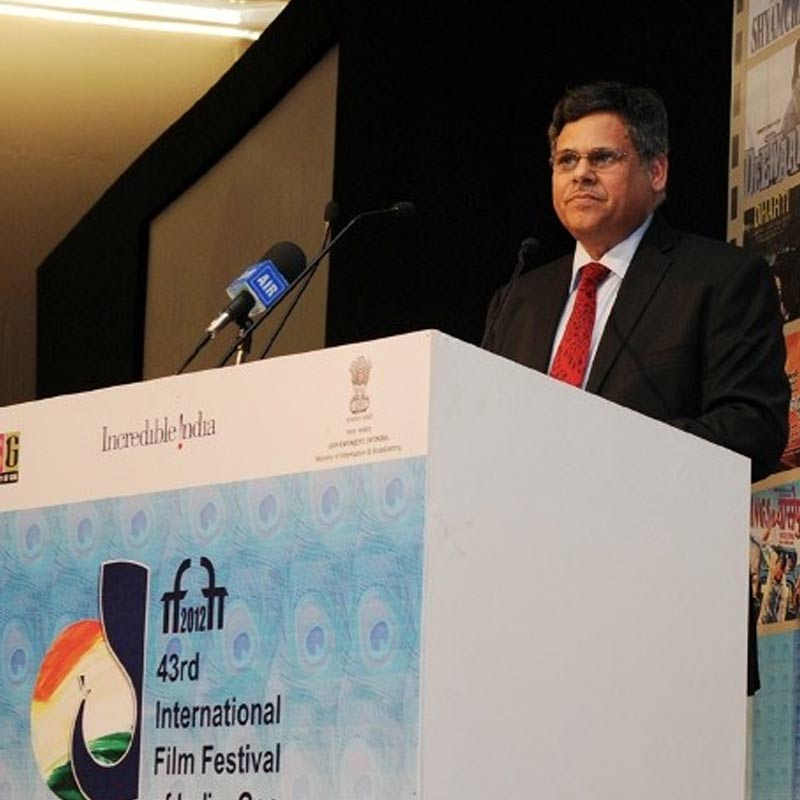
    Information and Broadcasting (I&B) secretary Uday Kumar Varma said most of the STBs at present are being imported and the share of the domestic manufacturers is negligible, mainly on account of cost disadvantage.

    He said with the government embarking upon a massive drive to switch over to digital delivery of television channels to households, there is a huge demand for STBs.

    If domestic manufacturers are able to price their products competitively, I&B Ministry may even mandate a certain percentage of STBs to be procured domestically, he added.

    Varma also said the I&B Ministry has written to the finance ministry over the issue of locally manufactured STBs attracting higher rate of value-added tax (VAT), while imported STBs are subjected to a lower rate of service tax as it is considered a service offered by cable operators.

    The I&B Ministry has asked the finance ministry to remove the tax anomaly and create a level playing field for domestic STB manufacturers.

    He said the government is confident of meeting the 31 March deadline for digitisation in 38 cities (with one million plus population) across the country in the second phase of digitisation.

    Varma said, �It is estimated that 16 million STBs would be required to digitise the 38 cities, excluding the four metros. But a study conducted by the ministry has revealed that already six million TV sets in these cities are already digitised."

    Cities like Ludhiana and Amritsar are already 90 per cent digital, according to Varma. The level of digitisation is high even in Bangalore and Hyderabad.

    The four metros – Mumbai, Delhi, Kolkata and Chennai — were part of the first phase of digitisation effective 1 November.

    Varma expressed satisfaction over the implementation of the first phase of digitisation. He said the exercise was "more or less completely successful" in Mumbai and Delhi. He added that even Kolkata, which initially had reservations about digital conversion, has come on board with a conversion rate nearing 90 per cent.

    It is held up in Chennai because of a petition by cable operators in the Madras High Court challenging the digitisation notification itself.

    Varma said the I&B Ministry has been reviewing the progress on a continuous basis and nodal officers have been appointed in every state to oversee the conversion process.

    He said the first phase of digitisation was a learning and the government was working to refine the process in the second phase. The feedback from the newly-converted digital homes has been mostly favourable and added that the move is bringing in a more transparent cable TV regime in the country.

  • I&B Ministry presses for convergence regulation

    I&B Ministry presses for convergence regulation

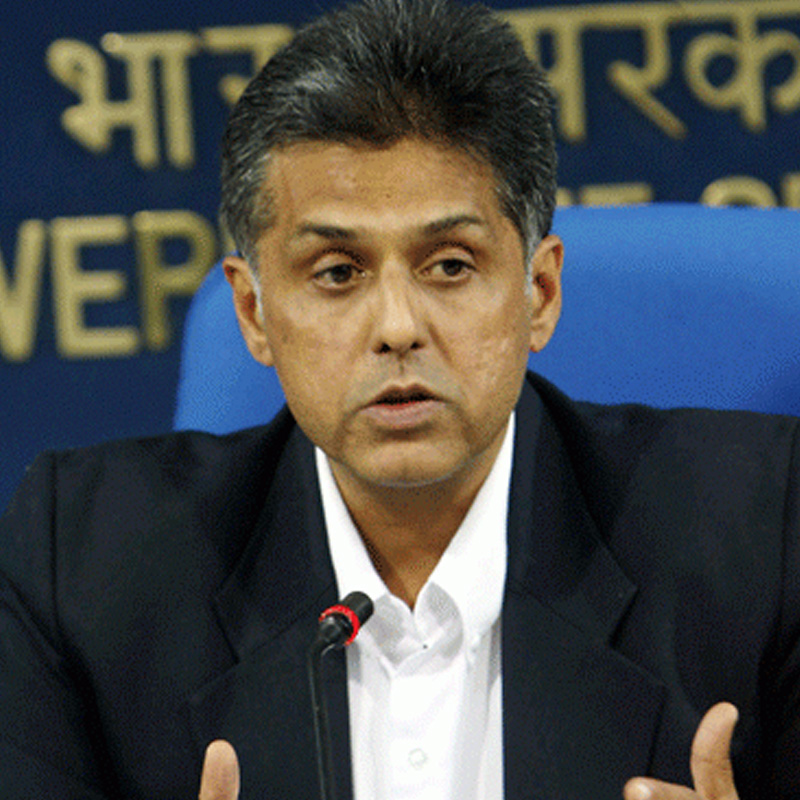
    NEW DELHI: Information & Broadcasting Minister Manish Tewari on Wednesday said he would talk to Telecom Minister Kapil Sibal to impress upon him the need to create a statutory mechanism to address issues related to convergence across media, entertainment and telecom.

    "Convergence across media, entertainment and telecom space specially with digitisation kicking in, is inevitable. Therefore, at some point in time there will have to be an overarching (legal) architecture which looks at it holistically," Tewari told reporters on the sidelines of Convergence India 2013.

    Admitting that convergence is a reality which cannot be ignored, he said: "I will talk to my senior colleague, the minster of telecom (Kapil Sibal) and see if we can work out a modus operandi whereby we can put a statutory architecture on the convergence format."

    Efforts have earlier been made to have a legal framework for convergence of the three sectors. A Convergence Bill was tabled in Parliament more than a decade ago. The bill has sought to create an autonomous commission to regulate carriage of all forms of communications, and for establishment of an appellate tribunal and to provide for matters connected therewith or incidental thereto.

    The bill aimed at promoting, facilitating and developing in an orderly manner the carriage and content of communications (including broadcasting, telecommunications and multimedia). The Convergence Bill had sought amalgamation of Information Technology (IT), Telecommunications and entertainment industry by replacing the Telegraph Act of 1985 and the Indian Wireless Act of 1933.

    Tewari admitted that the convergence bill tabled earlier could not be worked on. "The EGoM (empowered group of ministers) will work on the prevalent conditions," he said.

    Need to encourage production of indigenous STBs

    Tewari said one of the government‘s primary concerns now is to ensure that digital set top box (STB) manufacturing happens in India as the whole process is going to lead to revenue expansion of about $4 to $5 billion, according to a Trai estimate.

    "As we speak today, most of that business is not coming to India. So, that is an overriding priority for us as to how we are able to build an indigenous STB manufacturing model on to it," he said.

    Tewari also said STBs should be inter-operable and wanted enough operators for the consumers to switch to.

  • Videocon d2h earmarks Rs 4.88 bn of proposed IPO proceeds to buy STBs

    Videocon d2h earmarks Rs 4.88 bn of proposed IPO proceeds to buy STBs

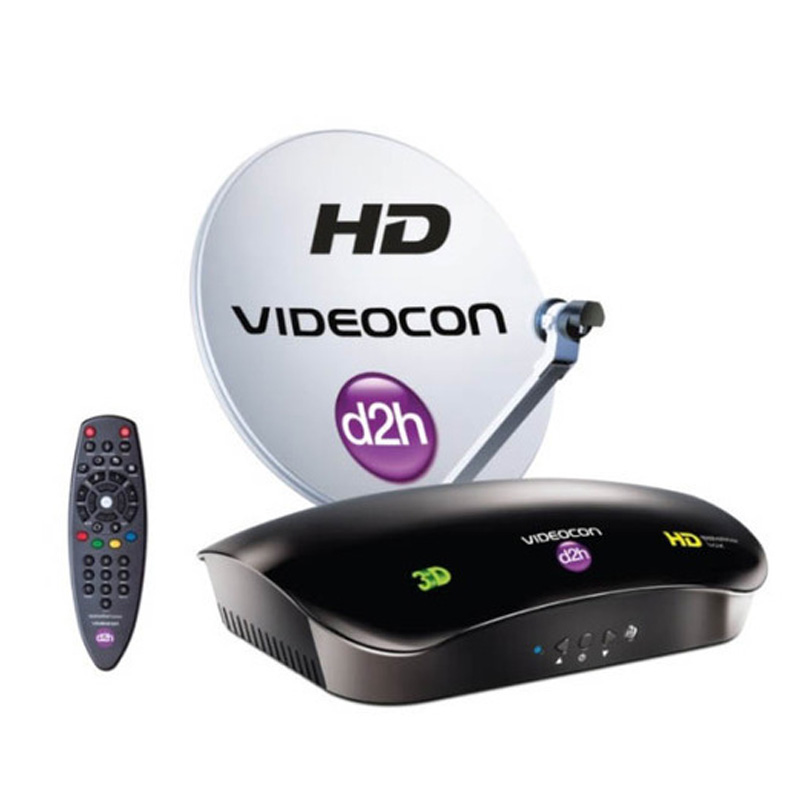
    MUMBAI: Bharat Business Channel, the Videocon Group‘s direct-to-home (DTH) television service provider under the brand Videocon d2h, plans to spend Rs 4.88 billion of the Rs 7 billion it intends to raise from an initial public offering to purchase set-top-boxes (STBs) and associated equipment.

    Videocon d2h will purchase two million STBs, outdoor units and accessories from Trend Electronics Ltd (TEL), a Videocon Group company, during the financial year 2014.

    Videocon d2h will buy from TEL 1.6 million standard definition STBs at Rs 1,400 per piece, 0.4 million high definition STBs at Rs 1,700 per piece and two million outdoor units and accessories at Rs 627 per unit.

    Videocon d2h expects 7-8 per cent of new DTH subscribers to purchase HD subscription packages. Approximately 30 television channels are available in HD apart from sports and movie channels.

    Videocon d2h brand owner Bharat Business Channel has 6.62 million gross subscribers (including inactive subscribers) as of 30 September 2012. The company started operations in July 2009.

    The company has filed a draft prospectus with the Securities and Exchange Board of India (Sebi) for its IPO and would be listing its shares on the Bombay Stock Exchange.

    Videocon d2h will use Rs 695.85 million of the IPO proceeds to repay or prepay part of its debt from banks and the remaining for general corporate purposes.

    As of October 31, 2012, Bharat Business Channel had outstanding secured indebtedness of Rs 16.62 billion from banks and indebtedness of another Rs 2.25 billion from Videocon Industries.

    The company plans to raise Rs 500 million through sale of equity before the IPO. If the pre-IPO placement is completed, the public issue size will be reduced to the extent of such placement, subject to the public issue size constituting at least 25 per cent of the post-Issue paid-up equity share capital of the company.

    All of Bharat Business Channel‘s secured loans are either guaranteed or supported through undertakings by Videocon Industries.

    The company incurred losses for the six months ended September 30, 2012 and the financial years 2012, 2011 and 2010 of Rs 2.70 billion, Rs 4.82 billion, Rs 5.28 billion and Rs 1.31 billion, respectively. For the financial years 2011 and 2010, it had negative cash flows from operating activities of Rs 1.18 billion and Rs 504.26 million, respectively.

    As of September 30, 2012, the company had a negative net worth of Rs 5.89 billion.

    The company said its auditors have noted that despite the erosion of our net worth and the fact that our accumulated losses exceeded the paid-up share capital, the financial statements have been prepared on a going concern basis.

  • Trai asked to expedite views on govt entities in cable TV after Jayalalitha letter

    Trai asked to expedite views on govt entities in cable TV after Jayalalitha letter

    MUMBAI: The Information & Broadcasting ministry has asked the Telecom Regulatory Authority of India (Trai) to expedite the process of re-examining granting of Digital Addressable System (DAS) licence to a government or government-owned entity.

    The move comes in the wake of Tamil Nadu Chief Minister J Jayalalitha writing to Prime Minister Manmohan Singh to expedite the matter of granting DAS licence to the state government-owned cable distribution company Arasu Cable TV Corporation, which has been hanging fire for more than five months.

    "There is a larger question. I am aware of the concerns raised by the Tamil Nadu Chief Minister. The Members of Parliament have also come and met me. That is why we have requested the TRAI chairperson to expedite their consideration… so that we can take a conclusive decision at the earliest," I&B minister Manish Tewari said.

    "We have referred the matter back to the TRAI for reconsideration as to whether the state government or the central government entities should be allowed in the broadcasting or the distribution business," Tewari added.

    Arasu, the dominant MSO in Tamil Nadu, applied for DAS licence on 5 July but is yet to get the licence as the government is mulling whether or not to grant broadcasting or the distribution licences to government-owned entities.

    The government has till date issued DAS licence to 11 MSOs in Chennai.

    While acknowledging that Arasu was granted a license in 2008, he said that there was a recommendation from Trai which doesn‘t allow state government or their instrumentalities to enter distribution or in the broadcasting business.

    Arasu has already placed orders for the supply of Set Top Boxes (STBs), Conditional Access System and Subscriber Management System and erection of Head-End at a cost of about Rs 500 million.

    Arasu, which was lying defunct under the DMK regime, was revived by AIADMK government after it stormed to power in April last year.

    It commenced cable TV services in all the 31 Districts of Tamil Nadu on 2 September, 2011 barring Chennai, which was a conditional access system area.

    Arasu Cable is providing 100 channels to the subscribers at a cost of Rs 70 per month per subscriber. It has 23,000 local cable operators in its network with a subscriber base of six million.

  • Trai seeks views on carriage & placement fees and carriage of minimum channels

    Trai seeks views on carriage & placement fees and carriage of minimum channels

    MUMBAI: The Telecom Regulatory Authority of India (Trai) has issued a consultation paper seeking comments from all stakeholders on placement and carriage fees and also over the requirements of minimum channel carrying capacity to be set up by MSOs.

    These three provisions in the Interconnection Regulations have been set aside by the Telecom Disputes Settlement & Appellate Tribunal (Tdsat) on petitions by MSOs.

    The consultation paper issued on Thursday also attempts to make amendments to the Tariff Order applicable for addressable systems – both MSOs and direct-to-home (DTH) services, through the consultation process. Trai has sought responses from stakeholders on its plan to link the prices of channel bouquets and individual (or a-la-carte) channels, to make it mandatory for provision of both free-to-air and pay channels on a-la-carte basis and to restrict offer of channels requiring special type of STBs only on a-la-carte basis or as part of separate bouquets that consists of only those category of channels that require a particular type of specialised STB.

    Trai has called for submission of views and reasons thereof by all the stakeholders by 11 January.

    Responses Sought on following issues related to amendments to the Interconnection Regulations:

    Whether the following proviso should be introduced in the clause 3(2): "provided that the provisions of this sub-regulation shall not apply in the case of a multi-system operator, which seeks signals of a particular TV channel from a broadcaster, while at the same time demanding carriage fee for carrying that channel on its distribution platform."

    Clause 3(2) has safeguards with regard to charging of carriage fee: (1) Carriage fee to be transparently declared in the RIO of the MSO, (2) The carriage fee is to be uniformly charged (3) The carriage fee not to be revised upwardly for a minimum period of 2 years, and (4) The details of the carriage fee are to be filed with the Authority and the Authority has a right to intervene in cases it deems fit.

    Trai said if any of the stakeholder is against this provisions, it should state the reasons thereof.

    (a) Whether there is a need to specify certain minimum channel carrying capacity for the MSOs in the interconnection regulations for DAS.

    (b) If yes, what should be the different categories (example cities/town/rural area) of areas and the minimum channel carrying capacity for each area.

    Whether there is a need for regulating the placement fee in all the Digital Addressable Systems. If so, how it should be regulated. The stakeholders have been asked to submit their comments with justifications.

    Responses sought on following Issues related to amendments to the Tariff Order applicable for Addressable Systems:

    Trai has suggested (a) a ceiling on the a-la-carte rates of pay channels forming part of bouquet(s) which shall not exceed three times the ascribed value of the pay channel in the bouquet and (b) that the a-la-carte rates of pay channels forming part of bouquet(s) shall not exceed two times the a-la carte rate of the channel offered by the broadcaster at wholesale rates for addressable systems.

    The stakeholders have been asked to offer their comments on the above conditions to prevent perverse a-la-carte pricing of the pay channels being offered as part of the bouquet(s). The stakeholders can also submit any other formulation that can achieve the same objective, along with its justification.

    To deletion of the word "Pay" to make it mandatory to offer both free-to-air and pay channels on a-la-carte basis. Trai calls it: "Freedom to choose the channel(s) on a-la-carte and/or bouquet(s)."

    Whether the channels that require special type of STB be offered only on a-la-carte basis or as part of separate bouquets that consists of only those channels that require a particular type of specialised STB.
  • Seagate announces new drive for DVRs

    Seagate announces new drive for DVRs

    MUMBAI: Seagate Technology which offers hard drives and storage solutions has announced the Seagate Video 2.5 HDD, a 2.5-inch drive specifically engineered for use in 24/7 video applications like digital video recorders (DVRs), set-top boxes (STBs), and surveillance applications.

    The company says that the product focuses on three areas of importance to manufacturers – high reliability, acoustics, and energy efficiency. Featuring reliability, the drive has an annual failure rate of approximately 0.55, based on current configurations, enabling it to keep product in the field longer while reducing the cost of field deployment and maintaining customer retention. It also boasts 24/7 operation capabilities in extended temperature ranges and enhanced acoustics for near silent operation – features crucial for consumer electronics and video applications.

    The Video 2.5 HDD provides home entertainment manufacturers one and two disk, cost-optimized solutions for today‘s high-definition (HD) video recording applications. Featuring capacities up to 500 GB, manufacturers can benefit from its lower-power performance and slim form factor without sacrificing the streaming capabilities or reliability of Seagate‘s 3.5-inch video drive. Its low power consumption, 24×7 operation, and support of up to 12 streams of simultaneous HD content also make it ideal for surveillance DVR applications.

    Seagate VP marketing Scott Horn said, "We pioneered the HDD video market more than a decade ago and as such are leveraging our vast knowledge of this technology to bring consumers the most reliable video drive in the world. The CE industry has extremely specific criteria and needs when it comes to storage and the Video 2.5 HDD is built to meet and exceed their rigorous demands."

    The living-room environment requires superior acoustic management to limit audible distractions during operation of DVRs and STBs and the Video 2.5 HDD enables designers to build the quietest home entertainment systems possible. Operating below the range of audible sound for the human ear at just 22db, the drive provides optimized acoustics for home entertainment components.

    Maintaining Seagate‘s goal of delivering sustainable products, the drive reduces packaging materials by 53 percent and overall freight up to 30 percent, over previous 3.5-inch offerings, by efficiently packing and shipping more units with fewer materials than larger drives. It also contributes to sustainable energy initiatives by achieving a 55 percent improvement in power savings over comparable 3.5-inch offerings, enabling system integrators to meet aggressive new energy requirements. The Seagate Video 2.5 HDD is built without the use of harmful chemicals like the fire retardant bromide and is PVC free.