Tag: STB

  • New technology simplifies collection for cable ops

    New technology simplifies collection for cable ops

    MUMBAI: Even as industry prepares for phase III of digitisation, here comes a technology that is likely to get more than a warm welcome from cable operators.

    UPASS, a front-end automation for the cable sector and mobility solutions provider, has announced that it has successfully integrated with the subscriber management system of Media Nucleus; a development set to change the collection system. While Kottayam-based Star Vision Cable Networks is the first LCO to use the integrated solution, Media Nucleus is in talks with three other operators for installing the solution to their systems.

    It was at the recently concluded SCaT that the collaboration took place. “We finished the integration and also showcased a part of it during SCaT,” informed Media Nucleus director Santosh Nair. He explained the working of the solution as: “Each subscriber will have an ID, subscriber number or name that will be stored in the subscriber database. Once the subscriber pays the monthly fees, the collection agent will type it on the mobile phone that has all the details relating to the package etc. Also, there is a Bluetooth printer connected to this device, which will help him print a receipt immediately.  The same data will also be sent to the database, which clears the subscriber’s outstanding amount.”

    Technically speaking, UPASS’s cloud model acts as data bridge between the mobile device and the SMS server. There is an option for collection entries to be made either in cash or cheque and the relevant data is passed on to the SMS server in real-time.

    UPASS managing director Ravindra Deshmukh said: “We are excited that Media Nucleus and UPASS are collaborating to help operators overcome the challenges of billing and collection hurdles by providing data in real-time as trusted and actionable information. Our system benefits end users quickly and with self-service, regardless of data volumes and variety, or whether the data is on-premise or in the cloud.”

    The advantages of the solution are three-fold. One, it will make the collection process easier. Two, it will make the system more transparent and help MSOs with instant data on subscribers and revenue collected per day. Three, it is more economical, since it can be used even on a simple Rs 500 mobile phone.

    Nair said every operator had collection issues and with this system in place, “MSOs will just have to follow up on the data. They will get instant information, unlike earlier, when LCOs would collect data and sometimes, not even reveal it. The information will give an upper hand to MSOs as well, who can show it to their investors.”

    The new solution will help both the MSOs and LCOs by making collection easier, says Santosh Nair Explained Media Nucleus director technology and delivery Rajiv Tomer: “We had been providing the core solution of subscriber management solution and were looking at integration services to enable collection at the ground level become a part of our solution to our clients.  UPASS, having an industry benchmark solution, gave us the right option to be a go-to-market, providing end-to-end technology with a single integrated platform. We have enabled it in such a way that operators can provide the basic handset to the collection agents, which gets integrated with our SMS.”

    The solution will be available to operators at a one-time investment of Rs 2500. This apart, “the operator will have to pay less than Re 1 per transaction per month,” informed Nair, adding, “We will be meeting operators from Pune next week. We have been getting a good response for the technology.”

    Maharashtra Cable Operators Federation president Arvind Prabhoo said the technology would address the biggest problem of digitisation, which is collection. “The cost of collection for the operator is approximately Rs 25. Also, there is a huge process involved with it- right from collecting money from each subscriber to putting the data on computer etc. The solution will reduce this burden and make the system more transparent.”

    “Rs 2500 is just 10 customers for an operator, so it is very economical for them. Also, getting two-three handhelds will also reduce their burden. As for the MSO, they have for long wanted a transparent system, which they can achieve through this,” Prabhoo said.

    The UPASS solution claims that it provides customer data capture and STB activation in real time, channel/package activation from the LMO phone as well. 
  • TRAI meets MCOF’s Prabhoo on LMO issues

    TRAI meets MCOF’s Prabhoo on LMO issues

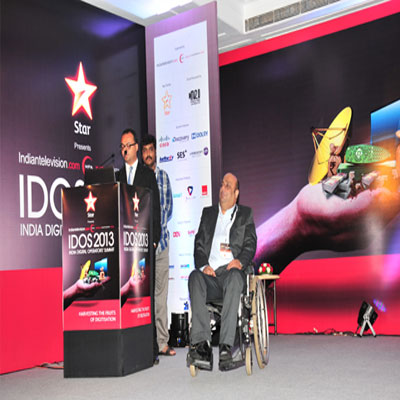
    MUMBAI: It was at indiantelevision.com & MPA’s (Media Partners Asia) India Digital Operators Summit (IDOS) that Mumbai-based cable TV heavyweight and MCOF (Maharashtra Cable Operators Federation) president Arvind Prabhoo first presented to India’s cable, DTH, regulatory and broadcast leaders the local cable TV operators’ perspective. Everyone was impressed including Telecom Regulatory Authority of India (TRAI)’s advisor N. Parameswaran, who said the regulatory body would like him to come and present at its headquarters in Delhi.

    The wheelchair bound Prabhoo did exactly that three days ago on 6 November when he presented the LMO’s viewpoint once again before the TRAI’s N Parmeshwaran, Wasi Ahmed, S K Singhal and G S Kesarwani.

    Prabhoo once again highlighted the issues that are bothering the LMOs and the role they can play in phase III and phase IV of digitisation.

    “There is a crisis in DAS I and II areas regarding LMO-MSO relationship,” says Prabhoo, adding that it was important to address the problems. Prabhoo has told TRAI that his major concern was the MSO-LMO-subscriber relationship. Subscribers belong to LMOs who collect money from them and give it to the MSOs who in turn pass it on to broadcasters. However, the MSOs believe that subscribers belong to them and not to the LMOs.

    Prabhoo also raised the issue of uneven pricing of packages in cities like Mumbai. He wants all MSOs to have similar packages so that it is convenient for a subscriber to migrate and that will even make money collection easier. At the same time, clarity on a-la-carte channels is missing even today.

    He also brought to fore the issue regarding the ownership of set top boxes (STBs). He thinks it is a big bone of contention. “On one hand, customers think they own the STBs, while the MSOs think that STBs are their property,” he remarks. “This disallows customers from migrating from one provider to another using the same STB when he shifts to a new place with a new provider and if he does, the LCO is held responsible for it. Because of this, many subscribers are shifting from cable to DTH, as it seems to be more convenient.”

    Since there’s no fixed revenue sharing deal between the MSOs and LMOs, Prabhoo came up with few solutions. He suggested that for an FTA (Free to Air) channel the sharing between MSO and LMO can be 20:80, while for pay channels it can be 75:25.

    He also suggested that the price of a STB can be reduced and a free basic broadband service be given to communicate by mail. Another suggestion was to rename the LMOs as Horizontal Connectivity Provider Agency (HCPA).

    Prabhoo also brought to TRAI’s notice the issue of entertainment tax. The 42B licenses of LMOs have not been renewed since two to three years and yet the tax is being collected from them. TRAI seemed to be unaware about the issue and has told to get in touch with the chief secretary of Maharashtra soon. They also said that as a regulator they had done everything they could.
    “There needs to be more interaction between LMO, MSO, broadcaster and TRAI if we need a proactive solution to address all our concerns,” concludes Prabhoo.

  • Howrah’s DAS travails

    Howrah’s DAS travails

    KOLKATA: To DAS or not to DAS? That is the question in West Bengal’s Howrah.
    Howrah, which is among those regions that are under phase II of DAS, has seen the implementation of DAS in only around 40 per cent of the million or so cable TV connections that dot the district.

    The remaining 60 per cent continues to be stuck watching analogue cable TV services. Subscribers have been loathe to pick up a set top box (STB) as local cable TV operators have clearly assured them that they fall under Howrah district and not Howrah city.

    A Howrah resident Rohan Das when contacted says: “I don’t mind buying the set top box (STB) but my operator has informed that it is not necessary to buy now.”

    Sources further add that not enough is being done to monitor or police how cable TV is making the transition to digital in Howrah. Cable Operators Digitisation Committee of the Association of Cable Operators convener Swapan Chowdhury confirmed that there is slackness in the DAS rollout.

    Manthan director Sudip Ghosh pointed out that things are doing well in “Howrah city which has around five lakh cable TV connections; most of these have been digitized. More over the CAF collection has also been completed by many, while some are doing it now.”

    Manthan has installed 20-25 per cent STBs in the region out of the four to five lakh STBs. Ghosh clarified that “Howrah district and Howrah city are different.”

    SitiCable Kolkata director Suresh Sethia also confirmed that the company has completed the work as mandated by TRAI. He however added, “TRAI has to define whether the border of Howrah falls under phase II or not. The regulator has to clarify the DAS area.”

    SitiCable controls a sizeable chunk of cable TV viewers in the region. It should be noted that broadcast regulator TRAI has extended the deadline for collection of Consumer Application Forms (CAF) in phase II cities including Howrah by MSOs to 15 November from its previous deadline of 30 September. MSOs operating in Howrah vicinity confirm that they will meet the deadline.

    While cable TV analysts say that CAF forms have not been received by many cable subscribers due to festive holidays – firstly, Durga Puja, and now Kali Puja followed by Diwali. “LCOs and MSOs will be back to work only after these are over.” 

  • Siti Cable reports significant improvement in EBIDTA in Q2-2014

    Siti Cable reports significant improvement in EBIDTA in Q2-2014

    BENGALURU:  The painstaking rollout of the digitisation of India’s cable TV ecosystem and the depreciation of the rupee are taking their toll – both positively and negatively –  on national MSOs.  Take the case of Essel Group company Siti Cable Network Limited (Siti Cable), the erstwhile Wire and Wireless (India) Ltd (WWIL). Its latest quarter (Q2-2014) shows that the company has shown an improvement in its EBIDTA to Rs 32.98 crore which is 74 per cent higher than the previous corresponding quarter last fiscal.  It’s bottomline is however stained red in  Q2-2014 with a negative PAT of Rs 21.87 crore, almost double (173 per cent) the negative PAT of Rs (-12.65 ) crore the company had reported during the corresponding quarter (Q2-2013) last year. However, the loss is lower than the Rs (-27.07) crore for the immediate preceding quarter (Q1-2014).  


    Let us look at some other numbers for Siti Cable in Q2-2014


    Operating revenue in Siti Cable’s case is primarily generated from subscriber related income especially from digitisation, income from bandwidth charges, ad income, STB activation charges and other operating revenues.


    The cable network reported total revenue of Rs 162.94 crore for Q2-2014, which was 56.7 per cent more than the Rs 103.98 crore for Q2-2013 and 12.9 per cent more than the Rs 144.29 crore in Q1-2014.


    Total expenses for Q2-2014 at Rs 129.96 crore were 57 per cent more than the Rs 85.06 crore for Q2-2013 and 15 per cent higher than the Rs 113.1 crore for Q1-2014.


    Siti Cable claims that it is the only MSO in India which shares 25 per cent carriage revenue with local cable operators. A big chunk of its expense is carriage sharing, pay channel and related costs in the latest quarter. The company spent Rs 65.46 crore in Q2-2014 towards this head, which was 21.7 per cent higher than the Rs 53.03 crore for Q2-2013 and six per cent more than the Rs 61.8 crore during the immediate preceding quarter Q1-2014.


     Siti Cable’s main operating expenses include cost of goods and services, employees’ cost, selling and distribution expenses and other expenditure. Its major cost item was cost of goods and services recorded as Rs 82.7 crore during the quarter (Q2-2014)  representing 51 per cent of the total revenue in comparison to Rs 62.15 crore in Q2-2013, representing 60 per cent of the total revenue.


    Siti Cable’s Selling and Distribution Expense for Q2-2014 at Rs 12.42 crore was more than quadruple (424 per cent) the Rs 2.93 crore for Q2-2013 and more than double (225 per cent) the Rs 5.51 crore for Q1-2014. Its administrative expense at Rs 25.44 crore for Q2-2014 was almost double (95 per cent more) than the Rs 13.03 crore for Q2-2013 and 22.7 per cent more than the Rs 20.74 crore in Q1-2014.


    Another major cost item was foreign exchange fluctuation due to Rupee devaluation during the Q2-2014, which has been recorded at Rs 7.69 crore, says the company; the corresponding figure for Q1-2014 was Rs 5.11 crore.


    Siti Cable chairman Subash Chandra said, “The industry is at an inflexion point where creating the valuable ecosystem for all stake holders be it consumer, broadcaster or last mile local cable operators will ensure sustainable growth. We see immense opportunity for digitization in India in the years ahead.”


    Siti Cable CEO V D Wadhwa said, “We are pleased to report a healthy performance in the second quarter of the year, our total revenue and EBITDA in the quarter grew to Rs 162.9 crore and Rs 33 crore, a growth of 57 per cent and 74 per cent respectively over last fiscal. Our growth was largely due to greater focus on subscription revenue despite low seeding of STB’s during the quarter. We shall continue to focus on business expansion and revenue maximization in coming quarter.”


    Siti Cable informed BSE that the board of directors of the company at its meeting held on 23 October 2013, inter-alia, has approved the appointment of Anil Kumar Malhotra as manager of the company for a period of three years.

  • Siti Cable reports significant improvement in EBIDTA in Q2-2014

    Siti Cable reports significant improvement in EBIDTA in Q2-2014

    BENGALURU:  The painstaking rollout of the digitisation of India’s cable TV ecosystem and the depreciation of the rupee are taking their toll – both positively and negatively –  on national MSOs.  Take the case of Essel Group company Siti Cable Network Limited (Siti Cable), the erstwhile Wire and Wireless (India) Ltd (WWIL). Its latest quarter (Q2-2014) shows that the company has shown an improvement in its EBIDTA to Rs 32.98 crore which is 74 per cent higher than the previous corresponding quarter last fiscal.  It’s bottomline is however stained red in  Q2-2014 with a negative PAT of Rs 21.87 crore, almost double (173 per cent) the negative PAT of Rs (-12.65 ) crore the company had reported during the corresponding quarter (Q2-2013) last year. However, the loss is lower than the Rs (-27.07) crore for the immediate preceding quarter (Q1-2014).  


    Let us look at some other numbers for Siti Cable in Q2-2014


    Operating revenue in Siti Cable’s case is primarily generated from subscriber related income especially from digitisation, income from bandwidth charges, ad income, STB activation charges and other operating revenues.


    The cable network reported total revenue of Rs 162.94 crore for Q2-2014, which was 56.7 per cent more than the Rs 103.98 crore for Q2-2013 and 12.9 per cent more than the Rs 144.29 crore in Q1-2014.


    Total expenses for Q2-2014 at Rs 129.96 crore were 57 per cent more than the Rs 85.06 crore for Q2-2013 and 15 per cent higher than the Rs 113.1 crore for Q1-2014.


    Siti Cable claims that it is the only MSO in India which shares 25 per cent carriage revenue with local cable operators. A big chunk of its expense is carriage sharing, pay channel and related costs in the latest quarter. The company spent Rs 65.46 crore in Q2-2014 towards this head, which was 21.7 per cent higher than the Rs 53.03 crore for Q2-2013 and six per cent more than the Rs 61.8 crore during the immediate preceding quarter Q1-2014.


     Siti Cable’s main operating expenses include cost of goods and services, employees’ cost, selling and distribution expenses and other expenditure. Its major cost item was cost of goods and services recorded as Rs 82.7 crore during the quarter (Q2-2014)  representing 51 per cent of the total revenue in comparison to Rs 62.15 crore in Q2-2013, representing 60 per cent of the total revenue.


    Siti Cable’s Selling and Distribution Expense for Q2-2014 at Rs 12.42 crore was more than quadruple (424 per cent) the Rs 2.93 crore for Q2-2013 and more than double (225 per cent) the Rs 5.51 crore for Q1-2014. Its administrative expense at Rs 25.44 crore for Q2-2014 was almost double (95 per cent more) than the Rs 13.03 crore for Q2-2013 and 22.7 per cent more than the Rs 20.74 crore in Q1-2014.


    Another major cost item was foreign exchange fluctuation due to Rupee devaluation during the Q2-2014, which has been recorded at Rs 7.69 crore, says the company; the corresponding figure for Q1-2014 was Rs 5.11 crore.


    Siti Cable chairman Subash Chandra said, “The industry is at an inflexion point where creating the valuable ecosystem for all stake holders be it consumer, broadcaster or last mile local cable operators will ensure sustainable growth. We see immense opportunity for digitization in India in the years ahead.”


    Siti Cable CEO V D Wadhwa said, “We are pleased to report a healthy performance in the second quarter of the year, our total revenue and EBITDA in the quarter grew to Rs 162.9 crore and Rs 33 crore, a growth of 57 per cent and 74 per cent respectively over last fiscal. Our growth was largely due to greater focus on subscription revenue despite low seeding of STB’s during the quarter. We shall continue to focus on business expansion and revenue maximization in coming quarter.”

  • Siti Cable’s Q1-2014 losses almost quintuple Q1-2013 losses

    Siti Cable’s Q1-2014 losses almost quintuple Q1-2013 losses

    BENGALURU: Siti Cable Network Limited (Siti Cable), the erstwhile Wire and Wireless (India) Limited, reported for Q1-2014 a negative PAT of Rs 27.07 crore, almost five times (467 per cent) the negative PAT of Rs 4.77 crore the company had reported during the corresponding quarter (Q1-2013) last year.


    However, Siti Cable’s consolidated operating profit (EBITDA) for Q1-2014 was Rs 31.18 crore as compared to Rs 27.74 crore during corresponding quarter last fiscal, showing a 12.4 per cent growth.


    Siti Cable paid Rs 61.80 crore towards carriage sharing, pay channel and related costs during Q1-2014 as compared to NIL during Q1-2013 and Q4-2013. The cable service provider had paid Rs 234.345 crore towards this expense head during FY-2013.


    Let us look at some of the other results for Q1-2014


    Operating revenue in Siti Cable’s case is primarily generated from subscriber related income especially from Digitisation, income from bandwidth charges, income from advertisements, STB activation charges and other operating revenues.


    The company reported a 27 per cent growth in consolidated revenues to Rs 144.29 crore for Q4-2014 as compared to Rs 113.5 crore for Q1-2013. Siti Cable’s consolidated revenues for Q1-2014 were slightly lower (2.1 per cent) than the Rs 147.44 crore reported for Q4-2013.


    Siti Cable’s main operating expenses include cost of goods and services, employees’ cost, selling and distribution expenses and other expenditure. Its major cost item was cost of goods and services recorded as Rs 77.83 crore during the quarter representing 54 per cent of the total revenue in comparison to Rs 60.04 crore in Q1-2014, representing 53 per cent of the total revenue. Another major cost item was Foreign Exchange Fluctuation due to Rupee devaluation during the Q1-2014, which has been recorded by Rs 5.11 crore.


    Total operating costs for Q1-2014 at Rs 113.1 crore (78 per cent of consolidated revenues for Q1-2014) were higher by 32 per cent than the Rs 857.6 crore (76 per cent of consolidated revenues for Q1-2013) for the corresponding quarter last year, and were 6.9 per cent lower than the total operating costs of Rs 121.42 crore reported for Q4-2013.


    Employee benefit costs for Q1-2014 at Rs 9.11 crore, though two per cent lower than the Rs 9.29 crore reported for Q4-2013, were 17.3 per cent higher than the Rs 7.69 crore reported for the corresponding quarter last year (Q1-2013).


    Other expenses for Q1-2014 at Rs 39.90 crore also saw a steep reduction of 48.3 per cent as compared to the Rs 77.18 crore in Q1-2013 and were lower by 67 per cent than the Rs 121.12 crore during Q4-2013.


    Siti Cable paid Rs 26.13 crore towards finance cost for Q1-2014, 48 per cent more than the Rs 17.57 crore it paid in Q1-2013, but 15.4 per cent lower than the Rs 30.9 crore it paid in Q4-2013.


    Siti Cable chairman Subhash Chandra said, “The on-going digital revolution in Indian cable television distribution industry is set to bring in all round gains for the entire industry value chain. Digitisation will transform the way television is seen, consumed and marketed. For customers, digitisation brings an enhanced viewing experience, expanded channel pool, power to choose and pay only for the chosen channels. For MSOs like Siti Cable, the digitisation will bring digitally addressable consumer base leading to higher revenues and profitability.”


    Despite uncertain environment Siti Cable has done well in this quarter and has driven higher revenue through relentless focus on operational excellence. Siti Cable is EBITDA positive in this quarter as well, which clearly indicates continuing growth path”, Chandra said.


    Siti Cable executive director and CEO V D Wadhwa said, “Our focus area is to increase the collection of monthly subscription revenues from the ground. We made healthy progress in metros cities where we are present. We are far ahead of other operators in terms of subscriber wise billing and collection. In phase-II cities the collection are likely to improve in coming quarters. We have also collected significant numbers of Subscriber Application form (SAF) and Channel/Package selection form from Delhi & Mumbai.”


    Wadhwa added, “Digitisation marks the beginning of an organised and professional way of conducting business and opens up possibilities of multiplier revenues from television and numerous value added services (VAS). The encouraging growth trends make us more confident of further accelerating the growth momentum and serving the cable TV viewing needs of many more million Indians on Siti Cable Network.”


  • Manthan Broadband to invest big bucks to expand reach

    Manthan Broadband to invest big bucks to expand reach

    KOLKATA: The kingpin of the Multi System Operator (MSO) ecosystem in the East, Manthan Broadband Services has drawn an aggressive plan to secure its current position. Aware of the competitive market, this Kolkata-headquartered MSO plans to invest Rs 450 crore by 2014 end to upgrade its cable TV operations and also expand its reach in the eastern region.

    The cable operator which planned to install around 36 lakh Set Top Boxes (STBs) in the entire eastern region including Kolkata, rest of Bengal, Orissa, Jharkhand, Meghalaya and Assam by September 2014, has already installed around seven lakh STBs in Kolkata.

    While for the subscribers’ management system (SMS), Manthan is likely to sign a contract with an international brand soon. “We will soon be signing Rs 120 crore contract for the management work for 10 years. We will also invest to build best infrastructure which includes network, encryption, SMS and call centre,” informed Manthan Broadband Services director Sudip Ghosh.

    Created way back in 2002 through a merger of the operations of nine cable TV operators, Manthan has indeed come a long way.  The MSO caters to 30 lakh households, serving a greater part of Kolkata and West Bengal and other eastern regions with four digital headends and 40 analogue headends. It has more than 2,500 cable operator partners in the region.

    Manthan had earlier earmarked an investment of Rs 600 crore, out of which around Rs 150 core was spent in the markets of Kolkata and Jharkhand. “We will now spend Rs 450 crore in other states of the east. The promoters would invest a part of it and Manthan is looking at raising debt from banks,” added Ghosh.

    The company has a market share of 34 -35 per cent in the installed STBs offering 350 channels in Kolkata Metropolitan Area (KMA). Manthan has penetration in areas like Kolkata, Howrah, Hooghly, Baraipur and Chandannagar among others.

    On the company’s plans to hit the capital market with its initial public offering (IPO) to fund its expansion plans in the next two to three years, Manthan Broadband Services director Gurmeet Singh said, “We have started the backend work. There are many regulatory issues which we have to look at.”

    Also on the back of Indian rupee depreciating against the US dollar and Manthan as a company is likely to import more than 30 lakh STBs in the next one year. Ghosh said the import of the boxes have become costlier now as compared to when the rupee to dollar rate was Rs 46 – Rs 47 a dollar.

    “Even if the import cost for us is Rs 2,000, we give a subsidy to consumers and sell at Rs 999,” he hinted, saying that apart from other cable operators, it has a tough war to fight with direct-to-home (DTH) players. “We feel a hit at the revenue but it does not strike the bottom line up since we are in other added services too,” he said.

    Singh said that the company imports STBs mainly from China and added that if any local manufacturer sets up an assembling unit upon getting benefits and incentives from the government, it would help the industry people immensely.

    Manthan currently employs more than 300 people. This number will go up by another 30 per cent by 2014 end. The MSO currently serves more than 25 lakh households in the states of eastern region. “Of this we have around 18 lakh analogue cable connections,” he informed.

    According to sources, by September 2014, the rest of Bengal will witness 50 lakh STB installations. Also Orissa will see seven lakh installations, Jharkhand eight lakh-10 lakh, Meghalaya and Assam will register five lakh STB installations each.

    Commenting on the reach of Manthan, Hathway Cable and Datacom MD and CEO Jagdish Kumar G Pillai said, “The fragmented cable TV is likely to see some consolidation and the same applies to eastern region too. Manthan’s investment plans in the eastern region shows its commitment.”

    While aother MSO on the condition of anonymity stated: “Manthan had been performing well in the past but with digitisation kicking in, it has lost its hold on the market and dropped in its position. In terms of box supply and system integration, the company could not stand at par with its competitors. In fact recently due to funding issues, it has become difficult for it to operate in locations like Mednipur, Kharagpur and Bankura among other locations.”

    Industry sources feel that the company in order to move ahead and achieve such ambitious plans will have to work jointly with other companies, going forward.

  • Comcast Cable and Time Warner Cable join to manage software in STBs

    Comcast Cable and Time Warner Cable join to manage software in STBs

    NEW DELHI: Comcast Cable and Time Warner Cable have joined hands to manage the Reference Design Kit (RDK) software being used in set-top boxes (STBs).

    The new venture RDK Management will manage the RDK licensing, community support and training, as well as code management.

    Comcast will contribute RDK components into the new entity, including the RDK code and specifications, related intellectual property rights, associated contracts and licenses which will be transitioned to the RDK Management.

    The RDK is a pre-integrated software bundle, developed and licensed by Comcast to create a common framework for powering tru2way, IP or hybrid STBs and gateway devices and accelerate the deployment of video services.

    RDK works with the CableLabs OCAP Reference Implementation software along with other open source components.

    The new entity will provide continuity with the existing licensing program and continue to offer a licensing program similar to the existing program. In addition, the new entity will set up an expanded support program to provide technical support to RDK licensees as operators more broadly deploy the RDK solution.

    Since its introduction in early 2012, more than 100 licensees have joined the RDK community, including OEMs, systems integrators, SOCs and software vendors as well as MVPDs to create a community of innovators focused on bringing rich, multi-screen TV home entertainment experiences to consumers faster.

  • Hathway EBITDA more than triples in Q1-2014 as compared to Q1-2013

    Hathway EBITDA more than triples in Q1-2014 as compared to Q1-2013

    BENGALURU: Indian Multi Systems Operator (MSO) Hathway Cable & Datacom Limited (Hathway) reported EBITDA (including other income) of Rs 77.04 crore for Q1-2014, more than three times (3.23 times) the Rs 23.84 crore for Q1-2013, but 14 per cent lower than the EBITDA of Rs 88.47 crore for Q4-2013.


    NOTE: As per Hathway management’s estimates, EBITDA inclusive of Hathway’s economic interest in the EBITDA of its several subsidiaries/JVs/associate companies would aggregate to about Rs 96.0 crore for Q1-2014.


    Let us look at Hathway’s other figures for Q1-2014


    Hathway reported a total income from operations of Rs 232.65 crore in Q1-2014 which was 70.74 per cent higher than the Rs 132.26 crore in Q1-2013 and almost flat (just 0.64 per cent more) income as compared to the Rs 231.18 crore for Q4-2013.


    Hathway’s expense for Q1-2014 at Rs 156.56 crore was 39.14 per cent more than the Rs 112.42 crore for Q1-2013 and 9.7 per cent more than the Rs 142.71 crore for Q4-2013. Hathway’s purchase of stock in trade in Q1-2014 at Rs 0.67 crore was one fifth (5.075 times less) the Rs 3.4 crore in Q1-2013 and only about 41 per cent of the Rs 1.63 crore for Q4-2013.


    Staff cost of Rs 13.77 crore for Q1-2014 was 35.53 per cent higher than the Rs 10.16 crore in Q1-2013 and 31.02 per cent higher than the Rs 10.51 crore for Q4-2013.


    Paycost of Rs 58.45 crore for Q1-2014 was 50.22 per cent more than the Rs 38.91 crore for Q1-2013 and 18.08 per cent more than the Rs 49.5 crore for Q4-2013.


    Other expense at Rs 83.67 crore for Q1-2014 was 39.57 per cent more than the Rs 59.95 crore for the corresponding quarter of the previous year (Q1-2013) and 3.2 per cent more than the Rs 81.06 crore for the immediate preceding quarter (Q4-2013).


    PAT for Q1-2014 at Rs 5.32 crore was however less than one fifth the PAT of Rs 28.27 crore for Q4-2013. In Q4-2013, Hathway had a foreign exchange gain of Rs 5.73 crore, while in Q1-2014; it had incurred a foreign exchange loss of Rs 8.32 crore. Finance cost at Rs 21.61 crore for Q1-2014 was 53.6 per cent more than the Rs 14.07 crore in Q4-2013 and 62 per cent more than the Rs 13.32 crore for Q1-2013.


    For Q1-2013, Hathway had reported a loss of Rs (-15.87) crore. The foreign exchange loss incurred by Hathway in Q1-2013 was Rs 4.56 crore.


    Hathway’s income from operations mainly consists of subscription income from cable TV and broadband business, carriage and placement income, advertisement income, activation income from STB’s and other operating income.


    Hathway says that it continued to deploy STBs in Q1-2014 and as of June, 2013 along with its JV partners had cumulatively deployed over 0.7 crore STBs all over India and approximately 0.18 crore STBs in Q1-2014. The company says that it has deployed approximately 0.25 crore STBs in Phase I and approximately 0.41 crore STBs in Phase II areas till June 2013, which it says, makes it the biggest MSO in Phase I and II areas.


    Hathway informs that it has adequate STBs in hand and continues to roll out its services in major Phase III and IV towns.


    Hathway further says that as per MIB (Ministry of Information and Broadcasting, Government of India) reports cable television is clearly the preferred choice in Phase II cities also with a near 90 per cent share of digital STBs seeded after 15 February 2013 being seeded by cable MSOs.


    In its broadband update Hathway states that the gross additions to its broadband subscriber base was around 27,000 for the Q1-2014. Hathway’s cumulative subscriber base stood at approximately 4,24,000. As on end June 2013, the company says that it has tested its DOCSIS 3 technology for its broadband subscribers in certain cities. With DAS being successfully implemented Hathway expects to increase its broadband customer base with bundled schemes that it plans to offer shortly at competitive rates.


    Hathway says that it is in the process of raising funds to the tune of Rs 149.8 crore from its promoters and new shareholders through preferential allotment. The shares of face value Rs10 each are to be issued at a premium of Rs 274 per share (adding up to Rs 284 per share).

  • Kolkata’s cable TV ecosystem struggles to cope with CAF

    Kolkata’s cable TV ecosystem struggles to cope with CAF

    KOLKATA: Ritika Saha, a city based Gujarati engineer, recently installed a set top box (STB) at a cost of Rs 1,400 and has still not been able to mention in writing about her preference for channels. The reason: her cable operator has not yet approached her with a consumer application form (CAF).

    “I hardly stay at home. For news and updates, a cheaper DAS package is more than enough for me. If the local cable operator does not provide me with the form, I shall not have access to cable TV post August on account of no fault of mine,” says Saha, adding that her hectic schedule does not allow her to follow up with her operator.

    “Had I placed the order for the STB eight months ago, it would have cost me just about Rs 800. The prices of these STBs have sky rocketed in the past few months,” she rues, little knowing that the depreciation of the Indian rupee against the US dollar has led to the rise in import cost of these boxes.

    There are many in Kolkata who have not yet filled up their CAFs. This is the situation even after TRAI’s order to the cable TV ecosystem in Kolkata undergoing digitisation to complete the process of collecting subscriber details before 23 August Saha is not the only one. There are many in Kolkata who have not yet filled up their CAFs. This is the situation even after the Telecom Regulatory Authority of India’s (TRAI) order to the cable TV ecosystem in Kolkata undergoing digitisation to complete the process of collecting subscriber details before 23 August. “TRAI plans to crack the whip against any MSO that fails to abide by the deadline of submitting CAFs,” informs a Kolkata based cable operator.

    CAF collection rate in Kolkata currently is about 25 per cent and should be around 60-75 per cent by 28 August,” says Siticable Kolkata director Suresh Sethia. “The implementation of DAS and its performance is not upto the mark in Kolkata,” adds media analyst Namit Dave.

    According to a report issued by TRAI last month, only 20 per cent of the city’s subscriber details and choices for channels were put up in the subscriber management system as part of the digitisation process.

    “The MSOs and cable operators are likely to miss the deadline,” says the Association of Cable Operators’ cable operators digitalisation committee convener Swapan Chowdhury. “Achieving the target by 30 August is next to impossible. Kolkata will miss the deadline,” he adds.

    “There are many other teething problems. One, not many CAFs were in supply; Two, from past seven days only the MSOs are supplying the forms to people and three even feeding in customer details is time consuming. For an exercise so massive and with so many loopholes in the process, more time is needed,” informs Chowdhury.

    While one local service provider complains of not receiving any subscriber information and management forms from his MSO, there is another MSO who says that his cable operator continues to be lethargic and has been loathe to do anything even after the forms were given to him.

    Both the MSOs and LCOs will appeal to the TRAI to extend the deadline by 15-20 daysm Both, MSOs and LCOs will appeal to the TRAI to extend the deadline by 15-20 days. “The operators and MSOs can send the subscribers’ choices of package till 31 August. And the billing can start from 1 September,” informs Sethia. “Though the MSOs will not switch off channels, the decision has been left on TRAI.”

    While 30 lakh STBs have already been installed in Kolkata, the steeper sticker prices – following the rupees downslide- makes digitisation of another 200,000 cable TV homes in Kolkata nigh impossible.

    With the depreciation of the Indian rupee to Rs 61.70 (approx) against the dollar, the import price of STBs has gone up by Rs 500-Rs 600. And this extra burden has been passed on by the distributors to consumers, says Chowdhury, adding that for some in the low income category in Kolkata, digital cable TV looks unaffordable now. “Despite the extension of the digitisation deadline, 100 per cent achievement is not possible,” he informs.

    Abhishek Cable director Rajendra Prasad Agarwal, feels that out of 35 lakh cable TV subscribers, around 30 lakh have taken STBs. “Houses with four to five cable connections have not yet taken up set top boxes,” he says. Contradicting this claim is Sethia whose estimate is that 27 lakh homes have been digitised with no analog connections left in the metropolitan area of the city.With 11.5 lakh cable TV subscribers, SitiCable is a giant in Kolkata which offers 410 channels.

    Manthan Broadband Services, another big daddy has a 34-35 per cent marketshare with a 350 channel service. . “We have 6.5 lakh to seven lakh subscribers. The CAF rate is around 25 per cent as of now,” informs Manthan Broadband Services director Sudip Ghosh. According to industry sources Hathway Cable and Datacom and Digicable Network (India) have jointly achieved 5.5 lakh installations so far.

    While the current average revenue per user in Kolkata is around Rs 180-Rs 200, cable operators in south Kolkata charge anything from Rs 350–Rs 475. What’s more is that operators in Shyam Bazaar and north Kolkata have been complaining that customers who are used to monthly subscription fees of Rs 120 are yelping about a hike to Rs 150. MSOs get to keep only Rs 70 on an average out of what subscribers are paying to local cable operators. “The local operators make huge profits,” informs Ghosh.

    Turfs have been maintained in Kolkata with everyone maintaining their position and no mergers or acquisitions taking place, unlike in the neighbouring states of Shillong, Jaharkhand, Orissa and Assam where there has been a flurry of activity.

    When asked if DTH is making inroads in Kolkata, Chowdhury says, “Since the performance of the DTH is subject to weather conditions, some dissatisfied customers will definitely opt for a digital cable connection. This can happen more so if their queries are not well addressed by the DTH players.”

    So will Kolkata meet the 31 August deadline? Answers Dave, “For the next few weeks nearly 5,000 local cable operators and 14 MSOs, which provide service in DAS area will have a herculean task to perform.”

    Yes it’s something the entire Kolkata cable TV ecosystem will have to jointly and collaboratively work together to achieve. Failing which, cable TV subscribers will see their cable connections cut.