Tag: STB

  • Videocon d2h and Broadcom partner for HD service

    Videocon d2h and Broadcom partner for HD service

    MUMBAI: A few weeks after Videocon d2h familiarised Indians with 4K Ultra HD technology, it has now announced an official deal with Broadcom, which is a leader in semiconductor solutions for wired and wireless communications, for growing its HD service.


    The DTH provider has selected Broadcom’s integrated satellite set top box (STB) system-on-a-chip (SoC) device to power its HD digital video recorder (DVR). Broadcom’s BCM7358 HD satellite STB SoC enables the operator to fasten the deployment of its HD STBs with reduced design complexity, size and cost.


    Videocon d2h’s DVR is capable of recording on a USB device with digital picture quality and 1080p resolution. The HD USB DVR is supported by Broadcom’s BCM7358 single-channel 1080p HD advanced video coding (AVC) satellite receiver chip, featuring a high performance CPU and graphics engine, digital living network alliance (DLNA) connectivity support and advanced security functionality.


    Says Videocon d2h CEO Anil Khera, “The silicon innovation that Broadcom provides has been a key factor in our continued success in delivering rich content to our growing subscriber base. We’re leveraging a variety of Broadcom STB silicon throughout our portfolio and plan to extend our manufacturing capabilities to meet the needs of other cable operators in the region.”


    “The Indian television market is undergoing a major transition and operators such as Videocon d2h are leading the charge in dramatically improving the quality and variety of content delivery,” adds Broadcom India senior director of business development Rajiv Kapur. “As an established leader in STB silicon innovation around the world, Broadcom is delivering the technology required for a growing number of consumers to enjoy more sophisticated features such as HD quality content, digital video recording and on-demand services.”


    IHS Technology states that STB industry revenue will reach a record $ 22.8 billion in 2015, driven largely by growth in emerging markets and subscriber demand for HD content. “As pay-TV operators move to accommodate changes in delivery platforms and formats, including the adoption of HD, STB shipments will continue to rise, hitting record levels for the next few years,” said IHS Technology director for connected home research Daniel Simmons.


    “Technology-based service differentiation is becoming increasingly important for pay-TV operators in emerging regions, as these markets begin to mature and saturate. Transitioning subscribers from SD to HD at minimal cost will be critical for driving further pay-TV growth in emerging markets.”

  • Indigenous STBs, courtesy ABS Productions

    Indigenous STBs, courtesy ABS Productions

    MUMBAI: Efforts have been on to spur Indian companies to manufacture cable TV set top boxes (STB) domestically – the government has been encouraging and nudging the private sector to do so.  The Mumbai-based ABS Seven Star group – which runs a health channel and a cable TV network in Mumbai – seems to have taken the bait. It has set up a new company called ABS Productions Pvt Ltd which has designed standard definition (SD), high definition (HD) and hybrid STBS – both MPEG2 and MPEG4 – and contracted Videocon group company Trend Electronics to manufacture them at its Aurangabad plant.


    “Trend Electronics also makes STBs for Videocond2h and it has very good experience doing so. Hence we have struck up a manufacturing alliance with it,” says ABS Seven Star CMD Atul Saraf.


    Saraf has hired a 20 member team for the STB manufacturing initiative – 14 of these are working on the software while the rest will be looking after the hardware. While the manufacturing unit has a 30,000 STBs per day capacity,  its first order will roll out of the assembly lines by 15 May.  “The first order is for our cable TV network ABS Seven Star, which is close to 50,000 boxes,” he says.


    Saraf points out that close to $1 million has been pumped into R&D while designing the STBs locally.


    Saraf is a firm believer of indigenous manufacturing of STBs. “When the government mandated implementation of digitisation, it was since then, that I was against importing boxes from abroad. These plain vanilla Chinese boxes are of poor quality and need to be replaced every couple of years. Also, a big disadvantage is that there are no service centers,” he says.


    He reveals that local manufacturing will ensure better service standards apart from generating employment.  “Phase III and IV markets will need approximately 100 million STBs.I hope to capture about 5 per cent of this by next year” he says.


    Based on the Broadcom chipset – ensuring better video quality – the higher end boxes will have a recording facility as well, apart from being able to deliver internet.  The Hybrid STB will also deliver a video on demand service. “We are not tying up with any OTT platform for this, but will create our own platform to facilitate the VOD service,” says he.


    In order to ensure better service, 200 Videocon d2h service centers, across India, have been roped in to bandage and spruce up the STBs should they face any problems in close proximity to their installation.


    ABS Productions has priced the  MPEG2 SD box at  Rs 1200-1300, the MPEG4 SD box at Rs 1400-1600, the MPEG4 HD box at  Rs 2,300-2,400 while Hybrid Box is priced at  Rs 3,500-3,800. 

  • China’s Shenzhen Coship plans to set up STB making unit in India

    China’s Shenzhen Coship plans to set up STB making unit in India

    KOLKATA: China’s Shenzhen Coship Electronics Co Ltd, a cable television and broadband equipment maker, plans to set up a set-top box (STB) manufacturing facility in India.


    “We are planning to set up a set-top box manufacturing facility with a capacity to make 2.5 lakh units a month in India to start with and the scale up the operations on the back of demand,” Vipan Kumar Sharma, Country Manager, India, Coship, told indiantelevision.com, on the sidelines of Cable TV Show 2014, an exhibition of cable television industry in Kolkata.


    “We will see and evaluate the benefits and policies of the government”, he said.


    Sharma further said the company might look at a place near Delhi, in Chennai or around Pune. “We already have our technical office at Chennai and our commercial office is in Delhi,” he said. 


    The proposed STB manufacturing unit would employ about 1,000 workers, he said.


    Sharma did not disclose the investments that would be required for setting up the STB manufacturing facility but said the average cost of producing one STB would be around $22.


    Shenzhen Coship, which has already supplied 10 million STBs in India since 2007, is planning to export to India another 5 million STBs by the end of 2014.


    The company’s clients include Siticable, Kerala Communicators Cable Limited (KCCL) and Sun Direct DTH.


    Sharma said it is also in talks with Videocon d2h for supplying its STBs.


    He said demand for STBs in phase III and phase IV of digitisation would be the growth driver for the company in India. He, however, said in rural and semi-urban areas, availability of funds is an issue for the multi-system operators (MSO) and local cable operators (LCOs).


    As per the Information and Broadcasting Ministry estimates, a total of 75 million STBs would be required for installation in the third and fourth phases of digitisation. The deadline for the third phase of digitisation is 30 September and for the fourth phase is 31 December.


    Shenzen Coship has three factories in China with combined capacity to manufacture 25 million STBs  — both SD and HD — a year.

  • Cable TV prediction: US to phase out STBs by 2015

    Cable TV prediction: US to phase out STBs by 2015

    MUMBAI: The year 2013 was a big year for the Indian cable TV industry. The country that was till now running on analogue signals opened up to digitization, even if it was in few regions. While we can celebrate this achievement as we enter into 2014 and also gear up for the phase III and phase IV of digitisation, there is some food for thought coming from the US cable industry for the Indian cable TV industry. 

    According to the CEO of TV Predictions, Inc Phillip Swann, the Americans will see phasing out of cable TV set top boxes (STBs) by 2015 and witness an upsurge in USB dongle or CableCard like products that can be connected to a TV and signals can be received from the operator’s facility. And all this to reduce the expenses incurred due to huge sums paid to the box manufacturers.

    The predictions suggest that consumers would anytime prefer the simplicity and convenience of cable dongle over the set top boxes. That apart, the cable TV operators will also appreciate the savings.

    When the Google Chromecast Net TV device was launched, it was surely a step ahead in the cable TV industry. The dongle is one of the best-selling electronic products at Amazon.com currently.
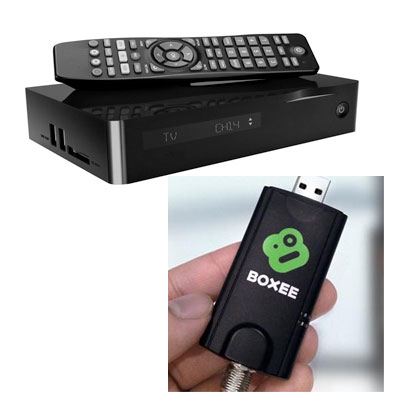
    Some of the dongles available in the market currently are Boxee’s Live TV dongle and TBS USB DVB-C TV Stick amongst others.

    The predictions make it pretty obvious that the Americans are moving at a faster pace in the sector. Another point to ponder over here is that while in India the cable TV operators are still struggling to seed the STBs, another country is in the process of its phase out and switch to a compact technology.

    It’s not that in India, technology hasn’t improved. The direct-to-home (DTH) operators by introducing new and better facilities like recording as per preference, authority to choose channels with their high-definition (HD) boxes has already become a threat to the Indian cable TV operators who have just started seeding the standard definition STB with no added feature.

    With the world shrinking, it would not take the consumers much time to get exposed to the advancement happening in the TV/Cable industry the world over. The Indian consumers would soon wish for a compatible technology like the dongle. The New Year seems to be an alarm for the cable operators to start preparing for the huge shift.

  • NationalChip’s STB solutions for Indian digitisation

    NationalChip’s STB solutions for Indian digitisation

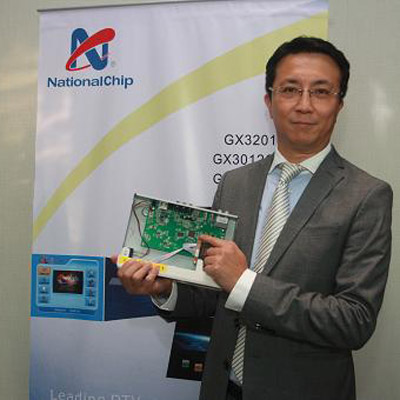
    MUMBAI: When it comes to technology, China is one of the leading Asian countries in the world that comes to mind. So it’s no surprise when leading China based IC developer and manufacturer of digital TV solutions, NationalChip, launched new set top box chips (system-on-chip) for the Indian market.

    The company is looking to increase its market share in India’s fast-growing set-top box (STB) chip manufacturing market. As part of its growth plans, NationalChip has launched new set-top box chips (system-on-chip) for the Indian market.

    The company’s new HD STB chip is based on GX3201 that delivers HD content at over 1000 MIPS CPU performance, 1080P HD decoding and security implementation. To cater to the mid to lower end subscribers that forms the major chunk of the Indian cable TV universe, the company has launched SD STB chip based on GX3001R or GX3012Q that offers high speed CPU for user experience as well as true colour display for enhanced picture quality.

    According to NationalChip, these chips can support advanced security implementation that are demanded by most prominent conditional access vendors (CAS) and MSOs.

    “India has nearly 6,000 MSOs whereas there are only 300 MSOs in China. There is a huge opportunity for us to tap into this large cable TV market and we have the resources, the name and the technological advancement to cater to it,” says NationalChip VP Patrick Dou.

    NationalChip’s HD solution also supports OTT application that will allow subscribers to access online video content through home network internet. Currently the chip allows the viewer to use Wi-Fi connectivity to access sites such as YouTube to experience HD videos on their larger screens.

    “We are telling the MSOs here that they can secure subscription revenue and at the same time provide value added services to their subscribers with our HD solution that supports OTT application,” adds Dou.

    After having been in the industry since its inception in 2001 the chip manufacturer is looking to expand into new markets. It has identified India as one of the key markets apart from southeast Asia and Europe, Middle East & Africa (EMEA). NationalChip, which began operations in India from 2011, is working with local Indian STB manufacturers by providing them with software support to develop STBs locally.

    The company claims that its chips have been officially authorised by many CAS companies including NDS (Now under Cisco), Sumavision, NSTV, ABV, Logic Eastern, Ensurity, E-CAS, and Only One CAS. With the new product offering, the STB chip manufacturer is looking to work with other major CAS vendors in the Indian market.

    “We have a leading product lineup, turnkey solutions, track record and technical capability to support sustainable development of the Indian market,” says an optimistic Dou. On the business front, Dou says that the company has shipped 1.5 million chips to the Indian market in the last two years.

    “This might not seem like a big number but for a company which has been in the market for just two years, it’s quite an achievement,” stresses Dou. Dou is looking to up NationalChip’s market share to 30-35 per cent in the next four years, up from the current five per cent share.

    However, that will be a tough task as the STB chips market is currently dominated by big players like French Italian MNC STMicroelectronics, America’s Broadcom, and Taiwan’s ALi Corporation.

    To achieve this growth, the company is expanding to other cities in the country. Currently having its office only in Delhi it soon has plans to branch out to Mumbai, Pune, Hyderabad, Bengaluru, Ahmadabad and Chennai. The company currently has Pune-headquartered Millennium Semiconductors as its only distributor in India.

    “We have been in this business for nearly two decades now and have the right know how to take NationalChip and its advanced technology to the leading MSOs in the country. We are sure that with its advanced security feature as well as great capability to showcase HD content all leading MSOs will be more than willing to join hands with NationalChip and us,” says Millennium Semiconductor Sr.GM Technical Operation Sunil Deshmukh.

    Being the first local Chinese company to develop digital TV IC solutions since 2001, NationalChip is also the first and only Chinese IC company to achieve big deployment to support digitalisation phases in India.

  • MSO Alliance launches ad campaign on monthly billing

    MSO Alliance launches ad campaign on monthly billing

    MUMBAI: Soon consumers will find bills coming to them for using cable TV service. And the message will be reaching them loud and clear through a print campaign that was launched today in the New Delhi edition of The Times of India and Navbharat Times. The print campaign which aims at educating consumers of monthly billing reads: “Attention Digital Cable TV subscribers- Now pay as per your selected channel pack. Get a cable TV bill from your MSO every month starting December 2013.”

    The campaign is an initiative of the multi-system operator (MSO) Alliance that comprises national players: DEN Networks, Hathway Cable & Datacom, Siti Digital Cable Television and InCableNet. The MSO Alliance also has announced that the subscribers who have got a set top box (STB), submitted the ‘Know-Your-Client’ details and channel package selection, will get a bill for their cable TV service every month. The first bill will be generated for the month of November. The new facility has been introduced in keeping with the Telecom Regulatory Authority of India’s (TRAI) regulation on starting gross billing from December.    

    “This move is important as it will ensure that there are no additional or random charges levied on the subscribers. Our viewers will thus pay only for what they watch and they must insist on a bill from their local cable operator or MSO at the time of monthly payment,” said MSO Alliance secretary and DEN Networks CEO S.N Sharma. 

    As per the TRAI regulations, subscribers will get 15 days from the date of the bill to make their payment. In case the subscriber fails to make the payment after the expiry of the due date of payment, the MSO or the affiliate LCO has the right to charge interest on the outstanding amount.

    The Union Government and the TRAI had rolled out a four-phased plan for digitisation of cable TV across India early last year. Phases I & II of this process covering Delhi, Mumbai, Kolkata and 38 other major cities have already been completed. According to the Ministry of Information and Broadcasting, over 26 million STBs were installed in these cities, over 70 per cent of which were by digital cable companies.

  • TRAI asks DTH operators to provide interoperability of STBs

    TRAI asks DTH operators to provide interoperability of STBs

    MUMBAI: In September this year, the licence of India’s oldest DTH provider Dish TV was to expire after a period of 10 years and then there was no provision for an extension. On 1 October the regulator came out with a consultation paper and on 14 November it issued a supplementary paper. 
    With the last date to provide feedback approaching, TRAI had an open house discussion (OHD) on 9 December with the leading DTH providers give suggestions on the consultation and supplementary papers released by TRAI.

    During the OHD, TRAI chairman Rahul Khullar said that set top boxes (STBs) should be inter-operable for the end consumer, either commercially or technically. He also told operators that the viewers should have the option to use the same STBs if they wished to change their service provider. But if operators found it to be a challenging prospect then they should be given an option of returning the STBs to their provider in exchange for money that could help them buy a new one.

    The Information and Broadcasting (I & B) Ministry had directed TRAI to set up new guidelines for obtaining DTH licenses in India. The OHD between TRAI and DTH players was to frame new recommendations regarding the same.

    During the OHD, DTH operators were asked to give views on issues such as entry fee and quantum thereof, licence fee, conditions governing cross holdings and period of extension. 

    Representatives from the industry said that new licences should be given for a reasonably long duration and the government should have the power to cancel these if operators violate rules.

    Khullar conveyed to operators that once the new licence rules come into effect, they will have two options: one, to either continue under their earlier terms and conditions till their licence expires or two, to change to the new system.

    Khullar has told DTH operators that they can submit any additional points till Friday.

  • LCOs give their views to parliamentary committee on IT

    LCOs give their views to parliamentary committee on IT

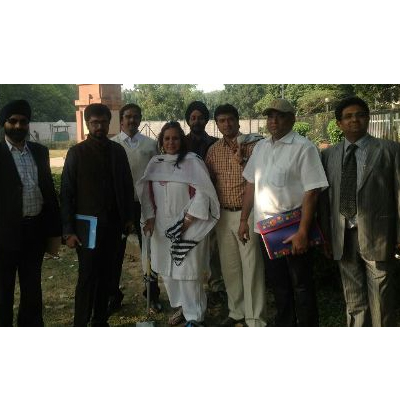
    MUMBAI: If one thought that the local cable operators (LCOs) would give up without a good fight for their rights, one was surely mistaken. When around 10 LCOs from across states met the Parliamentary Committee on Information and Technology today in New Delhi, they ensured that their voices were heard on digital addressable systems (DAS). The meeting that went on for two and half hours was attended by 20 members of parliament.


    While each LCO was heard by the committee, it was ABS 7 Star CMD Atul Saraf who said that the LCOs were not against digitisation, but against mandated digitisation. “Digitisation should be voluntary,” he said in the meeting.


    The LCOs represented the trials and tribulations of the cable TV consumer to the committee. “We spoke on consumer interest and what they had gained with digitisation,” informed Cable Operators Federation of India president Roop Sharma. The operators opined that the consumer should be able to choose his set top box (STB).


    Apart from Saraf and Sharma, the others who were a part of the committee included: Pramod Pandya, Swapan Chowdhary, Jeevan Khanna, Ajeet Singh, Sudhish Kumar, GS Oberoi, Gaurav Gupta, Chandradeep Bhatia and Paramjit Singh.


    “The consumer should be able to buy portable STBs which gives him access to internet, video-on-demand and other facilities. Why should every consumer be burdened with the same quality of STB. There should be a provision that if someone wants to buy an expensive STB they should be able to do so,” said Sharma.


    The operators also suggested that since it is the consumer who pays for the STB, they should be allowed to own it. “Also consumer should have the option to change STBs and his service provider. Currently if Hathway seeds a STB in a consumer’s house, they cannot switch to another MSO,” said Sharma to the committee.


    The LCOs also raised concern over their own existence. Many in the meeting felt that the LCOs have been left at the mercy of the MSOs. They also said that the process of billing and the power to switch off STBs should be with the LCOs and not MSOs.


    The operators put a point stating that TRAI should first successfully complete digitisation of phase I and II and then start the work in phase III and IV.


    On the issue of entertainment tax, the LCO representatives opined that there should be uniformity in taxation throughout. “Also we told them that entertainment tax should be collected per household and not per TV set,” informed Sharma.


    The MPs asked the LCOs for solutions to the issues with digitisation, to which the LCOs suggested that the long pending Broadcasting Bill and the DTH Act needs to be brought in to regulate and control the  the broadcasters and DTH players respectively.


    Also a point on implementation of vertical monopoly and cross media holding on immediate basis, before going ahead with further digitisation was made.
    The committee will also be meeting Information and Broadcasting Minister Manish Tewari in a couple of days, after which they will come out with a recommendation which will be submitted to the I&B Ministry.

  • TRAI issues supplementary consultation paper on DTH licensing

    TRAI issues supplementary consultation paper on DTH licensing

    MUMBAI: The Telecom Regulatory Authority of India (TRAI) issued a supplementary consultation paper on issues related to new DTH licences late 14 November evening.

    This follows up the consultation paper it had issued on 1 October on issue/extension of DTH licences at the behest of the Ministry of Information and Broadcasting (I&B).

    The new consultation paper seeks to get the views of industry stakeholders on the comprehensive review of the provisions in the existing DTH guidelines it is seeking to undertake.

    Among those are:

    Cross-holdings and control between a DTH licencee, broadcasting entities and TV channel distribution entities.

     
    It is seeking to modify clause 1.4 of the DTH guidelines from “The licencee shall not allow broadcasting companies and/or cable network companies to collectively hold 20 per cent of the total paid up equity in its company at any time during the licence period” to “the licencee shall not allow any entity controlling broadcasting and/or any TV channel distribution operator to control it…”

    Clause 1.5 is proposed to be changed from “The licencee company  not to hold or own more than 20 per cent equity share in a broadcasting and/or cable networking company”  to “any entity controlling the licencee should not control any broadcasting and/or any TV channel distribution operator.”

    The term TV channel distribution operator covers operators of cable TV, DTH, HITS, and IPTV.
    The consultation paper has defined what “control” can mean:

    *A company owns 20 per cent of another firm directly or indirectly though associate companies, subsidiaries and/or relatives

    * De jure control through having not less than 50 per cent of voting rights in second company; appointing 50 per cent of the members of the board of directors; controlling the management of affairs through decision-making in strategic affairs of the second company and appointment of key personnel.

    * Exercises de facto control by being a party to agreements, contracts or understandings…that enable it to control business decisions in the second company.

    The TRAI has said that if one were to go with this definition of control, then amendments will have to be made to laws relating to cable TV operators, broadcasters, HITS operators and some DTH operators will have to be given time to comply with the new provisions.
    Interoperability of DTH STBs

    The TRAI has stated that Clause 7.1 of the guidelines is open to interpretation. It states: “The open architecture (non-proprietary) set top box which will ensure technical compatibility and effective interoperability amongst different DTH providers shall have such specifications as laid down by the government from time to time.”

     
    It has emphasised that this could be modified to put the onus on the Bureau of Indian Standards and the government shall ensure that “the BIS specifications are based on open architecture and should incorporate the latest technological developments with respect to interoperability of DTH STBs taking into account its practicality as well as international experience.”

    Additionally, it states that “the BIS specifications should clearly specify the contours of interoperability between the STBs based on different technological standards.”

    Finally, it has pointed out that the licence conditions should be amended to mandate compliance to BIS specifications for the STB to be offered to all new subscribers within a suitable period of say six months.”

    Licence Fee:

    It has recommended that the licence fee and the definition of adjusted gross revenues (AGR) for the DTH sector be aligned with that specified in the Unified Licence. And that the licence fee may be charged at eight per cent of AGR. The AGR could be calculated “by excluding service tax on provision of service tax and sales tax actually paid to the government if gross revenue had included components of sales tax and service tax.”

    Under the current guidelines, DTH licencees have to pay an initial non-refundable entry fee of Rs 10 crore before the issue of the letter of intent by the licensor, and an annual fee of 10 per cent of its gross revenue in the particular financial year after the issue of the wireless operational licence by the WPC. The TRAI had in 2004 recommended that this be reduced by two per cent on AGR, and later to six per cent of gross revenues in 2008.

    Migration Fee:

    It has recommended an imposition of an entry fee on existing and new DTH operators moving to the unified licence regime. Existing operators should be given a rebate commensurate to the value of the licence for the remaining licence period, and that may be termed as the migration fee. The rebate could be calculated.

    The TRAI has asked stakeholders to give their views on the recommendations issued today by 25 November. Stakeholders also have to give their recommendations on the consultation paper dated 1 October 2013.

  • Q2-2014 Den Networks reports 35 per cent higher y-o-y cable revenues

    Q2-2014 Den Networks reports 35 per cent higher y-o-y cable revenues

    BENGALURU: Indian cable TV distribution company Den Networks Limited (Den Networks) continues to rake in the moolah with 32.4 per cent higher total revenue of Rs 271.88 crore for Q2-2014 as compared to the Rs 205.26 crore for Q2-2013 and almost flat (1.8 per cent higher) as compared to the Rs 268.69 crore for Q1-2014. The company reported a 35 per cent y-o-y jump in cable revenue for Q2-2014 at Rs 258.93 crore as compared to the Rs 192.51 crore in the corresponding quarter of last year (Q2-2013).


    Note:  
    Den Network claims that on account of a reporting policy change, w.e.f. Q2-2014, all revenue figures exclude ‘Other Income’ which is reported separately after EBITDA, and that past period figures have also been adjusted to this effect to make it comparable. Variance/s has/have been observed between the company’s investor updates of Q1-2014 and Q2-2014 and the statements filed by the company with the stock exchanges. The differences, if any between the financial analysis for Q1-2014 and Q2-2014 must be attributed to the varied accounting methodology/communications by the company. The current analysis is being done based on the updates for Q2-2014 received.


    The company reported a 35 per cent y-o-y jump in cable revenue for Q2-2014 at Rs 258.93 crore as compared to the Rs 192.51 crore in the corresponding quarter of last year (Q2-2013) on the back of strong growth in subscription revenues and higher placement revenues despite lower activation revenues in the current quarter.


    Q-o-q, the company’s investor update for Q2-2014 says that its cable business revenue was almost the same as the Rs 256.41 crore for Q1-2014, a figure that is Rs 6.44 crore (about 2.45 per cent) lower than the Rs 262.85 crore the company had reported in its Q1-2014 investor update (ref Note above).


    The company says that it has deployed about four lakh set top boxes (STBs) during Q2-2014 and claims a digital subscriber base of around five million in DAS phase I and II cities and about eight million analogue subscribers in DAS phase III and IV markets.


    Further, Den Networks believes that the next big opportunity after full digitisation of cable TV is offering high speed broadband services to its subscribers. The company announced plans to launch its broadband service offering by late Q4, FY 2013-14 (February 2014).


    Let us look at the other Q2-2014 figures announced by Den Networks


    The company has reported breakup of its cable revenue as Rs 99.11 crore as subscription revenue, Rs 119.90 crore as placement revenue and Rs 29.43 crore as digital activation revenue.


    Den Network’s consolidated EBITDA for Q2 -2014 was Rs 87.70 crore vs. Rs 38.73 crore in Q2-2013, a 126 per cent leap y-o-y, and eight per cent higher than the Rs 80.94 crore for Q1-2014.


    Correspondingly, its cable business EDITDA for Q2-2014 at Rs 85.05 crore was 134 per cent higher than the Rs 36.36 crore for Q2-2013 and seven per cent higher than the Rs 79.39 crore for Q1-2014.


    Consolidated PAT at Rs 11.18 crore for Q2-2014 was up by about 10 per cent higher as compared to the PAT of Rs 10.15 crore for Q1-2014. The company says that its cable business PAT stood at Rs 9.64 crore for Q2-2014.


    Consolidated expense at Rs 224.13 crore for Q2-2014 was 21.54 per cent higher than the Rs 184.66 crore for Q2-2013, and 2.3 per cent lower than the Rs 229.69 crore for Q1-2014. Den Network paid 18.4 per cent more towards content cost at Rs 90.54 crore for Q2-2014 as compared to the Rs 76.5 crore in Q2-2013 and the 6.5 per cent higher than the Rs 85.01 crore in Q1-2014.


    Depreciation and amortisation cost at Rs 37.04 crore for Q2-2013 was more than double (2.14 times) the Rs 17.29 crore for Q2-2013 and 11.47 per cent higher than the Rs 33.23 crore for Q1-2014. Den Networks has reported a foreign exchange loss of Rs 5.96 crore in its cable business for 2-2014.
    Den Networks claims that there is a significant demand for its digital cable services in its existing Phase III and IV markets. The pace of seeding is expected to pick up in the next few months. It also says that it is witnessing a lot of interest from smaller players (MSOs and LCOs) from Phases III and IV areas looking to align themselves with it and is receiving several such requests on a regular basis.