Tag: STB

  • “Govt. should reconsider extending excise duty concessions to consumer durables”: Anirudh Dhoot

    “Govt. should reconsider extending excise duty concessions to consumer durables”: Anirudh Dhoot

    MUMBAI: With the government of India deciding to withdraw the sops offered to the consumer durable industry, the move has come as a shocker to the sector.


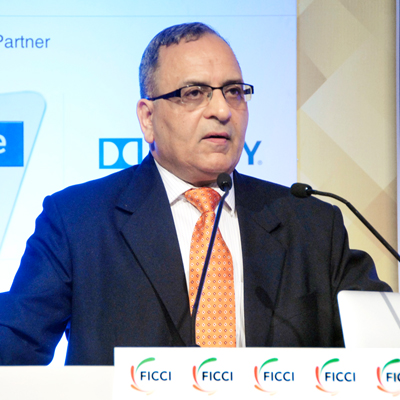
    Commenting on the decision taken by the government, Videocon director Anirudh Dhoot said, “The Indian government’s decision to not extend excise duty concession has come as a setback to the consumer durable industry.”


    Dhoot further requested that the government should reconsider the increased excise duty sops in the upcoming budget as it will give a boost to manufacturing and bring revival to the sector.


    Speaking about Prime Minister Narendra Modi’s highly anticipated and pet project, ‘Make in India’ campaign, Dhoot said that the country was capable enough to hold up the “Make in India” campaign. But going further he cautioned that in order to achieve this vision, the foremost action was to formulate policies and grant infrastructural support favouring electronic components and panel manufacturing in India. Dhoot’s Direct To Home (DTH) company Videocon d2h is also into the manufacturing of indigenous Set Top Boxes (STB).


    “We expect better guidelines and framework that strengthens consumer durable industry and benefits homegrown produce from this budget,” Dhoot added.


    On a concluding note Dhoot feels that at an overall level, the Union Budget needs to adopt a pragmatic approach towards addressing the needs of the consumer durable sector to manage its fiscal position. “This can take India back to a higher growth trajectory,” declared Dhoot.

  • Calcutta HC extends Digicable Comm interim stay till 6 April

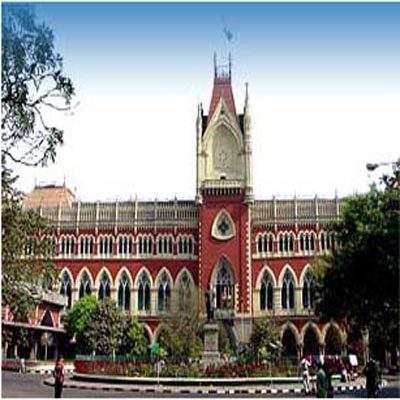
    Calcutta HC extends Digicable Comm interim stay till 6 April

    KOLKATA: Granting relief to Digicable Comm once again, the Calcutta High Court has extended the interim stay till 6 April 2015.

    Previously, the Calcutta High Court had put the stay order on the cancellation of the registration of Kolkata-based multi-system operator (MSOs) till 17 January 2015, citing that Digicable Comm, having been in business for quite some time and would suffer irreparable loss and injury, unless appropriate ad-interim protection is granted to them.

    Jishnu Saha, a senior advocate for the petitioners, did hope for an extension of the interim order. An extension was also sought to file the affidavit-in reply since affidavit-in-opposition had been filed out of time. “Interim order already granted is extended till 6 April, 2015 or until further order, whichever is earlier,” said DigiCableComm Services operations and technology VP Lokesh Agarwal, quoting the letter.

    As hoped, time to file affidavit-in-reply has been extended till 27 January, 2015, he further said.

    It should be noted that in July last year, the Ministry of Information and Broadcasting (MIB) had cancelled the registration of Digicable Comm. Services.

    Digicable Comm, a joint venture (JV) between Digicable (51 per cent) and Kolkata-headquartered Multicar Group (49 per cent) was formed in the year 2009, to gain the foothold in the West Bengal market.

    Digicable Comm is hopeful that after appealing to the Ministry of Home Affairs (MHA) and moving to the High Court, the decision would be in favour of the MSO. “We are happy to get the stay order extended from the High Court. Slowly we will expand in the region,” added Agarwal.

    MHA cancelled the company’s permanent registration on 18 July due to denial of security clearance.

    Cable TV experts when asked to comment on the reason for the denial of security clearance by authorities said this might be due to Amit Nag who was the then chief executive officer (CEO) and on the board and the application for DAS (digital addressable system) had his signature.

    Now, going forward what happened with the MSO here is not hidden from anyone. Nag not only resigned from Digicable but had convinced around 412 of the 600 cable operators affiliated to Digi Cable to switch to Hathway along with him. More than 400 LCOs affiliated to DigiCable when switched to Hathway did not think that they would have to spend sleepless nights and some even behind bars, cable TV sources said.

    At present, Digicable Com which boasted more than four lakh connections in the KM area is left with less than 50,000 set top boxes (STBs).

    “We will follow the mandates. We are hopeful that the authorities would consider the minute details presented by us,” said Agarwal.

  • Kolkata LMOs in talks with STB and headend vendors

    Kolkata LMOs in talks with STB and headend vendors

    KOLKATA: The last mile owners (LMOs) in Kolkata are gearing up to stake claim on their subscribers. Apart from uniting and setting up their own control room and tie-ups with existing DAS license holders, the LMOs have initiated talks with the STB and headend suppliers and other vendors in India and as well as abroad.


    The LMOs have already made an agreement with a DAS license holder, who will levy a minimum price against every set top box (STB). “Recently, more than 150 LMOs signed the deal. And thousands of LMOs from different MSOs are also showing interest to join in this mission,” says a LMO on the condition of anonymity.


    “The LMOs have already formed a company as they intend to counter the MSO business. We are also trying to take control over our business,” informs Cable Operators Sangram Committee general secretary Apurba Bhattacharya.


    He adds, “It is a survival battle; either we set up our own headend or partner with MSOs. As for the investment, every LMO will put in the amount according to their pockets. In fact, some financiers are also ready to invest in it.” He further explained that the investment would be based on the size of LMO’s network.


    Tying up with existing license holders ensures LMOs power of billing to subscribers, distribution of package according to the choice of subscribers, share of carriage fee and ownership of STBs.


    There are some DAS license holders who might go ahead and increase their topline and bottomline by strengthening their presence.


  • Nodal monitoring units for DAS to be formed by mid-January, task force to meet every month

    Nodal monitoring units for DAS to be formed by mid-January, task force to meet every month

    NEW DELHI: A total of 11 crore set top boxes (STBs) will be needed for the third and final phase of digital addressable system of which only three crore will be for direct-to-home (DTH) platforms.

     
    The Information and Broadcasting Ministry (I&B) says the requirements for phase III have been worked out on the basis of census 2011 data and the compiled data will be sent to state governments for vetting.
     

    The data for TV households is also being collected from the Registrar General and Census Commissioner for verification.

     
    The Ministry, which claims that manufacturers have assured it of adequate supplies of STBs, has constituted a publicity committee and begun issuing advertisements in newspapers and the electronic media in this regard to encourage multi-system operators to place orders.

     
    During the recent task force meeting for the next two phases of DAS, the Ministry said it will facilitate a meeting of manufacturers of indigenous STBs and MSOs in view of complaints by the manufacturers that no orders were being placed for the STBs.

     
    A multi-lingual call centre will be set up by the end of February, and 12 nodal regional monitoring units will begin working by 15 January. The task force will meet every on the second Wednesday of every month.

     
    The task force meeting under the chairmanship of Ministry additional secretary J S Mathur was also addressed by the advisor for DAS Yogendra Pal.

     
    A road map has been prepared by the government for the final two phases, and MSOs have been asked to apply by 21 December this year for licences.

     
    The Home Ministry will clear all security licences within 90 days, the meeting was informed.

     
    Publicity awareness campaigns have also commenced, for which a Publicity Committee has been formed.

     
    The Department of Information Technology is in the process of developing an Indian cable access system that will be ready in a year and will make interoperability of STBs possible. A participant pointed out that there was still the issue of certification involved in the embedment of CAS in set top box manufactured by the domestic STB manufacturers. The integration of CAS with the STB is a time consuming process and indigenous STB manufacturers must clear the apprehensions on this account.

     
    The long pending demand of “C” Form had been resolved to give fillip to domestic manufacturing of STBs.

     
    Interestingly, the Telecom Regulatory Authority of India has not attended any of the two task force meetings, a point noted by several participants. However, Mathur said TRAI was being apprised of the proceedings.

     
    The Ministry officials said that MSOs could simply download the forms for registration and did not have to come to the Ministry.

     
    A participant pointed out that the carriage fee which had fallen initially after announcement of DAS had again shot up. Others said issues relating to billing, packaging and reference interconnect order had still not been ironed out by TRAI.

     
    There was also a reference to entertainment tax, and it was stated by some participants that the Uttar Pradesh Government had sharply raised this tax.


  • MIPCOM 2014: What do buyers want in 4K?

    MIPCOM 2014: What do buyers want in 4K?

    MUMBAI: 4K is on everyone’s mind. Even when Indian direct to home (DTH) players, Videocon d2h and Tata Sky launched their 4K set top boxes (STBs), everyone questioned if there was enough content available in 4K. The same was discussed even at the just concluded MIPCOM 2014 at Cannes in the session ‘What do buyers want in 4K?’


    The session which saw Sky Deutschland EVP programming Gary Davey, France Télévisions director of future media Eric Scherer, Atlantic Productions director of operations Ruth Sessions and Red Bull Media House head of commercial distribution Bernhard Hafenscher speaking on the issue which was moderated by journalist & industry consultant Chris Forrester.


    Talking about the general prospect for 4K in the world, Davey said that a platform like Sky Deutschland is excited about the sea change that content is set to witness. “We will be very active on 4K. While we haven’t decided a launch date as yet, we are committed to it,” said Davey.


    What is interesting is that the take-up for 4K has outperformed even high definition (HD). So, is it the broadcasting push, the industry push or the consumer pull? Said Davey, “According to me, people just love the idea of big screen viewing with higher resolution.”


    For Sessions, content creators today are telling stories for multiple platforms and so a lot of them are filming it in 4K. Atlantic Productions has been filming in 4K for the past four years. “We have always been hungry for resolution and I believe in future proofing. So for the right projects, where we thought that stories that we are saying today will be relevant for the next 10-15 years, we film in 4K,” said Sessions adding that stories benefit when told in 4K.


    Television today has the risk of being over passed by new barbarians-Netflix and by millennial kids. “France TV too, have decided to test with 4K,” added Scherer.


    During the discussion, one thing which came out clearly was that it is sports and sports events which will be most important in 4K. “People can become a part of the sport, when they watch it in 4K. Once the market grows, we will have a lot of content in 4K,” said Hafenscher.


    The other content created in 4K will include high end documentary movies and arts content. “You have to pick the projects for 4K. It needs to mean something and add value,” informed Davey.

    In 3D and 4K quality, there is a lot of information in every shot. “There is so much going on in the image, because of the depth,” said Sessions.


    While content creators are excited about filming in 4K, the extremely high production cost is what keeps them on their toes. “The cost depends on the category of the content. It is expensive, but not multiple of costs. The cost increases also because of multiple use of cameras,” informed Scherer.


    So will 4K percolate to broadcasters? “It will take a little longer than people expect. For a long time, we will be cherry picking the content in 4K. In fact all the promise that ultra HD had made has not been realised as yet,” informed Davey.


    According to the panel, in the next five years, the world could see two-three 4K channels, which would start as special events and then move to a full-fledged channel.
     

  • Ali Corporation aims to sell 20 million chipsets by December 2016

    Ali Corporation aims to sell 20 million chipsets by December 2016

    KOLKATA: Taiwan-headquartered Ali Corporation, a set top box (STB) solution provider, is looking at an order size of between 15 to 20 million chipsets by the end of December 2016.


    “India is a big market and we are looking at it keenly. Compared to other countries, it is different because branding which is important here. Our focus is to build around the brand and the technology in India. In phase III and IV of digitisation, we are eyeing between 15 million and 20 million chipsets,” Ali Corporation country manager Shivani Pratap Singh exclusively told indiantelevision.com.


    Singh was extremely gung-ho about the potential in India as the country’s television ecosystem digitises fully by December 2016.


    With India’s transition from analogue to digital service, many consumers need new, full-featured set-top boxes (STBs) for home viewing. This represents a major opportunity for regional operators and STB manufacturers, as only a portion of the roughly 100 million STBs in consumers’ homes have already been digitised according to published government figures.


    Adding to the STB growth is the trend of consumers placing more than one TV in their homes, as well upgrading from standard definition to high definition.


    The government had previously set a target of digitising the cable TV services in the entire country by December 2014. However Information and Broadcasting Ministry recently issued a notification as per which the deadline for the areas which came in phase III was extended from 30 September 2014 to 31 December 2015 and phase IV for December 2016 as was also first broken by indiantelevision.com.


    “By December 2014, we were looking at 5 million chipsets. Due to the delay in digitisation, the clients also delayed it,” he said. If an order of 2 lakh had been placed, clients have picked up nearly 10000 to 20000 chipsets and left the remaining for later.


    Demand had grown down due to digitisation delay but Singh says that it is always balanced by the international market demand.


    The company supplies chipsets to most of the big players in the industry.


    “We at Ali, have our own system in place; our chip sets are reliable, cost effective and when the technology is upgraded, we keep on updating ourselves,” concluded Singh.

  • Local STB manufacturers confident of meeting target of DAS phase III and IV

    Local STB manufacturers confident of meeting target of DAS phase III and IV

    NEW DELHI: The Information and Broadcasting (I&B) Ministry has been assured by manufacturers of domestic set top boxes (STBs) that they will be able to meet the demand of 11 crore STBs needed for the final two phases of cable television digitisation.


    This assurance was given to I&B Ministry secretary Bimal Julka over the weekend with manufacturers to check the status of indigenous manufacturing of STBs.


    I&B Minister Prakash Javadekar had recently told that it was unfortunate that good quality STBs were being exported overseas and poor quality STBs from overseas were being installed.


    Earlier, he had said that the Ministry will take steps to solve problems of local manufacturers including those relating to taxation.


    The manufacturers appreciated the efforts of the government for resolving their long pending demand of C-form. They said that they have sufficient installed capacity to meet the full demands of STBs locally and said the government’s initiative would help give employment to about 50,000 people and would attract an investment of about Rs 500 crore. It would generate local support facility for repair of STBs and would also help in smooth implementation of digitisation initiative in the country. 

    The Finance Ministry had on 13 August extended the facility of Form ‘C’ under section 8(3) (b) of Central Sales Tax (CST) Act 1956 to STBs thus fulfilling the major demand of the domestic STB manufacturers who would charge CST @ 2 per cent against VAT of 12-14 per cent being paid earlier. 

    The phase III of digitisation to be completed by December 2015 would cover all other urban areas (municipal corporations/ municipalities) which were not covered in first two phases. Phase IV to be completed by December 2016 would cover the rest of India.


    The meeting was attended by the members of the consumer electronics and appliances manufacturers association (CEAMA) and representatives from STB manufacturers such as My Box Technologies, Dixon Technology, Videocon, Jabil, One-Eight Technologies, Skyworth Digital, Spectra Innovations, Indieon, Logic Eastern and Simmtronics.

  • I&B Ministry issues new deadlines for DAS phase III and IV

    I&B Ministry issues new deadlines for DAS phase III and IV

    NEW DELHI: It is official now. The new dates for digitisation of cable television in the entire country have been announced. While indiantelevision.com was the first to write about the extension in the date given for digitisation of phase III and IV, Information and Broadcasting Ministry officials have said that while phase III has been postponed to December 2015, phase IV can be completed by December 2016. The move has been taken to allow great indigenisation of production of Set Top Boxes (STB) to meet the demands of digital addressable system (DAS).


    Earlier, the government had set 31 December 2014 as the date by which the cable sector across the country would be completely digitised.


    In the first two phases of digitisation, which included cable TV households in the four metros and other major cities, most of the STBs that were installed had been imported from other countries.


    After he took over as Information and Broadcasting Minister, one of the major areas of focus of Prakash Javadekar has been indigenisation of the digitisation drive and Ministry sources said the new dates are in keeping with inputs supplied to the Minister in this connection.


    The Ministry has made efforts to get STBs declared as Telecommunication Network Equipment which will enable domestic manufacturers to get exempted from certain taxes, an official said.


    Nearly 110 million STBs are required to be installed in cable TV households in the remaining two phases of digitisation and the extended deadline will ensure that the domestic manufacturers prepare themselves and meet this demand, officials said. 

  • Axom Communications aims to install 1 million STBs in NE

    Axom Communications aims to install 1 million STBs in NE

    KOLKATA: Assam based multi-system operator (MSO), Axom Communications and Cable, which already boasts of around six lakh cable TV connections in the state including the lower and central parts, is aiming to spruce up its digitisation drive.


    By the end of the phase IV of digitisation, it aims to install one million set top boxes (STBs) not only in Assam but also in other states of the north-eastern region.


    Axom Communications and Cable director Sanjive Narain says that the MSO has already installed the digital headend in the year 2009 and has laid down the fiber connectivity linking around 250 kms from three sides of Guwahati, the commercial hub of Assam. The setup of the digital headend was supported by Cisco, from whom Axom would be purchasing STBs as well. 


    “We aim to have a million boxes seeded by the end of 2015. We have around 10 analogue headends and one digital headend,” he says. According to sources, the MSO had spent Rs 3 crore for installing the digital headend.


    Out of 6 lakh connections, more than 70,000 cable homes have been converted into digital mainly in Guwahati, even before the digitisation process has started in the state.


    The seven sisters come under phase III and IV of digitisation. “Right now the process has not started in the true sense but the industry is getting ready,” adds Narain. He expects the current deadline of December 2014 to be extended as well. This could be because the government is addressing the loopholes witnessed in phases I and II.


    “Fibre network connectivity work is still progressing in states like Tripura, Nagaland, Meghalaya to name a few,” he adds.


    The north east terrain is such that cable TV cannot reach everywhere. Therefore DTH made a sizeable penetration in this market. “We will convert the DTH subscribers into cable by giving a lucrative option to consumers,” he says adding that the MSO may charge Rs 250 plus tax for offering 350 channels.


    As far as the funding for the undertaking is concerned, Cisco’s capital arm is one of the options amongst others such as private equity or JVs with other parties.

  • Kolkata LMOs to join hands with smaller MSOs

    Kolkata LMOs to join hands with smaller MSOs

    KOLKATA: Cable TV industry in Kolkata is up for some change. The last mile owners (LMOs) who have for long been complaining about losing their consumers to the multi system operators (MSOs) because of digitisation, are now looking for different ways of retaining their customers. While it had started with setting up of cooperatives, the LMOs are now joining hands with the smaller MSOs, who are also DAS licence holders.


    As part of this arrangement, a group of LMOs will sign a Memorandum of Understanding (MoU) with the MSO. While the group will have access to the headend, SMS and other backend services of the MSO, it will be free to create its own packages and also bill the consumers. This will also help the LMO to own its customers.


    “We have already prepared an agreement with a DAS licence holder who will levy a minimum price against every set top box (STB) that we take from him. Joining of other LMOs is in progress,” said an enthusiastic LMO on condition of anonymity.


    According to market sources, some of the MSOs that may get into such an arrangement are Sristi Cable TV Network, Kailash Cable Network, Meghbela Cable & Broadband Services and Barasat Cable TV Network. The smaller MSOs are looking at increasing their topline and bottomline and strengthening their presence in the region by partnering with the LMO group.


    “LMOs will partner with DAS licence holders either by forming a cooperative or working independently with him using his network,” informs a cable TV industry source.


    Meetings in this regard had started a year ago between the two parties operating in the KM area which currently has close to 33 lakh digitised cable TV homes. The LMOs will not be swapping the STBs in the current digitised homes, but will try and capture the new homes which have not yet been digitised.  


    The partnership will give the LMO the power to bill its subscribers, create packages based on consumers’ choice, and get a share of carriage fees as well as ownership of STBs.


    Cable Operators Sangram Committee general secretary Apurba Bhattacharya while confirming the development said, “It is good that LMOs are looking for new business models to earn their living. The operators are happy to get into this space. We will run the business ourselves.”


    LMOs in Kolkata are moving to this arrangement, since setting up of a headend not only takes time, but is expensive as well. “Setting up the headend requires a lot of permissions and an investment of some crores, so it is better to get into partnership with existing DAS licence holders than to set up our own headend,” says a LMO.


    A last mile owner who is in talks with one of the smaller MSOs concludes, “During the analogue regime, the revenue share between the MSO and LMO was 20:80 but after digitisation, this has come down to 65:35. The business model is not at all lucrative anymore.”