Tag: start-ups

  • Aayush Wellness sets aside Rs 50 million investment corpus for healthcare startups

    Aayush Wellness sets aside Rs 50 million investment corpus for healthcare startups

    MUMBAI:  Healthcare and wellness firm  Aayush Wellness has announced the formation of a strategic growth division backed by a Rs 50 million investment corpus. The initiative aims to support ambitious start-ups and existing ventures capable of transforming the health and wellness landscape.

    Beyond financial investment, the company will offer its portfolio ventures access to a vast network, industry expertise, and operational support to help accelerate growth. With a focus on scalability and innovation, Aayush Wellness is keen to collaborate with angel networks, private equity investors, incubation centres, and industry associations.

    The company aims to invest in solutions spanning healthcare technologies, artificial intelligence, products, infrastructure, and business models that promote sustainable wellness and enhance consumer health.

    Aayush Wellness  managing director Naveena Kumar:  “By collaborating with forward-thinking organisations, we’re not just expanding our portfolio, but fuelling a movement towards smarter, more personalised health and wellness solutions. Our vision is to be at the forefront of a healthier future, empowering individuals with the right tools and services to lead better lives.”

    As part of its growth strategy, Aayush Wellness seeks to harness synergies with startups to accelerate product development, boost customer engagement, and expand market reach. The company aims to cement its position as a leader in India’s burgeoning health and wellness sector.

    Established in 1989, Aayush Wellness Limited is listed on the Bombay stock exchange. It is a trusted name in health and wellness, offering innovative products and services that prioritise consumer well-being.

  • Trivayu Media Works aims to double client base; focus on newly built startups

    Trivayu Media Works aims to double client base; focus on newly built startups

    Mumbai: Hyperlocal content distribution company TriVayu Media Works has announced ambitious targets to expand its client base by 100 per cent by specifically focusing on newly built start-ups. TMW is a one-of-a-kind hyper-local content distribution company with a presence over 200 districts, 1,000 villages, and 20+ states across the country. In addition to English, TMW offers content services in 12+ languages to help brands reach a wider audience.

    TMW has facilitated over 100 projects to date and currently has 50+ clients, with 80 per cent of start-up clients connected to TMW’s network. The company garners a major 60 per cent of its business from internet/social companies, 20 per cent from agriscience, 10 per cent from OTT, and 10 per cent from the news/media sector. In order to build its business traction, TMW aims to target the OTT start-ups understanding the growing demand and changing dynamics in the field of hyperlocal content.

    TMW co-founder Ratnendra K Pandey, “The OTT (over-the-top) industry is rapidly expanding and is one of the most competitive in emerging markets. Also, the OTT sector is witnessing a boost in investments in Indian original local content, which will undoubtedly lead to an increase in the number of hours of original content available to users. This has created enormous potential for content distribution networks, and we are attempting to capitalise on the market trends. We seek to expand our client base by focusing primarily on OTT start-ups and intend to make a substantial mark.”

    TMW team also trains and employs youth and the process until a candidate starts earning money is completely free. Candidates are onboarded based on their performance and work from TMW’s micro-offices that TMW claims no other company currently offers. The unique model helps TMW reduce 30 per cent  of the project cost of its clients by closely working with trained resources from Tier 3 and Tier 4 cities. TMW’s majority of the workforce in these cities has resulted in quick TAT, cost efficiency of projects, and multilingual operations without compromising on quality.

    The top four most popular services at Trivayu include bulk content distribution; data learning resources (moderation & tagging), and customer success; projects (such as voice calling and email support); creative designs; and production of hyperlocal news content. Since its inception, TMW has served over 110 clients and reached over 1 billion users through its various social media platforms.

  • Budget 2022: A clear push towards a digital economy, start-ups

    Budget 2022: A clear push towards a digital economy, start-ups

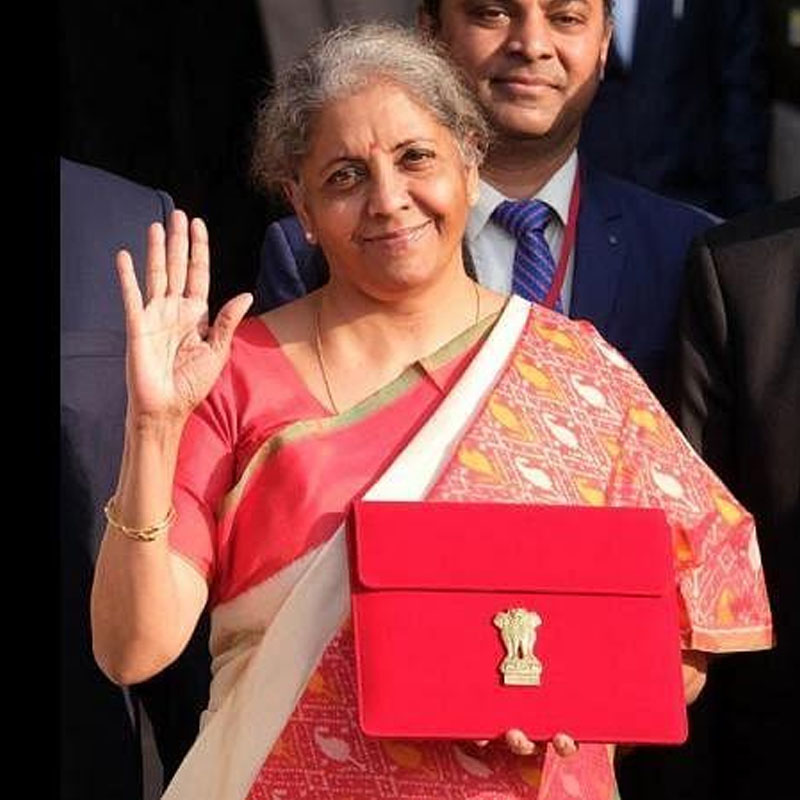
    Mumbai: Finance minister Nirmala Sitharaman on Tuesday presented the Union Budget 2022 in Parliament. The minister said that the country is set to clock an economic growth rate of 9.2 per cent in the current financial year, in what was her shortest Budget speech yet. While the budget made no tax concessions for the salaried class, some of the key areas it focussed on was a push towards a digital economy, and start-up ecosystem.

    The FM proposed a 30 per cent tax on income from transactions of cryptocurrencies and other virtual assets. Also, to bring such assets under the tax net, Sitharaman proposed a one per cent TDS (tax deducted at source) on transactions in such asset classes above a certain threshold, while also including gifts in crypto and digital assets in the to-be taxed list.

    Sitharam also said that the Reserve Bank of India (RBI) will launch a ‘Digital Rupee’ based on blockchain technology in 2022-23. The Central Bank Digital Currency (CBDC), according to the finance minister, will provide a significant boost to the digital economy and lead to a more efficient and cost-effective currency management system.

    The FM also announced the extension of the Emergency Credit Line Guarantee Scheme (ECLGS) that provided additional credit to over 1.3 crore MSMEs till March 2023. Additionally, its guarantee cover has been expanded by Rs 50,000 crore to Rs 5 lakh crore. Apart from this, in a year riddled with mental health well-being concerns amid the pandemic, FM Sitharaman announced the launch of a ‘National Tele Mental Health Programme’ for better access to quality mental health counselling and care services, in a move that signifies the normalising of mental health as a legitimate area of focus for us as a nation.

    Industry reactions on the Union Budget have been pouring in, and most of the industry stakeholders saw the twin announcements of the digital rupee and the taxation on “virtual digital assets” as a focused drive from the government to regulate the crypto space. Some felt that regulating a decentralised space is a paradox in itself, and took the cautious approach by saying how this plays out needs to be seen.

    Here is what the industry experts had to say:

    CoinSwitch founder and CEO Ashish Singhal who is also the co-chair of Blockchain and Crypto Assets Council (BACC) welcomed the government’s decision to introduce central bank digital currency (CBDC) to accelerate digitisation. Calling it the ‘the gateway to the future decentralised world, aka Web3.0’, he said, “The budget provides clarity on taxation and shows the government’s intent to take a business-friendly approach while protecting the interest of consumers and the exchequer. The regulatory guidance on tax from the government furthers the mainstreaming excitement of this emerging asset class with over $6bn worth of investments in India. Hopefully, this will induct more digital-savvy Indians into the financial ecosystem willing to explore newer forms of investing and wealth creation.”

    OKX.com CEO Jay Hao believes that India is slightly lagging in the digital currency race mainly due to the regulatory hurdles and reluctance in accepting the growing popularity of digital assets/digital currency around the world. “If we look at the global scenario, central banks around the globe have already launched or are about to launch their digital currency,” said Hao, adding that he hoped the announcement made regarding CBDC is implemented without any further delay as it will give a much-needed push to the blockchain industry in India. He also asserted that higher taxes may discourage investors from choosing crypto as an investment avenue and delay the mass adoption of crypto assets in India.

    CoinDCX co-founder and CEO Sumit Gupta hailed taxation of Virtual Digital Assets or Crypto as a step in the right direction. According to him, this will give a much-needed clarity and confidence to the industry. The introduction of CBDC sends a clear signal of India being a digital-first, efficiency-driven, and transparency-led system, he added.

    Mudrex CEO and co-founder Edul Patel also termed it as a progressive step towards boosting crypto adoption in the coming years. The sentiment was shared by other industry executives who felt the government legitimatised crypto assets in India in an indirect way by coming out to tax the same.

    Dentsu India chief client officer Narayan Devanathan said the budget is “future-focused, aiming at the distant vision of India@100”, instead of being focussed on the present. Expressing dismay over the omission of much-needed concessions in critical sectors like health, Devanathan said, “A punishing 2021 for the aam aadmi with more-than-usual expenditure on health and sustenance meant the general populace was looking for immediate relief that would place more cash in their household budgets. That did not happen. Nor was there any extraordinary investment in relieving the healthcare expenditure burden. Even the MSME sectors were only handed a slightly longer lease of life with the extension of the ECLGS, but there was no real move to stimulate consumption by placing more cash at consumers’ disposal, for example, extending LTA claims to restaurants (and not just accommodation).”

    According to Blink Digital co-founder and COO Rikki Agarwal the government sent mixed signals with its proposed announcement of a new digital rupee powered by blockchain technology and taxing digital assets. While the move has cleared the impending ambiguity around the cryptocurrencies in India, signifying its acceptance as an asset and legalising it to boost the economy, imposing heavy taxes on digital assets is an indication that the government intends to discourage the same, he says, adding, “We will wait for more clarity on the regulations.”

    Wunderman Thompson South Asia CEO Shams Jasani said the budget highlighted that government is finally recognising that digital is getting to be bigger and bigger. “With so much talk on digitisation I think the digital revolution has already come in India. And the sheer push on digital infrastructure in the country will help a lot more content consumption and a lot more content creation as well. Also, the reach of the medium is going to grow into the rural areas and smaller towns & cities,” he said, adding that, “Governments across the world are going to ultimately get into the digitalisation of currencies, backed by Crypto technology or blockchain technology, and that is the future of currencies. So that is going to take off and that will also legitimise the whole idea of cryptocurrencies in India.”

    DDB Mudra Group chief operating officer and chief financial officer Anurag Bansal opined that the Union Budget looks neutral, with no major changes in taxation, adding that the launch of digital Rupee based on blockchain technology is a big move to bring in official cryptocurrency in India. Managing the Fiscal deficit while pushing for growth and investments is a great balancing act taken on by the government, he feels; one that will give a boost to capital investments and infrastructure development.

    White Rivers Media CEO and co-founder Shrenik Gandhi termed the budget as ‘fairly balanced’ in that there is sufficient emphasis being laid on up-skilling, and making right investments in tech which is the need of the hour. Speaking of the expected benefits, he added, “Let’s not forget that this is India’s #Budget and not a Big Bazaar scheme announcement. So, the immediate benefit may not be seen right now but considering the long-term narrative, it is a fairly established budget.”

    According to Publicic Groupe South Asia CEO Anupriya Acharaya, the Budget was positive, growth-oriented and with reforms in the right direction. “The advent of 5G is sure to transform communications – for our industry it will help the creation of better AV, voice and AR/VR experiences. It will also fuel digital payments, streaming entertainment, gaming, e-commerce, tele-medicine etc which in turn will aid more Unicorns! From e-passports, to battery swapping for electric vehicles, setting up of optic fiber in villages, setting up of a digital university and skilling through an e-portal, the big push is for technology, digital infrastructure and empowerment,” she added.

    Parle Products senior category head Mayank Shah said putting money in the hands of consumers really helps, so they go out and buy products. “So that was more on the front of ensuring that the demand remained robust given that we have gone through two years of pandemic. That was something that industry expected, either by tax cut, or by increasing the slabs tax brackets or by probably increasing the standard deduction limit. Those were the things that we expected but not much has been done there.”

    Thomas Cook (India) MD Madhavan Menon said the budget was disappointing from a Travel & Tourism perspective. “The Budget made no reference to the industry’s recommendations to aid revival, including rationalisation of taxes (a complete GST holiday, exemption of TCS on outbound tours, reduction in indirect taxes), removal of SIES benefit capping of Rs 5 cr,” he said.

    Mad Over Donuts ED Tarak Bhattacharya also rued that the budget gave no attention to the hospitality industry in particular. “Our industry continues to bear the brunt of the pandemic, probably more than a lot of other sectors. We were hoping for some relief or some measures that would help the industry in the months and years to come,” he said.

    Food and Beverage startup Wat-a-Burger co-founder & CEO Farman Beig said the government has been supportive towards the F & B sector and did announce some steps to help the sector bounce back by shifting the GST compliance onto online food delivery partners on behalf of the restaurants. “However, some relief in terms of ITC (Input tax credit) would have further catalysed the recovery of the sector which otherwise is on the bleeding end. Currently, when the industry is struggling to manage the fixed cost with GST, it requires immediate boost, and cutting down ITC would have worked wonders,” he added.

    TCL India head of marketing Vijay Kumar Mikkilineni welcomed the FM’s increased focus on the consumer electronics industry and formation technology. “The 2022 Union Budget allocated 1.97 lakh crore ($26 billion) for PLI projects, notably electronic components, which are among the 13 vital sectors that would undoubtedly help our economy expand. Furthermore, reduced customs taxes will encourage electronics manufacture, which will benefit the electronics industry,” he said.

    CEO of SPPL – exclusive licensee of Thomson in India Avneet Singh Marwah said, “This budget has been more like announcements and slogans. I’m surprised how FM missed on health and education, which are two main pillars of the economy, despite the pandemic. On one hand the government talks about how electronics will contribute one trillion to the economy and on the other for consumer electronics no major announcements, no roadmaps have been given to the industry.”

  • Budget 2019: Finance Minister reveals plan for TV programme dedicated to startups

    Budget 2019: Finance Minister reveals plan for TV programme dedicated to startups

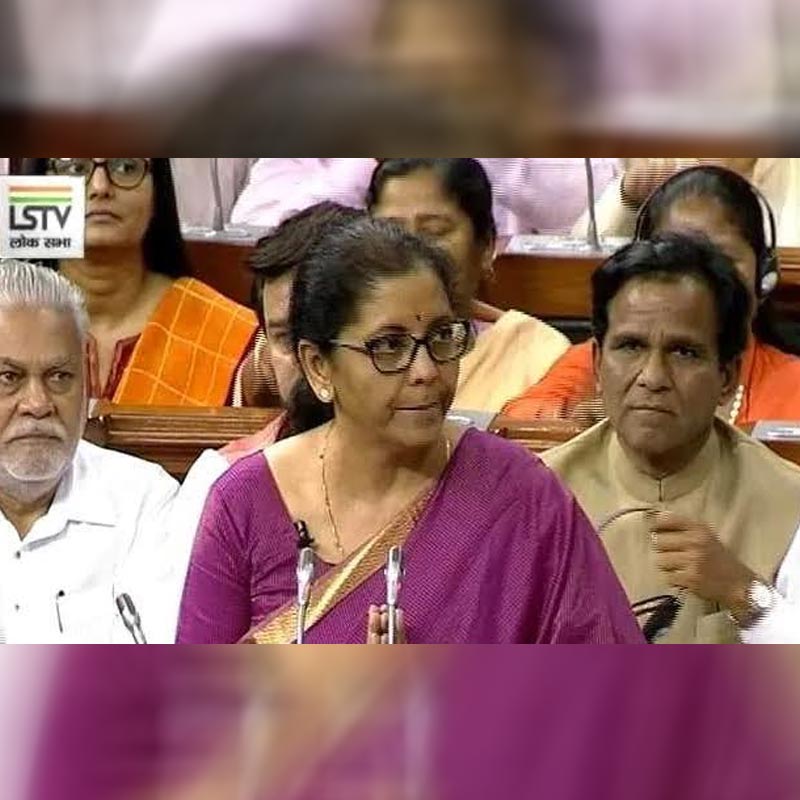
    MUMBAI: While presenting the first Union budget under Prime Minster Narendra Modi's second term, finance minister Nirmala Sitharaman announced a plan to come up with television programme dedicated to startups.

    "We propose to start a television programme within the DD bouquet of channels exclusively for start-ups. This shall serve as a platform for promoting start-ups, discussing issues affecting their growth, matchmaking with venture capitalists and for funding and tax planning. This channel shall be designed and executed by start-ups themselves. Later in this speech, I shall deal with taxation matters of the start-ups." Sitharaman said. 

    It was highlighted in the latest Economic Survey of India that nearly 85 per cent of companies in India were small-scale firms that employed fewer people. With the emerging importance of media and entertainment industry, nine pages have been devoted the sector in Economic Survey this year from zero space in previous editions.

  • Reliance Jio makes a punt on tech start-ups

    Reliance Jio makes a punt on tech start-ups

    MUMBAI: After closing Saavn and Embibe deals, Reliance Jio, according to a report published by The Economic Times, is now looking to acquire Indian start-ups in the technology ecosystem.

    In a bid to take on its competition, Reliance Jio is now looking to invest more to create a comprehensive ecosystem of digital products and services around its core telecom service.

    To add more relevant entertainment and education content to its Jio platform, the company is looking to invest in or acquire start-ups operating in the content, healthcare, education technology, financial technology and transportation segments. It might also look at Jio aligning with product technology ventures, particularly those operating in artificial intelligence (AI) and machine learning (ML).

    In April, Reliance Jio Music and Saavn leveraged their synergies to jointly strengthen their foothold in the Indian music streaming market. The combined value of the companies has been pegged at $1 billion, out of which Jio Music’s implied valuation is $670 million leaving Saavn at a valuation of $330 million. With this, Reliance also acquired a partial stake in Saavn from its existing shareholders for $104 million.

    Also, soon after this, Reliance Industries Ltd (RIL) agreed to invest over $180 Mn into AI-based education platform, Embibe over the next three years. This will put RIL in a position to buy out around 72.69% stake from Embibe’s existing investors including Lightbox and Kalaari Capital.

    Leading Jio’s charge into the start-up ecosystem is Akash Ambani, the 27-year-old Brown University-educated older son of Mukesh Ambani. Akash Ambani, chief of strategy at the company, is believed to be deeply involved in the negotiations.

    Also Read :

    Jio Music, Saavn to merge; RIL to invest $100 mn in combined entity

    Jio shifts focus to wired broadband


  • CleverTap & Mobile Growth Academy join hands to help tech start-ups

    CleverTap & Mobile Growth Academy join hands to help tech start-ups

    MUMBAI: CleverTap, a mobile analytics and engagement announced its new startup marketing partnership with Mobile Growth Academy, an online education platform for startups featuring video tutorials, how-to guides, and step-by-step mobile growth hacking tips used by Silicon Valley’s leading apps.

    The two companies have joined forces to produce a variety of events designed to provide startups with the best possible combination of mobile behavior analytics & engagement guidance and practical support through meet-ups, webinars, video tutorials to support startups from product launch to mobile growth phases.

    “Life can feel very lonely when you leave a job in a large company to launch a startup. All of the business support and resources you’re used to aren’t available anymore,” said CleverTap head of business and developer relations Monica Puchner. “You have to find your own solutions for everything from venture capital to growth marketing. In today’s mobile app economy, there are very few companies actively focused on helping startups, but that’s exactly what CleverTap and Mobile Growth Academy’s partnership was established to do. ”

    Adding to the challenge, all mobile startups operate under time pressure. Self-funded startups need to start generating cash as quickly as possible, while even well-funded ones can have alarming burn-rates as they seek to establish themselves. ‘Growth hacks’ – techniques designed to maximize the rate at which a startup grows – are the Holy Grail.

    “Our video tutorials have helped over 4000 startups achieve success in the competitive mobile app marketplace,” said Mobile Growth Academy CEO Nagi Salloum. “but businesses need practical support as well as the best startup advice – that’s where CleverTap comes in. There are a number of companies that offer a suite of mobile marketing automation, live user segmentation, and CRM products, but most of them are price-prohibitive for startups. CleverTap matches the best feature-for-feature but offers pricing structures geared towards startups. ”

    The new partnership is already producing several Mobile Growth Startup events this summer. You can register for the next webinar, Critical Steps to Explode Your Growth Like Silicon Valley’s Top Mobile Apps on August 3rd at http://themga.co/ct-webinar

  • CleverTap & Mobile Growth Academy join hands to help tech start-ups

    CleverTap & Mobile Growth Academy join hands to help tech start-ups

    MUMBAI: CleverTap, a mobile analytics and engagement announced its new startup marketing partnership with Mobile Growth Academy, an online education platform for startups featuring video tutorials, how-to guides, and step-by-step mobile growth hacking tips used by Silicon Valley’s leading apps.

    The two companies have joined forces to produce a variety of events designed to provide startups with the best possible combination of mobile behavior analytics & engagement guidance and practical support through meet-ups, webinars, video tutorials to support startups from product launch to mobile growth phases.

    “Life can feel very lonely when you leave a job in a large company to launch a startup. All of the business support and resources you’re used to aren’t available anymore,” said CleverTap head of business and developer relations Monica Puchner. “You have to find your own solutions for everything from venture capital to growth marketing. In today’s mobile app economy, there are very few companies actively focused on helping startups, but that’s exactly what CleverTap and Mobile Growth Academy’s partnership was established to do. ”

    Adding to the challenge, all mobile startups operate under time pressure. Self-funded startups need to start generating cash as quickly as possible, while even well-funded ones can have alarming burn-rates as they seek to establish themselves. ‘Growth hacks’ – techniques designed to maximize the rate at which a startup grows – are the Holy Grail.

    “Our video tutorials have helped over 4000 startups achieve success in the competitive mobile app marketplace,” said Mobile Growth Academy CEO Nagi Salloum. “but businesses need practical support as well as the best startup advice – that’s where CleverTap comes in. There are a number of companies that offer a suite of mobile marketing automation, live user segmentation, and CRM products, but most of them are price-prohibitive for startups. CleverTap matches the best feature-for-feature but offers pricing structures geared towards startups. ”

    The new partnership is already producing several Mobile Growth Startup events this summer. You can register for the next webinar, Critical Steps to Explode Your Growth Like Silicon Valley’s Top Mobile Apps on August 3rd at http://themga.co/ct-webinar

  • 2015: From employees to employers, a year of transition in media

    2015: From employees to employers, a year of transition in media

    MUMBAI: 2015 saw India retain its title of being the world’s third leader in start-ups. What is interesting to note is that entrepreneurship not only thrived in the technology sector but also showed a sharp increase in the field of media and entertainment.

    Follow the year’s calendar closely and you can see it checkered with launches of new bespoke media ventures and innovative digital solutions companies.

    This was the year when we saw creative heads, vice presidents and marketing heads of leading agencies and media houses leaving their plush corporate jobs and taking on the challenge to establish their own companies.

    Creative stalwarts like Abhijit Avasthi and Gaurav Seth, who were often considered torch bearers in their former organisations, made headlines as they decided to move on to launch independent agencies.

    The world of start-ups is dynamic and unpredictable unlike the stable portfolios that these executives enjoyed until they decided to cut the cord as the lure to explore new avenues and expand their horizons eventually won.

    As the year comes to an end, Indiantelevision.com lists 10 such media professionals who embarked on their entrepreneurial journeys in 2015.

         Abhijit Avasthi: The media had a field day when Ogilvy & Mather chief creative officer Abhjit Avasthi put in his papers out of the blue last year. The mystery was    unravelled six months later, when Avasthi announced his new creative solutions start-up Sideways, of which he is a co-founder. Aimed to be a multi-dimensional    creative solutions provider, Avasthi even gave an open invitation to professionals from different industries to join his new venture.


       Ajay Chacko and B Saikumar: Industry veterans and Network18 associates, who severed ties with company almost at the same time, came together    after a long time to team up with media and broadcasting veteran Ronnie Screwvala to form a new digital media company called Arré. The venture aims  at establishing a digital brand, which will offer multi-genre¬, multi-lingual content across video, audio, text and other traditional and new age art forms.


       Barkha Dutt: Media professional or not, there is hardly anyone unfamiliar with this veteran journalist, who anchors NDTV’s prime time shows. Therefore, her  announcement to quit the news network as an editor to start her own digital multi-media company has saddened several fans of Dutt – the reporter. As she firmed up  plans for her new venture, she moved to the role of consulting editor for the news channel, while remaining closely associated as the anchor for The Buck Stops Here  on weeknights and We The People on weekends.


        Cyrus Oshidar: Former MTV man, who is known for his involvement with iconic shows such as MTV Bakra, Roadies, et al, made a comeback this year with what he  does best – telling stories about young urban India. Through videos, photos and tongue-in cheek style of articles, branded content start-up 101 India is designed to  be the window to open-minded listless and creative millennials and what they find interesting.


         Gaurav Seth: Those who have known Gaurav Seth as the senior vice president of Sony Entertainment Television did a double take when he ended his  relationship of over six years with the broadcast network to co-found Purple Canvas. Fresh in the picture, this new content creating start-up already  has its first television series underway.


        Nitin Suri and Chraneeta Mann: When two highly creative individuals get together, the combination always leads to creation and  that’s exactly what happened when former Dentsu national creative director Suri and Rediffusion Y&R national creative director Mann  joined hands to form The Mob. Funded by the wholly owned subsidiary of Mogae Media, the venture aimed to marry television  commercials and content with mobile phones.


           Prakash Nathan: This former UTV Disney India operations head and UTV Motion Pictures vice president too recently rolled out India’s first ever digital media  market titled CineMArkets Digital Solutions along with partners Girish Kumar and Inkswipe Consulting LLP. Backed by his experience of two decades, Nathan is already  leading this CineMArket into new avenues.


         Prashant Bhatt: Colors fiction head Prashant Bhatt, best known for shows likeMadhubala and Udaan, surprised one and all in the first half of the year  by venturing into production. Bhatt launched the new production house – Studio B&M – along with his business partner and cinematographer Sanjay  Memane. The one year old production house is already slated to produce Mastaangi for Channel V.


         Pratap Bose: As the DDB Mudra Group chief operating officer, Bose helmed several path breaking projects and even donned the hat of the Ad Club president.  Therefore his decision to take on the role of an entrepreneur and start his own creative agency – The Social Street came as a surprise to the industry at large. His  former colleagues and associates Mandeep Malhotra, Arjun Reddy and Pradeep Uppalapati were quick at his heel, and joined his new venture as partners.


        S Yesudas: The most recent executive to join the start-up bandwagon is former managing director of Vizeum India and media expert S Yesudas.      Along with partners Ajit Nair of MX Advertising and Amit Tripathi from IdeateLabs, Yesudas plans to disrupt the current industry with their ‘unagancy,’  which is christened triggerbridge. From the way the agency is spelled to its operational objectives, triggerbridge comes across as having an innovative  and modern outlook towards the current advertising space.


    There’s no doubt that these ever so crucial moves from leading media houses and agencies have created an indelible void in their respective companies. Whether or not the sudden mushrooming of such start-ups pose any competition to the existing industry leaders, only time will tell. But one thing’s for sure, some of these executives have managed to inspire several of their loyal teammates and colleagues to follow in their footsteps, leaving many empty shoes to fill in their former workplaces.

    Even as the curtains draw on 2015, the coming year holds a lot of promise and will see many of them making an impression in the media and entertainment ecosystem.

  • AIB launches ad wing with Truly Madly’s ‘Creep Qawwali;’ plans major expansion

    AIB launches ad wing with Truly Madly’s ‘Creep Qawwali;’ plans major expansion

    MUMBAI: The rather (in)famous comedy group All India Bakchod (AIB) has some ambitious expansion plans up their sleeves. The group has launched its advertising wing called Vigyapanti, which kick-started with their latest comic presentation – Creep Qawwali. A keen observer would notice that the video is in fact an advertisement for the start-up dating portal – Truly Madly.


    What’s more, brand AIB isn’t putting a stop to their expansion plan with just Vigyapanti as the group also has plans to foray into long-form content production as well as movie production. 


    Speaking to Indiantelevision.com about the group’s plans for the next couple of years, AIB’s Tanmay Bhat says, “There is no precedent to what we do — from entertainment to working with brands and start-ups. We are soon getting into long form productions and hopefully into movie production by the end of next year.”


    Coming to Vigyapanti, while AIB has taken on embedded branding projects for various established brands, their latest output is a first from their newly conceived advertising wing.


    Bhat says, “One of our copy writers suggested the term. It sounded almost like ‘adgiri,’ which rings close to the way we approach a brand. The name Vigyapanti just fits with brand AIB.”


    Bhat is on a mission to establish a 15 members strong team of copywriters by the start of next year.


    One doesn’t need to look too far in history to notice AIB’s roots in advertising. Bhat has been associated with the advertising industry before. “I was supposed to become a copywriter before AIB and stand-up comedy happened,” says Bhat in his signature comical intonation. So why this call back to advertising? “Because our biggest source of income, even for the YouTube channel, is working brands,” comes his simple answer. “Brands is where the money is.”


    AIB’s ad wing idea didn’t pop out of nowhere. The four team members – Bhat, Gursimran Khamba, Rohan Joshi and Ashish Shakya – were toying with the idea of starting an agency for over eight months now. “We were dwelling on the thought without any copywriters on our team. After meeting a bunch of people for about six months, we were able to get some fine writers onboard with us,” says Bhat, referring to the new additions to the team namely Girish Narayandass, Devaiah Bopanna, Vignesh Raja and Mihir Lele.


    However, it wasn’t until AIB worked with Truly Madly that they locked the idea of using their strength to make start-ups massive. “Working with a start-up is a very refreshing experience. There’s no bureaucracy involved unlike the big brands. So we decided, maybe we should focus on start-ups, which are either getting funded or are looking to get funded,” shares Bhat, adding that the romantic idea of “using our popularity to good use” is part of the appeal.


    A pertinent question here is, how affordable Vigyapanti will be for such start-ups? If they go by their romantic ideologies and lessen the cost, how will this be a profitable business for the brand? To this, Bhat says, “We plan to go about this on a case by case basis. For those who can’t afford us, we might decide to do away with the creative cost and charge them only for the production cost. We are also seriously considering on picking up equities from them as opposed to monetary transactions.”


    This doesn’t however mean that AIB will cut all ties with the mega brands who seek their expertise. They will continue to do promotional videos for sponsors and other established brands through their YouTube channel.


    When quizzed about OML’s (AIB’s managing body) involvement with Vigyapanti, Bhat replies, “OML manages AIB and its business so they are with us on most of the things that we do. Now they have moved on from being just managers to consultants. I like having Vijay and Ajay Nair involved. In fact, the idea of pivoting to start-ups and picking up equities instead is an idea, which came from Vijay Nair. Given his experience, he is someone who can think long term in the ecosystem.”


    While Bhat declines to divulge the names of all the brands Vigyapanti has onboard, he does add that Hotstar is their next client. As was previously reported by Indiantelevision.com, AIB will be doing a news comedy series called On Air with AIB for Star India’s over-the-top (OTT) platform Hotstar. “Vigyapanti has also done promos for AIB’s upcoming show on Hotstar. We will take care of their digital and outdoor promotions as well,” says Bhat.


    Pertinent to note here is that the collaboration with AIB for the show made Hotstar an exception to Vigyapanti’s ‘start-up only’ rule.


    “We are already in talks with four or five start-ups regarding equity and stakes. Hopefully, by the end of the year, we can roll out our client list for the next five to six months,” says Bhat.

  • Times Network creates unique advertising opportunity for SMEs

    Times Network creates unique advertising opportunity for SMEs

    MUMBAI: Times Network has kick-started a unique advertising opportunity for Small & Medium Enterprises (SMEs) called Ascend Now 2015. 


    The week long workshops over three markets – Mumbai, Bangalore and Delhi are being held to educate, create awareness, and provide cost-effective advertising opportunities on national television for SMEs and start-ups.


    In India, there is a huge amount of potential hidden in the SMEs sector, which needs to be brought forth. The country is a home to over five crore SME units. Having said, that when it comes to communicating their respective brands, these SMEs and start-ups don’t know how to go about it.


    They don’t get expert advice that their bigger counterparts receive from brand consultants and media agencies. As a result, fail to optimise their brand communication and get that critical benefit. The research has shown that the biggest perception bearers amongst the SME and start-ups are of the opinion that the national television is expensive and beyond their reach.


    Having identified this need gap, Times Network has created an opportunity through Ascend Now 2015, whereby the SMEs and the start-ups can avail expert advices on brand communications and can broadcast their brand through the television channels of Times Network. Through this framework, the SMEs and the start-ups can do their brand promotions on India’s largest television platform in a cost-effective manner.


    As the workshops end on 23 September, Times Network is expecting to reach out to over 1000 SMEs and start-ups, which are prospective advertisers. The trend shows that the conversion of the prospects to the real advertisers will be about 150 companies. This initiative will possibly give a 10 per cent increase in the number of advertisers on Times Network, annually.


    Times Network CEO &MD MK Anand said, “I’m extremely thrilled with the kind of response we have received from the SMEs in the first two days of seminars in Mumbai. It is this success that gives us confidence about doing well even in Delhi and Bangalore in the next few days.”


    The packages that were offered were specially created for SMEs ranging from Rs 22 lakhs to Rs 66 lakhs. The offers are valid for a 12-month period and are only available on the day of the seminar.


    In the inaugural two-day workshop in Mumbai, the senior executives who participated were from companies that have presence in – Construction, Education, Food and Agro Products, Jewellery Manufacturing, Internet start-ups and Beauty and Lifestyle.