Tag: start-up

  • Guest Column: Start-up hacks: A cheat sheet for success

    With the convergence of technology and media, we are witnessing tremendous activity in the start-up space.  From content to distribution to broadcast to affiliate opportunities, there is no dearth of new ideas and their backers.  Surprisingly not all of them are covering all their bases to crack the start-up success code.

    Having been a part of four start-ups in leadership positions along with all the insights gained through studying hundreds of others, here are 9 ways that help us better understand them and reasons that make them succeed.

    1. Start-ups are not smaller versions of large organisations. Bonsai have a different life and game plan as compared to large trees. The two should not be compared and start-ups should not be expected to emulate the large organisation. 

    2. Start-ups do not adhere to a ‘set’ business plan – in most of the cases the challenge is to find one. As Mike Tyson famously said on his opponent’s pre-fight strategies: everyone has a plan till they get punched in the face. Business Plans are a necessary evil but for a start-up they are nothing more than fictional plans and rarely do they survive their first contact with customers.

    3. Customer Plan is much more important than the business plan. This may include customer engagement, customer stickiness, brand advocacy score, net promoter score, etc. “Your most unhappy customers are your greatest source of learning,” said Bill Gates.

    4. Data is the new oil. Data undergirds everything. Period.

    5. Start-ups need to fail fast, fail often, fail cheap and fail better. Constant experimentation and continuous learning is the name of the game rather than elaborate planning. Start-ups need to keep their persistence levels high. “You don’t learn to walk by following rules. You learn by doing and falling over,” as famously told by Richard Branson.

    6. Iteration is the key word for every aspect of the business. Launch and iterate. And again. Everything is changeable except the intent to give one’s best to making it big.

    7. Repeatability and scalability are two pivots to search in the early life cycle stage. Investing in growth in stage 0 is almost a sure-shot pre-requisite. Mostly start-ups are dealing with a new concept and/or a habit change. This may initially require selling only on the strength of price (not the brand or anything else) and may call for disproportionate investments and therefore profitability may be a long way off.

    8. Turmoil and chaos are integral to the existence of a start-up. Those who cannot stand the heat, need to get out of the kitchen.

    9. Lastly as Jeff Bezos said – Entrepreneurs must be willing to be misunderstood for a long time.

    The M&E industry as much needs start-ups as the rest of the economy.  As research shows, the success quotient can go up if the above factors are kept in mind.

    public://piyu.jpgPiyush Sharma, a global tech, media and entrepreneurial leader, created the successful foray of Zee Entertainment in India and globally under the ‘Living’ brand. The views expressed here are of the writer’s and Indiantelevision.com may not subscribe to them.
  • Jio signs up 16 million 4G  subs; target, 100 million

    Jio signs up 16 million 4G subs; target, 100 million

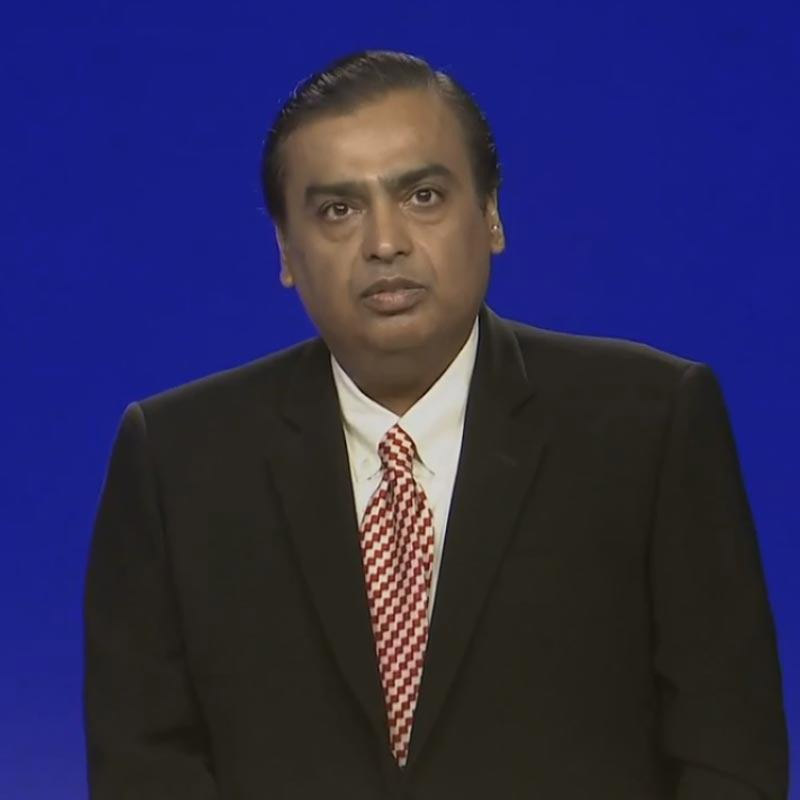
    MUMBAI: Think Big. Think Global. That’s been the motto of Reliance Industries chairman Mukesh Ambani. And, now the world’s biggest start-up Reliance Jio Infocomm Ltd. (Jio) — which he has been incubating for more than half a decade — has announced that it has achieved a global first.

    The number of registered sign-ups Jio has achieved in the first month of its 4G commercial launch – September 2016 — has crossed 16 million. That’s a faster adoption rate than that achieved by any telco or any start-up like Facebook, WhatsApp and Skype.

    And, of course, Ambani is pleased as punch by the consumer response. Said he in a press release: “We are delighted and humbled by the overwhelming response across India to the Jio Welcome Offer. Jio is built to empower every Indian with the power of data. We are delighted that people have recognized this and are utilizing our services to the fullest. We are customer-obsessed and committed to improve every day to exceed expectations of our customers.”

    Observers say Jio’s subscriber number could have been higher had Ambani and Jio managed to not run into a wall with older competitors like Airtel, Vodafone, Idea. Jio – which has made calls free – reported humungous amount of call failures because its rivals disallowed call connections by the newbie’s users.

    Jio is looking to disrupt the entire Indian telecom ecosystem. While all Indian telcos charge for calls, Jio announced that it would not be charging for calls made using its network. And it announced cheaper data plans than rivals. It has been running its Jio Welcome Offer wherein all its services – including data and apps – are free for customers until 31 December 2016. Last week, it announced an offer for iPhone users wherein buyers of the 7, the 7 Plus, the 6, the 6 Plus, 6S, 6S Plus, and the 5SE would not be charged for data and services for 12 months.

    To top it all, Jio has introduced Aadhaar-based paper-less Jio SIM activation across 3,100 cities and towns. This enables the customer to complete the SIM activation process in a matter of minutes, with only his/her Aadhaar number.

    The press release states that the “this process will be extended across the country and fully stabilized for satisfactory on-boarding experience in the next few weeks.”

    Ambani announced at the company’s AGM at the beginning of this month that Jio had set its ambitions high. His goal was to have 100 million subscribers to its services within a year.

    Rivals have been scrambling to ward off the Jio onslaught, dropping prices for data and bandwidth, as well as offering value added services at promotional rates.

    The overall Indian telecom sector has been seeing shifts too. According to the latest telecom data up to 31 July 2016, the wireless telecom subscriber base shrank to 1034.2 million as against 1035.1 million in end June. Amongst the big losers in the month were Reliance Communications which shed 32.4 lakh customers, and Tata Teleservices and Sistema lost 6,96,325 and 2,28,626 subscribers.

    Bharti Airtel led in the gainers table, adding a net 10.7 lakh new customers, taking its total sub base to 256.8 million, whereas Vodafone added 326,248 to take its tally to 199.7 million. Idea signed up 256,170 users taking its final number to 176.4 million.

    With Jio expected to spread out its availability further in the coming months, observers are expecting the battles to continue.

  • Jio signs up 16 million 4G  subs; target, 100 million

    Jio signs up 16 million 4G subs; target, 100 million

    MUMBAI: Think Big. Think Global. That’s been the motto of Reliance Industries chairman Mukesh Ambani. And, now the world’s biggest start-up Reliance Jio Infocomm Ltd. (Jio) — which he has been incubating for more than half a decade — has announced that it has achieved a global first.

    The number of registered sign-ups Jio has achieved in the first month of its 4G commercial launch – September 2016 — has crossed 16 million. That’s a faster adoption rate than that achieved by any telco or any start-up like Facebook, WhatsApp and Skype.

    And, of course, Ambani is pleased as punch by the consumer response. Said he in a press release: “We are delighted and humbled by the overwhelming response across India to the Jio Welcome Offer. Jio is built to empower every Indian with the power of data. We are delighted that people have recognized this and are utilizing our services to the fullest. We are customer-obsessed and committed to improve every day to exceed expectations of our customers.”

    Observers say Jio’s subscriber number could have been higher had Ambani and Jio managed to not run into a wall with older competitors like Airtel, Vodafone, Idea. Jio – which has made calls free – reported humungous amount of call failures because its rivals disallowed call connections by the newbie’s users.

    Jio is looking to disrupt the entire Indian telecom ecosystem. While all Indian telcos charge for calls, Jio announced that it would not be charging for calls made using its network. And it announced cheaper data plans than rivals. It has been running its Jio Welcome Offer wherein all its services – including data and apps – are free for customers until 31 December 2016. Last week, it announced an offer for iPhone users wherein buyers of the 7, the 7 Plus, the 6, the 6 Plus, 6S, 6S Plus, and the 5SE would not be charged for data and services for 12 months.

    To top it all, Jio has introduced Aadhaar-based paper-less Jio SIM activation across 3,100 cities and towns. This enables the customer to complete the SIM activation process in a matter of minutes, with only his/her Aadhaar number.

    The press release states that the “this process will be extended across the country and fully stabilized for satisfactory on-boarding experience in the next few weeks.”

    Ambani announced at the company’s AGM at the beginning of this month that Jio had set its ambitions high. His goal was to have 100 million subscribers to its services within a year.

    Rivals have been scrambling to ward off the Jio onslaught, dropping prices for data and bandwidth, as well as offering value added services at promotional rates.

    The overall Indian telecom sector has been seeing shifts too. According to the latest telecom data up to 31 July 2016, the wireless telecom subscriber base shrank to 1034.2 million as against 1035.1 million in end June. Amongst the big losers in the month were Reliance Communications which shed 32.4 lakh customers, and Tata Teleservices and Sistema lost 6,96,325 and 2,28,626 subscribers.

    Bharti Airtel led in the gainers table, adding a net 10.7 lakh new customers, taking its total sub base to 256.8 million, whereas Vodafone added 326,248 to take its tally to 199.7 million. Idea signed up 256,170 users taking its final number to 176.4 million.

    With Jio expected to spread out its availability further in the coming months, observers are expecting the battles to continue.

  • Quintype to invest in digital media start-ups via SpeakWrite

    Quintype to invest in digital media start-ups via SpeakWrite

    MUMBAI: Touting it as a “new kind of startup accelerator,” the Raghav Bahl backed digital publishing company Quintype has launched SpeakWrite. 


    SpeakWrite is a program for promising startups in the digital media space. So far, the company has accepted three startups into the program, and will be announcing the details soon.


    The company is looking at investing in a total of five start-ups this year and plans to take that number of 15 next year.


    “SpeakWrite will cost no money. However, in exchange for investing SpeakWrite and Quintype resources in the selected start-ups, Quintype will take a percentage of equity stake in the respective startups,” said Quintype founder and CEO Amit Rathore.


    Quintype will take anywhere between four – nine per cent equity stake in respective startups. The exact amount will depend on factors like the stage of the startup, amount of funding raised, complexity of the initial site/apps and business plan amongst others.


    By partnering with selected startups, SpeakWrite will advise, mentor, design, develop, and help launch their sites and apps. The company will mentor startups for a period of 12-24 months.


    SpeakWrite is based both in the United States, as well as in Asia.

  • E-commerce players’ 2015 ad spends in India pegged at Rs 3900+ crore: NASSCOM

    E-commerce players’ 2015 ad spends in India pegged at Rs 3900+ crore: NASSCOM

    BENGALURU: E-commerce players would have spent approximately Rs 3900 crore (or $600 million) in India on advertisement by the end of 2015, as per the second edition of the start-up report released by the National Association of Software and Services Companies (NASSCOM) and Zinnov.


    The report titled “Start-up India – Momentous Rise of the Indian Start-up Ecosystem” was released on the side-lines of NASSCOM Product Conclave 2015 in Bengaluru.


    As per the report, the total funding in the India based start-ups is estimated to be nearly $5 billion by 2015.


    With 100 per cent growth in number of private equity, venture capitalists, angel investors along with a 125 per cent growth in funding over last year, the Indian start-up ecosystem has risen to the next level says NASSCOM. Various central and state government start-up initiatives are further supporting this progressive phase of start-ups in India.


    The Indian technology start-ups landscape has seen tremendous growth in the emergence of innovative start-ups and creative entrepreneurs. In terms of providing a conducive ecosystem for the start-ups to thrive, India has moved up to third position and has emerged the fastest growing base of start-ups worldwide. India is one amongst the first five largest startup communities in the world with the number of start-ups crossing 4,200, a growth of 40 per cent, by the end of 2015.


    NASSCOM president R Chandrashekhar said, “The maturing Indian start-up ecosystem is now contributing to the Indian economy in many ways. Apart from positively impacting the lifestyles of citizens involved, start-ups are now creating innovative technology solutions that are addressing the key social problems that India is facing and creating significant growth opportunities for every stakeholder.”


    Some of the key highlights of the report are as follows:

    India is the youngest start-up nation in the world- 72 per cent of the founders are less than 35 years old.

    More than 50 per cent of the 1200 startups focus on e-commerce, consumer services and aggregators.

    Nine per cent female founders and co-founders in startup ecosystem.

    Number of accelerators grew by 40 per cent from approximately 80 in 2014 to approximately 110 in 2015.

    Total funding in 2015 saw a growth of approximately 125 per cent over 2014.

    Number of PE/VCs investments have grown by 100 per cent over 2014.

    80,000 jobs created by startups.

  • Tech startup SilverPush introduces innovation for ad analytics

    Tech startup SilverPush introduces innovation for ad analytics

    NEW DELHI: SilverPush, a San Francisco and Gurgaon based cross-device mapping platform, has introduced a new tech innovation for ad analytics that measures the effectiveness of television commercials and retargeting the TV viewers on mobile. 


    The new innovation was revealed at the second Ad Tech in Gurgaon, Delhi.


    “This is the first time in India, we are exhibiting our product to technology enthusiasts. We did give a demo at Mobile World Congress this year in the first week of March for which we received a huge response,” said SilverPush CEO Hitesh Chawla.


    The tech startup has created a new range of ad analytics services that offers insight on customer engagement with TV advertisements. It has gained substantial investments as well as response from brands across the globe. 


    Speaking to Indiantelevision.com, SilverPush product marketing manager Adarsh Sasi said that the new technology is integrated into the smart phone and this means a reach to around 18 million devices.


    A special code in the device will catch the audio of the advertisement even if it is being seen on a normal television in the same room and not on the smart phone. Thus, the data comes directly from the consumer and can then be passed on to the advertiser, Sasi said.


    The company uses a sophisticated deterministic modelling to identify the multiple devices associated with a single user and maps his/ her demographics and behavioural property into a unique id. 


    Answering a question, Sasi said that the charges varied according to the convenience of the advertiser, who could either pay according to the results they receive or the total number of viewers.


    Ad Tech hosted the event to offer a platform to tech companies from the digital marketing industry, where they could exhibit their innovations and products to investors, customers and the general media.


    Several keynote addresses and discussions formed part of the event led by hundreds of corporations and suppliers from digital marketing sector.


    It offered a platform for networking, collaboration and tie-ups. The first Ad Tech last year had more than 3500 attendees and above 96 speakers.