Tag: start-up

  • Sanjeev Misra joins Yoho’s board as an executive director

    Sanjeev Misra joins Yoho’s board as an executive director

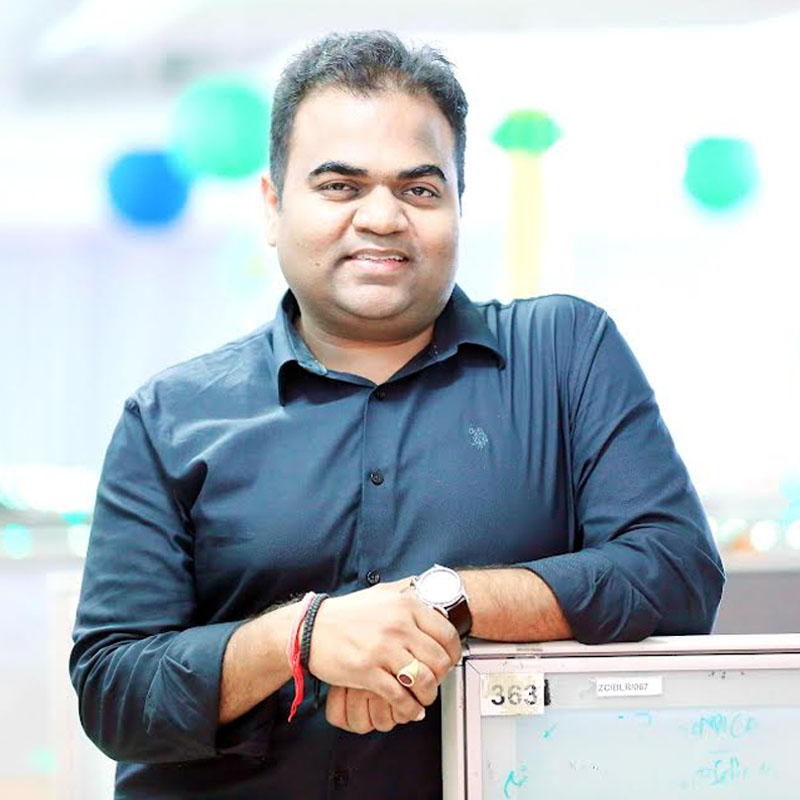
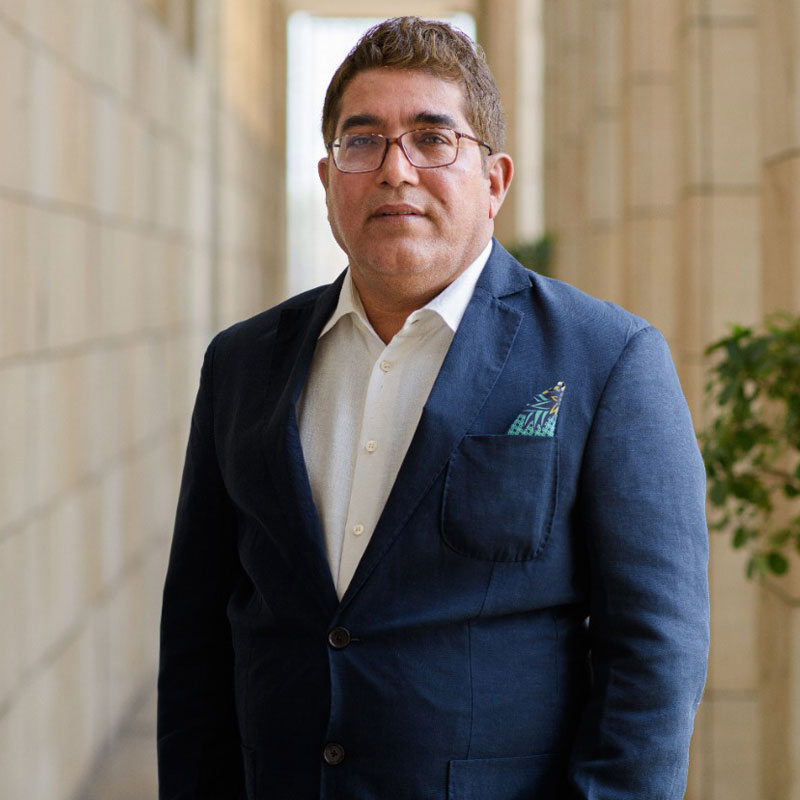
    Mumbai: Yoho, India’s fastest growing D2C footwear brand, has appointed Sanjeev Misra as executive director, effective 1 November. He is also an investing partner holding equity in the startup.

    Misra has over three decades of experience in the corporate world. Prior to joining Yoho, he spent more than five years as the senior vice president & director of Paytm, where he led B2B commerce and global exports & imports.

    His leadership approach has been built around sharp prioritization and focus, growing businesses and brands through innovation, transforming sales, driving productivity, while building teams with the right structure, talent, and culture.

    Prior to Paytm, Misra held the position of vice president – group business & renewables at the Adani Group for almost 3 years. He was responsible for accelerating sales, building strategic planning and overall business development, including corporate governance & IT, telecom. Additionally, he was managing large-scale projects at the firm. Before that, he has spent over a decade in Silicon Valley, working for brands including Motorola Semiconductors, Cisco Systems, Adobe, Compaq Computers and Silicon Graphics.

    Commenting on his appointment, Misra said, “I feel both honoured and humbled on being appointed as the executive director of one of the fastest growing and innovative Indian footwear brands. I’m also excited about the journey ahead in this fascinating space. The Indian footwear industry has the potential to grow 10 folds in the coming years. According to some recent reports, the revenue in the footwear market in India amounts to $23.73 billion in 2022 and is expected to grow annually by 6.77 per cent, CAGR 2022-2027. At Yoho, I look forward to building on the versatile brand that believes in offering comfortable and stylish footwear that cost less than half of the ones offered by popular global giants.”

    Yoho founder Ahmad Hushsham said, “We are delighted to welcome Misra, first as one of our angel investors and now as our executive director. He has played an instrumental role in our strategic development in the initial stage of coming out of stealth mode.”

    Yoho founder Prateek Singhal said, “We are privileged to have Misra join Yoho at this opportune time when we are looking at building and investing in new technology to build new product propositions and directly support our long-term strategic plan. In his new capacity as an executive director we will seek his guidance to scale up the business and expand the consumer base as we continue to disrupt the footwear market with our state-of-the-art technology and AI-powered solutions to create high-performance footwear that is affordable for all.”

    Recently, Yoho raised Rs 20 crore in a Series A round of funding by a group of influential investors, led by Softbank Vision Fund CEO Rajeev Misra, Rukam Capital, and Paytm founder Vijay Shekhar Sharma, along with participation from other investors.

    Founded in 2021, Yoho has already sold 1,00,000+ pairs of footwear after coming out of stealth mode four months back, with just three products – Bubbles, Waves, and Breeze. The products designed with orthopedic ergonomics are available for both men and women across all top e-commerce platforms. Before launching the product lines, Yoho created almost 700 prototypes before settling for the right product line. Each prototype went through stringent tests to ensure that customers get a product that is super comfortable and long-lasting.

  • We want to grow our user base two-fold & daily rides by 3X in 2022: Rapido’s Amit Verma

    We want to grow our user base two-fold & daily rides by 3X in 2022: Rapido’s Amit Verma

    For those of us who have spent precious stretches of time stuck in traffic jams during rush hour, the thought of getting on a bike and zipping through the traffic has definitely looked appealing. It is this everyday challenge that Rapido, a bike taxi service seeks to help overcome. The company which was among the first to introduce the concept of bike taxis in India in 2015, has over one million ‘Captains’ (bike taxi drivers) today, out of this, nearly 15 per cent are women.

    Over the years, Rapido has emerged as a key player in India’s ride-hailing industry by focusing its operations on the two-wheeler taxi segment. The Bengaluru-based startup has expanded its presence to 100 cities across the country that include tier 1 to tier 3 cities. But faced challenges post-2020, as the pandemic forced most commuters to work from home. Things began to look up in 2021, as cases subsided, only to return to the same routine with a new wave of infections.

    As we roll into 2022, IndianTelevision’s Anupama Sajeet caught up with Rapido head of marketing and growth Amit Verma to talk about the seven-year-old startup’s advertising and marketing for the year amid the pandemic. An avid marketer with a decade-plus experience in performance & growth marketing, Verma was previously with self-drive car rental company Zoomcar, and took over the role of marketing head at Rapido right at the outset of the pandemic. In an extensive conversation, he shared the learnings of the past year and his insights on the trends that might dominate the commute and ride-sharing industry in the new year, including the two latest campaigns featuring actor Ranveer Singh and Allu Arjun.

    Edited excerpts:

    On Looking Back at 2021 as a year of disruption or opportunity for Rapido

    Looking back, last year was a blessing in disguise as we got plenty of time to introspect. Since we were not able to run our bike taxi business, because of the pandemic, we focused on launching new verticals like auto and C2C (Consumer-to-consumer) hyperlocal delivery services. On both fronts, we are doing really well and we have a presence in auto & C2C in more than fifty cities today, and it contributes to 30 per cent of our overall business. So that was really helpful to sustain operations amid the disruption in demand for bike taxis.

    From a business numbers point of view, we succeeded in resetting the 1 ½ years of the pandemic. But, today we stand at the same position where we were about two years back when the pandemic hit (in 2020) and our operations went for a toss. So, to be honest, 2021 was about trying to regain our pre-pandemic numbers, of which we have recovered 100 per cent. If you talk of daily levels, we are doing about four lakh rides every day. So apart from the three to four months of lockdown, 2021 has been a good year overall for us. We spent more than 150 cr in the past year on performance marketing, branding et al, which will again go up by 200 per cent this year. We now have close to a 25 million user base, which we plan to grow two-fold this year. 

    On the brand messaging or marketing strategy in 2021

    The two major campaigns we launched in March and November in 2021 were with the aim to sharpen our messaging of  ‘affordable, convenient, and time-saving commute’ options. Even in our previous brand campaigns, we have tried to highlight these three value propositions, and this time too, with our first celebrity campaign, ‘Smart ho, toh Rapido’ campaign featuring Ranveer Singh and Allu Arjun, we aimed to position Rapido as a customer-centric brand and highlight its key USPs, while doing the relative comparison with the different mode of commute, like bus and auto.

    On the response to the ‘Smart ho, toh Rapido’ campaign

    We got a pretty good response on both these campaigns. When we did the first campaign in March we got an approx. 50 per cent jump in upper funnel numbers, and it helped us to garner new users at a faster rate. But unfortunately, then Corona came into the picture and we were not able to fully reap the benefits of the ads. Again, in November we got tremendous results for the Ranveer-Allu Arjun ad campaigns.

    Although Rapido has a pan-India presence, within India one has to accept the fact there are different regions that talk in different languages and with different celeb-affinities. To encash that affinity, and increase the reach of our campaign so as to get good ROI out of it, we chose these two celebrities for the HSM (Hindi speaking market) & the non-HSM markets. Additionally, they also went well with our brand image of ‘young, vibrant and smart’ as they have a similar kind of value proposition as the brand.

    We have also taken up big properties like the recent T20 World Cup that happened in November which has been partially instrumental to bring really good ROIs. We have seen more than 100 per cent uplift on upper-funnel numbers, even the week-on-week growth which we witnessed during this campaign was more than 20-25 per cent.

    On the brand’s ad spend allocation across media: TV, digital, print, OOH

    We are a digital-first brand. Our 100 per cent revenue comes from online bookings, as we don’t do offline bookings. So digital is our first priority. But, we rely heavily on TV for branding. In terms of ad-spends on the campaign we launched to create awareness about the brand, then we spent 65-70 per cent on TV, 15 per cent on OOH, and the rest on Digital. Previously, we have explored Print too, but we did not get a good ROI out of it essentially because we are a non-seasonal brand, and for us, as a commuter category brand that never comes out with a seasonal or festive sale, it did not make sense. So apart from Print, we are using every other media.

    On tapping into influencer marketing

    Although we have not used influencers for the brand campaigns, from our overall marketing expenditure, nearly 5-10 per cent spend goes into micro-influencers and micro-bloggers. With the advent of short video platforms, a new set of micro-influencers have come up, and they have a pretty good reach. As a brand we are in the process of fully exploring influencer marketing, having seen that it not only increases brand awareness, but one can get a really good ROI from these influencer marketing campaigns.

    On the brand’s target audience and consumer demographic

    From a demographic point of view, we have bifurcated the category into two different sections – T1 and T2. In T1 we are mainly talking to those users who fall into the age group of 18-28 years, which is our primary TG and 80 per cent of our business comes from there. These are guys who don’t fall into the high-income bracket. In T2, 60 per cent of business comes from state capital cities- of which we have pretty good coverage. And then we have a long tail of tier 3 cities. We have witnessed really good growth from tier 2, tier 3 cities during the last two campaigns, so certainly we see a reasonable potential over there. Right now we are not looking at expansion into newer regions so much, as we are trying to capitalise on our presence in each and every city and garner good numbers from the growth point of view.

    On plans to cater to the female demographic in the near future

    We have female captains in multiple metropolitan cities like Hyderabad, Delhi, Bangalore etc, only their percentage might be lesser for the simple reason that you do not get female riders very easily. But we are focusing on increasing their numbers going ahead. Unfortunately, when you talk about travel or commute as a category, you’ll get 80-85 per cent of users who are predominantly male. Just because of that, whenever one is drafting one’s brand communication you have to focus more on your TG which is male-centric, due to which regrettably, there has not been much female-centric communication from our end. But in the near future, you will certainly see some communication go out from our brand which will cater to the female consumer also.

    On Looking Ahead at 2022 and goals for the brand

    We don’t have a major expansion plan with regards to new cities. But, we want to increase our user base by 2X and our overall daily rides by 3X, which means we will spend a lot of money on user acquisition and on the repeat users so that we can get more users to take rides, and increase their ride frequency. Also, with what we have witnessed over the last two years, the influencers and micro-influencers have started creating a lot of impact on the user base. So, we plan to leverage that by increasing spend there. So approx. 6-12 per cent spend might go on a regular basis on influencer marketing this year.

    On the key trends that you think might dominate in the industry this year

    I think the next big thing we are betting on is the EV ride, because of the environment-friendly and cost-cutting factors. Everyone in the industry, I think, is trying to enhance their EV capability and general EV mobility in the commute segment. We will also be focussing more on EVs, and on how we can increase the adoption of EVs in the overall commute and bike taxis. As of now, we do have some electric vehicles and we have also done a couple of partnership rides. Recently, we entered a tie-up, where we are providing EVs to our delivery boys that are being used to fulfill deliveries of Swiggy and Zomato.

    On any personal learnings, you would be taking into the new year

    If the last two years have taught us anything it is that- be it an organisation or individual- one should be quick, adaptive, and volatile. With the odds changing constantly, that’s the only way one can survive. That’s the lesson I have learnt and certainly going forward too, we will try to replicate all these qualities so that we can grow further and at a really good pace.

  • Intercell-Virtual Mentor Network names Abhishek Verma as CMO

    Intercell-Virtual Mentor Network names Abhishek Verma as CMO

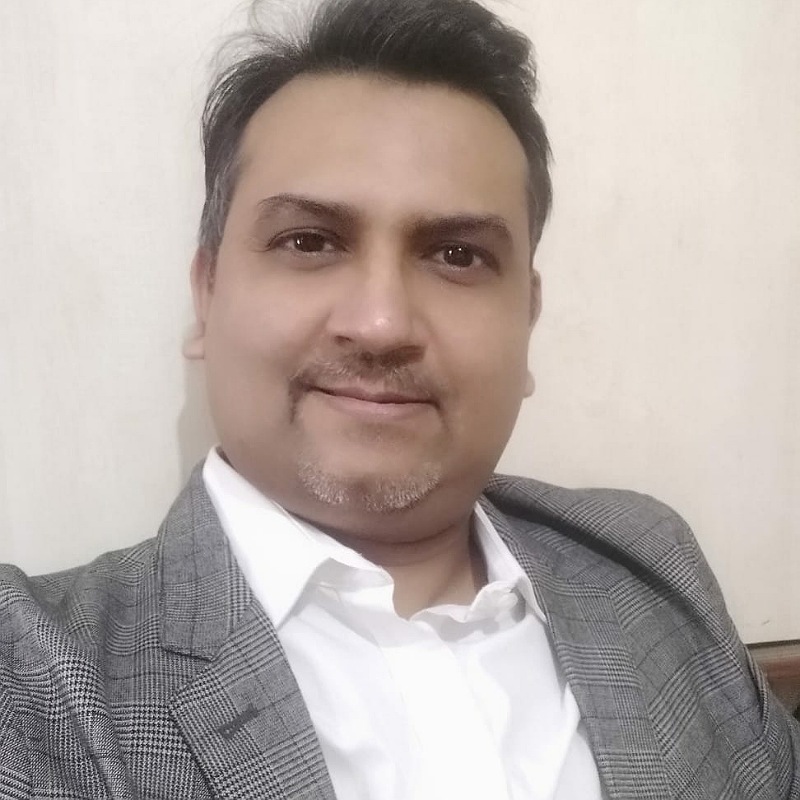
    Mumbai: Ed-tech start-up and online mentoring service Intercell – Virtual Mentor Network announced on Wednesday that it has onboarded Abhishek Verma to its leadership team as chief marketing officer. Verma will lead all marketing and PR initiatives and will help build a compelling brand story and drive user growth.

    Intercell is backed by marquee HNI investors, including actor Sonu Sood, who has recently invested in the business.

    “I am very excited to be joining the Intercell team,” said Abhishek Verma. “I believe Intercell has a great business model and talented management team that uniquely positions it to capitalize on the changing industry. Mentoring services are the need of the hour and I look forward to working with the leadership to craft a narrative for the brand and drive the next phase of growth.”

    Verma comes with 21 years of industry experience, has led marketing teams at Star TV, Sony Entertainment Television and Discovery Channel. More recently, he led the P&L of Freemont Digital, a digital agency with luxury hospitality clients like the Taj Group of Hotels. Verma has graduated from New Jersey Institute of Technology, USA and has an MBA from SP Jain School of Global Management.  

    “We are delighted to have Abhishek join our leadership team and direct the marketing function towards our next phase of growth,” said CEO Arunabh Varma. “His diverse expertise in building brands will be pivotal to our plans.”

  • Meat & seafood start-up TenderCuts launches its maiden campaign

    Meat & seafood start-up TenderCuts launches its maiden campaign

    MUMBAI: TenderCuts, the fresh meat, and seafood start-up backed by Paragon Partners and NABventures has released its first multi-film campaign focusing on the functional aspects of the brand.

    The multi-film campaign conceived by Lowe Lintas Bangalore banks on humour to communicate the key features of the brand’s offering. It relies on how Indians are extremely particular about their food from visiting markets early in the morning for sourcing fresh produce to eating on the day it is cooked – most have their own rules when it comes to food. The campaign aims to highlight how the brand’s eco chain is built to keep the meat fresh.

    “Understanding how Indian consumers gauge ‘freshness’ as one of the important factors in choosing their meats and seafood has driven our offerings and our process. And that has been our success. The team at Lowe Lintas has firmly positioned our brand in the space and this campaign aims to build consideration in the minds of our target audience,” said TenderCuts founder & CEO, Nishanth Chandran.

    The film also aims to showcase that the meat comes fresh to the store and is cut only after an order is placed, which keeps the meat fresh. “The campaign is rooted in research. It is a beautiful, light-hearted, and memorable take on our USPs of ‘freshly cut after your order is received and, “cut the way you love it,” said TenderCuts chief marketing officer Aruna Jathar.

    Lowe Lintas regional creative officer Puneet Kapoor said, “Being a brand that’s all about customer delight the task was to create something that was close to the heart. ‘Cut the way you love it’ sums that up nicely. And the films are all about celebrating the love for TenderCuts, whether it is the fact that they are an omnichannel or that they have the freshest locally sourced meat. Or even the fact that they have such a wide variety of cuts.”

    An integrated campaign covering TVC, Digital, Print, and OOH will run in all three markets.

  • Playtoome to double its manpower by end of 2021

    Playtoome to double its manpower by end of 2021

    New Delhi: Online live entertainment platform Playtoome unveiled its rigorous hiring plans for the next six months. The brand plans to recruit over 35 talented professionals across cities – Delhi, Kolkata, and Bangalore, it said on Monday.

    In a post covid era when industries are recovering and there is a dearth of jobs, the hiring announcement from the brand comes as a cheer for the young professionals.

    Playtoome offers hidden performing artistes to reach their target audience through the platform and monetise their acts. According to the company, it has provided over 8,000 artists with the opportunities and reached a viewership of 100K users.

    “The platform has been enabling quality live entertainment to people who otherwise could not avail the traditional live music due to the increasing dominance of fusion and western music trends. Exploring the horizons, we realised that there has always been a space for such a platform, and we received tremendous response. We distributed over 20 lakh amount among the artists that performed on the platform, and the brand’s revenue too grew by 10X last fiscal year yoy. Now with the climbing numbers we decided to expand the team and continue our journey with new energy,” said Playtoome founder and CEO Keerthivasan Subramanian.

    The startup is looking at hiring across departments including – sales & marketing, finance and accounts, artist coordinator, content planner and content creator, copywriter, web developer, assistant director, graphic designer/video editor/animator/illustrator, brand reputation executive.

    The platform is also looking at scouting musicians and exploring content partnerships with upcoming talent under its vertical Playtoome Originals, and is looking forward to featuring 100 songs under Playtoome Original by the year end.

  • Scaler onboards Rahul Karthikeyan as the CMO

    Scaler onboards Rahul Karthikeyan as the CMO

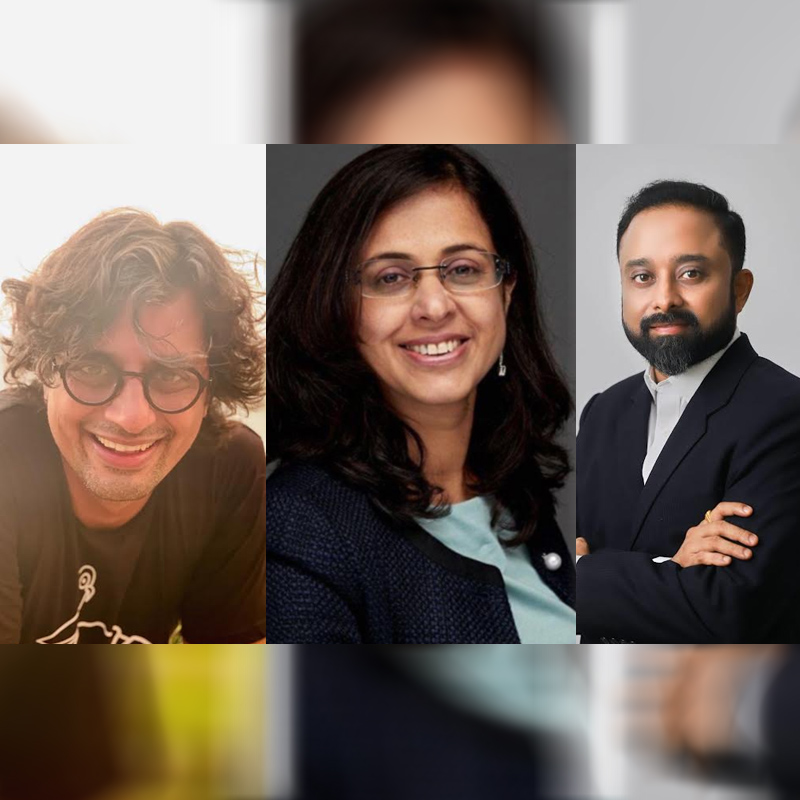
    MUMBAI: Edtech startup Scaler on Wednesday announced key leadership appointments in its marketing and creative verticals. Rahul Karthikeyan was appointed as the chief marketing officer. Karthikeyan moves from upGrad where he was the head of marketing.

    Arnav Gupta has joined as product and strategy lead. Gupta is a serial entrepreneur and has worked with Zomato in the past. Anu Nair joins as creative head, and Ranjeet Kumar and Manmeet Singh Akali as co-heads of brand and content.

    Scaler and InterviewBit co-founder Abhimanyu Saxena said, “As we prepare ourselves for the next phase of growth, industry knowledge and experience will be even more crucial across all aspects. I am, therefore, extremely delighted to have some of the brightest minds in the business join us as we journey to become a world-class virtual tech university. We are also looking to expand our presence beyond metros, and plan to hire over 100-150 people in the current fiscal across functions to support this expansion.”

    The company, which offers software programming courses, had raised $20 million in Series A funding from Sequoia India, Tiger Global, and Global Founders Capital in January.

    “We want to build a quality education platform that is constantly upgrading based on trends in the market, to ensure that our students are up to date. It is an exciting time for the brand, and I am happy to be part of this journey,” said Karthikeyan on his new role.

  • From the verge of closing shop, SUGAR Cosmetics delivers 49X returns to investor

    From the verge of closing shop, SUGAR Cosmetics delivers 49X returns to investor

    MUMBAI: How many people know that the now cult-favourite beauty brand of Gen Z and millennials, SUGAR was once on the verge of shutting shop due to lack of funding?

    The direct-to-consumer SUGAR Cosmetics founded in 2015 by IIM Ahmedabad alumni Vineeta Singh and Kaushik Mukherjee is one of the fastest-growing premium beauty brands in India today. However, things were far from rosy for the Mumbai-based start-up back in 2016 when it did not even have enough money to import its first batch of lipsticks manufactured in Germany. 

    Pulling back the curtain on an untold story of a contrarian bet for the brand in 2015, Co-founder & CEO Vineeta Singh says, “SUGAR Cosmetics started as a direct-to-consumer cosmetics brand in 2015 with products that were specifically created for young Indian women. Very few people know that it was also at this time when the company was pivoting from the beauty subscription service to a cosmetics brand, it came very close to shutting down.”

    Had it not been for a leap of faith from its earliest backer, India Quotient, dipping into their ‘reserve for AMC fees’ funds for a sizeable sum of Rs 1 crore, the founder admits the picture would have been starkly different today.

    “In 2016, having already infused capital from their first fund, the partners at India Quotient, Madhukar Sinha and Anand Lunia, were clear that their fiduciary duty towards their limited partners ruled out any possibility of any further investment from their successor fund without an external investor leading the round. However, for reasons best known to them, they took an extremely risky call of lending the company Rs 1 crore from the funds ‘reserve for AMC fees’ amount that VCs earn for managing the fund,” says Singh.

    Without India quotient’s cash infusion, Apart from being unable to pay their German manufacturers to release the products that were ready for delivery, the company would never have reached the 2017 Series A which eventually set the brand up on a different trajectory altogether, she details. “It gives us immense joy to be able to return 49X of their investment to them and thank them for the pivotal role they’ve had and continue to have as SUGAR scales,” she gushes. 

    The cruelty-free brand has quickly made its way into most makeup aficionado’s hearts and vanity bags. The year 2021 was off to a strong start for the digital-first beauty player as it announced a $21 Million (Rs 153 crore) Series C funding round in early February. As part of this, India Quotient marginally trimmed its holding to clock a 49X return on its investment at an IRR of 61 per cent.  

    Till date, the company has raised a total of $33 Million funds. India Quotient has consistently backed the founding team through all four rounds of funding, including the recently concluded Series C where it co-invested with Elevation Capital and A91 Partners. As a result, India Quotient is currently the second largest institutional investor of the company with a stake worth more than its first two funds put together.  

    The early-stage investor firm first invested in the vision back in 2013 when the parent company Vellvette Lifestyle was pursuing a beauty subscription service business model. In 2015, SUGAR Cosmetics was launched under the same company with a limited range of Crayon Lipsticks, Vivid Lipsticks, Matte Eyeliner and Kajal that disrupted the online cosmetics market and went viral through rave reviews on Instagram and YouTube. Starting with net revenue of Rs 3 crore in 2016-2017 the brand successfully clocked in Rs 105+ crores in its fourth fiscal year, reaching an 85 per cent year-on-year growth rate. This, while notching up 1.5+ million followers across social media platforms on the side.  

    India Quotient founding partner Madhukar Sinha said, “Ever since the launch of our operations in 2012, we have invested in over 70 start-ups. While we first backed the founders in 2013, we did infuse some amount in SUGAR Cosmetics in 2016 from the first fund’s reserve for AMC fees amount – we just knew that this association was to go a long way. The projections of the online beauty industry and the all-in approach of the team just had to be seen through to the Series A fundraise in June 2017.”

    Besides investments in keeping the brand’s fast-moving product range ahead of the curve, SUGAR plans on using their latest funds in building both digital and retail distribution to further their reach in existing and new geographies, particularly in tier-2 and tier-3 towns of India. The brand’s Android and iOS apps have seen a million downloads with a 4.6-star rating, indicating a strong community of beauty enthusiasts that the brand speaks to. The retail footprint is also expected to grow from the current 10,000+ retail outlets to 40,000+ in the current year. 

    Sinha affirms, “Seeing the brand grow to become a cult-favourite among millennial women was a proud moment for us as well because we knew that the gut feel was validated. Watching how quickly SUGAR was carving their mark in the beauty industry, we returned to invest in the brand in their Series B & Series C rounds as well. For a brand that is merely 5 years old, SUGAR has taken the industry by storm and we are happy to be a part of their success journey.” Indeed.

  • Kewal Kapoor joins Fun2 app as consultant global advisor & creative strategist

    Kewal Kapoor joins Fun2 app as consultant global advisor & creative strategist

    New Delhi: Sports and entertainment video sharing platform Fun2 app has onboarded Kewal Kapoor as consultant global advisor & creative strategist. He brings with him industry insights, vast experience in creative strategy and brand development, and innovative experience to the business gained in the largest and most successful brands worldwide.

    Prior to this, Kapoor has been seen wearing several hats over his 20+ years of experience in the industry. He has been associated with print, TV, digital, mobile and has served in various capacities. Some of the institutions that he worked with included UTV, BBC, and top-notch advertising agencies.

    Kapoor is also the founder & director of Chai Kreative & Oliver Green Sports, where he is currently working on something really exciting related to the world of sports. His expertise lies in conceptualising rich, brand-centric stories that enriches the brand’s overall look, feel and fragrance.

    “In all my career, I’ve always believed that it is the holistic synergy of the product and strategic marketing that can take a brand and make it into something. I’m extremely excited to be part of the solution which will alleviate Fun2 App’s market presence,” said Kapoor. “Fun2 App before I came on board was only an entertainment platform, but I introduced first strategic shift and made it ‘sports and entertainment platform’ and it’ll be my personal mission to give creative and strategic input to make it the go-to platform for those who believe in “joy of creating, and joy of playing together.”

    Fun2App founder Manoj Bhanu added, “We are happy that despite being deeply involved in his own company and various projects, Kewal agreed to give the strategic support. We aim to explore various waters and make Fun2 the go-to destination for creating and posting exciting videos. Also, it’s striking how closely the values Kapoor promotes will now be part of the mission, vision and purpose of Fun2. We have full confidence in Kapoor unparalleled creative exposure, and that he’ll bring invaluable insight and direction on how we can slowly and surely create a true UGC platform.”