Tag: Stars

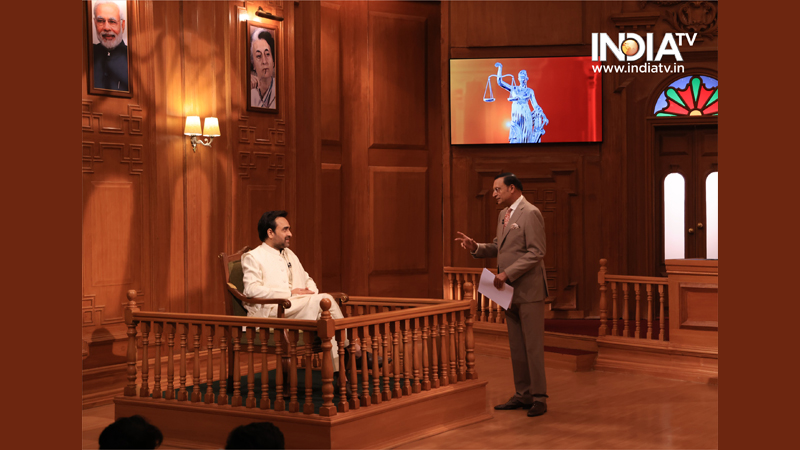
  • ‘RGV rejected me for a gangster’s role – Actor Pankaj Tripathi tells Rajat Sharma in ‘Aap Ki Adalat’

    ‘RGV rejected me for a gangster’s role – Actor Pankaj Tripathi tells Rajat Sharma in ‘Aap Ki Adalat’

    Mumbai: Bollywood and OTT star actor Pankaj Tripathi has revealed how director Ram Gopal Varma once rejected him for a gangster’s role after carrying out a test. “It was good otherwise both he and I would have suffered losses”, Tripathi said.

    Appearing in Rajat Sharma’s iconic show ‘Aap Ki Adalat’, telecasted on Saturday 6 January 2024, Pankaj Tripathi was asked why a noted director like Ram Gopal Varma rejected him for a gangster’s role.

    Pankaj Tripathi replied: “Yes, I once went to him and found several ferocious looking ‘gunday’ (gangsters) already waiting there. Some had deep scars on their faces. I asked one of them, are you really an actor? He replied, Ram Gopal Varma casts dangerous looking characters. Those days, aspiring actors used to deliberately cut their faces with blades, so that Ram Gopal Varma may spot and cast them.

    Rajat Sharma: Did Ramu call you?

    Pankaj Tripathi: Yes, he called me. It was an interesting incident. Ramu asked me to sit on a bench meant for four persons. I sat on the bench in a corner. He told me, ‘No No, come more close this side’. On a bench meant for four, I was sitting alone and he stared at me intently for 10 to 15 minutes. I felt very sheepish, when he continued to stare me for long. Then he told me, ‘Jao, Go’. He didn’t call me later….Of course, he is a good director. He met me once later and praised my acting, and said, “You are doing good, Pankaj”.

    Rajat Sharma: He must have realized, if he had cast you then it could have been his gain?

    Tripathi: It’s all a game of time (Samay Ka Khel Hota Hai). If he had cast me then, then it would have been his loss and my loss too. (Tripathi told the audience) So, if nothing big happens in your life, don’t be disappointed, it is an omen for something good that is going to happen.

    ‘I Never Check Monitor After Shoot’

    Pankaj Tripathi revealed he never watched the camera monitor after completing his shoot.  He said, “This is a rare thing which few people in the media know about. You (Rajat Sharma) have good spies in Mumbai. I never check the camera monitor after finishing my shoot. I think the director is the captain and it is his job to check the monitor. If he okays the scene, then it means he got what he wanted.”

    ‘Fukrey’ and Other Sequels

    Asked whether he changed his dialogues and sometimes, even the climax in his films, Pankaj Tripathi admitted in the affirmative. He said, at this moment, five of his films have sequels because they were hits.

    Rajat Sharma: Where did you get this idea of mixing Hindi with English in your dialogues?

    Tripathi: In the first part of the movie Fukrey, it was my idea. I told the director (M S Lamba) I wanted to change my lines. He first refused. While I was rehearsing, lighting work was going on inside the security cabin of Delhi’s Miranda College. The director told me don’t mix English in your dialogue, I told him I am only rehearsing. The lighting men began to laugh when I mixed English in my dialogues. By that time, the director had seen my rehearsed dialogue, and he agreed. In ‘Fukrey Returns’, I got the written dialogues. Also in ‘Fukrey 3’ too.

    Rajat Sharma: In Fukrey Part 1 and Part 2, your picture was not there in the posters, but in Part 3, your picture was there in the poster. Pankaj Tripathi has become a saleable star now?

    Tripathi: Yahi Toh Jeevan Hai (This is Life)

    Rajat Sharma: That’s why you are doing several sequels of your films?

    Tripathi: Sequels are made when film becomes a hit. Unsuccessful films don’t have sequels. At this moment, five of my films have sequels – Stree, Mirzapur, Criminal Justice, Fukrey and also Gangs of Wasseypur.

    Rajat Sharma: There was this ‘Super 30’ movie in which you were doing the role of a neta. You deliberately changed the dialogues?

    Tripathi: Vikas Bahl was the director. There was the scene where a student’s gets admission to Oxford University and asks the neta for money. The neta started blubbering something else. The neta was saying: ‘Ja Rahe Ho? Kahan Ja Rahe Ho? Jao, Jao, London Jao, Paris Jao, Japan Jao, Vietnam Jao, China Jao, Beijing Jao, Dubai Jao, Bahrain Jao.’ It looked like a poetry. The lines were not written. The dialogue was delivered spontaneously. I was doing the role of a neta in Bihar (Minister Shriram Singh in the movie). I had seen a leader in my village who used to blubber meaninglessly. I told the director Vikas Bahl, I will speak in the same manner. So, the scene developed in that way. It looked different.

    Rajat Sharma: Can you repeat the same dialogue here?

    Tripathi: It was, “Dubai Jao, Bahrain Jao … Kya Baat Hai. The boy said, Sir, you had called me. I replied: Hum har us cheez ko bulate hain, jo desh ke liye baat karega. The boy said, I need money. I replied: Jao Jao Jahan Jaana, par paisa aur prem ke chakkar me mat padna. Humne achche achhe ko barbaad hote dekha hai. Bhagat Singh padhe they? Dekho, nahin pade they. Jao Jao.” So you see, the neta starts giving a sermon instead of giving money.

  • Break into the New Year with your favourite stars on Lionsgate Play

    Break into the New Year with your favourite stars on Lionsgate Play

    Mumbai: ‘Celebrate endings, for they precede new beginnings.’ As we step into the New Year, it’s important for us to look back and cherish the moments, people and memories that stayed with us. Be it your friends, family or partner, commemorating the start of a ‘new chapter’ should be special in every sense. So, as you cosy up with your fam-jam for a quiet night in, Lionsgate Play brings to you a slate of titles across every genre. From the action-packed Keanu Reeves’ blockbuster John Wick: Chapter 4 to the critically acclaimed Past Lives, the platform has a binge-list. Kick-back, relax and get ready for a banging 2024 with your favourite stars from across the globe.

    John Wick: Chapter 4

    Indulge in the action movie of the year! There’s a price to pay and Baba Yaga has come to collect! Keanu Reeves is back with a Bang in Lionsgate Play’s John Wick: Chapter 4 as he looks to go up against the mighty High Table. Given the unlimited resources at the High Table’s disposal, John turns to allies Ian McShane, Laurence Fishburne, and Lance Riddick to help him for the fight of his life. With his life on the line will John Wick be able to pull off the impossible once again?

    Past Lives

    A love story that makes everything pale in comparison. Starring Greta Lee, Teo Yoo and John Magaro, Golden Globe Nominee, Past Lives is the heart-wrenching tale of two childhood friends who are separated when Nora immigrates to America. Almost a decade later when Hae Sung comes looking for Nora, they both confront destiny, love and the choices they made. Directed by Celine Song, the film is soul-food for every romance lover.

    About My Father

    This Robert De Niro starrer makes for the perfect laugh. Unlike the usual bitter-sweet chemistry between father and son, this one surely sets itself apart. Based on the life of the popular comedian Sebastian Maniscalco, this rib-tickling comedy has a high quotient of never-ending laughter and impeccable comic commentary on family and culture. The film promises to be a hilarious and heartwarming tribute to different cultures and experiences as told through the eyes of one of today’s most beloved comedians, starring Sebastian Maniscalco himself along with Kim Cattrall and Leslie Bibb.

    JoyRide

    These girls just want to have fun! Packed with comedy, drama and some NSFW instances, Joy Ride follows Audrey Sullivan on a path to self-discovery. When Audrey’s business trip to Asia goes wrong, she calls on her childhood bestie, Lolo, her college friend Kat and Lolo’s eccentric cousin Deadeye for help. Stranded in a country with nowhere to go, this wild squad embarks on a journey of utter chaos and debauchery that unveils their true loving selves. Starring Ashley Park, Sherry Cola, Stephanie Hsu and Sabrina Wu in titular roles, Joy Ride is the vacation we all want to go on.

    Minus One: New Chapter

    This seasoned show takes you through the story of Varun and Riya as they navigate the complexities of modern love and being broken up. From not being able to live without each other in Season 1, to never wanting to see each other again in Season 2, Lionsgate Play’s Indian Original Minus One: New Chapter is a roller coaster of emotions. Starring Ayush Mehra and Aisha Ahmed, Minus One is a story of love, longing and heartbreak as it touches on the themes of honesty, transparency and unrequited love.

    Plane

    An action film starring Gerard Butler and Mike Colter, Plane follows a commercial pilot named Brodie Torrance and a terrifying crash that marks only the beginning of his epic journey in the film. While an action film starring the two may seem like an obvious win for most audiences, the film’s plot is a darker action adventure with a life-or-death scenario. In Plane, Butler and Colter band together as pilot and fugitive to protect their fellow besieged crash survivors from swarming, hostage-taking pirates.

    Shotgun Wedding

    Wear your best clothes as you are invited to the biggest wedding celebration of the year. Featuring Jennifer Lopez and Josh Duhamel, the story builds on an ultimate destination wedding, hijacked by criminals, where suddenly everyone’s lives are in danger when the entire party is taken hostage. In the process of saving their families, the couple rediscovers why they fell in love in the first place. With a stellar star cast and amazing comedic chops, the movie will be a journey of fun, wit and tickling humour while the bride and the groom try to save the day and their wedding. 

  • Star India snaps up broadcast rights to Sachin-Warne’s Cricket All-Stars

    Star India snaps up broadcast rights to Sachin-Warne’s Cricket All-Stars

    MUMBAI: Star India has snapped up the broadcast rights of the much awaited venture of Sachin Tendulkar and Shane Warne namely The Cricket All-Stars T20 tournament, featuring cricket legends from across the globe.


    Confirming the development to Indiantelevision.com a source close to the development said, “The rights are with Star and we all are looking forward to the tournament.”


    While Master Card has been roped in as the title sponsor of the tournament, negotiations are on with a few more brand. The source adds, “We are in the last phase of proceedings and will soon reveal many more developments.”


    The Cricket All-Stars T20 tournament is set to unfold on 7 November, 2015 in New York. The tourney will then move to Houston on 11 November and to Los Angeles on 14 November.


    Virender Sehwag, who recently retired, has also joined the roster, which has former Indian greats like Sourav Ganguly, VVS Laxman and Ajit Agarkar. While Warne confirmed his participation in the tournament a few days back, the master blaster Tendulkar was also spotted sweating it out in the nets yet again. Some of the others former cricketers who are a part of the league are Kumar Sangakkara, Jonthy Rhodes, Wasim Akram, Glen Mcgrath and Ricky Ponting.


    His recent tweets read : 


    Had fun at the nets today. #ComingToAmerica, see you in New York in 10 days.. #CricketAllStars2015 @T20AllStars


    Welcoming Sehwag and beginning the countdown, Telndulkar tweeted: Welcome my friend and a batsman with distinct style …………………. #10daystogo


    Senior cricket expert Hemant Kenkre said, “It’s a delightful opportunity for the average American cricket fans to see the legends playing in front of them. The initiative is nice. I remember something similar was done in Brabourne Stadium long back. From cricket’s perspective, it remains to be seen how fit the players are, it’s been long since many of them retired and no one knows how much cricket they have been playing. But overall Wasim Akram bowling to Lara or Sachin facing Warne again would be a worthy sight for cricket lovers.”


    A sports media planning veteran added, “Sachin, Sourav, Sehwag, Warne in one pitch again can take viewership to a different level, recently we saw in Wankhede how the entire stadium was chanting Sachinnnnn! Sachinnnnnn! Having said that, the matches are to be played in America so the timing will be an issue for the Indian audience. Moreover, how competitive the matches are, will be another factor to look at. Overall the first three matches will be an experiment and the quality of those will determine the future.”


  • Movies, celebrities and songs were the top Google searches of the year

    Movies, celebrities and songs were the top Google searches of the year

    MUMBAI: This year, the number of people searching for Sunny Leone was much more than actors like Salman Khan and Katrina Kaif and cricket maestro Sachin Tendulkar, making the adult film star the most searched personality this year, reveals Google India’s annual Zeitgeist.


    Google India today announced its annual Year End Zeitgeist that takes a look at 2013 through the collective eyes of the world on the web. Zeitgeist offers a unique perspective on the year’s major events and hottest trends, based on Google searches conducted in India.


    This year, searches for Bollywood hits and the Indian Premier League topped the trending charts, showing that Indians’ first love, as ever, is for stars, movies, cricket and songs. Actor Shah Rukh Khan was fifth in the list, followed by singer Honey Singh, south Indian film actress Kajal Agarwal, Kareena Kapoor, Sachin Tendulkar and Poonam Pandey.


    SRK starrer-Chennai Express topped the Zeitgeist chart, followed by IPL 2013 and the musical blockbuster Aashiqui 2.


    Narendra Modi, who with his political campaigns made much noise all across in the country also  emerged the leader in the most searched news category. Other popular searches in the news category were Blackberry phones, Rahul Dravid, Saina Nehwal and Vijay Mallya.


    Local entertainment was also popularly searched on mobile this year. Top three searches on mobile were restaurants, bars and movies followed by coffee, cricket score and fast food.


    The report reveals that there was an uptick in searches for e-commerce sites. Flipkart and Olx.com were the most searched as online shopping sites.


    “From a search trends perspective, 2013 was clearly the year of entertainment. Online shopping, banking and e-commerce also continued their upward trend – a clear testimony to Indians embracing online transactions,” said Google India VP and Managing Director (Sales and Operations) Rajan Anandan.

  • BBC Worldwide sells Dancing with the Stars to Cambodian Broadcasting Service

    BBC Worldwide sells Dancing with the Stars to Cambodian Broadcasting Service

    MUMBAI: BBC Worldwide has announced that hit entertainment TV format Dancing with the Stars has been licensed to Cambodian Broadcasting Service (CBS). The series will air on CTN, Cambodia’s most watched terrestrial channel.


    The announcement marks the debut of Dancing with the Stars in Cambodia. It is also BBC Worldwide’s first format sale in the country.


    One of BBC Worldwide’s most popular global brands, Dancing with the Stars has been licensed in 49 countries, and a version of the show has been seen in over 75 countries, with over 220 series to date. Local versions of Dancing with the Stars air in countries as diverse as Lebanon, India and Russia.


    The brand has also extended into live events, gaming and digital properties. In Asia, the format has been sold in Thailand, Vietnam, Japan, China, South Korea and two versions in India. In India, the sixth and latest season of the Hindi version, Jhalak Dikhhla Jaa has achieved its best audience figures to date for Colors. The grand finale pushed the show to the top of weekend programming nearly doubling the ratings from 2012.


    The company thinks that Cambodia is an important market to grow in terms of business in Asia and thus it is looking at expanding there. Earlier, BBC World News, BBC Lifestyle and BBC Knowledge were launched in the country.


    The series is set to premiere in mid 2014.

  • Stars rally to promote Mickey Virus

    Stars rally to promote Mickey Virus

    MUMBAI: An established television anchor and actor Manish Paul’s debut film – Mickey Virus is ready to grab a larger eyeball before its release. Manish Paul and director Saurabh Varma have launched a unique kind of celebrity promo of the movie which has never been seen in Bollywood.

    In the promo, many Bollywood celebrities who are friends of Manish Paul like Salman Khan, Ranbir Kapoor, Anil Kapoor, Karan Johar, Farah Khan, Remo D’souza, Kapil Sharma were seen talking about Mickey Virus film.

    Dabangg Salman Khan was seen asking ‘Who is Mickey Virus…?‘, and gave his advice to people to be aware of this virus. Ranbir Kapoor also shares his views on Mickey Ideas. Bollywood‘s Lakhan, Anil Kapoor also featuring in the promo, was seen telling Mickey Vela Kahi Ka Dekhte hai..? Choreographer Farah Khan was seen shouting Mickey and said, “Mickey Arora internet par koi Qutub Minar bejata hai?”

    Bollywood diva Madhuri Dixit blushed and said whatever he is but he is the cutest guy I have seen. Bollywood director Karan Johar praises Mickey for his ideas. Kapil Sharma describes the names and said, “Naam hota hai Chaddha, Khurana, Sharma ye koi Naam hai Mickey Virus”. Choreographer Remo can’t stop explaining Mickey’s nature, he said, “Din me aate Bejata hai aur raat me logo ko aate me leta hai”.

    Mickey Virus is set against the backdrop of hacking where Manish Paul is playing a character of Mickey Arora. He is a smart guy who runs a grocery store in the day time and creates viruses for antivirus companies in the night. Mickey Virus also marks the debut of Elli Avram, now a contestant in Bigg Boss 7 house, who is half Greek and half Swedish.Mickey Virus is all set to hack people‘s brain and will soon enter in everyone‘s heart. The movie is stated to release on 25 October.

  • ‘Like Latin America, Indian fiction can be sold around the world’ : The WIT MD Virginia Mouseler

    ‘Like Latin America, Indian fiction can be sold around the world’ : The WIT MD Virginia Mouseler

    As format shows have become globalised, India offers an interesting opportunity. The consumption of reality shows has gone up even as channels like MTV have changed their positioning.

    In fiction, India is also emerging as a powerful production force and has the potential to sell its products around the world.

    The Wit (World Information Tracking), an agency specialised in research and information on TV programmes worldwide, is looking at expanding in India.

    In an interview with Indiantelevision.com’s Ashwin Pinto, The Wit’s managing director Virginia Mouseler talks about the company’s plans and the kind of content that works globally.

    Excerpts:

    When you founded The Wit 15 years ago, what did you set out to achieve?
    We wanted to explore creativity around the world and explore new ideas. We realised that other countries had good ideas and in France nobody knew about it.

    Now formats have become globalised. They travel around the world. Earlier only game shows like Wheel of Fortune travelled. Now it is a world of formats. The same good idea that works in one country can go to another and be adapted to the local culture.

    How have you expanded?
    In the beginning, we started with eight countries like UK, the US and Germany. These are the big markets in the Western world. Now we cover 40 countries, including some smaller countries like Belgium, as they are dynamic and creative. We observe every day the new shows and
    programmes that are being launched.

    We have correspondents around the world that send us a weekly report about the new shows that are launching in that country with ratings. You can track our database if you are a subscriber. Television channels subscribe to us. They get to know about interesting ideas.

    What are the major trends that we are seeing globally?
    The most successful show is the music talent contest. Music is everywhere. You cannot have just a singer in front of an audience. There has to be a competition element. Last year the number of formats adapted globally was 10 times compared to five years back.

    People are buying more and more formats. The top formats adapted globally include Dancing With The Stars, Idol, Got Talent, X-Factor and who Wants to Be A Millionaire. Another trend is reality TV. This is everywhere. Another growing trend is factual entertainment.

    TV channels want to address serious social topics without being boring. They find a way to tackle important social issues like homelessness or being jobless or being overweight in an entertaining way. Instead of doing a documentary, they will create experimental shows where people can change their lives and change another life.

    Could you give me an example of this?
    Teenagers in the UK are difficult to handle. They do what they want. They do not go to school nor do they obey their parents. They are unruly. They are sent to another part of the world. In one example on a show called ‘World’s Strictest Parents’, two UK kids were sent to an Indian family in Rajasthan. They had to adapt to discipline. The father showed them what education means to him.

    Is the kind of content that works here different from what works abroad?
    I don’t think so. Of course, there are cultural differences. At the same time in India Big Boss has been a success as it has been everywhere. A good idea will work anywhere if it is not shocking or provocative. It should have universal and positive values.
    ‘The economic downturn has led to consolidation. Spain launched two new national channels and smaller thematic channels two years back; this year they merged. Consolidation has also taken place on the production front.‘

    How are drama and comedy faring?
    They are popular. The problem is that drama and comedy are more expensive than reality TV. Everywhere local fiction is the most popular. But some channels in the UK wanted to reduce costs due to the financial crisis. They are good at fiction and drama but it is expensive. They did more reality TV. It was not a matter of success but of cost.

    So the economic downturn impacted programme expenditure?
    Yes! The UK was hit. A lot of people lost jobs. Producers made less content due to less ad revenue. Channels decided not to buy big budget fiction. I hope that they will do it again. The crisis impacted budgets of channels. They couldn’t pay for big historical fiction.

    In Germany they decided to buy more American shows rather than produce quality local shows due to costs. Now the situation is getting better. Spain is producing good fiction but with less expensive budgets. We are also seeing more co-productions happen in Europe between countries. This allows for expensive historical series to be made. For one country to do it would be difficult. The budgets are less than what is available in the US. When there are only 50 million viewers, it is difficult to produce an expensive show.

    The other impact of the downturn is that it led to consolidation. Spain launched two new national channels and smaller thematic channels two years back. This year they merged. Economically they could not attract enough ad revenue.

    How has the production sector been affected?
    Consolidation has also taken place on the production front. Earlier there were 10 independent production houses in a country. Now most have been acquired. It is tough for independent producers as there are few independent formats. They cannot buy a format as the big production houses have the major formats. It is difficult for a new
    idea to go on air now if it was not a success elsewhere.

    Channels are afraid of making mistakes. They don’t want to take the risk of buying a new idea from an independent producer.

    Across Asia what has the scene been like?
    Fiction in Korea and Japan is a big success in terms of soaps and dramas. After that, you have music and dance. We cover those two markets in Asia. Now we are focusing on India.

    What are the plans for India?
    Until now we followed formats which were adapted from abroad to see how it was done and if it had different cultural values. We did not follow fiction as there was a lot of it. Now we see channels like MTV have interesting local reality formats developed here like Roadies.

    We will focus on this kind of creativity. We will also cover fiction shows on channels like Colors. We want to touch base with the people in these channels to understand what is important for them and their style of production. India is such a powerful production force in fiction. I think that Indian fiction can be sold around the world as has been the case with Latin America. Their telenovelas are sold globally.

    Are you setting up an office here?
    No! We have one office in Geneva. We have correspondents globally sending us reports. It could be a housewife who loves television and will tell us everyday what is going on. Local correspondents also tell us why a fiction show is successful. It could be that the host is popular or that nobody wanted to see competition. You could have a
    show that runs for three hours and which delivers good ratings.

    Only a local person can tell you why it is a success. You need background and gossip. Someone who loves television and is not judgmental makes for a good correspondent. Correspondents should be able to work with our schedule and way. They have to be people that I can trust. I have to count on them every week. In India at the moment the PR agencies of channels send us data.

    Why didn’t you focus more on India earlier?
    We focus on countries that want to export their formats. Japan and Korea are looking increasingly at exporting formats. India so far has imported formats. They did not export anything. Now local concepts are being created here that are worth exporting. Important people in television and media read the Wit. It is an advertising platform for channels.
    We are seeing many foreign companies like CBS and RTL in Germany coming in now and tying up with Indian media companies. How do you see this impacting the content landscape?
    They will try to widen their own sales catalogue and adapt it to the local market. It is good for viewers as they have more choice. RTL and CBS want to have more space to sell but they have to be an Indian channel first of all if they hope to succeed. RTL has been in Greece recently and they have to adapt to the Greek market. They have to develop local fiction with local producers.
    What challenges are content producers and distributors facing as they try to hold on to audiences?
    The most threatened are the bigger channels. In the US for instance, the big networks have lost their audiences a lot over the past five years due to newer cable channels that drew young viewers. Specialty channels came in that targeted young women.

    What they have to do is create new channels themselves that are niche. The needs of people are becoming more specific. If you like golf, you want a channel for it.
    What impact is new media having on time spent on traditional television?
    Statistics show that people watch more television. New media is another platform. It is a new possibility to watch television. The challenge is to do good stories, ideas. Young people can connect to Twitter and Facebook. This is why the industry is developing connected television. They can attract young viewers on the TV and use what they like on their computer. Channels are working with technology companies.

    Is research more important today in an increasingly fragmented television environment?
    Television is a cultural product. When you see a TV show, you want to see something that reflects your society. You want to find yourself or your neighbour. Television is an image of society. You have to look at social and cultural influences to do a good TV show.
     

    But did the downturn impact channel budgets on research?
    We are a research tool. We did not lose any subscribers. We are a necessary luxury as channels need to know what is happening in other markets. We do social research to watch the social images of other countries through television. Television teaches you about the social worlds in other countries.

    The youth is probably the most difficult demographic to capture. They also migrate across platforms. What can media companies do to hold their attention better?
    Channels spoke about multiplatform formats last year. I think though that just going multiplatform does not make a show. It has to be an interesting story, a good topic something that touches the life of a youth.

    The youth might want to interact with and control content. However this is only an additional tool. The core is to have a show that meets the youth’s issues in an innovative way. It could be in fiction, reality. One show that has worked is Young Dumb and Living Off Mum. It airs in the UK on the BBC and focuses on making youngsters who have been lazy more responsible. But it is done in an entertaining way.

    The series follows a group of youth who‘ve waited on hand and foot their whole lives. The series sees them living together in a house and fending for themselves. Each week they must compete against each other in tough work challenges set by their parents, designed to encourage them to become more independent. After each assignment, their parents meet to watch the footage of the task and decide who, based on behaviour and performance, should be eliminated from the competition.At the end of the series, the winner will receive a round-the-world trip for two people.

    In what way has the youth perception and expectations from television changed over the past five years in India and globally?
    The youth want to watch television everywhere. Earlier the family gathered at a certain time. That has changed. The youth want to watch it anytime and anywhere and enter it anytime. You cannot tell them that a show starts at 8 pm. They want to control television and not be in control of it.

    What are the mistakes that television channels catering to the youth should avoid?
    It should avoid giving them lessons. It should not talk down to them. Television is not a tool of power. Broadcasters should realise this. Television is a consumption good. Television should understand that it has to be attractive and at the same time offer flexibility. It should not be a big brother. The youth want information in an entertaining way.

    What lessons have come from shows that have worked for youth?
    Youth needs guidance and coaching. This is why there are so many coaching shows for the youth. Guidance can be given but not through lessons. It should be done through experiments like involving somebody’s life being changed for the better.

    The youth also want avenues that allow them the possibility show their talents. That is why talent shows are popular. However everything does not have to be about being a star. There are talent shows for ordinary jobs like a butcher, nurse. Television has to offer experiments on different worlds.

    What about content targeted towards women?
    There is an interesting show in the US that has been adapted in many European countries called ‘The Real Housewives of’. They follow real housewives from a neighbourhood. You can enjoy watching the life of a real housewife. It is not necessarily about the successful woman professionally. She can be middle class or upper class. You can see her daily life. The ideas came from the fiction show Desperate Housewives.

    Another interesting thing is that shows that only targeted women earlier are also hooking on men. For instance, cooking shows are very successful. Here you have Masterchef India. This genre also targets men. Men and women compete to cook the best meal and welcome guests. Japan loves this genre. But what is interesting is that countries like France and Italy which are famous for food have less cooking shows.

    In terms of television consumption patterns, what differences are there globally?
    What we have seen is that it is often linked to when people have dinner. So in the UK the news is at 7 pm, in Germany it is at 8 pm and in Spain it is at 10 pm. In the UK the average length of a show is half an hour. In Italy it is three hours.

    In the first 20 minutes, the host is greeting the audience and saying nice things. In the UK it would be over. In Turkey, a fiction show is four hours. Turkish people like watching TV, going to eat and going back to watch the show.

    Are any genres becoming more popular?
    Hidden camera shows are making a comeback on television globally. This would work well in India. These shows have a lot of comedy. Big global events are becoming stronger drivers for channels like a world cup.
     

    In India we are seeing a trend where music channels to capture youth have moved away from music and doing different shows. Is this something being seen globally as well?
    Yes! They realised that they needed an identity. Music video clips can be found in many places. MTV realised that they had to be something else than just a music channel. When MTV started, it was the only place where you could find music clips. That is not the case now. They needed a clear personality. The music channels realised that they need to have a face, a real identity.