Tag: Starlink

  • Global broadband subs hit 1.52 billion as fibre dominates

    Global broadband subs hit 1.52 billion as fibre dominates

    MUMBAI: Global broadband subscribers surged past 1.52 billion in the first quarter of 2025, marking a 1.21 per cent quarterly rise as South and East Asia drove expansion, according to Point Topic data. Yet the picture remains patchy, with 22 countries—up from 14 in the previous quarter—seeing subscriber numbers fall as consumers shift to mobile broadband or grapple with economic headwinds and market saturation.

    India topped the largest 20 fixed broadband markets with a blistering 4.7 per cent quarterly growth rate, whilst Britain stood out as an outlier, suffering a 0.3 per cent decline as fibre rollout failed to offset broader connection losses.

    Fibre-to-the-home and building connections now command 72.34 per cent of global fixed broadband subscriptions, cementing the technology’s dominance. Other fixed technologies saw their market shares shrink, bar satellite and fixed wireless access, which bucked the trend with spectacular annual growth of 47.4 per cent and 29.9 per cent respectively.

    The satellite boom was largely driven by Starlink breaching the 5 million customer mark, though growth has slowed due to capacity constraints and pricing pressures. Competition is set to intensify as Amazon’s Project Kuiper prepares for launch by year-end, with Britain expected among the first markets to go live following Ofcom approvals. Residential plans currently start at around £75 monthly.

    Fixed wireless access is reshaping rural connectivity, particularly in America and India, with aggressive investments from Reliance, Bharti, T-Mobile, Verizon and AT&T driving adoption.

    Industry consolidation is accelerating, with potential mega-deals including Charter’s merger with Cox in America and a possible carve-up of France’s SFR among Orange, Bouygues and Iliad. Meanwhile, sub-Saharan Africa represents untapped potential, attracting significant infrastructure investment targeting broadband expansion.

  • Elon Musk’s Starlink clears final regulatory hurdle in India

    Elon Musk’s Starlink clears final regulatory hurdle in India

    MUMBAI: Elon Musk’s satellite internet venture Starlink has finally received the green light from India’s space regulator, In-Space, clearing the last major regulatory roadblock to launch commercial operations in the country.

    On 8 July, the Indian National Space Promotion and Authorisation Centre (In-Space) Igranted Starlink permission to operate its Gen1 non-Indian GSO and NGSO satellite constellation for broadband services over Indian territory. The authorisation is valid until July 7, 2030.

    The nod includes specific frequency band allocations. For gateway beams, Starlink can use uplink bands of 27.5–29.1 GHz and 29.5–30 GHz, and downlink bands of 17.8–18.6 GHz and 18.8–19.3 GHz. For user terminals, the uplink band is 14.0–14.5 GHz (LHCP), while the downlink is 10.7–12.7 GHz (RHCP).

    The approval follows Starlink’s receipt of a Global Mobile Personal Communication by Satellite (GMPCS) licence from the department of telecommunications (DoT), positioning it as the third player—after Eutelsat-OneWeb and Reliance Jio—to secure full clearance to provide satellite broadband in India.

    Next on the to-do list: acquiring administrative spectrum from the government, setting up ground stations, and passing security compliance trials. Starlink plans to establish three gateway stations across the country as part of its rollout.

    Sources say the DoT will soon allocate trial spectrum to facilitate security demonstrations. Final spectrum pricing and allocation guidelines are also expected shortly, following recent recommendations from TRAI.

    Starlink has already inked deals with Indian VSAT providers, signalling a B2B and B2G push ahead of a consumer rollout. Insiders hint that Starlink could soon begin offering direct-to-consumer connections via its website, though pricing is still under wraps. A promotional plan pegged at Rs 840 per month is reportedly on the table, but not officially confirmed.

    The road to India hasn’t been easy. Starlink has waited since 2022 for regulatory approvals, facing national security concerns and policy disputes with Jio over spectrum allocation. Eventually, the government backed Musk’s view that satellite spectrum should be assigned, not auctioned.

    Meanwhile, Amazon’s rival satcom venture, Project Kuiper, remains stuck in regulatory limbo. Despite completing operational and security checks, its application is still under review. Kuiper is proposing a more ambitious infrastructure plan, including 10 gateways and PoPs in Mumbai and Chennai—well ahead of Starlink’s three.

    India, the world’s second-largest internet market, is shaping up as a critical battleground for satellite broadband. With Musk’s firm now officially in the race, the stage is set for a high-stakes space-age showdown.

  • Europe shoots for the stars with home-grown satellite internet

    Europe shoots for the stars with home-grown satellite internet

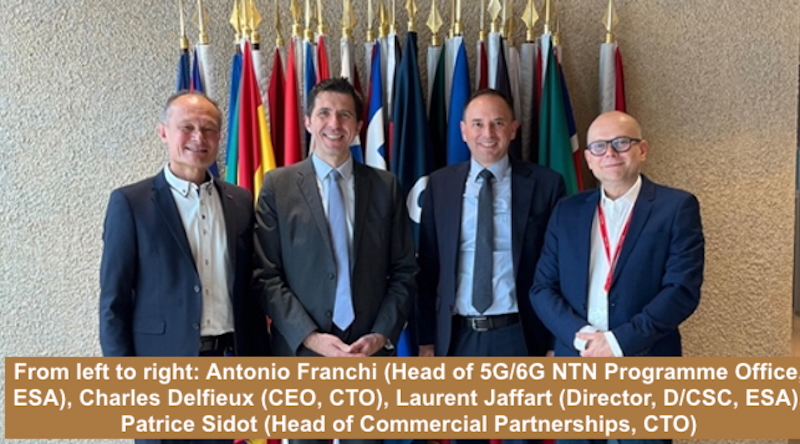
    MUMBAI: Space, it seems, is the final frontier for European ambition. Constellation Technologies & Operations (CTO), a plucky French outfit with grand designs on satellite internet, has inked a memorandum of intent with the European Space Agency (ESA) to conduct orbital experiments that could shake up the cosmic connectivity game.

    The partnership will see the duo test the world’s first regenerative 5G payload operating in the mmWave band from low Earth orbit, with a satellite launch pencilled in for June 2025. It’s a bold gambit to prove that Europe can play with the big boys—namely America’s SpaceX and China’s expanding constellation of internet satellites.
    Whilst Elon Musk’s Starlink and Chinese competitors dominate the space internet market, CTO is championing what it calls a “made in Europe” alternative. The company’s pitch is seductive: a shared, neutral infrastructure that lets telecom operators beam high-speed, low-latency internet from space without breaking the bank on massive capital investments.

    CTO CEO & founder Charles Delfieux isn’t mincing words about the venture’s ambitions. He stated:  “This alliance with ESA reflects a shared ambition: to build a competitive European sovereignty in space connectivity, powered by bold technology designed and developed in Europe. We’re proving that it’s possible to compete on a global scale without compromise—giving telecom operators back control over their future in space. Space is the new frontier for telecoms!”

    The technical wizardry involves using very low Earth orbit satellites to leverage telecom operators’ existing 5G mmWave spectrum, creating what the companies describe as a “hybrid connectivity ecosystem.” Rather than building entirely new networks, operators could complement their terrestrial infrastructure with space-based coverage—particularly handy for remote, rural, or crisis-hit areas where laying fibre is either impossible or prohibitively expensive.

    ESA  director of connectivity & secure communications Laurent Jaffart sees the collaboration as part of Europe’s broader push for “technological sovereignty.” He said: “This agreement aligns with ESA’s strategy to support the rise of innovative European players and jointly build resilient connectivity. The upcoming tests with CTO will pave the way for new hybrid use cases at the intersection of terrestrial and space networks.” 
    The upcoming tests, conducted jointly between CTO’s French-developed regenerative payload and ESA’s experimental facilities in Oxfordshire, represent what both parties hope will be a “major step forward” in the race for European space independence.

    As satellite internet becomes increasingly crucial for everything from military communications to rural broadband, Europe finds itself uncomfortably dependent on foreign providers. CTO’s proposition—a competitively priced, operator-friendly alternative—could offer a lifeline for European telecoms companies looking to expand their reach without surrendering control to American or Chinese constellations.

    Whether this ambitious European venture can actually deliver on its promises remains to be seen. But with ESA’s backing and a clear launch timeline, CTO is certainly putting its money where its mouth is. In the high-stakes game of space internet, Europe is finally ready to make its move.

  • Jio Platforms rides the 5G wave: revenues, profits, and ambitions soar in FY’25

    Jio Platforms rides the 5G wave: revenues, profits, and ambitions soar in FY’25

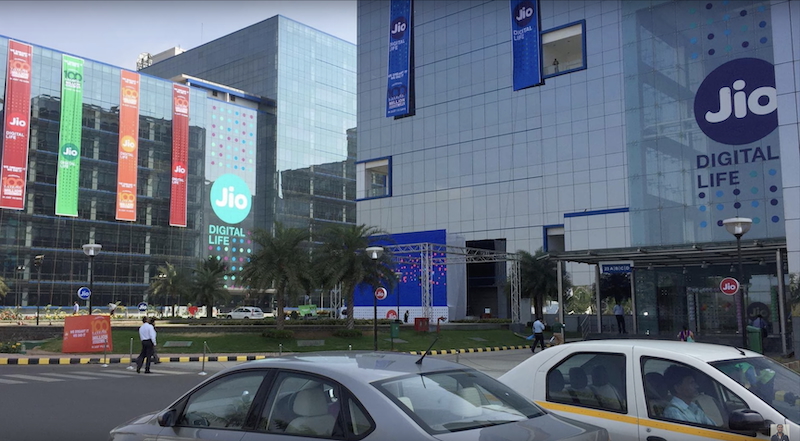
    MUMBAI: Reliance’s digital juggernaut, Jio Platforms Limited (JPL), wrapped up FY25 in style, clocking quarterly revenues of Rs 39,853 crore, up 17.8 per cent year-on-year, and an EBITDA surge of 18.5 per cent to Rs 17,016 crore. The subscriber base swelled to 488 million, with over 191 million True 5G users, as India’s data appetite drove traffic to an eye-watering 185 exabytes – a 24 per cent jump.

    Average revenue per user (ARPU) climbed to Rs 206.2, thanks to tariff hikes and a posher customer mix. Net profit rose a muscular 25.8 per cent to Rs 7,023 crore for the quarter ended March 2025, fuelled by strong EBITDA flow-through and despite a modest uptick in depreciation and finance costs.

    Jio’s operating revenue (net of GST) grew on the back of mobility tariff hikes and a surge in home broadband and digital services. EBITDA margins stayed a steady 50.1 per cent, while churn was the industry’s lowest at 1.8 per cent. Data consumption hit a per capita monthly average of 33.6 GB, with total data traffic rising nearly 20 per cent year-on-year.

    Jio signed an agreement with SpaceX to retail Starlink broadband in India, pending regulatory green lights. It also rolled out a cricket season blitz – free JioHotstar and JioFiber/AirFiber deals to woo mobile and home users alike.

    The telco flexed its tech muscle at the Mahakumbh mela, handling 400 million data service requests and 20 million voice calls on peak days without breaking a sweat. In parallel, partnerships with AMD, Cisco, Nokia, and Ericsson are fuelling its next big play: an Open Telecom AI Platform designed to slash operational costs and turbocharge network efficiency using cutting-edge agentic AI.

    Jio’s IP prowess didn’t go unnoticed either, with wins at the National Intellectual Property Awards and the World Intellectual Property Organization (WIPO) Trophy, further burnishing its credentials as India’s poster child for homegrown innovation.

    Reliance Jio Infocomm chairman Akash M Ambani summed it up, saying: “Jio continues to drive consistent outperformance with best-in-the-world network technologies and a wide bouquet of digital services. Our work at the Mahakumbh and plans to enable large-scale AI infrastructure reaffirm our commitment to serving India’s digital future.”

  • Jio hops onto SpaceX’s StarLink bandwagon close on the heels of Airtel

    Jio hops onto SpaceX’s StarLink bandwagon close on the heels of Airtel

    MUMBAI:  In a strategic move that follows arch-rival Airtel’s recent partnership, Jio Platforms has entered into an agreement with SpaceX to offer Starlink’s satellite internet services to Indian customers.

    The agreement, announced Wednesday, will see India’s data traffic heavyweight join forces with the world’s leading low Earth orbit satellite operator in a partnership that promises to reach even the most remote corners of the subcontinent.

    “This deal isn’t just about connecting the unconnected—it’s about transforming digital access,” says an industry analyst. “With Airtel and now Jio partnering with Starlink, SpaceX has strategically orchestrated its entry into one of the world’s most competitive telecom, internet and data delivery markets.”

    Jio’s retail network will soon showcase Starlink equipment alongside installation and activation support, creating a significant expansion of connectivity options that complement existing JioAirFiber and JioFiber services.

    Mathew Oommen, group chief executive at Reliance Jio, emphasized the company’s mission to provide “affordable and high-speed broadband” to all Indians, while Gwynne Shotwell, president and chief operating officer of SpaceX, expressed enthusiasm about the partnership—pending government authorisation. “We are looking forward to  to provide more people, organisations and businesses with access to Starlink’s high-speed internet services.”

    The satellite internet competition has intensified in India, with both telecom giants now aligning with Elon Musk’s constellation. Industry watchers suggest this competition could revolutionise connectivity across rural India, where terrestrial infrastructure has traditionally been inadequate.

    Beyond immediate internet provisions, both companies are exploring additional collaborative ventures to boost India’s digital ecosystem in what Oommen described as “this AI-driven era.”

    For millions of Indians lacking reliable internet access, these satellite partnerships promise to be a significant breakthrough—one that now has not just one, but two major telecom providers driving forward.

  • Airtel signs up with SpaceX to bring Starlink services to India

    Airtel signs up with SpaceX to bring Starlink services to India

    MUMBAI; In a dramatic move set to shake up India’s telecommunications landscape, Airtel has today inked an agreement with Elon Musk’s SpaceX to bring Starlink’s lightning-fast internet services to the subcontinent.
    The landmark deal—the first of its kind in India—hinges on SpaceX securing regulatory approvals  to peddle Starlink services in the country. Once green-lit, the partnership promises to dramatically expand high-speed connectivity to even the most far-flung corners of India.

    Under the ambitious arrangement, Airtel shops could soon display Starlink equipment, whilst the telecom giant will offer Starlink services to its business customers. The collaboration aims to connect remote communities, schools and health centres currently languishing in digital darkness.

    Airtel and SpaceX will also explore how Starlink could help expand and enhance the Airtel network, as well as SpaceX’s ability to utilise and benefit from Airtel’s ground network infrastructure and other capabilities in India.

    Airtel managing director Gopal Vittal  hailed the partnership as a “significant milestone” in the company’s quest to deliver “world-class high-speed broadband to even the most remote parts of India.”

    “This collaboration enhances our ability to ensure that every individual, business, and community has reliable internet,” Vittal declared. “Starlink will complement and enhance Airtel’s suite of products to ensure reliable and affordable broadband for our Indian customers—wherever they live and work.”

    “Technology is always evolving and we’re committed to staying at the forefront of innovation so that we can continue to bring the best connectivity experience for our customers. This includes collaborating with global leaders like SpaceX to extend our reach and add new coverage to customers throughout all of India.”

    SpaceX’s President Gwynne Shotwell matched Vittal’s enthusiasm, stating: “We are excited to work with Airtel and unlock the transformative impact Starlink can bring to the people of India. We are constantly amazed by the incredible and inspiring things that people, businesses and organizations do when they are connected via Starlink. The team at Airtel has played a pivotal role in India’s telecom story, so working with them to complement our direct offering makes great sense for our business.”

    The deal represents a clever strategic move for Airtel, which already boasts over 550 million customers across 15 countries. By adding Starlink to its portfolio alongside existing partner Eutelsat OneWeb, Airtel strengthens its position as India’s largest integrated communications solutions provider.

    Starlink, which operates the world’s first and largest low Earth orbit satellite constellation, delivers broadband internet capable of supporting streaming, gaming and video calls to users worldwide. The service is engineered and operated by SpaceX, the world’s leading rocket launch provider.

    The collaboration signals a new chapter in India’s digital transformation saga, potentially bridging the stubborn digital divide that has long hampered the nation’s development ambition

  • Avia’s Satellite Industry Forum demystifies trends and the future

    Avia’s Satellite Industry Forum demystifies trends and the future

    Mumbai: Industry lobby group the Asian Video Industry Association’s (Avia’s) Satellite Industry Forum held in Singapore took a deep dive into the world of satellites for video, data and mobility with executives from Asia and overseas voicing their opinions around current trends and the future on 28 May.

    The consensus was that while the market for the satellite ecosystem has been tough with some launch failures, hard macroeconomic forces, and caution amongst financiers and insurers about this segment, there is optimism on the horizon.

    The bright star on the horizon has been the success of Elon Musk-owned Space Link’s direct-to-consumer StarLink low earth orbit (Leo) or non-geosynchronous orbit (NGSO) constellation which has notched up $1.4 billion in revenues by signing up millions of users. This, and Amazon’s Project Kuiper, led to a frenzy of consolidation amongst the geosynchronous orbit (GSOs) players, following questioning by financiers and board members on what play they have in the multi-orbital business.

    Intelsat acquired Go-Go and followed up with an announcement that it itself was being acquired by big boy SES for a cash consideration of $3.1 billion. The marriage would create a giant with over 120 satellites in both the MEO and GEO legs of the business. Viasat meanwhile merged with Inmarsat, while Eutelsat fused with OneWeb.

    Speakers expected the wave of digestion and consolidation of the industry to continue, and possibly intensify, even as players such as Rivada Space Networks, promising the outernet through Leos get ready to provide their services. Also, HummingSat, which is Swiss company SWISSto12 small GEO satellite has thrown its hat into the ring.  Speakers at SIF  opined that video will continue to be delivered increasingly via IP, thanks to streaming services, through fibre, terrestrially as well as through high throughput satellites.

    SIF featured speakers such as Thaicom CEO Patompob (Nile) Suwansiri, ABS CEO Mark Rigolle, Asiasat chief commercial officer Raymond Chow, Measat Satellite Systems COO  Yau Chyong Lim, Sky Perfect Jsat GM Asia regional headquarters &  Singapore branch regional director  Kenichi Shimotsuma, Milbank partner Dara Panahy, Global Satellite Operators Association VP policy & regulatory Peng Zhao, Amazon Web Services head of global satcom (A&S), APT Satellite EVP  Huang Baozhong, Encompass VP, engineering & operations Mark Wardle, Lynk Global VP, Asia Pacific James Alderdice, Northern Telecom CTIO  Mahdi Nazari Mehrabi,  Wireless Nation operations adviser  Martin Arias,  GapSat CEO Gregg Daffner, Hughes Network Systems India president Pranav Roach, Curvalux & Saturn executive chairman Thomas Choi, Gilat Satellite VP regional sales  Yossi Gal, VP Regional Sales, Hughes VP International Operations Kartik Sheshadri,  Integrasys CEO Alvaro Sanchez, ST Engineering iDirect VP market development & strategy  Jo De Loor, Acesat Satellite VP business development & engineering Adrian Potter, Baker & McKenzie Wong & Leow principal Ken Chia, Bird & Bird partner  Thomas Jones, Partner,  Marsh Speciality managing director Stephen Monks Office for Space Technology & Industry, Singapore (OSTIn) deputy director  Jacinth Lau, Comsys partner Jeremy Rose,  Arianespace Asia Pacific managing director Vivian Quenet,  Boeing Satellite Systems VP business development Joe Bogosian, Space Machines chief commercial officer  Mark Ramsey,  HummingSat, SWISSto12 CTO Michael Kaliski, SpaceIntelReport co-founder & chief editor  Peter de Selding, Eutelsat OneWeb regional VP-APAC  Neha Idnani,  Kacific Broadband Satellites Group EVP corporate development Jacques-Samuel Prolon, Planetcast CEO Sanjay Duda,  Rivada Space VP of sales APAC Donald Chew, Rivers Advisers CEO Katherine Gizinski &  chief consulting officer Alexis Martin and  Avia CEO Louis Boswell.

  • MEASAT to distribute Starlink services

    MEASAT to distribute Starlink services

    Mumbai: MEASAT Global Berhad (“MEASAT”) – Malaysia’s premier satellite solutions provider has officially signed with Space Exploration Technologies Corp (SpaceX) to become the official authorised reseller for Starlink Hardware and Services in the markets that MEASAT serves. The agreement was formalised in December 2023.

    The official authorised reseller status enables MEASAT to solidify its position as a one-stop provider for customers in pursuit of the most suitable satellite services and solutions that address their needs. Meanwhile, Starlink will be able to benefit from  MEASAT’s established market presence and strong on-ground customer service and technical support, including a 24×7 helpdesk operated by in-country personnel and onsite support and maintenance. MEASAT’s customers have long benefited from end-to-end inclusive packages for last-mile logistics and installation services, as well as repair and maintenance, which will now extend to Starlink products offered by MEASAT.

    “MEASAT is delighted to work with Starlink as the official authorised reseller in our markets. As the leading Malaysian satellite solutions provider, we have always been open to working with other entities to deliver the benefits of satellite technology to our customers which include government agencies, commercial enterprises and rural  residents via a diverse portfolio of solutions to meet evolving needs. For example, by infusing Starlink’s capabilities into MEASAT’s CONNECTme NOW satellite broadband service, we are able to further enhance high-speed Internet services for the last three per cent of Malaysians lacking terrestrial connections. In addition, our capacity to offer fit-for-purpose, high-availability services for MEASAT’s client base in the oil & gas, maritime, and enterprise sectors will be expanded,” said MEASAT chief commercial officer Ganendra Selvaraj.

    “Our new status as an official authorised reseller for Starlink marks a milestone in our ongoing growth journey, being the first non-geostationary orbit (“NGSO”) satellite products offered through our on-ground network, as we continue exploring other potential NGSO solutions for our suite of services,” he elaborated.