Tag: Star TV

  • Raghu-Rajiv and Ravi Luthria team up for new venture ‘Monozygotic’

    Raghu-Rajiv and Ravi Luthria team up for new venture ‘Monozygotic’

    MUMBAI: Days after Rajiv Lakshman quit his as COO of Coloscem, he has announced a new venture with his twin brother Raghu Ram. The duo has come together with Ravi Luthra, a marketing veteran to start a new content and communications hub – Monozygotic. This new startup will mainly focus on content creation across various avenues of media from TV to digital to on-ground.


    Speaking about their new venture, Monozygotic co founder and managing zygote Rajiv said, “There has been a tectonic shift in the consumption of media in the past decade and it is critical for any brand manager to not only figure the right media mix but also the right communication for a specific media. This is where Monozygotic steps in with our cumulative experience in building enduring, genre defining brands like Roadies, Splitsvilla and Masterchef India”.


    “We have had the opportunity of multifunctional experience in content, both behind the scenes and facing the camera. The experience has helped us not only to understand the business of content but has also to develop a deep insight into audience psyche. I believe Monozygotic will be able to bridge the need gap, catering to audience and advertisers with equal ease. We have been contemplating this venture for a while now. I view Monozygotic as a natural progression in our respective careers”, added Monozygotic co founder and managing zygote Raghu.


    While majority of people know them as the face of the cult show Roadies, the dynamic duo Raghu Ram and Rajiv Lakshman, with experience of more than two decades have also been responsible for creating a number of other enduring, genre defining television shows such as Splitsvilla and instrumental in the launch and success of Masterchef India. They have also broken new ground in the digital content space with Roadies Battleground and Jack & Jones Hitched. Ravi Luthra, with 15 years experience, has also made a mark in the industry with companies like Marico Industries, Visa, Star TV, MTV and Sony Entertainment Television among others.


     “The twins are masters at content creation and community building. Monozygotic aims to create clutter-breaking content catering to a wide array of audiences and marketers. The duo has a keen understanding of the audience which we plan to leverage with a focus on new media, the future of content consumption.  Unfortunately, a huge gap exists in this space in the connect between brands and consumers. Herein lies a great opportunity to create innovative and customised market driven content that is both sharable and sustainable” said Monozygotic chief executive zygote Ravi Luthria.


    Monozygotic has already started working with some established brands on new, exciting projects.

  • We will look for international, local collaborations and diversifications: Sameer Nair

    We will look for international, local collaborations and diversifications: Sameer Nair

    I had never gone away”, says the man who is credited with bringing KBC and K shows to the Indian television screens. Sameer Nair, after a hiatus of three years, is back at doing what he does best. He has been busy exploring opportunities in online video, e-commerce, film & television production, education, hospitality and of course, helped the newest entrant, AAP, into Indian politics.


    A maverick as many call him goes by the philosophy – communicate clearly, be polite, be persuasive, sweat the detail, seize the moment and create not compete for what is already created.


    As the new group CEO at the country’s biggest production house, Balaji Telefilms, he will work closely with Shobha and Ekta Kapoor to take it to the next level.


    Indiantelevision.com’s Meghna Sharma caught up with him to know about his views on today’s audiences, their taste, Balaji’s success in gripping the viewers’ pulse and its future plans.


    Excerpts…


    You had the genius to select the content which caught the pulse of the viewers. How has that evolved? How do you keep abreast with the change in taste?


    Television is dynamic. When we did ‘KBC’ and ‘Kyunki saas bhi kabhi bahu thi’ which went on air on the same night, quickly followed by ‘Kahani ghar ghar kii’ and ‘Kasauti zindagi kay’, it used to be half an hour weekly programming on three main channels – Star Plus, Zee and Sony. This gave viewers 90 choices to pick from. At Star our big strategy was to channel this to daily and changed the whole schedule, reducing the primetime viewing choice to five. Which others followed and continues to be even done today. It was a new concept then and people liked it. With Imagine, we got mythology into primetime which can be seen today as well.


    In the last 22 years of Indian television, we have had a full generation of television – executive, creatives. When I started of in 1993, we were the pioneers then, and had only the legacy of Doordarshan (DD) to look back at whereas today’s generation has 22 years of television to study. So, in the last 20 years, there has been a lot of process especially in consumer taste because the country has progressed. Today we have 150 million television homes, 800 million mobile phones, internet, disposable income has increased and content has kept in pace with it because of the new talent entering the space. For instance, Colors has had wonderful success, Sab has created a special niche for itself and done remarkably well, production houses are doing well and coming up with shows like ‘24’ and ‘Yudh’.


    Content has evolved and so have the people.


    Channels do a lot of research, but what I feel is that research can only prevent you from doing a mistake. It can tell you what not to do and not what to do. Finally, what has to be done is done with meticulous details, creativity and the way a story is told. For instance, ‘kyunki…’ as a daily show was a good idea strategically, but people remember the story of Tulsi in the big Virani family. It is all about great stories, well told.


    What is your role as group CEO?


    Balaji is in a very good place and we have had a successful run of films as well as shows. I was doing a count and Balaji has 15 of the top 50 shows currently on the Indian television screens. There are a very few listed industries in this space and it is one of them.


    And in the past six months we have been discussing the growth plans and one of the main take outs of those meetings has been that we should scale up the company. So, now Balaji will do more movies, more television, we will look for international as well as local collaborations and look for diversifications.


    I have really come here to work with Shobha and Ekta Kapoor to do that.


    Which verticals are you looking at for collaborations?


    Could be movies, shows, formats or just partnering with an international company on specific projects. If there is a format company looking to set up a shop here in India or wants to do catalogue shows here then that could be an opportunity we would be looking at.


    Between Ekta, Shobha and you, how are the roles divided?


    Ekta is creative and she is great at that. Mrs Kapoor has been the operational backbone of the company, so I will work closely with her. And also with Ekta. The main aim here is to work together and look for growth opportunities.  


    What in your assessment are Balaji’s strengths and weaknesses? And what are its opportunities?


    Balaji has a very good team and they have produced some incredible work. So, if there has to be a weakness then it is to have craft a strategic plan and then execute it. At its current stage, the Indian television industry is at its best and has no weaknesses. But of course, one can always do better and look at different genres, show etc. But, I wouldn’t say that these are weaknesses but are opportunities.


    As for the strengths, they are very strong on creative, production and have the ability to deliver. The talent in Balaji is phenomenal and there is a lot of ambition.  


    What is Balaji’s USP- is it talent, creativity or the ability to know what viewers want?


    The USP is the storytelling. Ekta’s way of telling a story is what sets her apart from the others. The market is crowded and a lot of others are also doing a great job. It is not a monopolistic market. But Balaji is special.


    A lot of famous faces have come from Balaji’s house. How is the talent management arm, Spark, doing?


    I haven’t taken a look at it yet, but will soon do. I want to do some reorganisation with that arm. We at Balaji want to manage the talent in the country and look at growing more talent.


    Lately, we have seen channels experimenting with finite shows. According to you, what is its future in India?


    The market is already segmenting. There is a segment which will continue to watch the dailies and then there is another who will consume mythology and historical shows. But there is and will grow into a bigger section of audience which is interested in finite shows. So, there will be two distinctive audiences – you and your mother.


    Niche is always more valuable. And with digitisation it will benefit the industry and the viewer as one can choose to pay for a channel showcasing only hi-end products. As this group grows, it becomes a business model.


    The market is moving that ways and we are the market leaders.


    Globally, there are firms like Shine, BBC, Fremantle who have spread their wings internationally. Do you think Balaji can be India’s Shine?


    A lot of global companies which have come to India and come with their format catalogue which they are selling in India tend to be in reality and game show space. But we haven’t seen any international firm making any head way in the fiction space. The same thing applies on reverse basis. The west has been more advanced than India when it comes to television. The formats have done well there and since they are universal, they can travel across the globe.


    What Balaji will look to do is to partner with them. The future of this business is creative collaboration rather than destructive competition. We are looking at more people to work for.


    And we have already had a few offers to co-produce international movies into Hindi with a foreign partner. Maybe, later we could do shows as well and who knows set up a collaborated company in the future.


    Earlier there was Balaji and Balaji alone, apart from UTV. But today we have Beyond Dreams, Director’s Kut, Swastik which are producing big ticket shows. Did Balaji let go of opportunities? Or was it the content demand that helped them crop?


    It’s an expanding market and there is a limit to what a production house can do and should do. So, it’s just a dynamic market. There are too many channels and we need more shows so therefore more producers are needed to produce these shows.


    It is a nice competitive space with good creativity energy.


    Balaji did produce regional content for TV, will we see that happening again? What about venturing into regional films?


    I have heard that regional market is going through a bit of turmoil and price points have really crashed there. So, we are looking at the regional market to work with the right partners. So, again the big focus in on collaboration.


    Balaji has a lot of inherent strength and a lot of reverse so we have to see if we can collaborate with creative people there. We have an open door policy and anybody with a great idea can approach us. We are always looking for people to work with whether in television or films or new media.


    As far as films are concerned, what is the strategy?


    We have had a good run this year and the plan is to settle towards eight to 12 movie slates per year. So we will have to work really hard to achieve this because it will have to be across genre and across budgets. We have always done it that way and that’s why we have had films like ‘Ragini MMS 2’, ‘Mein Tera Hero’ and ‘Ek Villian’. So there is a lot of variety and we will be looking at scaling it up.


    What will be Tanuj Garg’s role now?


    The film arm is strong and has churned out fabulous work in the past. And will continue do so. Tanuj will be reporting to me.


    Balaji doesn’t own IP. Is that what has kept its price at the level it is?


    There is too much hype given to Intellectual Property (IP). The value of IP is when it has the ability to monetise the content. Movies have IP because after the theatrical release you can sell the broadcast rights to a channel and then re-syndicate it through DVDs.  In television, the kind of shows that are being made there is not much beyond what is in the first run. The channels are anyway syndicating it aboard.


    The US has so much of IP because of the content available there. For instance, they can have a great run of a show like ‘Big Bang theory’ and then sell it in India because we watch it too. But the reverse doesn’t work for us. For example, we can’t sell a ‘CID’ there for the Americans to watch, but we will watch ‘CSI’. So, IP makes sense when your content can cross boundaries and still be consumed.


    What is on the agenda for the next couple for years?


    We are looking a long term strategy of growing the business. In the next three to five years, we should double or triple in size. That means more shows, films and some good co-productions.


    The big agenda is that we are looking for creative people and companies to partner with and grow in inorganic manner as well.


     

  • Sameer Nair joins Balaji Telefilms as Group CEO

    Sameer Nair joins Balaji Telefilms as Group CEO

    MUMBAI: He has donned numerous hats. From selling space in Yellow Pages to being a member of a political party, Sameer Nair has had a volatile career.


    The former Star India CEO is now all set to join Ekta Kapoor’s Balaji Telefilms as Group CEO.


    On 15 July, Nair attended the board of directors meet and will take full -charge from today.


    Nair said, “I have enjoyed a wonderful association with the Kapoor family since 2000 following the launch of the hugely successful ‘K-series’ on Star Plus and later with their shows on Imagine. Undoubtedly the team has done a remarkable job of creating one of the most vibrant entities in content generation. The M&E industry is currently at a very dynamic stage and  will  continue  to  present  several  exciting  opportunities  across  all  segments, heralding significant change in times to come. I am delighted to have the opportunity of being a part of an extremely exciting business at one of India’s most pioneering, creative and talented media houses. Given BTL’s several strengths as a business, it is very well poised to capitalise on emerging growth prospects. I look forward to working together with Ekta, Shobhaji and the team, in driving strategic initiatives, furthering the Group’s vision of being regarded as an innovative entertainment powerhouse and enhancing value for all stakeholders.”


    Balaji Telefilms MD Shobha Kapoor added, “We are delighted to have Mr. Nair joining the Balaji family. Sameer brings with him immense and diverse experience in the media and entertainment industry and an acknowledged   record  of  content  innovation,  business  leadership  besides  being  an excellent  resource  unifier. Over  the  last  several  years  we  have  built  an  unparalleled franchise in creation of television content and have also developed  a very strong brand equity within the film production  segment. We are excited that Mr. Nair possesses  the same passion  for entertainment  as us and we look forward to him further reinforcing Balaji’s  inherent  strengths  in  both  segments  and  driving  the  Company’s  growth  & expansion strategies to help us scale greater heights.”


    Nair who was very vocal about his association with Aam Admi Party (AAP) started his TV career in 1994 where he began as a director-producer for Star Movies, Star’s English movie channel. In 2000, his career as well as Star reached higher peaks with Kaun Banega Crorepati which helped take Star Plus from number three position to number one.


    Soon, he was given the charge of the network as CEO. But it was short lived as he quit the company after 13 years of association in 2003.


    After that, he joined NDTV’s new joint venture with Karan Johar’s Dharma Productions as CEO. As part of the JV, he was involved in launching NDTV Imagine, the Hindi GEC in November 2007. However, the channel didn’t do well and was shut in 2012. 


    Since then, Nair has been busy as independent media entrepreneur and been making frequent trips to Delhi to support and contribute in AAP’s communication strategy.

  • Tribune Digital Ventures buys out What’s-ON

    Tribune Digital Ventures buys out What’s-ON

    MUMBAI: Atul Phadnis’ What’s-ON, a television search and electronic programme guide (EPG) data provider for India and the Middle East, has been acquired by Tribune Digital Ventures, a technology and innovation arm of Tribune Company.


    The move expands Tribune’s TV listings and video metadata footprint to more than 50 countries in 30 plus languages, reaching more than 600 million pay TV subscribers.


    What’s-ON provides EPG data and TV search products for 16 countries, including India, United Arab Emirates, Saudi Arabia, Jordan, Egypt, Qatar, Bahrain, Indonesia, Kenya and Sri Lanka.  Today, What’s-ON delivers data for more than 1,600 TV channels and helps power more than 50 million set-top boxes through the region’s top cable and IPTV services.  What’s-ON customers include some of the biggest TV networks, service providers and consumer electronics manufacturers, such as Star TV, Discovery Networks, Hathway Cable, Qatar Telecom, Samsung and Sony.


    Earlier this year, Tribune had acquired music and video technology and metadata leader Gracenote.  The company’s sizable presence in EPG data in Europe, combined with Tribune Media Services’ (TMS) presence in North America, immediately positioned Tribune as a leading provider of TV data, as well as music, around the globe.  The addition of What’s-ON further extends this reach and strengthens Tribune’s position internationally.


    “The acquisition of What’s-ON fits with our broad strategy of diversifying revenue and scaling our metadata business to meet increasing client demand,” said Tribune Company CEO Peter Liguori. 


    “The strategic investments we made over the last year expand Tribune’s presence internationally and enable us to offer a trusted solution to cable, Internet and consumer electronics clients globally.  I’m pleased that with What’s-ON we will have a new presence in markets with significant opportunity and What’s-ON’s founder and CEO Atul Phadnis and his team will work together with Rich Cusick and Tribune’s existing TV metadata team to grow this area of our business,” he added.


    India is the world’s third largest TV market, after the US and China, with an estimated 175 million homes and a growing base of digital cable subscribers, according to ABI Research.  The expansion of digital TV in Asia, featuring popular shows and movies, will enable Tribune to develop new technologies and services on top of its entertainment data that fuel discovery and recommendations on cable, satellite and over-the-top services.


    “We felt it was important to find a company that shares our vision for the business and understands the growth potential for TV data and services in Asia. And we believe we have found that with the Tribune team. Tribune’s portfolio of entertainment technology and metadata will provide us a solid foundation to grow the business and expand our services throughout the region,” said Phadnis.


    “Electronic program guides remain the primary vehicle for the discovery of TV shows and movies around the world,” said Rich Cusick, who oversees the TV metadata business for Tribune.  “While data remains the foundation of what we do, our evolution will be centered on data-driven services and features to help define new TV platforms and experiences for viewers around the world,” he added.


    What’s-ON will continue to operate out of its headquarters in Mumbai.  Its leadership team, including Atul Phadnis, will remain with the company.  Tribune’s Asian subsidiaries, including Tribune Digital Ventures Singapore, are purchasing all of the shares of What’s-ON for $27 million subject to standard adjustments.


    Edelweiss Capital served as the Investment Bank for What’s-ON.

  • Lowe Lintas and Partners sign on over 100 new businesses in 15 months

    Lowe Lintas and Partners sign on over 100 new businesses in 15 months

    MUMBAI: In a year that was relatively sluggish for the industry, Lowe Lintas and Partners announced today that they registeredover 100 business wins in the past 15 months. These wins have come across its 7 divisions and 9 offices in India.


    Joseph George (Joe), Chief Executive Officer – Lowe Lintas and Partners says, “2013was the culmination of an aggressive 3 year New Business plan that was put in place in early 2011; resulting in us, signing up upward of 300 new businesses in this period.Fantastic work leading to in-market success of our existing brandshas played a disproportionate role in helping us earn the confidence of new clients.I have always believed that doing well on Existing business is the best strategyto acquire New business”


    Some of the clients acquired in this period include Hero Motocorp, myntra.com, STAR TV, OLX, Heinz, Bharat Matrimony, Onida, Expedia, bookmyshow, Milma, Coir Board, Bharat Benz, Max Bupa, Finolex, Gyproc, Apollo Hospitals, Wockhardt, Bharat Forge, MCX, Heinz, Rajasthan Tourism, Nutricia, Mahanagar Gas, Dr. Reddy’s Labs among many others…


    Lowe Lintas and Partners, IPG’s largest operation in India,partnersabout 250 clients. Some of whom, amongst India’s most successful and marketing savvy companies–Aditya Birla Group, Arvind Brands, Axis, Britannia, Croma, Dabur, DLF, Essar, Future Group, Godrej, Havell’s, Hindustan Unilever, ICICI, ITC, Johnson & Johnson, Maruti, Micromax, MRF, Nestle, Croma, Tata Tea, Tanishq, Times Group, Videocon to name a few.


    OpineAmer Jaleel and Arun Iyer, National Creative Directors at Lowe Lintas – “The agency has put out the best body of work in the industry; now for 2 years in a row. So while 100 or 300 is a statistic that we are certainly very happy about, what is even more gratifying,is that the infectious energy ofthese wins are spurring on all of us to deliver even better work”


    Lowe Lintas and Partnershas traditionally been a strong player in advertising; but in recent times, its divisions outside of advertising have been significant contributors to business growth. A reasonable chunk of the over 100 wins have been accounted for, by LinOpinion-Golin Harris (Public Relations), LinEngage (Activation), dCell ( Design ), LinTeractive-Interactive Avenues and LinHealth-ICC (Healthcare Marketing)


    Some of the clients acquired in this period by the “non-advertising” divisions include Shapoorji Group, Brylcreem, Bru Coffee, Haldiram’s, Abbot India, Piramal, Mattel Toys, Tata Asset Management, Supermax, Wadhawa Group, NEC India, Herbalife, INOX, G.M. Pens, VST Industries, Govt of Netherlands, Onida, Sony Max, Bangalore Literature Festival among many others..


    Vikas Mehta, Chief Marketing Officer – Lowe Lintas and Partners said, “For the past year or so, we’ve gone about client acquisition as a group in a lot more orchestrated manner. It’s heartening to see our divisions like PR, Activation, Digital and Healthcare firing too.The investments we made through partnerships like Interactive Avenues and Golin Harris have shown results and we would like to make further and faster strides in that direction.”


    Joseph George concludes “An often used metric byclients to evaluate apotential agency partner is the consistency with which itkeeps putting out work that impactsbonding, buzz and business results. And most new prospects find us doing rather well on that count…”

  • Rupert Murdoch sells Fox’s TV stake in China

    Rupert Murdoch sells Fox’s TV stake in China

    MUMBAI: After divorcing his third wife, Wendi Deng, Rupert Murdoch has ended all ties with China by selling off 21st Century Fox’s minority stake in the broadcaster Star China TV to a private equity.


    Star China’s majority shareholder since 2010, China Media Capital, has agreed to buy Murdoch’s remaining 47 per cent stake for an undisclosed sum, estimated to be roughly $150 million.


    The existing Chinese management team will remain in place, broadcasting three Mandarin channels and producing China’s Got Talent.


    The move means that it is the final stage of a retreat from China, which Rupert Murdoch has tried to crack since 1993.


    However, as part of 21st Century Fox, Star TV, will now continue to focus its ambitions on India.


    James Murdoch oversees 21st Century Fox’s international businesses.

  • Star TV UK debuts on Sky’s on demand service

    Star TV UK debuts on Sky’s on demand service

    MUMBAI: The News Corp owned Star TV UK has got all its channels onto Sky Digital’s on demand service and has become the first Asian broadcaster to do so. With this, Star’s programmes will be available ‘on demand’ to Sky customers at no additional cost.

    More than 3.4 million homes have their set top boxes connected to the broadband to enjoy this catch up service.


    Four channels are available in the Star TV pack- Star Plus, Star Gold, Life Ok and Star Jalsha.

  • BAG Films bags Urmila Gupta as additional director

    BAG Films bags Urmila Gupta as additional director

    MUMBAI: The Anurradha Prasad owned BAG Films has been strengthening its senior management. A couple of months ago, it announced the appointment of television veteran Ravina Raj Kohli as an advisor. Today, it informed the Bombay stock exchange (BSE) that it had roped in a new additional director in former DD and Star TV professional Urmila Gupta.


    Currently, Gupta is a trustee director at Cinema Capital, an investment advisory company. She is also a producer/promoter at Taal India Communication. Confirming her appointment, BAG Network MD and chairperson Anurradha Prasad says, “We welcome her to the company. She is an old TV hand with a 360 degree experience. She will add a lot of value to BAG.”


    Gupta has over 35 years of experience in the media and entertainment sector. She was the head of the India International Film Festival for many years. Later, she joined Doordarshan as deputy director general of its news and current affairs division.


    In 1996, Gupta joined Rupert Murdoch’s News Corp as executive director of Star TV group. She headed its DTH operation in India called I Sky B which got dissolved, leading to her leaving the company in 1999. Apart from this, she has also worked with the Indian government for nearly 28 years.

  • Will Mahabharatham walk the talk?

    Will Mahabharatham walk the talk?

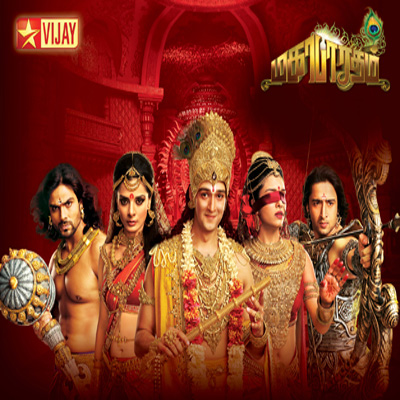
    MUMBAI: Not very long ago, Star Plus launched its magnum opus, Mahabharat, a contemporary retelling of the ancient Indian epic, on a scale never-seen-before and amidst huge fanfare.


    Soon after, a dubbed-in-Tamil version of the show named Mahabharatham was aired on 7 October on Star Vijay, Star TV’s Tamil GEC.


    Not only did Mahabharatham take over the 7:00 pm slot, earlier reserved for a kids’ show titled 7 C, which was anyway about to end, two weeks prior to the show’s launch, a high decibel marketing campaign comprising TV, radio, digital, on-ground, and to a large extent, outdoor, was undertaken to publicise its arrival.


    As part of this endeavour, life-size posters of the show characters were put up across Tamil Nadu; TV celebrities were brought in at the end of every show on Star Vijay to promote the series; monologues were staged on streets to grab attention; and hoardings were put up across 500 locations including Chennai, Madurai, Tiruchirrapalli, Erode and Tirunelveli. A staggering Rs 1 crore – Rs 1.5 crore was spent on the campaign, with separate plans for merchandising during Diwali.


    Promotions apart, Star Vijay ensured Seventh Channel Communications did a neat job of the dubbing. “Seventh Channel Communications has dubbed on a 50 episode contract, with each episode costing up to Rs 1 lakh. We have ensured the dubbing is so tight that the lip movements match with the Tamil words the characters are speaking. People were thoroughly impressed with the grandeur on watching the promos. The feedback on production value was positive,” elaborates Star Vijay general manager K Sriram.


    Now, with the show well past its launch, Star Vijay faces the big question whether all the investment and effort has been worth the channel’s while.


    While there are no clear answers, it is true that the first two weeks of Mahabharatham have garnered 422 and 440 TVTs (average), respectively, and its opening show has got 415 TVTs unlike 7C, which was just about managing 169 TVTs weekly (average). What’s more, close competitor Raj TV’s Sindhu Bhairavi (Uttaran dubbed in Tamil), which airs at the same time (7:00 pm), has garnered only 251 TVTs (average).


    As a media planner from Chennai-based Group M puts it: “For Star Vijay, these are good numbers and now – Mahabharatham – for which they did huge promotions, is their best show as well.”


    However, the picture is not entirely rosy. Sun TV, another rival, has its own version of Mahabharatham which airs every Sunday morning and garners more TVTs than Star Vijay’s show. To this, the planner only says that it is wrong to compare any other channel with a player like Sun TV which enjoys strong loyalty.


    The planner reasons that Tamilians are attached to such shows because they are conservative and dedicated to religious beliefs and that is why epic shows work well down south. At the same time, he is quick to point out it would be best to wait for another week to see if Star Vijay’s Mahabharatham sustains its ratings before taking any call on the show.


    In fact, readers may recall that the original Mahabharat (Hindi version on Star Plus) too dropped from 8,445 TVTs to 5,518 TVTs in its second week… So, Star Vijay will have to wait to see the returns of its investment…

  • Media should consider reasonable restrictions: Tewari

    Media should consider reasonable restrictions: Tewari

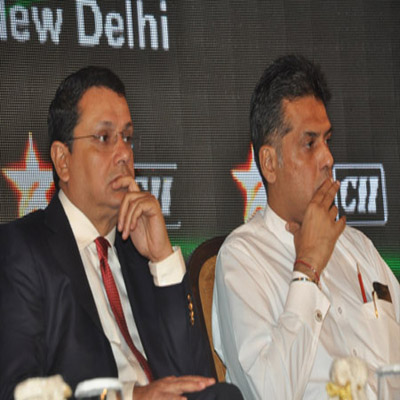
    NEW DELHI: Information and Broadcasting Minister (I &B) Manish Tewari today stressed that the government wanted the relationship with the media to be one of persuasion rather than regulation but the media should introspect about the reasonable restrictions laid down in the constitution to the freedom of speech.

    Making the inaugural address at the Big Picture Summit on Media and Entertainment organised by CII, the minister said the government will cooperate to ensure that the M & E sector is able to ‘unlock the potential of millions.’

    He stated that the phase III in FM radio will get underway next month with the e-auctions, adding that radio had seen a major resurgence thanks to mobile telephony.
    Manish Tewari believes that the industry must explore new avenues and technologies like mobile telephony and how it can be used to grow the sector

     The minister announced that the Justice Mudgal Committee which was going into the Cinematograph Act including film censorship was expected to give its report by mid-October. Tewari was responding to remarks made by previous speakers Star TV CEO Uday Shankar and Walt Disney MD Ronnie Screwvala about extra-constitutional authorities and even state governments raising voices even after a film had been cleared by the Central Board of Film Certification, and making a strong case for bringing cinema on the concurrent list.

    Tewari noted that despite the general slowdown the world over and in India, the M and E sector was expected to grow at a pace of 18.4 per cent CAGR to Rs 2,245 billion by 2017 from Rs 965 billion in 2012.

    He noted that the print and television sector comprised 48 per cent of this growth and the internet was expected to take over by 2017. He said the real success story was the print media since its growth continued at a rate of ten per cent per year when it was falling all over the world.

    Although India had the largest number of TV news channels in the world, it represented only 17 per cent of the M and E industry and therefore there was need to remove the bottlenecks in distribution.

    While the channels were not lagging in content, hardware was an area in which they were found lagging, he felt. The minister said that he wanted the industry to come up with ideas on how the number of cinema screens could be increased.

    Complimenting CII for its optimism in setting a target of USD 100 billion for the industry, he spoke of the opportunity that the sector presents in terms of innovation in content and non-content areas, adding that the government would partner the industry to put into place a system to see that the vision of USD 100 billion is translated into reality.

    He also mentioned that the industry must explore new avenues and technologies like mobile telephony and how it can be used to grow the sector, emphasising that the government would look to facilitate innovation and expansion.

    Screwvala in the keynote address said that although there have been challenges and a sense of gloom, there has been a fair amount of progress as well, especially in the movie industry, which has flourished.

    The M&E industry, he said, is seen as an industry of ‘high impact’ with the ability to bring about noteworthy transformation. Therefore, he felt that the time is right for the M&E industry, the government and other stakeholders to take time to deliberate upon the challenging issues that the industry faces such as dependency on advertising, inconsistent regulation, the need and ability to attract the best talent, unanimity and long-term thinking and then come up with a roadmap that will help the industry achieve the target of USD 100 billion.

    He hailed the progress in digitisation of cable TV and efforts to go on to better consumer TV viewing surveys, he said dependency on advertising remains a big problem and ways have to be found to make the consumer pay. There was need for unanimity and long-term thinking in the industry, a need to attract the best talent, and the need to recognise that new media needed a different kind of audience and talent.

    While India was among the least regulated countries in the world, he admitted that some regulation was necessary and this has to be consistent and not vary from state to state.

    He also wanted edutainment to be encouraged without being dependent on curriculum, sports to extend from just cricket as far as media was concerned, and the need for a greater bandwidth.

    He suggested setting up of a core group of the government and the industry which could work over the next 18 months or so to get over the bottlenecks, an issue supported by eminent filmmaker Amit Khanna.

    Khanna said the target of $100 billion for M &E was not unrealistic, if there was proper planning and greater cooperation between the government and the industry.

    He said it was unfortunate that the country was over-producing in cinema, considering the small number of screens.

    He suggested that the I & B ministry should change its name to the media ministry as new media was taking over.

    He regretted that there was no proper broadcasting regulator and the Telecom Regulatory Authority of India had been given this responsibility.

    India may have the largest number of TV news channels, but they were all getting ‘tabloidised’.

    He also felt the need for more trained professionals if the industry had to meet its targets.

     Delivering the theme address, Shankar said that openness to new ideas, capital and talent would unleash a fresh wave of growth, just as it did in the 1990s, when economic reforms ushered in a fresh wave of growth for the Indian economy.

    Earlier, in his welcome remarks, CII director general Chandrajit Banerjee spoke of the tremendous ‘soft power’ of the industry to bring about innumerable benefits to the Indian economy.
    A CII-PriceWaterhouse Coopers report on the M&E industry, titled ‘India Entertainment and Media Outlook 2013’ was also released on the occasion by Tewari.