Tag: Star TV India

  • Karan Singh moves to JioStar network as vertical head for FMCG, beverages, and alcoBev

    Karan Singh moves to JioStar network as vertical head for FMCG, beverages, and alcoBev

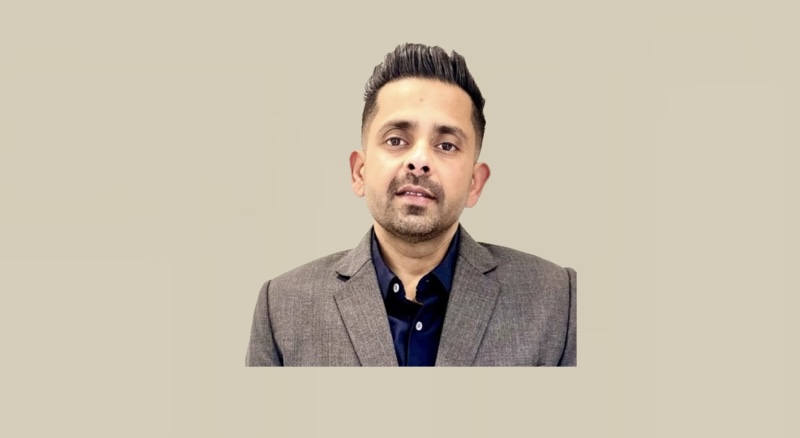
    MUMBAI: Seasoned media sales professional Karan Singh has been retained in the JioStar network scheme of things. He has been  named as the vertical head – FMCG, beverages & alcobev, Jiostar. At Viacom18, he was associate vice president – Colors Rishtey, Colors Cineplex Superhit and  Colors Cineplex Bollywood  managing advertising spends for the channels. He consistently delivered revenue growth and drove  innovative advertising solutions.

    Karan, a dynamic leader with a proven track record in media sales, business development, and brand solutions, brings over 17 years of experience in the media and advertising industry. His expertise spans revenue strategies, large-scale product launches, and high-stakes commercial negotiations, making him a perfect fit for the new role at JioStar Network.

    Previously, Karan held prominent positions at Viacom18, where he served for nearly 14 years.. Prior to this, he played pivotal roles at Star TV India and Radio Mirchi, where he was instrumental in establishing revenue functions and scaling up market presence.

    Karan holds a post graduate diploma in marketing from Amity University and has further honed his leadership skills through the young leader development program at XLRI Jamshedpur.

    In his new role, Karan aims to leverage his extensive experience to strengthen JioStar Network’s presence in the FMCG, beverages, and alco-bev sectors, driving growth and innovation in the rapidly evolving media landscape.

  • Reliance-Disney Star: joint venture to finally fall in place by 18 November

    Reliance-Disney Star: joint venture to finally fall in place by 18 November

    MUMBAI: Here’s more on the Reliance-Viacom18-Disney Star India. Disney Star India distribution and international head Gurjeev Singh Kapoor is moving on. That came across as a shocker to many in the industry as he was known to be close to vice-chairman Uday Shankar and has had a good track record in terms of achieving targets and getting in revenue. Rumours are that he is likely to be headed to Sony Pictures Network India (SPNI) to work closely with CEO Gaurav Banerjee. Others say he is going to be turning entrepreneur.

    Questions are being raised as to the fate of IndiaCast COO Piyush Goyal and international head Govind Shahi as the buzz in the organisation is that a new professional is likely to take Gurjeev’s place. Some fingers are being pointed towards SPNI’s Rajesh Kaul hopping on board. 

    While many have been saying that the new joint venture entity is going to be called JioStar and the email addresses are going to be jiostar.com, others are saying that the merged entity is going to be under Star India and the email addresses will be startv.com. Mails have been zipping around to executives in the two organisations and to clients announcing this, if sources are to be believed.

    Sources indicate that the final announcements of the executives who will be staying or moving on are going to be made by 15 or 16 November with everything finally falling into place by 18 November. 

    Here’s hoping that we, at indiantelevision.com, are not adding to the oodles of speculation being floated around. Only time will tell. 
     

  • The Reliance-Disney merger’s impact on the media ecosystem: an Elara perspective

    The Reliance-Disney merger’s impact on the media ecosystem: an Elara perspective

    MUMBAI: We believe the merger of Viacom18 and Star India will have a big impact on the entire M&E ecosystem as the combined entity will command a huge market share. The merger will create a large media juggernaut with 108 plus channels (Star India has 70+ TV channels in eight languages whereas Viacom has 38 TV channels in eight languages), two large OTT apps (Jio Cinema and Hotstar) and two film studios (one each of Reliance and Disney India). Large market opportunity (TAM) for the merged company, as India’s M&E market for print, TV and digital is at $18 billion in CY22, poised to post a CAGR of 8.2 per cent  over CY22-25 (Source: EY FICCI).

    Post the merger, the combined entity will command a TV advertisement/TV subscription (excluding distributors/DTH/MSO revenue)/Total TV market share of 40 per cent /44 per cent /42 per cent  (as of FY23) respectively. The merged entity is expected to command a digital OTT market share of ~34 per cent  in CY23, while the TV viewership share in top 10 channels (according to BARC) is ~40 per cent  as of CY23. The consolidation between RIL and Disney on the India TV side could have a negative impact on other linear TV broadcasters, such as Sun TV, Zee, Sony, and others, as they may not be scale up on market share. The merged entity’s focus on maximizing market share through increased investments in content, synergies, and enhanced marketing power poses challenges for individual broadcasters to compete and grow. With a large customer base across various genres, including regional genres and urban GEC, the combined entity aims to dominate key markets, potentially leading to market share loss and challenges for other players, including the possibility of smaller channels shutting down.

    Jio Cinema + Disney Hotstar merger – potential negative for global OTT giants

    The merger of JioCinema and Hotstar poses a challenge for global OTT platforms, as India’s market values bundling and is price sensitive. The combined entity can offer a comprehensive package including web series, movies, sports, originals, and a global catalogue. This bundled premium plan, possibly in collaboration with Jio’s large subscriber base, may hinder the ability of global OTT platforms to raise Average Revenue Per User (ARPU).

    Better prospects of profitability in the medium to long term

    The merger may result in improved profitability for the combined entity as there may be a reduction in employee cost, production cost and marketing costs on the TV side and content costs, particularly on the OTT side, which could contribute to a more sustainable path to profitability over the medium to long term. Currently, both platforms are facing heavy losses due to high content costs, and Jio Cinema relies solely on AVOD without significant paid subscriber revenue. With the combination of Hotstar and JioCinema, the merged entity can enhance its subscription revenue by increasing subscription prices and attracting a larger subscriber base. Reliance may drive the entire business through Jio Platforms, with a significant influx of ad revenues in digital advertising. The digital advertising market, being a winner-takes-all business, heavily relies on scale. They may also have a pay-based mechanism via Jio Cinema/Hotstar at a larger scale which will propel healthy subscription revenue over the medium term

    Monopoly in sports properties may lead to higher ad revenues

    On the sports front, the merged entity is set to become monopolistic, with Disney and Jio collectively controlling approximately ~75-80 per cent  of the Indian sports market across both linear TV and digital platforms. This dominance in sports, primarily cricket, positions them to command a substantial share of the overall ad market, showcasing strong growth in an industry where sports is a key driver of viewership on both linear TV and digital platforms. In CY22, sports adex (TV+Digital) in India stood at  Rs 71billion (according to GroupM) out of which Disney India had a contribution of ~80 per cent . The combined entity will have lucrative sports properties like Indian Premier League (both TV and digital), ICC cricket tournaments (both TV and digital), Wimbledon, Pro Kabaddi League, BCCI domestic cricket etc.

    Telco customer retention and bundling

    Telecom companies have used OTT as a value-add to retain/gain subscribers. And OTT companies piggyback on telecom plays to scale up their subscriber base – TSPs (telecom service providers) have larger access to a wide variety of customers. With the vast content library of Jio and Disney, the merged entity’s content, spanning 1) international movies, 2) web series, 3) sports content and 4) catch-up TV content, could prove advantageous for Jio subscribers and make it a one-stop content hub. There might be initiatives such as a Jio Prime offering, providing subscribers access to content at an affordable or even free price through last mile resource and 5G wireless access. The company will have a big advantage of last mile with Jio having a subscriber base of more than 450 million smartphone users This will hit Bharti Airtel as it has tried to tie up with OTT players in the content ecosystem to offer value-add. Thus, Bharti Airtel may have to invest heavily in own content or shape partnerships with global OTT giants such as Netflix and Amazon or other OTT platforms to generate clout in the content ecosystem.

    Synergy prospects

    – The ad revenue potential from IPL is expected to increase significantly with the merged entity having exclusive rights (TV+Digital) to IPL. This consolidation may result in bundled advertisement revenues, potentially mitigating the higher cost of IPL rights and reducing overall losses; due to IPL rights being split between TV and digital between two different platforms and digital platform offering IPL free, there was a big dent in the IPL revenues on TV, which could see some respite.

    – The merger is anticipated to bring about restructuring in employee costs, reduced production expenses, and lower advertisement costs for TV. These potential cost synergies could contribute to improved margins for the merged entity. On the sports side too, content costs may pare sharply for TV, digital over the medium to long term, given that fewer platforms may bid aggressively for expensive properties.

    – In digital, content cost inflation (content cost for web series 3-5x higher than for TV non-fiction shows, per episode) has been sharper due to heavy fragmentation in the OTT market and entry of global giants with deep pockets. With the merger, content cost in digital may see much lower growth, which may improve the unit economics for the OTT business, potentially resulting in lower EBITDA losses for Jio Cinema and Hotstar.

    – Considering the critical role of technological advancements in the success of OTT platforms, the integration of Disney’s technological expertise is expected to enhance the user experience on Jio Cinema. This improvement may subsequently drive higher subscriber numbers and revenue growth.

    Risks

    – Post CCI approval, NCLT (National Company Law Tribunal) approval may take another eight to 12 months

    – A below par customer experience on the video apps despite a wide variety of content may not augur well in subscribers paying for the same; global OTT giants like Netflix have a very superior experience to command a premium ARPU

    – Continuance of hefty losses of the merged entity over the near to medium term due to high costs sports properties (IPL, ICC tournaments & BCCI bilateral rights) could negatively impact valuation prospects for the merged entity

    Shareholding pattern of the merged entity

    After the merger, the ownership structure of the combined entity will be as follows: Reliance will hold 53 per cent  stake through cash infusion, after acquiring Paramount’s balance stake and factoring TV18 and Viacom 18 stake in JV, which are RIL’s subsidiaries;  Disney will hold 36.8 per cent , whereas the Bodhi Tree (stake through Viacom18) /TV18 (ex of Reliance stake) will hold balance 6.2 per cent /3.8 per cent  stake respectively.

    Valuation

    The joint entity, including cash infusion, is valued at  RS 704bn. This valuation comprises  Rs 115 billion in cash,  Rs 330 billion for Viacom18 (including Jio Cinema) and the remaining  Rs 260 billion (~USD 3.2 billion) is the combined valuation of Star India and Hotstar. This valuation of Star India and Hotstar is much lower compared to pre-covid valuation of $12-13 billion which may be due to 1) loss of IPL digital rights leading to ~50 per cent  ad revenue decline and 40 per cent  subscription revenue decline for Hotstar, 2) TV ad revenue remaining flat over FY19-23 and 3) sports content which may continue to incur hefty losses in linear TV due to slower revenue growth. From a valuation standpoint, the impact on TV18 (which owns 13 per cent  in Viacom18) is minimal to negative, as the combined entity is expected to generate substantial losses in the near term due to sports content. Additionally, TV18’s stake in the merged entity is valued at  Rs 42 billion, implying a hefty premium for its news business at  Rs 40 billion (considering TV18’s overall current market cap of  Rs 82 billion).

  • Star’s multi-screen Rio 2016 coverage gets thumbs up from viewers

    Star’s multi-screen Rio 2016 coverage gets thumbs up from viewers

    MUMBAI: With 191 million viewers tuning into watch the just concluded Rio Olympics in Brazil and every two out of three doing so on Star Sports channels, coupled with nearly 70 percent of the reach of television in affluent homes in the top 6 metros via digital platform Hotstar, it has been a gold medal performance from Star India.

    This statement from Star India today when the media world is talking about a over US$ 350 million buyout of TEN Sports by Sony Pictures Network India, is important from the point of view of sports broadcasting in India. SPNI also runs co-branded sports channels with ESPN.

    “For us, it is a matter of pride that Star Sports is the destination network for multi sports consumption in the country. Our endeavour to build a multi sports ecosystem is being rewarded with audience interest and attention not just in cricket but even in other sports…Star India’s unprecedented reach made the Rio 2016 Olympic Games the most epic sporting event in the history of viewing sports in India,” an official statement from Star quoted Star Sports CEO Nitin Kukreja as saying.

    The immersive and data rich experience, backed by powerful visuals and marketing, has once again created history in terms of user delight, translating into the highest ever viewership of Olympics in India, Star claimed.

    “As the official television broadcaster in India (the Olympics feed were shared with pubcaster Doordarshan by Star under stipulated regulations), Star Sports brought the game alive and the Rio 2016 Olympic Games was bigger than ever before with an unprecedented 191 million viewers (as per BARC data; CS 4+ Urban) tuning in to watch the games,” the Star statement stated, highlighting that two out of every three viewers tuned in to watch the mega event on the Star Sports network, thus “re-establishing its credentials as one of the leading sports networks in India capable of delivering national impact across geographies and demographics.”

    Hotstar, the exclusive digital streaming partner in India for the Rio Games, providing round the clock coverage of the games with 14 live streams for sports fans, attracted nearly “70 per cent of the reach of television in affluent homes in the top 6 metros” delivering an incremental reach of almost 10 million viewers in India with viewers streaming almost an hour of the Games during the two weeks, propelling Olympics into the top brackets of sporting events covered online, Star said.

    The standout highlight of the tournament was when India came together to watch the thrilling badminton women’s singles final between PV Sindhu and Spain’s Carolina Marin.

    The gruelling gold medal encounter garnered 17.2million impressions (again BARC data), making it the highest viewed TV programme on that day. It was also the highest rated non-cricket game on any sports network since the inception of BARC. On Hotstar, more than 5 million viewers tuned in to watch the match live, unprecedented for any event outside of international cricket, Star statement added.

    According to Hotstar CEO Ajit Moha, “As the world celebrated its sports champions, Hotstar enabled an experience that was unprecedented for sports fans not just in India but anywhere in the world: free access to almost every single moment of the Olympics fans with big moments being curated and showcased on the platform round the clock. Olympics allowed us to showcase our mission of building India’s most exciting content destination on demand.”

    With Star Sports channels showing various disciplines of Rio Games, including one channel dedicated to Hindi commentary, Star also undertook a massive campaign #IsseBadaKuchNahi ( nothing is bigger than this) focused on the stature of the Olympics as well as the medal prospects from India.

    Star Sports, which has some premier sporting properties in its portfolio, has been creating a multi-sport ecosystem in India. In 2016, from the ICC World T20 to Seasons 3 & 4 of Pro Kabaddi to the recently concluded Olympics, with each of these events delivering in excess of 175 million audiences at an all-India level (Source: BARC). Further in the year ahead, Star Sports has a multi-sport calendar coming up, consisting of 2016 Kabaddi World Cup in Ahmedabad, the international cricket season at home for team India and the Indian Super League.

    Hotstar, having already established itself as the premier digital sports destination in India, offered the widest possible coverage of all 42 sports with over 3000 hours of live coverage on the web, and 14+ streams running on the app all day. Its communication was focused on the massive choice it offered sports fans, with access to every moment of the Olympics and the convenience of watching live games or catching up on big performances any time of the day.

  • Star’s multi-screen Rio 2016 coverage gets thumbs up from viewers

    Star’s multi-screen Rio 2016 coverage gets thumbs up from viewers

    MUMBAI: With 191 million viewers tuning into watch the just concluded Rio Olympics in Brazil and every two out of three doing so on Star Sports channels, coupled with nearly 70 percent of the reach of television in affluent homes in the top 6 metros via digital platform Hotstar, it has been a gold medal performance from Star India.

    This statement from Star India today when the media world is talking about a over US$ 350 million buyout of TEN Sports by Sony Pictures Network India, is important from the point of view of sports broadcasting in India. SPNI also runs co-branded sports channels with ESPN.

    “For us, it is a matter of pride that Star Sports is the destination network for multi sports consumption in the country. Our endeavour to build a multi sports ecosystem is being rewarded with audience interest and attention not just in cricket but even in other sports…Star India’s unprecedented reach made the Rio 2016 Olympic Games the most epic sporting event in the history of viewing sports in India,” an official statement from Star quoted Star Sports CEO Nitin Kukreja as saying.

    The immersive and data rich experience, backed by powerful visuals and marketing, has once again created history in terms of user delight, translating into the highest ever viewership of Olympics in India, Star claimed.

    “As the official television broadcaster in India (the Olympics feed were shared with pubcaster Doordarshan by Star under stipulated regulations), Star Sports brought the game alive and the Rio 2016 Olympic Games was bigger than ever before with an unprecedented 191 million viewers (as per BARC data; CS 4+ Urban) tuning in to watch the games,” the Star statement stated, highlighting that two out of every three viewers tuned in to watch the mega event on the Star Sports network, thus “re-establishing its credentials as one of the leading sports networks in India capable of delivering national impact across geographies and demographics.”

    Hotstar, the exclusive digital streaming partner in India for the Rio Games, providing round the clock coverage of the games with 14 live streams for sports fans, attracted nearly “70 per cent of the reach of television in affluent homes in the top 6 metros” delivering an incremental reach of almost 10 million viewers in India with viewers streaming almost an hour of the Games during the two weeks, propelling Olympics into the top brackets of sporting events covered online, Star said.

    The standout highlight of the tournament was when India came together to watch the thrilling badminton women’s singles final between PV Sindhu and Spain’s Carolina Marin.

    The gruelling gold medal encounter garnered 17.2million impressions (again BARC data), making it the highest viewed TV programme on that day. It was also the highest rated non-cricket game on any sports network since the inception of BARC. On Hotstar, more than 5 million viewers tuned in to watch the match live, unprecedented for any event outside of international cricket, Star statement added.

    According to Hotstar CEO Ajit Moha, “As the world celebrated its sports champions, Hotstar enabled an experience that was unprecedented for sports fans not just in India but anywhere in the world: free access to almost every single moment of the Olympics fans with big moments being curated and showcased on the platform round the clock. Olympics allowed us to showcase our mission of building India’s most exciting content destination on demand.”

    With Star Sports channels showing various disciplines of Rio Games, including one channel dedicated to Hindi commentary, Star also undertook a massive campaign #IsseBadaKuchNahi ( nothing is bigger than this) focused on the stature of the Olympics as well as the medal prospects from India.

    Star Sports, which has some premier sporting properties in its portfolio, has been creating a multi-sport ecosystem in India. In 2016, from the ICC World T20 to Seasons 3 & 4 of Pro Kabaddi to the recently concluded Olympics, with each of these events delivering in excess of 175 million audiences at an all-India level (Source: BARC). Further in the year ahead, Star Sports has a multi-sport calendar coming up, consisting of 2016 Kabaddi World Cup in Ahmedabad, the international cricket season at home for team India and the Indian Super League.

    Hotstar, having already established itself as the premier digital sports destination in India, offered the widest possible coverage of all 42 sports with over 3000 hours of live coverage on the web, and 14+ streams running on the app all day. Its communication was focused on the massive choice it offered sports fans, with access to every moment of the Olympics and the convenience of watching live games or catching up on big performances any time of the day.