Tag: Star Sports

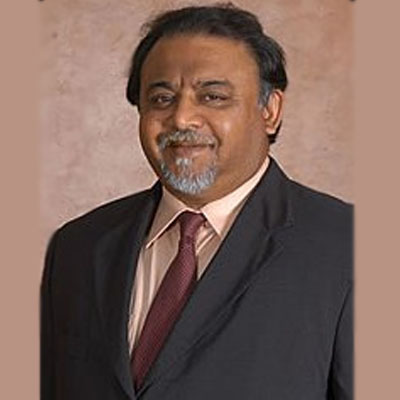
  • ‘We are the biggest investor in the game of cricket’ : Manu Sawhney – ESPN Star Sports managing director

    ‘We are the biggest investor in the game of cricket’ : Manu Sawhney – ESPN Star Sports managing director

     ESPN Star Sports has pumped in a whopping $2.25 billion to acquire the rights for ICC including the two World Cups, the Champions League T20, Cricket Australia and England and Wales Cricket board. The mix includes cricket across the three formats of T20, ODIs and Test matches.


    The mark of aggression has spread to other sports including the Fifa World Cup soccer rights and the Olympics.


    For over a year, Manu Sawhney has been shepherding this drive to crush competition and establish leadership position as a sports broadcaster by acquiring driver content rights over a longer period of time.


    “This is the best in cricket that could be there in the market and places us in the position of matchless leadership not only in Asia but on a global scale,” he says.


    In an exclusive interview with Indiantelevision.com’s Sibabrata Das, ESS managing director Sawhney elaborates on how the ESPN-Star joint venture company is gearing up to be not just a TV brand but also dominate in the digital new media space with its comprehensive content across sports, platforms and markets.


    Excerpts:


    The Indian Premier League was touted as the biggest prime time reality show on Indian television. Why didn’t ESPN Star Sports buy into that hype?
    We wanted to first evaluate how the T20 format of the game would evolve as a product cycle. Remember, we were the first to recognise the power of this new format at the international level when we acquired the ICC rights which include the two World Cups.


    With the IPL doing well, we have now bagged the Champions League T20. It will involve the best of the best where the top teams from various domestic leagues including the IPL, Australia, South Africa, England and others compete to win the title of Champions of Champions. The IPL also becomes a feeder league for this global tournament.


    We recognise that various formats continue to get developed and broaden the appeal of the game across new markets and demographics, providing increasing number of platforms for leverage and exploitation.

    Was the IPL miss a reason why ESS paid higher ($975 million) for the Champions League T20 when it could have got it at a much lower price with DIC’s $751.3 million bid being the second in race?
    When we are in a bidding environment, we do not punt but go ahead with an amount which we believe adds value to our business. We thought $612 million for the BCCI rights was too high for us, but somebody else thought it made business sense. We make a bid thinking what value the property can bring to us, how prepared we are today to leverage it, and how well placed are we for the future to fully realise the potential.


    Our investment in content follows this strategy and allows us to present a sound proposition to our partners. The acquisition of Champions League T20 has been done with this focused, planned and future oriented approach backed by a solid business plan, ensuring our profitability and long term growth.


    As a property, CL T20 has all the necessary ingredients of a blockbuster property, not only on the national level but on a global scale.


    After the inaugural edition this year in December, the tournament is to be scheduled right before the festive period featuring more top quality international teams and increased number of matches spread over a longer duration. This amplifies the opportunities around the property.

    But aren’t you also risking on the most expensive cricket property (calculated on a per game basis)?
    Tell me one property today which is available across the globe with all commercial rights – and that, too, for a period of 10 years! CL T20 is the only such property. This allows us multitude of opportunities to build, develop, customise, and fully realise immense value around the property. And it makes CL T20 most unique and premium as compared to any other domestic or international property currently around from the business perspective.


    Even if we were to compare it with a property like IPL, we have tremendous advantages. The rights around IPL do not include title sponsorship, umpire sponsorship, stadium advertising, official sponsor, ticketing and licensing. These rights amount to sizeable contribution and are expected to grow manifold over the next 10 years as the CL T20 further develops as the most premium tournament.


    The domestic nature of the tournament also limits IPL’s appeal internationally. This affects international syndication and other related rights. On the other hand, we have had significant success with the ICC on the international syndication front and today are better placed than anybody else to fully realise the value of this premium property in the global market.


    Unlike others, we are not just a broadcast brand but today the most comprehensive sports content provider in the region and the biggest cricket content provider in the world. With our three strong TV brands (ESPN, Star Sports and Star Cricket), two robust mobile brands (mobileESPN and Star Sports Mobile) and the most comprehensive online offering in form of www.espnstar.com, we are better placed than anyone else to fully leverage and exploit multiple opportunities across platforms for building our business on the back of CL T20 across the region and globally.

    Even in the ICC bid, ESS’s winning punt was $1.1 billion while the second highest bidder with $900 million was way behind. Are we seeing a more aggressive ESS?
    We are today the biggest investor in the game of cricket in the world with the ICC, Cricket Australia, England and Wales Cricket board rights and the newly acquired CL T 20. This not only provides us with a good mix of all forms of cricket – the new age blistering Twenty20 format, the popular ODIs and the ever-green Test matches, but along with the ICC it also gives us a very strong lineup of top quality cricket with a World Cup every year for the next 10 years. This is the best that could be there in the market and places us in the position of matchless leadership not only in Asia but on a global scale.


    While IPL has been a successful property, in ICC we have the pinnacle of international cricket while CL T20 gives us the very best of the international domestic competition. With the acquisition of CL T20, we have enhanced our driver content portfolio for cricket and our leadership position as a sports broadcaster not just for few years but a longer period of time.

    Do you see the high rise in cost for cricket properties a function of competition or is it based on a realistic projection of business growth?
    The escalation in the rights cost is because of competition as well as growth in the market that you are able to reach. The T20 format, for instance, has expanded the demographic profile from a male skew to young and female audiences. The emergence of new platforms is also playing a part in defining the value in the marketplace.

    India is no longer a low-cost media economy. As the market matures, there will be consolidation. There is, after all, a limited amount of driver content that is available

    ESS enjoyed high revenues from DTH operators as it was carried on the basic tier. But this year Tata Sky and the new DTH operators like Reliance ADAG’s Big TV are not willing to put the three channels on that package. With MSOs (multi-system operators) also consolidating, do you see growth on subscription revenues being hit?
    There is a huge opportunity for sports broadcasters like us and platform providers to work together in building the subscriber base. In global markets, digital subscribers grow on the back of HD, interactivity and video-on-demand; the driver content is live sports. In India, the market is still in infancy. New technologies like DTH, IPTV and mobile are bringing in paradigm shifts. With the power that we have on content across sports, we see tremendous scope to increase our revenues.

    With the ICC Champions Trophy, which was scheduled to be held in Pakistan in September, being deferred, will you be re-negotiating the bid amount with ICC?
    The ICC Champions Trophy is a showcase of game’s best elite players from the world’s top national cricketing sides. It was, therefore, important to ensure full and committed participation of the best teams from all qualified nations for ICC Champions Trophy to retain its premium status. Unfortunately, too much ambiguity existed for many months about the realistic possibility of the event being staged in Pakistan, which led to the current situation where the options available were very limited.


    As the global broadcast and production partner of the ICC, ESS was fully committed to producing and broadcasting the ICC Champions Trophy in a truly engaging and entertaining manner for fans across the globe. Accordingly, all necessary broadcast arrangements were made by ESPN Star Sports as per plans agreed with ICC for covering the event in Pakistan.


    The late decision to defer the tournament did come with its own set of difficulties for various organisations involved in the tournament, and this affected ESS’s business commercially too. Various questions have arisen as a result of this postponement, particularly issues relating to ensuring teams’ participation in the tournament when it is eventually played as well as the knock-on impact of the rescheduling on the overall cricket calendar.


    It is expected from the ICC to decide on these critical matters in the near future. We will only be able to assess the overall impact on our business based upon the way in which these issues are resolved and after we are able to study the short and long term implications of ICC’s actions for ourselves. We reiterate our commitment to working with the ICC in evolving a mutually satisfying solution.

    Isn’t ESS’s aggression spreading to other properties as well including the Fifa World Cup where ESS is said to have bid $40.5 million (up from around $8 million)?
    We have been aggressively mopping up content. In football, we have the exclusive television rights to broadcast Fifa’s stellar lineup of international football events including the 2010 World Cup for the Indian sub-continent. We have the exclusive rights to show over 275 international football games including the Fifa Confederations Cup. We have a multi-year exclusive agreement with The Football Association (The FA), for broadcast rights to The FA Cup, England Internationals and The FA Community Shield on multimedia platforms for the 2008/9 – 2011/12 seasons for 20 countries across the region. This, coupled with the existing partnership with Premier League with which ESS holds BPL rights for 22 countries in Asia through 2010 and rights of UEFA Champions League in key markets, places us as the single largest football content provider in the region.


    In motorracing, we have renewed partnership with FIA for another 5 years across the region and for the first time, secured rights across various platforms and in many key markets acquired terrestrial rights as well. This flagship racing property along with other leading properties like A1, MotoGP and WRC, sets ESS apart from any other network or broadcaster in the region.


    We have also renewed our partnership with Tennis Australia for another seven years, acquired French Open for India, and continue partnership with NBA and key Golf majors including Augusta Masters, The US Open and The Open, among others.


    We have acquired the Olympic rights. The partnership with the International Olympic Committee will allow us to show the Vancouver 2010 and London 2012 Olympic Games for 22 countries across the Indian subcontinent and South East Asia.

    This is the first time that IOC has awarded the rights to one single pay-TV platform across the region.

    Have your programming hours also gone up?
    In addition to the acquired content that we have the rights for, we produce over 3650 hours of original programming per year, which is probably the largest quantum of original programming around these sports.


    To give you an idea, we produce over 1500 hours of original football content and over 1000 hours of cricket content. In addition, our flagship studio show, SportsCenter, offers the best round-up of sporting action around the globe with five localised editions in Asia on ESPN. And along with our entertainment-focused sports bulletin show Score Tonight on Star Sports, we produce over 1000 hours of original sports news programming every year. This lineup of content makes us the prime choice of over 310 million passionate sports fans and business partners and associates across Asia.

    Our content strategy is to build a sustainable and scalable biz across sports, platforms and markets

    How important is the Indian market for ESS?
    It is a very important market for us and continues to contribute to the overall growth of our business in Asia. The media industry in India itself has seen rapid growth in the last few years. There is appetite for quality content and so are the opportunities to leverage and further build the business.


    While cricket has been, for many years, the most popular sport in India, it still continues to grow. This popularity is growing beyond India playing cricket to other international cricket as well as growth of strong female TG for cricket. The dedicated 24×7 cricket channel, Star Cricket, quickly reached penetration levels of 90-95 per cent after its launch last year.

    India is also steadily developing into a multi-sports market. Other sports like soccer, motor sports, tennis, hockey and golf are increasingly becoming more popular and gaining viewership as well. With that in mind, and considering the huge viewership base, India will continue to be a key market for ESS.

    India offers a lot of potential in terms of ESS’s new media initiatives. ESS has invested in a focused manner in the Indian market. With our multi-platform capabilities on the back of some of the most premium content in the form of ICC, CL T20, Fifa and F1, ESS is better placed than ever today to fully exploit the opportunities from the emerging media scenario in India.

    Do you see consolidation in the sports broadcasting space in India?
    India is no longer a low-cost media economy. As the market matures, there will be consolidation. There is, after all, a limited amount of driver content that is available. We hope to leverage our leadership position as and when such opportunities throw up. We are not just TV dependent but have grown our presence in the new digital media space. And we are not just an India product.

    What have been your focus areas since you took charge as managing director of ESS one year back?
    My focus has been on four key areas. The content strategy is to build a sustainable and scalable business across sports, platforms and markets.


    Besides continuing to acquire and develop the strongest, most comprehensive and relevant content, we have enhanced our multi-platform presence.


    While television is the biggest format in which consumers want to watch sports, new media platforms are growing in importance. Growing ESS’s presence in the digital space is a key thrust area for the company and we have invested huge resources to provide a new improved platform.


    We have launched the sharp new version of www.espnstar.com and are offering advertisers an expansive range of customised and creative advertising opportunities. The new Star Sports Mobile complements the mobileESPN offering through entertaining and engaging content with exclusive video highlights from Arsenal and Liverpool FC and Star Sports’ original programmes.


    Skyhawk is a new business management system that has been successfully integrated between internal systems across functions to provide competitive advantage and smoother operations.


    We have also made significant investments in improving our business and operational processes through adoption of new technology over the last one year with an aim to scale up our operations more efficiently for future expansion. Our focus has also been on human resource development and I have worked towards creating project teams within the organisation spanning across departments and markets entrusted with an objective to scout for new ideas to help grow our business.

    How has the last one year been for ESS?
    We have seen growth in bottomline and topline across the region. Our task is to take ESS to the next level in scalable business across sports and markets.
  • ‘Why would BCCI want its biggest new property on a new channel?’ – Kunal Dasgupta

    ‘Why would BCCI want its biggest new property on a new channel?’ – Kunal Dasgupta

    For Sony Entertainment Television (Set) India CEO Kunal Dasgupta, the big wish for 2008 is to throw up that one hit narrative show that would get some momentum going for his network’s flagship channel Set. Other than the vexed issue of Set and its equally struggling Hindi GEC sibling Sab, the network is doing fine thank you, argues the long serving head honcho of the Indian broadcast operations of Sony Pictures  In conversation with Indiantelevision.com recently, Dasgupta looks back on the difficult year that was 2007 and offers some pointers to the strategic direction Set India (now renamed Multi Screen Media Private Limited) is looking to take in 2008 and beyond.Excerpts:

    Let’s start with the new name. Is this because your parent Sony Pictures Entertainment is distancing the Sony brand name from the Indian broadcast entity?
    Certainly not. The name is reflective of the company’s evolution from a pure television broadcaster to a multimedia one. We want to be on all screens that are video enabled. Going forward, we will be actively investing in mobile, movies, Internet, and out of home screens. Mobile in particular is going to be a focus area for us.

    When you say you want to be on all screens, could you elaborate on that?
    I am going to be recycling the over 30,000 hours of television content and 750+ movie titles that I have with me. We plan to repurpose a lot of it not just across the different screens, but across networks too. The realm of exclusivity is no longer the norm. To stay ahead of the game you have to be focused on how best to leverage the content that you have.

    Like the Rs 40 crore (RS 400 million) deal you did with Peter Mukerjea’s INX for 60 movie titles?
    Yes. That deal entitles INX to three airings of each film I have syndicated to them.

    Looking back to 2007, how would you rate the performance of the channels in the Sony network?
    Well, Max was fantastic; Pix became viable. On Sony and Sab we have suffered reverses on account of our fiction programming not working.

    And looking ahead into 2008?
    The business paradigm is changing and we are at the forefront of that. You could say we are the catalysts for change. Syndication, mobile; these are going to be areas that will explode. The one who reads the writing on the wall and adapts will survive.

    How has the year been in terms of revenues? The perception in the market is that Sony had a terrible year?
    If you add up ad sales, distribution and our international business, it would be Rs 1,200 crores (Rs 12 billion) overall, so you can’t say it was a terrible year.

    One reason for the perception that Sony had a lousy year, aside from its programming not working, was the ICC World Cup debacle in March. We understand you lost some RS 800 million odd due to India’s early exit. Comment?

    The ICC rights should not be looked at from the results from one tournament, but on how it delivered over four years. And it delivered on every count for us.

    Looking at the larger perspective, what have been the big challenges the broadcast sector faced and will face, going forward?
    The pathetically slow pace of digital rollout (Cas) has been the biggest challenge for existing players. Though I do believe digital distribution will come into play from 2008 onwards.Combating all these new players will be the big upcoming challenge. The (leadership) pecking order will have to be reestablished. Star is not complacent in its position of number 1. Even Zee as a challenger is not complacent. Everybody will face challenge. The whole media business will face challenge.

    The industry is seeing huge churn now. The channel explosion is going to further fragment audiences. We will soon have 9/10 channels in each of the genres – news, sports and movies.

    You say pathetically slow digital rollout on the cable front is the biggest challenge for the new players as well as the existing players. But if we look at 9X, the numbers they are drawing are not due to cannibalization, but due to new viewers?
    It’s not cannibalization of GEC but other genres like music.

    So you don’t believe that people have an inherent desire to consume entertainment content but may have been tuned off by the lack of variety presently on offer so they are trying out channels like 9X?
    It’s not just 9X. Even Bindass is getting new viewers. 9X is making a lot of noise but give me a name of one show that stands out. On NDTV Imagine also, nothing will stand out.

    What do we have in 2008? BCCI’s Indian Premier League will take off and what else?
    I don’t know on which channel it will take off. I hope it is on ours.

    But as you yourself said, there will be new sports channels launching and we should expect bids from new players?
    They can of course bid but why would BCCI want its biggest new property on a new channel? Its not just money, they (the cricket board) have to make it successful.

    We do have an example of Ten Sports, which launched with World Cup Soccer in 2002?

    There were only two channels – ESPN and Star Sports – then. Today there are seven channels (DD Sports, Ten Sports, Zee Sports, ESPN, Star Sports, Star Cricket, Neo Sports). Additionally, Max is half a sports channel.

    Each time you launch a new channel, the space will get further fragmented. There is too much out there. There is going be a blood bath.

    What about a platform proposition, like in the case of Sky in the UK? For a rights holder, could IPL potentially become as critical as EPL was to Sky?

    Firstly, in India no exclusivity is being allowed. Secondly, the new guys bidding for the rights are channels which are not yet launched. If platforms like Dish TV or Reliance were to buy the rights, then I would understand but the guys buying are unknown people. They are all startups. They are doing it for their business valuations. They are not bothered whether IPL succeeds or not. Whereas BCCI wants IPL to succeed. IPL will collapse with new players.

    Coming back to the year ahead, how do you see 2008 for your network and the industry?

    As far as the industry is concerned, we would want to see the Reliance launches happening. It’s a very big thing. Then IPL should succeed. New players should enter digital distribution in the cable front. More people are required, more funding is required.

    As for ourselves, we will take some other new initiatives and continue to build our business. We need one hit show. Saat Phere was the starting point for Zee. I need one hit show from Monday to Thursday. That is my perspective. I have no problem in any other area of my business except that. We need to build up, which is not happening.

    Each channel is doing its own thing and so are we. In the meantime, I am doing syndication and international distribution. I am doing everything right except getting that one hit show.

  • ‘Why would BCCI want its biggest new property on a new channel?’

    ‘Why would BCCI want its biggest new property on a new channel?’

    Looking at the larger perspective, what have been the big challenges the broadcast sector faced and will face, going forward?
    The pathetically slow pace of digital rollout (Cas) has been the biggest challenge for existing players. Though I do believe digital distribution will come into play from 2008 onwards.

    Combating all these new players will be the big upcoming challenge. The (leadership) pecking order will have to be reestablished. Star is not complacent in its position of number 1. Even Zee as a challenger is not complacent. Everybody will face challenge. The whole media business will face challenge.

    The industry is seeing huge churn now. The channel explosion is going to further fragment audiences. We will soon have 9/10 channels in each of the genres – news, sports and movies.

    You say pathetically slow digital rollout on the cable front is the biggest challenge for the new players as well as the existing players. But if we look at 9X, the numbers they are drawing are not due to cannibalization, but due to new viewers.
    It’s not cannibalization of GEC but other genres like music.

    So you don’t believe that people have an inherent desire to consume entertainment content but may have been tuned off by the lack of variety presently on offer so they are trying out channels like 9X?
    Its not just 9X. Even Bindass is getting new viewers. 9X is making a lot of noise but give me a name of one show that stands out. On NDTV Imagine also, nothing will stand out.

    What do we have in 2008. BCCI’s Indian Premiere League will take off and what else?
    I don’t know on which channel it will take off. I hope it is on ours.

    But as you yourself said, there will be new sports channels launching and we should expect bids from new players.
    They can of course bid but why would BCCI want its biggest new property on a new channel? Its not just money, they (the cricket board) have to make it successful.

    New players should enter digital distribution in the cable front. More people are required, more funding is required

    We do have an example of Ten Sports, which launched with World Cup Soccer in 2002.
    There were only two channels – ESPN and Star Sports – then. Today there are seven channels (DD Sports, Ten Sports, Zee Sports, ESPN, Star Sports, Star Cricket, Neo Sports). Additionally, Max is half a sports channel.

    Each time you launch a new channel, the space will get further fragmented. There is too much out there. There is going be a blood bath.

    What about a platform proposition, like in the case of Sky in the UK? For a rights holder, could IPL potentially become as critical as EPL was to Sky?
    Firstly, in India no exclusivity is being allowed. Secondly, the new guys bidding for the rights are channels which are not yet launched. If platforms like Dish TV or Reliance were to buy the rights, then I would understand but the guys buying are unknown people. They are all startups. They are doing it for their business valuations. They are not bothered whether IPL succeeds or not. Whereas BCCI wants IPL to succeed. IPL will collapse with new players.

    Coming back to the year ahead, how do you see 2008 for your network and the industry?
    As far as the industry is concerned, we would want to see the Reliance launches happening. It’s a very big thing. Then IPL should succeed. New players should enter digital distribution in the cable front. More people are required, more funding is required.

    As for ourselves, we will take some other new initiatives and continue to build our business. We need one hit show. Saat Phere was the starting point for Zee. I need one hit show from Monday to Thursday. That is my perspective. I have no problem in any other area of my business except that. We need to build up, which is not happening.

    Each channel is doing its own thing and so are we. In the meantime, I am doing syndication and international distribution. I am doing everything right except getting that one hit show.

  • TDSAT upholds Rs 5 tariff by Trai, imposes costs on ESPN Star and Set Discovery

    TDSAT upholds Rs 5 tariff by Trai, imposes costs on ESPN Star and Set Discovery

    NEW DELHI: The Telecom Disputes Settlement Appellate Tribunal (TDSAT) today upheld the tariff of Rs 5 per channel fixed by Telecom Regulatory Authority of India (Trai) against which three broadcasters had appealed. It also imposed a cost of Rs 50,000 for each of the broadcasters in favour of the sector regulator.

    In its pronouncement on the appeal filed by Set Discovery, ESPN Star Sports (Singapore) and ESPN Software India, TDSAT held that the case was devoid of merit, and thus the appellants are liable to pay costs, totaling Rs 150,000, to Trai, which had proved its case.

    In a related development, some of the respondents in the case that includes Trai, Indus Ind Media and Communications Limited, and Hathway Cable & Datacom Private Limited, have filed a Caveat in the Supreme Court, since the broadcasters are most likely to appeal against the TDSAT order in the apex court.

    While giving its ruling, TDSAT said that the broadcasters had themselves said that 70 to 80 per cent of their revenues come from advertisements, and the bench noted that “at various fora”, it has been argued by the broadcasters that they also generate revenue through sub-licensing and through fees paid by consumers in sending SMSs to the channels.

    It held that the same broadcasters had said that due to underdeclaration by LCOs and MSOs, they get only 20 per cent of the subscription revenue actually generated.

    The tribunal noted that under the Cas regime, wherever Cas has been implemented, there is no longer a question of underdeclaration, and therefore, data on subscription revenue is 100 per cent.

    In this situation, whereas the broadcasters were – as they themselves said – earning only 20 per cent from subscription, the Trai order on Interconnection gave them 45 per cent, which is a sea change.

    Hence, going by the arguments of the broadcasters themselves, the case is devoid of merit and liable for dismissal, with a cost of Rs 50,000 per appellant.

    The tribunal, comprising the full bench of chairperson Arun Kumar, and members DP Sehgal and Vinod Vaish, made the following observations:

    “We have carefully considered the procedure undertaken by Trai for conducting the exercise. We have also considered the justification for the regulation. We find that the approach of Trai in regulating the CAS regime at its introductory stage in the notified areas is fully justified.

    “We find nothing wrong in the process undertaken by the Authority. In this connection we note that the Trai was conscious of its difficulties and the problems which it had to face while conducting the exercise.

    “It was a virgin field and the Chennai model could not serve as a good guide. The exercise was complex and it was made all the more difficult by the non-cooperative attitude of the broadcasters. In the given circumstances, Trai, in our view, has acted fairly by balancing the competing interests.

    “The Authority has promised to revisit the issue, including consideration of deregulation if the circumstances so warrant. The experience to be gained after introduction of CAS would enable it to reconsider everything.

    “This being a transitory phase, the appellants ought to have had patience and ought to have waited till Trai was able to revisit the issue. The hurry on their part to raise the issue before this Tribunal was not necessary.

    “We also cannot help observing that the broadcasters are either unmindful of the fact that they stand to gain in the CAS regime or they are intentionally feigning lack of knowledge of this fact.

    “To say the least, they have not been fair in placing their case before us. We find no merit in these appeals. They are liable to be dismissed. We order accordingly. Appellants will bear the costs of the Respondent, Trai which we quantify at Rs 50,000/- for each appeal. Costs are awarded only in favour of Trai,” the TDSAT order concluded.

  • ESS launches SportsCenter in Malaysia

    ESS launches SportsCenter in Malaysia

    MUMBAI: MESPN Star Sports (ESS) and Malaysia’s Ministry of Youth and Sport (KBS) have announced the launch of the Malaysian version of SportsCenter.

    The show will air on ESPN from April.

    The localised version of SportsCenter will be produced in Malaysia, presented by Malaysians and cover the best international and local sports. With a focus on the latest news from the Malaysian sporting scene, Malaysian sports fans can expect to see more of their sporting heroes and follow the latest happenings on this sports news programme that will be broadcast every weeknight on ESPN.

    This initiative is a part of the multi-year strategic alliance signed by the Ministry of Youth and Sport and ESS in October 2005 to raise participation and interest in sport in Malaysia.
    TMalaysia Minister of Youth and Sport, Datuk Azalina Datuk Othman Said, said, “The Ministry of Youth and Sports is pleased to spearhead this project to bring Malaysian sports closer to the fans at home. SportsCenter is one of the most recognisable and award-winning sports news programmes. We are confident that the Malaysian version of SportsCenter will have a positive impact on all sports-loving Malaysians who will enjoy following their heroes on a show with renowned high production standards. KBS’ aim to create sporting icons and promote the sporting culture in Malaysia will be better served with this partnership.”

    ESS Asia MD Jamie Davis says, “We are delighted to work with the Ministry of Youth and Sport to bring our world-famous SportsCenter programme closer to home for Malaysian fans. The KBS has a vision and ambition to build a strong, long-term and active sporting culture in Malaysia and we are proud to play our part to bring this to reality.”

    Malaysia is home to world beaters such as Nicol David (squash), Shalin Zulkifli (bowling), Lee Chong Wei (badminton) and Siti Zalina Ahmad (lawn bowls). In addition, Malaysia plays host to a great number of international sporting events annually including Le Tour de Langkawi, Formula One Grand Prix, A1 Grand Prix and MotoGP, the Monsoon Cup, the Sultan Azlan Shah hockey tournament, and the World Badminton Championships.

  • Equestrian TV show boosts global coverage

    Equestrian TV show boosts global coverage

    MUMBAI: A year after it launched the television magazine FEI Equestrian World has grown in terms of the number of channels that air it. From next month it will air on BBC World in Asia and other territories. Asian viewers can also catch it on ESPN Star Sports and on CNBC Asia. In India the next edition of the show airs on BBC World on 3 March at noon and on 4 March at 5 pm.

    More than a competition and sports news magazine, this monthly half-hour programme concentrates on the spirit of the Equestrian and the lifestyle surrounding it. It also focuses on the FEI’s efforts in key areas such as sports development. Interviews with equestrian stars such as Olympic Champion Rodriogo Pessoa of Brazil, Britain’s Pippa Funnell, the only rider to have ever won the Rolex Grand Slam of Eventing, FEI World Cup Jumping champion Marcus Ehning or American Reiner Shawn Flarida are only a few of the equestrian stars featured in the magazine.

    The camera’s investigating eye caught them outside of the usual competition arena. Whether in their kitchen, at the beautician’s or at the golf green, these personalities could be discovered in a more private and softer light.

    The importance of breeding, the concerns of horse owners or hippotherapy are also given their importance in the show. FEI Equestrian World is broadcast by several channels. In addition to BBC World the other channels include BBC World, CNBC Europe, ESPN Classic Sport which air it in Europe. Sky airs it in the UK.

    BBC World, Art, City 7, Fox Sports; ESPN International air it in the Middle East.

  • Pakistan-South Africa ODI series live on ESPN STAR Sports from 4 Feb 2007

    MUMBAI: ESPN STAR Sports, Asia’s number one broadcaster, will telecast live and exclusive, the one day international series between South Africa and Pakistan starting February 4, 2007. The two cricketing giants will kick off the series with a Twenty20 international on February 2. The Asian powerhouse will play the Proteas in a five ODI series in the African continent.

    After a close fought and absorbing duel during the three test series the two countries will be looking to prepare for the upcoming World Cup and hoping for team camaraderie during the five ODIs scheduled till mid February. Pakistan will look to reverse the results of the last two ODI series between the two teams in South Africa, where the Afrikaans beat them 4-1 in 2002-03 and 3-2 in 2003-04. Overall the two teams have met 42 times with South Africa enjoying a 69 percent win record. The South African nation was also unbeaten for a 14 straight matches against Pakistan from 1995 to 1999.

    South Africa has named seven black players in their 15 man squad and these will be the likely 15 the Proteas will go with for the World Cup in the Carribean. Coach Micky Arthur had revealed earlier that the ODI series against Pakistan will be South Africa’s dress rehearsal for the World Cup. Pakistan on the other hand will want to put behind the disappointment of losing the Test series and embark on their preparations for the bouncy pitches in West Indies. The Asian team will be bolstered by the return of Shabbir Ahmed but their top order batting is still a worry for Coach Bob Woolmer.

    Catch the action live and exclusive on ESPN STAR Sports

    Date Time Event
    Feb 2, 2007 17:58 South Africa Vs Pakistan, Twenty20 Int, Johannesburg
    Feb 4, 2007 13:28 South Africa Vs Pakistan, First ODI, Centurion
    Feb 7, 2007 17:58 South Africa Vs Pakistan, Second ODI, Durban
    Feb 9, 2007 17:58 South Africa Vs Pakistan, Third ODI,
    Port Elizabeth
    Feb 11, 2007 13:28 South Africa Vs Pakistan, Fourth ODI,
    Cape Town
    Feb 14, 2007 17:58 South Africa Vs Pakistan, Fifth ODI, Johannesburg
  • Neo Sports challenges Trai decision on price cut for its sports channels

    Neo Sports challenges Trai decision on price cut for its sports channels

    NEW DELHI: The Telecom Disputes Settlement Appellate Tribunal today asked Trai to explain by 7 February the basis of its decision to slash the bouquet prices of Neo Sports and Neo Sports Plus channels’ from Rs 58.50 to Rs 37.25, on which the channels had filed an appeal.

    The channels’ contentions were on several grounds, especially that “sports” cannot be treated as a “genre” for fixing of price.

    The counsel for the channels argued at TDSAT today, that “sports” cannot be treated as a genre as a method of fixing a channel’s price because there are sports channels and sports channels.

    The channels said that there were huge differentials between the pricing of various sports channels, and that these differentials stem from the rights to cricket properties. Neo Sports channels presented its case saying that it had rights of almost two-third of the assured cricketing properties involving India, till 2010. These properties have a tremendous revenue generating potential and also have to be bought at massive prices, hence the higher prices, the channels argued.

    Trai had argued earlier that fixing of prices for channels of the same “genre”, which is one of the key factors as per the Trai principal Tariff Order’s clause 3, does not allow Neo Sports and Neo Sports Plus to fix their prices higher than those fixed for channels of the same genre of sports, like Star Sports and ESPN.

    Based on these arguments Trai last week had ordered a slashing of the prices of the two Nimbus channels to the levels of Star Sports and ESPN, that is, Rs 5 in Cas areas in the three metros, and Rs 37.25 otherwise.

    While Nimbus has questioned the authority of Trai to fix the price, it has also pointed out to the tribunal that the price of sports channels range from Rs 10 for Zee Sports, to Rs 42.50 for ESPN, with Ten Sports at Rs 14 falling in between.

    This shows a 400 per cent difference in pricing for channels of the same genre: sports, which, Nimbus has contended, goes against Trai’s own argument, which is the basis of the decision to slash Nimbus’ pricing.

    MSOs and cable operators refused comment, since the matter has become sub-judice. Roop Sharma, president of Cable Operators Federation of India, which had in the first instance filed the case against Nimbus originally, said they would respond to the notice when the time comes.

  • Trai slashes Nimbus bouquet price by Rs 21.25

    Trai slashes Nimbus bouquet price by Rs 21.25

    NEW DELHI: The Telecom Regulatory Authority of India (Trai) has directed Nimbus Sports Broadcast Pvt Ltd to reduce the price of its two channels by Rs 21.25 to Rs 37.25. Nimbus had priced the bouquet at Rs 58.50.

    The regulator has asked Nimbus to furnish a report of compliance within seven days from the date of receipt of this direction. The directive was issued yesterday.

    Reacting to the decision, Nimbus officials have told Indiantelevision.com that they would be filing a challenge to Trai’s directive before the Telecom Disputes Settlement and Appellate Tribunal (TDSAT).

    Trai ordered this in relation to a complaint filed by Cable Operators’ Federation of India, after reviewing the prices charged by other broadcasters in the the same genre, that is, sport.

    In the Cas (Conditional access system) areas, Nimbus will have to stick to Trai’s tariff order where a la carte channels can be priced at a maximum of Rs 5.

    A clearly jubilant Cable Operators’ Federation of India president Roop Sharma told Indiantelevision.com that “this was a great decision as customers were being fleeced.”

    Trai has held that the decision was based on Clause 3 of its principal Tariff Order relating to charges, and said that Nimbus’ contentions were irrelevant especially because review of the prices charged by channels of the same genre showed that these are much less.

    Nimbus had argued that the prices for its two channels, Neo Sports and Neo Sports Plus, were higher than those of other sports channels because their content, composition and structure were different than such other rival sports channels.

    Trai in its decision observed that clause 3 of the principal Tariff Order specifies that the charges, excluding taxes, payable by (a) Cable subscribers to cable operator; (b) Cable Operators to multi system operators / broadcasters (including their authorised distribution agencies); and (c) Multi System operators to broadcasters(including their authorised distribution agencies) prevalent as on the 26th December 2003 shall be the ceiling with respect to both free-to-air and pay channels.

    Tra said that basically, channels of the same genre are required to charge the same price and this is a reasonable basic for fixing of prices.

    But the “thrust of the arguments of Nimbus does not bring out facts, which would justify a higher price being charged by them for its said sports channels as compared with other similar channels of the same genre”, Trai observed.

    The regulator compared the prices charged by Star Sports and ESPN and said that after due consideration, it has decided that Nimbus would have to slash the rate by Rs 21.25.

    Trai said that the argument that the prices charged were based on composition, content and structure of a sports channel did not hold ground.

    “Being business decisions, these may undergo a change in view of changing perception of the market and other perceptions, and such changes will not have a bearing on deciding the similarity of channels, as required under clause 3B, so long as the genre of the channel does not get altered on account of such changes,” Trai said.

    Trai observed that even in the case of Nimbus’ own two channels, Neo Sports and Neo Sports Plus, which were different in their respective compositions, contents and structures “both the said sports channels are having the same price”.

    “This shows that the broadcaster has not resorted to differential pricing even where composition, content and structure are different,” Trai observed.

    Commenting on the Trai directive WWIL senior executive vice president Arvind Mohanl said, “This is a seminal order and will go a long way to ease the burden on consumers.”

  • SC tells ESPN to call on it, if govt. seeks to coerce

    SC tells ESPN to call on it, if govt. seeks to coerce

    NEW DELHI: The Supreme Court told ESPN-STAR Sports that it could approach it in case the latter finds itself being coerced by the Central government for not sharing its exclusive feed of the just concluded India-South Africa cricket series with Prasar Bharati.

    The court disposed of the application holding that with the statement of the government, nothing survives in the application.

    The bench, comprising Justice Ashok Bhan and Justice Dalveer Bhandari, on recording the statement of Additional Solicitor General Amrender Saran, that till date, the government had not taken any coercive step, and if it decides to do so, it would issue a show-cause notice, said then the applicant would be free to approach the court, as the series is already over.

    Incidentally, a petition challenging the government guidelines to compulsorily share feed of every national or international tournament with the public broadcaster, namely Doordarshan, in public interest is already pending in the court.

    Earlier, senior counsel Abhishek Manu Singhvi, appearing for the channel, had contended that his application was for stay of coercive steps and must not be confined to the India-South Africa cricket series.

    ESPN-Star Sports had last week stated that it had filed a writ petition in the Delhi High court seeking to quash the downlinking guidelines, issued in November 2005, compelling the television channels to share the telecast of all matches, even if they were played outside India. This petition was subsequently shifted to the apex court.

    The petitioner had said that though it had exclusive rights for the telecast of the matches, it apprehended that the government would penalise the channel by invoking the provisions under the downlinking guidelines.

    Prasar Bharati had requested it to share the Star-ESPN feed with Doordarshan’s terrestrial channel and proposed sharing of revenue in the ratio of 75:25.

    ESPN-Star Sports had said it would be willing to share the dirty feed (the signal along with advertisements and logo) provided Prasar Bharati paid Rs 35 million for one-day internationals as compensation for loss of subscription revenue.

    It was apparent that Prasar Bharati only wanted to make money and was not really interested whether the public were able to watch cricket matches or not, the petitioner had argued.

    It had sought quashing of the guidelines on downlinking policy.

    In response to that and the hearings today, the Apex court today told ESPN to come back to it if they felt coercion is being resorted to.